





Disclosure: This article contains affiliate links. We may earn a commission from purchases at no extra cost to you, which helps our travel content.
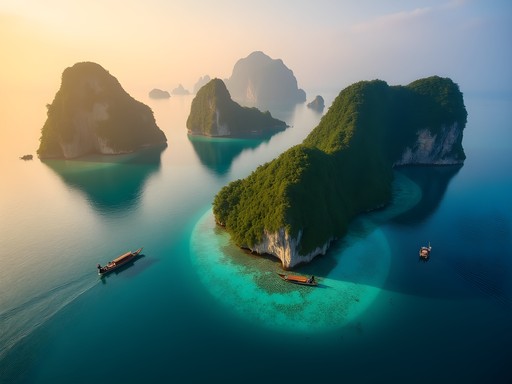
The moment my tiny propeller plane began its descent over Raja Ampat's scattered emerald islands, I knew I'd found something sacred. Tears welled in my eyes—not from fear of the bumpy landing, but from the overwhelming geometric perfection below. Patches of turquoise reef systems formed natural mandalas in the water, islands clustered in patterns that seemed deliberately placed by some cosmic hand. As a solo traveler with a sports coach's budget, Raja Ampat had long seemed like an impossible dream. But here I was, about to discover that this remote Indonesian paradise isn't just for luxury travelers—it's for seekers willing to step beyond the ordinary, even when traveling alone.

Getting to Raja Ampat: The Journey That Tests Your Commitment
Let's be real—reaching Raja Ampat is a pilgrimage that demands patience. From Sheffield, my journey involved four flights, a ferry, and a final wooden boat ride that sprayed salt water across my face like nature's own cleansing ritual. The route typically goes through Jakarta to Sorong, the gateway city to this archipelago of over 1,500 small islands.
I saved significantly by booking my international flight to Jakarta nearly six months in advance and using the Skyscanner 'whole month' feature to identify the cheapest travel dates. From Jakarta, domestic carriers like Wings Air and Batik Air run routes to Sorong, though schedules can be unpredictable during monsoon season.
The ferry from Sorong to Waisai (the main town on Waigeo Island) costs around 130,000 IDR (roughly £7/$9), running twice daily. I arrived at the terminal early to secure a spot, as these ferries fill quickly with locals, supplies, and the occasional tourist. This is where you'll first notice you're entering a different rhythm—island time doesn't conform to Western expectations.
For my two-week journey, I packed everything into my trusty waterproof backpack, which proved invaluable during sudden tropical downpours and boat transfers. Unlike my previous trips, I left behind most electronics, bringing only my phone, a solar power bank, and a waterproof pouch for documents.

💡 Pro Tips
- Book flights to Jakarta 4-6 months in advance for best rates
- Download maps.me and save the Raja Ampat region offline before arriving
- Exchange money in Jakarta or Sorong—ATMs are scarce to non-existent on the islands
Budget-Friendly Accommodation: The Homestay Network
Forget luxury resorts with their $500+ nightly rates—Raja Ampat's true heart beats within its homestay network. These family-run accommodations dot the shorelines of Kri, Gam, Arborek, and Mansuar islands, offering simple wooden bungalows built on stilts over crystalline waters for $25-45 per night, typically including three home-cooked meals daily.
I spent my first week at a homestay on Kri Island, where my basic bamboo bungalow became a sanctuary for meditation. Each morning, I'd roll out my travel yoga mat on the small veranda and flow through sun salutations while watching eagle rays glide through the shallows below.
What makes these homestays special isn't just their affordability, but the immediate community you join. Within days, I knew the names of every family member running the place, from 87-year-old Nenek (grandmother) who wove spectacular palm leaf baskets, to 5-year-old Putra who became my snorkeling buddy. Meals are communal affairs, with travelers from across the globe sharing the day's adventures over plates of fresh fish, coconut rice, and tropical fruits.
During my second week, I island-hopped between homestays on Gam and Arborek, booking directly through the Raja Ampat Homestay Association website to ensure my money went straight to local families. This approach not only kept costs down but created authentic connections impossible to forge in resort settings.

💡 Pro Tips
- Book homestays through the official Stay Raja Ampat website to support local families directly
- Pack earplugs—roosters don't care about your sleep schedule
- Bring small gifts from your home country for homestay hosts (tea from England was a big hit)
Sacred Geometry Beneath the Surface: Mindful Snorkeling
Raja Ampat holds 75% of the world's known coral species—a living, breathing example of nature's sacred geometry that takes my breath away each time I slip beneath the surface. Unlike other destinations where you need expensive dive certifications to see the good stuff, here the coral starts right off the homestay jetties.
I spent hours each day exploring with just a snorkel set and my underwater camera. The mathematical precision of brain corals, the Fibonacci spirals of giant clams, the perfect hexagonal patterns of coral polyps—all these became my underwater meditation subjects.
For those new to snorkeling, I recommend starting at Yenbuba Jetty on Mansuar Island. The gentle current carries you along a coral highway where giant clams larger than your torso open and close in slow, rhythmic pulses. When you're comfortable, graduate to the more challenging drift snorkel at Kabui Passage, where the current strengthens and weakens with tidal patterns.
The most profound experience came during a night snorkel near my homestay on Kri. With nothing but a waterproof headlamp, I witnessed bioluminescent plankton creating constellations around my fingertips—the ultimate reminder that we're all connected through these geometric light patterns, from the microscopic to the cosmic.
I developed a practice of mindful snorkeling—focusing completely on my breath through the snorkel tube, the sensation of water against skin, and the kaleidoscopic patterns below. This became my moving meditation, more centering than any studio practice back home.

💡 Pro Tips
- Always snorkel with a buddy, even in shallow water
- Wear a rashguard instead of sunscreen when possible to protect reefs
- Learn basic fish identification before arriving to deepen your appreciation

Finding Your Tribe: Solo But Never Alone
The beauty of traveling solo to Raja Ampat is that you arrive alone but rarely stay that way. The communal nature of homestays creates instant community, while the challenges of reaching this remote paradise mean fellow travelers tend to be kindred spirits rather than typical tourists.
My mornings often began with impromptu beach workouts, where I'd share simple bodyweight routines with other travelers. Using nothing but a resistance band set I'd packed, we created mini fitness communities on the sand—proving you don't need fancy gyms to maintain strength on the road.
Local connections proved even more meaningful. Through my homestay host, I joined a village cleanup initiative on Arborek Island, spending a day collecting plastic waste alongside local children and elders. This led to an invitation to a traditional dance performance that evening, where geometric patterns appeared again in both movement and traditional costume designs.
One of my most treasured memories was joining a local fishing trip with two Papuan women who spoke little English. Communication happened through gestures, smiles, and the universal language of fishing excitement. When they invited me to their home to share our catch, I experienced the kind of authentic cultural exchange that organized tours simply can't provide.
For solo female travelers concerned about safety, I can report that Raja Ampat felt remarkably secure. The conservative Muslim culture means modest dress is appreciated on villages (though swimwear is fine while snorkeling), and the respect shown toward visitors creates an environment where harassment is virtually non-existent.

💡 Pro Tips
- Join community meals at homestays rather than eating separately
- Learn basic Bahasa Indonesia phrases—locals light up when you make the effort
- Attend Sunday church services (even if not religious) to experience incredible Papuan harmonized singing
Beyond the Water: Jungle Treks and Viewpoints
While Raja Ampat's underwater world gets most of the attention, the islands' terrestrial offerings provide equally profound experiences. The jungle-covered karst formations hide hiking trails leading to viewpoints that reveal the archipelago's famous geometric patterns from above.
The iconic Piaynemo viewpoint requires a guided boat trip (around 600,000 IDR/£30 when shared with others), but the panorama of mushroom-shaped islands dotting turquoise lagoons is worth every rupiah. I hiked the 300+ wooden steps in the early morning to avoid both heat and crowds, reaching the top just as golden light illuminated the karst formations below.
For a more immersive jungle experience, I arranged a guided trek on Waigeo Island to spot the elusive Red Bird of Paradise. Setting out at 4:30am with my headlamp lighting the way, we hiked through primary rainforest to a hidden observation point. The mating dance of these birds—with their symmetrical movements and geometric positioning—connected perfectly to the patterns I'd observed underwater.
Gam Island offers excellent self-guided walking opportunities, with paths connecting various homestays and villages. During these walks, I'd practice moving meditation, focusing on the rhythmic pattern of my footsteps and breath while absorbing the symphony of jungle sounds.
Pack hiking sandals rather than heavy boots—they're perfect for trails that often cross streams and muddy patches, while still providing enough grip for the sometimes slippery terrain.

💡 Pro Tips
- Start viewpoint hikes before 7am to avoid midday heat
- Carry at least 2 liters of water for any jungle trek
- Ask permission before photographing people in villages—respect is essential
Final Thoughts
As my wooden boat pulled away from the homestay on my final morning, tears streamed freely down my salt-weathered cheeks. Raja Ampat had transformed me in ways I hadn't anticipated. The geometric patterns I'd observed—from microscopic coral polyps to island formations visible only from viewpoints—reminded me that we're all connected in this grand design, solo travelers included.
This remote paradise taught me that traveling alone doesn't mean being lonely. Community exists wherever we're willing to open ourselves to it, whether that's joining a family meal at a homestay or sharing an underwater moment with a passing turtle.
The journey to Raja Ampat isn't easy or particularly cheap, even for budget travelers. But by embracing local homestays, joining community activities, and focusing on the free natural wonders rather than expensive tours, it becomes accessible to those willing to trade luxury for authenticity.
What patterns will you discover in Raja Ampat? What connections will you make? The journey might begin solo, but I promise—like the sacred geometry that underlies everything in this magical archipelago—you'll find yourself part of something much larger by the time you leave.
✨ Key Takeaways
- Raja Ampat is accessible to budget solo travelers through the homestay network
- The journey requires patience but rewards with authentic connections and natural wonder
- Sacred geometric patterns both underwater and on land create natural mindfulness opportunities
- Solo travelers quickly find community through shared activities and homestay environments
📋 Practical Information
Best Time to Visit
October to April (dry season), with November-December offering ideal conditions
Budget Estimate
$50-70/day including accommodation, food, and basic activities
Recommended Duration
Minimum 10 days, ideally 2 weeks
Difficulty Level
Challenging







Comments
Nicole Russell
This post is EVERYTHING! I just got back from my second trip to Raja Ampat last month and I'm already planning my third. That feeling you described on the plane - I totally get it. There's something about those islands that just reaches into your soul. I did the Pianemo viewpoint hike this time and oh my god, the sunrise was unreal. Also totally agree about the solo-but-not-alone vibe. I met some of my closest travel friends there. We still have a WhatsApp group going! For anyone planning a trip, I packed my dry bag and used it literally every single day for island hopping. Worth every penny.
starlife
Going in September! Do you need to book homestays in advance or can you just show up?
Leah Moreau
I'd definitely recommend booking ahead, especially for September which is peak season. Most homestays have WhatsApp numbers you can find through the Stay Raja Ampat network. They fill up fast!
Savannah Torres
Leah, this brought back so many memories! We took our kids to Raja Ampat two years ago and it was transformative for our whole family. I was nervous about traveling somewhere so remote with a 6 and 9 year old, but the homestay experience was perfect for them. They learned to snorkel, helped with cooking, played with the local kids despite the language barrier. Your point about finding community really resonates - we met solo travelers, couples, families, all sharing meals together under the stars. It's such a special place. One tip for families considering it: bring reef-safe sunscreen because you'll be in the water constantly!
starlife
Love that you took your kids there! How long would you recommend staying?
Savannah Torres
We did 10 days and it felt perfect. Enough time to really settle in and not feel rushed, but not so long that the kids got restless. Though honestly, they could have stayed forever!
wanderlustrider
Your photos are stunning! Adding this to my bucket list
escapemate
This looks amazing but I'm a total beginner - never done anything like this. Is it safe to go solo? And how hard is it really to get there? The journey sounds complicated!
Nicole Russell
It's SO safe! The homestay families look after you like you're their own. The journey is long (Jakarta to Sorong, then ferry to Waisai) but totally doable. Just give yourself extra time because flights get delayed. I went solo last year and felt completely comfortable the whole time. The other travelers and locals make you feel so welcome!
escapemate
Thank you!! That makes me feel so much better about it
beachace
YES!! Raja Ampat is absolutely incredible. I stayed at Mangkur Kodon homestay last year and it was the best decision ever. The family was so welcoming and the snorkeling right off the dock was insane. Also pro tip - bring CASH, lots of it. There's basically no ATMs once you're out there and I ran short which was stressful lol. The boat rides between islands are pricey but so worth it. Did you do any diving or just snorkeling?
Leah Moreau
Mangkur Kodon was actually on my list! I ended up at Warsambin homestay but heard amazing things. And YES to the cash tip - so important! I mostly snorkeled because my diving cert had expired, but the snorkeling alone was mind-blowing.
beachace
Warsambin is supposed to be gorgeous! Lucky you :)
starway
Those underwater photos are incredible!!
smartexplorer
Going in August! How much did you budget per day including accommodation and snorkeling? Trying to figure out if I can stretch my budget for 10 days vs 7.
oceanone
not the author but i did about $40-50/day at homestays, that's 3 meals + snorkeling. way cheaper than resorts
Nicole Russell
Leah, this really resonates! I did Raja Ampat solo last year and had the EXACT same emotional experience leaving my homestay. The community aspect is so underrated - everyone talks about the diving but nobody mentions how the homestay families basically adopt you. Did you stay with Mama Yenkoranu on Kri? She made me cry when she gave me a woven bracelet on my last day. Also YES to the journey being part of the experience - that ferry from Sorong is a rite of passage 😂
starway
How do you book the homestays? Can you do it online or just show up?
Nicole Russell
Most have WhatsApp now! I found mine through the Stay Raja Ampat website and then messaged directly. Book ahead in high season (Oct-April) but you can wing it other times.
oceanone
Raja Ampat is absolutely unreal. Worth every bumpy flight!
Venture X
Premium card with 2X miles, $300 travel credit, Priority Pass