

Disclosure: This article contains affiliate links. We may earn a commission from purchases at no extra cost to you, which helps our travel content.
The first time I turned a corner in Chefchaouen's medina, my camera nearly slipped from my hands. That blue—that impossible, otherworldly blue—wrapped around every surface like some kind of dream made tangible. As someone who's chased light across five continents, I can tell you with absolute certainty: nothing prepares you for the visual feast that is Morocco's Blue Pearl. After three visits (and counting), I've mapped the hidden corners, befriended local artisans, and learned exactly when that magical Moroccan light transforms ordinary blue walls into photographic poetry. This isn't just about pretty pictures—it's about capturing the soul of a place where tradition and creativity collide in the most spectacular azure canvas imaginable. Grab your camera, clear your memory cards, and let me show you how to truly see Chefchaouen.
The Blue Hour in the Blue City: Timing Your Shots
If there's one thing my years of skydiving photography taught me, it's that timing is everything—and nowhere is this more true than in Chefchaouen. The city's signature blue walls create a photographer's playground that shifts dramatically throughout the day.
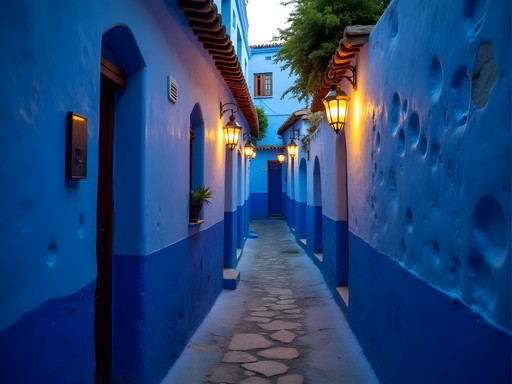
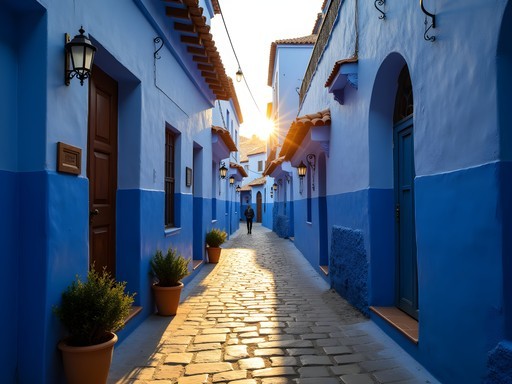
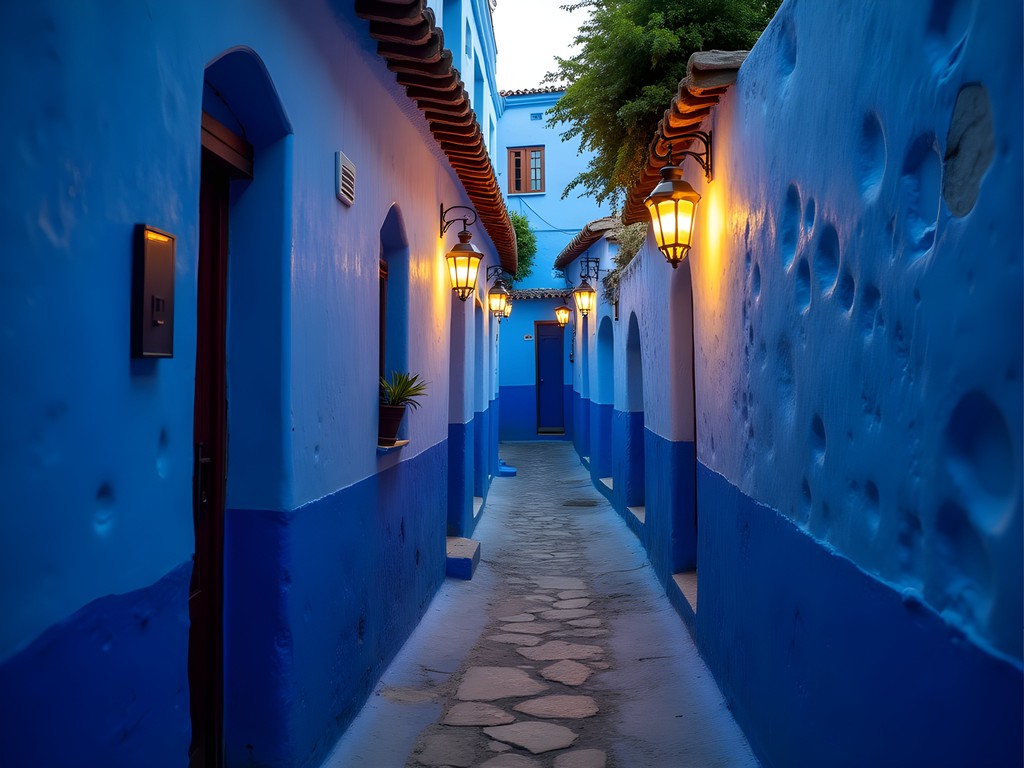
My absolute favorite time to shoot is during the golden hour before sunset (roughly 5-7 PM in spring), when the warm light creates a magical contrast against the cool blues. But here's the insider secret: the actual blue hour (that brief window after sunset) in the Blue City creates a mind-bending monochromatic effect where the walls seem to glow from within. It's like shooting in a dream.
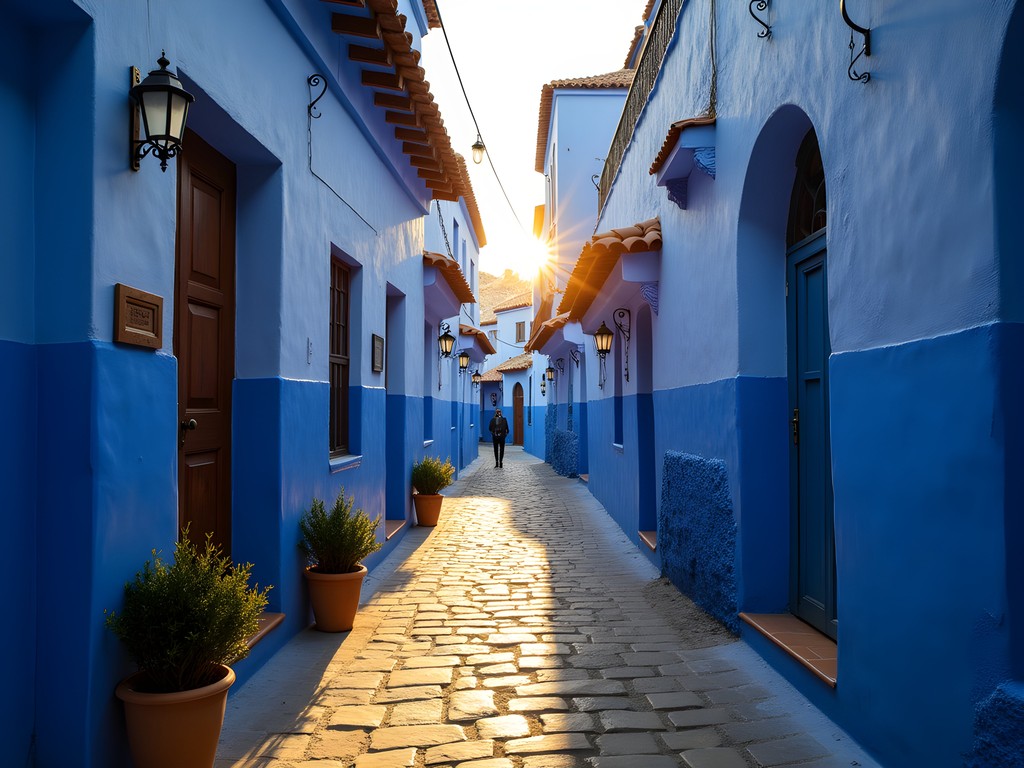
Mornings offer their own magic. I discovered on my second trip that arriving at Plaza Uta el-Hammam just after sunrise (around 6:30-7:00 AM) means you'll have those iconic stairways and alleyways nearly to yourself. The light is softer, more even, and creates fewer harsh shadows than midday shooting.
Mid-afternoon is actually my least favorite time to shoot here—the harsh overhead sun creates difficult contrast and washes out the blue tones. Instead, use this time to scout locations, chat with locals, or edit your morning shots at one of the rooftop cafés. I always bring my portable external SSD to back up files on the go, which has saved me more than once when my memory cards filled up faster than expected.
💡 Pro Tips
- Shoot during the first hour after sunrise for empty streets and soft light
- Return to the same locations at different times—the changing light transforms them completely
- Use the harsh midday hours for scouting rather than serious shooting
Finding Your Blue: Camera Settings and Gear
Let's talk technical for a moment, because capturing Chefchaouen's unique blue palette requires some specific approaches. After three trips and thousands of shots, I've refined my gear and settings to handle the city's unique lighting challenges.
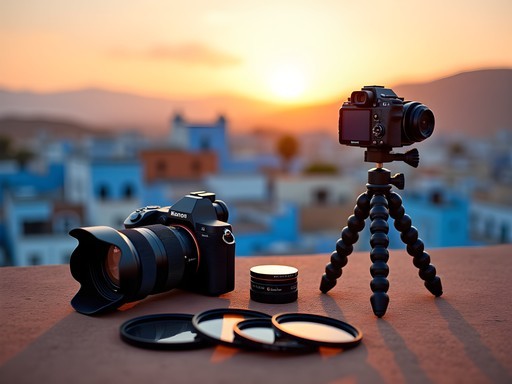
First, the blues of Chefchaouen can trick your camera's white balance. I typically set a custom white balance using a gray card for accuracy, but you can also shoot in RAW (always!) and adjust later. For the richest blues, I slightly underexpose by about 1/3 stop and use my polarizing filter to reduce glare on painted surfaces.
As for lenses, I bring three: a wide-angle zoom (16-35mm) for those narrow alleyways and architectural shots, a nifty-fifty (50mm f/1.8) for street portraits and detail work, and a medium telephoto (70-200mm) for compressing those stunning blue stairways and capturing distant details. If I could only bring one lens? It would be the 35mm prime—versatile enough for most situations while maintaining that storytelling quality I love.
For those shooting on smartphones (which can actually perform brilliantly here), I recommend using ProRAW mode if available and downloading a manual camera app that allows you to control exposure compensation. The native camera apps tend to overexpose the blues, washing them out.
One piece of gear that's been invaluable is my travel tripod. It's compact enough to carry all day but sturdy enough for those blue hour long exposures when the city takes on its most magical quality. Plus, it doubles as a makeshift stabilizer for video work when I'm documenting local craftspeople.

💡 Pro Tips
- Underexpose slightly (1/3 stop) to preserve the richness of blues
- Use a polarizing filter to reduce glare on painted surfaces
- Shoot in RAW to have maximum flexibility with white balance in post-processing
Beyond the Blue: Finding Unique Compositions
After my first visit to Chefchaouen, I looked at my photos and realized something disappointing: they looked just like everyone else's. The standard shots were beautiful, sure, but they didn't tell my story of the city. On subsequent trips, I've pushed myself to find unique perspectives that go beyond the obvious blue-washed walls.
One approach I love is to incorporate the human element. The contrast between local residents in traditional clothing against the blue backdrops creates compelling visual narratives. Always ask permission first—a smile and gesture toward your camera usually works, or learn the phrase "Mumkin sura?" (May I take a photo?). I often carry small prints from previous trips to give as gifts to people who allow me to photograph them.
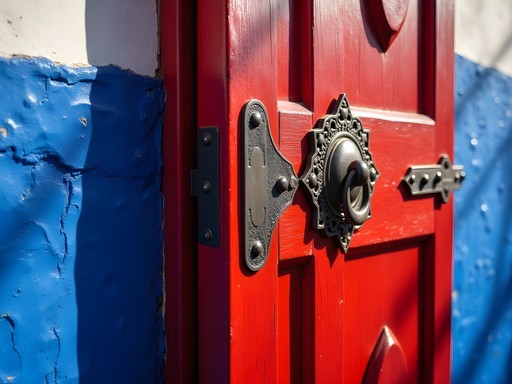
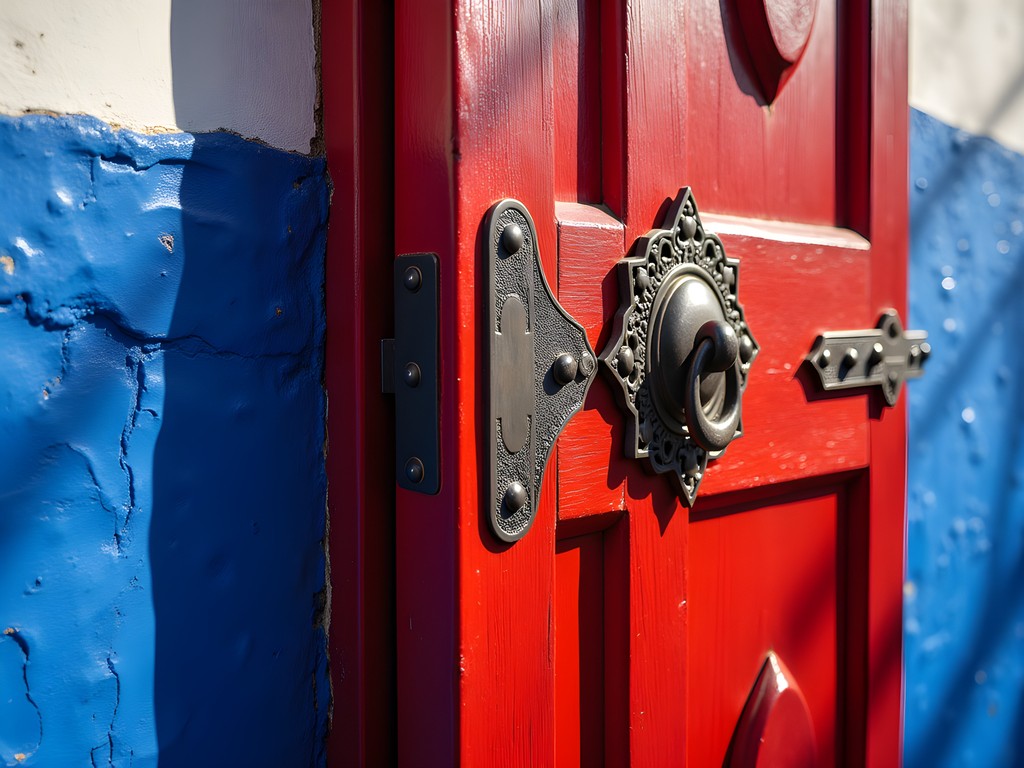
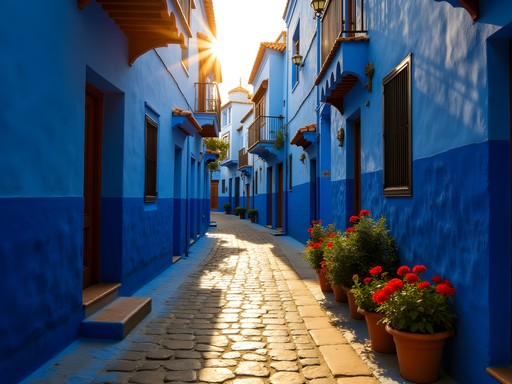
Look for unexpected color contrasts too. The occasional red door, yellow flowerpot, or colorful textiles hanging to dry create striking focal points against the blue monotony. These pops of color tell a more complete story of daily life.
Some of my favorite shots have come from looking up—ornate doorways, hanging plants, and the laundry strung between buildings create fascinating geometric compositions. The narrow streets create natural leading lines that draw the eye through your frame.
For something truly different, venture slightly outside the blue medina. The contrast between the blue city center and the more traditional Moroccan architecture just beyond creates fascinating juxtapositions that few tourists capture. A short hike up to the Spanish Mosque at sunset gives you panoramic views of the entire blue cityscape nestled against the Rif Mountains—an absolute must for any photographer.
💡 Pro Tips
- Look for contrasting colors (red doors, yellow pots) against the blue for striking focal points
- Incorporate local people (with permission) to add scale and storytelling elements
- Explore the edges where the blue city meets traditional architecture for unique juxtapositions

Connecting with Local Makers: Photography as Cultural Exchange
One of the things that keeps drawing me back to Chefchaouen isn't just the photogenic blue streets—it's the thriving maker culture that exists behind those azure facades. As someone deeply connected to maker communities around the world, I've found that my camera serves as the perfect introduction to local artisans.
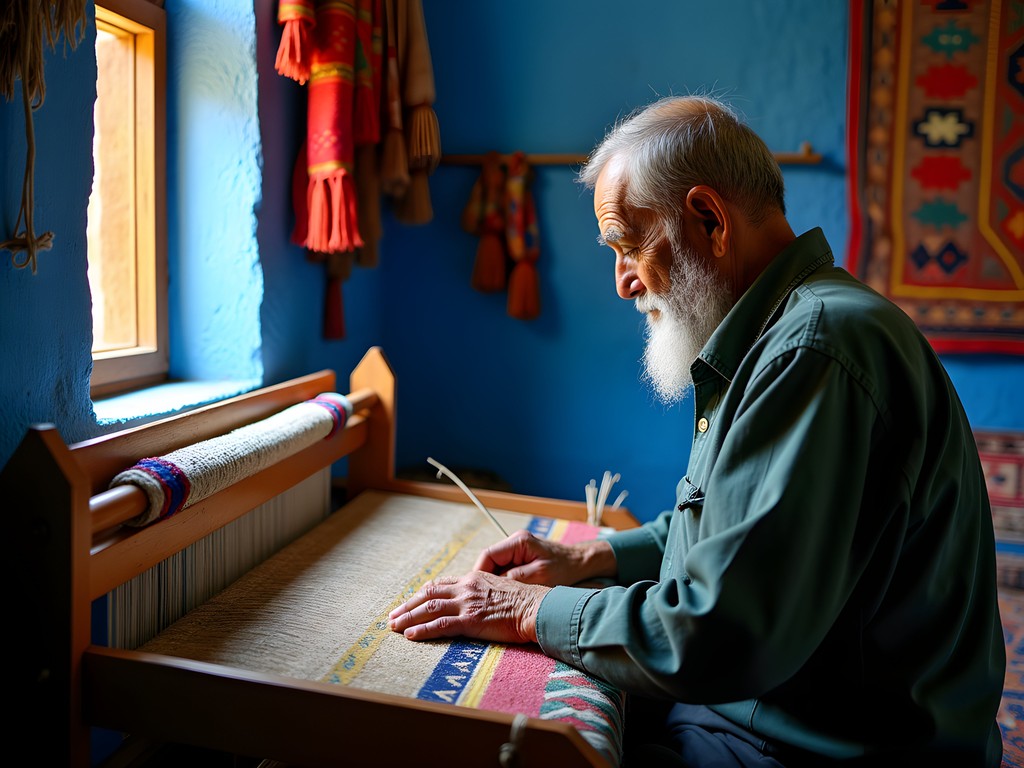
On my second trip, I spent an afternoon photographing a weaver named Hassan who creates traditional Moroccan blankets using techniques passed down through generations. Not only did this result in some of my most compelling images of human-centered storytelling, but it led to an invitation to his family home for mint tea and a deeper conversation about how traditional crafts are adapting to modern markets.
The key is to approach these interactions with genuine interest rather than treating locals as photo props. I always carry my portable photo printer which allows me to give immediate prints to artisans I photograph. This simple gesture transforms the dynamic from extraction to exchange and has opened countless doors.
The local leather workshops are particularly fascinating, where craftspeople dye leather goods using traditional methods—the contrast of their colorful products against the blue city backdrop makes for stunning photographs. Similarly, the wool dyers in the eastern part of the medina create vibrant displays as they hang freshly dyed yarns to dry.
Beyond the traditional crafts, I've also connected with a small but growing community of digital creators in Chefchaouen. During my last visit, I met Yousef, a young local photographer documenting his city's changing identity. We swapped techniques and perspectives, and his insider knowledge led me to several hidden spots I'd never have found otherwise. These connections are the true souvenirs I bring home—relationships that transform how I see and photograph a place.
💡 Pro Tips
- Give back by sharing your photos with local subjects—a portable printer makes this easy
- Spend time observing craftspeople before photographing them to understand their process
- Exchange photography tips with local photographers for insider perspectives
Practical Photography Tips for Chefchaouen
After multiple visits to the Blue City, I've accumulated some hard-won practical knowledge that will save you time, frustration, and help you come away with images you'll treasure forever.
First, let's talk about crowds. Chefchaouen has exploded in popularity thanks to Instagram, and certain spots (like the famous blue staircase with flower pots) can be packed with tourists by mid-morning. My strategy? I use a mapping app to drop pins at locations I discover during daytime scouting, then return during early morning or evening when the light is better and crowds are thinner. The best photos almost always happen before 9AM or after 5PM.
Respect is absolutely critical here. This is a real city where people live and work, not a photo studio. Some residents have grown weary of tourists treating their homes as backdrops. Always ask permission before photographing people, respect signs that indicate no photography, and never block doorways or passages for that 'perfect shot.' A little consideration goes a long way.
Weather considerations matter too. Spring offers the perfect combination of comfortable temperatures and beautiful light. The blue walls appear most vibrant after rainfall when they're slightly damp, creating deeper saturation. If you're lucky enough to visit after a spring shower, drop everything and start shooting!
For those longer photography sessions, I always carry my camera backpack which provides quick access to gear while protecting it from the occasional dust and tight squeezes through narrow passageways. Its side access panels mean I never miss a shot while fumbling with zippers.
Finally, don't forget to put the camera down occasionally. Some of my best discoveries in Chefchaouen have happened when I wasn't looking through a viewfinder but simply wandering, chatting with locals, or sitting in a café watching the light change. These moments of presence often lead to the most meaningful photographs later.
💡 Pro Tips
- Map your favorite locations during daytime scouting, then return during golden hour
- Visit popular spots before 9AM to avoid crowds and harsh light
- The blue walls appear most vibrant after rainfall when they're slightly damp
Final Thoughts
As I packed away my camera on my last evening in Chefchaouen, watching the blue walls deepen to indigo in the fading light, I realized that photographing this city had taught me something profound about image-making itself. The most compelling photographs aren't just about capturing beauty—they're about finding the unexpected stories within the obvious. Chefchaouen offers an embarrassment of visual riches, but its true magic emerges when you slow down enough to see beyond the blue. Whether you're wielding a professional camera or just your smartphone, I hope these tips help you create images that tell your unique story of this remarkable place. And when you visit, remember that the best souvenir isn't the perfect shot of an empty blue alleyway—it's the connections you make with the people who call this azure wonderland home. ¡Hasta la próxima, Chefchaouen!
✨ Key Takeaways
- Timing is everything—shoot during golden hour and blue hour for the most magical light
- Look beyond the obvious blue scenes to find unique compositions with contrasting colors and human elements
- Connect with local artisans and makers for more meaningful photography experiences
- Respect the city as a living place, not just a photo backdrop
📋 Practical Information
Best Time to Visit
Spring (March-May) for comfortable temperatures and beautiful light
Budget Estimate
$50-100 per day including mid-range accommodation, food and transportation
Recommended Duration
2-3 days minimum for photography
Difficulty Level
Beginner


Comments
dreamblogger9510
Going there next month, so excited!
journeyvibes6494
planning my trip for march - is it better to stay inside the medina or outside? worried about getting my camera gear through those narrow streets
Douglas Bradley
Definitely stay inside if you can. The early morning and late evening light is worth the hassle of navigating with gear. Just pack smart—I used a camera sling which was perfect for the tight spaces.
journeyvibes6494
thanks! super helpful
Riley Griffin
We took our kids to Chefchaouen last spring and it was magical! My 8-year-old called it "the Smurf village" and wouldn't stop taking pictures with her little camera. Your tip about connecting with local makers really resonates—we met a weaver who showed my daughter how traditional patterns are made, and those candid moments ended up being our favorite photos from the entire Morocco trip. One family tip: the medina's stairs can be challenging with younger kids, but there are plenty of cafes where you can take breaks and the locals are incredibly welcoming to families.
dreamblogger9510
the smurf village haha thats adorable
backpackzone
Love the photos!
Douglas Bradley
Astrid, your section on the blue hour timing is spot-on. I found that shooting around 6:30-7am gave me the most consistent light without the tourist crowds. One thing I'd add for photographers: the contrast between the blue walls and the terracotta pots creates some really compelling compositional opportunities. I spent an entire morning just documenting doorways and the way locals arrange their plants. The cultural exchange aspect you mentioned is crucial—I always ask permission and often end up being invited for tea, which leads to even better photo opportunities.
journeyvibes6494
what lens did you use for the doorway shots? trying to figure out what to pack
Douglas Bradley
I primarily used a 35mm for street photography and a 50mm for tighter compositions. The narrow alleyways make wider angles really useful.
nomadbackpacker
omg this is literally my dream destination!! adding to my list rn
greennomad
Just got back from Morocco and Chefchaouen was definitely the highlight! Pro tip for anyone going - get up SUPER early (like 6am) to catch the streets when they're empty. The locals start washing the streets down around 7am which creates these amazing reflections of the blue walls in the water. Worth missing breakfast for!
dreamphotographer
Ooh that reflection tip is gold! Did you need a tripod for those early morning shots?
greennomad
I just used my phone for most shots but would definitely bring a tripod next time for those low light conditions!
Jean Wells
Having photographed Chefchaouen multiple times over the years, I found your analysis of the light particularly insightful, Astrid. The quality of light changes dramatically throughout the seasons - something worth noting for serious photographers. Summer brings harsh contrasts while winter offers softer, more even illumination of those blue walls. One technical point I'd add: the blue walls can trick your white balance. I found manual white balance with a gray card essential for accurate color rendering, especially if you're trying to capture the subtle variations between neighborhoods. The oldest parts of the medina near the kasbah have a deeper, more weathered blue that requires different exposure considerations than the freshly painted areas.
Astrid Williams
Excellent point about the white balance, Jean! I struggled with that initially until I switched to manual. The seasonal differences you mentioned are spot on too.
springbackpacker
Thanks for the tips on camera settings! I'm a photography newbie and was struggling with how to capture those blues accurately. The white balance advice made a huge difference when I visited last week. Also appreciated the section on cultural exchange - bought some beautiful handwoven items after connecting with the artisans. Much more meaningful than random souvenirs!
Nicole Russell
Astrid, you've captured the essence of Chefchaouen beautifully! I was there last fall and completely agree about the magic of blue hour. I found my Sony a7III with a 24-70mm lens perfect for those narrow streets - wide enough for the architecture but versatile for portraits too. One thing I'd add for photographers visiting: the contrast between the blue walls and the colorful goods in the market stalls creates amazing photo opportunities. Look for pops of yellow, orange, and red textiles against the blue backdrop. Also, don't forget to look up! Some of the most interesting architectural details are above eye level. Can't wait to go back and try some of your composition ideas!
luckygal
Did you feel safe walking around with expensive camera gear? That's my biggest concern!
Nicole Russell
Absolutely! Chefchaouen felt very safe compared to larger cities. Just use common sense - I carried a non-flashy camera bag and kept my gear close. The locals were incredibly friendly and protective of tourists.
Venture X
Premium card with 2X miles, $300 travel credit, Priority Pass