
Disclosure: This article contains affiliate links. We may earn a commission from purchases at no extra cost to you, which helps our travel content.
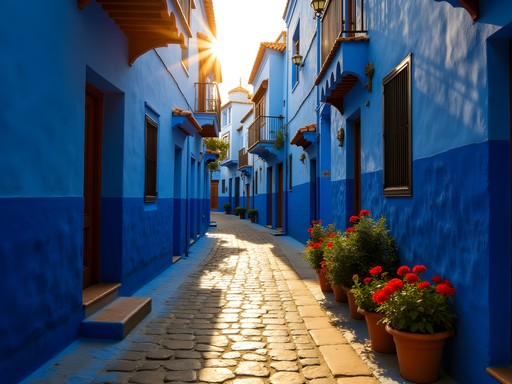
The first time I rounded a corner in Chefchaouen's medina, I literally gasped. That blue—that impossible, otherworldly blue—wrapping every surface like a three-dimensional canvas wasn't just visually stunning; it moved me physically. As someone who studies how environments affect our movement patterns, I found myself instinctively slowing down, breathing deeper, and looking upward more often. While most visitors snap the same iconic shots on the main streets, there's a whole network of quieter, equally magical spaces waiting just one turn away. After five visits to Morocco's Blue Pearl, I've mapped out the secret corners where design, community, and authenticity converge—places where you can experience the true rhythm of Chefchaouen beyond the Instagram crowds.
Finding Your Blue Rhythm: Navigating Chefchaouen Like a Local
Before diving into specific hidden corners, let's talk movement strategy. Chefchaouen's medina operates on what I call 'flow physics'—the tourist crowds follow predictable patterns, like water down a channel. To find the quiet spaces, you need to move against this current.
My technique is simple: whenever you see more than three tourists with cameras pointed in the same direction, turn left or right at the next opportunity. The medina is remarkably safe, and these counter-intuitive turns have led me to some of my most treasured discoveries.
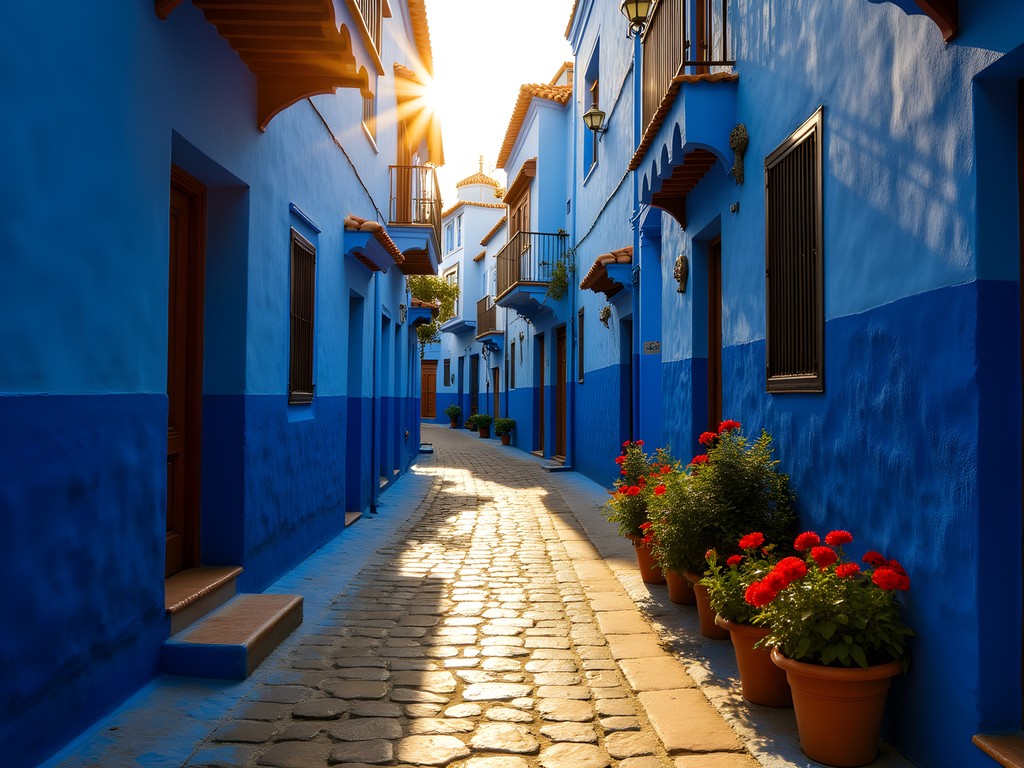
Mornings before 9am and evenings after 6pm transform the city entirely. During these golden hours, the quality of light on the blue walls creates an almost meditative atmosphere. I've found that carrying a small collapsible water bottle helps me stay hydrated during these extended wanderings without the bulk of a traditional bottle weighing me down.
The most magical moments often happen when you pause. Find a small doorway recess, step aside, and simply observe how locals navigate their beautiful blue world. Their efficiency of movement through these spaces tells you everything about how the city was designed to be experienced.
💡 Pro Tips
- Start explorations before 9am or after 6pm to avoid crowds
- Always take the less obvious turn when pathways diverge
- Look for doorway recesses to pause and observe local movement patterns
The Forgotten Eastern Quarter: Architectural Poetry in Blue
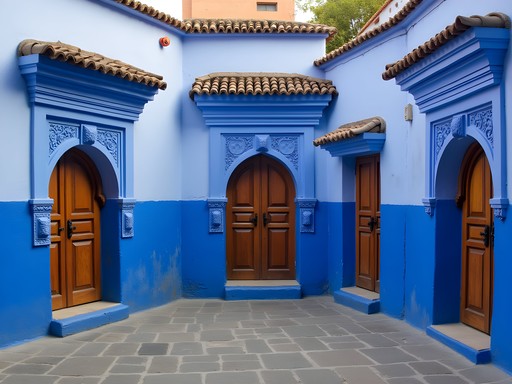
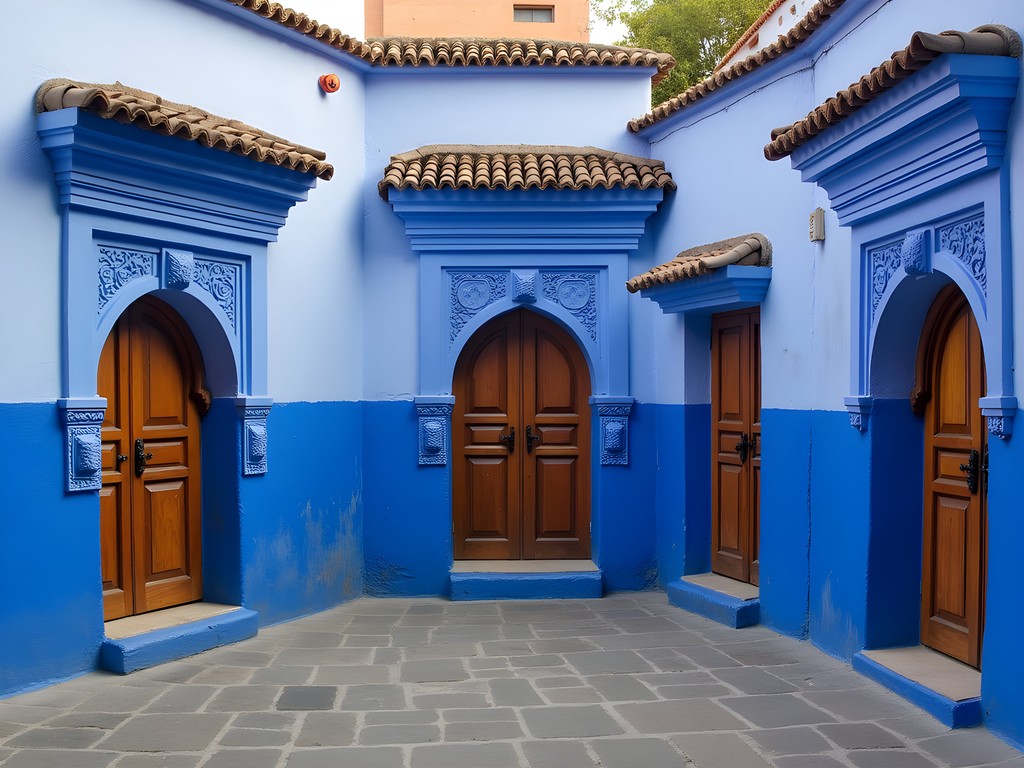
While tourists cluster around the Spanish Mosque viewpoint and the central plaza, Chefchaouen's eastern quarter remains delightfully under-explored. This area features some of the city's most architecturally interesting doorways, where you can trace the evolution of Andalusian-Moroccan design elements without the distraction of souvenir shops.
My favorite discovery is a tiny square I've nicknamed 'Five Doors Plaza' (locals call it Bab El-Harmoun), where several homes showcase distinctly different door styles within steps of each other. The contrast of weathered wood against the varied blue hues creates a natural color study that would make any design school professor proud.
For photography enthusiasts, this area offers perfect lighting conditions around 4pm when the sun hits the eastern walls at just the right angle. I've found my light reflector invaluable here for capturing the subtle variations in blue tones and architectural details without harsh shadows.
The eastern quarter is also home to several small, family-run weaving workshops where you can observe traditional Moroccan textile techniques. Unlike the market stalls, these aren't primarily tourist-oriented, so visits should be approached respectfully and with genuine interest.
💡 Pro Tips
- Look for houses with different shades of blue – each tells a story about the family's history
- Visit the eastern quarter around 4pm for optimal photography lighting
- Bring small denominations of dirhams to purchase directly from artisans
Secret Rooftop Routes: The Vertical Dimension
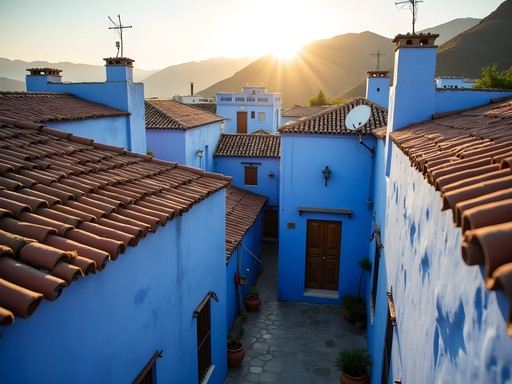
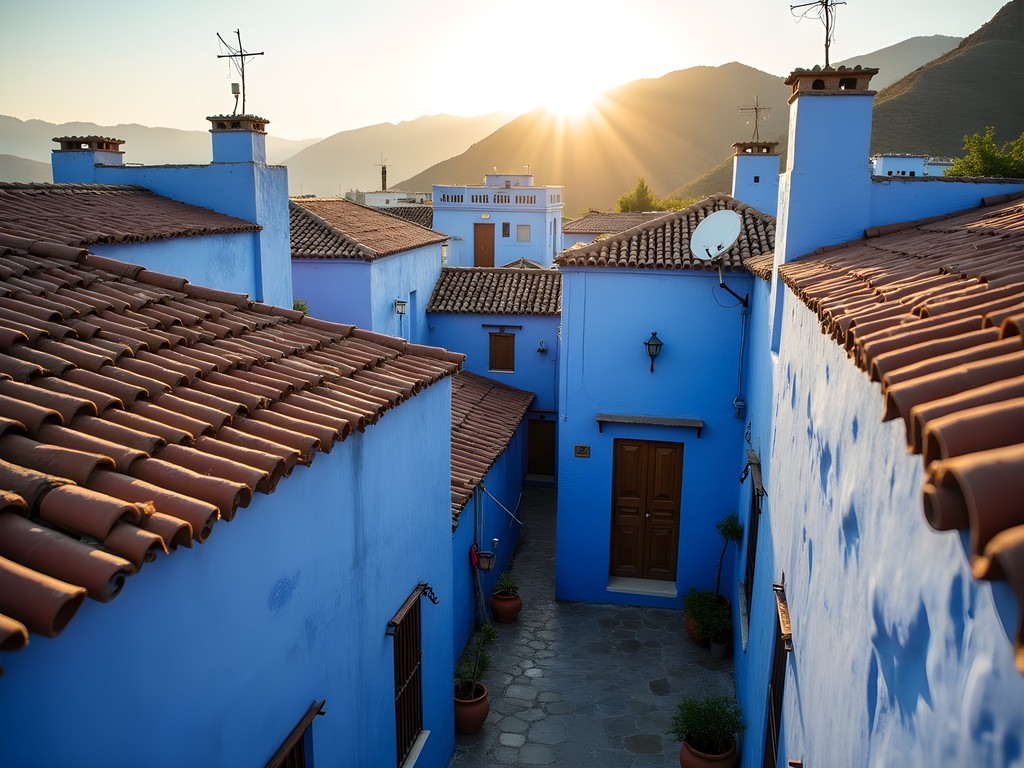
One of Chefchaouen's best-kept secrets is its interconnected rooftop world. While most visitors stay at ground level, locals have created an entire secondary network of pathways above the streets. Accessing these requires both permission and guidance, but delivers a completely different perspective on the city's design.
During my third visit, I befriended Hamid, the owner of a small guesthouse near Ras El Ma (the city's natural spring). For a modest fee, he arranged a rooftop tour that revealed how the buildings' upper levels create a fascinating negative space—a kind of inverted urban planning where the gaps between structures form their own pathways.
From this elevated vantage point, you can see how the city's famous blue palette isn't actually monotone, but rather a carefully orchestrated progression of shades that create visual rhythm. I always carry my color swatch book to identify and document these variations—I've counted over 20 distinct blues throughout the medina!
The rooftops also reveal Chefchaouen's ingenious passive cooling system. The blue color reflects heat, while strategic openings between buildings channel mountain breezes through the narrowest streets. It's a masterclass in sustainable design that predates modern concepts by centuries.
💡 Pro Tips
- Ask your guesthouse owner about rooftop access—most have connections
- Visit rooftops around sunset when the blue city is bathed in golden light
- Bring a small gift (tea or cookies work well) when visiting local homes

The Artisans' Quarter: Where Function Meets Form
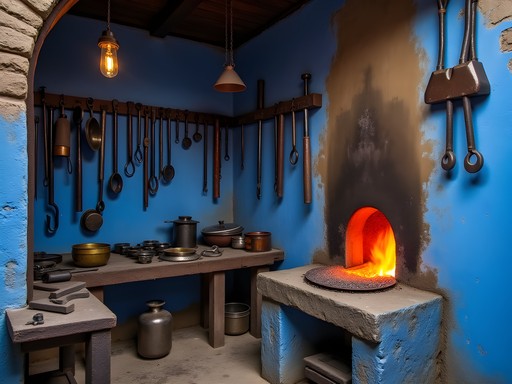
Southwest of the main plaza lies a neighborhood where Chefchaouen's craftspeople have worked for generations. Unlike the tourist-oriented shops near Plaza Uta el-Hammam, these workshops prioritize function over tourist appeal, creating everyday objects of remarkable beauty.
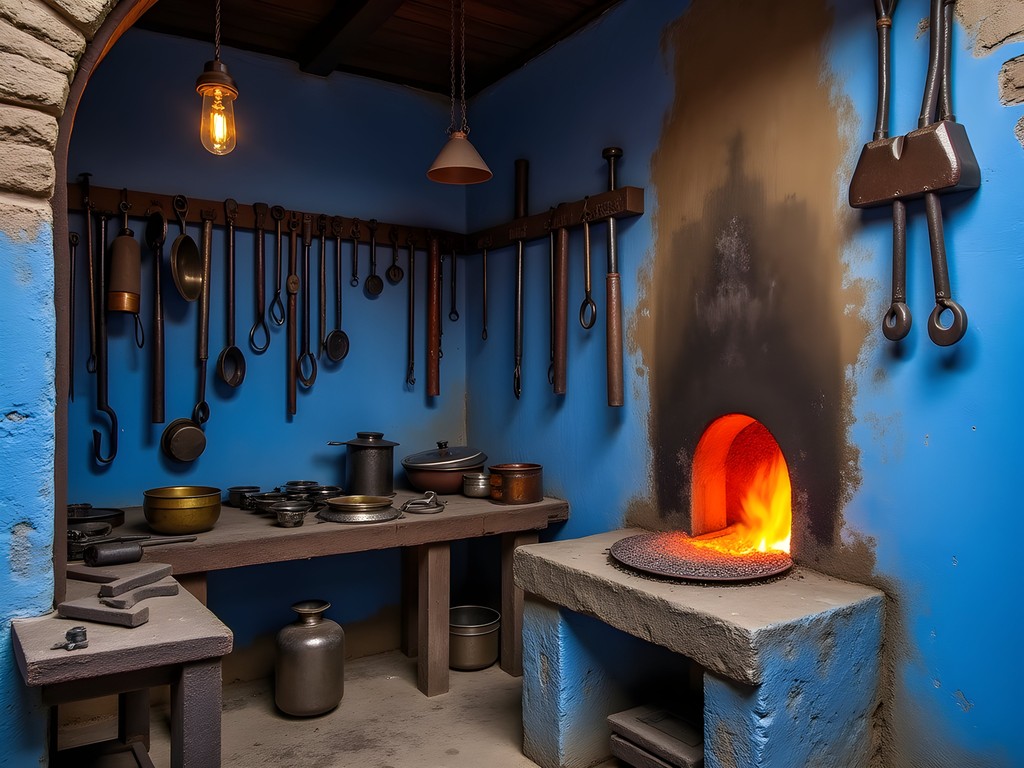
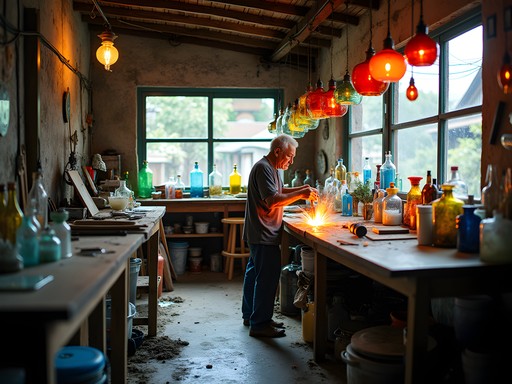
My favorite discovery is a tiny alley called Zankat el-Haddadin (Blacksmiths' Street), where metalworkers still use traditional techniques to create everything from practical kitchen tools to intricate door hardware. The visual contrast between their fiery forges and the cool blue surroundings creates a sensory experience you won't find in guidebooks.
As a budget-conscious traveler, I've found this area offers the best value for authentic souvenirs. My prized possession is a hand-forged kitchen knife that cost one-third the price of similar items in the main market. I protect it during travel with a simple knife roll that keeps it safe in my luggage.
Nearby, you'll find woodworkers crafting the distinctive octagonal tables (thuya wood) that define Moroccan interior design. What makes this area special is that you're watching items being made for local homes, not tourist shops. The craftspeople take pride in explaining their techniques if you show genuine interest.
💡 Pro Tips
- Visit workshops mid-morning when craftspeople are most active
- Ask permission before photographing anyone at work
- Learn a few phrases in Arabic or the local Berber dialect to show respect
Movement Breaks: Hidden Squares for Stretching and Reflection
As a PE teacher, I'm always conscious of how long days exploring can tax the body. Chefchaouen's maze-like structure actually contains several perfect spots for what I call 'movement breaks'—small, quiet squares where you can stretch and reset your posture without feeling self-conscious.
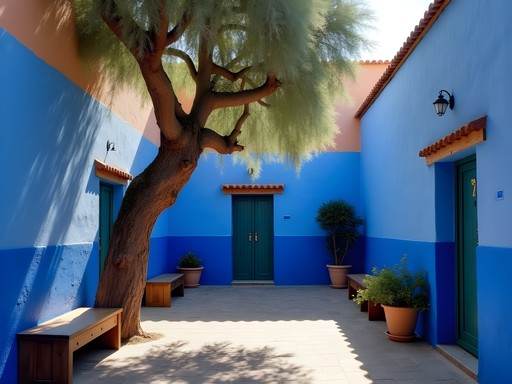
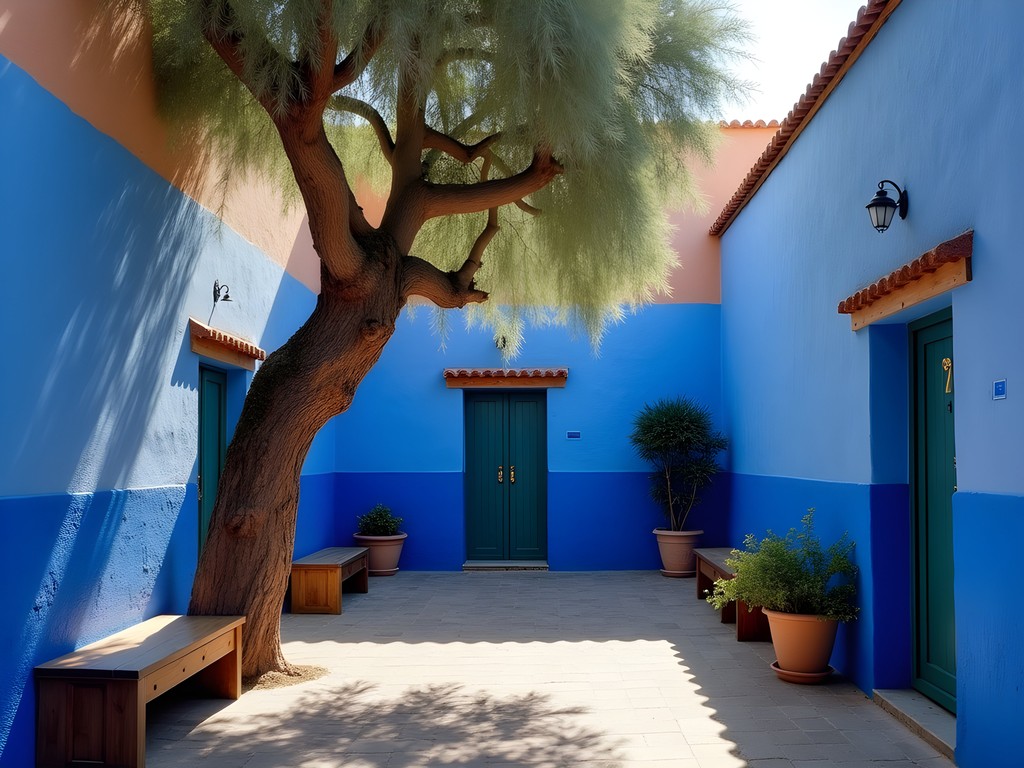
My favorite is a tiny square near Bab Souk that locals call Place des Artistes because young painters sometimes set up easels here. With its single ancient olive tree and three simple benches, it provides the perfect environment for a mid-day reset. I always pack my travel yoga mat which is thin enough to fold into my daypack but provides just enough cushioning for a quick stretch sequence.
Another hidden gem is the small courtyard behind the Kasbah museum. While most tourists pay to enter the museum itself, few realize the rear courtyard is accessible without a ticket and offers both shade and seating. I've spent peaceful hours here journaling and planning my next explorations.
These movement breaks aren't just physical—they're opportunities to absorb Chefchaouen's unique atmosphere. The city's blue environment has a measurable calming effect on heart rate and breathing, something I've observed both in myself and in my travel companions over multiple visits.
💡 Pro Tips
- Schedule deliberate 'movement breaks' every 2-3 hours of exploration
- Carry a small towel or scarf to sit comfortably on stone surfaces
- Use these quiet moments to document your impressions in a journal
Final Thoughts
Chefchaouen's magic doesn't lie in its Instagram fame but in how its design encourages a different way of moving through the world. The blue isn't just for photos—it's an environmental intervention that changes how we feel, breathe, and connect with our surroundings. As you explore beyond the main thoroughfares, you'll discover that the city's true gift is how it slows you down and heightens your awareness of space.
On my last morning in Chefchaouen, I woke before dawn and followed the sound of flowing water to a tiny square I'd never noticed before. An elderly man was carefully repainting his doorway the most exquisite shade of periwinkle blue. When he saw me, he smiled and said in French, 'The blue is never finished. We are always becoming blue.' That philosophy—of constant renewal and deepening connection to place—is what makes Chefchaouen worth exploring again and again.
I hope you'll venture beyond the familiar blue walls and discover your own secret corners. The city reveals itself differently to each visitor, but always rewards those willing to take the unexpected turn.
✨ Key Takeaways
- The best experiences in Chefchaouen happen when you deliberately move away from tourist crowds
- Early morning and evening provide completely different experiences of the blue city
- Local craftspeople in the southwest quarter offer authentic souvenirs at better prices
- The city's design naturally encourages slower, more mindful movement
- Building connections with locals can unlock hidden experiences like rooftop tours
📋 Practical Information
Best Time to Visit
April-May or September-October for mild weather and fewer crowds
Budget Estimate
$40-70/day including modest accommodation, meals, and activities
Recommended Duration
3-4 days minimum to discover hidden areas
Difficulty Level
Moderate (Involves Hills, Uneven Surfaces, And Navigation Challenges)

Comments
summerace
Going in October! Is three days enough or should we stay longer? Also is it super crowded with tourists?
Paisley Sato
Three days is perfect for really exploring beyond the main areas! October is great timing - not too hot and the crowds thin out after summer. Mornings before 10am are the quietest if you want those peaceful moments in the alleys.
summerace
Awesome thanks!! So excited now
vacationone
YES!! Finally someone writing about the real Chefchaouen not just the same 5 Instagram spots everyone posts. That eastern quarter tip is gold. We spent 4 days there last spring and barely scratched the surface. The early morning light in those alleyways is absolutely magical. Also totally agree about slowing down - we met this amazing ceramics artist who invited us for tea and showed us his workshop. Those moments are what made the trip special, not the photos.
nomadgal2887
Love the photos! Adding this to my bucket list
Hunter Thompson
Brilliant post Paisley! I was in Chefchaouen last year and completely missed the artisans' quarter you mentioned. Spent most of my time in the main square like every other tourist haha. The rooftop routes sound incredible though - I did stumble onto one cafe rooftop that had the most insane views over the medina at sunset. Wish I'd had this guide then! Definitely need to go back and explore properly. The blue really does something to your brain doesn't it? I found myself just sitting in random corners for ages.
vacationone
Which cafe was that?? Need rooftop recs!
Hunter Thompson
I think it was called Cafe Clock? Near the main square. But honestly there are loads of them, just look for stairs going up!
dreamace
The eastern quarter sounds amazing! How easy is it to find without a guide? I'm heading there in September and want to explore off the beaten path but worried about getting totally lost lol
Paisley Sato
Honestly, getting a little lost is part of the fun! But the eastern quarter isn't as maze-like as the main medina. I'd recommend downloading an offline map and just wandering in the morning when it's quieter. The locals are super friendly if you need directions.
dreamace
Perfect, thanks! That's exactly what I wanted to hear
nomadnomad
Really cool shots! The one in the forgotten quarter especially. How did you get so few people in the frame? Every time I tried to take photos there were tourists everywhere
Megan Martin
Excellent piece, Paisley. I particularly appreciated your focus on the vertical dimension - something most travel content overlooks. During my last visit, I worked with a local guide who showed me several rooftop passages that aren't in any guidebooks. For readers planning visits, I'd recommend downloading offline maps beforehand. The medina's GPS can be unreliable, and having offline navigation saved me multiple times when exploring those maze-like eastern quarters you described.
wanderlustgal
This will be my first time in Morocco! Nervous but excited
nomadnomad
You'll love it! Chefchaouen is super chill and way less overwhelming than Marrakech for a first timer
backpacknomad
Dude the artisans quarter is SO COOL. I bought a handwoven blanket from this guy who's been doing it for like 40 years. He showed me the whole process and we had tea. Cost way less than the touristy shops near Plaza Uta Hammam too. Pro tip: if you see cats everywhere in an alley, follow them - they usually lead to the quieter residential areas with the most authentic vibes lol
hikingway
Love the photos! Adding this to my list
Venture X
Premium card with 2X miles, $300 travel credit, Priority Pass