

Disclosure: This article contains affiliate links. We may earn a commission from purchases at no extra cost to you, which helps our travel content.
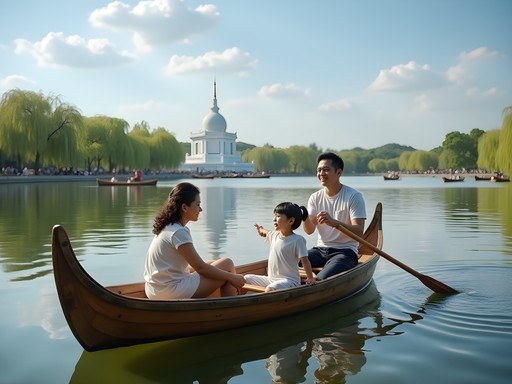
Standing at the entrance of the Forbidden City, my EMT training kicked in as I scanned the vast courtyard for potential hazards – old habits die hard. But this time, I wasn't responding to an emergency; I was beginning a week-long adventure through Beijing with my sister and her two energetic kids, ages 8 and 11. As someone who typically scales mountains solo or explores remote villages for their healing traditions, navigating China's ancient capital with children was an entirely different kind of adventure. Yet I discovered that Beijing offers a remarkable balance of history, culture, and hands-on experiences that captivate young minds while still satisfying adult curiosity. The city exists in fascinating duality – where ancient temples share streets with sleek skyscrapers, and where traditional medicine shops operate next to cutting-edge science museums. For families willing to step beyond their comfort zones, Beijing reveals itself as an unexpectedly welcoming classroom where kids can touch, taste, and traverse thousands of years of living history.

Conquering the Great Wall: Family-Style
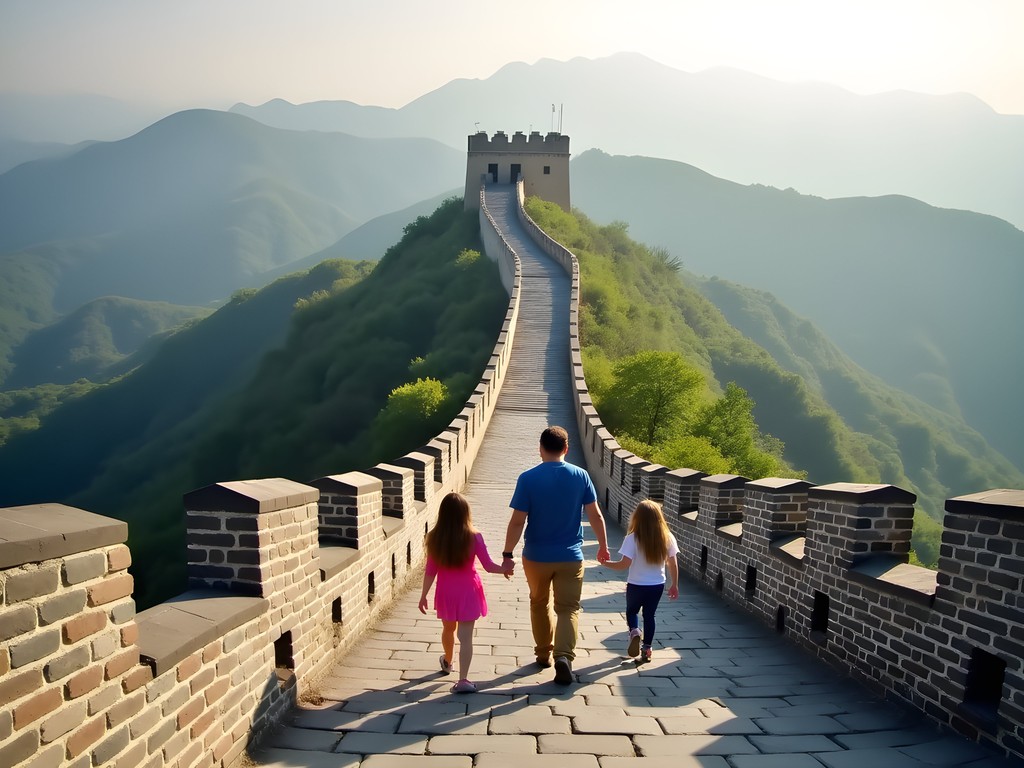
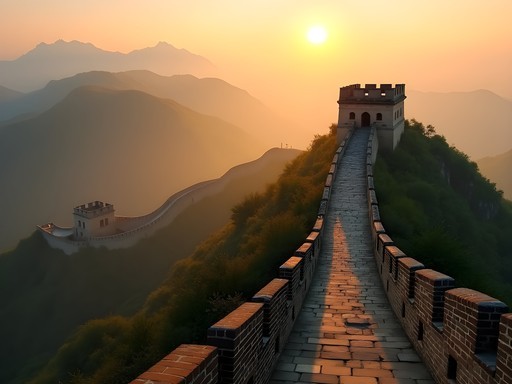
The Great Wall isn't just an adult bucket-list item – it's a playground of imagination for kids who've only seen such structures in movies or video games. After researching the most family-appropriate sections, we chose Mutianyu over the more crowded Badaling area. The investment in a private driver proved worthwhile, allowing us to arrive early before the midday crowds and summer heat.
My niece and nephew's eyes widened as we approached – 'It's like a dragon sleeping on the mountains!' my nephew exclaimed. Rather than tackling the steep climb with already-excited children, we opted for the cable car ascent, which became an adventure in itself as we glided over the forested hillside. Once atop the wall, the kids transformed into explorers, counting watchtowers and creating stories about ancient soldiers who once stood guard.
What surprised me most was how the physical structure became a tangible history lesson. My training in emergency medicine has taught me that experiential learning sticks far better than lectures, and watching my niece trace the ancient stonework while asking thoughtful questions about how it was built confirmed this theory. We packed a picnic lunch to enjoy at one of the watchtowers, creating a memory I know they'll carry forever.
For families with younger children or those concerned about stamina, I highly recommend bringing a comfortable child carrier for toddlers. My sister wished she'd had one during our previous travels, as little legs tire quickly on the uneven stone pathways. And don't underestimate the importance of sun protection – the wall offers little shade, and the elevation increases sun exposure.
💡 Pro Tips
- Visit Mutianyu section early (before 9am) to avoid crowds and midday heat
- Consider the cable car up and toboggan slide down for an exciting round trip experience
- Bring twice as much water as you think you'll need – the wall is more strenuous than it appears
Hands-On History: Interactive Museums That Captivate Kids
In my years of emergency response work, I've learned that engagement is the key to keeping anyone calm during stressful situations. The same principle applies to traveling with children through historically significant but potentially 'boring' (in kid-speak) attractions. Beijing excels at making history tactile and interactive in ways I didn't expect.
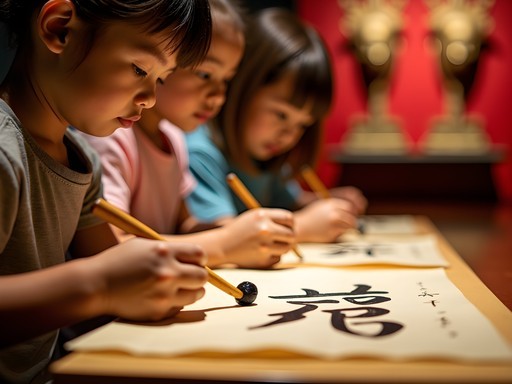
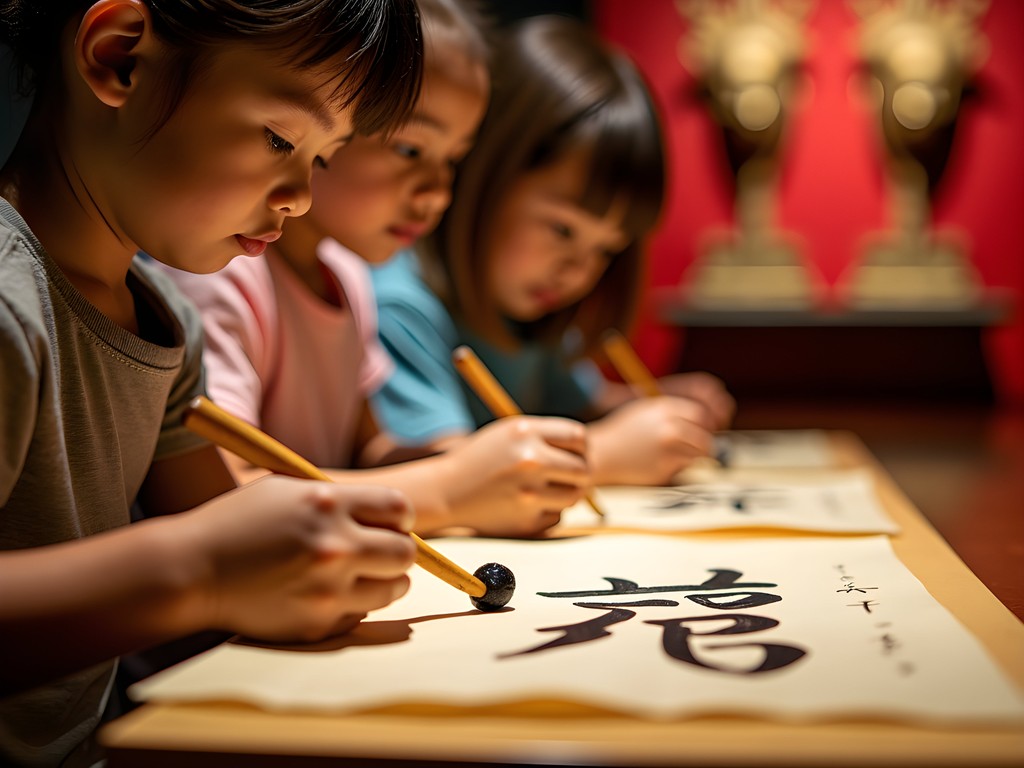
The Capital Museum surprised us all with its child-friendly approach to Beijing's 3,000-year history. Instead of endless display cases, we found hands-on exhibits where the kids could try Chinese calligraphy, operate shadow puppets, and even dress in replica historical costumes. My niece spent nearly an hour at the ceramic restoration station, carefully piecing together broken pottery replicas with the concentration of a trauma surgeon.
At the China Railway Museum (Dongjiao branch), my train-obsessed nephew was in heaven climbing aboard vintage locomotives. The museum staff, noticing his enthusiasm, gave him an impromptu lesson in Mandarin train terminology, which he proudly practiced throughout our trip.
The most unexpected hit was the Beijing Ancient Architecture Museum in Xiannongtan Temple, where traditional building techniques come to life through scaled models that kids can manipulate. The museum demonstrates how ancient Chinese buildings were constructed without nails using an ingenious system of interlocking wooden brackets. My nephew, who loves building things, was fascinated by the engineering principles that have withstood centuries of earthquakes.
Before visiting these museums, I downloaded simple Mandarin phrase cards to my kindle, which proved invaluable for helping the kids interact with exhibits and staff. The built-in dictionary and translation features made it easy to look up unfamiliar terms we encountered throughout the museums.
💡 Pro Tips
- Visit museums in the morning when children are freshest and crowds are thinner
- Ask at information desks about any special hands-on activities for children – many aren't advertised but are available upon request
- Bring a small sketchbook for kids to draw interesting artifacts – it helps them engage more deeply with what they're seeing
Culinary Adventures: From Dumplings to Peking Duck
My travels have always been guided by food trucks and local eateries – there's something about sharing food that transcends language barriers and cultural differences. In Beijing, involving kids in culinary experiences proved to be one of our most successful strategies for deepening their connection to Chinese culture.
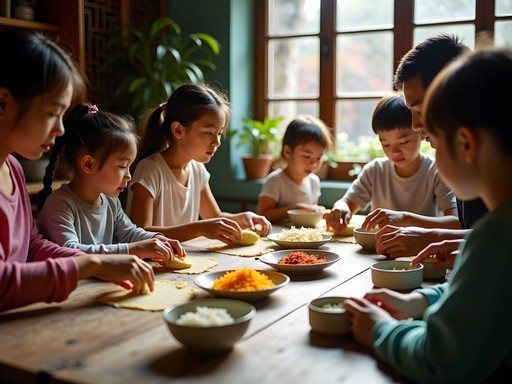
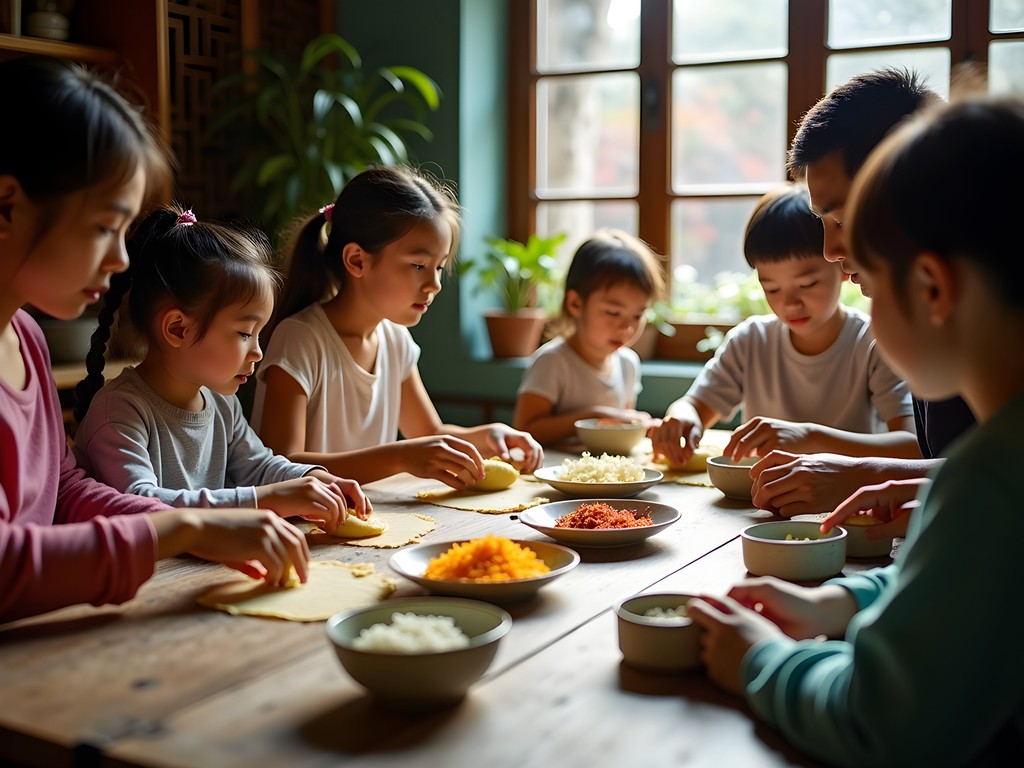
We started with a dumpling-making class specifically designed for families at The Hutong cooking school. What began as a potentially messy activity transformed into a lesson in precision and patience as my niece and nephew learned to fold the delicate wrappers around various fillings. Our instructor shared stories about the symbolic meanings of different dumpling shapes – wealth, longevity, family unity – adding cultural context to our culinary creation. The pride on their faces when they recognized their own handmade dumplings emerging from the steamer was priceless.
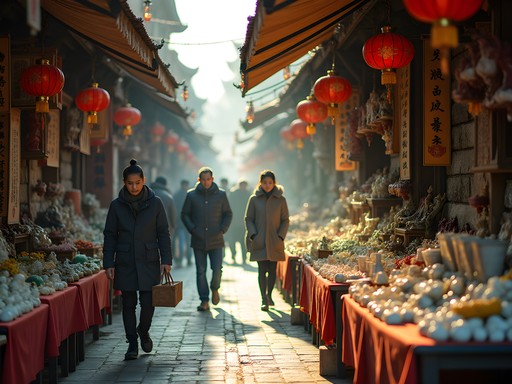
Navigating Beijing's street food scene with children requires some strategy. At Wangfujing Snack Street, we established a 'one brave bite' rule – everyone had to try something new, but no one had to finish anything they truly disliked. This approach led my normally picky nephew to discover an unexpected love for jianbing (savory crepes) while giving us all permission to politely pass on the scorpions on sticks.
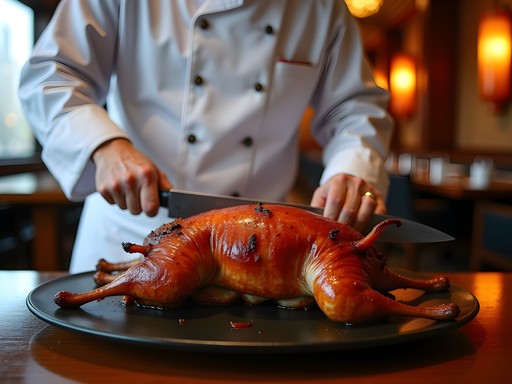
The culmination of our food journey was a Peking duck dinner at a mid-range restaurant called Siji Minfu near the Forbidden City. Rather than choosing one of the high-end duck restaurants, we opted for this more family-friendly establishment where the theatrical carving of the duck at our table captivated the kids. The restaurant provided illustrated instructions for assembling the perfect duck pancake, turning dinner into an interactive activity.
For families concerned about food safety while still wanting authentic experiences, I found the food tour invaluable for the first day of our trip. Their family-focused tour introduced us to safe, delicious local specialties while teaching us how to identify reliable food vendors for the remainder of our stay.
💡 Pro Tips
- Book a family cooking class early in your trip – the skills and food knowledge gained will enhance the rest of your culinary experiences
- Carry a small notebook for kids to create their own 'food passport' with ratings and descriptions of new foods they try
- Visit Yair Milk Dessert near Nanluoguxiang for traditional sweet dessert soups that appeal to most children's palates

Temple Adventures: Finding Sacred Geometry and Quiet Moments
My personal fascination with sacred geometry and healing spaces initially made me wonder if Beijing's temples would hold the children's interest. To my delight, these ancient spiritual sites became some of our most meaningful experiences when approached with the right framing.
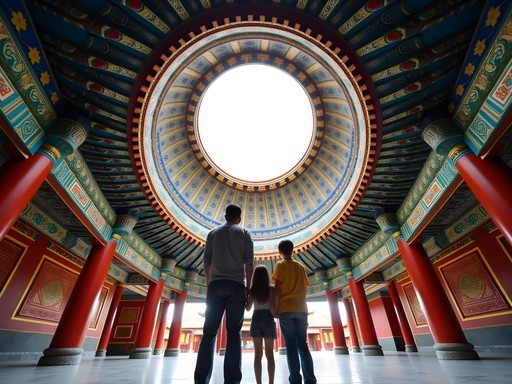
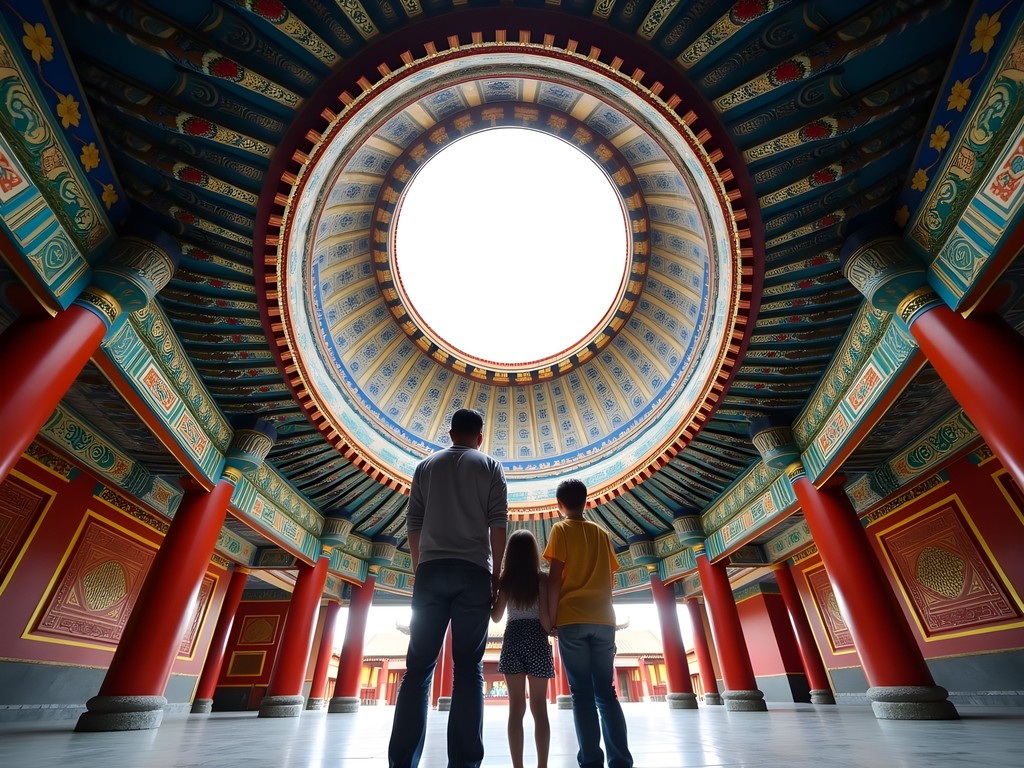
At the Temple of Heaven, we turned the visit into a scavenger hunt for specific symbolic patterns. I showed the kids how to identify the repeating circular motifs representing heaven and square elements symbolizing earth. The massive Echo Wall became an impromptu science lesson as they tested its acoustic properties, whispering messages to each other from opposite sides of the courtyard. The expansive grounds offered welcome green space for them to run freely after days of more structured sightseeing.
The Lama Temple (Yonghe Gong) presented a different kind of experience. Before entering, we discussed mindfulness and respect for active religious sites in terms children could understand. I asked them to notice how their bodies felt in different spaces and to observe the rituals without judgment. My niece became entranced by the butter lamp offerings, connecting them to candle lighting ceremonies from our own family traditions.
At the White Cloud Taoist Temple (Baiyun Guan), we timed our visit to witness the monks performing a ceremony. The rhythmic chanting created a surprisingly calming effect on the children. Afterward, an elderly practitioner demonstrated simple Tai Chi movements in the courtyard, and the kids mimicked his flowing gestures with surprising focus.
For families visiting multiple temples, I recommend investing in a quality travel journal for each child. Before our trip, I created simple temple passport pages they could stamp or draw in after each visit, transforming what could have been 'just another temple' into a collected set of unique experiences. This practice of mindful documentation mirrors techniques I've used in my EMT work to help people process complex experiences.
💡 Pro Tips
- Visit temples early in the morning when ceremonies are often taking place and energy feels more vibrant
- Create a simple meditation game where kids close their eyes for one minute and then share three sounds they heard – it teaches mindfulness while respecting the sacred space
- Bring paper for taking rubbings of stone carvings or wooden reliefs – many temples permit this and it creates a meaningful souvenir
Modern Beijing: Science, Technology and Urban Adventures
Beijing isn't just about ancient history – its cutting-edge side captivates children who might be growing weary of historical sites. Balancing old and new became our strategy for maintaining enthusiasm throughout the week.
The Beijing Science and Technology Museum became our rainy-day salvation with its five floors of interactive exhibits. The children were particularly mesmerized by the space exploration zone where they could experience a simulated rocket launch and the robotics area where they programmed simple movements. What impressed me was how many exhibits featured bilingual explanations and required no Mandarin knowledge to enjoy.
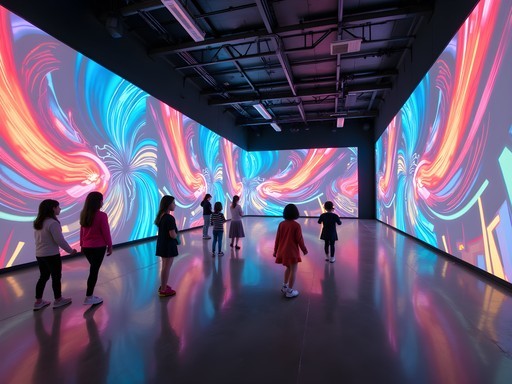
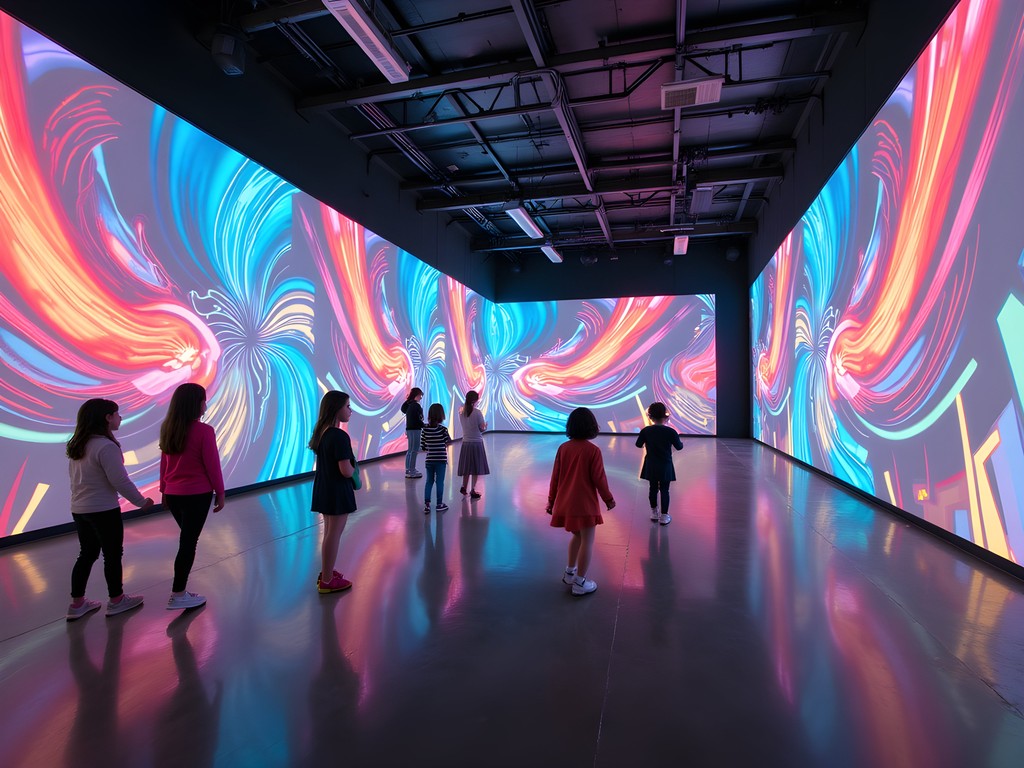
For a taste of contemporary Chinese culture, we spent an afternoon at the 798 Art District, where the industrial architecture has been transformed into galleries and workshops. I was initially concerned this would bore the kids, but many installations were playfully interactive. They especially loved the outdoor sculptures they could climb on and the digital art exhibits with motion sensors that responded to their movements. Several galleries had created child-friendly scavenger hunts that encouraged deeper engagement with the artwork.
The Olympic Park from the 2008 games provided another glimpse of modern Beijing. The iconic Bird's Nest stadium and Water Cube aquatics center are impressive from the outside, but the real highlight was the Water Cube's transformation into a massive indoor water park. After days of educational sightseeing, the children were ecstatic to simply play. My emergency medical training made me appreciate the park's excellent safety standards, with attentive lifeguards and clear rules explained via pictograms.
Navigating Beijing's extensive subway system became an adventure itself. The kids quickly mastered the color-coded lines and took pride in helping plan our daily routes. I downloaded the Beijing Subway Map to my phone, which works offline and was invaluable for calculating travel times and finding the most efficient connections between attractions.
💡 Pro Tips
- Purchase a rechargeable transportation card for each family member – kids love the independence of swiping their own cards
- Visit the Water Cube water park on a weekday to avoid long lines for slides
- Schedule modern attractions in between historical sites to maintain children's enthusiasm throughout your trip
Nature Escapes: Green Spaces and Outdoor Adventures
When sensory overload threatens in Beijing's bustling urban environment, seeking green spaces becomes essential for family harmony. As someone who finds healing in natural settings, I made sure to balance our cultural explorations with outdoor breathing room.
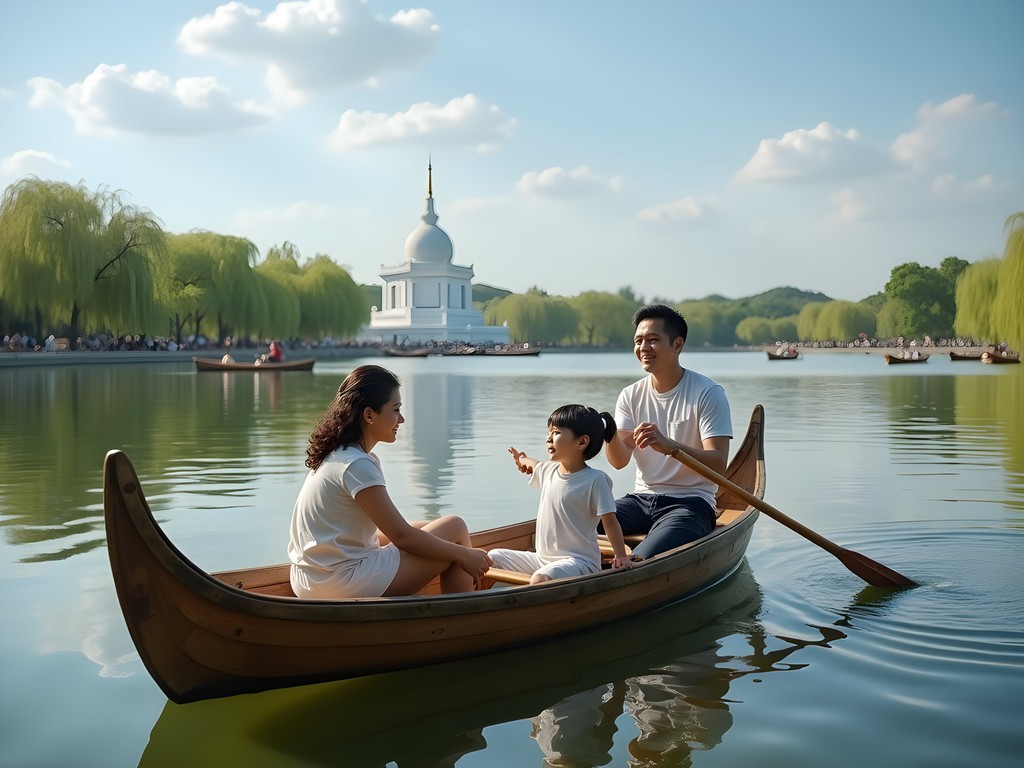
Beihai Park became our favorite morning ritual, joining locals practicing tai chi beside the lake. The kids were initially reluctant participants but soon found themselves mimicking the flowing movements. The enormous white stupa on Jade Island became a landmark challenge – climbing to the top rewarded us with panoramic views and rosy-cheeked children proud of their accomplishment. The park's traditional gardens introduced concepts of Chinese landscape design, where every rock and plant placement holds symbolic meaning – a connection to sacred geometry that fascinates me across cultures.
For a more immersive nature experience, we took a day trip to the Western Hills and Fragrant Hills Park (Xiangshan). The moderate hiking trails were manageable for the children, with plenty of pavilions for rest stops. The cable car to the summit saved little legs from exhaustion while offering spectacular views. During our autumn visit, the famous red maple leaves created a vibrant canopy that had the kids collecting the most perfectly shaped specimens.
Even within the city, Ritan Park provided unexpected wildlife encounters at its small lake, where the children spent a contemplative hour feeding koi fish and watching turtles sun themselves on rocks. A nearby tai chi master noticed their interest and offered an impromptu lesson, demonstrating how the slow, deliberate movements mimic animals in nature – a concept that resonated with my niece's love of dance.
For families visiting in summer, I recommend packing a portable water mister for each child. Beijing's heat can be intense, and these simple devices prevented overheating meltdowns during our outdoor adventures. My EMT background has taught me that prevention is always easier than treatment, especially when it comes to heat-related issues with children.
💡 Pro Tips
- Visit parks early morning (before 8am) to see locals practicing traditional exercises and avoid midday heat
- Pack a lightweight picnic blanket for impromptu rest stops – Beijing's parks have strict rules about not sitting directly on the grass in many areas
- Bring small binoculars for children to spot details in distant temple rooftops and observe birds in the parks
Final Thoughts
As our week in Beijing drew to a close, I watched my niece carefully wrap a small jade turtle she'd purchased as a souvenir, explaining to her brother that in Chinese culture, turtles represent longevity and wisdom. In that moment, I realized how deeply they had absorbed the cultural experiences we'd shared. Beijing had transformed from abstract history book pages to vivid personal memories – the taste of freshly made dumplings, the feel of ancient stones beneath their feet, the sound of temple bells carried on the wind. For families willing to step beyond the familiar, Beijing offers an unparalleled classroom where children can engage with both ancient traditions and cutting-edge innovations. The city challenged us, surprised us, and ultimately connected us – not just to Chinese culture but to each other through shared discoveries. As we prepare to leave, I'm reminded of a Mi'kmaq teaching from my grandmother: knowledge becomes wisdom when it's experienced with an open heart. In Beijing, even the youngest travelers can find that wisdom if you know where to look.
✨ Key Takeaways
- Balance historical sites with interactive experiences and outdoor activities to maintain children's enthusiasm
- Involve kids in culinary adventures as a gateway to understanding Chinese culture
- Use Beijing's efficient public transportation as part of the adventure rather than an obstacle
- Create simple games and challenges that transform potentially 'boring' historical sites into engaging experiences
📋 Practical Information
Best Time to Visit
Spring (April-May) or Fall (September-October) for mild temperatures and clear skies
Budget Estimate
$150-250 per day for a family of four (mid-range accommodations, local meals, attractions)
Recommended Duration
5-7 days
Difficulty Level
Beginner



Comments
winterqueen
Really useful post! One thing - download a VPN before you go. Google Maps doesn't work there and it's a lifesaver for navigating with kids in tow.
Casey Andersson
What a gorgeous read, Sage. Your EMT background coming through with the safety awareness made me smile - I'm the same way after years of travel mishaps! We took our friends' kids to Beijing two years ago and that Peking duck experience you mentioned at Quanjude was unforgettable. Watching the chef carve the duck tableside was like dinner theatre for the little ones. One tip I'd add: we hired a private guide for the Forbidden City and it was worth every yuan. She told stories about the emperors that had the kids absolutely captivated, turned what could've been boring palace halls into an adventure. Also, the 798 Art District has some surprisingly kid-friendly installations if you need a break from ancient history. The contrast between contemporary art and traditional temples really shows Beijing's incredible layers.
springseeker
Private guide is a great idea! Did you book in advance or find someone there?
Casey Andersson
Booked through our hotel concierge a few days before. They usually have good connections with English-speaking guides.
oceanguy
Going there next month! Super helpful timing.
Hunter Thompson
Brilliant post, Sage! I did Beijing solo last year but seeing it through a family lens is totally different. That bit about the interactive museums is spot on - the China Science and Technology Museum is absolutely massive and I saw loads of families there. The kids section has this incredible earthquake simulator that even I got excited about. Also have to say, the subway system there is so easy to navigate with the English signs, would definitely work well for families. Did you manage to catch any of the parks early morning? Seeing the locals doing tai chi is proper magical.
winterqueen
The parks in the morning are the best! We went to Temple of Heaven around 6am and it was incredible watching everyone.
oceanexplorer
Love the photos! That dumpling making class looks so fun.
springseeker
This looks amazing! Quick question - which section of the Great Wall did you go to with the kids? Planning our first trip and feeling overwhelmed!
Sage Dixon
We did Mutianyu! It has a cable car which makes it SO much easier with kids, plus it's less crowded than Badaling. The toboggan ride down was the highlight for my niece and nephew!
springseeker
Toboggan ride?? My kids would love that. Thanks!
Sarah Powell
Really appreciate the family angle here, Sage. I traveled Beijing solo last year and found the subway system incredibly efficient for getting around - I'm curious how manageable it was with kids in tow during rush hour? Also, your point about the interactive museums is spot on. The Science and Technology Museum near Olympic Park doesn't get enough attention but it's phenomenal for keeping kids engaged while parents actually learn something too. The pollution was my biggest concern when planning, so I'm glad you touched on that. Did you use any specific air quality apps to plan your outdoor days?
wavestar
We used the subway tons! Just avoid 8-9am and 5-6pm and you're fine honestly
dreamgal
Love the photos!
hikingstar
Quick question - how hard is the Great Wall with a 5 year old? My daughter is pretty active but I'm worried about the steep parts you mentioned. Did you do Mutianyu or Badaling?
wavestar
Not the author but we just did Mutianyu with our 6yo last fall and it was way better than Badaling! Less crowded and they have a toboggan ride down which kids LOVE
hikingstar
Ooh toboggan ride sounds perfect! Thanks!
wavestar
This is so helpful!! Planning our Beijing trip for this summer and totally saving this post!
Venture X
Premium card with 2X miles, $300 travel credit, Priority Pass