


Disclosure: This article contains affiliate links. We may earn a commission from purchases at no extra cost to you, which helps our travel content.
There's something magnetic about Beijing - this sprawling metropolis where ancient traditions crash into hyper-modernity at every corner. But after a week of navigating crowded hutongs and breathing in the city's particular urban perfume, I found myself craving the kind of vertical freedom that only mountains can provide. The kind that reminds me of those early climbing days back in college when I first realized that pushing physical limits could also be a spiritual practice.
Beijing might seem like an odd base for an adventure junkie like me, but trust me - this city sits at the doorstep of some seriously epic day trips that'll satisfy both your need for adrenaline and cultural immersion. From scaling restored and wild sections of the Great Wall to hiking sacred mountains where martial arts monks once trained, these five adventures have become my go-to escapes whenever the city's concrete jungle starts closing in. Grab your daypack, lace up those hiking boots, and let's break free from the tourist crowds to discover Beijing's wild side.

Jiankou to Mutianyu: The Great Wall's Wild-to-Mild Adventure
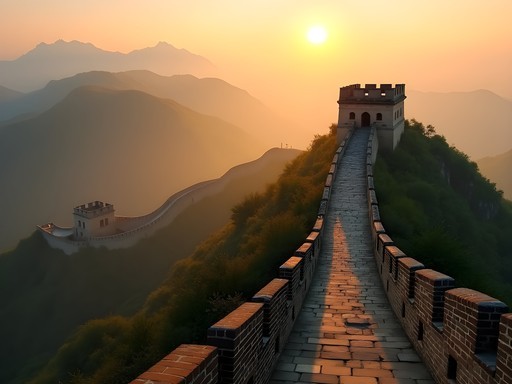
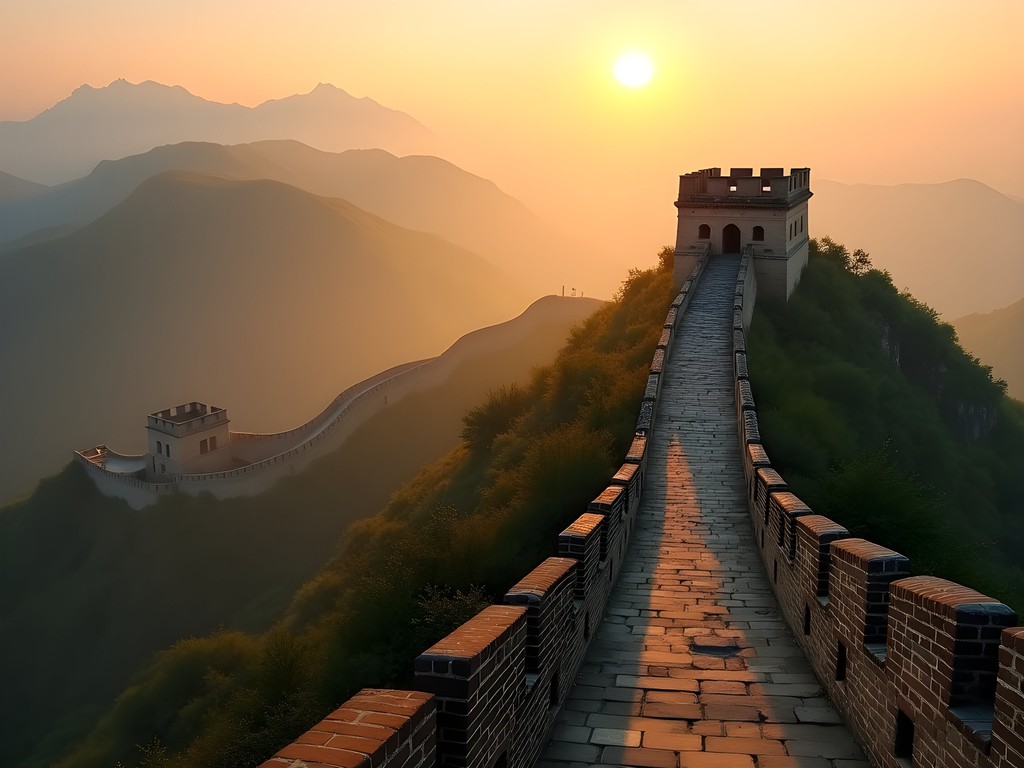
The moment my boots hit the crumbling stones of Jiankou's unrestored section, I knew this wasn't the Great Wall from postcards. This was my kind of Wall - raw, untamed, and demanding respect with every step.
This 9.3 km trek from the wild Jiankou section to the restored Mutianyu segment might be the perfect Beijing adventure. You start in near solitude on ancient crumbling stones that have weathered centuries without restoration, navigating steep ascents that would make my climbing buddies back in the Dolomites nod with approval. The route follows the mountain ridge with jaw-dropping views of the wall snaking across mountains in both directions.
What makes this hike special is the transition. You begin in wilderness and gradually make your way to the restored section at Mutianyu, watching the wall transform beneath your feet. It's like walking through centuries of history, from abandonment to restoration. The contrast is striking - from precarious footing and overgrown sections to perfectly maintained stones crowded with tourists.
The physical challenge reminds me of training for the Rome Marathon, but with better views and a deeper historical connection. There's something profoundly moving about placing your hands on stones that were laid over 500 years ago, feeling the same mountain winds that once buffeted Ming Dynasty guards.
My abuela would say there are spirits in ancient places like this. Standing alone on a watchtower at Jiankou as the morning mist burned away, I felt what she meant. Some places hold energy you can almost touch.
💡 Pro Tips
- Start early (around 7am) to avoid both crowds and afternoon heat
- Hire a local guide - the Jiankou trailhead is notoriously difficult to find
- Bring at least 2 liters of water - there are no refill stations until Mutianyu
Bouldering and Hiking at Baihe Canyon
Just 70 km northeast of Beijing lies a climber's playground that feels worlds away from the capital's chaos. Baihe Canyon (White River Canyon) in the Huairou District is where I go when my fingers start itching for some rock time.
The canyon cuts through the mountains with dramatic limestone and granite formations that create natural climbing routes ranging from beginner-friendly to seriously technical. What I love about Baihe is how it combines hiking with climbing opportunities - you can make your adventure as vertical as you want it to be.
The main trail follows the river upstream for about 10 km, crossing wooden bridges and passing by small waterfalls that provide perfect cool-down spots during summer months. But the real magic happens when you veer off onto the side paths that lead to hidden bouldering areas.
My favorite spot sits about 3 km into the canyon - a collection of house-sized boulders with routes that remind me of my first climbing gym back in Florida, except here, the backdrop is mist-shrouded mountains instead of concrete walls. I always pack my climbing shoes and enough chalk for a full day of problems. The rock quality isn't Fontainebleau, but there's something special about working out routes that few international climbers have touched.
Beyond the physical challenge, Baihe offers something I rarely find so close to a major city: genuine tranquility. On weekdays, you might encounter only a handful of local hikers and the occasional fisherman trying his luck in the clear waters. The canyon walls amplify the sounds of rushing water and birdsong, creating a natural meditation space that reminds me of those quiet moments in the Dolomites when the mountains seem to speak directly to your soul.

💡 Pro Tips
- Bring your own climbing gear - there are no rental shops nearby
- Download maps offline as cell service disappears deep in the canyon
- Visit on weekdays to avoid local weekend crowds
Spiritual Trek: Miaofengshan Mountain Pilgrimage
Some adventures feed the body; others feed the soul. The trek to Miaofengshan (Miaofeng Mountain) does both in ways that resonate deeply with the spiritual seeker in me.
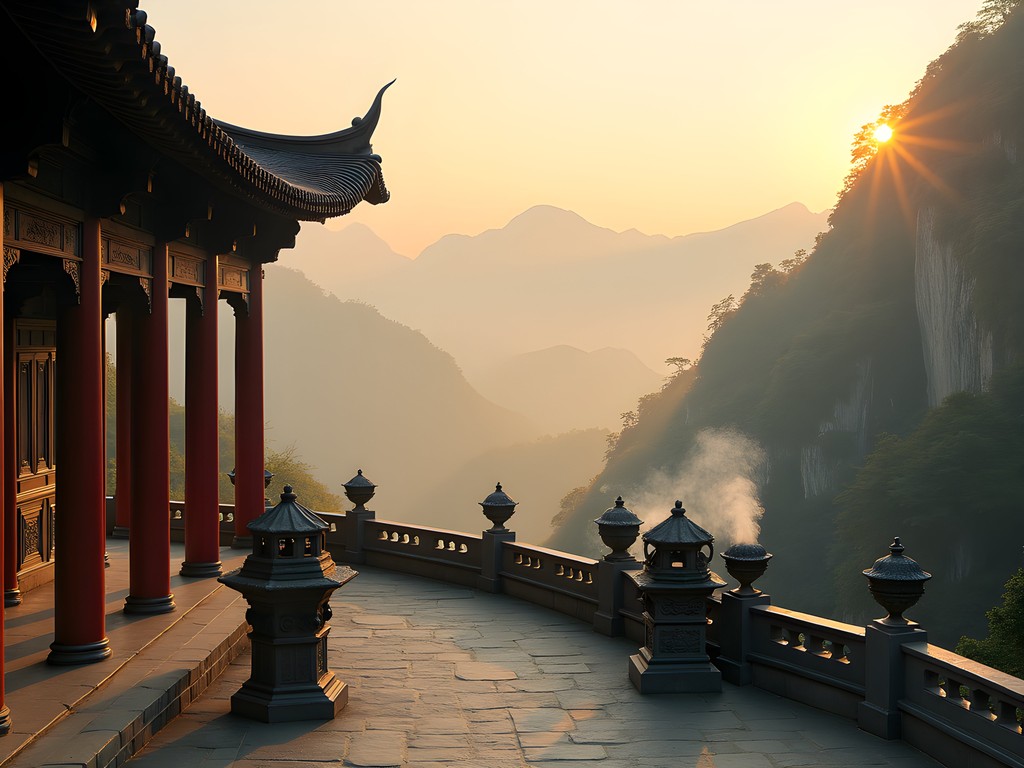
Located about 55 km west of Beijing, this 1,291-meter mountain has been a sacred pilgrimage site for centuries. The temple complex that crowns the summit dates back to the Tang Dynasty, though most buildings you'll see today are from the Ming and Qing periods. What makes this hike special isn't just the destination but the journey itself – a path that countless pilgrims have walked before you, each step a meditation.
The traditional pilgrimage route starts from Miaofeng Ancient Village, winding upward through forests of pine and cypress for about 10 km. The trail is marked by stone tablets and small shrines where you'll often see local elderly pilgrims stopping to burn incense or leave small offerings. It reminds me of watching my grandmother light candles at our church back in Hialeah – that same quiet reverence that transcends specific religious boundaries.
Unlike many mountain hikes that are purely about conquering elevation, this trail feels like a walking history lesson and spiritual practice combined. Ancient stone steps, worn smooth by centuries of faithful feet, lead you past caves where monks once meditated and stone markers inscribed with Buddhist and Taoist wisdom.
When you finally reach the temple complex at the summit, the panoramic views of the surrounding mountains create a natural cathedral. The main hall houses a statue of the Goddess of Fertility (Bixia Yuanjun), and during festival times (especially in April), the mountain comes alive with traditional performances, folk artists, and food stalls.
I've found that bringing my trekking poles makes the steep stone steps much easier on the knees, especially on the descent. The combination of physical effort, cultural immersion, and spiritual atmosphere creates exactly the kind of holistic experience I'm always searching for in my travels.
💡 Pro Tips
- Visit during the annual temple fair in April to experience traditional performances and ceremonies
- Bring offerings of fruit or incense if you wish to participate in temple rituals
- Start early to avoid afternoon thunderstorms common in summer months

Trail Running the Huanghuacheng Great Wall
As someone who's completed the Rome Marathon and regularly tracks miles in Florence's Cascine Park, finding good running routes is always a priority when I travel. In Beijing, I discovered the perfect trail run that combines endurance training with historical exploration: the Huanghuacheng section of the Great Wall.
Located about 60 km north of Beijing, Huanghuacheng (Yellow Flower Wall) offers a unique running experience where parts of the ancient wall actually disappear into a reservoir, creating a landscape where water, mountains, and human history intertwine. The name comes from the wild yellow flowers that blanket the mountainside in summer, creating a stunning contrast against the grey stone and blue water.
What makes this section perfect for runners is its varied terrain and relatively low visitor numbers. The route I've developed starts at the main entrance but quickly branches onto less-restored sections where you'll likely have the wall entirely to yourself. The 12 km loop I follow includes restored segments with even footing, wild overgrown sections where you'll need to watch your step, and mountain trails that connect different parts of the wall.
The run includes significant elevation changes as you climb and descend multiple watchtowers, making it an excellent training ground for trail runners. I track my runs with my GPS watch, which helps me compare my performance against previous visits - there's nothing like the motivation of beating your previous time up to watchtower five!
Beyond the physical challenge, running Huanghuacheng offers something truly special: moments of solitary connection with one of humanity's greatest monuments. There's a particular watchtower about 4 km in where I always stop to catch my breath and take in the view. Sitting there alone, legs burning pleasantly from the climb, watching the wall undulate across mountains in both directions – it's a runner's meditation that feeds both body and spirit.

💡 Pro Tips
- Bring trail running shoes with good grip - some sections are steep and slippery
- Carry extra water - the combination of elevation gain and exposure makes this more demanding than the distance suggests
- Take the earliest bus from Dongzhimen to have the wall mostly to yourself
Canyoning Adventure at Shidu Nature Park
When the summer heat in Beijing becomes unbearable, there's no better escape than the refreshing waters of Shidu Nature Park. Located about 100 km southwest of the city, Shidu (literally "Ten Crossings") gets its name from the ten times visitors cross the Juma River as they explore the karst landscape of towering limestone peaks.
While most tourists stick to the scenic boat rides and gentle walking paths, adventure seekers can find excellent canyoning opportunities in the park's hidden gorges. The first time I ventured here with a local adventure group, I was skeptical – could a place so close to Beijing really offer the kind of adrenaline rush I was used to finding in more remote locations? The answer was a resounding yes.
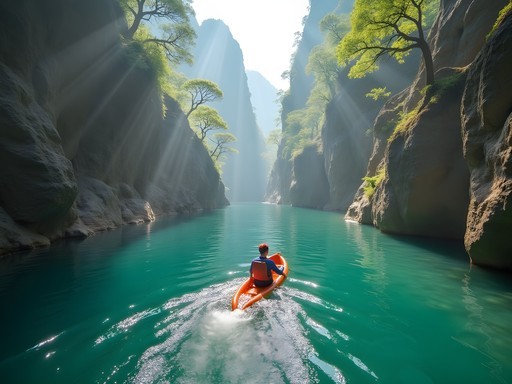
The canyoning route takes you through narrow gorges where limestone walls tower hundreds of meters overhead, creating cool, shaded passages even on the hottest summer days. The adventure involves swimming through emerald pools, scrambling over boulders, rappelling down small waterfalls, and jumping into deep natural pools (always check depth first!).
What makes Shidu special is how the adventure intertwines with the distinctive Chinese landscape that has inspired traditional paintings for centuries. You're essentially moving through a living scroll painting – mist clinging to karst peaks, twisted pine trees growing impossibly from rock faces, and the occasional glimpse of a distant temple perched on a hillside.
For this adventure, having a waterproof bag is essential to keep your valuables dry. I always bring my dry bag which has proven itself reliable through countless water adventures from Italy to China. The 10-liter size is perfect for a day trip, with enough room for a small towel, snacks, and a camera.
The full canyoning route takes about 5-6 hours to complete, though there are shorter options for beginners. While you can explore some parts independently, I recommend joining a guided group for the full canyoning experience, as local knowledge is essential for safety and finding the best routes through the gorges.

💡 Pro Tips
- Book a canyoning guide through one of Beijing's adventure groups like Beijing Hikers
- Wear quick-dry clothing and water shoes with good grip
- Visit on weekdays if possible - weekends can get crowded with domestic tourists
Final Thoughts
Beijing surprised me. Behind its facade of imperial palaces and modern skyscrapers, I discovered a gateway to adventures that challenge both body and spirit. These five day trips have become my sanctuary when the city's pace becomes overwhelming - places where I can reconnect with nature, history, and that essential feeling of moving through magnificent landscapes under my own power.
What makes these adventures special isn't just the physical challenge or the stunning scenery - it's how they weave together China's cultural heritage with natural wonders. Whether you're scrambling along an unrestored section of the Great Wall or finding your flow on Baihe's limestone, you're participating in a dialogue between human history and wild landscapes that feels both ancient and immediate.
So next time you find yourself in Beijing, look beyond the Forbidden City and hutongs. Pack your daypack, grab your partner, and discover how the mountains around this ancient capital can transform a city break into an adventure you'll remember for a lifetime.
✨ Key Takeaways
- Beijing offers world-class adventure opportunities within day-trip distance
- Combining cultural exploration with physical challenges creates deeper travel experiences
- Visiting these sites on weekdays dramatically improves your experience by avoiding crowds
📋 Practical Information
Best Time to Visit
September-October or April-May for ideal weather conditions
Budget Estimate
$50-100 per day trip including transportation, guides, and meals
Recommended Duration
5-7 days in Beijing to include city sights and 2-3 day adventures
Difficulty Level
Moderate (Can Be Adjusted Based On Fitness Level And Experience)




Comments
hikingwanderer
Planning to do the Huanghuacheng trail run in March. What's the terrain like? Should I bring trail runners or regular running shoes? Also how's the water situation - refill spots along the way?
Timothy Turner
Definitely trail runners - lots of uneven stone steps and rocky sections. Bring your own water, there's basically nothing once you're on the wall. I carried about 2L for a 3 hour run.
Claire Hawkins
Timothy, this brought back memories! We took our kids to Mutianyu last spring (skipped the wild Jiankou part obviously) and it was incredible. The cable car up made it doable with a 6 and 9 year old. What surprised me most was how quiet it was early morning - we practically had sections to ourselves before 9am. The toboggan ride down was the highlight for the kids. Beijing really does have this amazing duality of ancient and modern. Your Baihe Canyon recommendation is going on my list for when we go back without the little ones!
cityseeker
Wait there's a toboggan?? That sounds awesome!
Claire Hawkins
Yes! It's like a metal slide/luge thing down the mountain. Kids absolutely loved it.
adventurehero7800
How hard is the Jiankou section really? I've done some hiking but nothing too crazy. Also did you hire a guide or just go solo?
Timothy Turner
Jiankou is legit challenging - loose rocks, steep climbs, some scrambling involved. I went with a local guide from the village which I'd recommend for first-timers. The unrestored sections can be sketchy.
adventurehero7800
Thanks! That's what I figured. Better safe than sorry.
cityseeker
Wow this is exactly what I needed!! Didn't know Beijing had all this outdoor stuff!
sunsetone
Those Huanghuacheng trail running photos are incredible! Added to my bucket list!
Oliver Duncan
Mate, your Baihe Canyon recommendation is spot on! Just got back from Beijing last month and followed your advice. The bouldering there is fantastic for intermediates - challenging but not impossible. One tip for others: if you're going in summer like I did, start EARLY. By 11am it was scorching and the rock gets too hot to grip properly. Also, the little restaurant near the entrance makes amazing dumplings for post-climb refueling. I used my hiking shoes which were perfect for both the approach and scrambling around the boulders.
sunsetone
Thanks for the early start tip! Planning to go in August and wouldn't have thought about the hot rocks issue.
Oliver Duncan
No worries! And bring more water than you think you need - there's only one place to refill and the line gets long.
photoguide
That Jiankou section is no joke! Did it last summer and those steep sections had my knees crying. But totally worth it for those unrestored views without the crowds. Did you have trouble finding transportation back from Mutianyu? We ended up sharing a car with some German hikers we met on the wall because the buses were so infrequent.
Timothy Turner
Yeah, transportation can be tricky! I actually pre-arranged a driver to meet us at Mutianyu. Cost a bit more but saved the headache after an exhausting hike.
photoguide
Smart move! Will definitely do that next time.
Timothy Jenkins
Excellent guide, Timothy. I particularly appreciate your emphasis on the cultural aspects of Miaofengshan - it's refreshing to see adventure content that doesn't ignore the spiritual and historical significance of these sites. I spent three days exploring the temple complexes around Beijing last year and found the blend of pilgrimage culture and natural beauty quite profound. For readers interested in the deeper cultural context, I'd recommend timing your visit to coincide with one of the traditional festival days. The experience of hiking alongside local pilgrims adds an entirely different dimension to the journey.
globebackpacker
Solid list! I'd add that the best time for Jiankou is definitely spring or autumn. Summer is brutally hot with zero shade on those exposed sections, and winter can be icy and dangerous. Also, hire a driver for Jiankou - the public transport connections are a nightmare and you'll waste half your day just getting there. Cost me about 400 RMB round trip but so worth it to maximize hiking time. The Mutianyu toboggan at the end is touristy but honestly pretty fun after a hard hike!
wavemaster
The toboggan! Haha yes, such a random way to end an epic hike but I loved it
happypro
Baihe Canyon!! So underrated! We went last October and had the whole place basically to ourselves. The bouldering there is fantastic and the autumn colors were insane. Definitely bringing my climbing shoes back next time - the rock quality is surprisingly good. Thanks for putting this on more people's radar Timothy!
Venture X
Premium card with 2X miles, $300 travel credit, Priority Pass