

Disclosure: This article contains affiliate links. We may earn a commission from purchases at no extra cost to you, which helps our travel content.
There's something uniquely democratic about New York City's transportation system—a sprawling network where Wall Street executives and street performers alike share the same underground passages. As someone who spends my days weighing evidence and deliberating in courtrooms, I find a different kind of justice in NYC's public transit: the great equalizer that grants access to the city's magnificent tapestry regardless of one's means. During my recent fall weekend escape from Bangalore's judicial chambers, I discovered that mastering NYC's transit isn't just practical—it's the difference between experiencing the authentic heartbeat of the city and being relegated to its tourist arteries.

Decoding the Subway: Your Underground Legal Brief
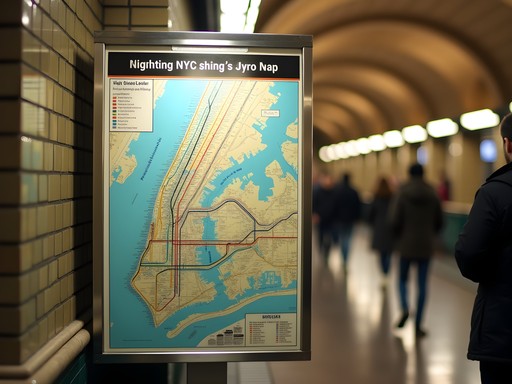
The NYC subway system operates like an intricate legal code—initially intimidating but governed by comprehensible principles once you understand its framework. Unlike the orderly legal systems I navigate professionally, the subway presents a beautiful chaos that somehow functions with remarkable efficiency.
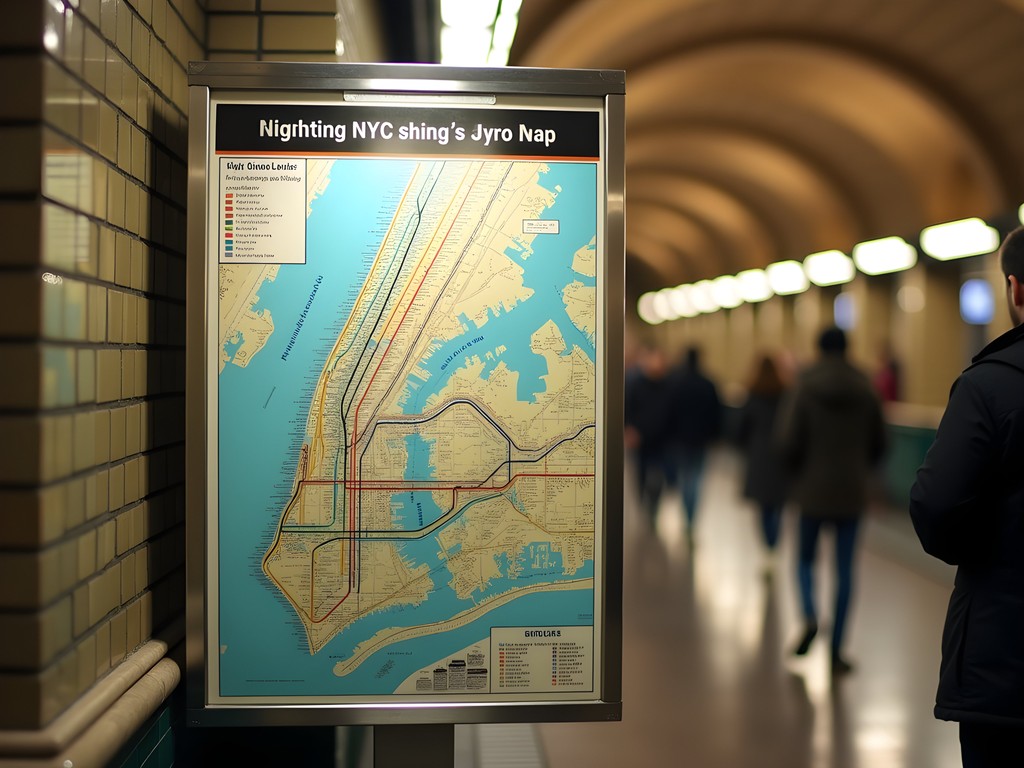
First, arm yourself with a digital guide. The NYC Subway Map app saved me countless times when signal was spotty underground. While Google Maps works well, this dedicated app functions offline and includes real-time service changes—the equivalent of last-minute amendments to legal proceedings.
Understand the fundamental distinction between local and express trains. Express trains are your summary judgment—skipping numerous stations to reach key destinations quickly. Locals make all stops, offering comprehensive coverage but requiring patience. When I needed to traverse from Lower Manhattan to the Upper West Side quickly, the express 2 or 3 trains shaved precious minutes off my journey compared to the local 1 train.
Pay attention to directionality—uptown versus downtown in Manhattan, Brooklyn-bound versus Queens-bound. Much like legal precedent, going the wrong way can set you back significantly. I once boarded an uptown train when I needed downtown, requiring a complete recalibration of my morning itinerary.
💡 Pro Tips
- Purchase a 7-day unlimited MetroCard for $33 if staying for a weekend—it pays for itself after 12 rides
- Stand clear of the closing doors and never hold them open—this isn't negotiable
- Position yourself near the subway map while riding so you can verify your route without smartphone dependency
The Bus System: NYC's Overlooked Transit Gem
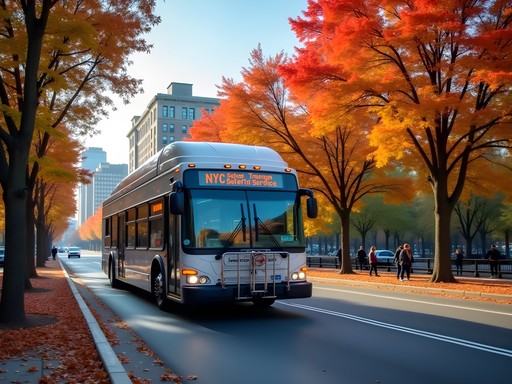
While the subway commands attention like a high-profile court case, the bus system operates as the diligent public defender of NYC transit—underappreciated yet indispensable. During my fall weekend exploration, I discovered buses offer spectacular advantages the subway cannot: panoramic city views, accessibility, and routes that fill subway gaps.
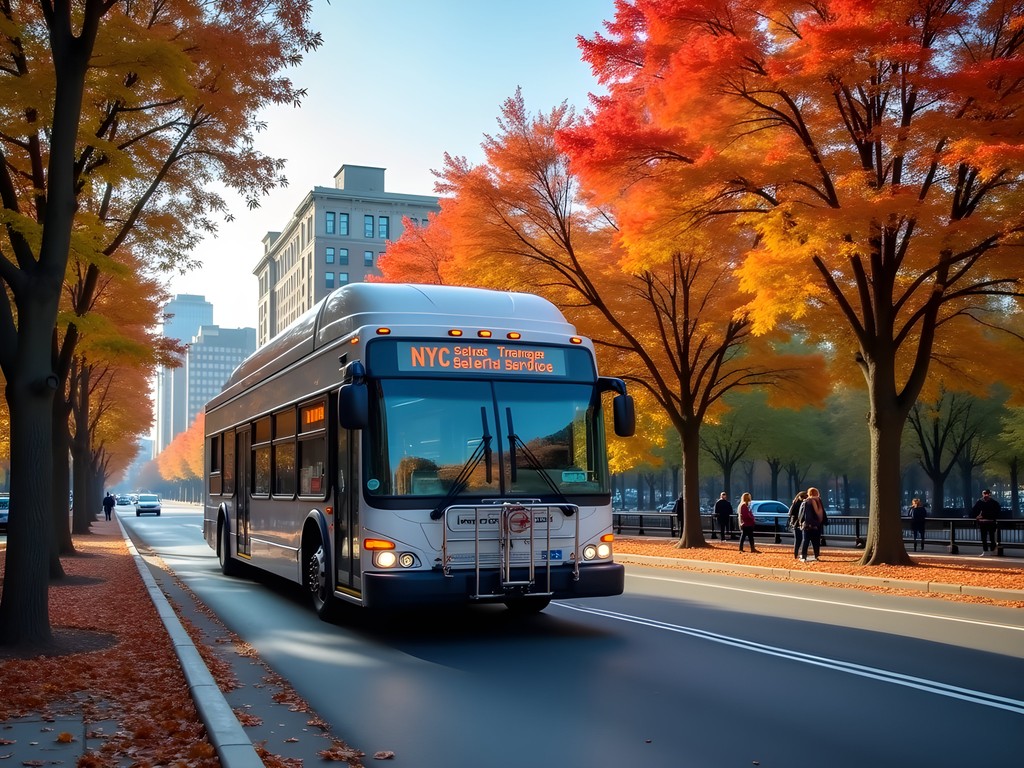
The M5 bus down Fifth Avenue provided me with a mobile courtroom view of Manhattan's architectural marvels and Central Park's autumn foliage—all for the same $2.75 fare as the subway. For travelers with mobility concerns, buses eliminate the stairs and long corridors that characterize many subway stations.
To master the bus system, download the NYC bus tracker app which provides real-time arrival predictions. Unlike subway trains that arrive every few minutes, buses can be less frequent, making timing crucial. The app functions like a reliable court clerk, keeping your schedule orderly and preventing unnecessary waiting.
Buses shine particularly when traveling crosstown—the M79 SBS (Select Bus Service) whisked me across Central Park in minutes, a journey that would require multiple subway transfers. These SBS routes operate like express legal proceedings, with dedicated lanes and off-board payment systems to expedite boarding.
💡 Pro Tips
- Board through the front door and exit through the rear on regular buses
- For Select Bus Service (SBS), pay at the curbside machines before boarding to avoid fines—consider it prepaid evidence of fare payment
- Pull the cord or press the strip along windows well before your stop to signal the driver
Walking Routes: The Constitutional Right to Explore
In my legal practice, I often reflect on how physical spaces shape human behavior and rights. Similarly, New York's walkability represents a fundamental freedom—the right to discover a city at human pace. Some of my most profound NYC experiences came not from planned destinations but from the spaces between them.
The High Line exemplifies this principle perfectly. This elevated park built on former railway tracks provides a unique vantage point above Chelsea and the Meatpacking District. Walking its 1.45-mile length one crisp October morning, I witnessed the city awakening—an experience no vehicular transport could provide.
For longer walks, invest in proper footwear. My cushioned walking shoes proved invaluable for covering 8-10 miles daily without the foot fatigue that would have otherwise limited my exploration. Think of comfortable shoes as essential infrastructure for urban exploration—just as solid legal foundations support complex cases.
When planning walking routes, consider the Manhattan grid system's efficiency. Avenues run north-south while streets run east-west. Each standard block between avenues equals approximately three street blocks—a ratio I kept in mind when estimating walking times. Generally, I allowed 1-2 minutes per east-west block and 3-4 minutes per north-south block, plus additional time for stopping to observe architectural details or cultural phenomena that caught my eye.
💡 Pro Tips
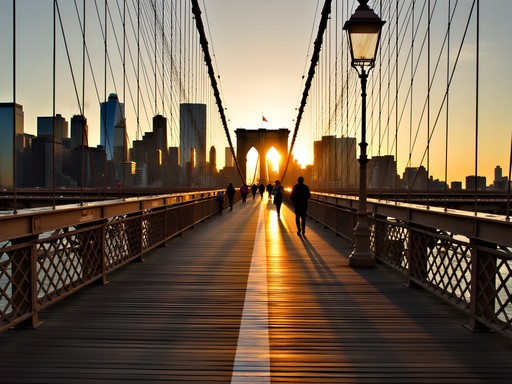
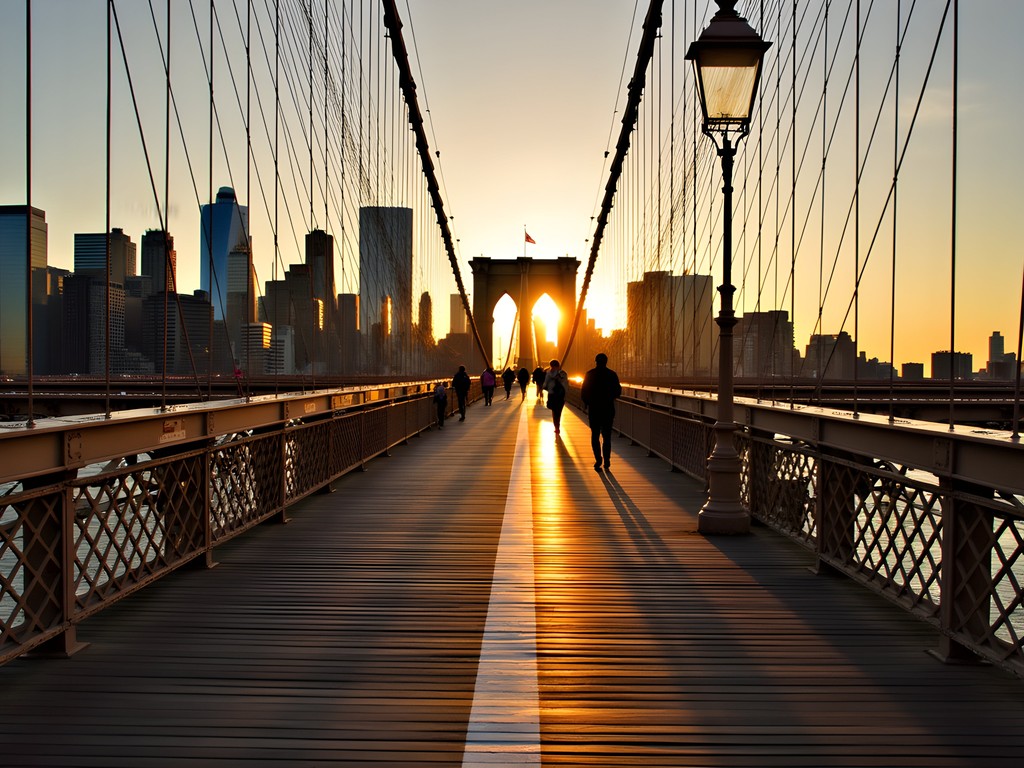
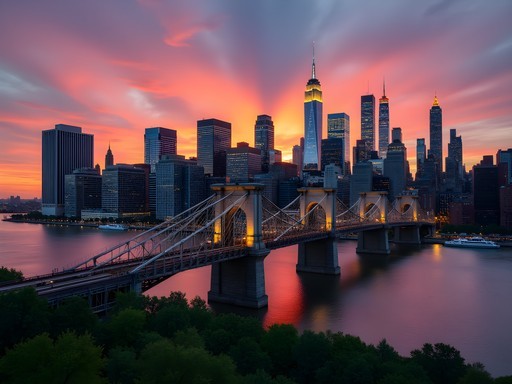
- Walk the Brooklyn Bridge at sunrise to avoid crowds and capture spectacular photos of the Manhattan skyline
- Use the Central Park transverse roads (65th, 79th, 85th, 97th Streets) as orientation landmarks when navigating the park
- For safety, stick to well-lit, populated streets after dark—I found the numbered grid system makes it easier to maintain orientation

Neighborhood Transit Personalities: Local Jurisdictions
Just as different courts have distinct procedural norms, each NYC neighborhood has its own transit personality. Understanding these local jurisdictions enhanced my navigation efficiency and cultural immersion.
In Midtown, the subway reigns supreme with major hubs at Times Square, Grand Central, and Herald Square offering connections to virtually everywhere. The density of yellow cabs makes hailing one straightforward, though traffic congestion often renders them less efficient than underground options.
Downtown areas like SoHo, Greenwich Village, and the Lower East Side reward walkers with architectural treasures and cultural discoveries on virtually every block. Here, I found the compact umbrella essential during a surprise autumn shower—it protected both me and my neighborhood walking map without becoming cumbersome when the sun returned.
Brooklyn's diverse neighborhoods connect to Manhattan via multiple subway lines, but internal Brooklyn travel sometimes requires bus transfers or strategic walking. The crossbody phone case proved invaluable here—allowing me to keep my phone accessible for navigation while maintaining awareness of my surroundings and freeing my hands for photography.
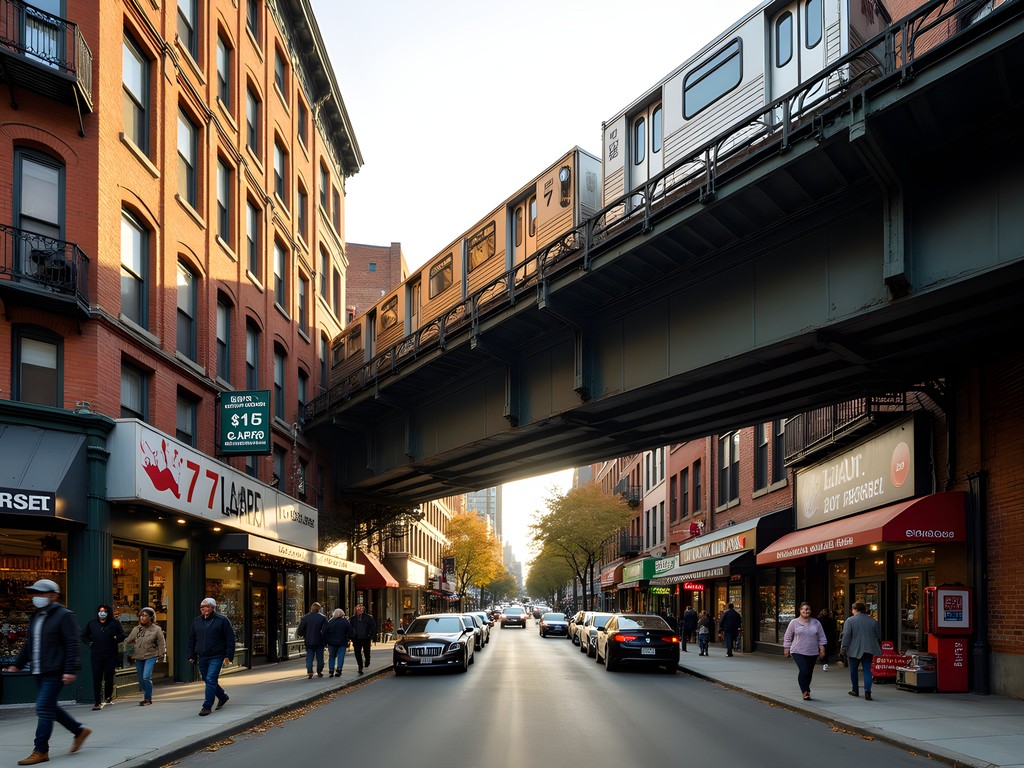
Queens presents greater transit challenges with fewer subway lines covering more territory, but rewards the intrepid explorer with authentic cultural experiences and superior culinary diversity. The 7 train—nicknamed the 'International Express'—served as my gateway to global cuisines in Flushing, Jackson Heights, and beyond.
💡 Pro Tips
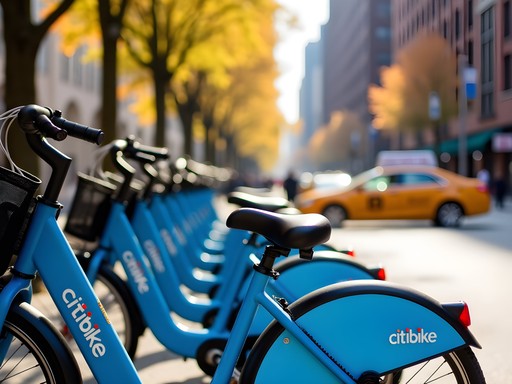
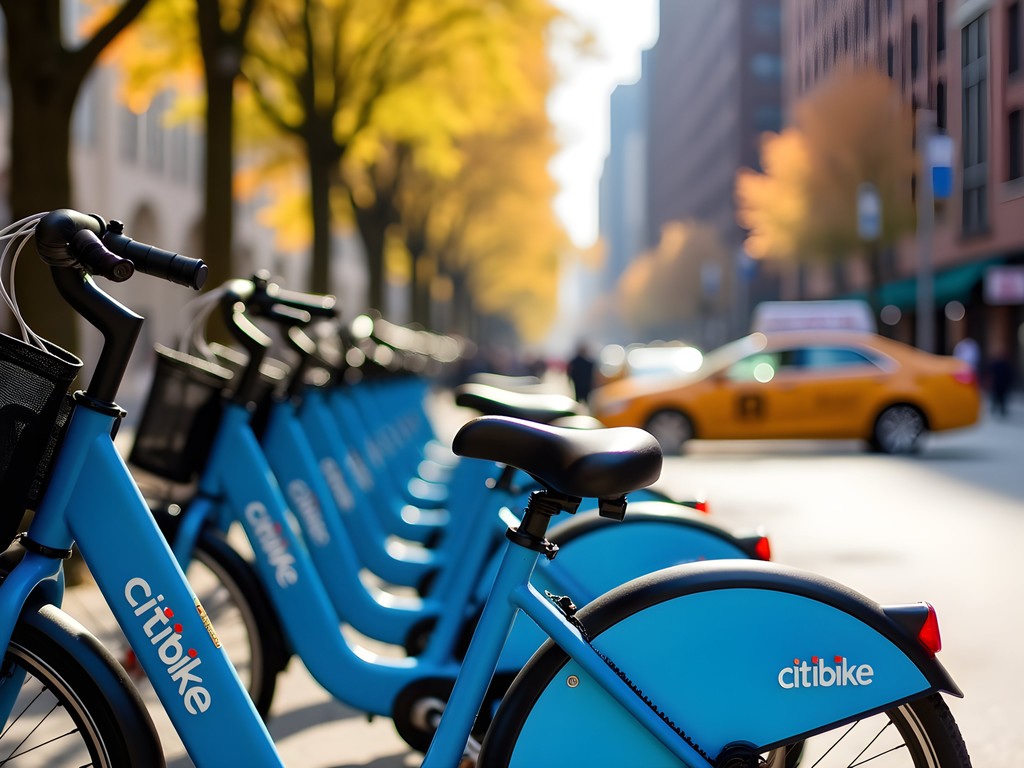
- Use Citibike for quick cross-neighborhood journeys when walking feels too far but subway seems inefficient
- In Brooklyn and Queens, plan extra travel time as subway service is sometimes less frequent than in Manhattan
- When exploring ethnic enclaves, learn basic greetings in the predominant language—this small gesture of respect often enhances the experience
Navigating Transit Disruptions: The Procedural Exceptions
In legal proceedings, we prepare for unexpected motions and objections. Similarly, NYC transit requires adaptability when service changes disrupt your carefully planned route. Weekend construction, special events, and occasional system failures demand alternative strategies.
The MTA's planned work schedule follows a consistent pattern: major maintenance typically occurs nights and weekends when ridership decreases. Before my weekend visit, I consulted the MTA service advisory app to identify planned disruptions affecting my routes. This preparation—like reviewing case files before court—prevented surprises and allowed me to plan alternatives.
When faced with unexpected service changes, I applied a principle from my judicial practice: seek multiple sources of information. Station announcements can be garbled, so I verified details with station agents, consulted my apps, and observed where locals were redirecting. During one significant delay, I pivoted to Citibike—the city's bike share program—which provided an invigorating alternative while offering street-level perspectives I would have missed underground.
For late-night travel, I balanced cost considerations with safety and convenience. While rideshares like Uber and Lyft offer door-to-door service, they command premium rates during peak times. For shorter distances, I found the subway generally safe even late at night, particularly at major stations and transfer points where police presence is common. However, I always prioritized stations with more activity and remained vigilant about my surroundings—the same awareness I maintain in unfamiliar legal territories.
💡 Pro Tips
- Check the MTA website or app before heading out on weekends to verify your planned route isn't affected by maintenance
- Have backup routes mentally prepared for common journeys
- For late-night travel, consider the additional cost of rideshares as an investment in safety and peace of mind
Final Thoughts
Navigating New York City's transportation system mirrors the practice of law in surprising ways—both require understanding complex systems, adapting to unexpected changes, and balancing efficiency with thoroughness. As I returned to my judicial chambers in Bangalore, I carried with me not just memories of iconic skylines and vibrant neighborhoods, but a deeper appreciation for how urban mobility shapes our experience of place and community.
Whether you have a weekend or a week, approaching NYC transit with confidence transforms the experience from potentially overwhelming to genuinely empowering. The subway, buses, and your own two feet provide access to authentic New York experiences that no tour bus could ever deliver. Like the most meaningful legal victories, the most rewarding travel moments often come from navigating challenges with resourcefulness and an open mind.
The next time you find yourself in this magnificent concrete jungle, remember that the journey between destinations isn't merely transition time—it's an essential part of the New York story, where democracy plays out in shared subway cars and on crowded sidewalks. In a city defined by perpetual motion, learning to move like a local is perhaps the most valuable skill you can develop. Case closed.
✨ Key Takeaways
- The subway system is most efficient for long distances, while buses excel for crosstown travel and scenic routes
- Walking offers the richest cultural immersion, especially in Manhattan below 59th Street
- Always have a backup plan for transit disruptions, particularly on weekends
- Different neighborhoods have distinct transit patterns—adapt your strategy accordingly
- Digital tools like transit apps are essential, but also develop an analog understanding of the city's geography
📋 Practical Information
Best Time to Visit
Fall (September-November)
Budget Estimate
$100-150 for a weekend of transit (including unlimited MetroCard, occasional rideshares, and Citibike)
Recommended Duration
2-3 days minimum to get comfortable with the system
Difficulty Level
Intermediate






Comments
freezone
Just got back from NYC and followed your neighborhood guide. The West Village was exactly as charming as you described!
Stephanie Romano
Ana, I love how you compared navigating NYC transit to practicing law - so true! Last spring we took our three kids (ages 6, 9, and 11) and I was terrified about the subway at first. But honestly? Within two days they were reading the maps better than me. The key for us was treating it like an adventure rather than just transportation. We'd pick a different line each day and explore wherever it took us. The 7 train to Queens for authentic dumplings became our favorite "off the beaten path" excursion. One tip I'd add: download the MTA app before you go. Real-time updates saved us from waiting on delayed platforms with cranky kids more than once!
coffeebuddy
The bus tip is gold! Never thought to use it over the subway
Stephanie Romano
Right?? We discovered this with our kids last year. The M15 up First Avenue became our favorite way to see the city without wearing everyone out!
coffeebuddy
Good to know! Heading there in March so I'll try that route
Sophia Gomez
This guide brings back memories of my first business trip to NYC when I got completely turned around at Penn Station! Now after dozens of trips, I've learned to embrace the controlled chaos. One trick I've discovered: if you're staying more than a few days, get the weekly unlimited MetroCard even if you don't think you'll use it enough - the convenience of hopping on/off without calculating fares is worth it. Also, the East River Ferry is both practical transportation AND a scenic cruise with the best skyline views - perfect for those client meetings in Brooklyn when I need to clear my head beforehand.
smartzone
Ana, your comparison of subway lines to neighborhood personalities is brilliant! The L train really is the hipster express and the 6 train perfectly captures that classic NYC rush. One thing I discovered on my last trip is that sometimes it's faster to get out and walk between close stations than to transfer lines. The MTA's countdown clocks were surprisingly accurate too - made planning so much easier. Can't wait to try those Upper West Side walking routes you mentioned next time!
summerking
Any recommendations for the best app to navigate the subway system? Going in December and want to be prepared!
Sage Dixon
Not Ana, but I swear by Citymapper! Used it during my three-week adventure documenting NYC neighborhoods last winter. It combines subway, bus, walking, and even Citi Bike options with real-time updates. The offline maps feature saved me when I lost signal deep in some stations. Google Maps works too, but Citymapper seems to understand NYC's transit quirks better, especially weekend service changes which nearly derailed my Brooklyn exploration plans twice!
summerking
Thanks Sage! Downloading Citymapper now.
summergal5152
Your walking routes section saved our trip! We followed your Greenwich Village to Chelsea Market walk and discovered so many cute shops we would've missed otherwise. The High Line at sunset was magical! One tip I'd add is to wear proper shoes - I averaged 20,000 steps daily. My compression socks were the only reason my feet survived all that walking!
escapediver
Is the subway safe late at night? Going next month and a bit nervous!
freezone
I've taken it until 2am and felt fine. Just stick to busier stations and cars with more people.
Sophia Gomez
As someone who visits NYC monthly for work, I'll add that the subway is generally safe but trust your instincts. After midnight, I sometimes splurge on rideshares if I'm alone. The NYC subway app is a must-have for real-time updates on service changes, which happen frequently late night. My rule of thumb: if a subway car is empty while others are crowded, there's usually a reason!
bluewalker
The neighborhood transit personalities section was spot on! I stayed in the East Village last month and it was exactly as you described - gritty charm with surprisingly efficient bus connections. One thing I'd add is that the CitiBike system is also worth trying if you're comfortable cycling in traffic. Perfect for crossing Central Park or cruising along the Hudson River Greenway!
smartzone
Totally agree about CitiBike! Just be careful about the time limits or you'll rack up charges fast.
bluewalker
Good point! I learned that lesson the expensive way on my first day 😅
freezone
This guide is a lifesaver! Used your subway tips last weekend and didn't get lost once.
Venture X
Premium card with 2X miles, $300 travel credit, Priority Pass