


Disclosure: This article contains affiliate links. We may earn a commission from purchases at no extra cost to you, which helps our travel content.
The city of Iquitos sits like a green island in Peru's northern Amazon, completely disconnected from the country's road network yet connected to the cosmos in ways that continue to astonish me. As an astronomer accustomed to remote locations, I've visited many isolated places, but nothing quite compares to this jungle metropolis where boats and planes replace cars and buses as primary transportation. After five visits spanning different seasons, I've compiled this comprehensive guide to help fellow adventurers navigate the unique transportation challenges of reaching—and exploring—this gateway to the Amazon.

Getting to Iquitos: Air Travel Options
Your journey to Iquitos will almost certainly begin by air, as this remarkable city is accessible only by plane or boat. From Lima, LATAM, Avianca, and Sky Airline operate daily flights (approximately 2 hours). During my most recent visit, I found that booking 2-3 months in advance secured the best fares, typically ranging from $100-200 USD each way.
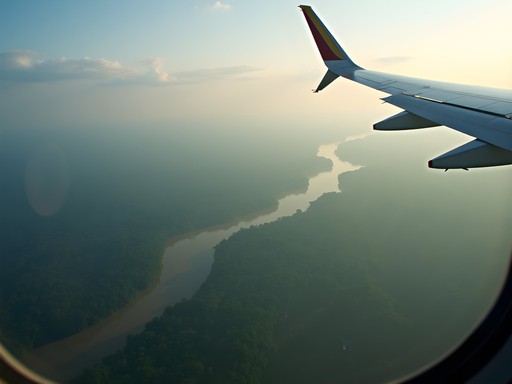
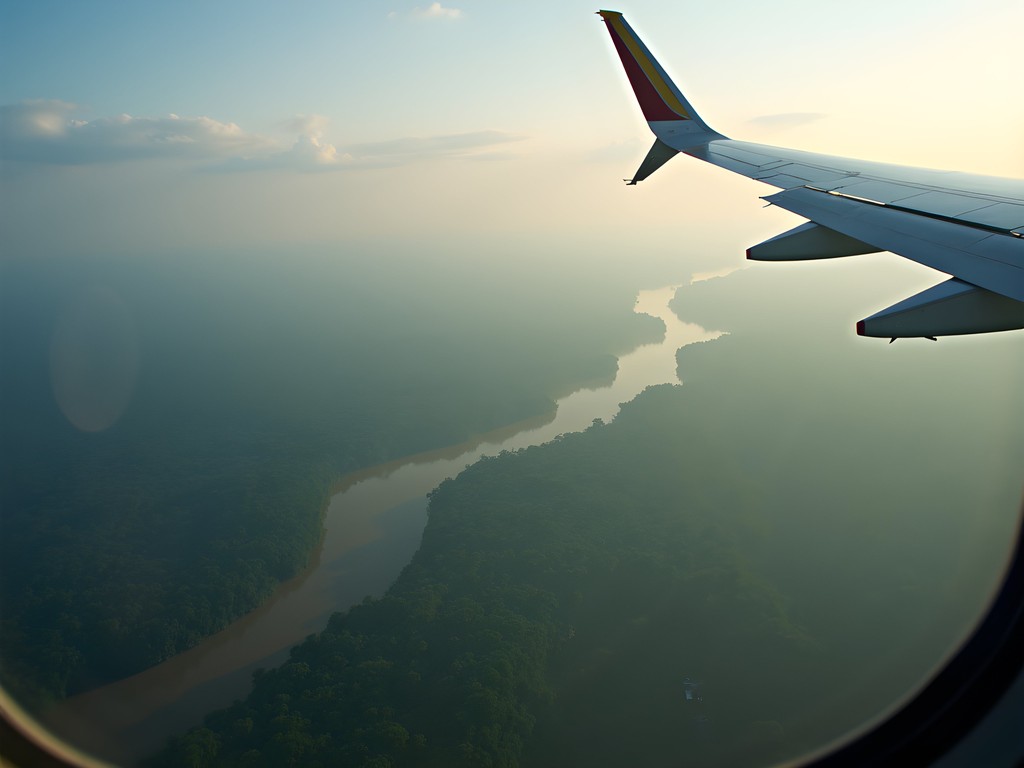
Flying into Iquitos offers a spectacular introduction to the Amazon Basin. Request a window seat to witness the dramatic transition from the Andes to endless emerald canopy, eventually broken only by the sinuous curves of the Amazon River. The airport (IQT) is surprisingly modern but relatively small, located about 7km from the city center.
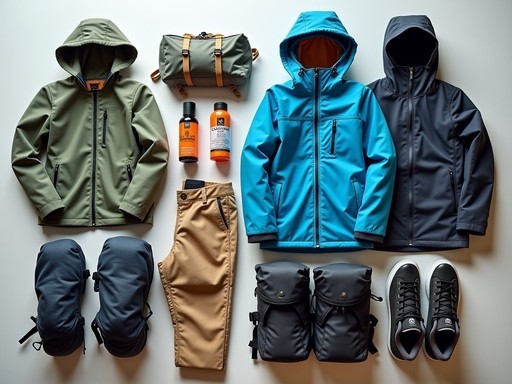
Upon landing, you'll immediately feel the thick, humid air envelop you—a stark reminder that you've entered one of Earth's most biodiverse regions. I always keep my moisture-wicking shirt handy in my carry-on for a quick change before stepping into the jungle heat. The breathable fabric makes the transition to the Amazon climate much more comfortable.
💡 Pro Tips
- Book flights 2-3 months in advance for best rates
- Choose morning flights to avoid afternoon thunderstorms common in the Amazon
- Download offline maps before arrival as internet connectivity can be spotty
River Travel: The Ancient Highway of the Amazon
The rivers surrounding Iquitos—primarily the Amazon, Nanay, and Itaya—serve as the region's highways, connecting communities that have relied on water transport for millennia. Much like ancient Polynesian navigators who used stars to cross vast oceans, local boat captains possess an intimate knowledge of the river's moods and channels that no GPS can replicate.
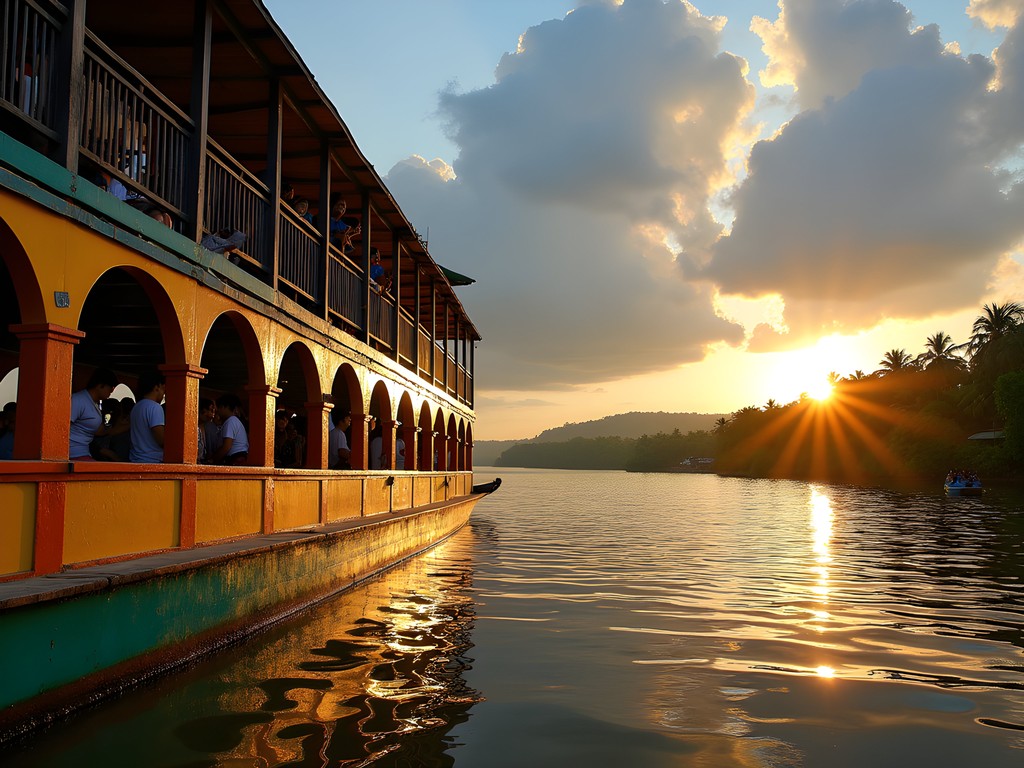
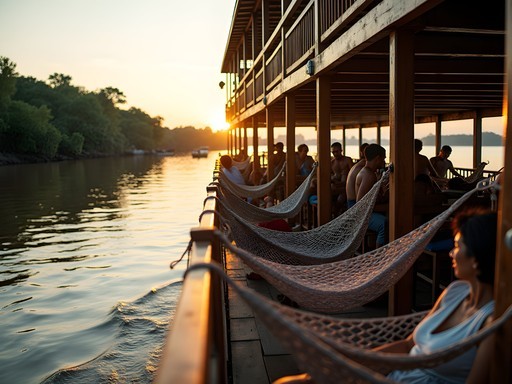
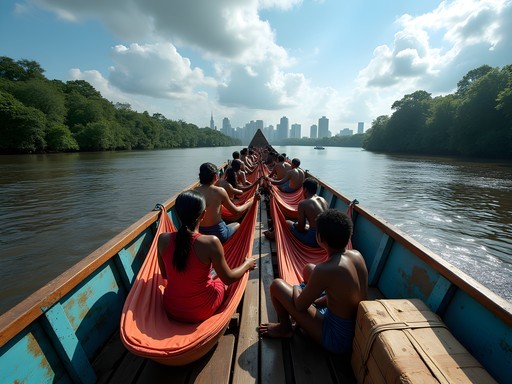
For longer journeys to remote communities or neighboring countries, cargo boats called lanchas offer multi-day trips. These floating villages carry everything from produce to livestock, and yes, passengers. I spent three unforgettable nights on a slow boat to the tri-border area where Peru meets Colombia and Brazil, sleeping in a hammock under brilliant stars while the boat gently navigated the river.
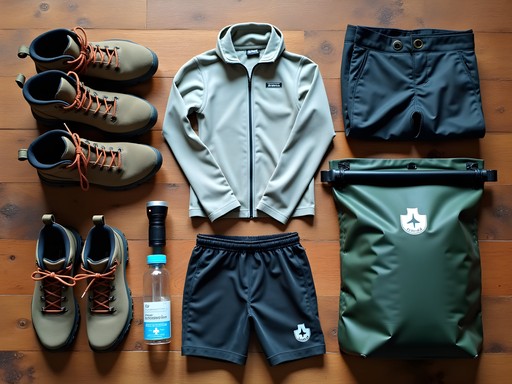
For this type of journey, a quality hammock is essential. My camping hammock has accompanied me on countless river journeys—lightweight, quick-drying, and comfortable enough for multiple nights. Equally important is protection from the elements and insects. A waterproof dry bag keeps electronics and documents safe during sudden downpours or splashy boat transfers.
Remember that river travel follows nature's schedule, not man's. Water levels can alter journey times dramatically between wet and dry seasons, and departures often happen when the boat is full rather than at a specific time.
💡 Pro Tips
- Purchase hammocks locally in Iquitos markets for authentic quality and to support local artisans
- Bring plenty of small bills for food purchases from floating vendors
- Pack motion sickness medication if you're sensitive to the boat's gentle rocking
Navigating Iquitos: Motorbikes, Mototaxis, and Walking
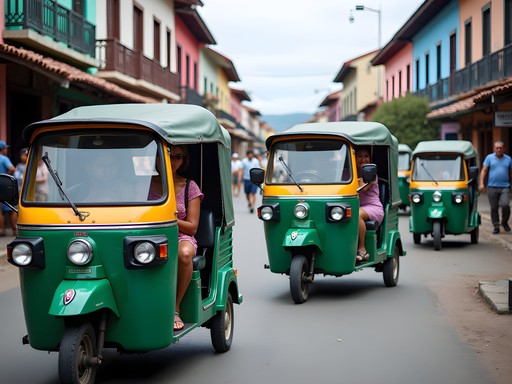
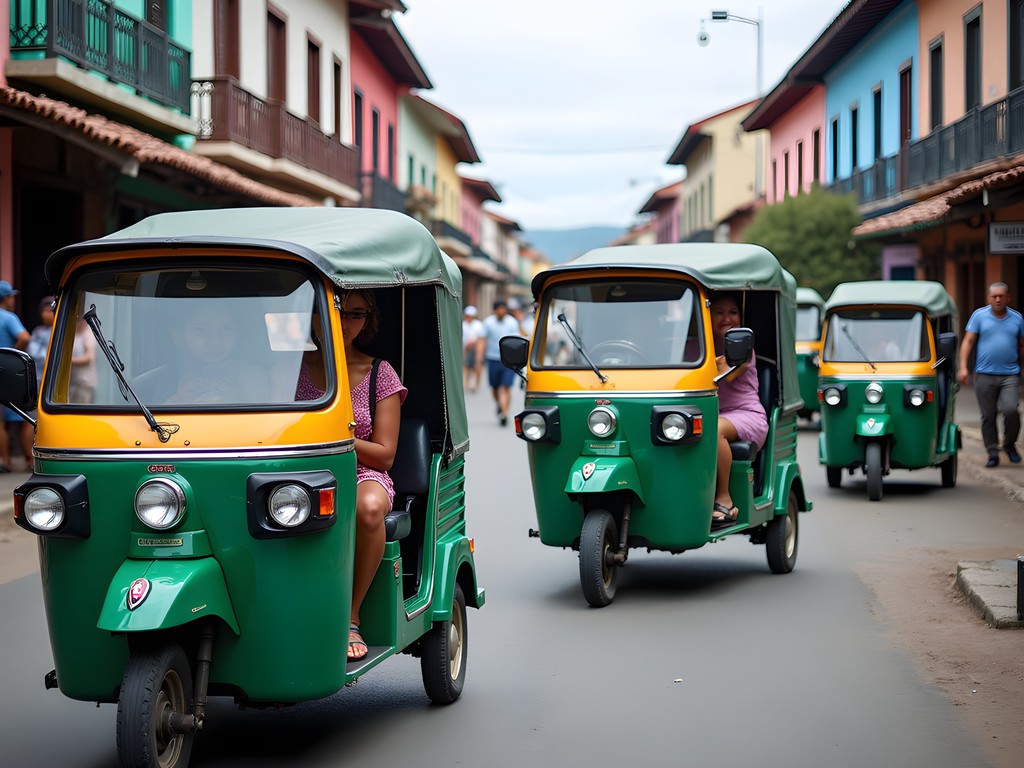
Within Iquitos itself, the ubiquitous mototaxis (motorized rickshaws) create a symphony of buzzing engines that forms the city's soundtrack. These three-wheeled vehicles are the primary mode of transport, costing 3-5 soles ($0.80-1.50 USD) for most trips within the city.
During my stays, I've found that negotiating the fare before entering is essential, as tourists often receive inflated initial quotes. A simple "¿Cuánto cuesta a [destination]?" followed by a friendly counter-offer usually results in a fair price. The mototaxi experience itself is part of the adventure—open-air travel that connects you intimately with the city's rhythms and aromas.
For those staying longer or wanting more independence, motorcycle rentals are available from several shops near the Plaza de Armas, typically costing 60-80 soles ($16-22 USD) per day. I rented from Moto Adventures Iquitos on Putumayo Street and found their bikes well-maintained and their staff knowledgeable about local conditions.
The city center is relatively compact and walkable, particularly the malecón (riverfront promenade) and the historic district with its rubber boom-era architecture. Early mornings or evenings provide the most comfortable walking conditions, as midday heat can be intense. I never explore without my cooling towel which, when wet, provides remarkable relief from the humidity through evaporative cooling.
💡 Pro Tips
- Learn basic directions in Spanish to communicate effectively with mototaxi drivers
- Carry a business card from your hotel/lodging for easy returns if language barriers arise
- Walk the malecón at sunset for spectacular river views and cooler temperatures

Into the Jungle: Lodge Transfers and Expedition Transport
For many travelers, Iquitos serves as the jumping-off point for deeper Amazon experiences at jungle lodges or on expedition cruises. Most reputable lodges include transportation as part of their packages, typically combining road transport to a river port followed by boat transfers of varying distances.
During my astronomical research expeditions to observe the pristine night skies above the Amazon, I've stayed at lodges ranging from 30 minutes to 4 hours from Iquitos. The journey itself becomes progressively more immersive the further you travel, as signs of urbanization fade and wildlife sightings increase.
For independent travelers arranging their own transport to more remote areas, the ports of Bellavista-Nanay and Productores serve as hubs for hiring boat transport. Expect to negotiate both price and departure time, as schedules remain fluid. For longer jungle expeditions, I've found that a solar charger is indispensable for keeping essential devices powered where electricity is scarce or non-existent.
When venturing into remote areas, waterproof protection for your gear becomes non-negotiable. My waterproof phone case has saved my documentation capabilities on numerous occasions when sudden downpours or boat splashes threatened my electronics. For nighttime navigation and stargazing sessions, a headlamp with both white and red light modes (to preserve night vision) has proven essential.

💡 Pro Tips
- Book lodge stays that include transportation to simplify logistics in this complex region
- Pack essential medications and first aid supplies for remote journeys
- Learn the Spanish words for basic directions and transportation terms
Celestial Navigation: Stargazing Transportation Tips
As an astronomer, one of my primary motivations for visiting Iquitos has been to document both the pristine night skies and the rich astronomical traditions of indigenous communities. The Amazon offers extraordinary stargazing opportunities, but accessing ideal viewing locations requires specialized transportation considerations.
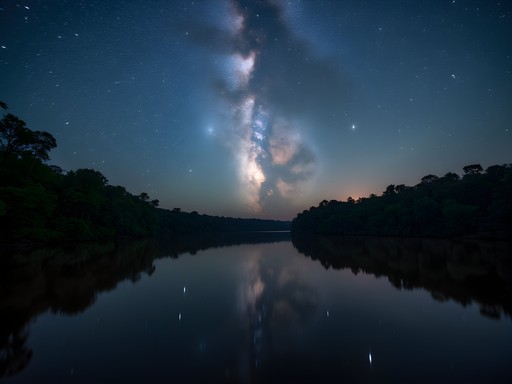
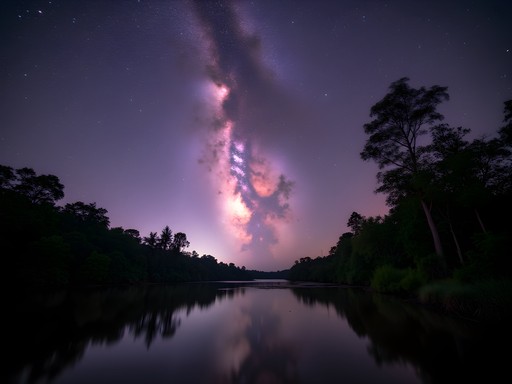
For serious astronomical observation, I've arranged custom night boat trips through lodges or local guides. These excursions take advantage of the region's natural waterways to escape light pollution, allowing unobstructed views of both the celestial sphere and its perfect reflection on still river waters. The experience of floating silently while observing the cosmos mirrored in the Amazon is profoundly moving—a reminder of how celestial navigation has guided humans across both land and water for millennia.
When planning night excursions, safety becomes paramount. I always bring a personal locator beacon for emergency situations in remote areas. For documenting both astronomical phenomena and night journeys, a travel tripod sturdy enough to handle long exposures yet compact enough for travel has been invaluable.
Many indigenous communities around Iquitos maintain rich astronomical knowledge systems that have guided their agricultural, hunting, and cultural practices for generations. When visiting such communities, I arrange transportation through cultural guides who understand appropriate protocols and can facilitate meaningful exchanges about celestial knowledge.

💡 Pro Tips
- Book night boat excursions during the new moon phase for optimal stargazing conditions
- Bring insect repellent specifically formulated for evening use when mosquitoes are most active
- Allow your eyes 20-30 minutes to adjust to darkness for the best stargazing experience
Final Thoughts
Navigating Iquitos and its surrounding wilderness requires adaptability, patience, and a willingness to surrender to the river's rhythms. Unlike destinations connected by predictable road networks, transportation here follows patterns established over centuries of human adaptation to the mighty Amazon. This is a place where celestial navigation still matters, where boat captains read the water like astronomers read the sky, and where the journey itself becomes as profound as any destination.
As you plan your own Amazon adventure, remember that the transportation challenges of reaching and exploring this remarkable region are not obstacles but gateways to deeper understanding. By traveling as the locals do—by river, by mototaxi, by foot—you'll experience the Amazon as it has been experienced for generations: not as a wilderness to be conquered but as a complex living system to be navigated with respect and wonder.
In my travels across five continents, I've found few places that connect Earth and sky as powerfully as the Amazon. Whether you're seeking adventure, biological diversity, cultural exchange, or—like me—perfect night skies, the journey to and through Iquitos will transform your understanding of what it means to truly travel. The stars above the Amazon have guided explorers for centuries; now it's your turn to follow where they lead.
✨ Key Takeaways
- Air travel is the most practical way to reach Iquitos, with daily flights from Lima
- River transportation follows natural rhythms rather than fixed schedules—build flexibility into your plans
- Mototaxis provide the most efficient way to navigate within Iquitos itself
- Most jungle lodges include transportation packages that simplify logistics
- Prepare for varied transportation modes by packing waterproof gear and appropriate clothing
📋 Practical Information
Best Time to Visit
year-round, though June-September offers lower rainfall and better stargazing conditions
Budget Estimate
$50-100/day excluding lodges; jungle lodges $100-300/day all-inclusive
Recommended Duration
minimum 5 days, ideally 10-14 days
Difficulty Level
Moderate To Challenging


Comments
smartbuddy8763
is it safe to walk around at night or should we stick to mototaxis?
Sarah Powell
Stick to well-lit main streets if walking at night, but honestly mototaxis are so cheap it's worth just taking them after dark. Standard safety precautions apply.
Sarah Powell
Peter's point about surrendering to the river's rhythms really resonates. I spent three weeks in and around Iquitos doing research for a piece on Amazon conservation, and the biggest adjustment was letting go of rigid schedules. River levels dictate everything - lodge transfers, boat departures, even which communities you can visit. The public speedboats to Nauta are actually a great way to see local life if you're not on a tight timeline. They leave when full, not on a schedule, which initially frustrated me but eventually became part of the charm. Pro tip: the colectivo boats to Santa Maria de Nanay are cheap and the floating restaurants there serve incredible fresh fish. Also, LATAM tends to have better on-time performance than the other carriers flying into Iquitos.
springbackpacker
Going in September!! This post answered literally every question I had about getting around. Can't wait to experience the Amazon properly!
moonphotographer
Love the photos!
Stephanie Romano
We took our two kids (8 and 11) to Iquitos last summer and it was honestly one of our best family adventures ever. The mototaxis were a huge hit with the kids - they thought it was like a real-life video game navigating through the streets! We stayed at a lodge about 90 minutes upriver and the boat transfer at dawn was magical. One tip Peter didn't mention: negotiate your mototaxi prices before getting in, and don't be shy about it. We learned that the hard way on day one. Also, the Belen market is absolutely worth visiting but go early morning. The energy, the exotic fruits, the fish from the river - it's sensory overload in the best way.
smartbuddy8763
which lodge did you stay at? looking for family friendly options
Stephanie Romano
We stayed at Ceiba Tops - it has a pool which was great for the kids after jungle hikes, and the guides were amazing with children.
globeace
This is SO helpful!! Been dreaming about Iquitos for years and finally booking for August. The mototaxi info is exactly what I needed!
springrider
how long does the river boat from pucallpa actually take? thinking about doing it instead of flying
Sarah Powell
It's typically 3-4 days depending on water levels and stops. I did it in 2023 and it was an incredible experience, but definitely not for everyone. Bring a hammock and lots of patience!
springrider
thanks! might just fly lol
wanderlusthero
This is so helpful! Bookmarking for our trip in September
mountainlover
Do the jungle lodges arrange all the boat transfers or do you need to sort that separately? We're looking at staying at Ceiba Tops but the transport logistics seem confusing.
Hunter Thompson
Brilliant guide Peter! I spent 3 weeks in Iquitos last summer and the mototaxis were honestly my favourite part of getting around. Chaotic but so much fun. One tip I'd add - negotiate the price BEFORE you get in, and don't be afraid to walk away if it seems too high. I was paying about 3-5 soles for most trips around the city centre. Also the Belén market area is absolutely mental to navigate but worth experiencing at least once. The floating houses during high water season are unreal!
wanderlusthero
How safe are the mototaxis? Going with my partner in August and a bit nervous
Hunter Thompson
They're safe! Just hold on tight and try not to look at the traffic too much haha. Never had any issues and used them constantly.
Venture X
Premium card with 2X miles, $300 travel credit, Priority Pass