
Disclosure: This article contains affiliate links. We may earn a commission from purchases at no extra cost to you, which helps our travel content.
The Amazon rainforest has long been revered as a sanctuary of biodiversity, but beyond its ecological wonders lies a culinary tradition as rich and complex as the ecosystem itself. During my recent week-long sojourn to Iquitos—Peru's gateway to the Amazon and the world's largest city unreachable by road—I embarked on what can only be described as a gastronomic pilgrimage through one of South America's most distinctive food landscapes. What I discovered was not merely sustenance, but a profound connection between people, place, and plate that speaks to the very essence of Amazonian identity.

The Belén Market: A Portal to Amazonian Abundance
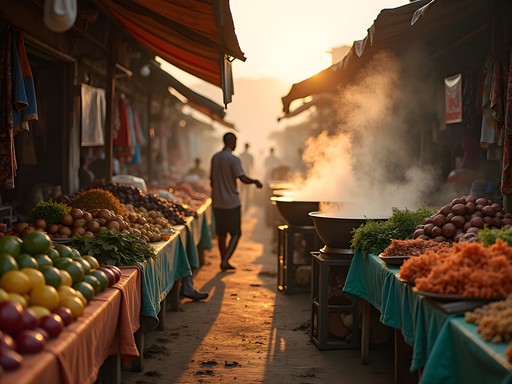
My culinary journey began where all authentic food experiences should—at the source. The Belén Market, often called the 'Venice of Peru,' is a floating labyrinth of wooden stalls that rises and falls with the Amazon's seasonal rhythms. Arriving at dawn with my well-worn travel daypack (essential for carrying purchases and a water bottle in the humid climate), I was immediately enveloped by a sensory tapestry that defied my expectations.
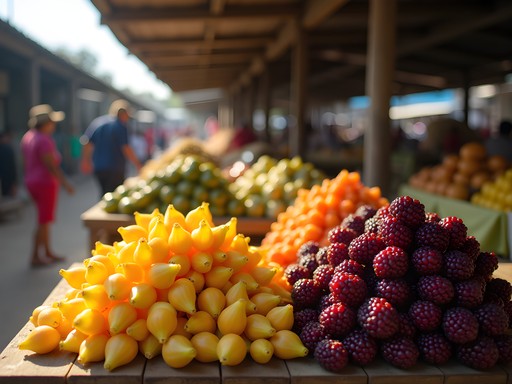
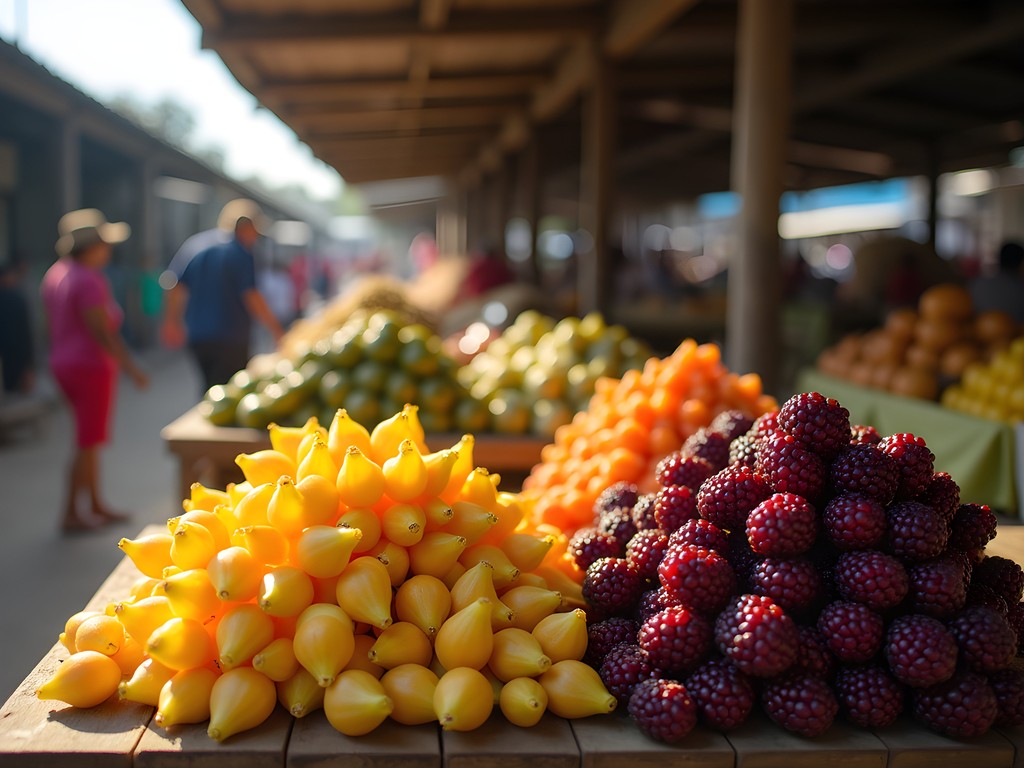
Unlike the orderly markets of Japan where I've studied tea ceremonies, Belén operates with a beautiful chaos that initially overwhelms but gradually reveals its own internal logic. Vendors called out in melodic Spanish as I navigated past pyramids of exotic fruits—camu camu, aguaje, and cocona—whose vibrant colors rivaled any artist's palette. The market's protein section presented an encyclopedia of Amazonian wildlife: grilled suri (palm tree larvae), smoked paiche (the Amazon's largest fish), and turtle eggs nestled in banana leaves.
What struck me most profoundly was not the unfamiliarity of these ingredients, but how they embodied the ahimsa principle I've studied in Indian spiritual traditions—a sustainable harmony with nature where nothing is wasted and everything serves a purpose in the greater cycle.
💡 Pro Tips
- Visit Belén Market early (5-7am) for the freshest selection and to avoid the midday heat
- Bring small denominations of Peruvian soles as vendors rarely have change
- Ask permission before photographing vendors or their goods—a small purchase often earns goodwill
Jungle Cuisine: The Philosophy of Amazonian Cooking
Understanding Amazonian cuisine requires abandoning conventional culinary frameworks. Unlike the precisely measured traditions I've documented in Kyoto's tea houses or the mathematical spice balances of Indian cuisine, cooking in the Amazon operates on principles of adaptation and intuition. This became clear during my cooking class with Doña Carmela, a seventy-year-old curandera (traditional healer) who has been preparing jungle foods for over five decades.
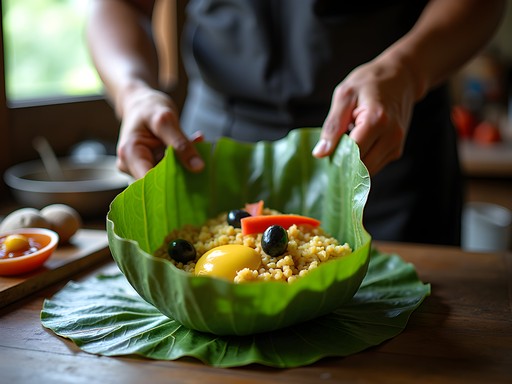
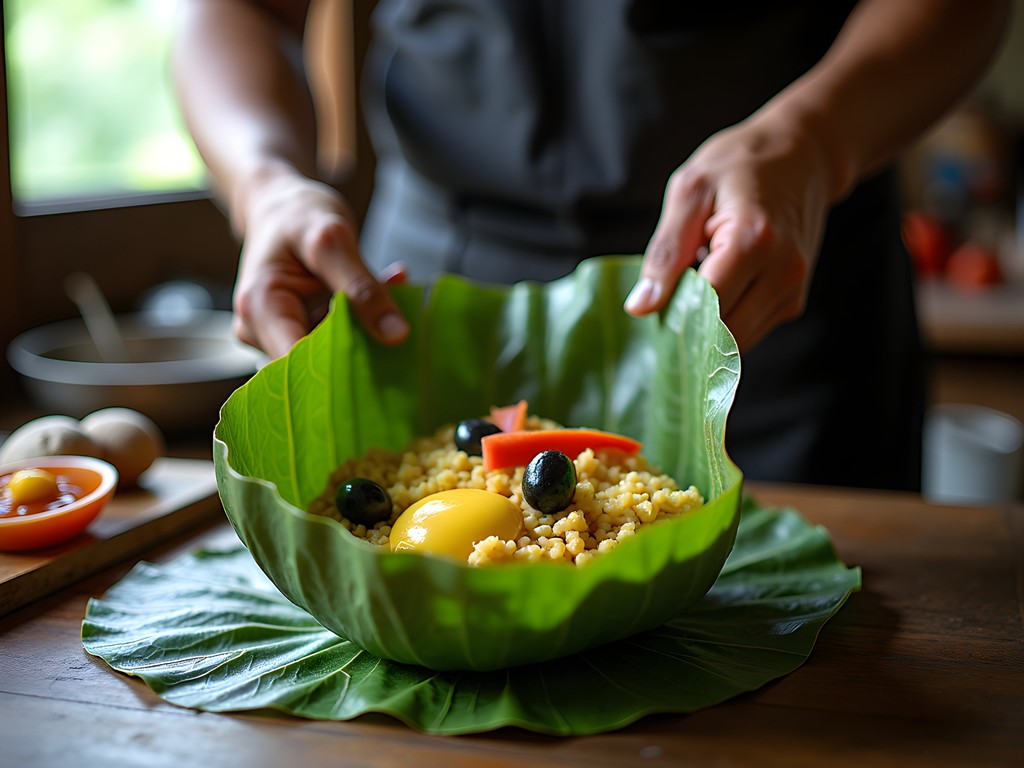
In her riverside home, constructed on stilts to accommodate the Amazon's dramatic water level fluctuations, I learned to prepare juane—a tamale-like creation of rice, chicken, olives, and egg wrapped in bijao leaves and boiled to perfection. The process was meditative, reminiscent of the mindfulness practices I've studied in Bhutanese monasteries. 'The jungle provides everything we need,' Doña Carmela explained as she demonstrated how to fold the leaves with practiced precision. 'Our job is simply to listen.'
I recorded the experience using my travel journal, which has accompanied me through seventeen countries. The tactile process of handwriting recipes and observations helps me internalize experiences in ways digital documentation cannot match. This practice of mindful documentation—capturing not just ingredients but contexts and emotions—has transformed how I experience culinary traditions worldwide.
💡 Pro Tips
- Book cooking classes at least 2-3 days in advance through your accommodation
- Bring a small gift for your cooking instructor—quality chocolate or tea from your home country is always appreciated
- Learn basic food-related Spanish phrases to enhance your experience
River-to-Table: Iquitos' Emerging Culinary Scene
While traditional preparations form the backbone of Amazonian cuisine, Iquitos is experiencing a renaissance of innovative cooking that honors indigenous ingredients while introducing contemporary techniques. This movement is exemplified by restaurants like Ámaz and Al Frío y Al Fuego, where chefs trained in Lima's prestigious culinary academies have returned to their Amazonian roots.
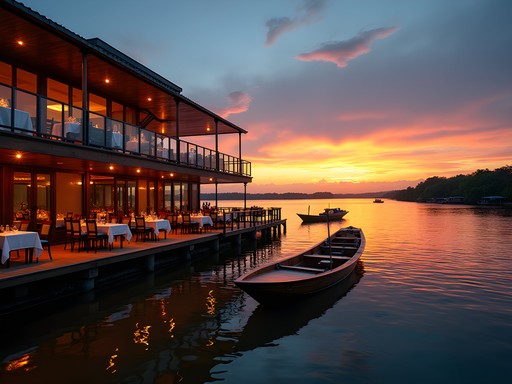
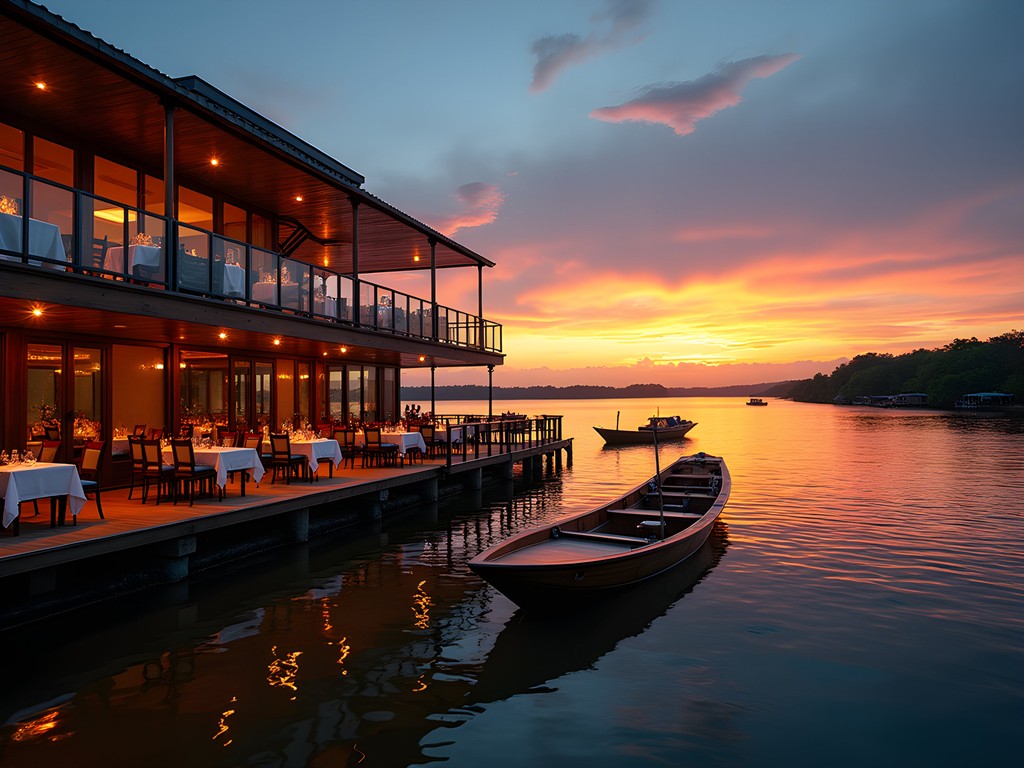
At Al Frío y Al Fuego—a floating restaurant accessible only by boat—I enjoyed a revelatory meal of paiche prepared three ways: as sashimi with aguaje sauce, grilled with wild mushrooms, and smoked with cassava purée. The juxtaposition of traditional ingredients with modern presentation created a dialogue between past and present that resonated with my own journey of cultural reconnection.
To fully appreciate these experiences, I relied on my pocket translator to understand menu nuances and converse with chefs about their techniques. This technological bridge allowed me to delve deeper into culinary philosophies than my intermediate Spanish would otherwise permit.
What distinguishes Iquitos' culinary scene is not merely its ingredients but its philosophy of place. Unlike the farm-to-table movement popular in North America, Amazonian cuisine embodies a river-to-table ethos where the Amazon itself—its rhythms, moods, and bounty—dictates what appears on the plate. This acceptance of nature's authority reflects the wu-wei principle I've studied in Taoist traditions: achievement through non-action, or working in harmony with natural forces rather than against them.
💡 Pro Tips
- Make reservations for floating restaurants at least one day in advance
- Try the chef's tasting menu for the most comprehensive experience of Amazonian flavors
- Ask about the seasonal specialties—many ingredients are available for just a few weeks annually

Medicinal Gastronomy: The Healing Properties of Amazonian Foods
Perhaps the most profound aspect of Amazonian cuisine is its seamless integration of nourishment and healing. Unlike Western culinary traditions that primarily emphasize taste and sustenance, Amazonian food culture operates within an elaborate framework of medicinal knowledge that has been refined over millennia.
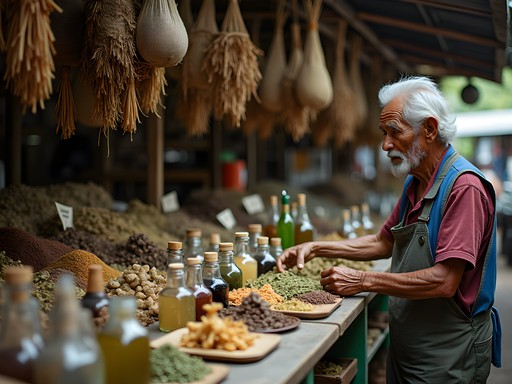
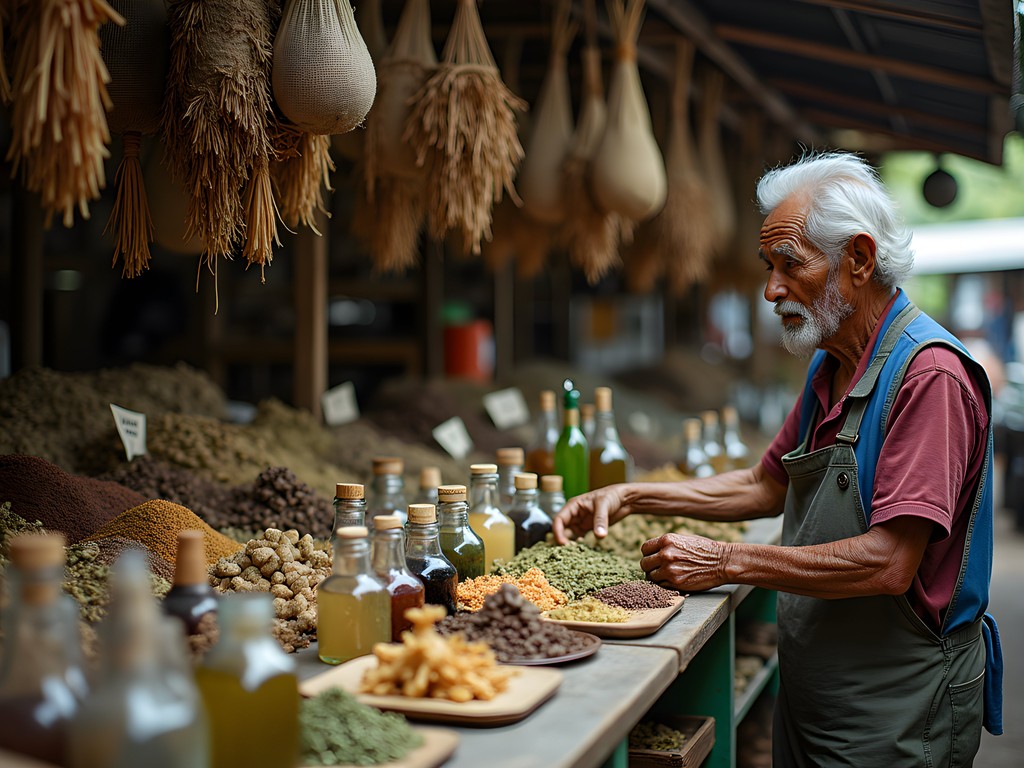
This dimension became apparent during my visit to the San Pedro Market's medicinal section, where I met Don Augusto, an eighty-two-year-old herbalist who has spent his life cataloging the therapeutic properties of jungle plants. Under his guidance, I sampled preparations that defied conventional categorization as either food or medicine: chuchuhuasi bark macerated in cane alcohol to treat arthritis, uña de gato (cat's claw) tea for inflammation, and camu camu juice containing more vitamin C than any other documented food source.
'In the jungle, we do not separate what heals the body from what feeds it,' Don Augusto explained as he prepared a beverage from seven different barks and roots. 'This understanding was nearly lost during colonization, but now we are remembering.'
I documented these experiences using my digital voice recorder, which allows me to capture nuanced conversations without the intrusion of note-taking. These audio journals have become invaluable resources for my ongoing study of traditional knowledge systems across cultures.
The concept of food as medicine resonates deeply with my professional background in orthodontics, where I regularly observe how oral health connects to systemic wellness. The Amazonian approach offers a sophisticated counterpoint to our increasingly compartmentalized understanding of health in Western medicine—a holistic paradigm where boundaries between culinary arts and healing arts dissolve entirely.
💡 Pro Tips
- Consult with knowledgeable guides before trying medicinal preparations
- Start with mild preparations if you're new to Amazonian medicinals
- Keep a journal of your reactions to different foods and preparations
The Sacred in the Culinary: Ritual Foods of the Amazon
My exploration of Iquitos' food culture culminated in an experience that transcended gastronomy and entered the realm of the sacred. Through connections established during previous visits to Peru, I received an invitation to observe the preparation of masato—a fermented yuca beverage central to communal gatherings in many Amazonian cultures.
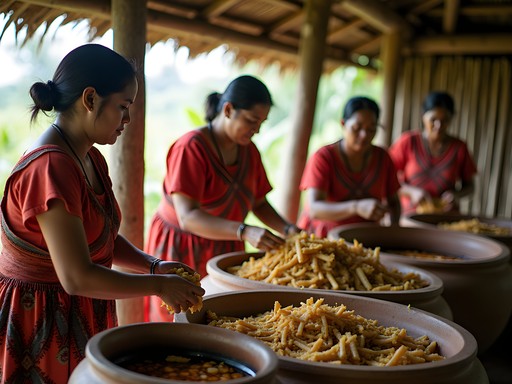
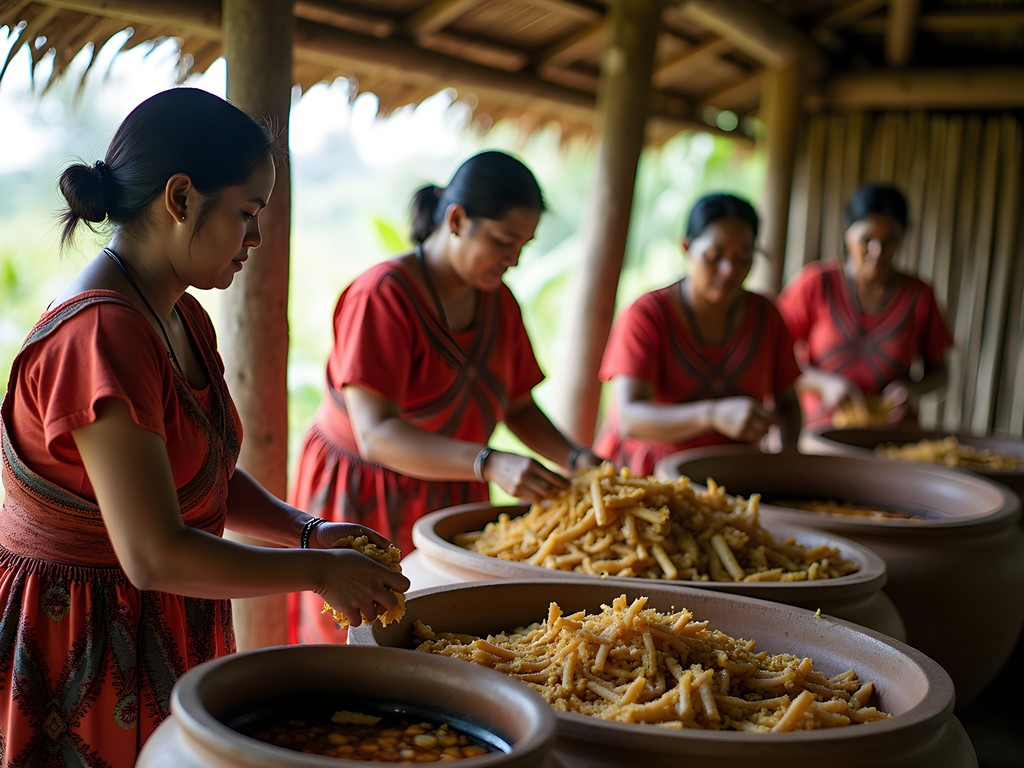
In a small Yagua community an hour upriver from Iquitos, I witnessed women working collectively to prepare this ancient drink. The process begins with peeling and boiling yuca roots, followed by the traditional method of mastication—where portions of the yuca are chewed to introduce enzymes that catalyze fermentation—before being left to ferment in handmade clay vessels.
The preparation was accompanied by songs passed through generations, creating an atmosphere of reverence that reminded me of the tea ceremonies I've studied in Kyoto or the preparation of prasad in Hindu temples. What might appear to outsiders as merely a beverage production process revealed itself as a sophisticated ritual that reinforces community bonds and connects participants to ancestral wisdom.
For documenting these sacred food traditions, I've found my compact camera invaluable—its discreet size and silent shooting mode allow me to capture images respectfully without disrupting ceremonial atmospheres. When permission is granted, these visual records help preserve traditions increasingly vulnerable to modernization pressures.
What struck me most profoundly was how masato preparation embodied the principle of samsara—the cyclical nature of existence central to Eastern philosophical traditions. The women explained that the yuca plants used today grew from cuttings their grandmothers had planted, which had come from their grandmothers before them—an unbroken agricultural lineage stretching back countless generations.
💡 Pro Tips
- Always request permission before observing or photographing traditional food preparations
- Bring a small gift of appreciation when visiting indigenous communities
- Learn about the cultural significance of foods before trying them to appreciate their deeper meaning
Final Thoughts
As my week in Iquitos drew to a close, I found myself reflecting on how this culinary journey had transcended mere gastronomy to become a profound meditation on the relationship between humans and their environment. The Amazonian approach to food—simultaneously practical and sacred, innovative and traditional—offers valuable insights for our increasingly disconnected food systems worldwide.
In my travels across seventeen countries, I've observed how globalization often homogenizes culinary traditions, but Iquitos remains a rare sanctuary where food still speaks the language of place with remarkable eloquence. The cuisine here doesn't merely sustain the body; it tells stories of ecological wisdom, celebrates ancestral knowledge, and invites us into a more mindful relationship with what we consume.
I return to my orthodontic practice in Salt Lake City carrying not just memories of extraordinary flavors, but a deepened appreciation for how food can serve as a vehicle for cultural preservation and environmental stewardship. For those seeking more than mere sustenance in their travels, Iquitos offers a rare opportunity to taste the Amazon's soul—a complex flavor profile that lingers long after the journey ends.
✨ Key Takeaways
- Amazonian cuisine represents a sophisticated knowledge system that integrates nutrition, medicine, and spiritual practice
- The best culinary experiences in Iquitos come from engaging directly with local producers and traditional knowledge-keepers
- Understanding the cultural context of Amazonian foods enhances both the flavor experience and appreciation of indigenous wisdom
📋 Practical Information
Best Time to Visit
June-September (dry season)
Budget Estimate
$75-150 per day including accommodations, meals, and activities
Recommended Duration
5-7 days
Difficulty Level
Moderate



Comments
citystar
Just spent a week in Iquitos and used this post as my food guide! The section on river-to-table restaurants was spot on. We tried La Mishquina based on Kenji's recommendation and had the most amazing paiche dish. One thing to add - if you're staying at a jungle lodge, ask if they offer cooking classes. Our guide at Heliconia Lodge taught us how to prepare patarashca (fish cooked in leaves) and it was one of the highlights of our trip!
freediver2081
Going there in March! Any specific restaurants you'd recommend?
Kenji Kumar
Dawn on the Amazon Café for breakfast, and definitely hit up Al Frío y Al Fuego for dinner. The tacacho there is phenomenal. Also just wander around the malecón at sunset - lots of great street food vendors.
freediver2081
Perfect, thanks!!
Taylor Moreau
Excellent piece, Kenji. I visited Iquitos for a conference in 2024 and managed to squeeze in a market tour. Your point about medicinal gastronomy really resonates - the integration of healing properties into everyday cooking is something Western cuisine has largely lost. I was particularly fascinated by the use of sacha inchi in various dishes. The chef at my hotel explained how it's been used for centuries for inflammation. Have you explored how restaurants are modernizing these traditional preparations while maintaining their nutritional integrity?
Kenji Kumar
Thanks Taylor! Yes, there are a few chefs doing really innovative work with traditional ingredients. One place I visited was cold-pressing sacha inchi for finishing oils rather than cooking with it to preserve the omega-3s. It's a delicate balance between innovation and tradition.
adventurelife
Belén Market is absolutely wild! I was there last year and the sheer variety of fish species blew my mind. Did you try the paiche ceviche? That stuff is incredible. Also heads up for anyone going - the market can get pretty muddy during rainy season so wear shoes you don't mind getting dirty. The jungle fruit section is worth spending time in too, there's stuff there I'd never seen anywhere else.
Kenji Kumar
Yes! The paiche ceviche was outstanding. I tried it at a small spot near the market. The texture is so different from ocean fish. Did you get to try any of the medicinal plants while you were there?
adventurelife
Yeah the lady at one stall made me this bitter tea from cat's claw bark. Not gonna lie, tasted awful but I felt amazing the next day lol
summerpro
I'm staying in Iquitos right now and tried the juane yesterday based on this post - OMG so good! The rice had this amazing flavor from being cooked in the bijao leaves. Heading to Belén Market tomorrow morning. Anyone know if it's better to bring cash or if vendors accept cards?
exploretime
Definitely cash! Small bills if possible. Most vendors don't even have electricity at their stalls.
Savannah Walker
Just got back from Iquitos myself and this post is spot on! The medicinal gastronomy section really resonated with me. I participated in a cooking workshop with a local shaman who explained how certain ingredients are used both as food and medicine. The camu camu was my absolute favorite - I became addicted to those smoothies! For anyone heading there, don't miss the dawn fish market - it starts around 4am but it's worth the early wake-up to see the freshest catches coming in from overnight fishing trips. Also, if you're adventurous, ask about the 'jungle culinary tour' at Dawn on the Amazon Cafe - they'll connect you with a guide who takes you foraging for ingredients before cooking them.
summerpro
Savannah, that cooking workshop sounds amazing! Was it expensive? Heading there in March and would love to do something similar.
Savannah Walker
It was about $45 USD for a half-day experience. Totally worth it! Ask for Percy at the tourist info center - he can connect you.
luckylover
Wow, eating piranha? That's hardcore!
citystar
I tried it too! Tastes like any white fish but with TONS of tiny bones. More trouble than it's worth IMO.
winterbuddy
Those jungle fruits look incredible! Never heard of aguaje before.
traveldiver
Great post! How safe is it to try the street food there? Any specific stalls you'd recommend at Belén Market? I'm planning a trip in January and I'm a bit nervous about stomach issues but don't want to miss out on authentic flavors.
Kenji Kumar
I stuck to cooked foods and had no issues! Look for busy stalls where locals eat - there's a woman near the west entrance who makes amazing tacacho con cecina. Bring hand sanitizer and maybe some stomach medicine just in case, but don't let fear hold you back!
Amit Sullivan
Kenji, your post took me right back to my time in Iquitos last year! The Belén Market is indeed a sensory overload - I still remember the pungent smell of that fermented manioc beer (masato) that an elderly woman insisted I try. Did you get a chance to sample any of the more unusual proteins? I found myself developing quite a taste for grilled caiman. The river fish prepared with bijao leaves was another highlight. There's something profound about how Amazonian cooking maintains such strong ties to the jungle ecosystem.
Kenji Kumar
Thanks Amit! Yes, I tried the caiman too - surprisingly tender. The masato was... an acquired taste, let's say! Did you visit any of the floating restaurants near Belén?
Amit Sullivan
I did! Al Frío y Al Fuego was a splurge but worth every sol. Watching the sunset over the river while eating fresh paiche was unforgettable.
Venture X
Premium card with 2X miles, $300 travel credit, Priority Pass