
Disclosure: This article contains affiliate links. We may earn a commission from purchases at no extra cost to you, which helps our travel content.
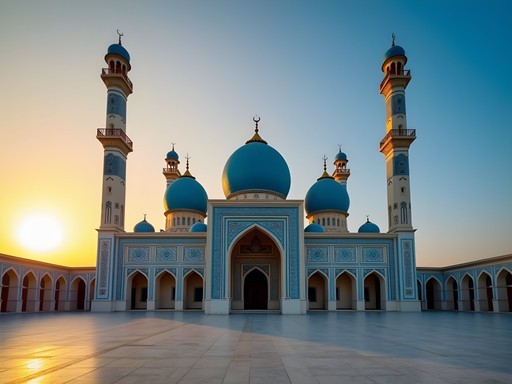
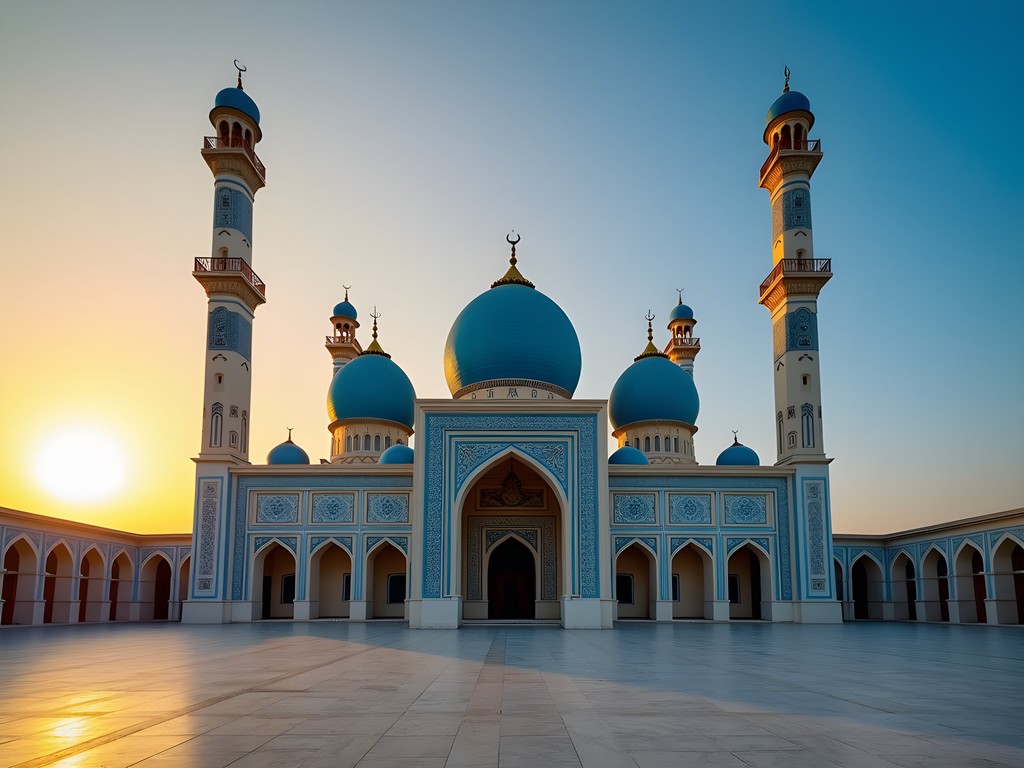
The first time I laid eyes on the azure domes of the Shrine of Hazrat Ali—known worldwide as the Blue Mosque—I understood why my cinematographer colleagues had spoken of it in reverent whispers. Rising from the dusty plains of northern Afghanistan like a mirage, this architectural masterpiece doesn't just dominate Mazar-i-Sharif's skyline; it commands it with a celestial authority that nearly brought me to my knees. As a filmmaker accustomed to framing the natural world, I found myself humbled by this human creation—a symphony of cobalt tiles, intricate calligraphy, and mathematical precision that defies simple documentation. After spending a week orbiting its perimeter with my camera, studying its relationship with light, and navigating the delicate balance between artistic documentation and cultural reverence, I'm sharing what I've learned about photographing this sacred space with the respect it demands.
Understanding the Sacred Space
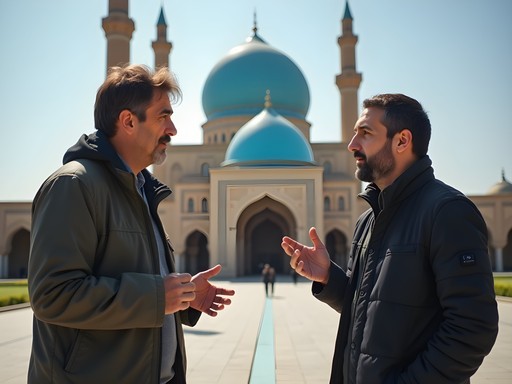
Before we discuss apertures and angles, we must acknowledge the profound spiritual significance of the Blue Mosque. Unlike tourist attractions in more frequented destinations, this is first and foremost an active place of worship, believed to house the tomb of Ali ibn Abi Talib, the cousin and son-in-law of Prophet Muhammad.
During my week in Mazar-i-Sharif, I observed how locals approached the shrine—with measured steps, quiet voices, and a palpable reverence that transcended the physical space. As photographers, our primary responsibility is to honor this sanctity.
The mosque complex follows a rhythm dictated by prayer times, with the call to prayer echoing across the city five times daily. These moments transform the atmosphere entirely—what was a contemplative public space becomes an intimate sanctuary. I quickly learned to plan my photography around these sacred intervals, using prayer times for reflection rather than documentation.
Before arriving, I familiarized myself with Islamic customs by reading cultural guide, which proved invaluable for understanding the nuances of respectful behavior. The knowledge gained from this resource helped me navigate complex social situations with confidence and prevented inadvertent offense—something no photograph is worth risking.
💡 Pro Tips
- Never photograph worshippers without explicit permission
- Learn prayer times in advance and plan shooting schedule accordingly
- Remove shoes before entering any interior spaces
- Dress conservatively—covering shoulders, knees and hair (for women)
Essential Gear for Sacred Architecture Photography
The technical challenges of photographing the Blue Mosque demand thoughtful equipment choices. After years documenting wildlife in variable conditions, I've learned to travel with versatile yet minimal gear—a philosophy that served me well in Afghanistan.
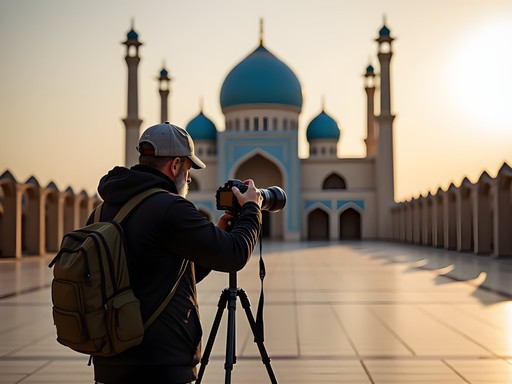
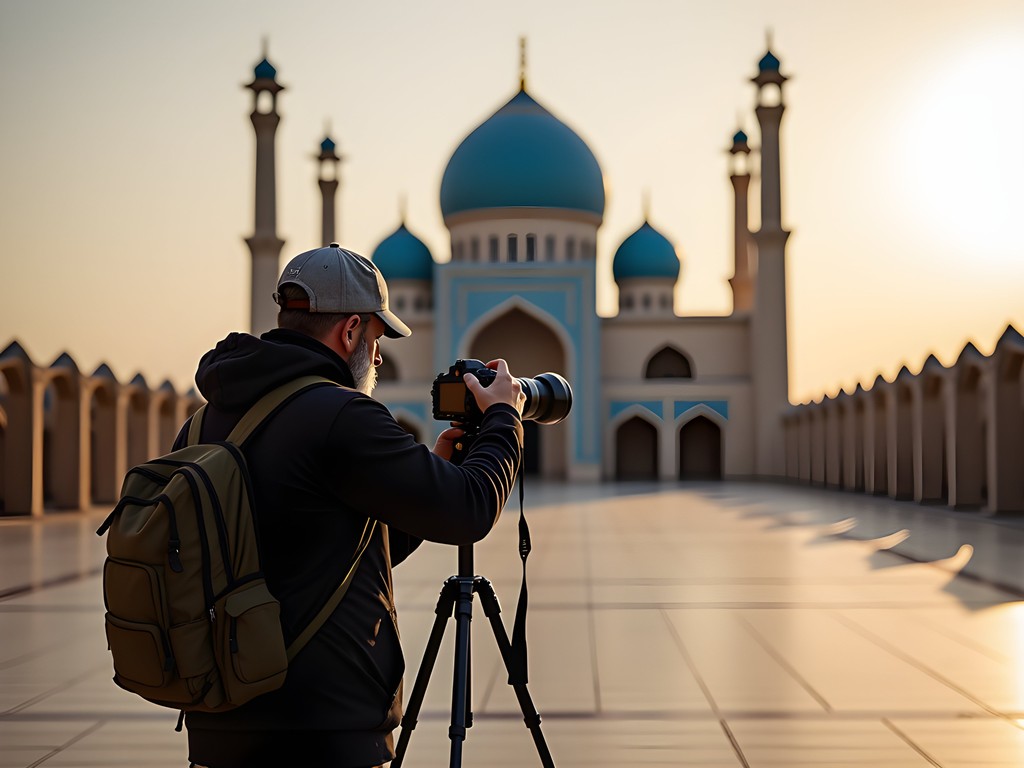
My workhorse for this assignment was my full-frame camera paired with three essential lenses: a 16-35mm wide-angle for capturing the mosque's grand exterior and courtyards, a 24-70mm for versatile compositions, and a 70-200mm for isolating architectural details and distant perspectives. The camera's exceptional dynamic range proved crucial for balancing the bright Afghan sky against shadowed archways.
A sturdy carbon fiber tripod was indispensable for low-light shooting at dawn and dusk—precisely when the mosque reveals its most photogenic qualities. Its compact design made it manageable through crowded spaces while providing the stability needed for crisp architectural shots.
Perhaps counterintuitively for a digital filmmaker, I found myself reaching for my polarizing filter more than any other accessory. It proved invaluable for managing reflections off the glazed tiles and enhancing the already spectacular blue tones that give the mosque its nickname. The filter's ability to deepen the azure hues while maintaining natural skin tones made it essential when including visitors in wider contextual shots.
Finally, never underestimate the importance of spare batteries and memory cards. Power in Mazar-i-Sharif can be unpredictable, and the visual splendor of the Blue Mosque will have you shooting more frames than anticipated.
💡 Pro Tips
- Bring a microfiber cloth to protect gear from the fine dust that permeates Mazar-i-Sharif
- A zoom lens is preferable to frequent lens changes which expose your sensor to dust
- Consider a lens hood to manage flare when shooting toward the sun
- Pack a discreet camera bag that doesn't scream 'expensive equipment'
Finding the Perfect Light: Timing Your Visit
If there's one lesson my years of wildlife filmmaking has taught me, it's that light is everything—and nowhere is this truer than at the Blue Mosque. The building's relationship with sunlight is nothing short of alchemical, transforming from spiritual sanctuary to living artwork as the sun traverses the Afghan sky.
Dawn provides the most magical conditions. Arriving before sunrise—around 5:00 AM during my spring visit—I witnessed the mosque emerging from darkness like a celestial vision. As first light kisses the eastern-facing domes, they ignite with an ethereal glow that seems to radiate from within. The courtyard remains blissfully uncrowded at this hour, allowing unobstructed compositions and moments of genuine solitude with this architectural marvel.
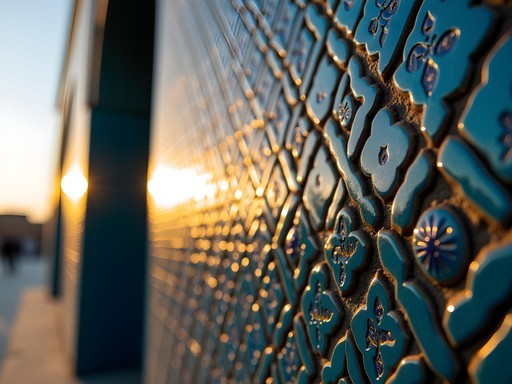
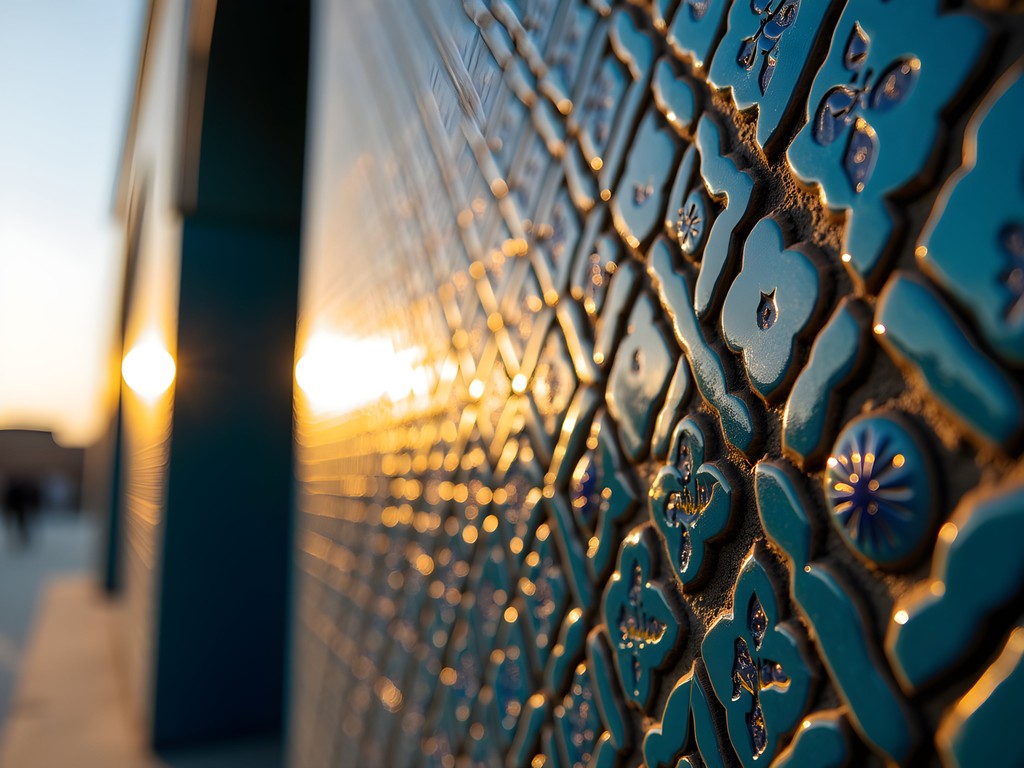
Mid-morning brings harsh overhead light that flattens the intricate tilework, making this an ideal time to explore interior spaces or focus on detail shots where you can control your angle relative to the sun. I used this time to photograph the mesmerizing geometric patterns that adorn every surface, creating abstract compositions that capture the mathematical precision of Islamic architectural traditions.
The golden hour before sunset (approximately 5:30-6:30 PM in spring) bathes the western façade in warm amber light, creating a striking contrast with the cool blues of the tiles. This interplay between warm and cool tones produces some of the most cinematic opportunities, particularly when capturing wide establishing shots from across the plaza.
After sunset, during the brief blue hour, the mosque undergoes its final daily transformation as artificial lights gradually illuminate the structure against the deepening indigo sky. A portable LED light helped me subtly fill shadows in foreground elements while maintaining the ambient mood during this challenging lighting transition.
💡 Pro Tips
- Arrive at least 30 minutes before sunrise to secure prime shooting positions
- Mid-day harsh light is ideal for photographing interior details and shadows
- During Ramadan, timing changes significantly—research prayer schedules in advance
- The mosque is often illuminated until about 9 PM, offering night photography opportunities

Composition Strategies: Beyond the Postcard Shot
While the classic frontal view of the Blue Mosque is undeniably striking, my filmmaker's instinct pushed me to search for perspectives that reveal its character beyond the obvious. After all, this isn't merely a building—it's a living, breathing spiritual entity with countless stories embedded in its walls.
My most successful compositions came from embracing asymmetry. Rather than centering the main dome, I often positioned it according to the rule of thirds, allowing the remaining frame to capture the human element—pilgrims approaching, children playing in the courtyard, or the everyday life that unfolds around sacred spaces. These compositions tell a more complete story about the mosque's role in community life.
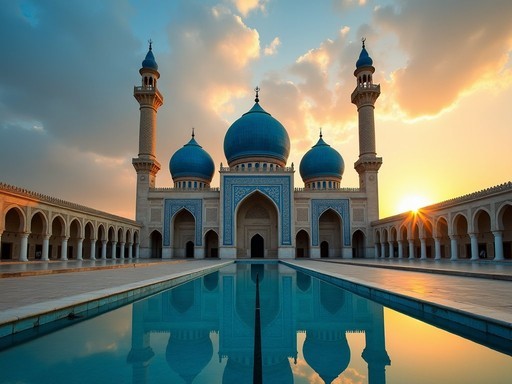
The mosque's reflecting pools offer compelling opportunities for symmetrical compositions that double the visual impact of the architecture. Early mornings when the water is still provide mirror-like reflections, though you'll need to position yourself low to the ground. My camera strap allowed me to quickly transition between tripod and handheld shooting when navigating these awkward angles.
Don't overlook the power of negative space. Some of my most evocative images incorporated the vast Afghan sky as a dominant element, with the mosque's distinctive silhouette anchoring the lower portion of the frame. This approach conveys the spiritual aspiration of the architecture—reaching toward heaven—while contextualizing it within the expansive landscape.
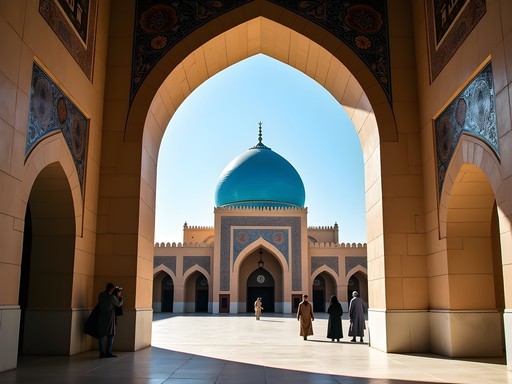
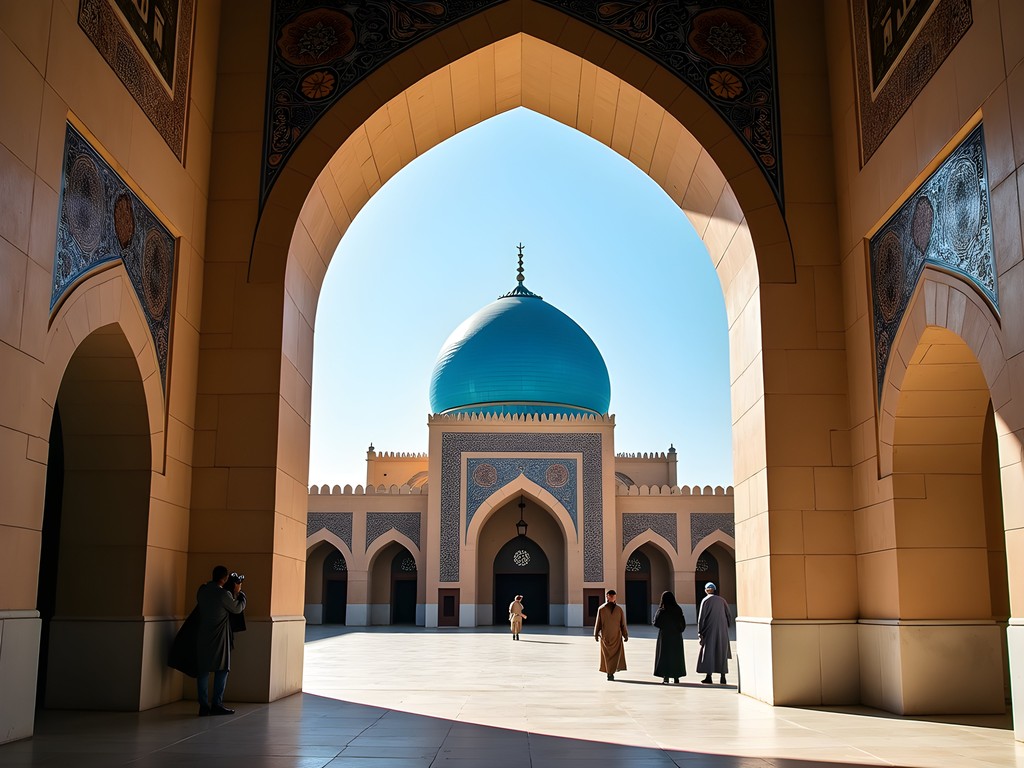
Framing techniques using the mosque's own architectural elements proved particularly effective. Shooting through arched doorways or using colonnades to create natural frames draws viewers into the space as if they're discovering it themselves. These compositions create depth and invite exploration beyond the two-dimensional image.
💡 Pro Tips
- Include people for scale—the mosque's grandeur is best understood in relation to human figures
- Look for leading lines in the courtyard's geometric patterns to draw viewers into your composition
- Experiment with vertical compositions to emphasize the soaring minarets
- Use a telephoto lens to compress perspective and create dramatic layering of architectural elements
Navigating Cultural Sensitivities with Grace
Photography in Afghanistan—particularly at religious sites—requires navigating a complex landscape of cultural norms, religious sensitivities, and personal boundaries. My approach was guided by a simple principle: relationship before documentation.
I spent my first day at the Blue Mosque without taking a single photograph. Instead, I observed, engaged with locals when appropriate, and sought to understand the rhythms of the place. This investment paid dividends throughout my stay, as people recognized me as someone who respected their sacred space rather than merely consuming it visually.
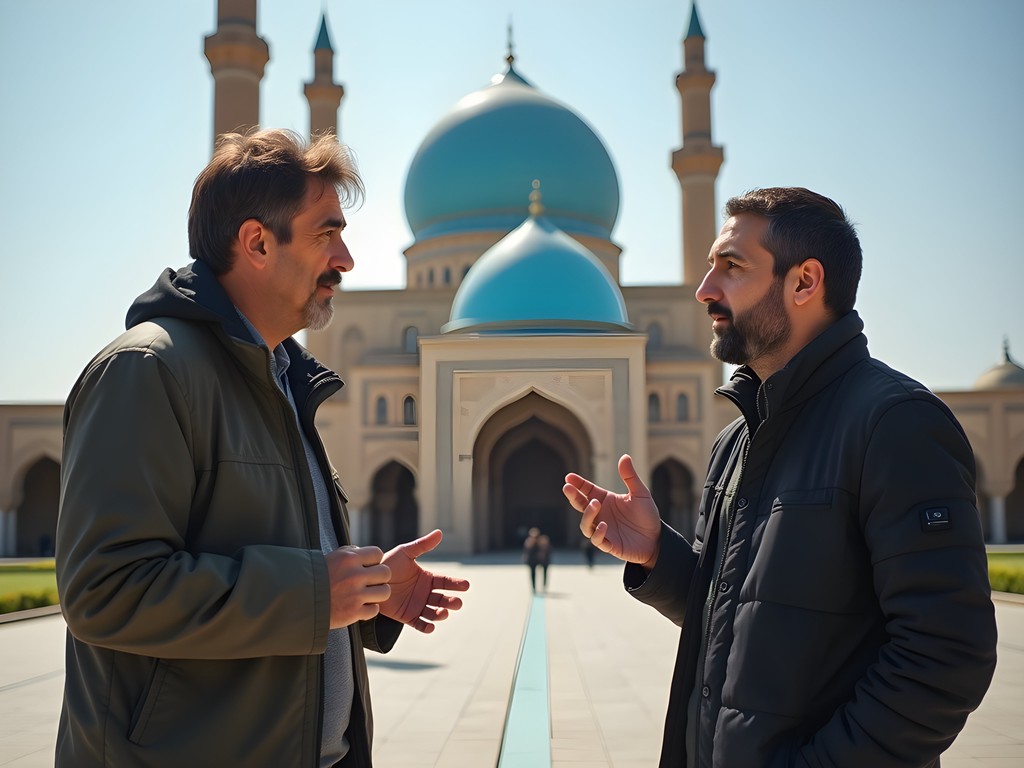
When photographing people—whether devotees or casual visitors—I adopted practices that prioritized dignity and agency. Rather than capturing candid shots from a distance (which can feel exploitative), I established connection first. A smile, a nod, or when language permitted, a brief conversation about my project often preceded any photography. This approach not only yielded more authentic portraits but fostered meaningful cultural exchange.
Working with a local guide proved invaluable for navigating nuanced situations. My guide, Fahim, helped negotiate access to certain vantage points, explained appropriate behavior during religious ceremonies, and facilitated conversations with mosque officials. The modest fee for his services was perhaps my most valuable expenditure.
I learned to recognize subtle cues that photography might be unwelcome—a shift in body language, a concerned glance—and always respected these boundaries without question. In several instances, I was asked to delete images that inadvertently captured private moments of worship, which I did immediately and without protest.
Perhaps most importantly, I approached photography at the Blue Mosque as a privilege rather than a right—an opportunity to document extraordinary beauty while honoring the living traditions that created it.
💡 Pro Tips
- Learn basic Dari phrases to establish rapport before photographing people
- Always ask permission before photographing women or children
- Be prepared to put your camera away immediately during call to prayer
- Consider making small donations to the mosque maintenance fund as a gesture of appreciation
Final Thoughts
As I packed away my gear on my final evening in Mazar-i-Sharif, watching the last light fade from the Blue Mosque's domes, I realized that my most valuable images weren't stored on memory cards but etched in my consciousness—moments of connection, reverence, and wonder that transcend mere documentation. The challenge of photographing the Blue Mosque isn't technical but spiritual—finding ways to honor its sanctity while celebrating its beauty. In this delicate balance lies the opportunity to create images that don't merely show what the mosque looks like, but what it feels like to stand in its presence. Whether you're a seasoned photographer or passionate amateur, I encourage you to approach this magnificent structure with both technical preparation and open-hearted respect. The Blue Mosque has stood for centuries and will remain long after our shutters fall silent—we are merely temporary witnesses to its enduring splendor.
✨ Key Takeaways
- Respect always supersedes the perfect shot—when in doubt, ask permission
- Early morning offers the most magical light and fewest crowds
- Look beyond obvious compositions to find perspectives that reveal character and context
- Working with a local guide transforms the experience from documentation to cultural immersion
📋 Practical Information
Best Time to Visit
April-May (spring) when temperatures are mild and flowers bloom in the courtyard
Budget Estimate
$50-75/day excluding accommodation
Recommended Duration
3-4 days minimum to experience different lighting conditions
Difficulty Level
Challenging Due To Cultural Navigation And Security Considerations

Comments
Riley Griffin
Avery, this is exactly the guide I needed before my family trip last month! We followed your advice about visiting just before sunset, and the light was absolutely magical. My 16-year-old daughter (the budding photographer in the family) was mesmerized. One thing I'd add for families - bring a lightweight travel tripod as the interior lighting can be challenging, especially if you're trying to avoid using flash in the sacred spaces. We found the locals incredibly welcoming when we showed proper respect. A kind elderly gentleman even showed my kids the best spot to capture the reflection of the domes in the courtyard fountain. Sometimes the most profound travel experiences happen when you slow down and truly engage with a place rather than just checking it off your list. Your section on understanding the sacred space helped us appreciate the spiritual significance, not just the architectural beauty.
winterstar
Did you really bring your family to Afghanistan? Isn't that risky?
Riley Griffin
We're experienced travelers and worked with a specialized tour company that focuses on safety. We stayed in secure accommodations and had a local guide with us at all times. It's definitely not for everyone, and we researched extensively before going. Some regions are absolutely off-limits, but Mazar-i-Sharif has been relatively stable compared to other parts of the country. Always check current travel advisories!
summerblogger
Your post brought back so many memories! I visited the Blue Mosque last year and was completely unprepared for how the light changes throughout the day. Wish I'd had your timing tips then! The morning light was indeed magical but I missed that golden hour shot you captured. Also appreciated your reminder about appropriate dress - I saw several tourists being turned away because they weren't covered properly. My favorite angle was actually from the small tea shop across the eastern plaza where you can frame the domes against the mountains in the distance.
Avery Gordon
That tea shop view is a hidden gem! Did you try their cardamom tea while watching the sunset? One of my favorite memories from the trip.
summerblogger
Yes! That cardamom tea was incredible. Perfect way to end a day of shooting!
cityking2950
Really cool! The section on cultural etiquette was super helpful.
waveclimber
Amazing guide! I'm curious about the security situation there now. Did you feel safe walking around with camera gear? Any tips for someone considering a visit?
Avery Gordon
Thanks for asking! Security can be unpredictable in Afghanistan. I always worked with a local guide and kept a low profile. The immediate area around the Blue Mosque is generally safer, but always check current travel advisories and consider hiring a reputable local fixer. I kept most of my gear in a non-descript bag when not shooting.
waveclimber
Thanks for the honest advice! Might wait a bit before planning a trip there.
winterstar
Those azure domes are simply breathtaking! Your photos capture the essence perfectly.
moonninja
What lens did you use for the detail shots? Trying to figure out what to pack
Avery Gordon
I mostly used a 24-70mm for versatility and a 50mm prime for low light inside. The 24-70 was perfect for the courtyard and those wide architectural shots!
George Hayes
Avery, this brought back memories! I visited Mazar-i-Sharif with my family back in 2019 and the Blue Mosque was absolutely the highlight. Your point about respecting the sacred space really resonates - we spent time just sitting and observing before even thinking about photos. My kids were fascinated by the white doves everywhere. One tip I'd add: if you're traveling with family, the courtyard is much more relaxed than inside the shrine itself. We got some beautiful candid shots of the kids feeding the pigeons with those stunning tiles in the background. The locals were incredibly welcoming and patient with us.
moonninja
The doves! I've seen those in photos. Are they always there?
George Hayes
Yes! They're considered sacred and there are literally thousands of them. It's quite a sight.
backpackvibes
This is amazing! Quick question - you mentioned being mindful during prayer times. How strict are they about photography during those periods? Want to make sure I'm being respectful when I visit.
Avery Gordon
Great question! They're pretty strict and rightly so. I'd recommend putting your camera away completely during prayer times and just observing respectfully. The best shooting windows are mid-morning and late afternoon anyway when the light is perfect.
backpackvibes
Perfect, thanks for clarifying!
globeway
Wow those domes are incredible! Adding this to my list
mountainblogger
I'm a beginner photographer planning to visit next month. Would a basic DSLR with kit lens be sufficient or do I need specialized gear? Your photos are inspiring but I don't want to invest in expensive equipment just yet!
roambackpacker1558
Not the author but I got decent shots with just my phone camera! The place is so photogenic you don't need fancy gear.
Avery Gordon
A basic DSLR with kit lens will work perfectly fine! Just bring extra batteries and memory cards. The site's beauty does most of the work for you. Focus on composition and lighting rather than gear.
Venture X
Premium card with 2X miles, $300 travel credit, Priority Pass