

Disclosure: This article contains affiliate links. We may earn a commission from purchases at no extra cost to you, which helps our travel content.
The first time I visited Bangalore, I expected the stereotypical tech hub – all glass and steel, devoid of soul. How gloriously wrong I was. As someone who has wandered through the cliff-side villages of Southern Italy and the ancient corners of Cairo, I found Bangalore to be a magnificent contradiction – a place where centuries-old temples stand in the shadow of sleek skyscrapers, where traditional flower markets burst with color before dawn, and where the colonial past whispers through tree-lined boulevards. With my trusty camera in hand and just a weekend to spare during my Ayurvedic retreat in Southern India, I set out to capture this multifaceted city, discovering that Bangalore offers photographers an incredible tapestry of light, color, and culture that defies its 'Silicon Valley of India' moniker.

Golden Hour at Lalbagh Botanical Gardens
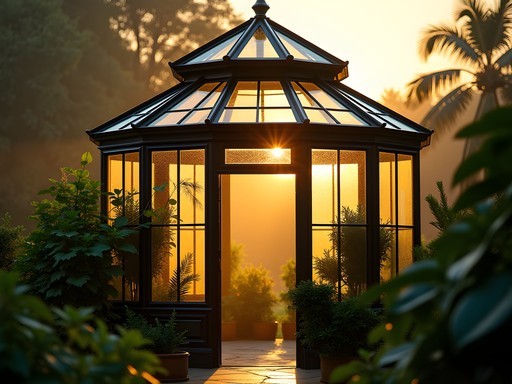
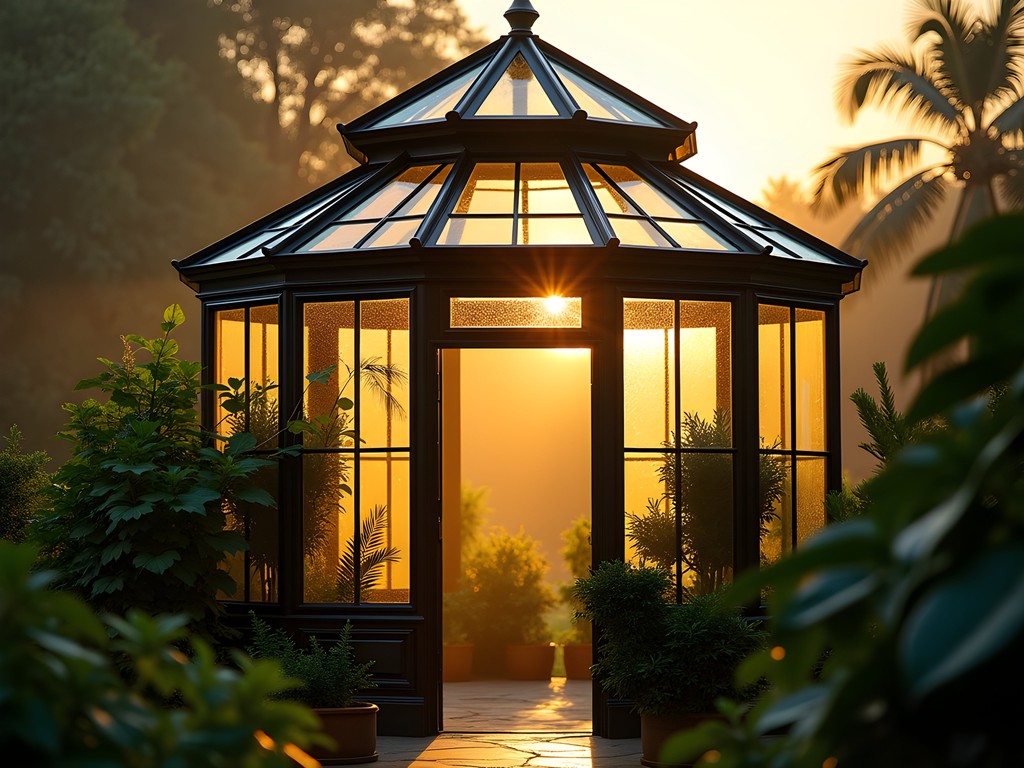
My love affair with Bangalore's light began at Lalbagh, where I arrived just as the gates opened at 6 AM. The botanical garden, established in the 18th century by Hyder Ali, transforms into a photographer's paradise during the golden hour. The glass house – a replica of London's Crystal Palace – captures the morning light in ways that made me gasp and fumble for my camera lens to switch to something that could truly capture the luminescence.
As I wandered deeper into the 240-acre garden, I found myself alone with ancient silk cotton trees whose massive trunks were bathed in honey-colored light. The morning dew on tropical plants created natural macro opportunities that reminded me of similar moments in Morocco's hidden gardens.
The true photographic treasure of Lalbagh, however, is its 20-million-year-old rock formation. I climbed to the top just as the sun crested fully above the horizon, casting long shadows across the park while illuminating the distant city skyline. The juxtaposition of this ancient geological formation against Bangalore's modern silhouette tells the story of the city in a single frame.
What surprised me most was the diversity of birds – from vibrant parakeets to elegant egrets – that appeared as if on cue when the first light touched the trees. My childhood in Venice never prepared me for the riot of color that is an Indian garden at dawn. For photographers seeking portraits, the elderly morning walkers and yoga practitioners, bathed in golden light with the misty lake as backdrop, offer beautiful studies in human form and tranquility.
💡 Pro Tips
- Arrive by 6:00 AM to catch the first light and avoid crowds
- Bring a versatile zoom lens to capture both wide landscapes and bird details
- The northwest corner of the park offers the best elevation for skyline shots
Colonial Architecture in Cubbon Park & MG Road
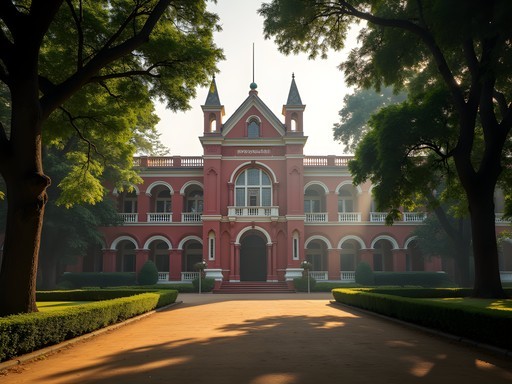
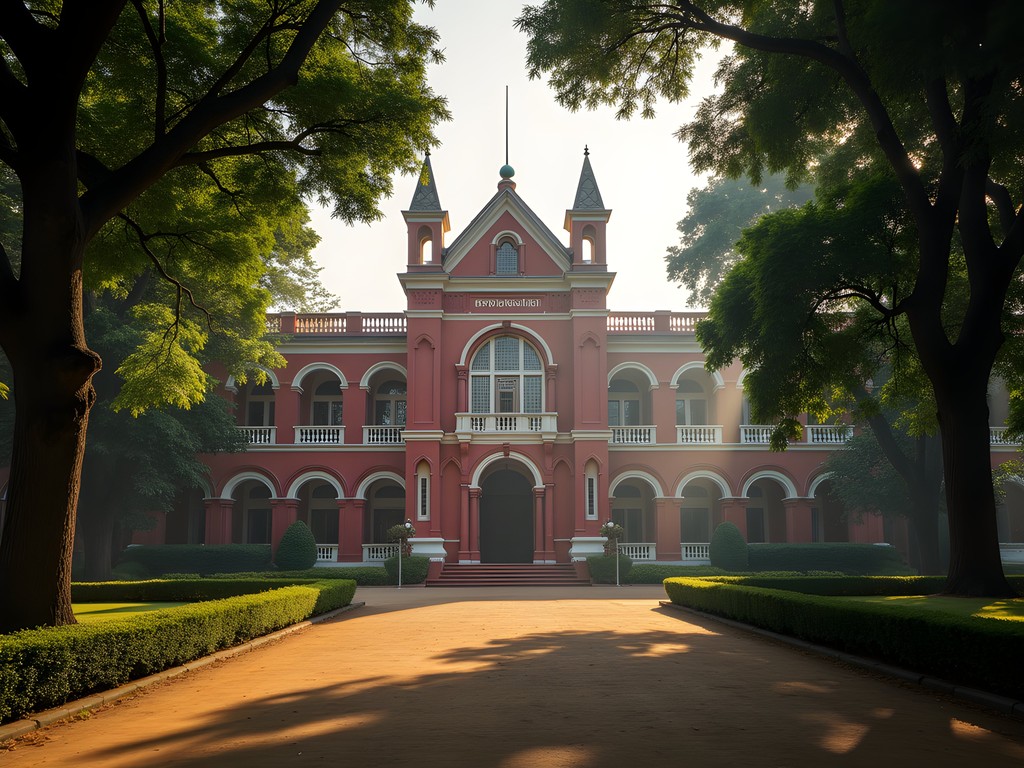
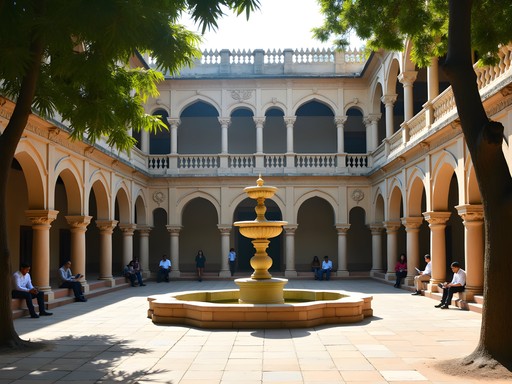
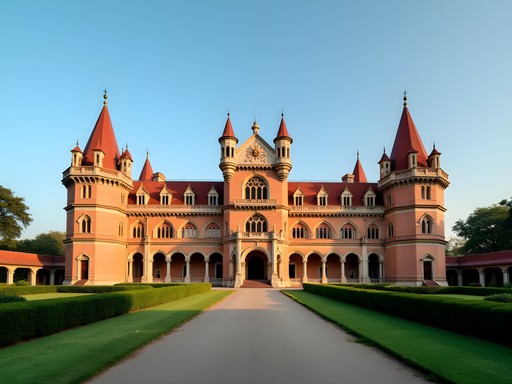
My second day began with an early morning walk through Cubbon Park, where Bangalore's colonial past is preserved in red-painted Gothic structures that emerge from lush greenery. The contrast between the crimson buildings and the verdant surroundings creates a striking visual narrative that my polarizing filter helped emphasize, cutting glare and deepening the already vibrant colors.
The High Court building, with its deep red façade and intricate detailing, appears almost like a mirage at the end of tree-lined paths. I found that positioning myself under the canopy of a massive rain tree created natural framing that emphasized the architectural grandeur while providing context of Bangalore's famous green spaces.
A short walk away, MG Road offers a different photographic experience – one where colonial-era buildings stand shoulder to shoulder with modern glass structures. This architectural timeline makes for compelling street photography, especially in the soft light of early morning or late afternoon when shadows grow long and textures become pronounced.
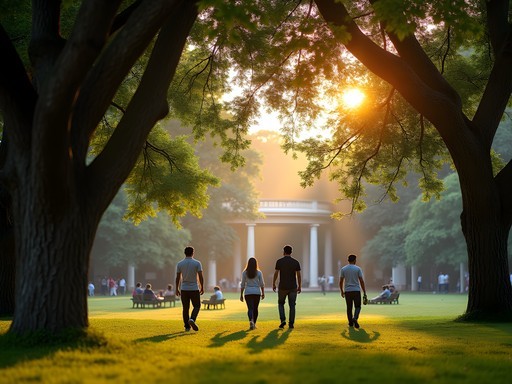
The old parade grounds near Cubbon Park transport me back to my childhood fascination with historical narratives. Here, where British troops once marched, now families and young couples stroll, creating layers of human history that can be captured through thoughtful composition. I spent nearly an hour watching an elderly gentleman reading his newspaper on a bench beneath a massive banyan tree, the dappled light creating natural spotlights on his weathered face – a single frame that seemed to encapsulate Bangalore's gentle pace despite its technological rush.
💡 Pro Tips
- Use a polarizing filter to enhance the red buildings against green foliage
- Visit on Sundays when MG Road is less congested for cleaner architectural shots
- The bandstand in Cubbon Park offers excellent foreground interest for wide shots
Sacred Frames: Bull Temple and Someshwara Temple
My fascination with sculptural traditions drew me inevitably to Bangalore's temples, where light plays across ancient stone in ways that challenge even the most sophisticated camera sensors. The Bull Temple in Basavanagudi houses one of the largest Nandi sculptures in the world – a 4.6m tall and 6m long monolith of granite that has witnessed centuries unfold.
I arrived in late afternoon when sunlight streams through the eastern entrance, illuminating the massive bull in dramatic chiaroscuro. The challenge for photographers here is capturing the scale while also highlighting the intricate details of this 16th-century sculpture. I switched to my wide-angle lens to capture the entirety of the space while maintaining the intimate feeling of devotion that permeates the air.
The Someshwara Temple nearby offered a different photographic experience. Built during the Chola period, its stone corridors create natural light tunnels that photographers can use to frame devotees or architectural details. I spent nearly an hour simply observing how the light moved through the space, creating ever-changing compositions.
What struck me most was the similarity between the stone carving techniques here and those I'd studied in Northern Italy – despite being worlds apart, human creativity follows certain universal patterns. As a photographer with Egyptian heritage, I found myself drawing mental connections between these Hindu sculptures and the ancient Egyptian art of my father's homeland.
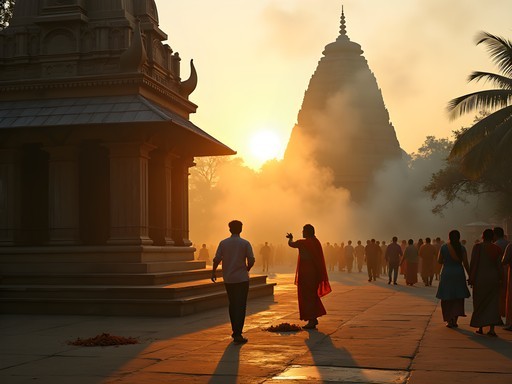
For those seeking authentic cultural photography, arrive during morning rituals (around 7 AM) when priests perform ceremonies and devotees bring offerings of flowers and incense. The sensory experience – fragrant smoke illuminated by slanting morning light – creates atmospheric images that capture not just the place but its spiritual essence.

💡 Pro Tips
- Remove shoes before entering and always ask permission before photographing ceremonies or devotees
- Visit between 4-5 PM for dramatic side-lighting on the Bull sculpture
- Bring a lens hood to manage flare when shooting toward light sources in temples

Street Photography in KR Market and Pete Area
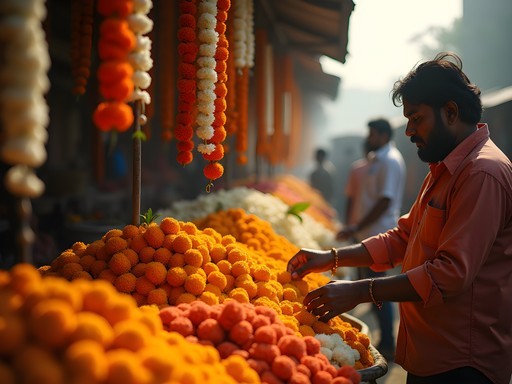
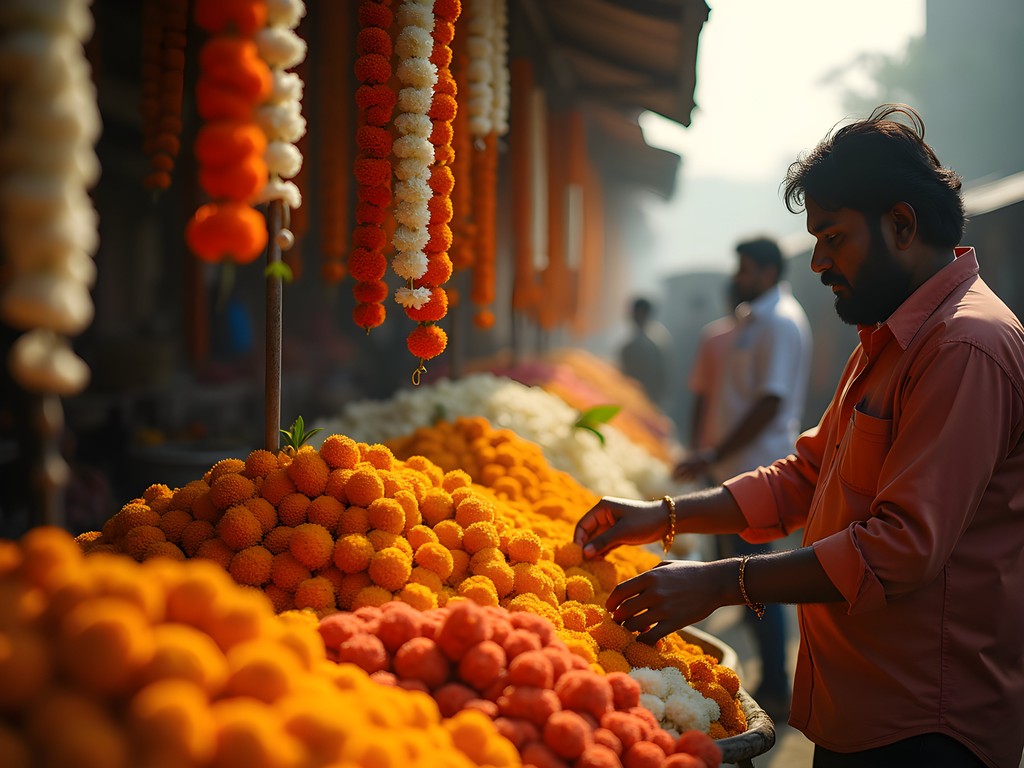
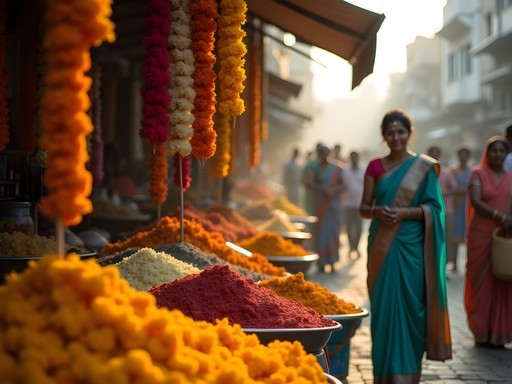
For photographers who thrive on color and chaos, Bangalore's Krishna Rajendra Market (KR Market) is an unmissable destination. I arrived at 5 AM – an ungodly hour for most, but the magical moment when the flower market erupts into a riot of color and activity. Vendors arrange marigolds, roses, and jasmine into mountains of fragrant blooms, their hands moving with practiced precision under the harsh fluorescent lights.
The challenge here is technical – the mixed lighting of pre-dawn darkness, artificial lights, and eventually breaking daylight requires constant adjustment. I set my camera to auto ISO with exposure compensation to manage the transitions while focusing on composition and moment.
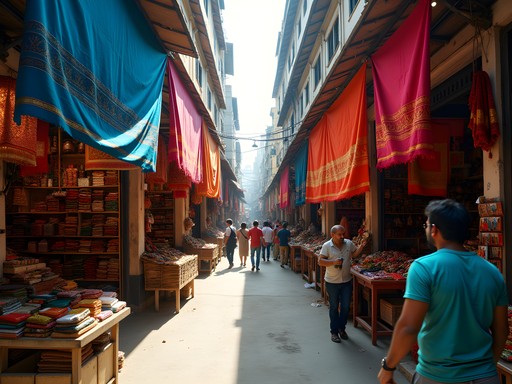
The adjacent Pete area – Bangalore's historic commercial center – offers narrow lanes where light filters through in dramatic shafts as the sun rises higher. The centuries-old markets specialize in different goods: Balepete for textiles, Chickpete for jewelry, Akkipete for rice. Each creates distinct visual stories as shopkeepers arrange their wares in patterns that have remained unchanged for generations.
What fascinated me most was how this area reminded me of Cairo's Khan el-Khalili, where my father would take me as a child. The same entrepreneurial energy, the same careful arrangement of goods, the same pride in craftsmanship – all universal human experiences that transcend cultural boundaries.
As someone who has photographed markets across three continents, I've learned that the key to meaningful market photography is connection. I spent time speaking with flower sellers, learning their stories, understanding their craft before raising my camera. The resulting images carry the weight of human connection rather than mere exotic spectacle – something I believe is essential for ethical travel photography.
💡 Pro Tips
- Arrive by 5 AM at KR Market for the flower auction – the most photogenic time
- Keep your camera ready but inconspicuous; engage with vendors before photographing
- Use a fast prime lens to manage low light conditions without flash
Modern Bangalore: UB City and Aerial Perspectives
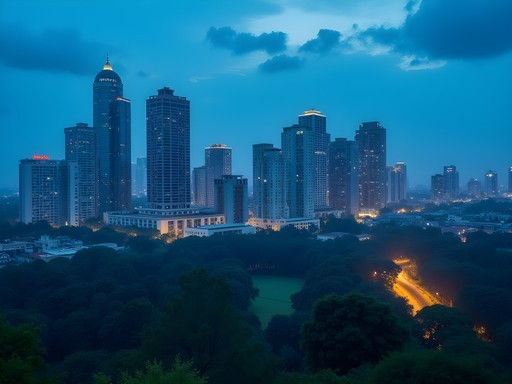
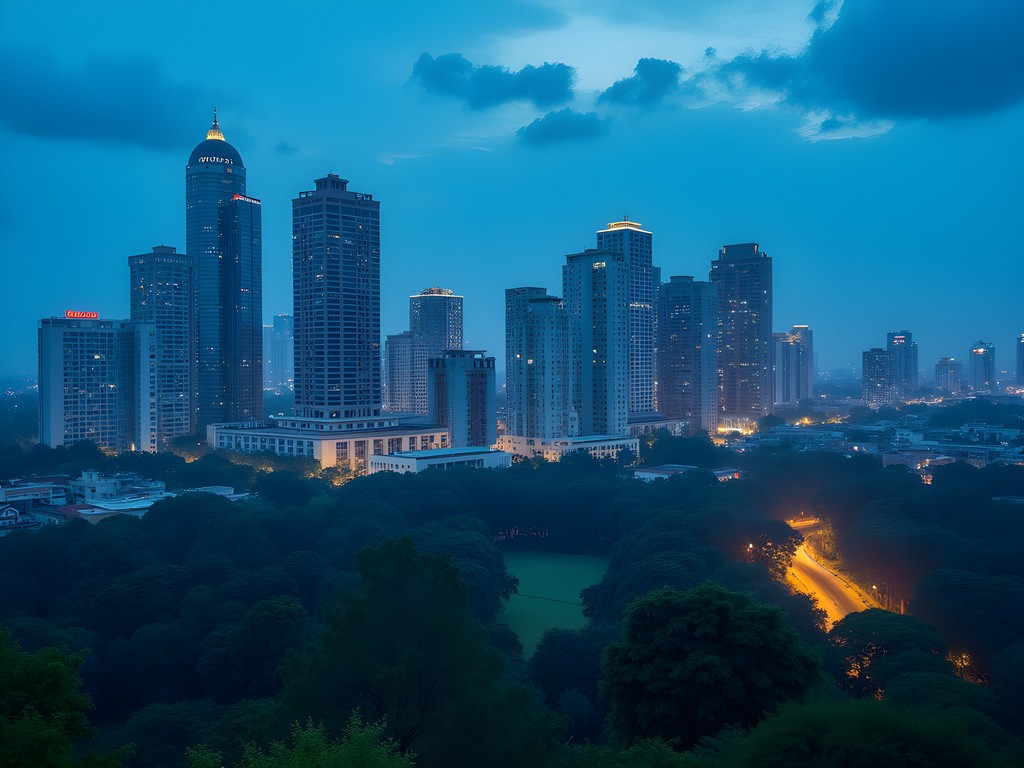
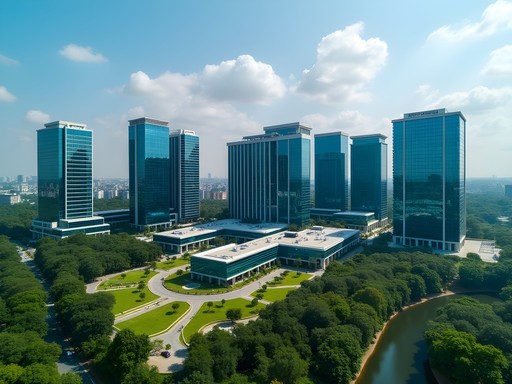
To truly capture Bangalore's identity as India's tech hub, I dedicated my final evening to its contemporary architecture. UB City, a luxury shopping complex and business center, offers clean lines and reflective surfaces that create geometric abstractions as the sun sets. The contrast between traditional Indian elements and modern design makes for compelling architectural photography.
I positioned myself on the outdoor terrace of a café on the top floor, ordering a masala chai as I waited for blue hour – that magical time after sunset when artificial lights balance perfectly with the deep blue sky. This timing transforms glass buildings from mundane structures into glowing sculptures.
For those seeking aerial perspectives, Bangalore offers several rooftop restaurants and bars that provide stunning views. The 13th Floor on MG Road and High Ultra Lounge at World Trade Center offer particularly photogenic vistas. I recommend arriving an hour before sunset to secure a good spot and capture the transformation from day to night.
What struck me most about photographing modern Bangalore was how the city has incorporated its green heritage into contemporary spaces. Even the most futuristic buildings are softened by ancient banyan trees or thoughtful landscaping – a visual metaphor for India's approach to modernization that maintains connection to tradition.
As someone who typically gravitates toward ancient architecture, I found unexpected beauty in these modern spaces. The reflection of a centuries-old temple in the glass façade of a tech company headquarters created a single frame that encapsulated Bangalore's journey through time – exactly the kind of cultural intersection that has fascinated me since childhood.
💡 Pro Tips
- Blue hour (30-45 minutes after sunset) offers the best light for modern architecture
- Look for reflections that create juxtapositions between old and new Bangalore
- Rooftop access usually requires making a restaurant reservation – book in advance
Final Thoughts
As I packed away my camera on my final Bangalore evening, I realized this city had gifted me a visual narrative far richer than I'd anticipated. Like the intricate sculptures I've studied across continents, Bangalore reveals itself in layers – from the ancient spirituality of its temples to the vibrant humanity of its markets to the ambitious reach of its modern architecture. For photographers willing to rise before dawn and stay until the stars appear, this garden city offers endless visual poetry that transcends its tech industry reputation. I left with memory cards full and a promise to return, perhaps during monsoon season when rain-slicked streets would offer entirely new reflections and perspectives. Until then, I carry Bangalore's light with me – another thread in the tapestry of cultural connections that photography helps me weave across continents.
✨ Key Takeaways
- Bangalore rewards photographers who explore beyond the tech hub stereotype
- Early morning (5-7 AM) offers the most magical light and authentic cultural experiences
- The juxtaposition of ancient traditions and modern architecture creates unique visual narratives
📋 Practical Information
Best Time to Visit
November to February (winter)
Budget Estimate
$100-150 per day including mid-range accommodations
Recommended Duration
2-3 days for photography exploration
Difficulty Level
Moderate (Early Mornings And Some Crowded Areas)
Comments
adventureexplorer
Just got back from Bangalore last week and wish I'd read this before going! Totally missed the Bull Temple. Did make it to Cubbon Park though and got some great shots. The light filtering through the trees in the afternoon was beautiful. Also the street food near KR Market is insane, just saying 😊
wildway
The Bull Temple tip is gold! I went there last year but totally missed the best angles you mentioned. One thing I'd add - if you're shooting at Cubbon Park on weekends it gets PACKED with families, so weekday mornings are way better for architecture shots. Also the metro station near MG Road has some cool modern architecture that contrasts nicely with the colonial stuff. Made for some interesting juxtaposition shots.
tripone
Going in March, is Lalbagh worth it if I only have 2 days?
Lillian Diaz
Definitely yes! Early morning golden hour there is incredible. You can do it in 2-3 hours and still hit other spots.
tripone
perfect thanks
vacationtime
Going there next month! Did you feel safe walking around with camera gear? Also is it easy to get around between these spots?
wildway
I was there in november and felt totally safe. Just use common sense like any big city. Uber works great for getting around
Timothy Jenkins
Excellent guide, Willow. I particularly appreciate your emphasis on the colonial architecture around MG Road - it's often overlooked in favor of the more obvious photo ops. The juxtaposition of old Bangalore with the modern tech infrastructure creates fascinating visual tension. When I was there in 2024, I found the monsoon season (July-August) offered dramatic skies for architectural photography, though you do need to protect your gear. The light after a storm is absolutely sublime. Have you considered doing a follow-up piece on Bangalore's street art scene? Quite vibrant in areas like Indiranagar.
Willow Ali
Timothy, great suggestion! The street art scene definitely deserves its own post. I got some shots in Indiranagar but didn't have time to explore it properly. Adding it to my list for next visit!
Douglas Bradley
Really solid guide, Willow. I spent a week in Bangalore last year and completely agree about KR Market - the chaos makes for incredible street photography. One tip I'd add: the flower market section opens around 4am and the pre-dawn light with all those marigolds is absolutely stunning. I used a 35mm prime for most of my street work there and found it perfect for capturing candid moments without being too intrusive. The vendors are generally welcoming if you ask permission first.
hikingvibes2573
4am!! thats dedication haha. worth it for the photos though?
Douglas Bradley
Absolutely worth it. Some of my favorite shots from India came from that morning.
globeway
Quick question - what time did you get to Lalbagh for golden hour? Trying to plan my morning shoot there
wildway
not the author but i got there around 5:45am in march and it was perfect
globeway
thanks! thats super helpful
hikingvibes2573
wow those temple shots are amazing!! adding bangalore to my list
starmate
Love the temple shots! Really inspiring
Lillian Diaz
Willow, this resonates so much! I had the exact same preconceptions about Bangalore before visiting last year. The KR Market at dawn is absolutely magical for street photography - the flower vendors setting up their stalls, the colors, the chaos. I spent three mornings there and each one told a completely different story. One tip I'd add: if you're shooting in Pete area, wear comfortable shoes because you'll be walking A LOT on those uneven streets. The architecture there is incredible though, totally worth the sore feet!
starmate
dawn at the market sounds amazing!!
Venture X
Premium card with 2X miles, $300 travel credit, Priority Pass