



Disclosure: This article contains affiliate links. We may earn a commission from purchases at no extra cost to you, which helps our travel content.
The first time I laid eyes on Guilin's limestone karsts jutting dramatically from the misty Li River, I understood why this landscape has inspired Chinese artists for centuries. But what truly surprised me was how much more this region offers beyond the iconic river cruise that everyone knows. On a recent spring trip with my 12-year-old daughter Maya, we discovered that Guilin is an outdoor adventurer's playground with activities that challenge, inspire, and create those priceless family memories that no classroom can replicate. Having explored safari destinations across Africa and adventure hubs around the world, I can confidently say that Guilin ranks among the most uniquely beautiful outdoor destinations I've experienced. The perfect blend of cultural immersion and natural wonder makes it ideal for families seeking more than the standard tourist experience. So pack your sense of adventure (and maybe some comfortable hiking shoes) as I share seven breathtaking outdoor adventures in Guilin that go well beyond the typical Li River cruise.

1. Hiking the Dragon's Backbone Rice Terraces
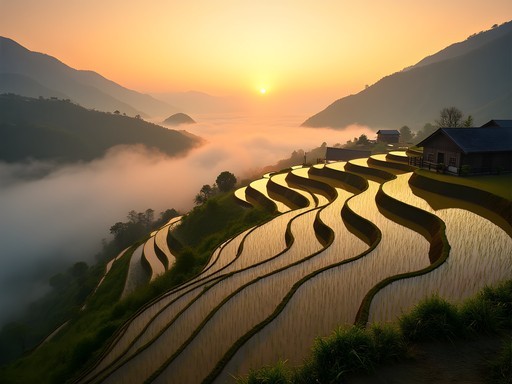
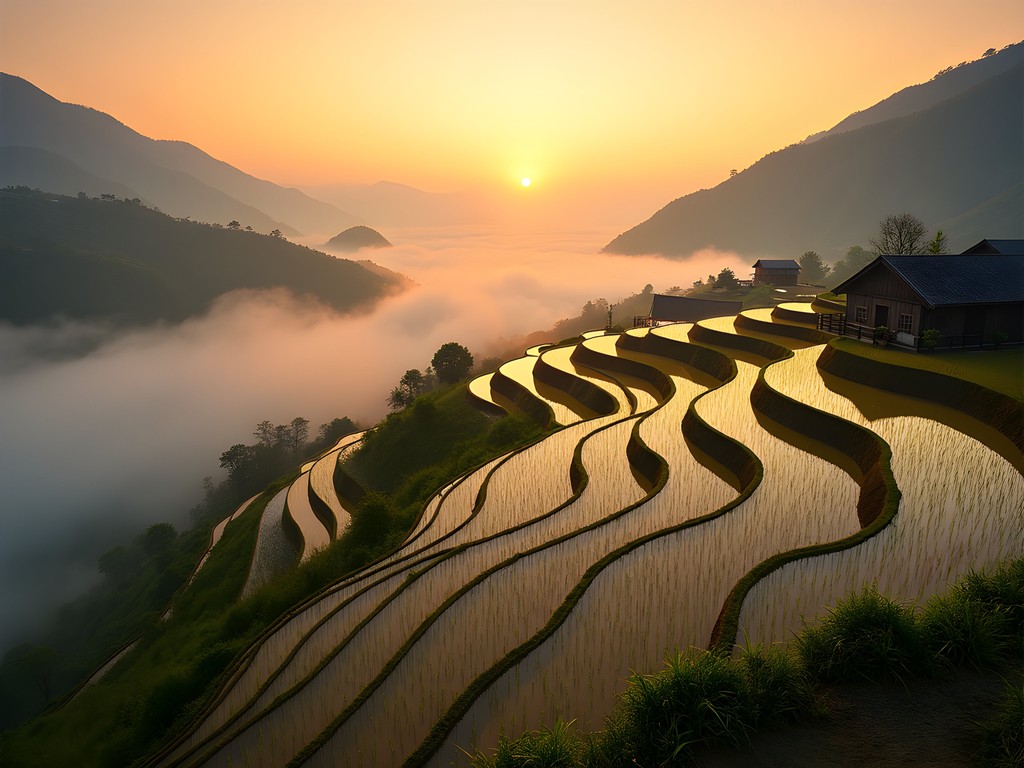
While the Li River gets all the Instagram glory, the Longji (Dragon's Backbone) Rice Terraces delivered the most breathtaking views of our entire Guilin adventure. Located about 2 hours from downtown Guilin in Longsheng County, these ancient agricultural terraces cascade down mountainsides in hypnotic patterns that shift with the seasons.
Maya and I visited in late April when the terraces were filled with water, creating thousands of mirror-like pools that reflected the sky in a mesmerizing display. The main villages—Ping'an, Dazhai and Jinkeng—each offer different hiking experiences and perspectives.
We chose to stay overnight in Ping'an village with a local Zhuang family, which I highly recommend. Starting our hike at sunrise meant we had the trails mostly to ourselves. The 'Nine Dragons and Five Tigers' viewpoint delivered panoramas that had Maya speechless (a rare occurrence, trust me).
The full-day hike from Ping'an to Dazhai takes about 4-5 hours and ranges from moderate to challenging in sections. My hiking poles were absolute lifesavers on the steeper sections, especially when afternoon rain left parts of the trail slick.
What makes this adventure special isn't just the scenery—it's the cultural immersion. Hiking through villages where Zhuang and Yao minorities have farmed for centuries offers glimpses into a way of life that's remained largely unchanged for generations. Maya was fascinated by the Yao women's incredibly long hair (often reaching their ankles) and their traditional demonstrations of rice processing techniques.
💡 Pro Tips
- Start hiking early (7-8am) to avoid both crowds and afternoon heat/rain
- Stay overnight in one of the villages rather than rushing a day trip
- Pack light but bring layers—mountain weather changes quickly
- Wear proper hiking shoes with good grip for the sometimes slippery stone paths
- Bring small denominations of yuan for purchasing water or snacks from locals along the route
2. Cycling Through Yangshuo's Countryside
If there's one activity in Guilin that perfectly balances adventure with accessibility, it's cycling through the countryside around Yangshuo. This small town about an hour south of Guilin sits amid some of the most spectacular karst landscapes in the region.
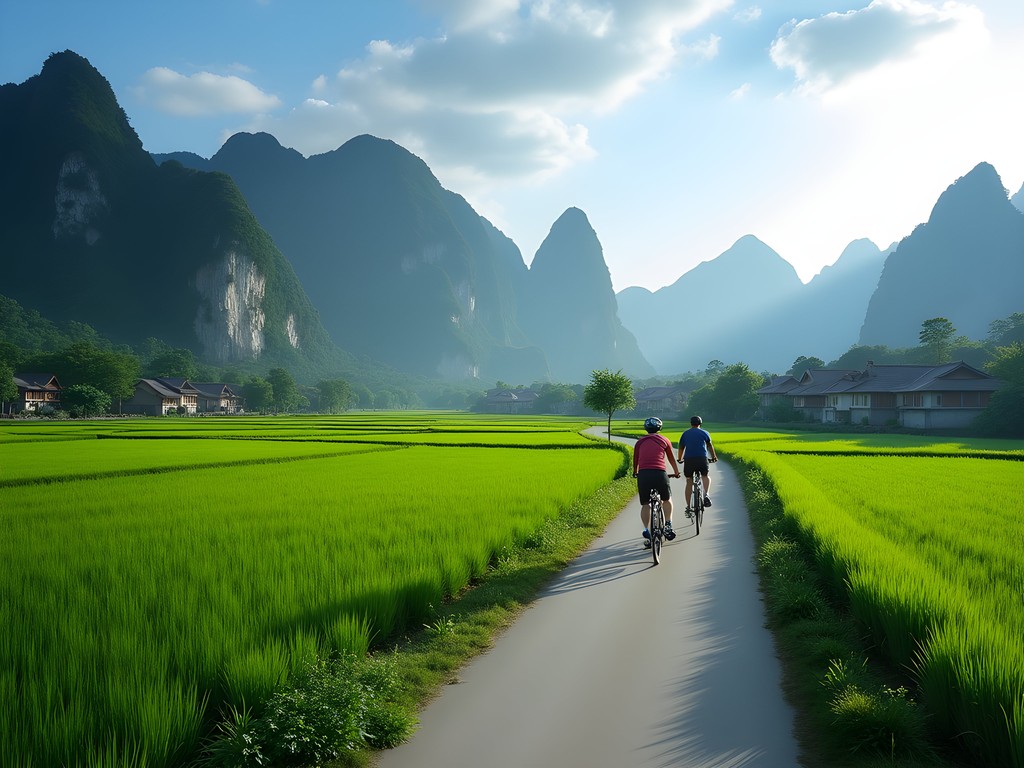
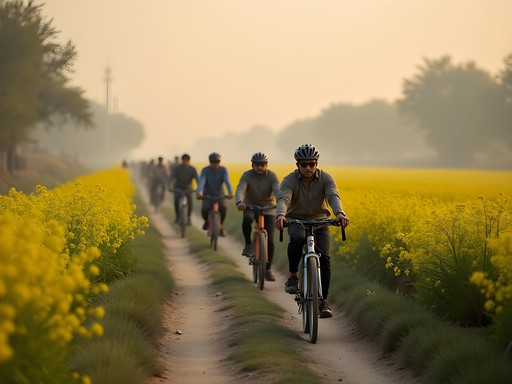
Maya and I rented bikes in Yangshuo and followed the famous 'Ten-Mile Gallery' route along the Yulong River. Unlike the busier Li River, the Yulong feels more intimate and untouched. The flat, well-maintained paths wind through farming villages, bamboo groves, and past countless limestone formations that seem to have personalities of their own.
We stopped frequently—to watch farmers working in rice paddies with water buffalo, to sample fresh pomelos from roadside stands, and to simply sit in awe of the landscape. The 'Moon Hill' formation became Maya's favorite spot, where we locked our bikes and hiked up for a panoramic view through its natural arch.
What makes this cycling adventure special is its flexibility. You can cover 10-30 miles depending on your energy level, and the terrain is mostly flat. We opted for a full-day excursion with a local guide named Mr. Wei, who showed us hidden paths and introduced us to families who've farmed this land for generations.
Being on bicycles allowed us to access areas tour buses can't reach. At one point, we found ourselves completely alone among the karst formations as the afternoon light created dramatic shadows across the landscape—a photographer's dream. My action camera captured stunning time-lapse footage as we pedaled through changing light and landscapes.
The day ended with a sunset ride back to Yangshuo along the river, where we watched bamboo rafts drifting downstream and the karst mountains silhouetted against the orange sky—a perfect end to what Maya declared 'the coolest bike ride ever.'
💡 Pro Tips
- Rent quality bikes with good suspension—the extra comfort is worth the slight price increase
- Start early to avoid the midday heat, especially in late spring
- Bring a waterproof bag for your camera and electronics—afternoon showers are common
- Download offline maps or hire a local guide to discover the less-traveled routes
- Pack plenty of water and snacks, though you'll find small shops in villages along popular routes
3. Rock Climbing the Karst Formations
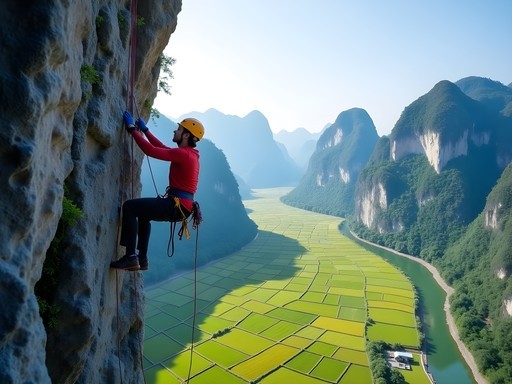
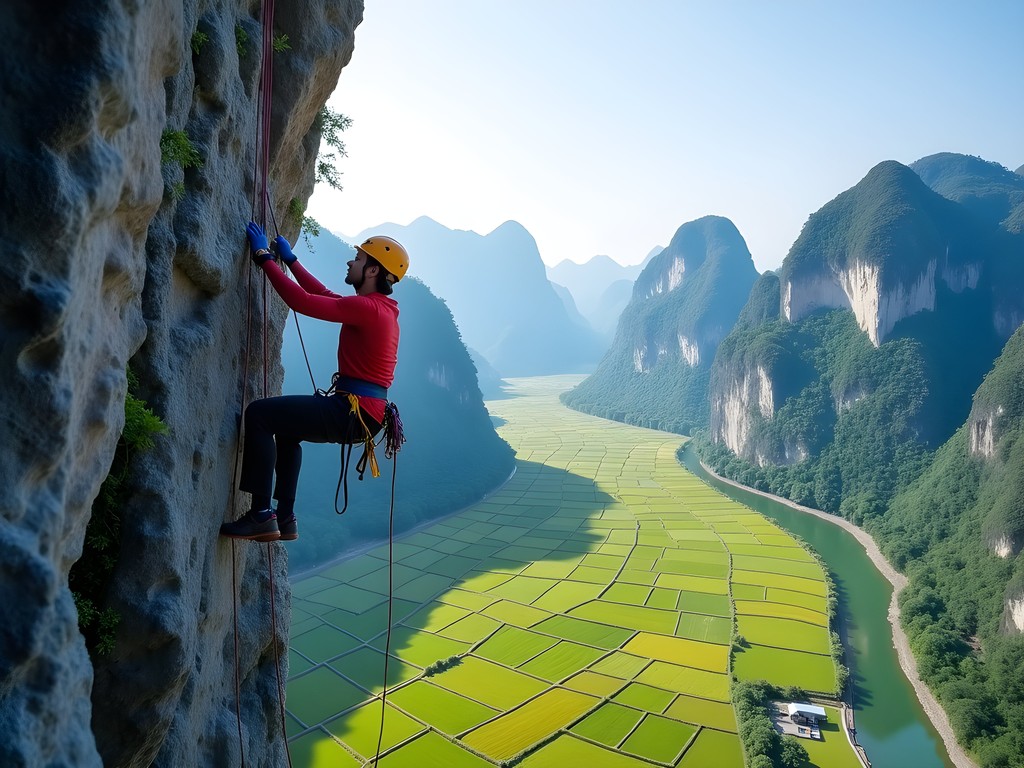
When I mentioned to Maya that we could actually climb those magnificent limestone formations we'd been admiring from afar, her eyes lit up with the kind of excitement that makes parenting so rewarding. Guilin's karst landscape, particularly around Yangshuo, has become an international rock climbing destination with over 800 established routes ranging from beginner-friendly to expert-level challenges.
Not being experienced climbers, we booked a full-day beginner course with BlackRock Climbing, a reputable outfit run by a mixture of local and international guides. Our instructor, Xiao Li, was incredibly patient with Maya's endless questions and my occasional hesitation on the more exposed sections.
We started at 'Wine Bottle Cliff,' which features several introductory routes perfect for novices. After learning basic techniques and safety procedures, we progressed to increasingly challenging climbs. By afternoon, Maya was scaling routes with names like 'Chicken Soup' and 'Baby Frog' with surprising confidence, while I found myself enjoying the physical challenge more than I'd anticipated.
What makes climbing in Yangshuo special isn't just the technical aspects but the surreal setting. As you ascend these ancient limestone formations, you gain ever-improving views of the surrounding countryside—emerald rice fields, winding rivers, and countless other karsts stretching to the horizon. At one point, perched about 30 meters up, I watched a traditional bamboo raft drift silently along the river below while farmers worked their fields in the distance—an unforgettable fusion of adventure and cultural immersion.
For our climbing day, I was grateful for my climbing shoes which provided crucial grip on the limestone. While the guide provided basic equipment, having your own comfortable shoes made a significant difference in confidence and performance.
Even if you've never climbed before, I'd highly recommend this experience. The guides are skilled at matching routes to ability levels, and there's something profoundly satisfying about physically connecting with this iconic landscape rather than just photographing it from afar.
💡 Pro Tips
- Book with established companies that prioritize safety and have English-speaking guides
- Wear comfortable, stretchy clothing that allows full range of motion
- Apply sunscreen generously—the reflection off the limestone can intensify sun exposure
- Bring more water than you think you'll need, especially in warmer months
- Consider a half-day intro session before committing to a full day if you're uncertain about climbing

4. Exploring Reed Flute Cave and Other Underground Wonders
While Guilin's aboveground landscapes deservedly steal the spotlight, what lies beneath the surface is equally spectacular. The region's extensive cave systems offer a fascinating glimpse into the geological forces that shaped this unique landscape over millions of years.
Reed Flute Cave (Ludi Yan) was our first subterranean adventure, located just a few miles northwest of downtown Guilin. Named for the reeds growing outside its entrance (traditionally used to make flutes), this massive limestone cave extends about 240 meters into the mountain.
What makes Reed Flute Cave extraordinary is the combination of natural formations and thoughtful illumination. Stalactites, stalagmites, and stone pillars are dramatically lit with colorful lights that change hues as you progress deeper into the cavern. While some might find the lighting a bit theatrical, Maya was absolutely mesmerized by the rainbow-colored reflections in the underground pools and the massive chamber known as 'Crystal Palace.'
For a more adventurous caving experience, we joined a small-group tour to the less-visited Longmen Water Cave near Yangdi Village. This required some light wading through underground streams and navigating narrower passages, but the reward was experiencing a more natural cave system without the crowds or colored lights. The highlight was floating in inner tubes through a section of the cave, gazing up at stalactites glittering in our headlamps' beams—an experience that had Maya declaring it 'better than any water park ever.'
My waterproof headlamp proved invaluable in the darker sections of Longmen Cave, allowing us to spot details our guide pointed out while keeping hands free for scrambling over rocks.
What fascinated me most about Guilin's caves was understanding how they're connected to the visible karst landscape above. These caves formed as acidic rainwater slowly dissolved the limestone over millions of years—the same process that created the iconic towers we'd been admiring aboveground. It's like seeing both the positive and negative space of a massive natural sculpture.

💡 Pro Tips
- Wear shoes with good grip—cave floors can be slippery even on developed paths
- Bring a light jacket even in spring, as cave temperatures remain cool year-round
- Visit Reed Flute Cave either early morning or late afternoon to avoid tour group crowds
- For adventure caves like Longmen, wear quick-dry clothing and water shoes
- Keep cameras in waterproof cases for caves with underground streams or high humidity
5. Bamboo Rafting on the Yulong River
While the motorized cruise boats on the Li River get all the attention (and rightfully appear on the 20 yuan note), I found the traditional bamboo rafting experience on the smaller Yulong River to be far more rewarding and authentic.
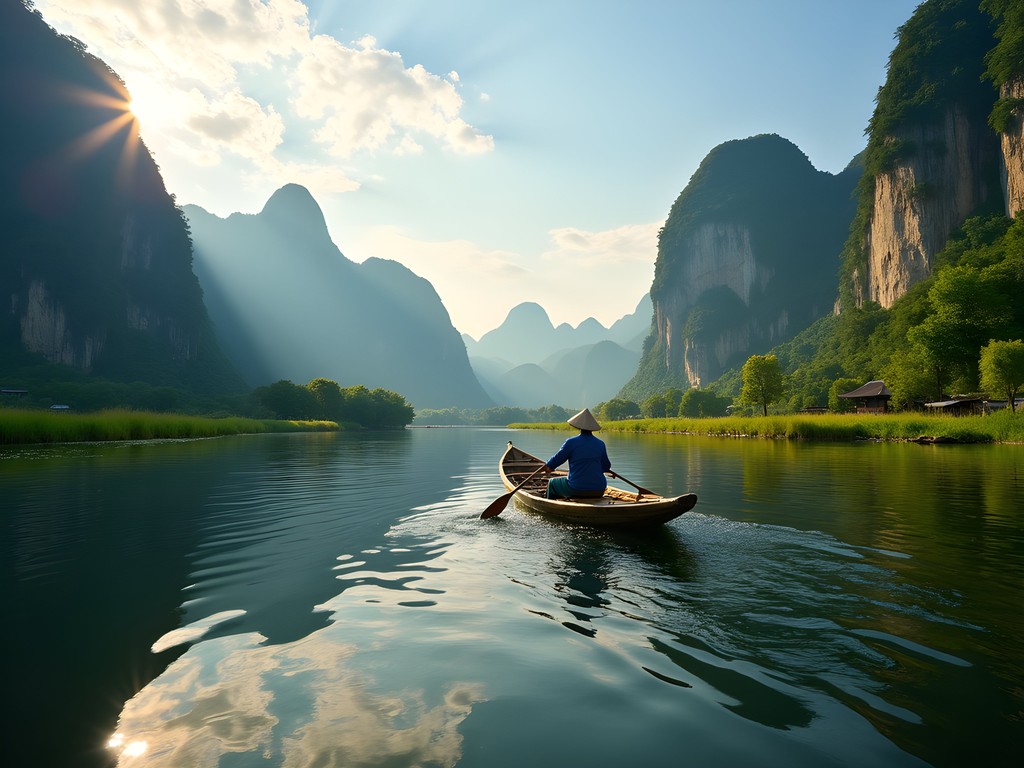
After our cycling adventure, Maya and I arranged for a late afternoon bamboo raft journey. Unlike the larger Li River cruise boats, these are genuine bamboo rafts—though modernized with plastic barrels for buoyancy and comfortable seating. Each raft accommodates just 2-3 passengers and a local guide who propels and steers the craft using a long bamboo pole.
The Yulong River moves at a gentler pace than the Li, creating a perfect environment for slow travel. Our 2-hour journey took us past scenes that felt plucked from classical Chinese landscape paintings: farmers working in riverside fields, water buffalo lounging in the shallows, and always those magnificent karst formations rising dramatically on both sides.
The highlight came when we drifted through a series of small rapids and under ancient stone bridges. At the Fuli Bridge, locals often gather to take photos of passing rafts, creating a curious exchange where tourists and locals photograph each other simultaneously. Maya found this particularly amusing, especially when an elderly woman gave her a thumbs-up for her attempt at saying 'nihao.'
What makes this experience special is the silence—with no motor, you hear everything: birds calling from the shoreline bamboo, the gentle splash of the pole entering water, distant farmers calling to each other across fields. It creates a meditative quality that's increasingly rare in modern travel experiences.
I captured the journey with my waterproof camera, which proved perfect for shooting from water level without worrying about splashes during the small rapids. The perspective from just inches above the water surface created some of my favorite photos from our entire Guilin trip.
For families, bamboo rafting offers a perfect balance of adventure and accessibility. Maya alternated between trailing her hand in the cool water, spotting kingfishers darting along the shoreline, and simply lying back to watch the karst silhouettes drift by overhead—experiences no digital entertainment could ever replace.
💡 Pro Tips
- Book a late afternoon raft trip (after 3pm) when the light is golden and most tour groups have departed
- Bring sun protection—hats, sunscreen and light long sleeves are essential as there's limited shade on the rafts
- Keep electronics in waterproof cases—the small rapids aren't dangerous but can definitely splash
- Consider combining rafting with cycling by riding to an upriver launch point and rafting downstream
- Negotiate the price beforehand and confirm the exact route and duration—prices vary seasonally
6. Hiking Xianggong Mountain for Sunrise Photography
For photography enthusiasts visiting Guilin, sunrise at Xianggong Mountain (Xiangongshan) is nothing short of magical. Located about 25km from Yangshuo and overlooking a spectacular bend in the Li River, this relatively small mountain delivers arguably the most iconic views in the entire region.
Maya was less than thrilled when I woke her at 4:30am, but I'd promised this would be worth it. We joined a small-group sunrise tour that picked us up from our Yangshuo hotel and drove us to the mountain base in darkness. The hike up takes about 20-30 minutes on stone steps—moderately challenging but manageable for most fitness levels.
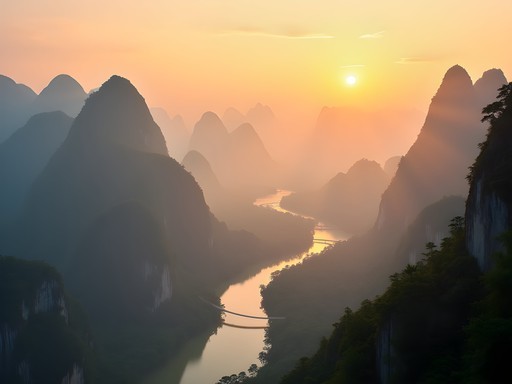
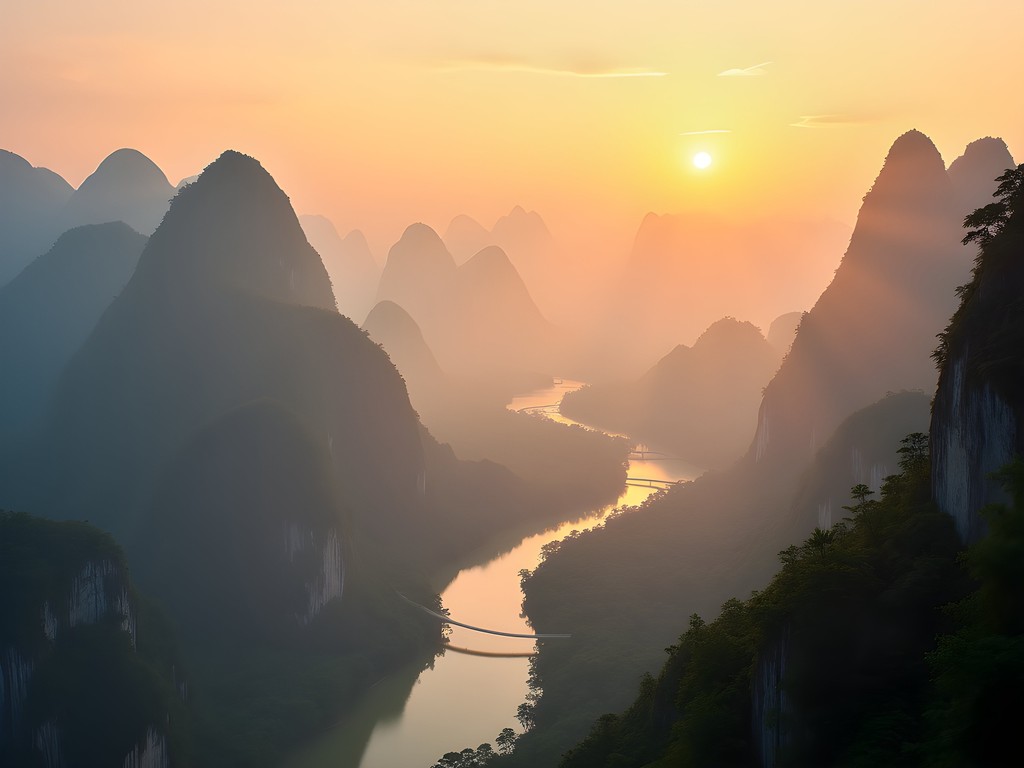
Reaching the summit platform before dawn, we claimed a spot along the railing as other photographers began setting up tripods. The anticipation was palpable as the first hints of light revealed the landscape below: the Li River winding between countless karst peaks, with morning mist hovering in the valleys.
As the sun crested the distant mountains, the scene transformed minute by minute. The mist began glowing gold, then pink, creating an ethereal landscape that barely seemed real. Maya, initially grumpy about the early wake-up, stood transfixed for nearly an hour as the light show unfolded. 'It looks like we're in Avatar,' she whispered, referencing the floating mountains of Pandora—an apt comparison.
What makes Xianggong Mountain special is how it perfectly frames the quintessential Guilin landscape in one sweeping vista. You can identify the exact scene depicted on the 20-yuan note, plus dozens more compositions as you move along the viewing platform.
My travel tripod proved essential for capturing sharp images in the dim pre-dawn light, allowing me to shoot long exposures of the mist movement without blur. Its compact size made carrying it up the mountain much easier than traditional tripods.
While the platform gets crowded with photographers (both tourists and locals), there's a collaborative atmosphere as everyone works to capture this spectacular natural phenomenon. Several Chinese photographers showed Maya techniques for shooting into the sun without flare—impromptu lessons she still references when we're out photographing at home.
💡 Pro Tips
- Arrive at the summit at least 30-45 minutes before official sunrise time to secure a good spot
- Bring layers—spring mornings can be surprisingly cool before the sun rises
- Pack a headlamp for the pre-dawn climb up the stone steps
- Consider joining a dedicated photography tour rather than a general tour for better timing and locations
- Bring a zoom lens to capture both wide landscapes and details of distant karst formations
7. Hiking and Wild Swimming at Wupai River
For our final Guilin adventure, we sought something off the standard tourist circuit. A local guide in Yangshuo mentioned the Wupai River area—a place where few international visitors venture but that offers some of the region's most pristine natural experiences.
Located about an hour's drive from Yangshuo, the Wupai River cuts through karst landscape with several sections featuring crystal-clear pools perfect for swimming. We arranged a driver through our hotel and set off with a packed lunch and swimming gear, unsure exactly what to expect.
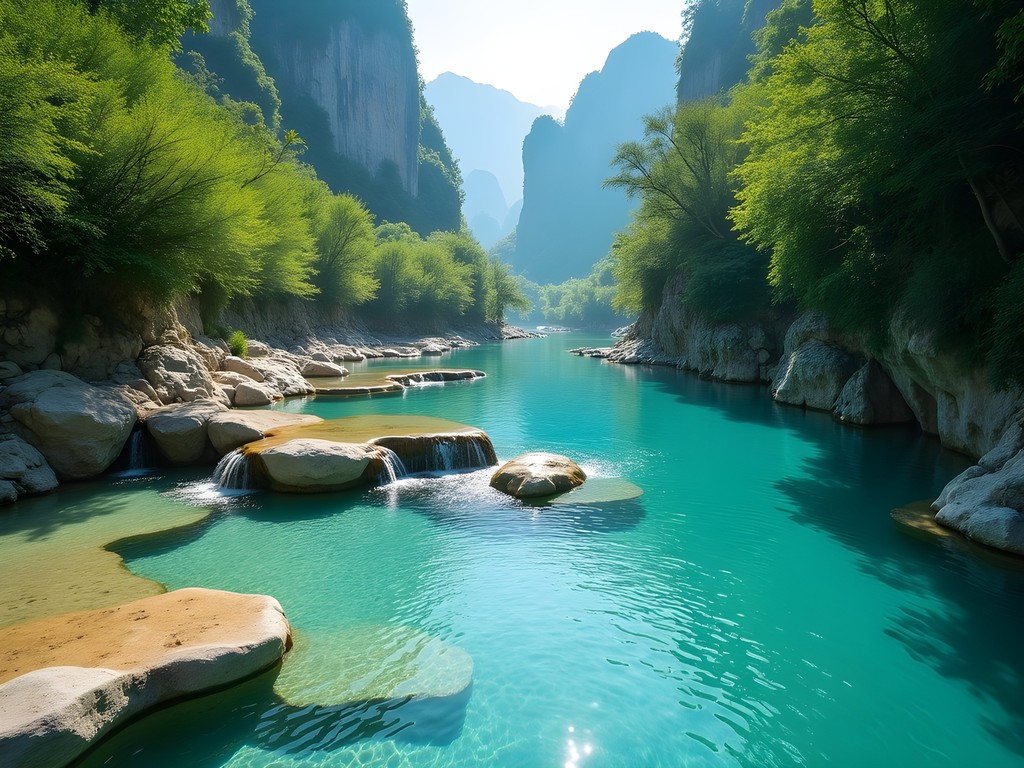
The adventure began with a moderate 40-minute hike along a path that alternated between riverside trails and sections where we rock-hopped across the stream itself. The further we progressed, the more spectacular the scenery became—sheer limestone cliffs rising from both sides of the river, with lush vegetation clinging improbably to vertical rock faces.
The highlight was reaching a series of tiered natural pools with water so clear we could see every pebble on the bottom. Unlike the more famous waterfalls in the region, we encountered only a handful of local Chinese visitors here, creating a sense of discovery that's increasingly rare in popular destinations.
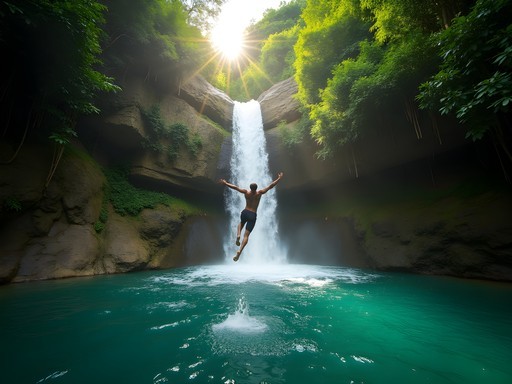
Maya immediately declared it 'the best swimming hole ever' and spent hours alternating between floating in the deeper pools and exploring the small caves behind some of the cascades. The water was refreshingly cool but not cold—perfect for a warm spring day.
What made this experience special was its unscripted nature. Without designated viewing platforms or established photo spots, we were free to explore at our own pace, finding personal connections to this remarkable landscape. At one point, we sat silently on a large rock mid-river, watching dragonflies skim across the water surface while karst peaks towered above—a moment of natural perfection I'll remember long after more structured tourist experiences have faded.
For this adventure, our water shoes were absolutely essential, providing grip on slippery river rocks while protecting feet during water crossings and swimming. They're now a permanent addition to our travel gear for any destination with potential water adventures.
The Wupai River reminded me why getting off the beaten path—even in popular tourist regions—remains so rewarding. It offered Maya a glimpse of what travel was like before Instagram dictated destinations, where discovery still feels personal and authentic.
💡 Pro Tips
- Hire a local driver who knows the exact location—it's not well marked and difficult to find independently
- Visit on weekdays to avoid local weekend crowds during peak season
- Bring all food and water you'll need—there are no facilities once you leave the main road
- Pack quick-dry towels and a change of clothes for after swimming
- Wear proper water shoes rather than sandals—the river rocks can be slippery and sharp
Final Thoughts
As our week in Guilin came to an end, Maya and I sat reviewing photos on our hotel balcony overlooking the karst skyline. 'This wasn't anything like I expected China to be,' she admitted, scrolling through images of her bamboo rafting and swimming in crystal pools. That's precisely why I believe Guilin deserves more than the standard day-trip treatment it often receives in China itineraries. By diving deeper into its outdoor offerings, we discovered a region that balances natural wonder with cultural immersion in a way few destinations can match. Whether you're scaling limestone peaks, cycling through timeless villages, or simply drifting silently down rivers that have inspired artists for centuries, Guilin offers the kind of genuine connections to both nature and culture that make travel truly transformative. So when planning your China adventure, I urge you to allow Guilin the time it deserves—and to venture beyond the famous Li River cruise into the remarkable landscapes and experiences that await those willing to explore a little deeper. The memories you'll create among these ancient mountains will stay with you long after you've returned home.
✨ Key Takeaways
- Spring offers ideal conditions for Guilin's outdoor adventures with comfortable temperatures and lush scenery
- Staying in Yangshuo for at least part of your trip provides better access to outdoor activities than basing entirely in Guilin city
- Hiring local guides unlocks access to less-visited areas and deeper cultural understanding
- Combining active adventures (hiking, climbing) with passive experiences (rafting, photography) creates a well-balanced itinerary
- Venturing beyond the standard Li River cruise reveals Guilin's true depth as a world-class outdoor destination
📋 Practical Information
Best Time to Visit
Mid-March to May (spring) or September to November (fall) for ideal weather and scenery
Budget Estimate
$100-150 per day including accommodations, activities and meals
Recommended Duration
5-7 days minimum to experience multiple adventures beyond the standard attractions
Difficulty Level
Moderate - Activities Can Be Adjusted For Different Fitness Levels But Some Hiking And Physical Activity Required

Comments
TravelBug_Annie
Going to Guilin next month! How many days would you recommend to do all these activities? Is a week enough?
summergal
Not the author but I'd say a week is perfect! Spend 2-3 days in Yangshuo, 1-2 for the rice terraces, and the rest exploring caves and the city itself.
WanderingSoul
Those photos of the karst mountains are incredible! Adding Guilin to my bucket list right now!
Timothy Jenkins
Excellent post that goes beyond the typical Guilin experiences! The rock climbing in Yangshuo is truly world-class - I spent three days there last April and barely scratched the surface. One tip for anyone heading to the Dragon's Backbone Rice Terraces: go very early morning (before 8am) or late afternoon (after 4pm) to avoid both the crowds and the harshest sun. And don't forget to bring your hiking poles if you plan to explore the more remote sections - those terraces can get slippery, especially after rain!
ChinaExplorer92
Is April a good time to visit the rice terraces? I heard they're not as green then?
Timothy Jenkins
You're right! April is early in the growing season. For the vibrant green terraces, May-June or September-October are ideal. I went in April for the rock climbing weather, which was perfect!
oceanbackpacker
Really cool! Thanks for sharing
summergal
This post brought back so many memories! I went to Guilin last summer but only did the Li River cruise and missed all these other amazing adventures. The Dragon's Backbone Rice Terraces look incredible! Did you find it difficult to get between all these different sites? I relied on public transportation and found it a bit challenging at times.
Timothy Jenkins
When I visited Guilin last year, I rented a scooter for the countryside areas around Yangshuo - absolute game changer for getting to the more remote spots! For the rice terraces though, I'd recommend joining a day tour as the journey is quite long.
summergal
Thanks for the tip! Did you need a special license for the scooter?
Timothy Jenkins
Most places accept an international driving permit, but some rental shops in Yangshuo are pretty relaxed about it. Just make sure you're comfortable riding before hitting those country roads!
oceantime
is it easy to get around without speaking Chinese?
starhero
not OP but i was there last year and had a translation app on my phone that worked pretty well. most tourist spots have some english signage
Morgan Cunningham
Excellent write-up, Riley. I visited Guilin three times between 2019 and 2024, and you've captured exactly what makes it special beyond the typical Li River cruise. A few observations: The Dragon's Backbone terraces are spectacular but be prepared for a proper workout - those stone steps are no joke. I found the Jinkeng (Golden) terraces less crowded than Ping'an if you're visiting during peak season. Regarding Reed Flute Cave, the lighting is quite garish with all the colored LEDs, but the formations themselves are genuinely impressive. If you want a more natural cave experience, Silver Cave near Lipu is worth the extra travel time. One thing I'd add: the weather in Guilin is incredibly unpredictable. That mist you mentioned creates the iconic scenery but can also mean visibility drops to almost nothing. I've had trips where we couldn't see the karsts at all for three days straight.
backpackmood
Going there in March!! How many days would you recommend for doing most of these activities? Also is the rock climbing beginner friendly or do you need experience?
Morgan Cunningham
I'd budget at least 5-6 days to do it justice. The rice terraces alone deserve a full day plus travel time. As for climbing, there are routes for all levels but I'd recommend going with a guide if you're new to it.
wildfan
Love the photos!
Hunter Thompson
Riley, absolutely brilliant post! I did the Yangshuo cycling route last spring and it was hands down one of my favourite days in China. The countryside is mental - just rice paddies, water buffalo, and those mad limestone peaks everywhere you look. Pro tip: rent a bike early (before 9am) to beat the tour groups. Also, there's this tiny family-run noodle shop about 5km out on the Yulong River route that does incredible beer fish. Can't remember the exact name but it has red lanterns out front. Did you manage to try rock climbing? I've heard the routes there are world-class but didn't have time myself.
oceanbackpacker
do you need to book the bike rental ahead or can you just show up?
Hunter Thompson
Just show up mate! There's loads of rental shops along West Street in Yangshuo. Should be around 30-40 yuan for the day.
Venture X
Premium card with 2X miles, $300 travel credit, Priority Pass