
Disclosure: This article contains affiliate links. We may earn a commission from purchases at no extra cost to you, which helps our travel content.
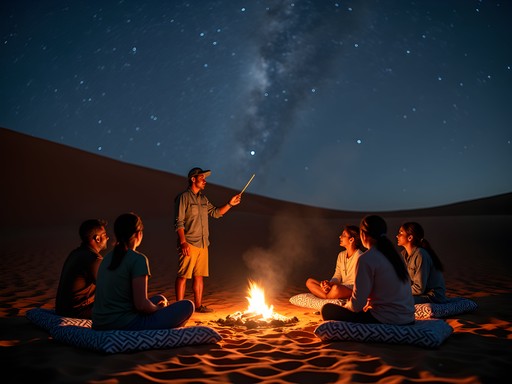
The first time I stood beneath the Namibian night sky, I experienced what I can only describe as a profound geological vertigo. After decades of mapping hot springs across three continents and exploring subterranean cave systems, I found myself utterly humbled by the simple act of looking up. The Namib Desert—one of our planet's oldest—offers a celestial theater so pristine and expansive that it fundamentally alters one's perception of our place in the cosmos. For couples seeking a transcendent weekend experience, Sossusvlei's winter skies provide what may well be Earth's most spectacular astronomical display.

The Geological Theater of Sossusvlei
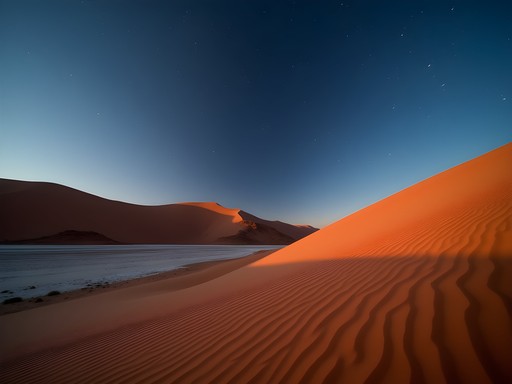
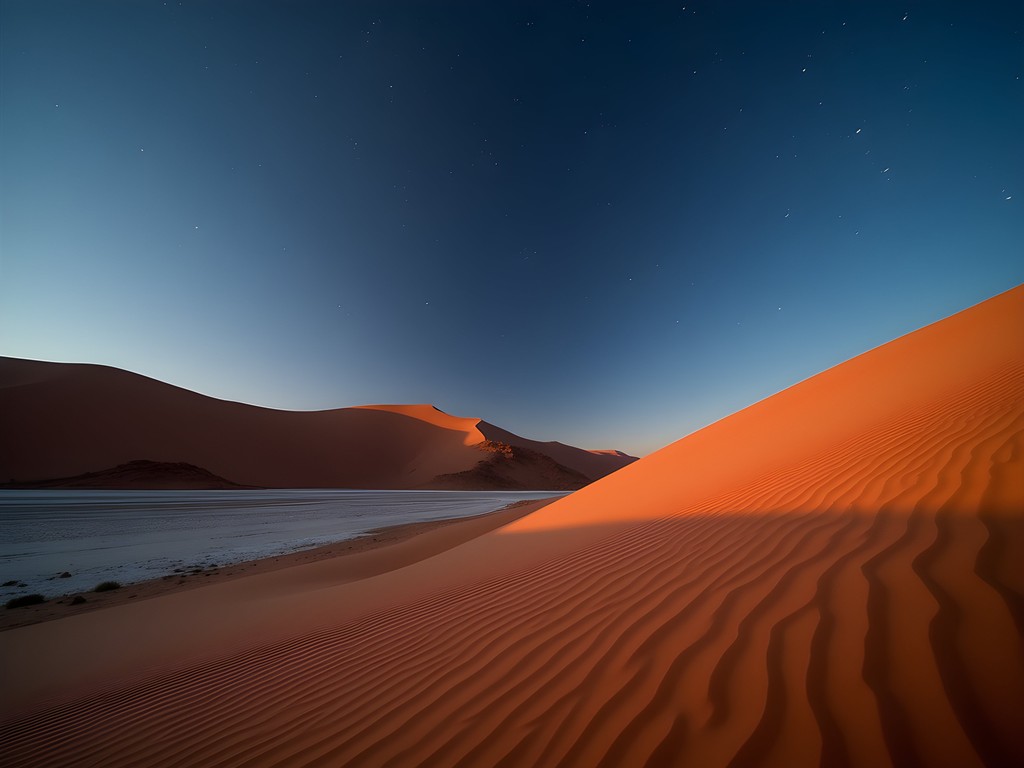
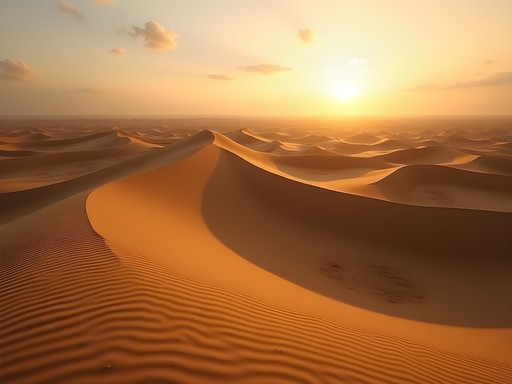
Sossusvlei sits within the Namib-Naukluft National Park, where 80-million-year-old sand dunes—some towering over 300 meters—create a natural amphitheater for celestial observation. The geological composition of these dunes, primarily iron-rich sandstone that has oxidized over millennia, gives them their characteristic reddish hue that provides a stunning contrast to the night sky.
During my research expeditions connecting geological formations with ancient human settlements, I've documented how the extremely low humidity, minimal light pollution, and high elevation combine to create viewing conditions that rival professional observatories. The desert's thermal properties—rapidly cooling after sunset—eliminate the atmospheric distortion that plagues many stargazing locations.
What makes Sossusvlei particularly remarkable is the juxtaposition of ancient earth and infinite cosmos. Standing on dunes formed when dinosaurs still roamed, you'll witness light that began its journey toward Earth before human civilization existed. This perspective has a way of recalibrating one's sense of time and significance.
💡 Pro Tips
- Visit during new moon phases for optimal star visibility
- The darkest skies occur 2-3 hours after sunset
- Climb dunes before sunset to secure an elevated viewing position
Essential Equipment for Desert Astronomy
After numerous astronomical expeditions in remote locations, I've refined my equipment recommendations to balance quality observation with practical transportability. For couples visiting Sossusvlei, I suggest prioritizing comfort and optical clarity over excessive equipment.
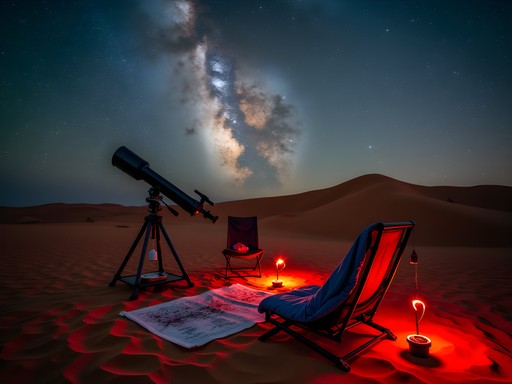
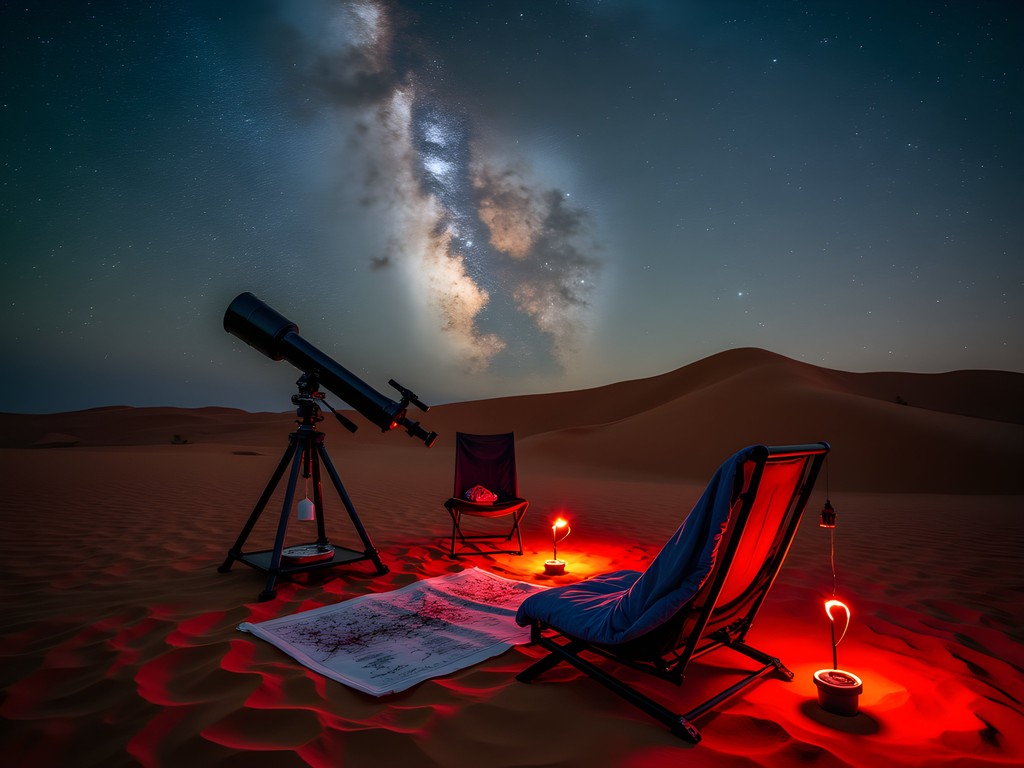
A quality star chart is essential—while smartphone apps can work, the star wheel remains my preferred tool, functioning without batteries or glare that can impair night vision. For serious viewing, I recommend a portable telescope which offers remarkable clarity while remaining manageable for travel.
Despite professional equipment being valuable, I've found that the most memorable experiences often come from simply lying back on a comfortable reclining desert chair designed specifically for skyward viewing. This allows couples to share the experience without the taking turns at an eyepiece.
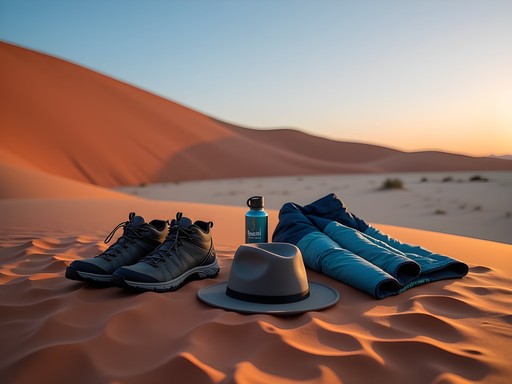
Temperature regulation deserves special consideration—Namibian winter nights drop dramatically after sunset. A heated blanket powered by a robust power bank has transformed my winter viewing sessions from endurance tests to luxurious experiences.
💡 Pro Tips
- Red-light headlamps preserve night vision while allowing movement
- Bring a thermos of hot beverage—desert temperatures drop rapidly after sunset
- Allow 20-30 minutes for your eyes to fully adapt to darkness
Navigating Namibia's Celestial Landmarks
What continually astonishes me about Sossusvlei's night sky is not merely its clarity but its profound difference from Northern Hemisphere observations. For visitors from Europe or North America, the southern celestial sphere presents entirely new constellations and celestial features.
The Southern Cross (Crux) serves as your primary navigation point, replacing the familiar North Star. The Magellanic Clouds—satellite galaxies of our Milky Way—appear as misty patches visible to the naked eye, a sight entirely absent from northern skies. Jupiter's moons, Saturn's rings, and countless deep-sky objects reveal themselves with minimal optical assistance.
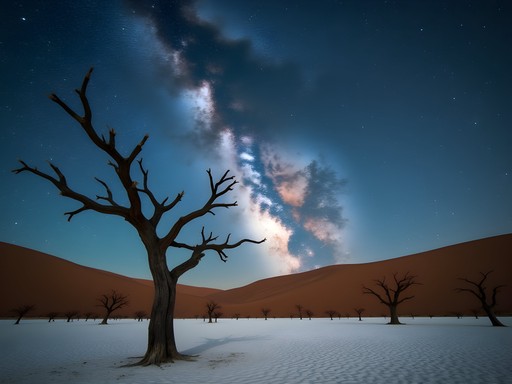
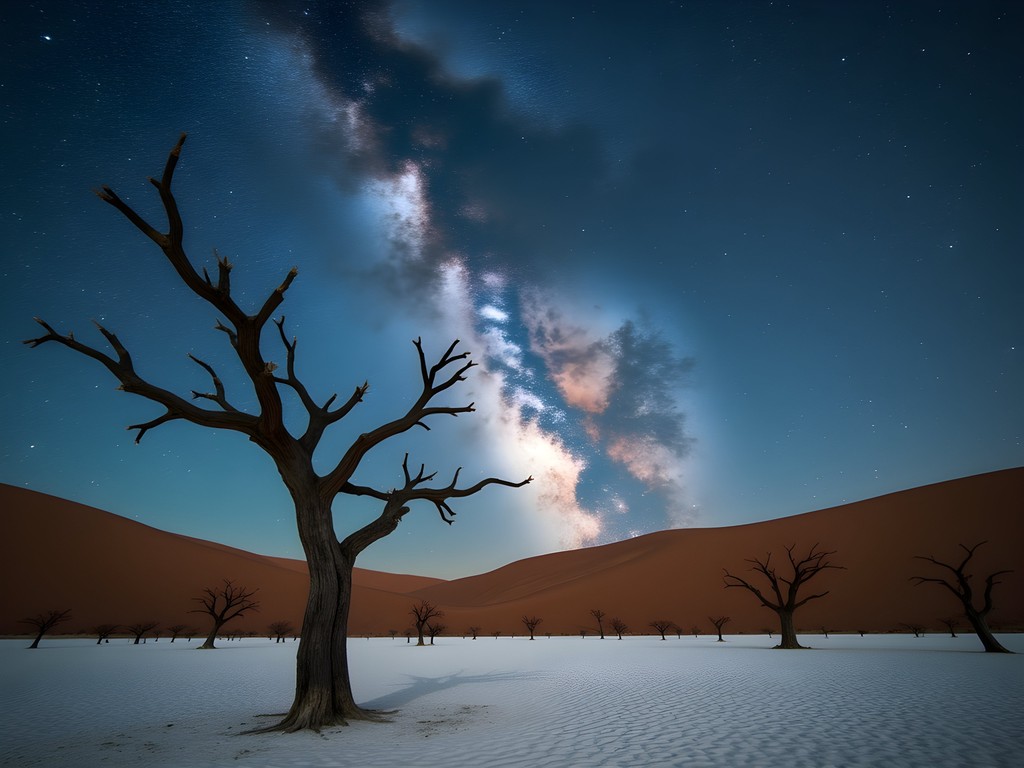
During my geological mapping work in Namibia, I developed a particular appreciation for the region between Scorpius and Sagittarius, where the center of our galaxy lies. The dark dust lanes cutting through the dense star fields create what indigenous Namibian cultures described as the 'backbone of night'—a structure that becomes apparent only when atmospheric conditions are perfect.
For detailed constellation identification, I recommend the southern hemisphere star guide which provides seasonal maps specifically calibrated for southern Africa's latitude.
💡 Pro Tips
- The galactic center is best viewed around midnight in winter months
- Allow your eyes to use peripheral vision to detect faint objects
- Learn 3-4 key southern constellations before your trip for easier orientation

Luxury Accommodations with Astronomical Amenities
After decades of fieldwork in remote locations, I've developed a profound appreciation for thoughtful accommodations that enhance natural experiences rather than competing with them. Sossusvlei offers several exceptional options that merge desert luxury with astronomical access.
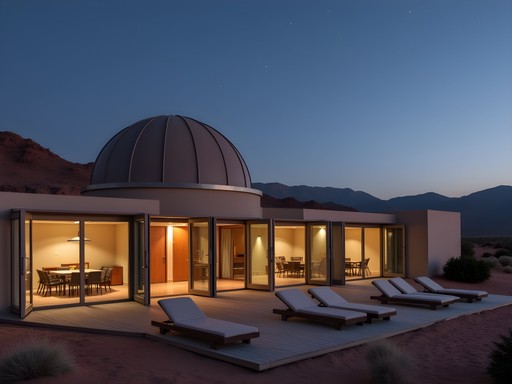
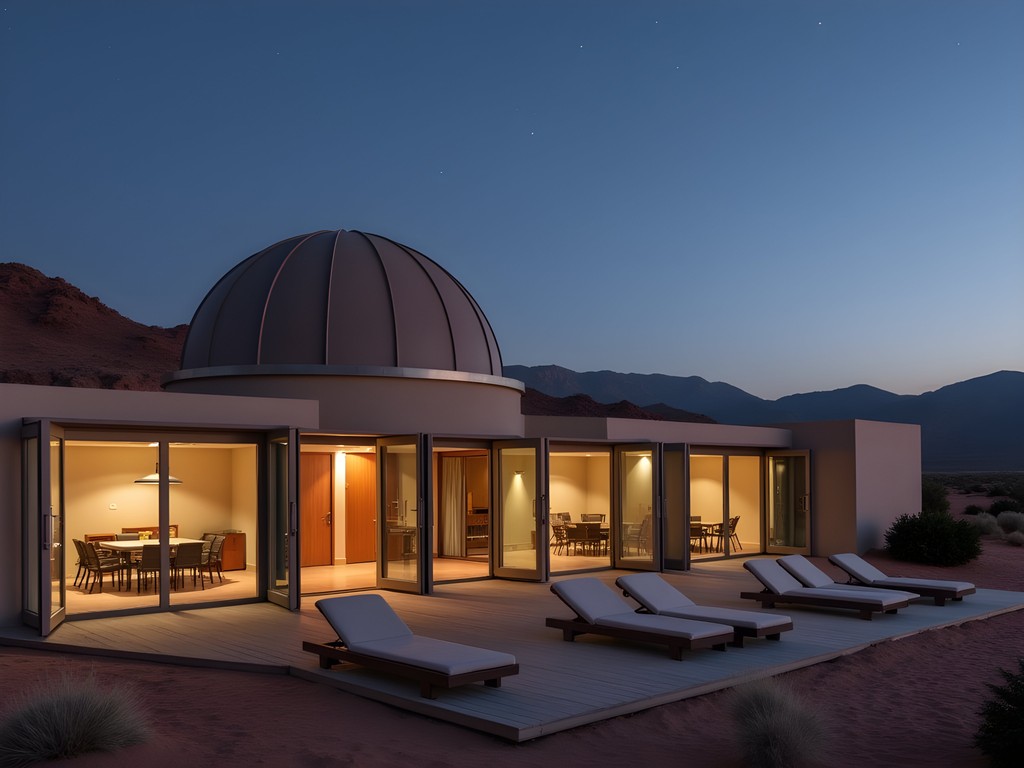
&Beyond Sossusvlei Desert Lodge stands as the premier choice for serious stargazers, featuring a professional observatory with a 12-inch telescope and resident astronomer. Their suites include skylights above beds and completely retractable walls, effectively eliminating the boundary between accommodation and cosmos. During my consultancy work connecting sustainable tourism with scientific research, I've watched this property evolve into a model for astronomical ecotourism.
For couples seeking ultimate privacy, Little Kulala's climate-controlled desert villas include rooftop 'star beds' where you can sleep entirely outdoors while maintaining luxury amenities. The property's location in a private reserve adjacent to Namib-Naukluft Park provides exclusive dune access outside standard park hours—a critical advantage for astronomical twilight observation.
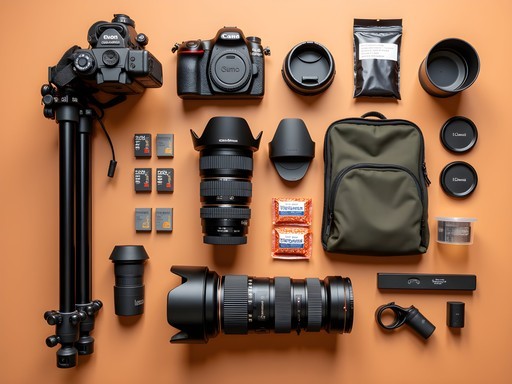
Whichever accommodation you select, I recommend bringing a personal star tracker mount if you're interested in astrophotography. This compact device compensates for Earth's rotation, allowing even smartphone cameras to capture remarkable long-exposure images of the night sky.
💡 Pro Tips
- Request rooms furthest from common areas to minimize light interference
- Book private dining experiences away from the main lodge for uninterrupted night viewing
- Inquire about specialized astronomy guides when booking your stay
Cultural Astronomy: The Sky Knowledge of Namibia's Indigenous Peoples
My decades working alongside my anthropologist wife have impressed upon me the importance of understanding indigenous astronomical traditions. The Namib Desert's earliest inhabitants—San and Khoi-Khoi peoples—developed sophisticated celestial navigation and timekeeping systems that predate Western astronomy by millennia.
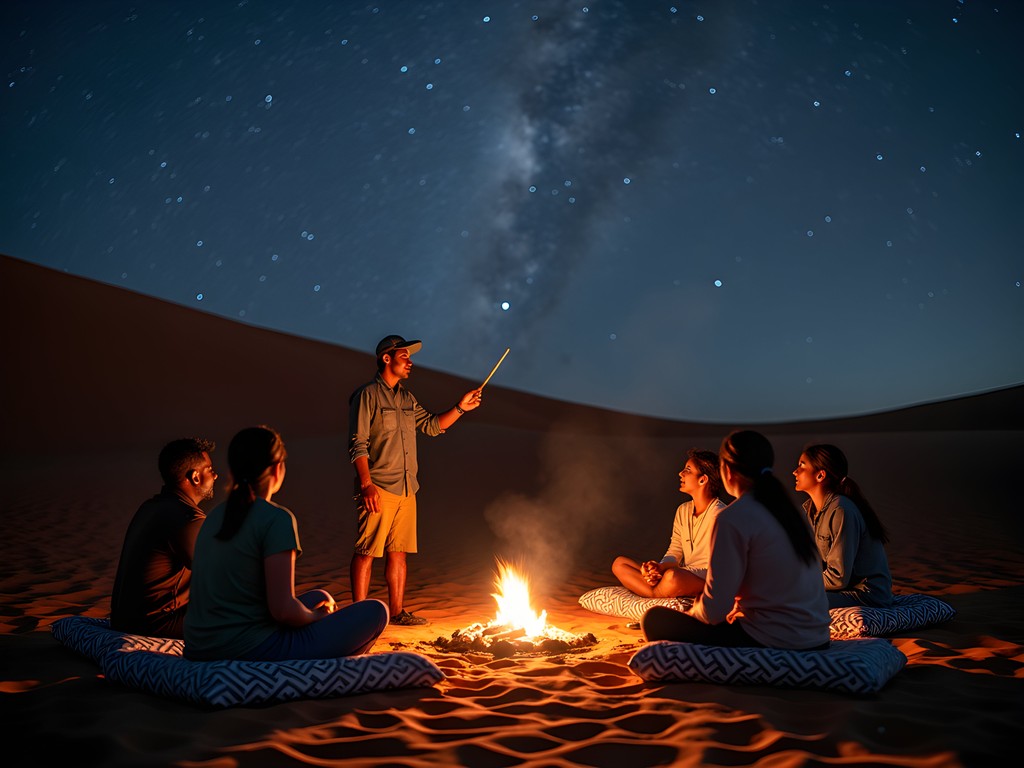
During winter months, when the Southern Cross stands prominent in early evening, local guides can share how these constellations functioned as both calendar and spiritual framework. What Western astronomy identifies as the Coal Sack Nebula—a dark absorption nebula near the Southern Cross—features prominently in San mythology as a celestial animal skin bag.
I highly recommend arranging a cultural astronomy session with guides from the Namibia Community Based Tourism Association. These experiences connect traditional knowledge with contemporary astronomy, providing context that transforms star patterns into living cultural heritage.
For deeper preparation before your journey, the cultural astronomy guide provides excellent background on southern African sky traditions. During my geological surveys across Namibia, I've documented numerous rock art sites that depict celestial events, suggesting a continuous astronomical tradition spanning thousands of years in this very region.
The night vision monocular has proven invaluable during these cultural astronomy sessions, allowing observation of landscape features referenced in traditional stories without disturbing the darkness necessary for optimal star viewing.
💡 Pro Tips
- Arrange cultural astronomy guides at least 3 months in advance
- Learn basic San constellation names before your visit
- Request permission before photographing cultural astronomy demonstrations
Final Thoughts
As I've witnessed throughout my career studying the intersection of geological wonders and human heritage, certain landscapes possess a transcendent quality that alters our perception of time and scale. Sossusvlei's celestial theater—where 80-million-year-old dunes meet light that has traveled for millennia—creates precisely such an environment. For couples seeking connection with each other and the cosmos, few experiences rival a winter weekend beneath these southern stars.
The luxury accommodations, while exceptional, ultimately serve as mere platforms from which to access the true attraction: an unadulterated view of our galactic neighborhood. Whether you're identifying southern constellations for the first time or capturing astrophotography against otherworldly landscapes, Sossusvlei offers an astronomical experience that recalibrates one's perspective.
I encourage you to approach this journey with both scientific curiosity and cultural respect—the stars above Namibia have guided countless generations before us. Perhaps, like me, you'll discover that in the profound darkness of the desert night, we paradoxically see most clearly our connection to both Earth's ancient past and the cosmic future that awaits us all.
✨ Key Takeaways
- Sossusvlei offers one of Earth's premier stargazing environments due to its dry air, high elevation, and minimal light pollution
- Winter provides optimal viewing conditions with clearer skies and earlier darkness
- Luxury accommodations with astronomical amenities enhance the experience without sacrificing comfort
- Indigenous astronomical knowledge adds cultural depth to scientific observation
- The juxtaposition of ancient landscape and cosmic perspective creates a transformative experience
📋 Practical Information
Best Time to Visit
May through August (Namibian winter)
Budget Estimate
$500-800 per night for luxury accommodations
Recommended Duration
3-4 nights minimum
Difficulty Level
Easy


Comments
Riley Griffin
Jonathan, this brought back so many memories! I took my family to Sossusvlei three years ago when my kids were 10 and 12. We thought they'd be bored in the desert, but they still talk about the stargazing night as their favorite travel experience ever. We brought our astronomy binoculars which were perfect for the kids to use while my husband and I took turns with our camera setup. Pro tip for families: bring red headlamps for everyone so you can move around without ruining your night vision. Also, the temperature drop at night surprised us - pack more warm layers than you think you'll need, especially if visiting June-August!
Jonathan Richardson
Great advice about the red headlamps and layers, Riley! The desert temperature swing really catches people off guard. And it's amazing how stargazing can captivate kids when they get to see the real night sky without light pollution.
explorebuddy
Those photos of the night sky are unreal! Added to my bucket list!
greenone
This looks amazing! I'm planning a trip to Africa next year but have never done any stargazing before. Do you need to bring your own equipment or can you still enjoy it without any special gear?
Jonathan Richardson
Great question! You absolutely don't need any special equipment to enjoy the night skies in Namibia - your naked eyes will be treated to more stars than you've likely ever seen. However, even a basic pair of binoculars will enhance the experience tremendously. Many lodges also provide telescopes for guests.
greenone
Thanks! That's really helpful. I think I'll look into some binoculars then. Can't wait!
sunsetnomad
Just got back from Namibia last month and the night skies were INCREDIBLE! Sossusvlei was the highlight of our trip - we spent three nights just lying on blankets staring up at the Milky Way. It's exactly like Jonathan describes - that feeling of vertigo when you look up is so real. We stayed at one of the lodges that had telescopes available for guests. Worth every penny for that experience alone!
Jonathan Richardson
So glad you had that experience! It really is unlike anywhere else on Earth. Which lodge did you stay at?
sunsetnomad
We stayed at Sossusvlei Desert Lodge - their observatory was amazing and they had a resident astronomer who pointed out all sorts of things we would have missed otherwise!
dreamqueen
Did anyone try the night photography workshops mentioned in the luxury accommodations section? Worth it for a complete beginner?
blueexplorer
I did! Absolute beginner here and came away with amazing shots. The guides are super patient and the equipment they provide is top-notch. Just bring warm clothes!
nomadchamp
Adding this to my bucket list!
oceanperson
Never been to Africa before and this looks amazing but also kind of intimidating? Is it easy to get around? Do tours include the stargazing part or is that separate? Sorry for basic questions lol
Abigail Matthews
Not basic at all! Most lodges include guided stargazing sessions. The infrastructure around Sossusvlei is quite developed for tourists. You'll be fine.
Frank Garcia
Spent three weeks backpacking through Namibia last summer and Sossusvlei was the absolute standout. The light pollution index there is genuinely among the lowest I've encountered anywhere. For budget travelers, you can actually camp at the Sesriem campsite for relatively cheap and still get incredible views - you don't necessarily need the luxury lodges Jonathan mentions, though they do offer superior amenities. I brought my red headlamp which was essential for preserving night vision while setting up equipment. The Southern Cross and Magellanic Clouds are worth the trip alone.
sunnychamp
Thanks for the budget option! That's more my speed
explorevibes
Just got back from Sossusvlei two weeks ago and WOW. Your guide was spot-on about the Southern Cross orientation. We stayed at &Beyond Sossusvlei Desert Lodge and their astronomy program was incredible - they have a resident astronomer who does guided sessions with a massive telescope. Pricey but worth every cent for the experience. Also, pro tip: download a star map app BEFORE you go because wifi is basically nonexistent once you're out there. The Magellanic Clouds were visible even to my untrained eye. Absolutely surreal experience.
winterlegend
Thanks for the app tip!! Which one did you use?
explorevibes
SkySafari worked great for me, works offline once downloaded
nomadchamp
Do you really need all that equipment or can you just go with your phone camera?
Frank Garcia
Phone cameras struggle with astrophotography honestly. Even a basic DSLR with manual settings will give you way better results. But just viewing with naked eye is still amazing there.
Venture X
Premium card with 2X miles, $300 travel credit, Priority Pass