

Disclosure: This article contains affiliate links. We may earn a commission from purchases at no extra cost to you, which helps our travel content.
After fifteen years of globe-trotting from the misty Scottish Highlands to remote Pacific villages, I've developed a knack for peeling back the tourist veneer of any destination. When my machine learning project with a Kampala wildlife conservation group landed me in Entebbe for three weeks, I found myself captivated by this lakeside town that most travelers merely use as a gateway to Uganda's more famous attractions. What started as a technical assignment quickly evolved into a deep dive into Entebbe's rhythms and routines. Between debugging sessions and field tests, I slipped into local life with surprising ease, discovering a town where colonial architecture meets vibrant markets, and where Lake Victoria's shoreline tells stories that tourist brochures never mention. This isn't your standard Entebbe guide—it's the culmination of dawn-to-dusk explorations, countless conversations with locals, and the kind of serendipitous discoveries that only happen when you abandon your itinerary.

Navigating Entebbe: The Boda Boda Chronicles
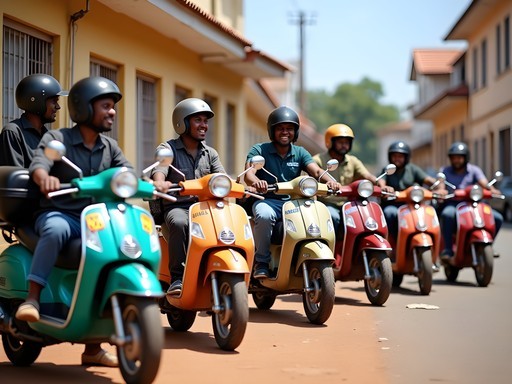
If there's one skill you'll need to master in Entebbe, it's the art of the boda boda negotiation. These ubiquitous motorcycle taxis are your ticket to experiencing the town like a local, but they come with their own unwritten rulebook.
My first boda boda ride was a white-knuckled affair that had me questioning my life choices as we weaved through traffic with what seemed like millimeters to spare. By day three, I was hopping on and off these two-wheeled chariots with the casual confidence of a seasoned resident.
'Mzungu price' is real, friends. When I first arrived, I was quoted figures that would make a Scottish banker wince. The solution? Learn a few Luganda phrases, particularly 'Ssebo, wangi?' (Sir, how much?) and the all-important 'Nedda, oli muceere!' (No, that's too expensive!). The transformation in treatment was immediate—prices dropped by half, and drivers' faces lit up with surprised respect.
For safety, I never travel without my foldable helmet. It packs down small enough to fit in my daypack and has saved my noggin more than once on bumpy Entebbe backroads. Most locals don't wear helmets, but after witnessing a minor accident on Kampala Road, I've made it a non-negotiable part of my travel kit.
Establish relationships with specific drivers if you can. My go-to guy, Moses, became not just my transport but my cultural interpreter. After learning I worked in tech, he proudly showed me the mobile payment system he uses—a sophisticated setup that would put some Western financial apps to shame. Through Moses, I accessed parts of Entebbe I'd never have found in guidebooks, from a hidden lakeshore fish restaurant to a backstreet workshop where craftsmen carve intricate wooden sculptures.

💡 Pro Tips
- Save trusted boda drivers' numbers in your phone and arrange pickups
- Always negotiate fares BEFORE getting on the motorcycle
- Learn the numbers in Luganda to better understand prices
- For longer trips, consider using SafeBoda app for set prices
Entebbe's Market Maze: Where Locals Really Shop
Forget the sanitized souvenir stalls near the botanical gardens. The beating heart of Entebbe's commercial life is found in its sprawling local markets, where the sensory overload is worth every moment of initial disorientation.
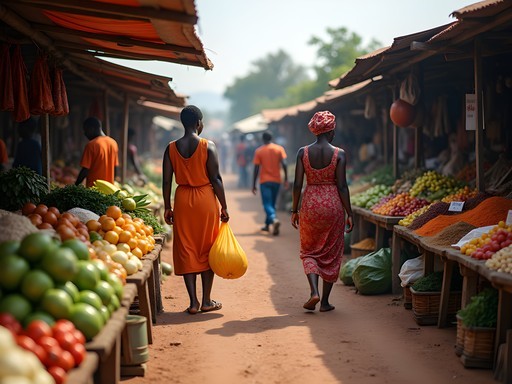
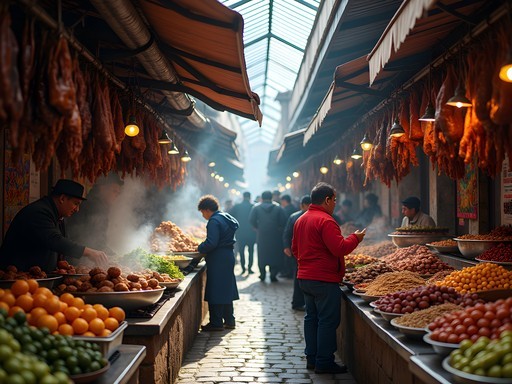
Kitoro Market became my twice-weekly ritual, a labyrinthine explosion of color and commerce that makes Western supermarkets feel sterile by comparison. The market operates on an unspoken choreography—vendors calling out prices, customers haggling with theatrical flair, and porters somehow navigating impossibly narrow aisles with towering loads balanced on their heads.
My first visit was admittedly overwhelming. I stood frozen at the entrance, my senses bombarded by the pungent mix of fresh fish, tropical fruits, and spices. A grandmotherly vendor noticed my deer-in-headlights expression and beckoned me over with a warm 'Jangu, jangu!' (Come, come!). She introduced herself as Mama Grace and proceeded to walk me through the market's unwritten rules.
From Mama Grace, I learned to shop the Entebbe way: always greet vendors with 'Oli otya?' (How are you?), examine produce thoroughly before purchasing, and never accept the first price. She taught me to recognize when jackfruit is perfectly ripe and introduced me to matoke (green bananas) preparation techniques I'd never have figured out on my own.
The market's hidden treasure is its food section at the back, where 5,000 UGX (about $1.35) buys a feast of luwombo (meat or fish steamed in banana leaves), posho (cornmeal staple), and fresh vegetables. I've eaten alongside local taxi drivers, teachers, and office workers—all of us perched on wooden benches, using our right hands to scoop food from communal plates.
For market adventures, I always bring my packable tote which folds into a tiny pouch but expands to hold a surprising amount of produce. It's sturdier than plastic bags offered at the market and has become a conversation starter with environmentally-conscious locals.

💡 Pro Tips
- Visit markets early (6-8am) for the freshest produce and authentic local atmosphere
- Carry small bills and coins for easier transactions
- Learn basic food names in Luganda to communicate with vendors
- For the best prices, observe what locals pay before making your purchase
Lake Victoria's Secret Shores: Beyond the Tourist Beaches
Lake Victoria dominates Entebbe's geography and culture, but most visitors experience only the manicured beaches attached to hotels. The real magic happens along the lesser-known shorelines where local life unfolds with remarkable authenticity.
My discovery of these hidden lakeside gems began with a wrong turn during a morning jog. Veering off Kampala Road, I followed a dirt path that eventually opened onto a bustling fishing landing site. Unlike the tourist beaches, this was a working shoreline—wooden boats painted in faded primary colors lined the beach, while fishermen mended nets with practiced precision.
At first, I felt like an intruder, but curiosity trumped my Scottish reserve. I approached an elderly man sorting through the morning catch and asked in my limited Luganda if I could watch. His name was Mzee Kizito, a fisherman for over five decades, and he became my unexpected guide to Lake Victoria's traditions.
Through Mzee Kizito, I found Nakiwogo Landing Site, perhaps my favorite spot in all of Entebbe. Here, around 4-5pm daily, fishing boats return with their catch, creating a spectacle of commerce and community that few tourists witness. Women arrive with baskets balanced on their heads to purchase fresh tilapia and Nile perch directly from the boats. Impromptu auctions break out, prices called and countered in rapid-fire Luganda.
For these lakeside explorations, my waterproof daypack proved invaluable. The unpredictable combination of lake spray, afternoon downpours, and fish market puddles would have destroyed a standard bag, but this waterproof wonder kept my camera and notebook pristine.
The real insider experience comes at sunrise. Force yourself out of bed by 5:30am and head to Kigungu fishing village. Here, you can arrange with departing fishermen to join their morning rounds for about 20,000-30,000 UGX ($5-8). I spent a breathtaking morning on the lake, learning traditional fishing methods while watching the sun paint Entebbe's shoreline in gold and crimson. The fishermen's stories—told in a mixture of broken English and patient Luganda—offered insights into lake conservation challenges and local mythology that no museum could provide.

💡 Pro Tips
- Visit fishing landing sites around 4-5pm to see boats returning with their catch
- Ask permission before taking photos at working fishing sites
- Bring small bills to purchase fresh fish directly from boats
- Arrange lake excursions the day before, as morning departures happen very early

Entebbe's Artisans: Where Traditional Craft Meets Modern Innovation
My professional background in AI has given me a deep appreciation for the intersection of traditional craftsmanship and technological innovation. In Entebbe, I discovered a thriving community of artisans who are preserving cultural techniques while adapting to contemporary markets in fascinating ways.
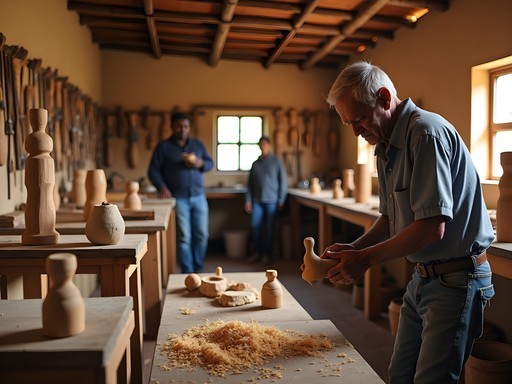
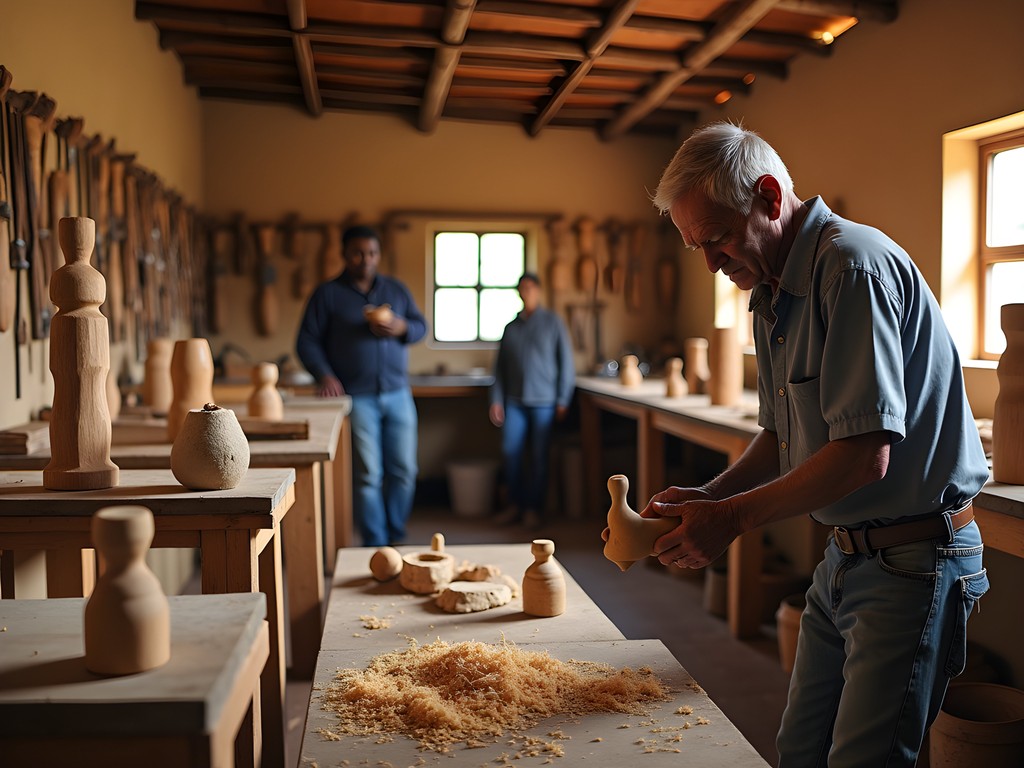
The tourist craft markets near the botanical gardens offer standardized souvenirs, but the real artisanal treasures lie in the workshops scattered throughout Entebbe's residential neighborhoods. Through Moses, my boda boda confidant, I was introduced to a collective of woodcarvers working from a modest compound near Kitooro.
The workshop belonged to Mwangi, a master carver whose family has practiced the craft for four generations. What immediately struck me was how technology had subtly integrated into his traditional practice. While carving techniques remained unchanged from his grandfather's time, Mwangi showed me the WhatsApp group where he receives commission requests from clients across East Africa, and the mobile payment system that has expanded his business beyond local markets.
I spent several afternoons in this workshop, my engineer's mind fascinated by the precision achieved with simple tools. Mwangi noticed my interest and offered to teach me basic carving techniques. My first attempt at a simple animal figure was laughably crude, but the experience gave me profound respect for the mathematical and spatial understanding these artisans possess without formal training.
For photography in these dimly-lit workshops, my compact travel tripod was essential. Its flexible legs wrapped securely around workshop beams, allowing me to capture long-exposure shots that revealed the intricate details of works in progress.
Another hidden gem is the Women's Craft Cooperative near Entebbe Road, where local women create intricate baskets using traditional weaving techniques. What makes this place special is their innovative approach to sustainability—they've developed methods to incorporate plastic waste into traditional designs, creating beautiful, durable products while addressing environmental challenges. As someone who works with algorithmic pattern recognition, I was mesmerized by the complex mathematical patterns emerging from their weaving techniques—proof that advanced computational thinking exists in traditional practices long before computers.
💡 Pro Tips
- Ask your boda driver to introduce you to local artisans - they know where the real craftspeople work
- Plan to spend time watching the creation process rather than just purchasing items
- Bring cash in small denominations as most workshops don't accept cards
- Commission pieces early in your stay so they can be completed before you leave
Entebbe After Dark: Evening Rituals and Nightlife Beyond Tourist Zones
When the equatorial sun sets with remarkable punctuality around 7pm, Entebbe transforms. Tourist-oriented establishments grow quieter while local life intensifies in neighborhood spots that rarely make it onto traveler itineraries.
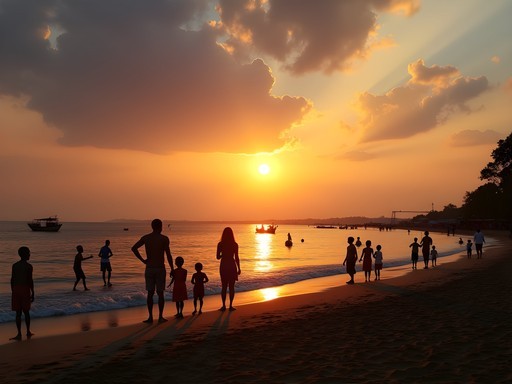
My evenings in Entebbe began with what I came to call the 'sunset migration'—the mass movement of residents toward Lake Victoria's shores to witness the daily spectacle of the sun sinking into the water. I joined this ritual at Lido Beach, where families, couples, and solitary observers gather not at the restaurant section frequented by tourists, but at the adjacent public shoreline where entrance costs just 2,000 UGX (about $0.50).
Here, impromptu football matches unfold as the sky shifts through impossible shades of orange and purple. Street food vendors appear with clockwork precision, selling roasted corn, chapati, and my personal addiction—'rolex,' a brilliant combination of rolled chapati with egg and vegetables that puts Scottish fast food to shame. For around 3,000 UGX (less than $1), these roadside culinary masterpieces offer the perfect sunset accompaniment.
As darkness falls, Entebbe's neighborhood bars come alive. Forget the hotel lounges and tourist pubs—places like Mosquito Bar near the old airport road offer the authentic Entebbe evening experience. On my first visit, I was the only non-local, receiving curious but welcoming glances. By my third visit, I was greeted by name and ushered to 'my' table.
These neighborhood bars operate on a different model than Western establishments. Most patrons purchase full bottles of spirits or beer buckets to share among friends. The real magic happens when the music starts—usually around 9pm when local DJs spin a mix of Ugandan dancehall, afrobeat, and surprisingly, reggae classics that would be at home in any Glasgow pub.
For evening explorations, I always carry my compact flashlight as Entebbe's side streets are sparsely lit. This powerful little torch has helped me navigate uneven pavements and find boda bodas for the journey home.
The most authentic evening experience came through a chance invitation to a local engagement celebration. My neighbor Moses invited me to his cousin's introduction ceremony—a pre-wedding event where I witnessed traditional Kiganda music, complex social rituals, and hospitality that put Scottish generosity to shame. These family gatherings typically happen on weekend evenings and represent Entebbe's social fabric at its most authentic.

💡 Pro Tips
- Visit Lido Beach public section around 6:30pm for spectacular sunsets without tourist prices
- Try different 'rolex' vendors until you find your favorite - each has a unique style
- Use ride-sharing apps for evening transportation rather than flagging unknown bodas after dark
- Accept invitations to family events when offered - they provide cultural insights no tourist activity can match
Final Thoughts
After my three weeks living like a local in Entebbe, I left with far more than completed code for my wildlife conservation project. I gained a profound appreciation for a town that most travelers merely pass through. The real Entebbe exists in the predawn fish landings, the back-alley workshops, and the neighborhood bars where strangers quickly become friends. As my boda driver Moses said on my final evening, 'Now you see Uganda with your heart, not just your eyes.'
Entebbe rewards those willing to step beyond comfort zones and embrace its daily rhythms. Learn a few Luganda phrases, establish relationships with local guides, and allow yourself to get gloriously lost in neighborhood markets. The memories that will stay with you longest won't be the tourist attractions, but the moments of connection—sharing a rolex with fishermen at sunset, watching master craftspeople transform wood into art, or joining the lakeside evening ritual as the equatorial sun makes its punctual departure. Entebbe isn't just a gateway to Uganda's more famous destinations—it's a destination worth knowing intimately in its own right.
✨ Key Takeaways
- Build relationships with boda boda drivers for access to authentic local experiences
- Visit markets and fishing landing sites early morning for the most genuine interactions
- Learn basic Luganda phrases to transform your reception from tourist to respected visitor
- Seek out neighborhood gathering spots rather than tourist establishments for evening entertainment
📋 Practical Information
Best Time to Visit
year-round (dry seasons: Dec-Feb and Jun-Aug ideal)
Budget Estimate
$30-50/day excluding accommodation
Recommended Duration
minimum 3 days to experience local rhythms
Difficulty Level
Intermediate




Comments
Hunter Thompson
Brilliant write-up! The bit about learning to negotiate boda prices resonated so much. My first week in East Africa I was definitely getting the muzungu price everywhere haha. One thing I'd add for anyone heading to Entebbe - download the SafeBoda app before you arrive. It's like Uber for boda bodas and takes away the stress of negotiating if you're not comfortable with it yet. The drivers are vetted and you can track your route. Saved me so many times when I was knackered after long days exploring. Also, that rolex stand near the taxi park? Absolute game changer for cheap, filling breakfast.
summerlegend
Anyone know if those secret beaches you mentioned are swimmable? Or is bilharzia still an issue in Lake Victoria?
Hunter Thompson
Good question - I stuck to the beaches locals use regularly. They know which spots are safe. Definitely ask before jumping in!
bluephotographer
i swam at lido beach and was fine but yeah ask around first
globestar
Love this! Which market did you like best for fresh fruit?
travelfan3292
Really cool photos! The sunset shot over Lake Victoria is amazing
tripnomad
Love this!! Adding to my bucket list
hikingwanderer
is the market safe for solo travelers? heading there in march and bit nervous
Hunter Thompson
Totally safe mate! Just keep your bag in front of you like any busy market. People are super friendly and will help if you look lost.
explorehero1655
THIS IS EXACTLY WHAT I NEEDED!! Going to Entebbe in March and all the guides are just about the zoo and botanical gardens. The secret beach spots sound amazing!
Haley Hamilton
Hunter, this brought back so many memories! I spent a month in Entebbe back in 2023 and your description of Nakasero Market is spot-on. I'll never forget the mama who taught me how to pick the perfect pineapples - she'd tap them and listen like they were telling her secrets. One tip I'd add: if you're visiting the artisan workshops, go in the morning around 9am. That's when the woodcarvers are just starting their day and they're much more willing to show you their process. I watched a guy create an entire giraffe from a single piece of mvule wood. Pure magic.
summerlegend
which workshop did you visit? would love to check it out when im there
Haley Hamilton
There's a cluster near Kigungu landing site - just ask locals for "the carvers" and they'll point you in the right direction!
Frank Garcia
Brilliant post, Hunter. I spent two months in Uganda last year (mostly Kampala and Jinja) and completely agree about getting off the tourist trail. The market section resonated with me - Nakasero Market in Kampala had that same authentic energy you described. One thing I'd add for readers: learn a few Luganda phrases before going. Even just "webale" (thank you) opens so many doors. The artisan workshops sound fascinating - did you find most craftspeople were open to visitors just dropping by, or is it better to arrange visits in advance?
explorehero1655
Good tip about the language! Downloading a phrase app now
bluephotographer
The boda boda section is SO accurate lol! Best way to get around honestly
Hunter Thompson
Right?? I was terrified my first ride but by day 3 I was negotiating prices like a pro haha
Venture X
Premium card with 2X miles, $300 travel credit, Priority Pass