

Disclosure: This article contains affiliate links. We may earn a commission from purchases at no extra cost to you, which helps our travel content.
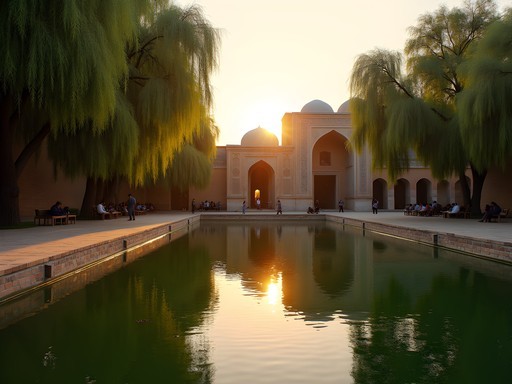
The morning call to prayer echoes across Bukhara's ancient skyline as I stand in Lyab-i-Hauz plaza, watching the first light illuminate the 16th-century Khanaka and Madrasa complex. The reflection in the central pool shivers slightly with each breeze, distorting the perfect symmetry of the centuries-old Islamic architecture. After decades of traveling to coastal fishing villages and bustling markets, I've found myself inexplicably drawn to this landlocked desert city—an ancient Silk Road hub where cultures, religions, and culinary traditions have converged for over two millennia. As a medical technologist accustomed to precise measurements and controlled environments, there's something profoundly moving about standing in a place where human history has unfolded so richly and continuously since before the time of Christ. Bukhara isn't simply preserved; it's still alive, still breathing—a living museum where the past and present coexist in remarkable harmony.

Navigating Bukhara's Architectural Time Machine
Bukhara presents a unique challenge for the visitor: how to systematically explore over 2,000 years of architectural history without experiencing sensory overload. With more than 140 protected monuments scattered throughout the old city, I approached my exploration with the same methodical precision I apply in my laboratory work.
I found that dividing Bukhara into chronological segments rather than geographical ones offers the most rewarding experience. Begin with the oldest structures—the Ark Fortress (dating to the 5th century) and Poi-Kalyan complex—before progressing to the medieval trading domes and finally to the more recent 18th and 19th-century structures.
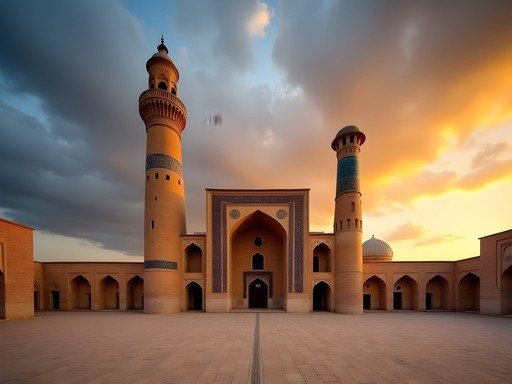
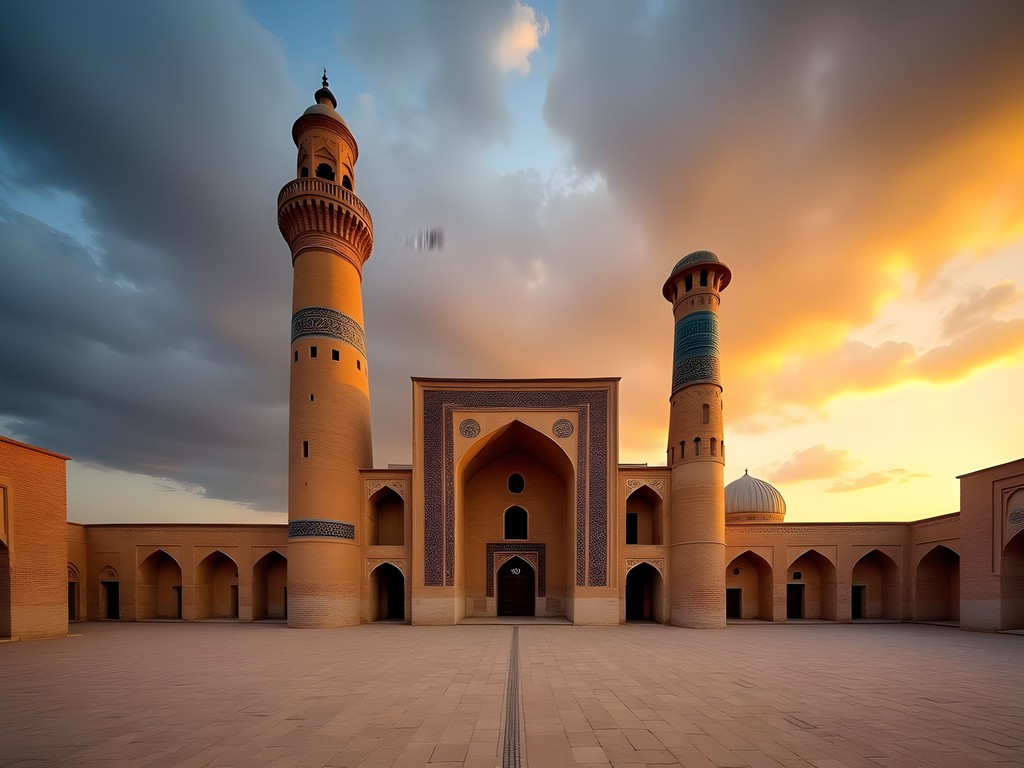
The Poi-Kalyan ensemble, anchored by the 155-foot Kalyan Minaret (once the tallest building in Central Asia), offers a masterclass in Islamic architectural evolution. As I circled the minaret, I couldn't help but recall the stories of Genghis Khan, who was reportedly so impressed by its beauty that he ordered it spared while the rest of the city was razed. The adjacent Kalyan Mosque can accommodate 12,000 worshippers—its forest of 288 domes and pillars creating a meditative space where light filters through in geometric patterns that shift with the sun's movement.
For comprehensive historical context, I relied heavily on my Uzbekistan guidebook, which provided architectural details and historical context often missing from the limited English signage at the sites themselves.
💡 Pro Tips
- Purchase the combined ticket (approximately $25) that covers entry to all major monuments—it's valid for three days and saves both money and time
- Visit the Ark Fortress early in the morning before tour groups arrive
- Hire a local guide for at least one day—their insights into architectural details and historical context are invaluable
The Trading Domes: Following Ancient Commercial Routes
Perhaps nowhere is Bukhara's Silk Road legacy more palpable than in its surviving trading domes—distinctive covered bazaars where merchants have haggled over goods for centuries. Unlike the chaotic souks of North Africa that I've frequented, Bukhara's trading domes maintain a sense of ordered purpose, each historically dedicated to specific goods.
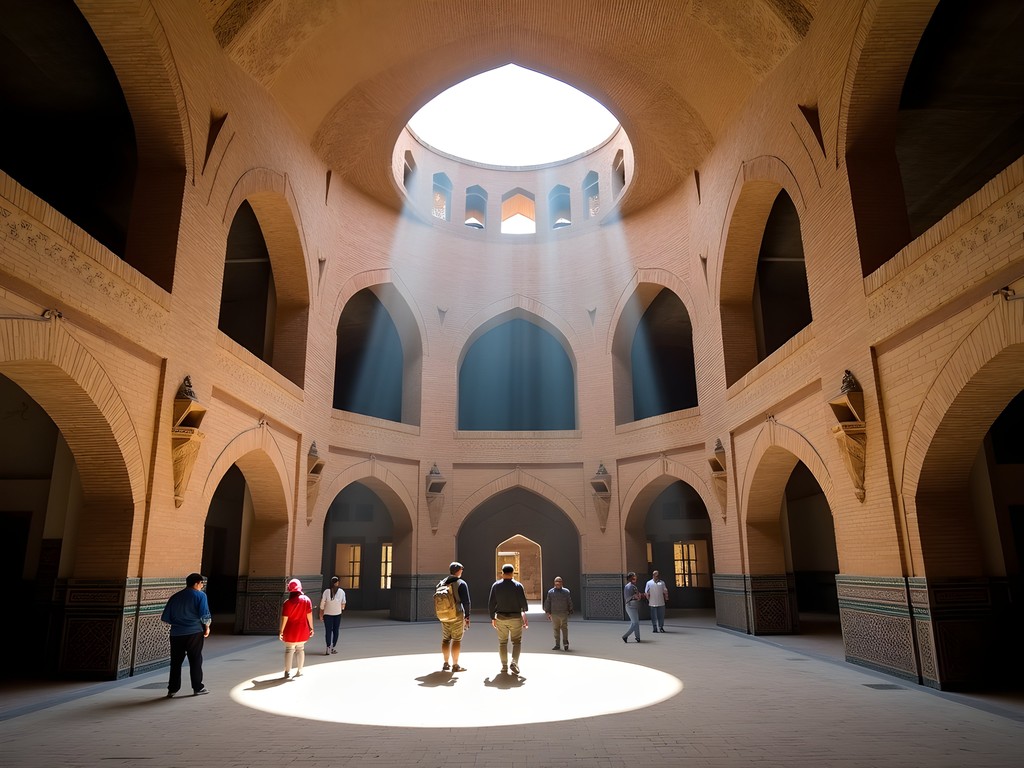
The most impressive is Taki-Sarrafon, the money changers' dome, where currency from across Asia once flowed through merchant hands. Standing beneath its massive central dome, I closed my eyes and could almost hear the multilingual negotiations that once filled this space—Persian, Arabic, Chinese, and countless other tongues converging in the universal language of commerce.
Nearby, Taki-Telpak Furushon specialized in headgear, while Tim Abdullah Khan housed carpet traders. Today, while tourism has certainly transformed the merchandise (expect plenty of souvenirs), the architectural integrity remains intact, and some traditional crafts persist.
I spent an afternoon observing a master woodcarver creating intricate patterns on a decorative box, his techniques virtually unchanged for centuries. When I mentioned my interest in fishing traditions, he shared stories of his grandfather's techniques for catching fish in the canals that once crisscrossed the city—a reminder that even in this desert outpost, fishing was once part of daily life.
For documenting these architectural marvels and craft demonstrations, my compact camera proved invaluable. Its discreet size didn't intimidate local artisans, while the excellent low-light performance captured the atmospheric interior of the domes without flash.
💡 Pro Tips
- Visit the trading domes in late afternoon when the light filters through the ceiling openings most dramatically
- Look for workshops behind the main tourist stalls where authentic crafts are still practiced
- The best authentic souvenirs are hand-carved wooden boxes, hand-hammered copper items, and naturally dyed silk scarves
Sacred Spaces: Mosques, Madrasas and Mausoleums
As someone who finds meditative peace in the rhythmic cast of a fishing line, I discovered an unexpected parallel in the geometric harmony of Bukhara's sacred spaces. The mathematical precision of Islamic architecture—where every arch, dome, and minaret follows specific proportions—creates environments that quiet the mind and invite contemplation.
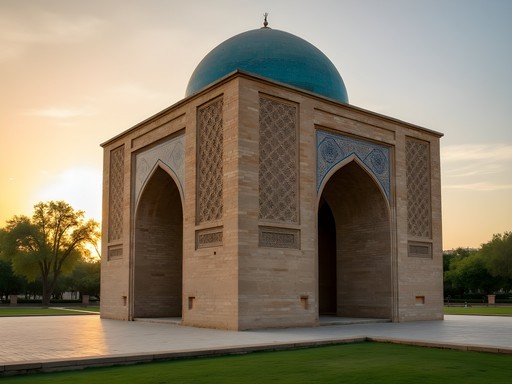
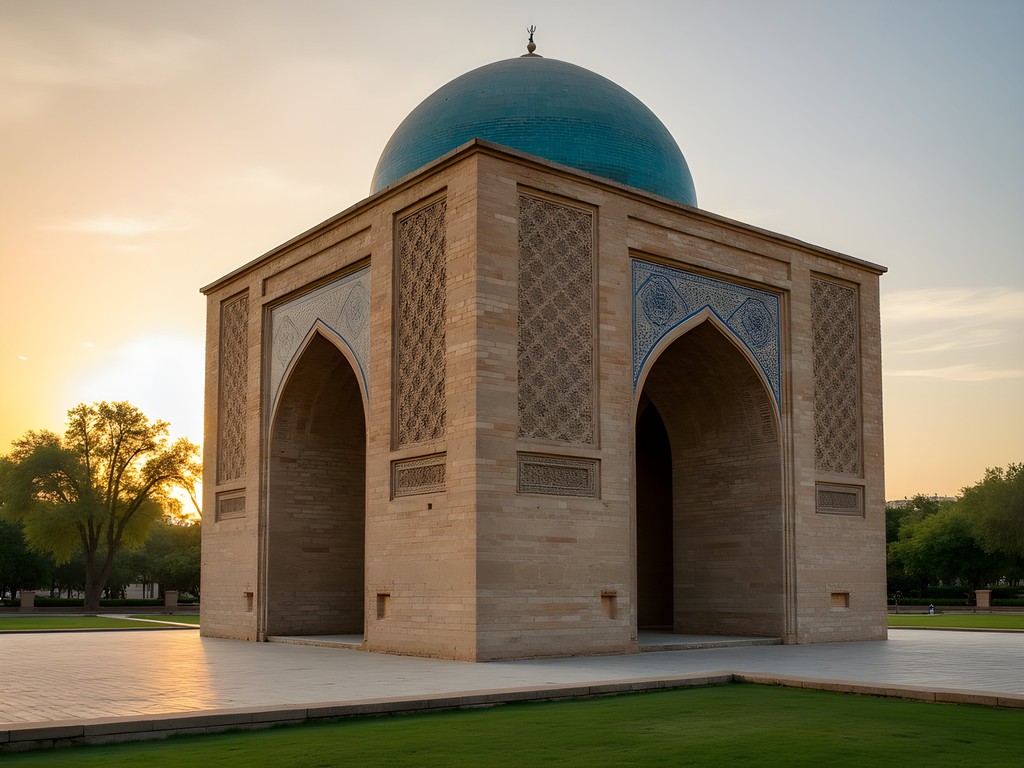
The Samanid Mausoleum, dating to the 10th century, represents the earliest surviving masterpiece of Central Asian architecture. Its perfectly proportioned cube, topped with a hemispherical dome, employs brickwork of such complexity and precision that it appears to change color throughout the day as light plays across its intricate patterns. As a scientist, I found myself counting the mathematical patterns and marveling at the engineering knowledge required to create such stability without modern tools.
Equally impressive are Bukhara's madrasas (Islamic schools), particularly the 17th-century Ulugbek Madrasa and Abdulaziz Khan Madrasa, which face each other across a small square. The contrast between Ulugbek's austere, mathematically precise design and Abdulaziz Khan's exuberant decoration offers a visual lesson in how Islamic art evolved over two centuries.
I spent one entire afternoon sketching architectural details at the Bolo Hauz Mosque, known as the Emir's mosque. Its reflection in the adjacent pool (hauz) creates a perfect symmetry that had me reaching for my watercolor travel set. The mosque's wooden colonnade features 20 pillars with stalactite-like capitals that seem to defy gravity—another example of the mathematical precision underlying Bukhara's beauty.
💡 Pro Tips
- Remove shoes before entering mosques and dress modestly (covering shoulders and knees)
- Visit Bolo Hauz Mosque in early morning when the pool perfectly reflects the structure
- Bring binoculars to appreciate ceiling details in the higher domes and iwans (vaulted spaces)

Culinary Heritage: Tasting Bukhara's Silk Road Legacy
My travels have always been guided by local food traditions, and Bukhara—despite being far from any ocean—offers a fascinating culinary landscape shaped by centuries of trade and cultural exchange. The city's gastronomic heritage reflects its position at the crossroads of Persian, Turkic, Jewish, and Russian influences.
Plov (pilaf) is Uzbekistan's national dish, and Bukhara's version—typically made with lamb, carrots, and rice cooked in sheep fat—has distinct preparation methods. At a small family restaurant near Lyab-i-Hauz, I observed the ritualistic preparation in a massive kazan (cauldron). The precision of the cook reminded me of laboratory work—each ingredient added at precisely the right moment, the fire adjusted with expert attention. When I mentioned my background in medical technology, the cook laughed and said, "Cooking plov is also a science—one mistake and the experiment fails!"
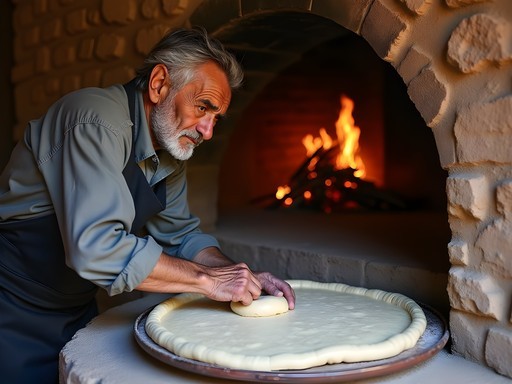
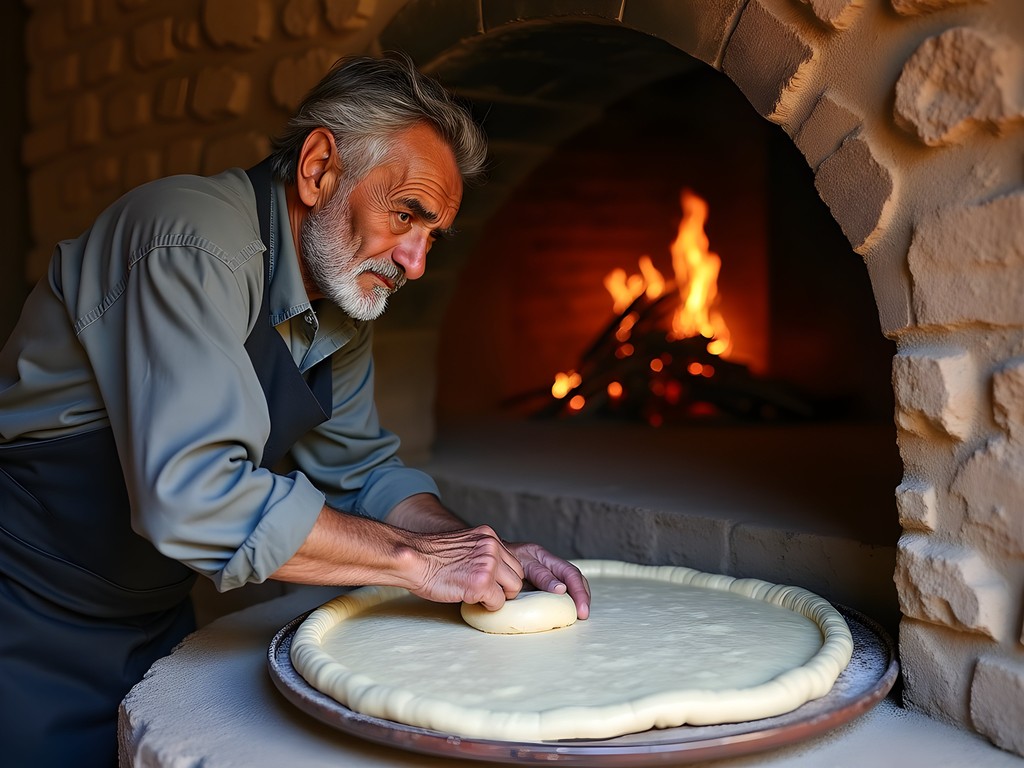
Equally impressive is Bukhara's bread (non), baked in tandoor ovens and stamped with distinctive patterns. The bread stays fresh for weeks—a necessity developed during ancient caravan journeys. At the bazaar near Tok-i-Zargaron dome, I documented several bakers using techniques unchanged for centuries, each family maintaining their unique bread stamp patterns passed through generations.
For those interested in culinary exploration, I recommend carrying a pocket food dictionary with food terms. Many small, family-run establishments don't have English menus, and the visual dictionary helped me identify dishes I might otherwise have missed.
Don't miss shashlik (grilled meat skewers), samsa (savory pastries baked in tandoor ovens), and shivit oshi (dill-infused green noodles served with meat and yogurt sauce)—a dish unique to the region that reflects the historical importance of herbs in both cooking and traditional medicine.
💡 Pro Tips
- Ask for 'chai-khana' recommendations from locals—these traditional tea houses often serve the most authentic food
- Try shashlik at the small grills near Lyab-i-Hauz in the evening
- Sample different non breads from various bakeries—each family has their own recipe and technique
Beyond the Old City: Day Trips and Hidden Gems
While Bukhara's UNESCO-protected core justifiably dominates most itineraries, venturing beyond the ancient walls reveals layers of history often overlooked. With my travel journal in hand to document observations, I dedicated two days to exploring these peripheral sites that tell equally compelling stories about the region.
Sitorai Mokhi-Khosa, the 'Palace of Moon-Like Stars,' located about 4 miles outside the city, offers a striking contrast to the medieval architecture of the old town. Built between 1902 and 1918 as the summer residence of the last Emir of Bukhara, the palace blends traditional Central Asian elements with Russian Imperial and even Western European influences. The White Hall, designed by Russian architects, features elaborate alabaster carving using traditional techniques but incorporating Art Nouveau motifs—a physical manifestation of Bukhara's position between East and West in the early 20th century.
More poignant is Chor-Bakr Necropolis, known as the 'City of the Dead.' Established in the 16th century around the tomb of Abu-Bakr Said, a descendant of the Prophet Muhammad, it grew into an extensive cemetery where generations of Bukharians rest in family compounds. Walking among the quiet domed mausoleums, I was struck by the continuity of burial practices across centuries—the same architectural forms repeated from the 1500s until Soviet-era prohibitions disrupted traditional customs.
Perhaps most unexpected was my visit to the Bukhara Jewish Quarter. Before the Soviet period, Bukhara hosted one of Central Asia's most significant Jewish communities, with roots dating back 2,000 years. While most have emigrated to Israel and the United States, their cultural legacy remains in the surviving synagogue and the distinctive architecture of Jewish merchant houses. The synagogue caretaker shared stories of this once-thriving community and showed me a Torah scroll that survived both Tsarist and Soviet restrictions on religious practice.

💡 Pro Tips
- Hire a driver for day trips—public transportation to outlying sites is limited
- Visit Chor-Bakr near sunset when the light creates dramatic shadows among the mausoleums
- When visiting the Jewish Quarter, call ahead to ensure the synagogue will be open
Final Thoughts
As I sit in a small chai-khana on my final evening, sipping green tea and watching the sunset paint Poi-Kalyan in golden hues, I reflect on how Bukhara has affected me differently than the coastal communities I typically explore. There's something profound about a place that has witnessed 2,000 years of continuous human habitation—where every brick and carved doorway tells a story of resilience, adaptation, and cultural exchange. For couples seeking a destination that combines architectural splendor, rich history, and authentic cultural experiences away from overtourism, Bukhara offers an ideal balance. The city demands patience and curiosity but rewards visitors with insights into how civilizations rise, fall, and transform while maintaining their essential character. Like the intricate patterns in its architecture and textiles, Bukhara weaves visitors into its ongoing story—one that began long before us and will continue long after we're gone.
✨ Key Takeaways
- Bukhara's architectural treasures span over 2,000 years and are best explored chronologically rather than geographically
- The trading domes offer insights into Silk Road commerce and still house traditional craftspeople practicing ancient techniques
- Spring visits provide ideal weather and fewer crowds than the peak summer season
- Venturing beyond the UNESCO core reveals lesser-known but equally fascinating aspects of Bukhara's history
📋 Practical Information
Best Time to Visit
Mid-April to early June and September to October
Budget Estimate
$30-50 per day excluding accommodation
Recommended Duration
5-7 days
Difficulty Level
Moderate

Comments
Claire Hawkins
Nathan, this brings back such wonderful memories! We took our kids (7 and 9) to Bukhara two years ago and they still talk about it. They were absolutely fascinated by the stories of the Silk Road caravans and loved exploring the Ark fortress - it felt like stepping into a storybook. One tip for families: the Puppet Museum near Lyab-i-Hauz was a huge hit with our little ones, and it's a nice break from all the historical sites. The puppet shows are charming and help kids connect with the local culture. We also found that hiring a local guide for just the first day really helped us understand the history better, then we explored on our own after that.
bluediver
Oh that's good to know about the puppet museum! Might bring my nephew
roamguide
Love the photos! Adding this to my list
freestar
YES! Bukhara is incredible. I was there during spring and the weather was perfect. Those trading domes are so cool to explore - I bought the most beautiful suzani textiles. The plov at the market near Lyab-i-Hauz was some of the best food I had in all of Central Asia. Definitely stay in the old town if you can, waking up to those views is unreal.
roamguide
Which guesthouse did you stay at? Looking for recommendations
freestar
I stayed at a small family-run place near Poi-Kalyan. Can't remember the exact name but it was around $25/night with breakfast included
bluediver
This looks amazing! How many days would you recommend spending there? Also is it easy to get around without speaking Russian?
freestar
Not the author but I spent 3 days there last year and it was perfect. Most young people speak some English, especially in tourist areas. Download a translation app just in case!
bluediver
Thanks! That's really helpful
Hunter Thompson
Just got back from Uzbekistan last week and Bukhara was the absolute highlight! Nathan, your section on the trading domes brought back so many memories. I spent hours wandering through them, bargaining for suzani textiles and chatting with shopkeepers. The Toki Zargaron (Jewelers' Dome) was my favorite - found an amazing silver bracelet there! One tip for anyone planning a visit - don't miss the small family restaurants behind Lyab-i-Hauz. I had the best plov of my entire trip at a tiny place where the grandma was cooking in the back. Also, I used my pocket guidebook which had some great walking routes not covered in most online guides. Cheers from Newcastle!
luckyperson
Thanks for the restaurant tip! Any chance you remember the name of that plov place?
Hunter Thompson
It was called 'Doston' something... small blue door, family photos all over the walls. Just ask locals for the best plov near the pond, they'll point you there!
luckyperson
Going there next month! How many days would you recommend staying in Bukhara? And is it easy to get around without knowing the language?
Nathan Washington
I'd say 3 full days minimum to really appreciate it. Most sites are walkable in the old town. Basic English is understood at tourist spots, but having a translation app helps with locals. The people are incredibly friendly!
moonphotographer
Those shots of Poi-Kalyan at sunset are absolutely stunning! The way you captured the light on those ancient structures is magical.
Nathan Washington
Thanks! The golden hour in Bukhara is something special - I'd camp out at the plaza around 5pm for the best light.
moonphotographer
Noted! Did you use any filters or was that natural light?
Nathan Washington
All natural! Just a bit of exposure adjustment. The light there does all the work!
nomadmate
Is it easy to walk everywhere or do you need taxis? First time in Central Asia and not sure what to expect
explorelife
Old city is totally walkable, everything's pretty close together. Taxis are cheap if you need one though
wintergal
Love the photos! Adding this to my list
Megan Martin
Excellent overview, Nathan! I visited last year for a conference in Tashkent and extended my trip to Bukhara. Your point about the architectural layers is spot-on - you really do feel like you're walking through different centuries. I'd add that hiring a local guide for at least one day is worthwhile for understanding the historical context. The stories behind the madrasas and the Ark fortress add so much depth. Also recommend staying in a converted merchant house if your budget allows - the traditional courtyards are beautiful.
nomadmate
Any guide recommendations? Or just find someone when we get there?
Megan Martin
Most hotels can arrange one, or check at the tourist information center near Poi-Kalyan. Expect around $30-40 USD for half day.
Venture X
Premium card with 2X miles, $300 travel credit, Priority Pass