


Disclosure: This article contains affiliate links. We may earn a commission from purchases at no extra cost to you, which helps our travel content.
As a physicist with a passion for geological wonders, Iceland's Ring Road has been on my scientific bucket list for years. Last summer, I finally gathered my closest friends (including two fellow scientists and a jazz musician) for what would become our most enlightening adventure yet. Over 10 days, we circumnavigated this geological wonderland, where the laws of physics seem to operate differently—where fire meets ice, where the earth's crust visibly separates, and where light dances in the atmosphere in ways that still leave me awestruck. This isn't just travel; it's a masterclass in earth sciences wrapped in an unforgettable road trip.

Planning Your Ring Road Scientific Expedition
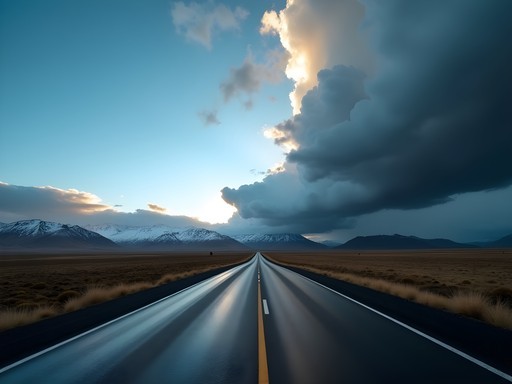
The 828-mile Ring Road (Route 1) encircles Iceland's perimeter, but this isn't your average road trip. You're essentially driving around an active geological laboratory.
First, timing is critical. We chose late June for 20+ hours of daylight—perfect for maximizing observation time at each phenomenon. The midnight sun meant we could examine geological formations at any hour, which proved invaluable when tourist crowds thinned after dinner.
Vehicle selection requires careful consideration of physics and practicality. While a standard 2WD can handle the Ring Road itself, many of the most fascinating geological sites require F-road access. Our 4x4 SUV proved perfect—compact enough for efficient fuel consumption yet capable of handling rough terrain when we ventured to more remote volcanic formations.
For navigation, I relied heavily on my handheld GPS, which proved invaluable when mapping coordinates of interesting formations and when cellular service disappeared in remote areas. The satellite communication feature provided peace of mind when we ventured far from populated areas to explore lesser-known geological sites.

💡 Pro Tips
- Book accommodations at least 6 months in advance, especially if traveling during summer solstice period
- Download offline geological maps—cellular coverage is spotty in remote areas
- Consider renting portable WiFi to share among your group for researching sites en route
Days 1-3: Reykjavík to Vík — Where Plate Tectonics Come Alive
Our journey began in Reykjavík, where we visited the Perlan Museum to contextualize Iceland's geological significance. The interactive exhibits provided my friends with the foundational knowledge that would enhance our observations throughout the trip.
Heading east, our first major stop was Þingvellir National Park—a UNESCO World Heritage site where the North American and Eurasian tectonic plates visibly pull apart at approximately 2.5 cm per year. Standing with one foot on each continent is not just a photo opportunity; it's a tangible connection to the dynamic forces shaping our planet.
"This is continental drift in real-time," I explained to my jazz musician friend, who composed an impromptu melody inspired by the steady, inevitable movement of Earth's crust.
The Golden Circle's Geysir geothermal area offered a perfect demonstration of thermodynamics and pressure systems. We timed Strokkur's eruptions, analyzing the relationship between the dome formation and the subsequent explosion of water and steam. For accurate temperature readings of various hot springs, my infrared thermometer proved invaluable for safely measuring surface temperatures from a distance.
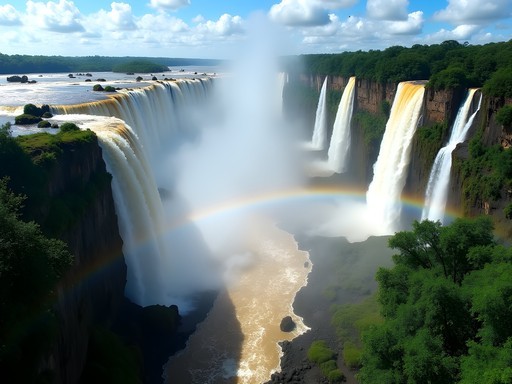
At Gullfoss waterfall, we calculated the approximate energy dissipation as water plummeted into the canyon—a practical application of potential to kinetic energy conversion that fascinated everyone in our group.

💡 Pro Tips
- Visit Þingvellir early morning or evening to avoid crowds and get better photographs of the rift
- Bring a polarizing filter for your camera to cut glare when photographing waterfalls
- Pack microspikes for approaching Sólheimajökull glacier safely
Days 4-6: The Eastern Fjords — Glacial Physics and Volcanic Phenomena
The eastern segment of our journey presented a stark contrast in geological forces: the grinding power of glaciers versus the explosive nature of volcanic activity.
At Jökulsárlón Glacier Lagoon, we witnessed thermodynamics in action as massive icebergs calved from Breiðamerkurjökull glacier. Using my laser distance meter, we estimated the size of several icebergs and calculated their approximate mass based on visible volume and ice density.
"Each of these icebergs contains ice that fell as snow hundreds of years ago," I explained to our group. "The blue coloration comes from the compression of ice crystals that eliminates air bubbles and allows longer wavelength light to be absorbed while blue light is scattered back to our eyes."
We spent hours at Diamond Beach, where the interplay between ocean currents and melting icebergs creates a constantly changing gallery of ice sculptures. The physics of wave action and thermal exchange was evident as we watched smaller ice fragments gradually reshape under the Atlantic's influence.
In the Eastern Fjords, we examined the layered basalt formations, visible evidence of repeated volcanic eruptions over geological time. At Dettifoss, Europe's most powerful waterfall, we calculated the approximate horsepower generated by the falling water—an exercise that connected abstract physics concepts to the raw power of nature before our eyes.
For nighttime aurora viewing (yes, even in summer, we caught faint displays around midnight), my light pollution filter glasses helped enhance visibility by filtering out ambient light, allowing us to better observe the subtle interaction between solar particles and Earth's magnetic field.

💡 Pro Tips
- Bring polarized sunglasses for glacier viewing—they reduce glare and allow you to see ice structures more clearly
- Visit Jökulsárlón at different times of day—the lighting dramatically changes the appearance of the ice
- Pack a thermos of hot tea; even summer temperatures near glaciers can be surprisingly cold

Days 7-8: Northern Iceland — Geothermal Wonders and Sound Physics
Northern Iceland offered some of the most dramatic demonstrations of geothermal activity on our journey. The Mývatn area is essentially a living laboratory of volcanic and geothermal phenomena.
At the Námafjall geothermal area (Hverir), we observed mud pots, fumaroles, and sulfur deposits that showcased the chemical interactions occurring just beneath the earth's surface. The rotten egg smell of hydrogen sulfide prompted a discussion about gas chemistry and how these emissions provide valuable data about subsurface activity.
"What we're smelling is actually an important safety mechanism," I explained. "Pure hydrogen sulfide can be odorless at high concentrations and lethal, but these diluted concentrations warn us of its presence." To monitor air quality near geothermal vents, I used my portable air quality monitor to measure particulate matter and gas concentrations—a safety precaution I always take near active geothermal areas.
Dettifoss waterfall provided an exceptional opportunity to discuss acoustics and sound propagation. Using my digital sound level meter, we measured the decibel levels at various distances from the falls, noting how terrain features affected sound propagation.
Perhaps most fascinating was our visit to Ásbyrgi, a horseshoe-shaped canyon. Here, I demonstrated the physics of sound reflection by having our jazz musician friend play short notes on his pocket trumpet at specific points in the canyon. The resulting echoes created a natural delay effect that fascinated everyone and sparked a discussion about how early humans might have interpreted such acoustic phenomena.

💡 Pro Tips
- Stay upwind when possible at geothermal areas to avoid sulfur dioxide and hydrogen sulfide gases
- Bring a small bottle of vinegar to neutralize sulfur residue on metal jewelry or camera equipment
- At Dettifoss, protect camera equipment from water spray with a rain cover
Days 9-10: Completing the Circle — Snaefellsnes and Volcanic History
Our final segment took us through the Snaefellsnes Peninsula, often called "Iceland in miniature" for its diverse geological features. Here, the interplay between volcanic activity and glacial forces is particularly evident.
At Kirkjufell mountain, we discussed how its distinctive shape resulted from glacial carving of an ancient volcanic plug. The adjacent waterfalls provided a perfect setting to explain erosion patterns and water's persistent force in shaping landscapes over millennia.
Snaefellsjökull glacier and volcano—made famous in Jules Verne's "Journey to the Center of the Earth"—offered a perfect culmination to our geological expedition. Standing at its base, I shared how this stratovolcano has shaped scientific understanding and literary imagination alike.
"What makes this volcano special is not just its geological significance," I explained, "but how it bridges science and culture—showing how natural phenomena inspire human creativity."
For our final evening, we timed our visit to the black church at Búðir during golden hour. The stark contrast between the black church and the surrounding lava fields created a powerful visual reminder of how Icelanders have adapted to life on this geologically active island.
To document our observations throughout the trip, I relied on my waterproof field notebook, which proved essential during unexpected rain showers and near waterfalls where conventional notebooks would have been ruined. For precise location tracking of geological features, my geological compass allowed us to measure strike and dip of interesting rock formations we encountered.

💡 Pro Tips
- Visit Kirkjufell for sunset when the mountain and waterfalls are beautifully illuminated
- Allow extra time on Snaefellsnes—the concentration of diverse geological features means frequent stops
- Check weather conditions before attempting any approach to Snaefellsjökull glacier
Final Thoughts
Our 10-day Ring Road expedition was more than a vacation—it was a journey through Earth's geological processes made visible in real-time. From the diverging tectonic plates at Þingvellir to the geothermal wonders of Mývatn, Iceland offers what few destinations can: a comprehensive education in geological processes that's both intellectually stimulating and visually spectacular.
What struck me most was how this trip made abstract scientific concepts tangible for everyone in our group, regardless of their scientific background. Our jazz musician friend composed a piece inspired by the rhythmic eruptions of Strokkur geyser. My physicist colleagues found themselves speechless before the raw power of Dettifoss.
If you're planning your own Ring Road adventure, remember that Iceland's true value isn't just in checking off famous sites but in understanding the processes that created them. Take time to observe, measure, and contemplate. Bring tools that enhance your understanding—whether that's a simple magnifying glass or more specialized equipment.
And most importantly, leave time for serendipity. Some of our most profound moments came from unplanned stops where a particular rock formation or thermal feature caught our scientific curiosity.
The Ring Road isn't just a highway—it's a circular timeline of our planet's most dynamic processes, waiting for curious minds to decode its wonders.
✨ Key Takeaways
- Iceland's Ring Road offers an unparalleled opportunity to observe active geological processes in a concentrated area
- Summer provides maximum daylight hours for exploration, though shoulder seasons offer fewer crowds
- Simple scientific tools can dramatically enhance your understanding and appreciation of Iceland's natural phenomena
📋 Practical Information
Best Time to Visit
June-August for maximum daylight; May and September for fewer crowds
Budget Estimate
$2,500-3,500 per person (excluding flights)
Recommended Duration
10-14 days
Difficulty Level
Moderate

Comments
Sage Dixon
Corey, your scientific approach to the Ring Road brought back memories of my own journey there last fall! I was particularly moved by your description of the basalt columns at Reynisfjara - I remember standing there at sunrise, completely alone, watching the waves crash against those perfect hexagonal formations. It was like witnessing geology's sacred geometry. For anyone planning this trip, I'd add that the Westfjords, though not technically part of the Ring Road, are worth the detour if you have extra days. The layered cliffs at Látrabjarg tell a story of millions of years of volcanic activity, and the isolation there gives you space to truly contemplate Earth's processes. Did you find the locals as knowledgeable about their geological surroundings as I did? Seemed everyone I met could explain the formation of their nearby features!
Corey King
Absolutely, Sage! Icelandic locals have an incredible connection to their geological landscape. Our guesthouse host near Vík gave us detailed directions to a hidden columnar basalt formation that wasn't in any guidebook. And you're right about the Westfjords - we're already planning a return trip focused just on that region.
adventureguy
How much extra time should I budget for the Westfjords if I add it to a Ring Road trip?
Sage Dixon
@adventureguy I'd recommend at least 3-4 extra days for the Westfjords. The roads are slower and you'll want time to explore the peninsulas. Well worth it though!
vacationseeker
Planning this trip for next summer! What camera equipment did you use for those aurora shots? And did you need special gear for exploring the glacier areas?
Corey King
For the aurora shots, I used a Sony A7III with a wide-angle lens and tripod. For glaciers, we hired a guide who provided crampons and safety equipment - definitely don't go on glaciers without proper guidance!
dreammate
Just got back from Iceland last month! The geothermal areas near Myvatn were my favorite - smelly but incredible!
Jean Wells
As someone who's circumnavigated Iceland's Ring Road three times, I appreciate your scientific perspective on the geological formations. The tectonic boundary at Þingvellir is indeed fascinating - I spent an entire day there measuring the visible annual widening. I would add that visiting Dettifoss during different seasons provides varying perspectives on hydraulic power dynamics. For those interested in the geological aspects, I recommend bringing a good hand lens and field notebook as the changing weather conditions can make digital documentation challenging. Your breakdown of Days 4-6 in the Eastern Fjords was particularly informative.
Corey King
Thanks Jean! Your suggestion about Dettifoss in different seasons is spot on. We were there in summer, but I'd love to return in spring to see the difference in water volume.
adventureguy
Is 10 days really enough to do the full Ring Road? Wondering if I should plan for more time when I go next summer.
dreammate
I did it in 9 days last year and felt rushed. Would recommend 12-14 days if you want to do side trips and hikes.
Corey King
10 days is doable but tight! We focused on geological sites which helped us prioritize. If you want to add more hiking or photography time, 12-14 days would be better as dreammate suggested.
sunnyway
Amazing photos! Iceland's been on my bucket list forever. The geological wonders look absolutely stunning!
freestar
Going in May with my husband - how crowded does it get? We're trying to avoid peak tourist season but still want decent weather. Also any car rental companies you'd recommend?
Corey King
May is actually perfect - fewer crowds than summer but most roads are open. We used Blue Car Rental and had a great experience with their 4x4. Make sure you get a vehicle with good clearance for the F-roads if you want to explore inland!
Frank Garcia
Really enjoyed your scientific perspective on this, Corey. I did the Ring Road last September on a tight backpacker budget and found the eastern fjords were criminally underrated - everyone rushes through them but the geology around Stöðvarfjörður is absolutely mental. Did you stop at the Petra's Stone Collection there? Also, for budget travelers reading this: camping along the route saved me a fortune. Most campsites are £10-15 per night and the facilities were surprisingly good. The one near Höfn had incredible glacier views.
Corey King
Yes! Petra's collection is wild - she spent decades collecting zeolites and other minerals from the area. The eastern fjords definitely deserve more time than most itineraries give them. Great budget tip on the camping too.
vacationblogger
This looks amazing! Quick question - did you do this in summer? Wondering if the Ring Road is doable in winter or if it's too sketchy?
Corey King
We did it in July! Winter is definitely possible but you'll need serious winter driving experience and a 4WD. Roads can close without warning. I'd recommend summer for your first time - you get the midnight sun too which is incredible for photography.
vacationblogger
Thanks! Summer it is then :)
Marco Flores
This brings back memories! I did the Ring Road solo two years ago on a motorcycle - probably crazy but unforgettable. Your description of the geothermal areas in the north is spot-on. I remember standing at Hverir near Mývatn, surrounded by those bubbling mud pots and sulfur vents, feeling like I'd landed on another planet. One tip for adventure travelers: consider camping at least a few nights. Waking up at 3am to the midnight sun reflecting off Jökulsárlón glacier lagoon... there's nothing quite like it. The campsites are well-equipped and you meet incredible people from all over the world. Just bring warm layers - even in July it gets cold!
freestar
Motorcycle sounds intense! Was the wind crazy? I've heard it can be pretty brutal on bikes
Marco Flores
Not gonna lie, the wind nearly knocked me over a few times especially near Vík. You need to really lean into it. But the freedom of stopping anywhere made it worth it for me.
Venture X
Premium card with 2X miles, $300 travel credit, Priority Pass