



Disclosure: This article contains affiliate links. We may earn a commission from purchases at no extra cost to you, which helps our travel content.
The morning light filters through centuries-old stone, casting long shadows across weathered Buddha statues partially reclaimed by tree roots. I stand transfixed, watching as the first tourists of the day navigate the sprawling temple complex while local vendors set up their carts along dusty pathways. This is Ayutthaya – Thailand's ancient capital that once rivaled Paris in size and significance before being brutally sacked by Burmese forces in 1767. What remains today is a UNESCO World Heritage site that spreads across an island formed by three converging rivers, where ruins of temples, palaces, and monasteries create one of Southeast Asia's most photogenic urban exploration playgrounds. As someone who's spent years documenting the intersection of transport networks and urban spaces, I found myself unexpectedly captivated by Ayutthaya's unique position as both a thriving modern Thai city and an open-air museum where you can wander freely among the ghosts of a once-mighty kingdom.

Planning Your Ayutthaya Walking Adventure
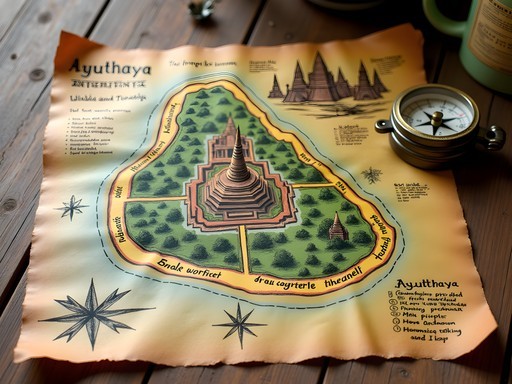
Ayutthaya's ancient city is essentially an island, created by the meeting of three rivers: the Chao Phraya, Lopburi, and Pa Sak. This natural moat once served as both defense and transportation network for the thriving capital. Today, it creates a conveniently contained exploration zone spanning roughly 4 square kilometers.
While many visitors opt for the quick day trip from Bangkok (just 80km south), I'd strongly recommend giving yourself at least 2-3 full days to properly explore. I initially planned a quick 24-hour visit and ended up extending to a full week, completely captivated by the layered history and photographic opportunities.
The key to truly experiencing Ayutthaya is having a flexible itinerary. Rather than racing between major sites, I found the most rewarding approach was dividing the island into quadrants and thoroughly exploring each section, allowing plenty of time for unexpected discoveries and photography in different lighting conditions.
For navigation, I relied heavily on my Garmin eTrex 22x, which proved invaluable when wandering between sites. While Google Maps works in the main areas, having a dedicated GPS device with downloaded maps meant I could confidently explore the more remote ruins without worrying about mobile reception or battery life.
Accommodation-wise, I recommend staying on the island itself rather than across the river. The Baan Tye Wang Guesthouse became my home base – a charming riverside spot with modest rooms but extraordinary sunset views of the ruins across the water. Most guesthouses offer bicycle rentals, but I found Ayutthaya surprisingly walkable, especially in the cooler morning and late afternoon hours.

💡 Pro Tips
- Download offline maps before arrival as signal can be patchy around some ruins
- Book accommodation on the island itself for early morning and evening photography without transportation hassles
- Carry a reusable water bottle – the heat can be intense and plastic waste is a growing problem at heritage sites
Dawn at Wat Chaiwatthanaram: A Photographer's Dream
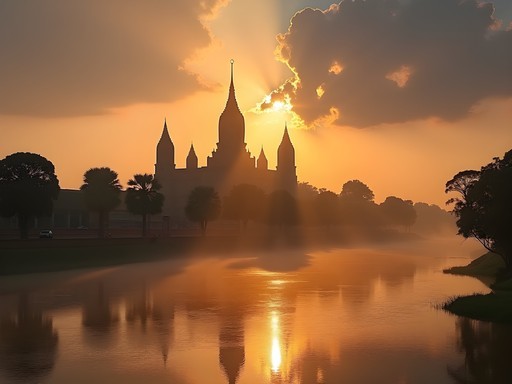
If there's one non-negotiable experience in Ayutthaya, it's witnessing sunrise at Wat Chaiwatthanaram. This magnificent riverside temple complex was built in 1630 by King Prasat Thong to honor his mother and serves as one of the most complete examples of Khmer-influenced architecture in Thailand.
I arrived at the site by 5:30am, well before the official 8:00am opening time. Here's an insider tip: while the main entrance is locked, local photographers know that a small side gate near the river is often left unlocked for early risers. A respectful nod to the groundskeeper and a 100 baht tip granted me access to what felt like a private showing of one of Thailand's most spectacular ruins.
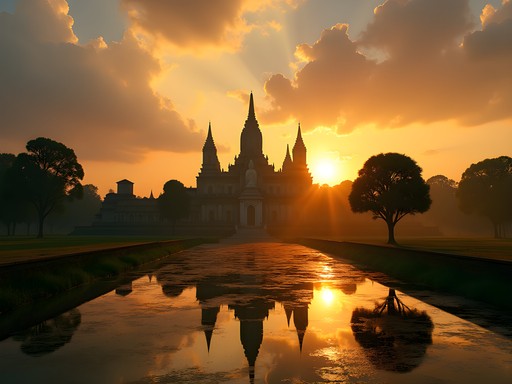
Positioning myself on the western side of the main prang (tower), I watched as the first light illuminated the eastern face of the structure, gradually bringing the entire complex to life. The symmetry of the eight surrounding chedis (stupas) creates leading lines that are a dream for composition.
My travel tripod proved essential here – the carbon fiber version packs down small enough to fit in my daypack but provides rock-solid stability for those long-exposure shots in low light. The unique ball head design made precise adjustments effortless, crucial when working quickly as the golden light changes by the minute.
As the sun climbed higher, I moved to capture the Buddha statues within the temple's remaining chambers, where shafts of light create dramatic spotlights on ancient stonework. By 8:00am, the first tour groups began arriving, breaking the magical solitude but offering a new photographic element: the scale contrast between modern humans and ancient architecture.

💡 Pro Tips
- Arrive at least 30 minutes before sunrise and try the side entrance near the river
- Bring small bills (100 baht notes) for unofficial early access tips
- Focus on the interplay of light and shadow during the first hour after sunrise for the most dramatic shots
The Buddha Head in Tree Roots: Beyond the Postcard Shot
Perhaps Ayutthaya's most iconic image is the sandstone Buddha head entwined in the roots of a bodhi tree at Wat Mahathat. It's on every postcard and guidebook cover, and for good reason – the visual of nature reclaiming human creation is both haunting and beautiful.
What most visitors don't realize is how challenging this spot can be for photography. By mid-morning, a constant stream of tourists forms a queue for selfies, and the site is roped off, requiring you to shoot from several meters away. The contrast between bright sunlight and deep shadow also creates exposure nightmares.
My approach was two-fold: First, I visited during the lunch hour (12:30-1:30pm) when most tour groups disappear to nearby restaurants. Second, I returned during a brief rainstorm when the wet stone and leaves created rich, saturated colors and kept the crowds at bay.
For this location, my telephoto lens was invaluable. The compression effect helped isolate the Buddha head from distracting elements, and the zoom capability allowed me to frame tight compositions despite the viewing restrictions. The rain-resistant construction also meant I could continue shooting during the light shower without concern.
Beyond the famous head, Wat Mahathat offers dozens of less-photographed Buddha figures in various states of decay. I spent hours documenting these overlooked statues, many with missing limbs or worn features that tell a more complete story of time's passage than the relatively well-preserved famous head.
A local guide named Somchai shared that the Buddha head likely fell from its original statue during the Burmese invasion, and the tree grew around it over centuries – not, as some stories claim, in an act of deliberate preservation. These layers of history and myth make Ayutthaya so fascinating for those willing to look beyond the obvious shots.

💡 Pro Tips
- Visit during lunch hours (12:30-1:30pm) or during light rain for fewer crowds
- Bring a telephoto lens to capture detail shots from the required distance
- Look for the less-photographed Buddha figures throughout the complex for unique compositions

Cycling the Outer Ring: Discovering Hidden Temples
While the central island contains Ayutthaya's most famous sites, some of my most rewarding discoveries came from venturing beyond the rivers to the outer ring of ruins. After three days of walking the central zone, I rented a bicycle (60 baht/day) to expand my exploration radius.
Crossing the Pa Sak River to the east leads to several spectacular complexes that receive a fraction of the visitors. Wat Yai Chai Mongkhon, with its massive reclining Buddha and rows of seated Buddha figures draped in saffron cloth, offers a striking contrast to the bare stone of the central ruins. Here, active worship continues alongside tourism, creating a living connection to the site's religious significance.
Further east, Wat Phanan Choeng predates the founding of the Ayutthaya kingdom and houses a stunning 19-meter-high Buddha image called Luang Pho To. The interior's dim lighting and burning incense create an atmospheric challenge for photography but capture the authentic spiritual experience.
For these varied lighting conditions, I relied heavily on my versatile camera with its exceptional low-light performance. The tilting screen proved particularly useful for capturing low-angle compositions of towering structures without having to lie on the ground. The silent shooting mode also allowed me to photograph inside active temples without disturbing worshippers.
The true hidden gem of my cycling expedition was Wat Phutthaisawan on the western bank of the Chao Phraya River. Built on the site of King U-Thong's temporary palace before the founding of Ayutthaya, this complex features stunning stucco work that has survived the centuries remarkably well. I spent a peaceful afternoon here without encountering a single other foreign visitor, sketching architectural details and chatting with monks who were surprised to see a foreigner so interested in the site's structural elements.
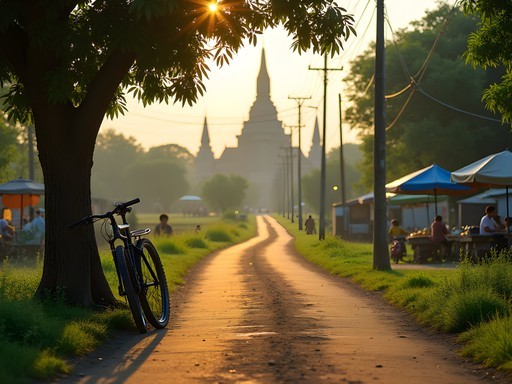
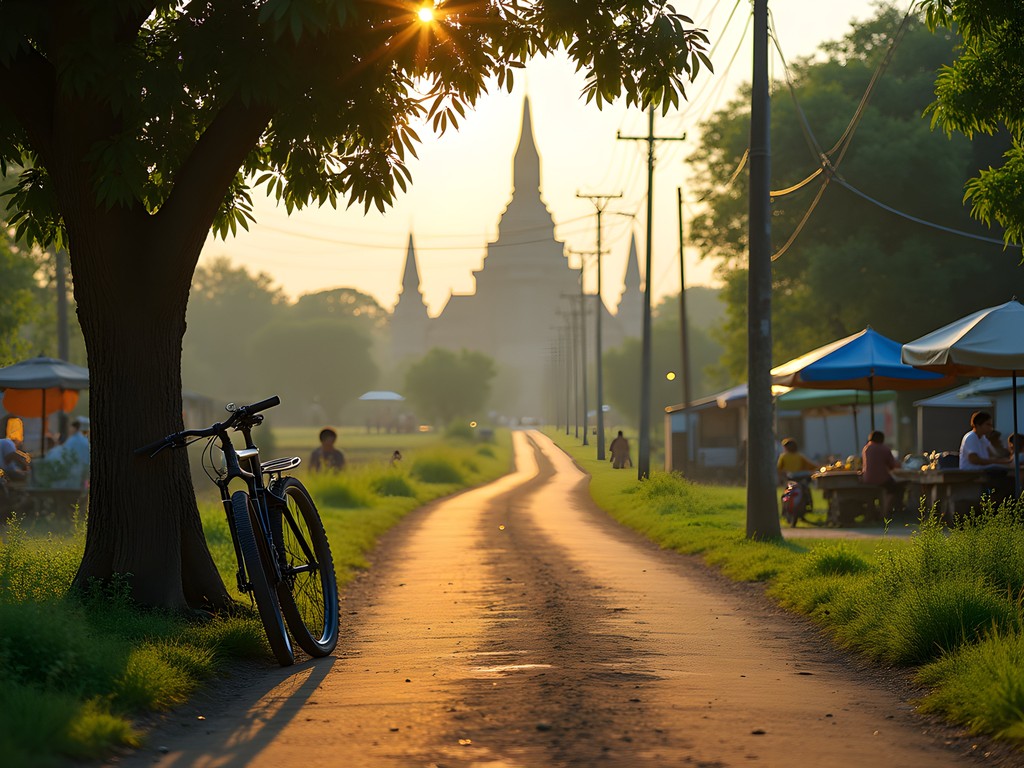
The cycling route between these outer temples takes you through neighborhoods where daily Thai life continues, completely removed from the tourist ecosystem – children playing after school, food vendors preparing afternoon snacks, and elderly residents chatting in the shade of ancient trees that may have witnessed the kingdom's fall centuries ago.
💡 Pro Tips
- Rent bicycles from shops near the ferry pier for better quality than hotel rentals
- Start early to avoid midday heat when cycling between sites
- Bring offerings (flowers or incense) when visiting active temples as a sign of respect
Capturing Night Photography in the Ancient City
Ayutthaya undergoes a magical transformation after sunset when floodlights illuminate select ruins against the night sky. While most day-trippers have returned to Bangkok by this time, those who stay overnight are rewarded with a completely different photographic experience.
Wat Mahathat, Wat Ratchaburana, and Wat Phra Si Sanphet all feature evening illumination, though hours can be inconsistent. I found it best to confirm the current schedule with your accommodation, as lighting times change seasonally and with special events.
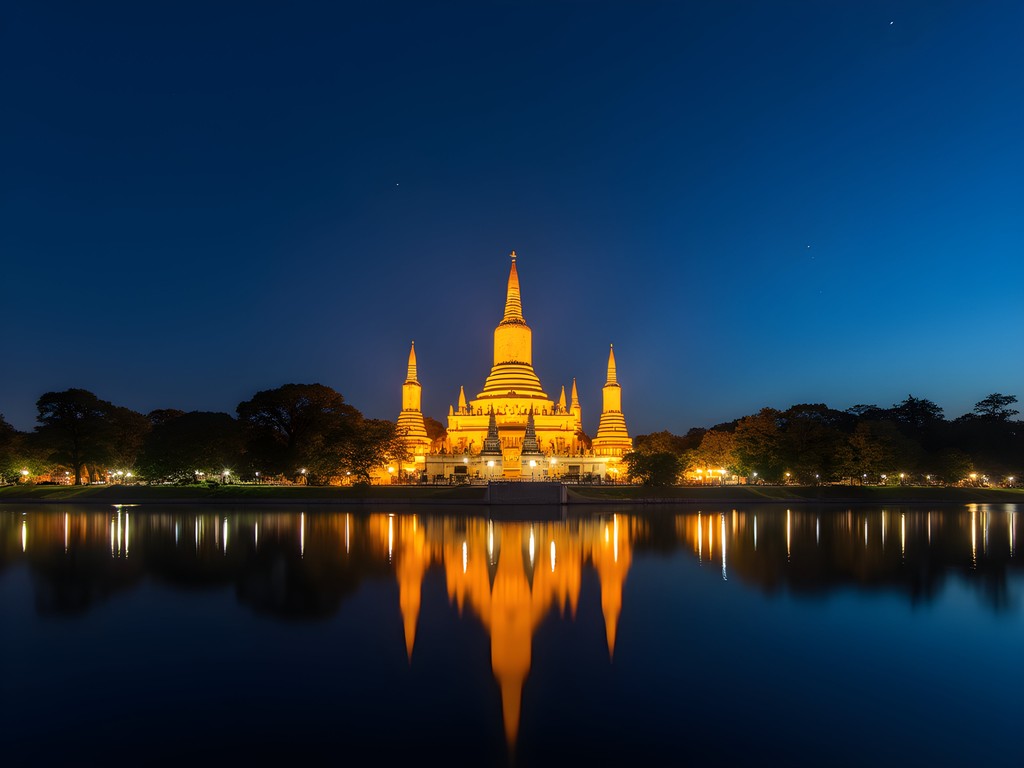
The crown jewel of nighttime photography is undoubtedly Wat Chaiwatthanaram, which is dramatically lit from 6:00pm until 9:00pm most evenings. The reflection of illuminated prangs in the river creates mirror images that seem to double the site's grandeur. I spent three consecutive evenings here, each time discovering new angles and lighting effects as clouds and weather conditions changed.
Night photography in ancient ruins presents unique challenges. A sturdy tripod is non-negotiable, and I found my remote shutter release essential for preventing camera shake during long exposures. The wireless functionality allowed me to trigger shots without touching the camera, eliminating even the slightest vibration that could blur a long exposure.
Be aware that mosquitoes can be relentless around the rivers at dusk. I learned this lesson the hard way on my first evening and subsequently made sure to apply repellent before each sunset shoot. Also, while the main sites have security present at night, it's wise to travel with a companion when moving between locations after dark.
Perhaps my most memorable night photography experience came during an unexpected electrical storm. From the safety of a covered viewpoint, I captured lightning strikes illuminating the silhouettes of ancient prangs – a collision of momentary and eternal that encapsulated Ayutthaya's enduring presence through centuries of natural and human drama.
💡 Pro Tips
- Verify illumination schedules with local hotels as they change seasonally
- Bring mosquito repellent specifically for evening shoots near the rivers
- Use bulb mode for capturing lightning strikes over illuminated temples during storms
Local Flavors: Fueling Your Exploration
Urban exploration is hungry work, and Ayutthaya offers distinctive culinary experiences that are as much a part of the city's heritage as its stone monuments. The city's position at the confluence of three rivers made it a historical trading hub, resulting in a unique fusion of Thai, Mon, Chinese, Portuguese, and Muslim influences still evident in local cuisine.
For breakfast, I developed a routine of visiting the morning market near Chao Phrom Market, where elderly vendors prepare traditional boat noodles (kuay teow ruea) – a dish said to originate from vendors who once paddled the city's canals. The rich, pork-based broth with rice noodles and morning glory provides sustaining energy for a day of walking.
During midday heat, I'd seek refuge at Pa Lek's roti sai mai stall near Wat Mahathat. This Muslim-influenced sweet consists of colorful spun sugar wrapped in paper-thin roti bread – a perfect sugar boost during intensive temple exploration. The green pandan-flavored variety proved particularly refreshing.
For evening meals, the night market near the Hua Ro area offers an impressive array of seafood, reflecting the city's continued connection to river life. Here I discovered kung mae nam (river prawns) grilled with salt – a simple preparation that showcases the exceptional quality of local ingredients.
The most distinctive local specialty is boat noodles, traditionally served in small portions because vendors once had to balance while serving from boats. Modern restaurants now serve these in small bowls, with customers typically ordering 4-5 bowls to make a meal. Raan Pathongko near the old Portuguese settlement serves my favorite version, with a complex broth enriched with pork blood and fragrant spices.
I recorded my culinary discoveries in my trusty travel journal, which has accompanied me across four continents. The acid-free paper handles occasional food stains well, and the expandable inner pocket proved perfect for collecting food stall business cards and hand-drawn maps to memorable meals. Reviewing these notes months later instantly transports me back to specific moments in Ayutthaya through the memory of tastes and smells that no photograph can capture.

💡 Pro Tips
- Try boat noodles for breakfast when the broth is freshest, before 9am
- Look for roti sai mai vendors with the thinnest, most translucent bread wrappings
- Visit Baan Kao Nhom for traditional Thai desserts that are disappearing from modern menus
Final Thoughts
As my week in Ayutthaya drew to a close, I found myself lingering at Wat Phra Ram during my final sunset, watching the light change across stones that have witnessed over 600 years of human drama. What began as a straightforward photography expedition had evolved into something deeper – a connection with a place where urban design, transportation networks, and cultural identity are literally layered upon each other through centuries of evolution. Unlike many ancient sites cordoned off from modern life, Ayutthaya breathes alongside its contemporary city, with locals fishing in shadow of ruins and children playing football against backdrops that once hosted royal ceremonies. For photographers and urban explorers, Ayutthaya offers that rare combination – spectacular visual opportunities alongside authentic cultural experiences, all accessible on foot through gentle exploration. As you plan your own journey through Thailand's ancient capital, remember that the most compelling images and memories often come not from rushing between major attractions but from the quiet moments of discovery in between.
✨ Key Takeaways
- Allow at least 2-3 days to properly explore Ayutthaya rather than rushing through as a day trip
- The best photography opportunities come at sunrise, sunset and during rainfall when tourist crowds thin out
- Venture beyond the central island to discover less-visited temples with active worship still taking place
- Engage with local food traditions as an essential part of understanding Ayutthaya's cultural landscape
📋 Practical Information
Best Time to Visit
November to February (cool, dry season)
Budget Estimate
$30-50 USD per day including accommodation, food and site entrance fees
Recommended Duration
3-5 days for photographers, 2 days minimum
Difficulty Level
Easy

Comments
summerninja
Pro tip: download the maps.me app before you go! The temples are all marked and you can navigate offline while cycling around. Saved me so many times when I got turned around on the back roads. Also bring a good water bottle because you'll need it - I used my water bottle and refilled it constantly at the 7-Elevens.
escapebuddy
This looks amazing!! Quick question - how's the heat in February? I'm not great with super hot weather and wondering if early morning walks are manageable or if it's brutal even then?
Gregory Boyd
Solid guide, Jerry. I'd add that the outer ring temples you mentioned are criminally underrated. Wat Phu Khao Thong in particular offers a completely different perspective - you can actually climb to the top and get panoramic views of the entire ancient city. It's about 2km northwest of the main island and sees maybe 10% of the tourist traffic. Best visited late afternoon when the light gets softer. Also, the local markets near Chao Phrom Market are worth exploring for authentic lunch spots between temple visits.
summerninja
YES! Wat Phu Khao Thong was my favorite. Had the whole place to myself at sunset.
wavegal
OMG that Buddha head in the tree roots photo is stunning!! I've seen so many versions of that shot but yours has such beautiful composition. The way you framed it with the morning light is just *chef's kiss*. Adding Ayutthaya to my Thailand itinerary for sure now!
travellegend
going there next month! is one day enough or should i stay overnight?
Nicole Russell
Stay overnight for sure! You'll want to catch sunrise AND sunset at different temples. Plus it's way less rushed.
hikingmood
What camera gear did you bring? Trying to figure out if I need my telephoto lens or just stick with my 24-70mm?
Gregory Boyd
A 24-70mm will cover most situations at Ayutthaya. The temples are quite accessible and you'll be walking a lot, so keeping your kit light is smart. I'd maybe add a 50mm prime if you have one for those detail shots of Buddha statues.
hikingmood
Perfect, thanks! Definitely keeping it light then.
Nicole Russell
Jerry, this is EXACTLY the guide I needed when I visited last year! I made the mistake of going to Wat Mahathat at midday and it was packed with tour groups. Your point about the golden hour at Wat Chaiwatthanaram is spot on - I went back three mornings in a row just to capture different light conditions. Did you rent a bike from the guesthouses near the island or did you arrange something beforehand? I'm heading back in March specifically for photography and want to be more organized this time!
summerninja
Not Jerry but I rented from a place right by the ferry crossing, super easy and like 50 baht for the day!
oceanchamp
Those sunrise shots are incredible!
Gregory Boyd
Excellent breakdown of the walking routes. I'd add that the historical park pass (220 baht) is worth it if you're planning to hit more than three temples. Also, the light between 4-5pm is almost as good as sunrise but with warmer tones - great for that golden hour glow on the weathered stone. The main temples get tour groups mid-morning, so if you're after that solitary explorer vibe Jerry captured, definitely go early or late afternoon.
SoloFemTraveler
Just got back from Ayutthaya and used this guide extensively - thank you Jerry! For solo female travelers, I felt completely safe cycling around the ruins, even in the less visited areas. One tip to add: I found the temples were much less crowded on weekdays than weekends when local tourists visit. Also, there's a night market near the train station on weekends with amazing food - perfect after a long day of temple-hopping!
Venture X
Premium card with 2X miles, $300 travel credit, Priority Pass