Disclosure: This article contains affiliate links. We may earn a commission from purchases at no extra cost to you, which helps our travel content.
The first time I stepped off a sept-place taxi into Touba's dusty streets, the contrast hit me like a wave—from Philadelphia's sirens to the melodic call to prayer echoing across Senegal's holiest city. As someone who's navigated emergency scenes for a living, I thought I was prepared for anything. But Touba demands a different kind of navigation skill—one that balances practical transport knowledge with deep cultural respect. This sacred Mouride Brotherhood city, home to one of Africa's largest mosques, operates by different rhythms than typical tourist destinations. Over my week here, I discovered transportation isn't just about getting from point A to B; it's about moving through spaces where everyday life and spiritual devotion intertwine. Whether you're drawn by religious pilgrimage, cultural curiosity, or the architectural wonder of the Grand Mosque, this guide will help you traverse Touba's physical and cultural landscape with both efficiency and reverence.

Getting to Touba: The Journey Inward
The journey to Touba begins long before you arrive at its sacred perimeter. Most travelers will depart from Dakar, Senegal's bustling capital, approximately 190 kilometers away. The primary artery connecting these worlds is the well-maintained N3 highway—though 'highway' might conjure misleading images of Western infrastructure.
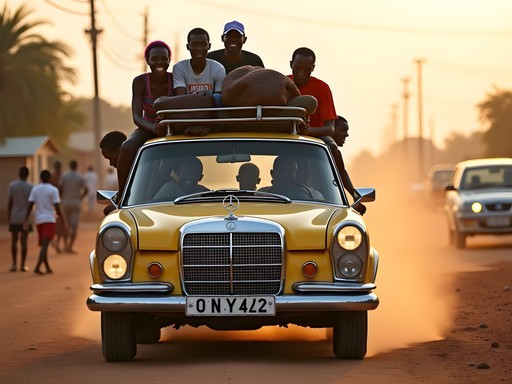
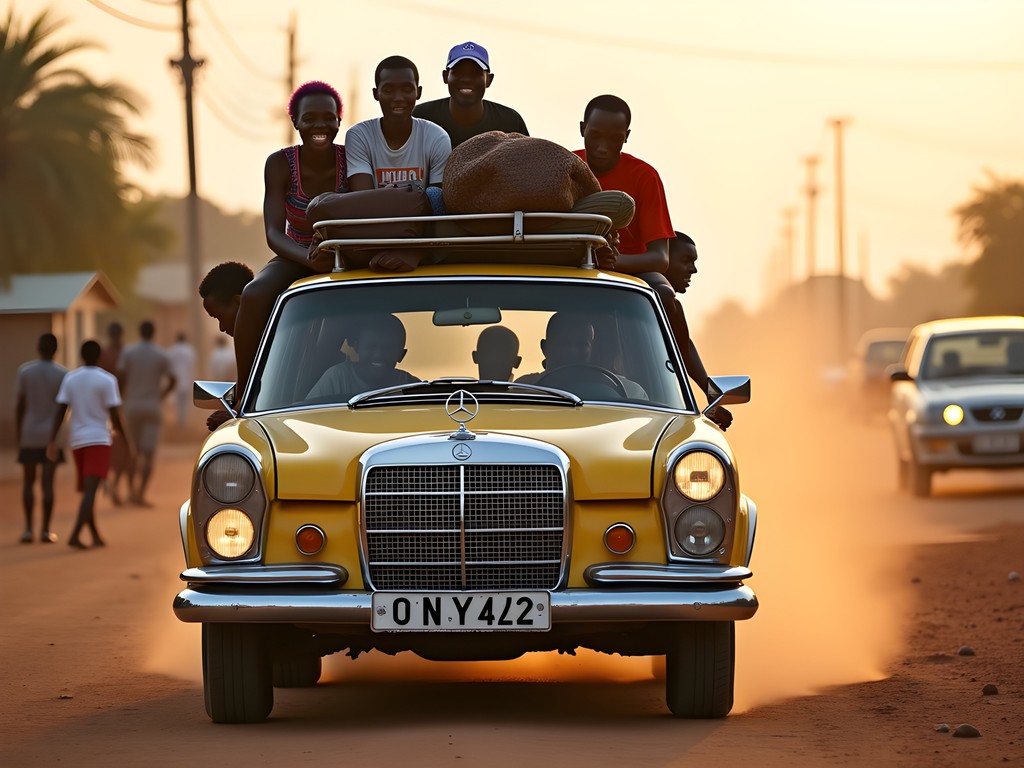
The sept-place taxi remains the transportation backbone for reaching Touba. These shared Mercedes station wagons (named for carrying seven passengers) depart from Dakar's Gare Routière des Baux Maraîchers once full. Expect to pay around 3,000-4,000 CFA (roughly $5-7 USD) for the journey. As an EMT who's spent years assessing safety, I'll be honest: these vehicles wouldn't pass inspection back home, but they're the lifeblood of Senegalese transportation.
My sept-place journey began at dawn—the best time to travel before the Senegalese heat intensifies. I shared the back row with a grandmother returning from visiting family and a young Mouride disciple heading home after studies in Dakar. The middle row held three men deep in theological discussion, while our driver navigated the road with the calm confidence that comes from driving this route thousands of times.
For those seeking more comfort, private taxis can be arranged for around 40,000-50,000 CFA ($70-85 USD). If you're traveling with camera equipment or value air conditioning, this might be worth the investment. I've found that a quality travel backpack is essential for these journeys—compact enough to keep at your feet in crowded transport but spacious enough to carry essentials for a week in Touba.
Public buses also connect Dakar to Touba, but schedules can be unpredictable and the journey significantly longer. However, at around 2,000 CFA ($3.50 USD), they're the most economical option if you're on a strict budget.
💡 Pro Tips
- For sept-place taxis, arrive early (6-7am) at Gare Routière for better vehicle selection and cooler travel temperatures
- Keep valuables on your person, not in stored luggage
- Bring small bills for fare payment as drivers rarely have change for large notes
- Pack water and snacks—the journey typically takes 3-4 hours with minimal stops
Navigating Within Touba: Sacred Circles
Once you've arrived in Touba, you'll quickly notice the city's layout resembles a series of concentric circles radiating from the Grand Mosque—a physical manifestation of sacred geometry that would fascinate anyone interested in how spiritual principles shape urban planning. This circular design isn't just symbolic; it impacts how you'll navigate the city.
Within Touba, transportation options are more limited than in Senegal's tourist hubs, reflecting both the city's religious character and practical realities. The most common options include:
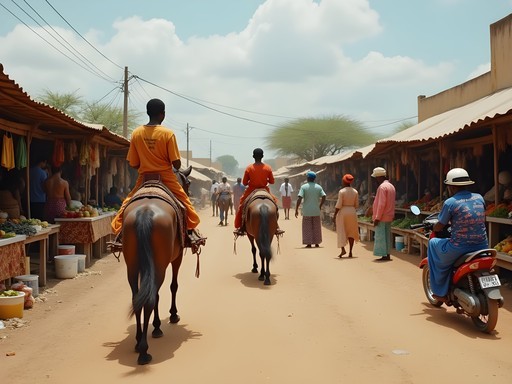
Walking: For exploring the central mosque area and nearby markets, walking is not just practical but preferable. The mosque complex deserves unhurried exploration, and the surrounding streets offer glimpses into daily life that you'd miss from a vehicle. During my second day, I spent hours simply circling the mosque at different distances, observing how community life organizes itself around this spiritual center.
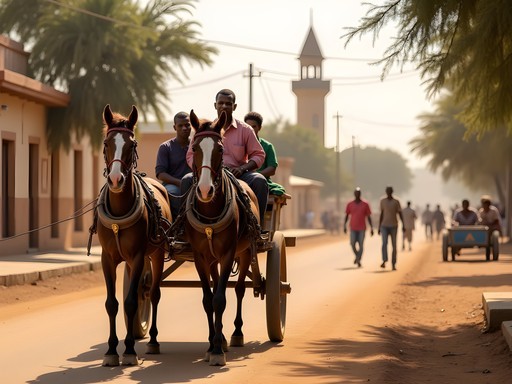
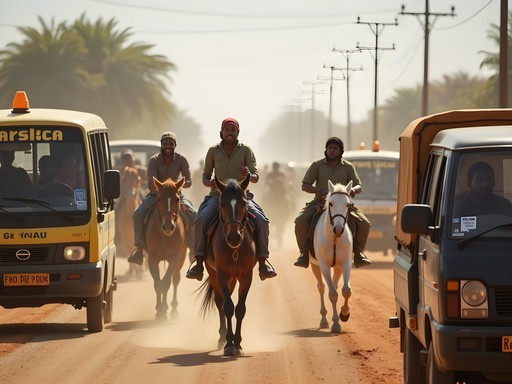
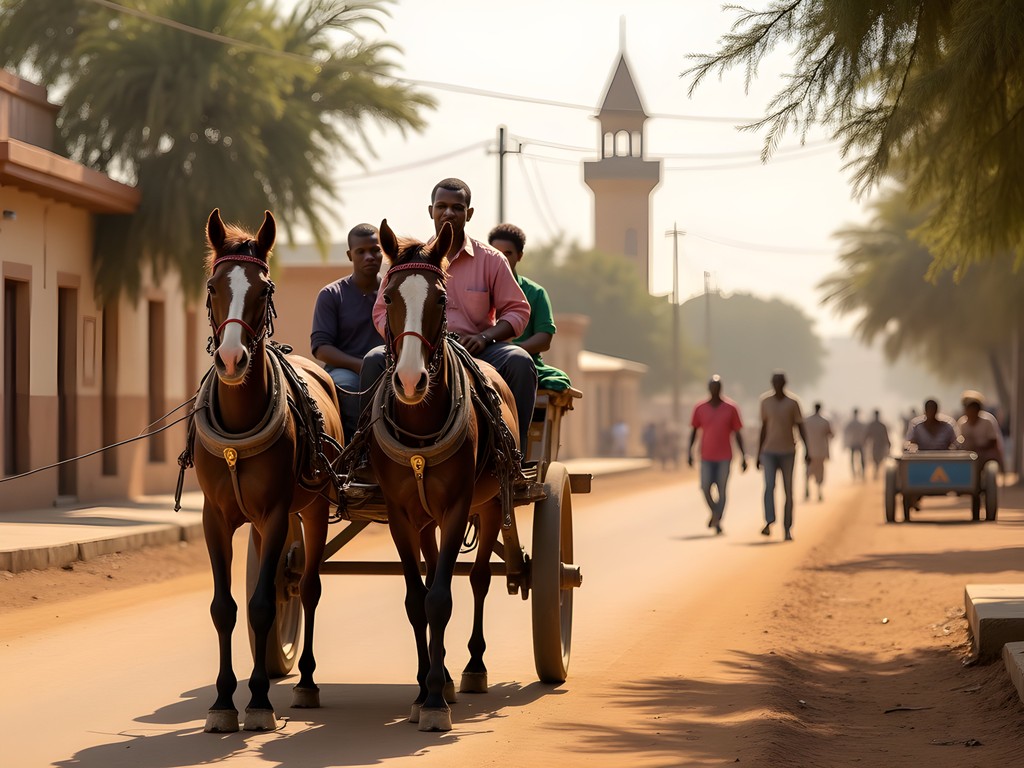
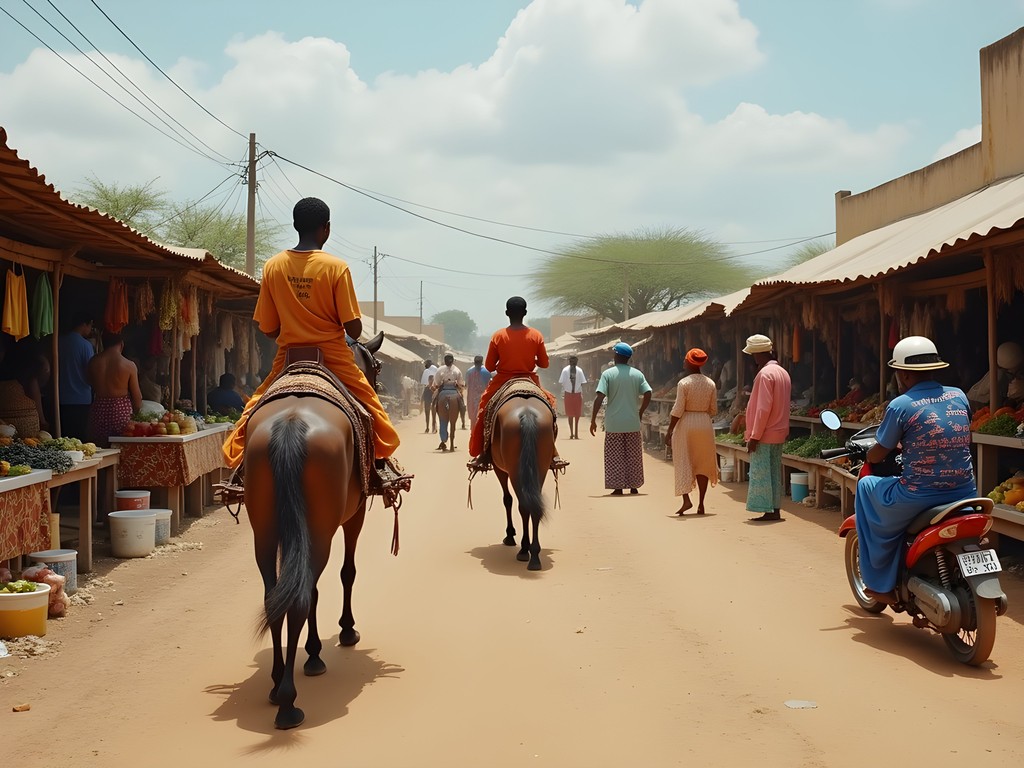
Horse Carts (Charrettes): These traditional carts remain a common sight in Touba and can be hired for short distances. Prices are negotiable, typically ranging from 500-1,000 CFA ($0.85-1.70 USD) depending on distance. While bumpy, these journeys connect you to a transport tradition that predates motorized vehicles and still serves many Senegalese communities.
Motorcycle Taxis (Jakarta): For quicker trips, motorcycle taxis are increasingly popular. Rates typically start at 500 CFA for short hops. While efficient, they come with obvious safety considerations—no helmets are provided, and drivers often navigate chaotic traffic with confidence that borders on recklessness.
City Taxis: Yellow taxis operate within Touba but are less common than in Dakar. Expect to pay 1,000-2,000 CFA ($1.70-3.40 USD) for trips within the city. Unlike taxis in tourist areas, meters aren't used, so negotiate your fare before departing.
During my explorations, I relied heavily on a combination of walking and occasional horse carts. My hiking sandals proved invaluable—breathable enough for the heat yet supportive enough for hours of walking on uneven surfaces. They're now my go-to footwear for exploring sacred sites across continents.
💡 Pro Tips
- Dress conservatively when walking around Touba—covered shoulders and legs for all genders
- Carry a reusable water bottle with a good filter, as staying hydrated is essential in the heat
- Learn basic Wolof greetings to better connect with transportation providers
- For women travelers, sitting in the front of horse carts is generally avoided out of cultural respect
Cultural Navigation: Respect & Etiquette
Transportation in Touba isn't just about physical movement—it's about navigating cultural and spiritual spaces with appropriate awareness. As someone who's worked in emergency medicine across diverse communities, I've learned that understanding cultural protocols can be as crucial as technical knowledge.
Touba operates under Sharia principles as the headquarters of the Mouride Brotherhood. This impacts transportation in ways that might surprise Western travelers. The city maintains prohibitions against alcohol, tobacco, and music in public spaces—including within all forms of transportation. These aren't just suggestions; they're deeply respected rules that maintain the city's sacred character.
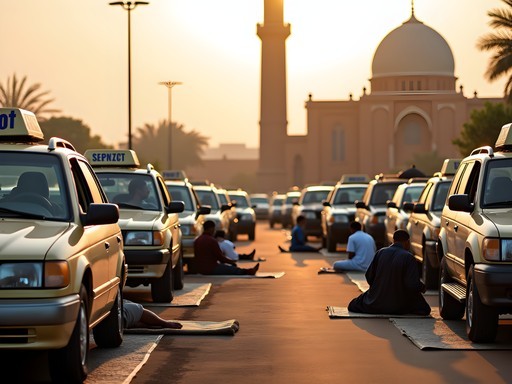
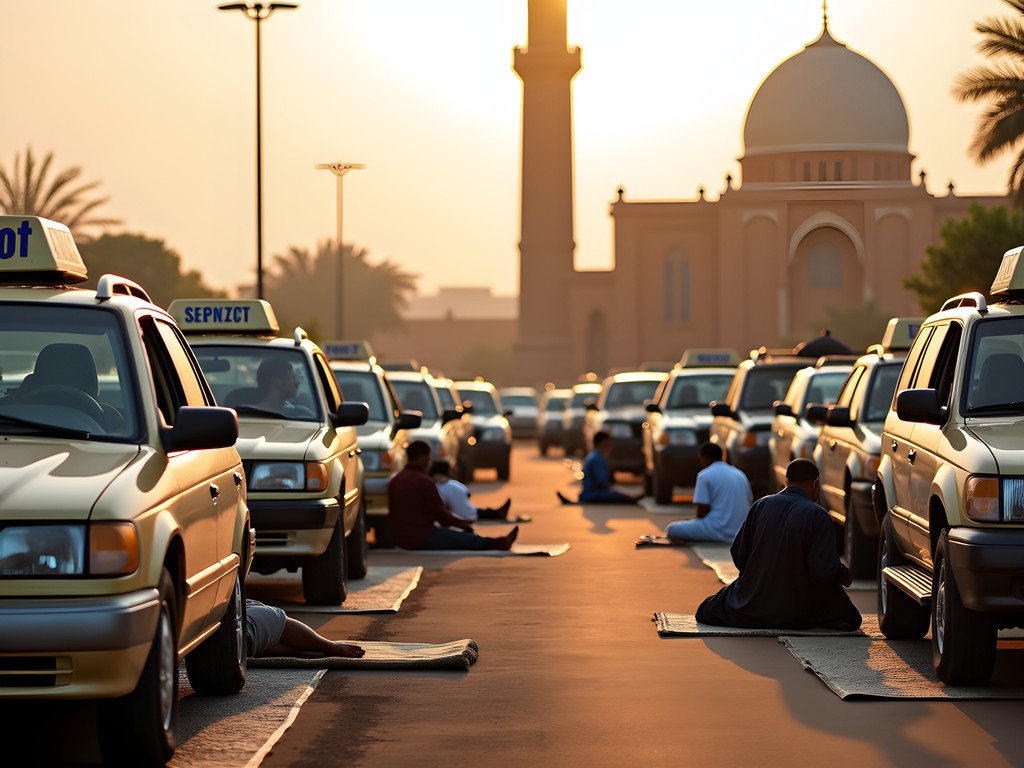
During my visit, I observed how these principles shaped everything from driver behavior to passenger interactions. Taxi drivers often pause for prayer times, and transportation hubs quiet significantly during calls to prayer. Rather than seeing these as inconveniences, I found them to be natural rhythms that connect movement through space with spiritual practice—something that resonated with indigenous teachings I'd learned from Mi'kmaq elders about how physical journeys can mirror spiritual ones.
As a female solo traveler, I took additional considerations into account. While Senegal is relatively progressive regarding women's freedom of movement, Touba's conservative nature means women travelers should:
- Dress modestly (loose clothing covering shoulders, chest, and knees at minimum)
- Consider sitting with other women in shared transportation when possible
- Be prepared for curious but generally respectful attention
One afternoon, my sept-place taxi pulled over so passengers could perform prayers. Rather than viewing this as a delay, I used my travel journal to document observations about how spiritual practice integrates seamlessly into daily transportation routines. These moments of pause became opportunities to connect more deeply with the place I was moving through.
Language also shapes transportation experiences. While French is widely spoken, Wolof dominates in Touba. Learning basic phrases like "Naka nga def?" (How are you?) and "Jerejef" (Thank you) creates goodwill with drivers and fellow passengers. When negotiating fares, a respectful approach yields better results than aggressive bargaining, which can be seen as disrespectful in this spiritual center.
💡 Pro Tips
- Remove shoes before entering the Grand Mosque if you're permitted entry (non-Muslims can sometimes visit outer areas)
- Keep transportation negotiations friendly and respectful rather than aggressive
- Prepare for transportation to pause during prayer times, especially Friday prayers
- Ask permission before photographing people or religious sites, particularly from vehicles

Safety Considerations Through an EMT's Eyes
My background as an emergency medical technician gives me a particular lens through which I assess transportation safety, and Touba presented unique considerations worth sharing with fellow travelers.
Road safety in Senegal differs dramatically from North American standards. Vehicles often lack basic safety features like functioning seatbelts, roads may be poorly maintained, and traffic regulations are treated more as suggestions than rules. This doesn't mean you should avoid local transportation—it means approaching it with appropriate awareness.
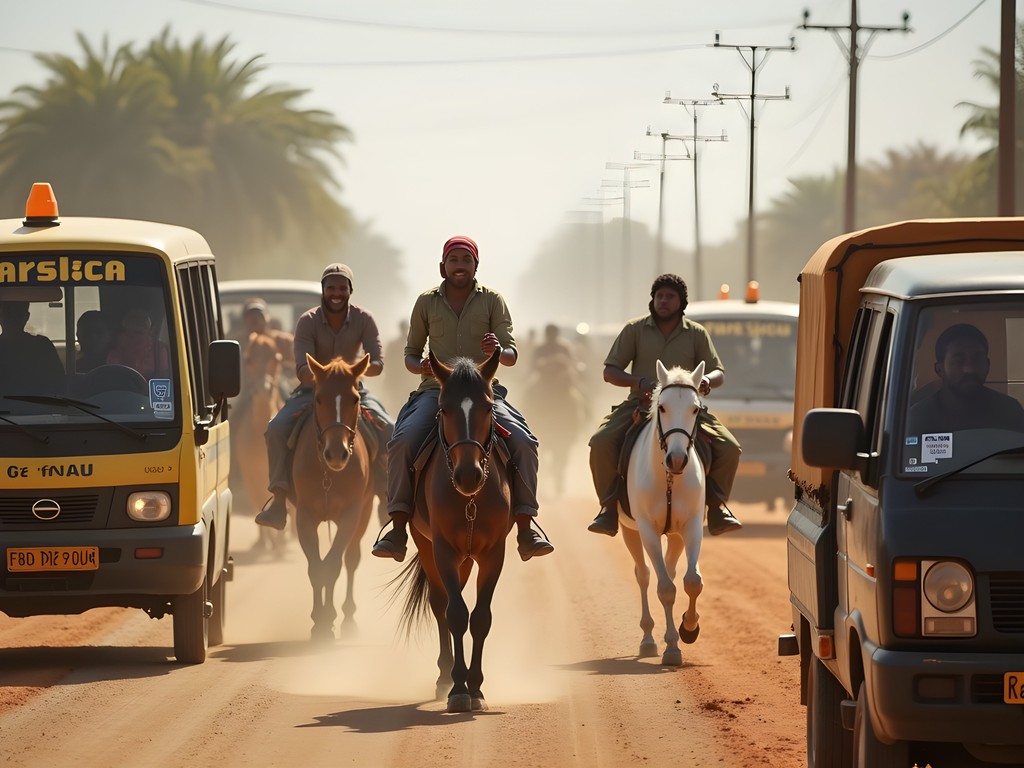
In sept-place taxis traveling to Touba, I noticed drivers frequently exceeded safe speeds while simultaneously navigating around potholes, animals, and pedestrians. As someone who's treated countless MVA victims, I found myself instinctively tracking potential hazards. When possible, I recommend:
- Choosing morning departures when drivers are less fatigued
- Politely asking drivers to reduce speed if you feel unsafe
- Avoiding night travel when possible, as roads are poorly lit and hazards multiply
Within Touba itself, the greatest safety challenges come from environmental factors rather than traffic. The heat can be overwhelming, especially for those unaccustomed to it. Heat exhaustion is a real concern when walking between sites or waiting for transportation. I always carry a insulated water bottle that keeps water cool even in extreme heat—critical for preventing dehydration.
Dust is another consideration, particularly during harmattan season when fine Saharan particles fill the air. Those with respiratory conditions may struggle, especially when using open-air transportation like horse carts. A lightweight breathable scarf can serve as an improvised dust filter.
Petty theft exists but is less common in Touba than in tourist centers like Dakar. Still, maintain awareness of your belongings, particularly in crowded transportation hubs. I use a simple money belt for essential documents and larger amounts of cash, keeping only small bills easily accessible for transportation costs.
As in many places where traditional and modern medical approaches coexist, knowing where to find healthcare is important. Touba has a hospital (Hôpital Matlaboul Fawzaini) with basic emergency services. For serious medical emergencies, evacuation to Dakar would be necessary. I always recommend travelers carry a basic first aid kit with personal medications, ORS packets for dehydration, and broad-spectrum antibiotics if prescribed by your doctor.
💡 Pro Tips
- Stay hydrated and protect yourself from the sun when using open-air transportation
- Keep a small first aid kit with electrolyte packets and basic medications
- Have the contact information for your country's embassy in Senegal saved offline
- Consider purchasing travel insurance with medical evacuation coverage before your trip
Day Trips & Surrounding Areas
While Touba itself deserves your full attention, the surrounding region offers compelling destinations that provide context for understanding Senegal's spiritual and cultural landscape. Using Touba as your base, several worthwhile day trips are possible through various transportation arrangements.
Diourbel, about 45 kilometers west of Touba, represents an interesting contrast as a former colonial administrative center. Sept-place taxis run regularly between Touba and Diourbel (around 1,500 CFA/$2.50 USD), making this an easy half-day excursion. The city's French colonial architecture stands in stark contrast to Touba's Islamic aesthetic, offering perspective on Senegal's layered history.
Mbacké, just 6 kilometers from Touba, is technically a separate city but functions almost as Touba's secular counterpart. Horse carts can take you there for around 1,000 CFA ($1.70 USD), or you can catch a shared taxi for a similar price. While Touba prohibits alcohol and maintains strict religious codes, Mbacké operates under standard Senegalese civil law. The twin-city relationship demonstrates how sacred and secular spaces coexist in Senegalese society.
For the more adventurous traveler, arranging transportation to the weekly rural markets (loumas) in surrounding villages offers glimpses into agricultural life that supports Touba's urban existence. These require either hiring a private driver (15,000-20,000 CFA/$25-35 USD for a half-day) or navigating infrequent public transportation. During my visit, I connected with a local guide through my guesthouse who arranged transportation to the Thursday market in Taif, where I witnessed centuries-old trading practices still thriving.
For these excursions, proper preparation is essential. I rely on my dry bag backpack which protects camera equipment and essentials from dust and unexpected rain during day trips. Its compact design makes it ideal for navigating crowded markets and various transportation modes while keeping valuables secure.
When planning day trips from Touba, remember that transportation back to the city becomes scarce after late afternoon. Unless you've arranged private transportation, plan to return by 4:00 PM to avoid being stranded. Also note that during major religious events like the Grand Magal, transportation to surrounding areas may be limited as vehicles are redirected to accommodate pilgrims.
💡 Pro Tips
- Confirm return transportation options before departing for day trips
- Consider sharing costs with other travelers for private transportation to more remote areas
- Rural markets operate on specific days of the week—confirm schedules locally
- Bring additional water and snacks for day trips as options may be limited outside Touba
Final Thoughts
Navigating Touba isn't just about mastering transportation logistics—it's about moving through a living spiritual ecosystem where every journey becomes part of a larger pilgrimage. Whether you're bouncing along in a sept-place taxi from Dakar, negotiating with a horse cart driver near the Grand Mosque, or simply walking the concentric streets that radiate sacred geometry, transportation here connects you to centuries of devotional movement. As someone who's witnessed how traditional knowledge and modern practices can combine in healing ways, Touba reminded me that how we move through sacred spaces matters as much as why we go. Pack respect alongside your practical gear, move at a pace that allows for genuine connection, and remember that in Touba, every journey—however humble the vehicle—carries echoes of the spiritual quests that built this remarkable city. When you depart, you'll take with you not just memories of magnificent architecture, but of how it feels to navigate a landscape where the physical and spiritual realms travel the same roads.
✨ Key Takeaways
- Sept-place taxis remain the most practical way to reach Touba from major cities
- Within Touba, walking and horse carts provide the most authentic transportation experience
- Transportation in Touba follows religious rhythms—expect pauses during prayer times
- Cultural navigation is as important as physical transportation in this sacred city
📋 Practical Information
Best Time to Visit
November-February (cooler months); avoid Grand Magal pilgrimage unless specifically attending
Budget Estimate
$30-50/day including accommodation, transportation, and meals
Recommended Duration
3-5 days
Difficulty Level
Moderate



Comments
Fatima Sims
This brought back memories! I visited Touba three years ago and the journey itself was transformative. Your description of the contrast from Philadelphia really captures that sensory shift. One moment that stuck with me: my sept-place driver stopped for midday prayer and invited all passengers to join at a roadside spot. That communal pause in the journey felt like an introduction to Touba's rhythm before we even arrived. Also, as a woman traveler, I found the dress code guidance crucial - I packed a lightweight scarf and modest clothing which made navigating the city so much smoother. The respect you show in your approach is exactly what Touba deserves.
moonmate
Love this guide. Touba is incredible.
Frank Garcia
Excellent breakdown, Sage. I visited Touba in 2024 and your point about it being a "living spiritual ecosystem" really resonates. One thing I'd add: the transportation rhythm changes dramatically during Magal - the annual pilgrimage. If you're visiting during that period, expect completely different logistics. The sept-places multiply but so does the wait time. I ended up hiring a private car from Dakar which was pricier but gave me flexibility. The driver also served as an informal cultural guide which was invaluable for understanding the significance of different locations within the city.
islandbackpacker
Good to know about Magal! Definitely something to plan around.
nomadrider4717
How much does the sept-place from Dakar cost roughly? And how long is the ride?
oceanphotographer
Can you take photos in Touba or is that disrespectful? Planning a trip in March and want to be prepared.
Sage Dixon
Great question! Always ask permission first, especially near the Grand Mosque. Some areas are off-limits for photography. When in doubt, just ask - people are generally warm if you're respectful about it.
oceanphotographer
Thanks so much!
islandbackpacker
This is super helpful! I went to Senegal last year but skipped Touba because I wasn't sure about the etiquette stuff. The sept-place taxis sound intense though - how cramped are we talking? Like sardines or manageable? Also loved the EMT perspective on safety, that's a unique angle you don't usually see in travel blogs.
moonmate
sept-places are tight but worth it. 7 people in a car meant for 5 lol. bring water.
vacationbackpacker
I found the transportation within Touba to be much easier than getting there. Those sept-place taxis are an experience! Pro tip: if you're coming from Dakar, try to leave early morning to avoid the worst of the midday heat, especially if your taxi doesn't have AC (most don't). And bring small bills - drivers rarely have change for large notes.
starmate
Great tips, thanks for sharing!
Savannah Walker
This brought back so many memories! I visited Touba as part of a longer Senegal trip last spring and honestly, the transportation chaos was half the adventure. Those horse carts (calèches) are the best way to see the city - bumpy but authentic. My driver Ahmed gave me a complete tour including stops at all the important sites around the Great Mosque. Cost me about 5000 CFA for two hours. The key thing Sage mentioned about respecting prayer times is SO important - everything stops and you should too. I made the mistake of trying to take photos during prayer my first day and got some stern looks. Learn from my rookie mistake!
islandtime
Love this guide!! The photos are beautiful
Venture X
Premium card with 2X miles, $300 travel credit, Priority Pass