


Disclosure: This article contains affiliate links. We may earn a commission from purchases at no extra cost to you, which helps our travel content.
The first time I saw Neuschwanstein Castle, I wasn't prepared for how it would hit me. Not just the fairy-tale silhouette against the Bavarian Alps—that's the money shot everyone expects—but the journey there. Like a good marathon, getting from Munich to this iconic castle isn't just about the finish line; it's about the rhythmic meditation of the miles in between. After coordinating relief efforts across three continents, I've developed a sixth sense for efficient travel routes that don't drain your wallet. Whether you're a solo traveler with a weekend to spare or someone seeking both Ludwig's fantasy castle and the authentic heartbeat of Bavaria, I'm breaking down every transportation option with the precision of a race day strategy. Because let's be honest—the difference between a magical Bavarian adventure and an overpriced tourist trap often comes down to knowing exactly how to get there.

Understanding Your Options: The Transit Landscape
Before we lace up for this journey, let's map the terrain. Munich to Neuschwanstein is about 120 kilometers (75 miles) southwest of Bavaria's capital. It's the classic day trip that thousands attempt daily in summer, creating a predictable rhythm of crowded morning trains and afternoon returns.
You've got four main options:
- Public transportation: The budget marathon runner's choice—trains and buses that connect like a well-executed relay race
- Guided tours: The convenience option—someone else handles the logistics while you just show up
- Rental car: The freedom route—pricier but with flexibility to explore beyond the castle
- Rideshare: The wild card—potentially budget-friendly if you find the right match
Having made this trip six times (yes, I'm slightly obsessed with tracking how castle crowds change through different seasons), I've tested every route. The public transport option has become my ritual, much like how I always visit local record shops in new cities—it's where you feel the authentic pulse of a place.
While planning your journey, I recommend downloading the DB Navigator app to your phone. The German rail system runs with the precision of a Swiss watch, and this app gives you real-time updates, platform changes, and even lets you purchase tickets directly. It's saved me countless times when connections were tight or schedules changed.
Remember that transportation in Germany follows a hub-and-spoke model. Munich is your hub, Füssen is the gateway spoke, and Neuschwanstein is your final destination. Understanding this structure helps you visualize the journey as a series of connected segments rather than one intimidating long haul.

💡 Pro Tips
- Download the Bayern Ticket details to your phone as offline PDF in case of spotty service
- Weekday travel is significantly less crowded than weekends, especially in summer
- The earlier you start from Munich, the less crowded your castle experience will be
The Budget Champion: Public Transportation Route
If you've ever hit the wall at mile 20 of a marathon, you know that proper pacing is everything. The same applies to this journey—rushing creates stress, while moving too slowly costs precious castle time. Here's the public transit route I've refined over multiple trips:
Step 1: The Bayern Ticket Advantage
Start at Munich Hauptbahnhof (main station) by purchasing a Bayern Ticket. This regional day pass is the budget traveler's best friend at around €26 for one person or €32 for two—each additional person (up to 5 total) is just a few euros more. The beauty of this ticket is that it covers all your transportation for the day: trains to Füssen, buses to the castle, and any regional trains or buses you take within Bavaria until midnight.
Pro move: Purchase your Bayern Ticket the evening before through the DB Navigator app to avoid morning ticket line chaos.
Step 2: Munich to Füssen by Train
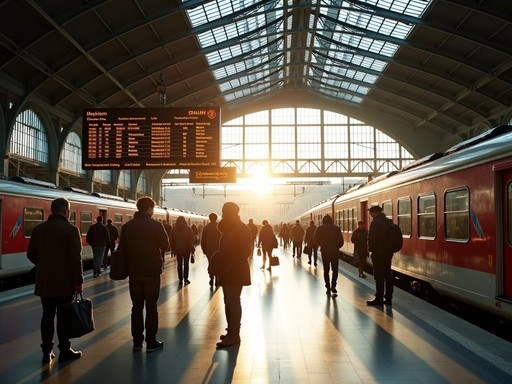
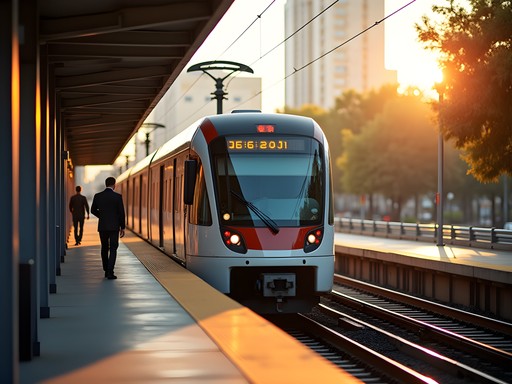
Catch the regional train from Munich to Füssen. These typically depart every two hours, with the first train leaving around 7:53 AM. The journey takes approximately 2 hours and offers meditative views of the Bavarian countryside that remind me of the temple-side runs I used to do in Thailand—expansive, green, and surprisingly centering.
The train route includes a transfer at Buchloe station. Don't panic—these connections are designed for travelers, and you'll have about 10 minutes to change platforms. German trains typically run on time with the precision of a race clock.
Step 3: Füssen to Hohenschwangau by Bus
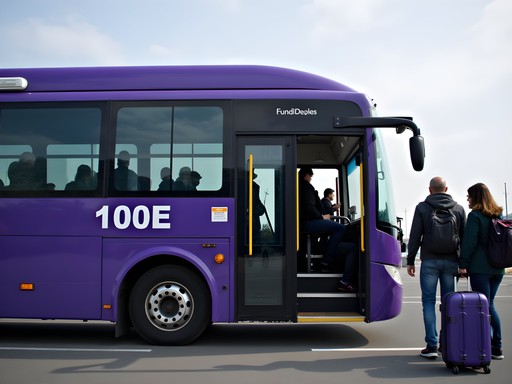
Upon arriving in Füssen, exit the station and look for Bus 73 or 78 to Hohenschwangau (the village at the foot of the castle). The bus stop is directly in front of the station, and buses are timed to meet incoming trains. The ride takes just 10 minutes, and your Bayern Ticket covers this leg too.
While waiting for the bus, I always take a moment to adjust my travel backpack. This compact but surprisingly spacious pack has been my faithful companion on countless day trips. Its water bottle pockets, tablet sleeve, and comfortable straps make it perfect for carrying essentials while keeping your hands free for taking photos or grabbing snacks from local bakeries along the way.
Step 4: The Final Ascent
From Hohenschwangau village, you have three options to reach Neuschwanstein Castle: 1. Walk: A 40-minute uphill hike that's steep but doable (my preference for the morning journey) 2. Horse-drawn carriage: Romantic but often has long queues (€7 uphill) 3. Shuttle bus: Efficient but still requires some walking (€3 uphill)
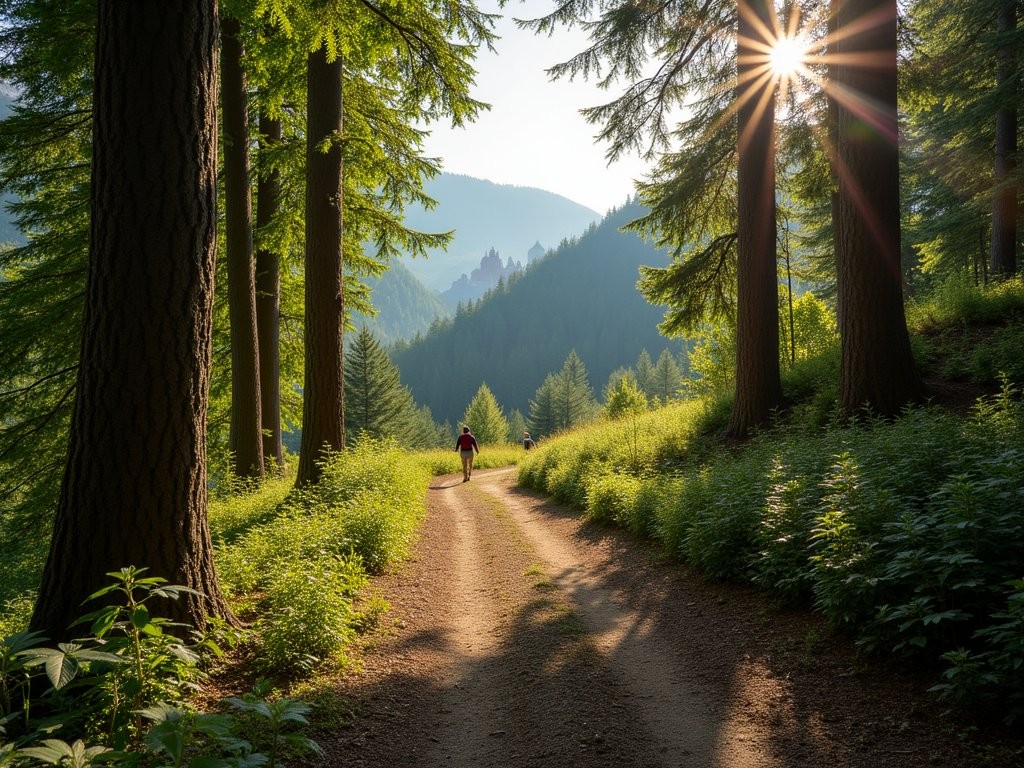
The walk has become a ritual for me—like the first few miles of a marathon where you find your rhythm. The path winds through forest that feels almost monastic in its quiet beauty, offering glimpses of the castle as you ascend.
💡 Pro Tips
- The first train from Munich (usually 7:53 AM) gets you to the castle before most tour groups arrive
- Save your return journey receipt—conductors check tickets on afternoon trains back to Munich
- Bring cash for the shuttle bus or horse carriage as card payments aren't always accepted
Timing Is Everything: Strategic Castle Arrival
Marathon runners know that race-day strategy is as important as training. Similarly, when to arrive at Neuschwanstein can make or break your experience. The castle receives up to 6,000 visitors daily during peak summer months, creating crowd patterns as predictable as tide charts.
The Early Bird Advantage
My tried-and-tested approach is catching the first train from Munich (typically the 7:53 AM). This puts you at the castle entrance around 10:30 AM, just as it opens. This timing hits the sweet spot—you'll be ahead of most tour buses that arrive between 11:00 AM and 1:00 PM.
During my June visit last year, I arrived at 10:15 AM and waited just 10 minutes for tickets. When I exited the castle at noon, the queue had ballooned to over 90 minutes. Timing truly is everything.
Ticket Reservation Reality Check
While you can reserve castle entry tickets online, there's a catch—you still need to pick them up at the ticket center in Hohenschwangau village. During high season, the pickup line can be almost as long as the regular ticket line, negating much of the advantage.
My strategy: If traveling in summer or on weekends, make online reservations. For weekday visits in shoulder seasons, the regular ticket line moves efficiently enough to skip the reservation hassle.
The Marienbrücke Photo Strategy
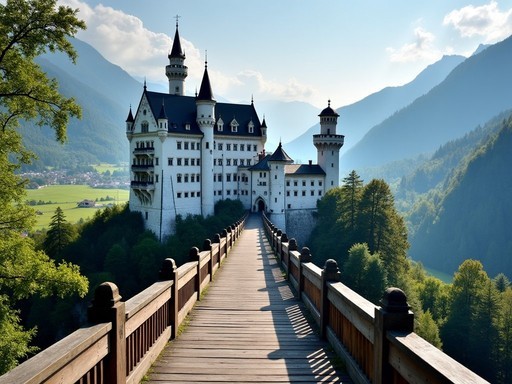
The iconic postcard shot of Neuschwanstein comes from Marienbrücke (Mary's Bridge), a short hike past the castle. Here's where strategic timing creates magic: Most tour groups visit the castle first, then the bridge. By reversing this order—heading straight to Marienbrücke upon arrival, then backtracking to the castle—you'll likely have those million-dollar views with far fewer photobombers.
I've found that carrying a collapsible water bottle is essential for these hikes. It saves space in your daypack when empty but provides necessary hydration during the surprisingly steep climbs around the castle grounds. The flexible, leak-proof design has saved my camera gear more than once when packed in close quarters.
The Return Journey: Avoiding the Exodus
Just as the start line of a marathon sees staggered departures, plan your castle exit strategically. Most visitors leave between 3:00-4:00 PM, creating bottlenecks at the bus stop back to Füssen.
Either commit to an early departure (around 1:00 PM) or linger until later (post 5:00 PM). The in-between hours create transportation congestion that can add unnecessary stress to your return journey. I've found that the 5:30 PM bus back to Füssen connects perfectly with evening trains to Munich, and the golden hour light on the castle as you descend is worth the wait.

💡 Pro Tips
- Take photos at Marienbrücke first, then visit the castle to avoid the largest crowds at both locations
- Castle tours are timed entries—don't miss your slot as rescheduling same-day is nearly impossible
- The last bus from Hohenschwangau to Füssen typically leaves around 6:45 PM (verify current schedule)

Beyond the Castle: Finding Spiritual Spaces
While thousands flock to Neuschwanstein daily, few visitors venture beyond Ludwig's fantasy creation. This reminds me of how travelers often miss the spiritual centers that reveal a culture's true heart—something I've sought in monasteries from Thailand to Ethiopia.
Wieskirche: The Pilgrim's Detour
If you have time flexibility, the Wieskirche (Church in the Meadow) offers a spiritual counterpoint to Neuschwanstein's secular grandeur. This UNESCO World Heritage site exemplifies Bavarian Rococo architecture and houses the famous "Scourged Savior" statue that reportedly shed tears in 1738.
To reach it: From Füssen, take bus 73 to Steingaden, then transfer to bus 9606 to Wieskirche. The entire detour adds about 3 hours to your day but provides a contemplative space rarely experienced by day-trippers.
During my visit, I sat alone in Wieskirche for nearly an hour as afternoon light filtered through the windows. The silence offered the same meditative quality I've found in marathon running—a chance to be present in a historic space where countless others have sought meaning.
Hohenschwangau Village: The Overlooked Haven
Most visitors treat Hohenschwangau village merely as a transfer point, but this tiny settlement deserves attention. While waiting for your castle entry time, explore the village's quiet corners and the often-overlooked Hohenschwangau Castle (Ludwig II's childhood home).
The village also houses Museum of the Bavarian Kings, which provides historical context often missing from the Neuschwanstein experience. Understanding Ludwig II's complex personality and tragic end adds layers of meaning to your castle visit.
Alpsee: Nature's Cathedral
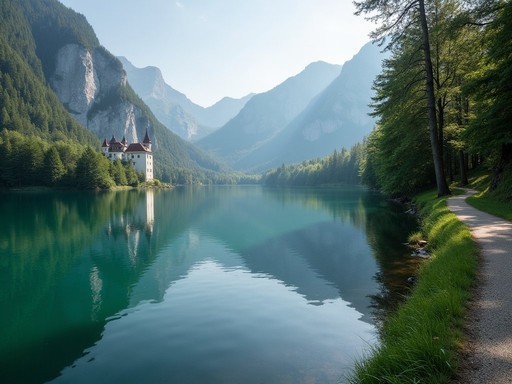
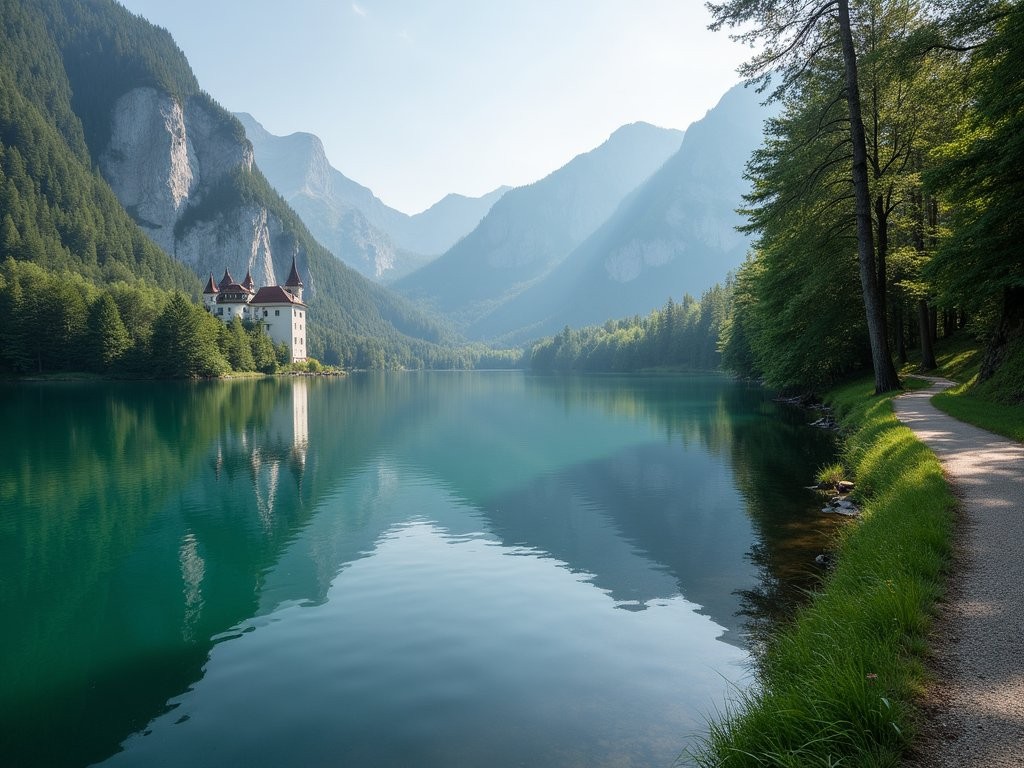
Just beyond Hohenschwangau village lies Alpsee, an Alpine lake that served as Ludwig's personal retreat. The 5km lakeside path offers a perfect opportunity to escape crowds and find the kind of natural sanctuary that inspired the king's architectural visions.
During summer visits, I always pack my quick-dry travel towel for an impromptu swim in the crystal-clear waters. This compact, fast-drying towel takes minimal space in my daypack but transforms an ordinary sightseeing day into a refreshing nature experience. The cool Alpine water provides the same rejuvenating effect as an ice bath after a long run—shocking at first, then deeply restorative.
These quieter experiences around Neuschwanstein remind me of discovering independent record stores in new cities—they may lack the immediate recognition of mainstream attractions, but they offer authentic connections to place that mass tourism often misses.
💡 Pro Tips
- Allow at least 30 minutes to walk the short trail around Alpsee for spectacular mountain reflections in the lake
- Visit Hohenschwangau Castle in the afternoon when most crowds have moved on to Neuschwanstein
- The Museum of the Bavarian Kings offers an audio guide that provides excellent historical context for both castles
Alternative Routes: Tours, Drives & Rideshares
While public transportation remains my go-to method, alternative routes offer different rhythms for different travelers—like choosing between trail running and track workouts.
Guided Tours: The Convenience Option
For first-time visitors to Germany or those with limited planning time, guided tours from Munich provide a frictionless experience. Companies like Grayline and Viator offer day trips that include:
- Round-trip transportation from central Munich
- Skip-the-line castle tickets
- English-speaking guides
- Often a stop at Linderhof Palace or Oberammergau
The downside? Limited flexibility, higher cost (€60-90), and moving with a crowd. You'll sacrifice the meditative quality of independent travel for convenience.
That said, during my volunteer coordination work in Munich last winter, I joined a tour when trains were disrupted by snow—and found the experience surprisingly enjoyable. Our guide provided historical context I'd missed on self-guided visits.
Rental Car: The Freedom Route
Renting a car transforms your Neuschwanstein day trip into a Bavarian road trip. The A96 and B17 route takes approximately 1.5 hours each way without traffic and allows for spontaneous detours to places like:
- The charming town of Füssen itself (often bypassed by day-trippers)
- The Zugspitze (Germany's highest peak)
- The monastery at Ettal
- The Starnberger See (where Ludwig II mysteriously died)
Parking at Hohenschwangau costs €8 for the day. While more expensive than public transport, a car rental makes sense for groups of 3-4 people or those continuing to other Alpine destinations.
Rideshare: The Social Option
Platforms like BlaBlaCar connect drivers with empty seats to passengers heading the same direction. This option combines budget-friendliness with the flexibility of car travel, plus the added dimension of meeting locals or fellow travelers.
I've used rideshares extensively across Eastern Europe and found them to be as reliable as public transportation when planned properly. For Neuschwanstein, search for rides to Füssen or Hohenschwangau, typically costing €15-25 each way.
The key to successful ridesharing is flexibility—you'll need to adapt to the driver's schedule rather than yours. Always have a backup plan (like the train schedule) in case your return rideshare falls through.
The Bicycle Adventure Option
For the athletically inclined, Munich offers rental bikes that can be combined with regional trains for an epic adventure. The Deutsche Bahn allows bicycles on regional trains with a special ticket (approximately €6 in addition to your regular fare).
The strategy: Take the train to Füssen with your bike, then cycle the remaining 4km to Hohenschwangau. This approach gives you freedom to explore the entire area, including the scenic routes around Alpsee and between villages.
While this option requires more physical effort, it connects me to the landscape in the same way long-distance running does—you notice details, smells, and sounds that enclosed transportation methods miss entirely.

💡 Pro Tips
- Book guided tours at least 3 days in advance during summer as they frequently sell out
- If driving, arrive before 10 AM to secure parking in the main Hohenschwangau lot
- For rideshares, look for drivers with high ratings and verified profiles for the safest experience
Budget Breakdown: Counting the Castle Costs
Like planning a marathon in a new city, budgeting for Neuschwanstein requires understanding both the obvious and hidden costs. Here's the financial breakdown based on my most recent solo trip:
Transportation Costs (Public Transit Option)
- Bayern Ticket: €26 (covers all regional trains and buses for the day)
- Optional shuttle bus to castle: €3 uphill, €2 downhill
- Optional horse carriage: €7 uphill, €3.50 downhill
Total transportation: €26-36
Castle Entry & Experiences
- Neuschwanstein Castle guided tour: €17.50
- Hohenschwangau Castle (optional): €15
- Museum of Bavarian Kings (optional): €11
- Audio guide: €4
Total attractions: €17.50-47.50
Food & Refreshments
Bavarian food prices around tourist attractions can shock the unprepared. My budget strategy:
- Breakfast: Grab a pretzel and coffee at Munich Hauptbahnhof before departure (€5)
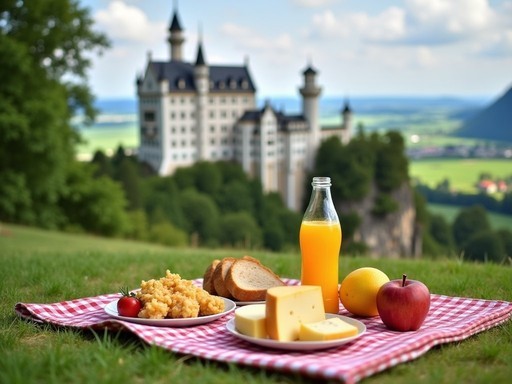
- Lunch: Pack a simple picnic to enjoy with castle views (€0 if you bring from home)
- Afternoon refreshment: One beer at Schlossbrauhaus Schwangau is a cultural must (€5)
Total food (budget approach): €10-15
For those willing to splurge, restaurants in Hohenschwangau village offer traditional Bavarian meals for €15-25 per person.
Total Day Trip Cost
- Budget approach (public transport, castle tour only, packed lunch): €53.50-61.50
- Mid-range approach (public transport, both castles, one restaurant meal): €78.50-98.50
- Convenience approach (guided tour from Munich including entry): €60-90
Comparing these costs to other European attractions, Neuschwanstein offers reasonable value despite its popularity. The real value optimization comes from smart transportation choices and food planning.
One budget tip I've learned from coordinating volunteer travel: Always carry a reusable water bottle with filter when traveling in Europe. German tap water is excellent, and this bottle lets you refill safely anywhere, avoiding the €3-4 charges for bottled water near tourist attractions. The built-in filter gives extra peace of mind, and the durable construction has survived countless trips in my daypack.
Remember that while Neuschwanstein is the headline attraction, the surrounding Alpine landscape costs nothing to enjoy. Some of my most memorable moments have come from free experiences—watching sunset paint the castle from Tegelberg viewpoint or finding a quiet spot along Alpsee to reflect on Ludwig's complicated legacy.

💡 Pro Tips
- The Bayern Ticket is valid after 9 AM on weekdays, but all day on weekends—plan accordingly
- Castle tickets can only be purchased in Hohenschwangau village, not at the castle itself
- Many smaller shops and cafés in Hohenschwangau only accept cash—bring Euros
Final Thoughts
As the train pulls away from Füssen, back toward Munich's urban rhythm, I always feel that particular satisfaction that comes from a day well-spent—similar to the endorphin high after completing a challenging run. Neuschwanstein may be one of Europe's most photographed buildings, but the journey there doesn't have to follow the tourist masses or drain your travel budget.
The castle itself is a monument to one man's imagination—Ludwig II created his fantasy despite practical limitations. In that spirit, I encourage you to craft your own perfect castle day trip, whether that means racing the crowds on the first train from Munich or taking a leisurely bicycle journey through the Bavarian countryside.
Remember that while Neuschwanstein will undoubtedly capture your attention, the spaces between—the train ride through rolling farmland, the forest path to the castle, the quiet shores of Alpsee—often provide the most authentic connection to Bavaria's spirit. Like finding an unexpected gem in a record shop or a moment of clarity during a monastery visit, sometimes the magic happens when you look beyond the obvious attraction.
What transportation method will you choose for your castle quest? However you decide to make the journey, I hope you find both Ludwig's fairy tale and your own Bavarian story along the way.
✨ Key Takeaways
- The Bayern Ticket offers the best transportation value at €26, covering all regional trains and buses for a day
- Arriving early (before 10:30 AM) dramatically improves your castle experience by avoiding peak crowds
- Visit Marienbrücke first for the iconic castle photo, then backtrack to the castle for your tour
- The areas surrounding Neuschwanstein (Alpsee, Hohenschwangau village) offer equally meaningful experiences with fewer crowds
📋 Practical Information
Best Time to Visit
May-June or September-October for ideal weather with fewer crowds than peak summer
Budget Estimate
€50-100 per person for a complete day trip
Recommended Duration
Full day (8-12 hours including travel time)
Difficulty Level
Easy



Comments
luckybackpacker
If you're doing the Bayern ticket, remember you can add up to 5 people total for just a few euros more per person. We split it with some people we met at our hostel and it was like 13 euros each for the whole day. Also the bakeries in Füssen are amazing - grab something for the train ride back!
Jose McDonald
The bakery tip is clutch! Those pretzels are no joke
Jose McDonald
Dude, YES! This castle is absolutely worth the hype. I did the early morning public transport route and had the Marienbrücke almost to myself around 9am - the photos were INSANE. Pro tip: if you're into hiking, there are trails behind the castle that go up into the Alps and the views are next level. Barely anyone takes them. Bring good shoes and water though. I had my water bottle and needed every drop. The spiritual spaces section really resonated with me too - there's something about being in those mountains that just hits different.
beachlife
We did the public transportation route last October and it was perfect. The train ride through the countryside was gorgeous. Only thing - make sure you check the return train times! We almost got stuck in Füssen because we didn't realize how infrequent the evening trains were. Ended up grabbing dinner at a cute little restaurant near the station while we waited.
coffeenomad7729
Good tip about the train times!
Ahmed Palmer
The public transport route is absolutely the way to go, especially if you're solo. I've done this trip three times now and the Bayern ticket makes it ridiculously economical. One thing Mason didn't mention: the walk from Hohenschwangau village up to the castle is steeper than it looks. Budget 30-40 minutes if you're walking rather than taking the shuttle bus. Also, the Marienbrücke viewpoint can get dangerously crowded by midday - I'd recommend hitting it either first thing or after 4pm when the tour groups thin out.
starnomad
How early should we book castle tickets? Is it really that crowded in summer?
Ahmed Palmer
Book at least 2-3 weeks ahead for summer months. I went in July last year and even mid-week slots were filling up fast.
starnomad
Thanks! Will do that
coffeenomad7729
Super helpful! Doing this next spring.
moonqueen
This castle is literally a dream!! We visited last fall and did the public transport route exactly like you described. The whole day felt like an adventure. Pro tip: bring snacks and water because the food options near the castle are limited and pricey. We packed sandwiches from a bakery in Munich and had a picnic with that amazing view. Also don't skip Marienbrücke bridge - yes it's crowded but the view is absolutely worth it! Already planning to go back next year 🏰✨
Adam Nichols
Solid breakdown of the transportation logistics. I've done this route solo six times now, testing different variables each visit. A few data points worth noting: The 7:52am train from Munich Hbf is optimal for minimal wait times at the castle ticket office. The bus from Füssen station (route 73/78) runs every 30 minutes but gets standing-room-only after 9:30am. For solo travelers on a budget, the Bayern ticket is unbeatable at €27 for unlimited regional transport. One addition: consider downloading the DB Navigator app beforehand - it works offline and saved me during a schedule change last November.
moonqueen
The DB app tip is gold! Used it all over Germany and it's so much better than trying to figure out the ticket machines
moonhero
Your photos are incredible
tripzone
Really helpful guide, thanks!
Venture X
Premium card with 2X miles, $300 travel credit, Priority Pass