

Disclosure: This article contains affiliate links. We may earn a commission from purchases at no extra cost to you, which helps our travel content.
I found myself in Bishkek last summer almost by accident. After a tea expedition to southern China went sideways due to visa complications, I pivoted to Kyrgyzstan's capital—a decision that gifted me one of the most unexpectedly rewarding travel experiences of my career. As someone who's navigated Seoul's labyrinthine subway system for years, I approached Bishkek's transportation network with technical curiosity and quickly discovered a system that's simultaneously chaotic and efficient, frustrating and charming. This guide distills my week of marshrutka-hopping, taxi-negotiating adventures into practical knowledge for fellow solo travelers.

Understanding Bishkek's Transportation Ecosystem
Bishkek presents a transportation ecosystem that feels like a living organism rather than a designed network. Unlike Seoul's meticulous subway maps or Sydney's scheduled ferries, Bishkek operates on a more fluid system that requires adaptability.
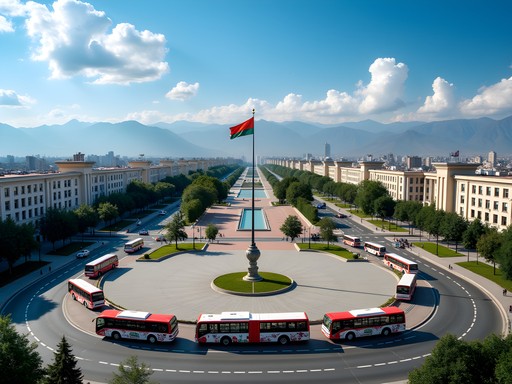
The city grid itself is fairly logical—wide Soviet-era boulevards intersected by smaller streets—but the transportation options overlay this grid with varying degrees of predictability. Marshrutkas (minibuses) form the backbone, supplemented by larger trolleybuses, conventional buses, informal taxis, app-based rides, and the occasional shared car.
Before arrival, I downloaded 2GIS (a Russian mapping app) which proved infinitely more useful than Google Maps in Bishkek. While not in English, its visual interface is intuitive enough, and it accurately displays marshrutka routes—a technological lifesaver that helped me avoid many wrong turns. My portable charger became my most essential companion, as constant map checking quickly drained my phone battery.

💡 Pro Tips
- Download 2GIS app before arrival for accurate route information
- Learn basic Cyrillic to read destination signs
- Take screenshots of your destination in both English and Russian/Kyrgyz to show drivers
Marshrutkas: The Backbone of Bishkek Transport
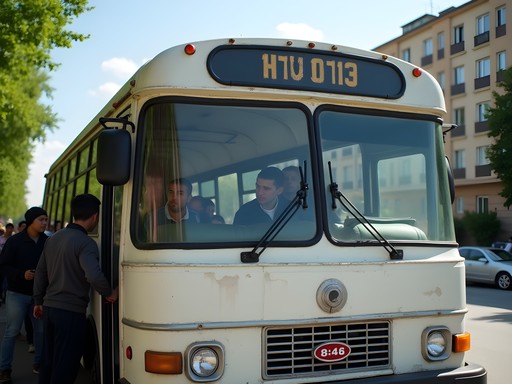
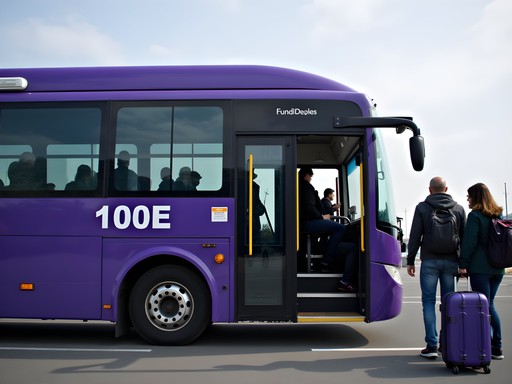
Marshrutkas—the ubiquitous minibuses that zip through Bishkek's streets—are simultaneously the most economical and most bewildering transportation option for newcomers. These white or yellow vans operate on fixed routes designated by numbers, but with flexible timing that depends entirely on passenger volume.
During my first marshrutka experience (Route 195 from my hostel to Osh Bazaar), I stood confused at what appeared to be an unmarked bus stop until a local pointed out the small sign with route numbers. The fare was a mere 10 som (about $0.12), making it absurdly economical compared to Seoul's transport costs.
To use a marshrutka, simply flag one down that displays your route number, climb aboard (often through a sliding side door), and pass your fare to the driver when seated. When approaching your stop, call out "ostanovite" (stop) or the simpler "stop" which most drivers understand.
The vehicles themselves vary wildly in condition. Some are relatively new Mercedes Sprinters, while others are Soviet-era relics held together seemingly by willpower alone. For longer journeys, I found my inflatable travel pillow invaluable for comfort on bumpy rides.

💡 Pro Tips
- Keep small bills handy for exact fare
- Learn the Russian phrase for 'stop here' ('ostanovite zdes')
- Observe locals to identify unofficial bus stops
Navigating Taxis and Ride Apps
When marshrutkas prove too crowded or your destination lies off the main routes, taxis offer a convenient alternative. Bishkek presents three distinct taxi options: street hails, app-based services, and unofficial 'shared' taxis.
Official taxis display the recognizable checkered pattern, but many Bishkek residents simply use their personal vehicles as unofficial taxis. This informal system works surprisingly well, though negotiation skills are essential. To hail one, simply stand at the roadside with an outstretched arm—almost any car might stop to offer a ride.
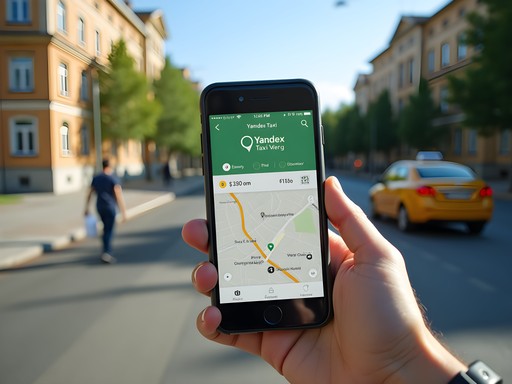
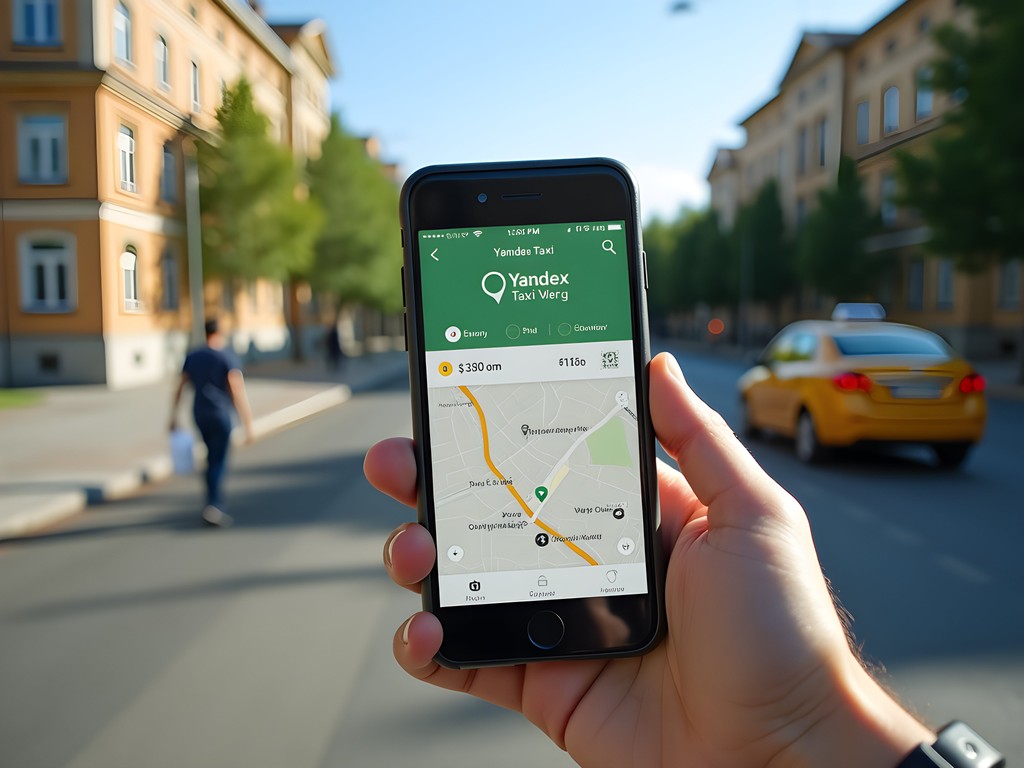
As a solo female traveler, I preferred using the Yandex Taxi app (Russia's equivalent to Uber) for safety and price transparency. The app functions similarly to ride-sharing services worldwide but at a fraction of the cost—most city rides cost between 100-200 som ($1.20-$2.40). One critical difference: drivers often call to confirm your pickup location, so having a language translation app proved invaluable for these brief conversations.
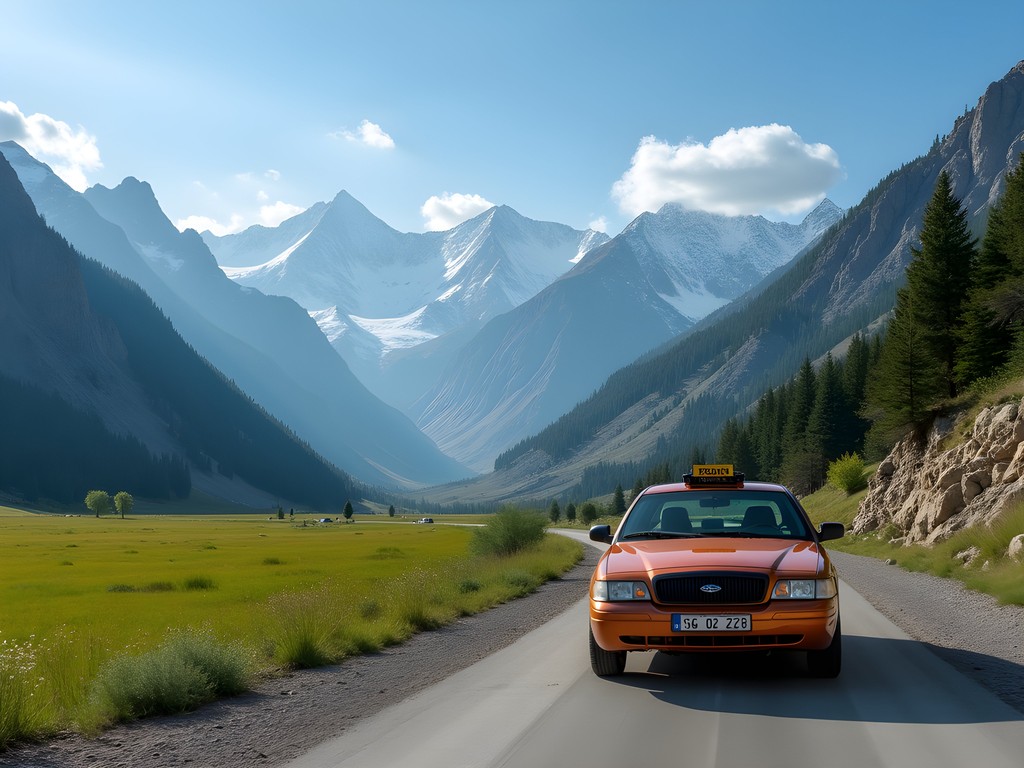
For longer journeys or day trips to nearby attractions like Ala-Archa National Park, negotiate a private taxi for the day. I paid 2,500 som (about $30) for a full-day excursion to the mountains, which included waiting time—an extraordinary value compared to similar services in Western countries.
💡 Pro Tips
- Use Yandex Taxi app for transparent pricing and added safety
- Learn basic numbers in Russian for fare negotiation
- Agree on price before entering unofficial taxis
- Save your accommodation address in Cyrillic to show drivers

Trolleybuses and City Buses: The Slower Alternative
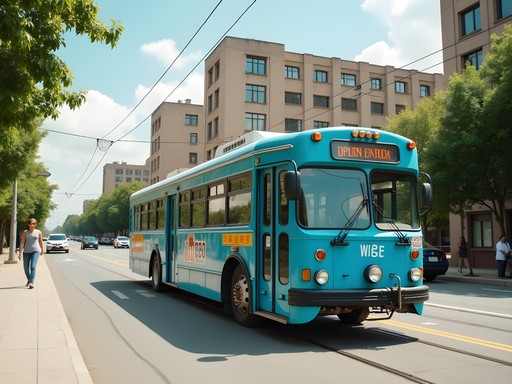
While marshrutkas dominate Bishkek's transportation landscape, the city's trolleybuses and conventional buses offer a slower, more spacious alternative. These electric vehicles follow overhead power lines and operate on numbered routes covering major thoroughfares.
The fare structure mirrors marshrutkas—10 som paid directly to the conductor who moves through the vehicle collecting payments. Unlike the minibuses, these larger vehicles have designated stops marked by blue signs with the letter 'A' or 'T'.
During my exploration of Bishkek's Soviet architectural landmarks, I found the trolleybuses particularly useful for photography purposes. Their large windows and slower pace allowed me to scout locations while in transit. The trolleybus network also operates later than many marshrutka routes, making them valuable for evening returns from restaurants or cultural events.
On particularly hot summer days, these vehicles became mobile saunas—Bishkek regularly hits 35°C (95°F) in July and August. My cooling towel became an essential companion, earning curious glances from locals as I draped it around my neck during the stuffiest rides.

💡 Pro Tips
- Board trolleybuses at designated stops only, unlike marshrutkas
- Have exact change ready for the conductor
- Use Google Translate's camera function to decipher route information posted at stops
Day Trips and Getting Beyond the City
Bishkek's position at the northern edge of Kyrgyzstan makes it an ideal base for day trips to some of Central Asia's most spectacular natural settings. The transportation options for these excursions differ significantly from city navigation.
For my day trip to Ala-Archa National Park (30km south), I initially considered public transport but ultimately opted for a negotiated taxi. This proved wise, as the mountain roads and sparse service would have made marshrutkas impractical. My driver charged 2,500 som ($30) for the entire day, waiting while I hiked for several hours.
To reach Issyk-Ata hot springs, another popular day trip, shared taxis depart from the Western Bus Station when full. The journey costs approximately 250 som per person, though departure times are entirely dependent on filling the vehicle.
For longer excursions to Lake Issyk-Kul or the mountain town of Karakol, marshrutkas and shared taxis depart from Bishkek's Eastern Bus Station. These longer journeys require preparation—I packed my water filter bottle to ensure safe drinking water throughout the day, as roadside stops rarely offer purified options.
One unexpected challenge: altitude adjustment. Even Bishkek sits at 800 meters elevation, with day trip destinations often exceeding 2,000 meters. My portable oxygen canister helped mitigate mild altitude symptoms during hikes in the Tian Shan foothills.
💡 Pro Tips
- Book day trip taxis through your accommodation for better rates
- For shared taxis to popular destinations, arrive early in the morning
- Bring twice as much water as you think you'll need—summer heat is intense
- Download offline maps before mountain excursions where signal is limited
Final Thoughts
Navigating Bishkek reveals much about Kyrgyzstan itself—a place where formal systems and spontaneous solutions coexist harmoniously. The transportation network reflects this duality perfectly. What initially appears chaotic soon reveals its own functional logic, and the apparent limitations become opportunities for cultural connection.
During my week in Bishkek, every journey became more than mere transportation; each ride offered unexpected conversations with locals eager to share their city with a curious foreigner. One marshrutka driver, upon learning of my interest in astronomy, detoured slightly to point out the Soviet-era observatory on the city's southern edge—a gesture of hospitality I'd never experience in more rigid transportation systems.
As you plan your own Bishkek adventure, embrace the city's transportation quirks rather than fighting against them. The marshrutka that arrives seemingly randomly, the shared taxi that takes an unexpected route, the trolleybus that moves at its own unhurried pace—these aren't bugs in the system but features of a transportation network that prioritizes human connection over mechanical precision. In our increasingly standardized world of ride-shares and subway apps, there's something refreshingly authentic about Bishkek's approach to getting around. Pack your sense of adventure alongside your som, and the city will open itself to you, one chaotic, wonderful ride at a time.
✨ Key Takeaways
- Marshrutkas offer the most economical and comprehensive network but require basic Cyrillic reading skills
- Download 2GIS app for accurate route information rather than relying on Google Maps
- Yandex Taxi provides the safest option for solo travelers, especially at night
- Negotiated day-rate taxis are the most practical option for exploring beyond the city
- Learning basic Russian transportation phrases significantly enhances the experience
📋 Practical Information
Best Time to Visit
May-September
Budget Estimate
$30-50/day including accommodation
Recommended Duration
3-7 days
Difficulty Level
Moderate


Comments
waveadventurer
Love your photos! Adding this to my list
escapemaster3108
How much should taxis cost from the airport to the city center? Want to make sure I don't get ripped off on arrival. Also are the marshrutkas running early morning like 6am?
Kimberly Murphy
Brilliant post, Olivia! The chaos of Bishkek transport is half the adventure, isn't it? I did a solo trek through Central Asia last autumn and Bishkek was my base for three weeks. Absolutely loved the marshrutkas once I got over the initial terror of not knowing where I'd end up! The drivers are legends - one let me ride for free when I accidentally got on the wrong route and helped me transfer to the right one. Also, for anyone heading there, download offline maps because WiFi can be spotty outside the city center. The combination of Soviet-era trolleybuses and modern ride apps perfectly captures Bishkek's vibe!
vacationwanderer
that's so cool about the driver helping you!
explorewanderer
Great guide! I spent 3 months in Bishkek last year and honestly the public transport became second nature after a week. Pro tip: learn the Cyrillic numbers 1-30 because that's how the marshrutka routes are labeled. Also the hand signals people use to flag them down took me a while to figure out - you kinda wave your arm down not up. The trolleybus network is actually pretty extensive and only costs like 10 som. Wish I'd known about route 265 to the mountains earlier though!
vacationwanderer
THIS IS SO HELPFUL!! Going in September and was so confused about getting around. Love the marshrutka tips!
cooladventurer
is yandex taxi safe there?
explorewanderer
totally safe! used it all the time in bishkek and it's super cheap compared to western countries
George Hayes
Olivia, this brings back memories! We spent two weeks in Bishkek with our kids (8 and 11) last year and the marshrutka system was honestly one of the highlights. My son kept track of all the different routes we took in a little notebook. The drivers were so patient with us fumbling with som coins. One tip for families: the trolleybuses are slower but WAY less chaotic if you've got little ones in tow. We also found that having the 2GIS app downloaded made everything so much easier for finding routes. Did you venture out to Ala-Archa while you were there?
waveadventurer
which app did you say? 2GIS?
George Hayes
Yep! 2GIS - works offline too which is clutch
coolwalker
marshrutkas are wild but so cheap!
roamone
Love this post! Bishkek was such a surprise for me too. The whole city feels like this perfect mix of Soviet history and modern Central Asian life. The transport system is actually way better than people expect. Can't wait to go back!
smartlover
Really helpful guide! Going in April for work and was stressing about getting around. The marshrutka info is super useful. Quick question - do they take cards or is it all cash?
Bryce Diaz
Cash only for marshrutkas! Keep small bills—they're only like 10-15 som per ride. ATMs are everywhere in Bishkek though, so you're good.
Venture X
Premium card with 2X miles, $300 travel credit, Priority Pass