


Disclosure: This article contains affiliate links. We may earn a commission from purchases at no extra cost to you, which helps our travel content.
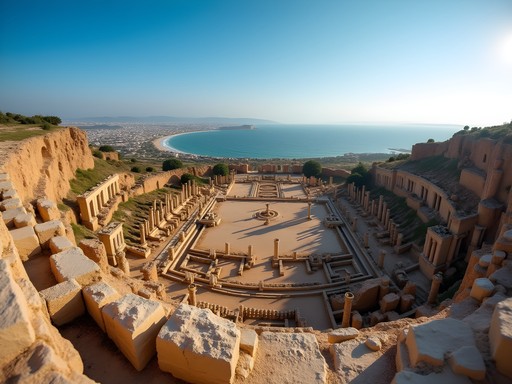
Standing atop Byrsa Hill with the Mediterranean breeze tousling my hair, I couldn't help but feel like I'd stepped into a geological time machine. The ancient ruins of Carthage spread before me – a civilization that rivaled Rome now reduced to stunning archaeological remnants on Tunisia's coast. As someone who typically chases active volcanoes and snowcapped peaks, this historical adventure offered a different kind of thrill: peeling back layers of human history written in stone. Grab your sun hat and join me as I break down exactly how to explore this UNESCO World Heritage site solo!

Why Carthage Deserves Your Attention
Let me confess something: I initially came to Tunisia chasing the desert landscapes, but Carthage completely blindsided me with its magnificence. Founded by Phoenicians in the 9th century BCE, this powerhouse civilization controlled Mediterranean trade routes before engaging in epic showdowns with Rome (spoiler alert: it didn't end well for Carthage).
What makes this place special isn't just its dramatic history – it's how the ruins interact with the landscape. The city sits on a promontory extending into the Mediterranean, creating a natural harbor that helped Carthage become a maritime superpower. The geological positioning is no accident; these ancient engineers understood terrain advantage millennia before modern city planning.
Unlike many ancient sites that feel cordoned off, Carthage is wonderfully accessible. The ruins are scattered throughout a modern suburb of Tunis, creating this surreal juxtaposition where everyday Tunisian life unfolds alongside 2,000-year-old columns. You'll literally walk from a modern café straight into the ancient past.

💡 Pro Tips
- Purchase the multi-site ticket (about 10 TND) that covers all major archaeological sites
- Download the Carthage+ app for self-guided tours with augmented reality features
- Visit Byrsa Hill first for orientation and context before exploring individual sites
Solo Female Safety in Carthage
Coming from Australia where I'm used to fairly straightforward travel experiences, I'll admit I had some initial hesitation about exploring Tunisia solo. Let me share the unfiltered reality: Carthage is located in an upscale suburb of Tunis and is one of the safest areas for tourists in the country.
During my week exploring the ruins, I experienced nothing but hospitality from locals. The archaeological sites are well-maintained, staffed with security, and frequented by international tourists and local families alike. That said, I still maintained my standard travel vigilance.
Staying hydrated is absolutely critical here – the Mediterranean sun is no joke, especially when you're scrambling around ancient stones for hours. I relied heavily on my trusty insulated water bottle which kept my water cold even after baking in the Tunisian sun for hours. The wide mouth made it easy to refill and add ice from my accommodation each morning.
For sun protection, I never left my room without slathering on mineral sunscreen – it's reef-safe (important for those Mediterranean swims) and didn't run into my eyes when I inevitably started sweating while sketching the Antonine Baths.

💡 Pro Tips
- Dress modestly (shoulders and knees covered) to respect local culture and avoid unwanted attention
- Take official taxis (yellow with black stripes) between sites if you're tired – they're affordable and safer than walking along busy roads
- Keep valuable items in a cross-body bag positioned in front of you, especially in crowded areas
Geological Wonders Hidden in Plain Sight
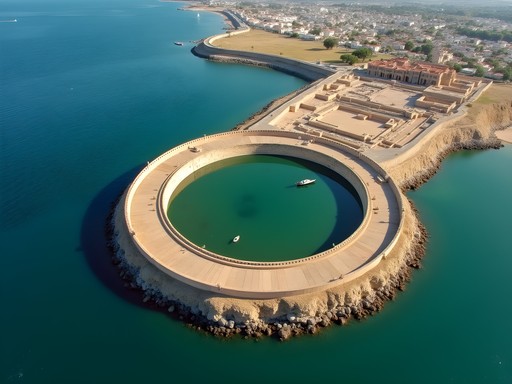
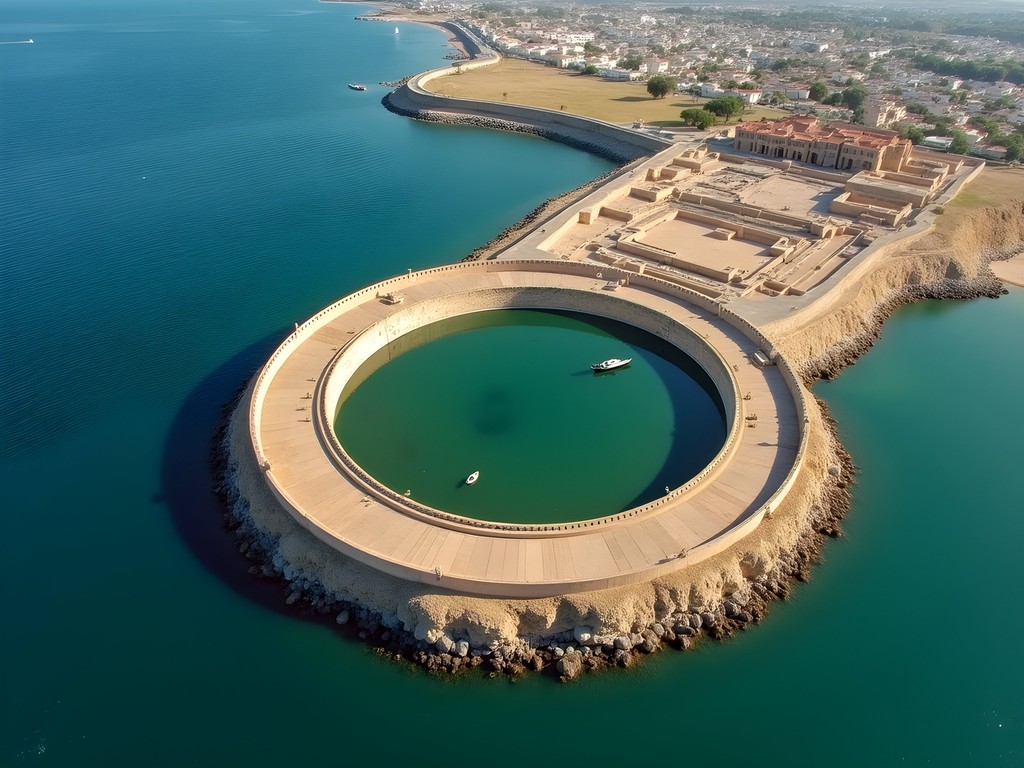
As someone obsessed with how landscapes shape civilizations, Carthage is a geological storytelling masterclass. The city's famous ports – both military and commercial – were engineering marvels that utilized the natural bay formation. Today, you can still see the circular military harbor, though it's a shadow of its former glory.
One of my favorite discoveries was seeing how the ancient builders incorporated local limestone and sandstone into their structures. The Romans later repurposed many Carthaginian building materials after destroying the original city – a geological recycling program, if you will! You can literally see the layers of history in the stone.
I spent one entire afternoon sketching cross-sections of the Punic Ports, trying to capture how the ancient engineers modified the natural harbor. Having reliable drawing supplies is essential when documenting these sites. My waterproof sketchbook was perfect for this – the pages didn't buckle when I added watercolor washes to my geological diagrams, and it survived an unexpected rain shower that sent other tourists running for cover.
For precise measurements (yes, I'm that geology nerd who measures ancient columns), my laser distance meter was invaluable. It's compact enough to fit in my pocket but accurate enough to help me create scaled drawings of the architectural elements.
💡 Pro Tips
- Visit the Carthage Museum on Byrsa Hill to see geological samples and building materials from different historical periods
- Look for the different stone types used throughout the sites – the colors and textures tell the story of local quarries
- The Punic Ports complex offers the best example of how Carthaginians adapted natural geography for maritime advantage

A Week's Itinerary: Beyond Just Ruins
While Carthage's archaeological sites could easily fill 2-3 days of exploration, I recommend using it as a base for a full week to experience the surrounding areas as well. Here's how I structured my time:
Days 1-2: Core Carthage Sites
Focus on the main archaeological complex including the Antonine Baths, Roman Villas, Punic Ports, and Byrsa Hill. The sites close relatively early (usually around 5:30 PM), so start your days early.
Day 3: Sidi Bou Said
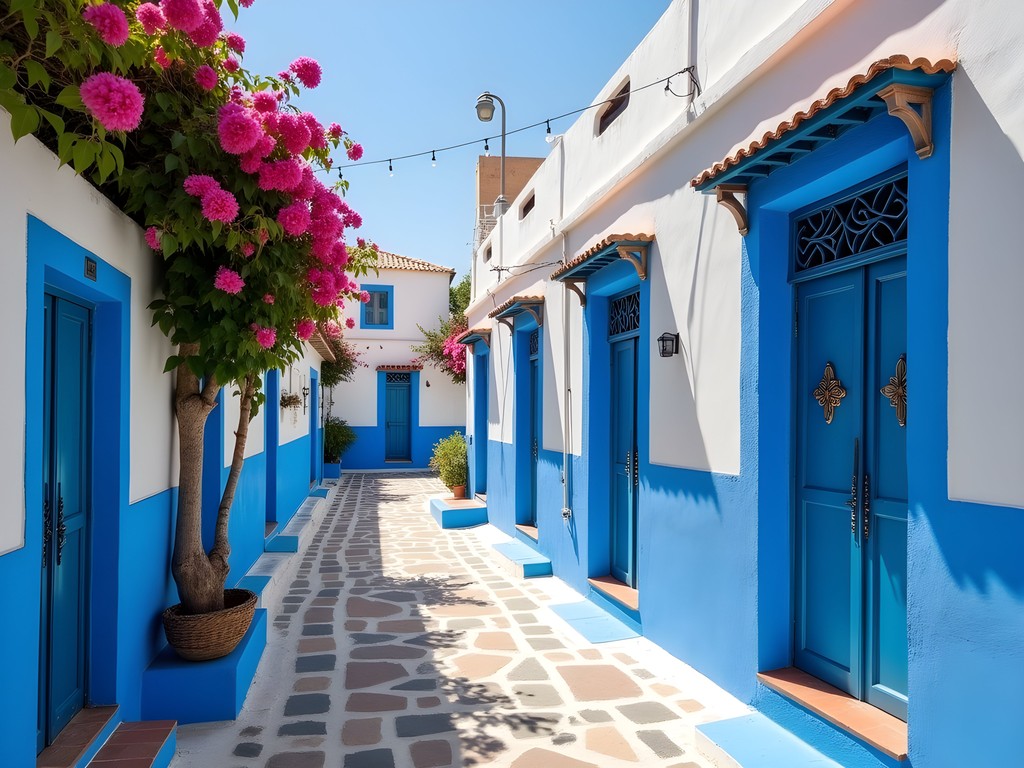
Just a short train ride from Carthage is this stunning blue-and-white village that looks like it was transplanted from Greece. I spent hours wandering the cobblestone streets and sketching the distinctive architecture.
Day 4: Tunis Medina & Bardo Museum
The bustling medina of Tunis offers a complete contrast to Carthage's quiet ruins, while the Bardo Museum houses incredible mosaics salvaged from various archaeological sites.
Day 5: Dougga Day Trip
This well-preserved Roman city about 2 hours from Tunis was actually my favorite archaeological site in Tunisia – worth the journey!
Days 6-7: Beach Recovery & Final Explorations
The beaches near Carthage are perfect for relaxation after days of intensive sightseeing.
Navigating between these sites was surprisingly easy using public transport. I tracked all my journeys using my offline GPS navigator which helped me plot coordinates of interesting geological features and never get lost between sites.
💡 Pro Tips
- Purchase a week-long 'Carte Bleue' transit card for unlimited rides on the light rail system connecting Carthage, Sidi Bou Said, and Tunis
- Many sites close for a lunch break from 12:30-2:30 PM – use this time to eat or rest during the hottest part of the day
- Bring a lightweight packable daypack to carry water, snacks, and sun protection as facilities at archaeological sites are limited
Local Connections: Beyond the Guidebook
The highlight of my time in Carthage wasn't actually found among the ancient stones, but in the connections I made with locals passionate about their heritage. Through a stroke of luck (and some awkward hand gestures when my French failed me), I met Malik, a local archaeology student who offered to show me some lesser-known aspects of the sites.
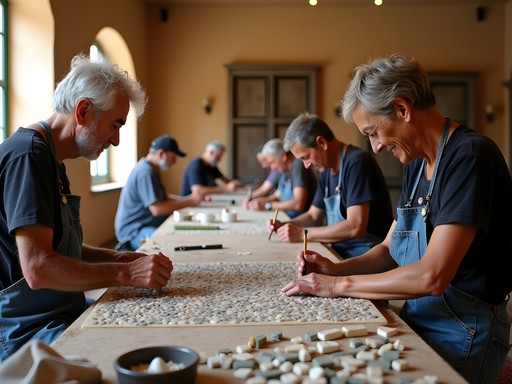
Malik introduced me to a tiny workshop where artisans create mosaics using traditional techniques passed down through generations. I spent a fascinating afternoon learning to cut and place tesserae (the small colored stones used in mosaics). This experience gave me a deeper appreciation for the intricate ancient mosaics I'd been admiring throughout the archaeological sites.
Communication was occasionally challenging as my French is embarrassingly basic and my Arabic non-existent. My pocket translator device became my constant companion, allowing for more meaningful conversations with locals than I could have managed alone. It works offline and handles Tunisian Arabic dialect surprisingly well.
For evening meals, I often found myself at small family-run restaurants in the nearby residential areas rather than tourist spots. The owner of my guesthouse recommended places where I could try authentic Tunisian dishes like brik (a crispy pastry with egg) and ojja (a spicy tomato and egg dish) – both became instant favorites!

💡 Pro Tips
- Learn basic French phrases as they're more widely understood than English in many situations
- Ask your accommodation host for restaurant recommendations where locals eat – prices are better and food more authentic
- Visit the Carthage site offices early in your trip and ask if any special events or less-visited areas are open during your stay
Final Thoughts
As I sketched one final diagram of Carthage's harbor formations on my last evening, watching the Mediterranean sunset paint the ancient stones in gold, I reflected on how this journey had surprised me. I came to Tunisia chasing geological wonders but found myself equally captivated by human history etched in stone.
Carthage offers solo travelers a rare combination of accessible history, beautiful landscapes, and genuine cultural connections – all within a setting that feels both safe and authentically challenging. The layers of civilization here – Phoenician, Roman, Byzantine, Arab – mirror the geological strata I typically study, each telling a story of adaptation and resilience.
Whether you're sketching ancient harbors, learning traditional mosaic techniques, or simply wandering among ruins that have witnessed over 2,800 years of human drama, Carthage rewards the curious traveler. And isn't that curiosity – that desire to understand both the earth beneath our feet and the civilizations that rose from it – what drives us to explore in the first place? Pack your sunscreen, bring plenty of water, and prepare to be humbled by the ingenious ways humans have shaped this Mediterranean landscape for millennia.
✨ Key Takeaways
- Carthage is generally safe for solo female travelers, especially if staying in the main tourist areas
- The multi-site ticket provides excellent value for accessing all major archaeological sites
- Spring offers ideal weather conditions with fewer crowds than the summer high season
- Learning basic French phrases significantly enhances the experience and interactions with locals
- Allow at least 3 days for Carthage itself, plus additional time for nearby attractions like Sidi Bou Said
📋 Practical Information
Best Time to Visit
March to May (spring) or September to November (fall)
Budget Estimate
$40-60 USD per day including modest accommodation, food, and site entrance fees
Recommended Duration
3-7 days (3 days for Carthage sites, additional days for surrounding areas)
Difficulty Level
Moderate (Requires Walking On Uneven Surfaces, Limited Shade, Basic Tourist Infrastructure)
Comments
winterlife
Great guide! I visited Carthage twice and your geological observations are spot on - not many people talk about that aspect. One practical tip: bring a good water bottle because there aren't many places to refill once you're at the ruins and it gets HOT. Also, if you're into photography, golden hour at the Tophet is magical but gets you almost no other tourists. The ancient harbor area is fascinating to explore if you have extra time.
exploretime
This is so inspiring! Adding Tunisia to my list!!
Marco Flores
Loved reading this, Rachel! I did Carthage as part of a North Africa adventure last spring and it completely exceeded expectations. One thing I'd emphasize - don't skip Sidi Bou Said just up the coast. The blue and white village is stunning and makes for an incredible half-day trip. I also hired a local guide for one day (found him through my hostel) and learned SO much more than I would have wandering alone. He showed me hidden Roman cisterns that aren't even on maps. The combination of Punic, Roman, and Byzantine layers is mind-blowing when someone explains what you're actually looking at.
winterlife
Second Sidi Bou Said! The cafe overlooking the marina is perfect for lunch.
oceanway
Going in September - will it still be crazy hot?
mountaindiver
Is this safe for a first time solo traveler? I'm nervous about going anywhere alone!
Rachel Snyder
I felt very safe! The tourist areas are well-patrolled and locals were incredibly helpful. Just use normal city precautions. Check out my safety section for specific tips!
Oliver Duncan
Rachel, this brought back memories! I spent three days in Carthage last year and absolutely loved how uncrowded it was compared to other Mediterranean ancient sites. One tip I'd add - the Carthage Museum is criminally underrated. I spent hours there sketching artifacts and chatting with the curator who shared incredible stories about recent excavations. Also, for budget travelers, you can get a combined ticket for all the sites that's way cheaper than buying individually. The sunset from the Antonine Baths rivals anything in Greece, honestly.
exploretime
How much was the combined ticket?
Oliver Duncan
It was around 12 dinars when I went - covers like 8 different sites. Total bargain!
tripqueen
How easy is it to get around between the different ruins sites? Can you walk or do you need transport?
oceanclimber
We used the local TGM train and it was super easy! Sites are kinda spread out for walking in the heat tbh
Rachel Snyder
Exactly! The TGM is your best friend. I covered it in the transportation section - definitely get a day pass if you're hitting multiple sites.
oceanclimber
Carthage is incredible! The views from Byrsa Hill are unreal.
Hunter Thompson
Rachel, I absolutely love how you connected the geological formations to the historical significance of the harbor! Most guides miss that completely. I spent three days exploring Carthage last year and hired a local archaeology student as a guide for one day - complete game changer. He showed me details I would've walked right past. For anyone planning a visit, the Antonine Baths are spectacular but don't skip the Tophet (ancient cemetery) - it's smaller but incredibly powerful historically. Also, did you notice how the museum on Byrsa Hill has those amazing cross-section displays of the different civilizational layers? Absolute gold for understanding how the Punic, Roman and Byzantine periods literally stacked on top of each other!
Rachel Snyder
Thanks Hunter! The geological aspects fascinated me too - I actually spent an extra day just sketching the harbor formations. And YES to hiring local guides! They bring these stones to life in a way no guidebook can.
coolbackpacker
How do you find these local student guides? That sounds amazing!
Hunter Thompson
I actually just asked at my hostel in Tunis! But there are usually some hanging around the entrance to the main site too. Just make sure to agree on price beforehand - I paid about 30 dinars for 3 hours and it was worth every penny.
islandbackpacker
Just got back from Tunisia last month and your guide would've been so helpful! The public transportation to Carthage from Tunis was actually super easy once I figured it out. For anyone going - the TGM light rail is the way to go, just make sure you get off at Carthage Hannibal station for the main archaeological site. I found most locals really friendly and willing to help when I looked lost. One tip I'd add - the site is MASSIVE and there's very little shade, so go early morning or late afternoon if visiting in summer. I made the mistake of going at noon and nearly melted!
Rachel Snyder
Thanks for the transportation tip! You're so right about the shade - I should've emphasized that more. I carried my collapsible water bottle everywhere and it was a lifesaver with those Mediterranean temperatures!
Venture X
Premium card with 2X miles, $300 travel credit, Priority Pass