
Disclosure: This article contains affiliate links. We may earn a commission from purchases at no extra cost to you, which helps our travel content.
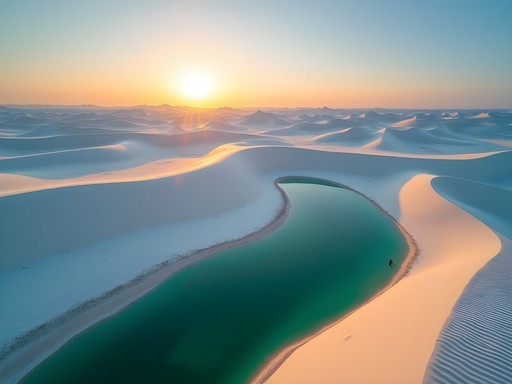
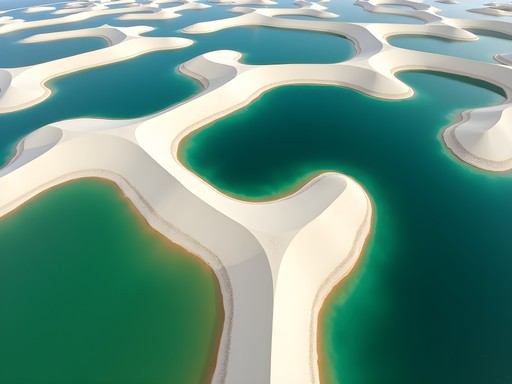
The first time I laid eyes on Lençóis Maranhenses, I genuinely thought someone had photoshopped the landscape. Vast stretches of blindingly white sand dunes cradle thousands of turquoise and emerald lagoons that appear like a mirage in this otherworldly corner of northeastern Brazil. As someone who's documented monastery architecture from the Himalayas to the Balkans, I'm not easily rendered speechless by landscapes – but this place defies logic and expectation. It's a photographer's dream and nightmare simultaneously: visually stunning beyond belief yet technically challenging to capture. After three visits over the past decade (most recently last summer), I've finally cracked the code to photographing this shape-shifting paradise. This guide distills everything I've learned about timing, equipment, techniques, and access points that will help you create images worthy of this surreal ecosystem.

Understanding the Landscape & Seasonal Rhythms
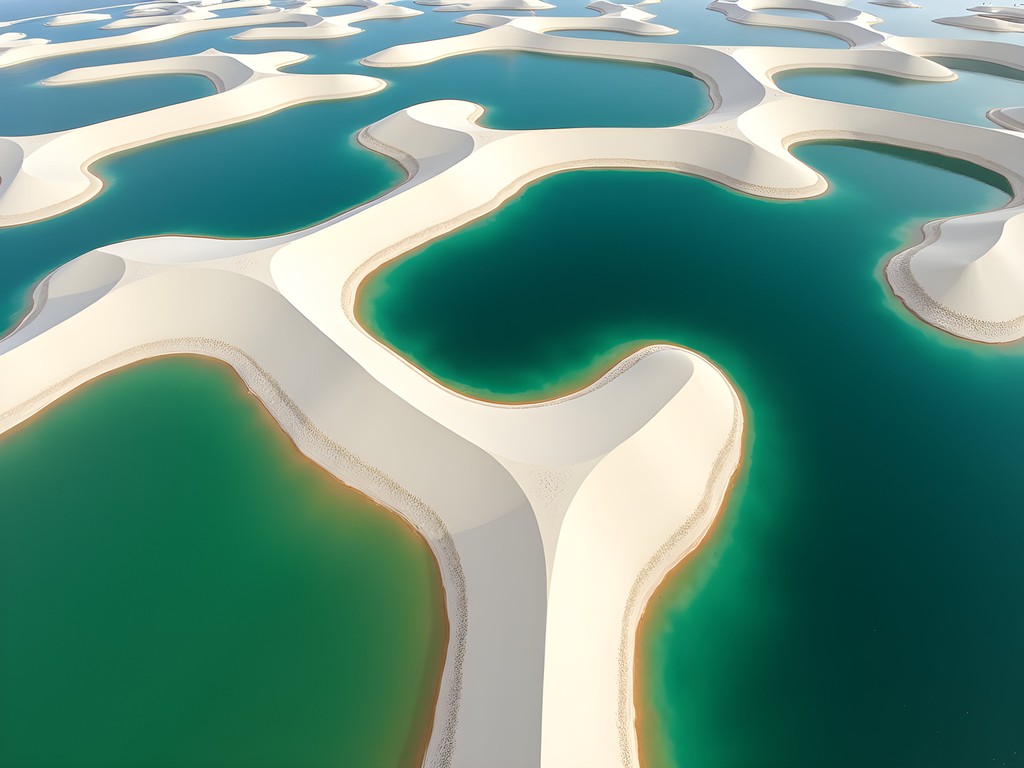
Lençóis Maranhenses isn't technically a desert, despite appearances. This 1,500-square-kilometer national park receives about 47 inches of rainfall annually, concentrated between January and July. The rain collects in the valleys between dunes, forming thousands of temporary lagoons that reach their peak between July and September before gradually evaporating.
What makes this ecosystem photographically fascinating is its constant evolution. Visit in June, and you'll find deep, full lagoons with dramatic contrast against the white sand. Return in November, and many will have transformed into shallow pools or disappeared entirely, while the dune formations themselves will have shifted with the winds.
For photographers, this means research is essential. I use satellite imagery before each visit to understand current conditions. My go-to tool is the Garmin inReach Mini which not only provides safety in these remote areas but allows me to download updated maps and mark GPS coordinates of promising locations.
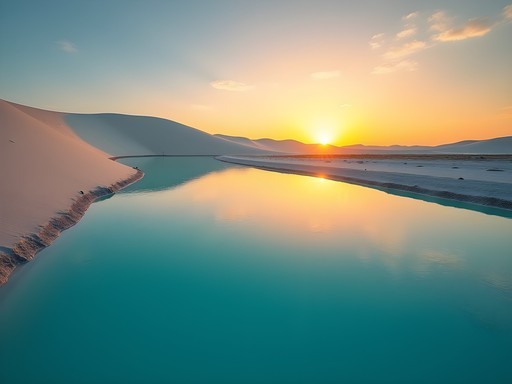
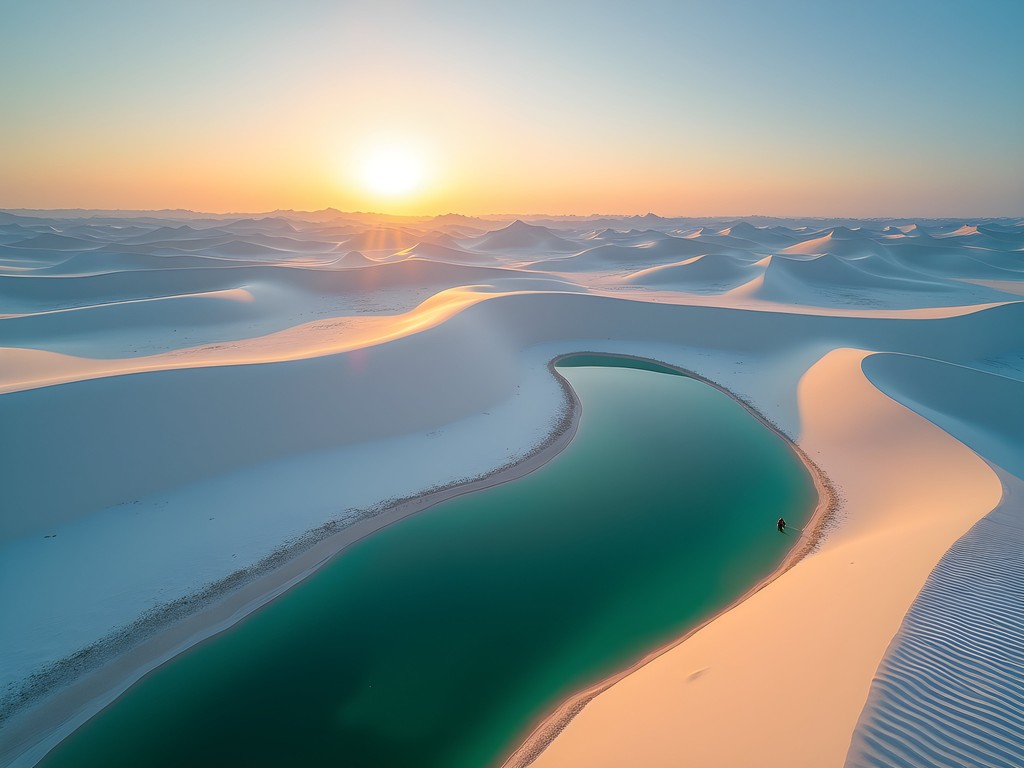
The interplay between water and sand creates fascinating compositional opportunities throughout the year. Early in the wet season, rain patterns create intricate ripples and textures in the sand. During peak lagoon season, the blue-green waters provide perfect reflections and contrast. As waters recede, the exposed sand reveals fascinating patterns and occasionally algae creates red or pink hues in the remaining pools.
💡 Pro Tips
- Research seasonal water levels before booking your trip - July/August typically offers the fullest lagoons
- Download offline maps of recent satellite imagery to track changes in lagoon formations
- Visit the same locations at different times of day - the changing light completely transforms the landscape
Essential Photography Gear for the Dunes
The Lençóis Maranhenses environment presents unique challenges for photographers. The combination of blinding white sand, harsh sunlight, and potentially wet conditions requires specific gear considerations.
First, let's talk about camera protection. Sand is your equipment's worst enemy here. I learned this lesson the hard way during my first visit when my primary lens developed a concerning grinding sound after just two days. Now I always bring my camera rain cover which works equally well for sand protection. For lens changes, I bring a small pop-up changing tent that creates a sand-free environment.
For lenses, I recommend a versatile trio: a wide-angle (16-35mm) for capturing the vast dune landscapes, a standard zoom (24-70mm) for general shooting, and a telephoto (70-200mm) for compressing dune formations and creating abstract patterns. The telephoto becomes particularly valuable for shooting distant lagoons when walking through deep sand becomes exhausting.
Filters are non-negotiable in this environment. A polarizer cuts glare from the water and intensifies the lagoon colors, while graduated ND filters help balance the extreme brightness difference between sand and sky. I also pack several neutral density filters for long exposures that capture the subtle movement of clouds reflected in the still lagoons.
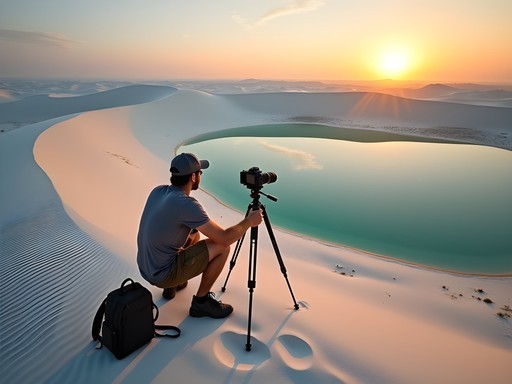
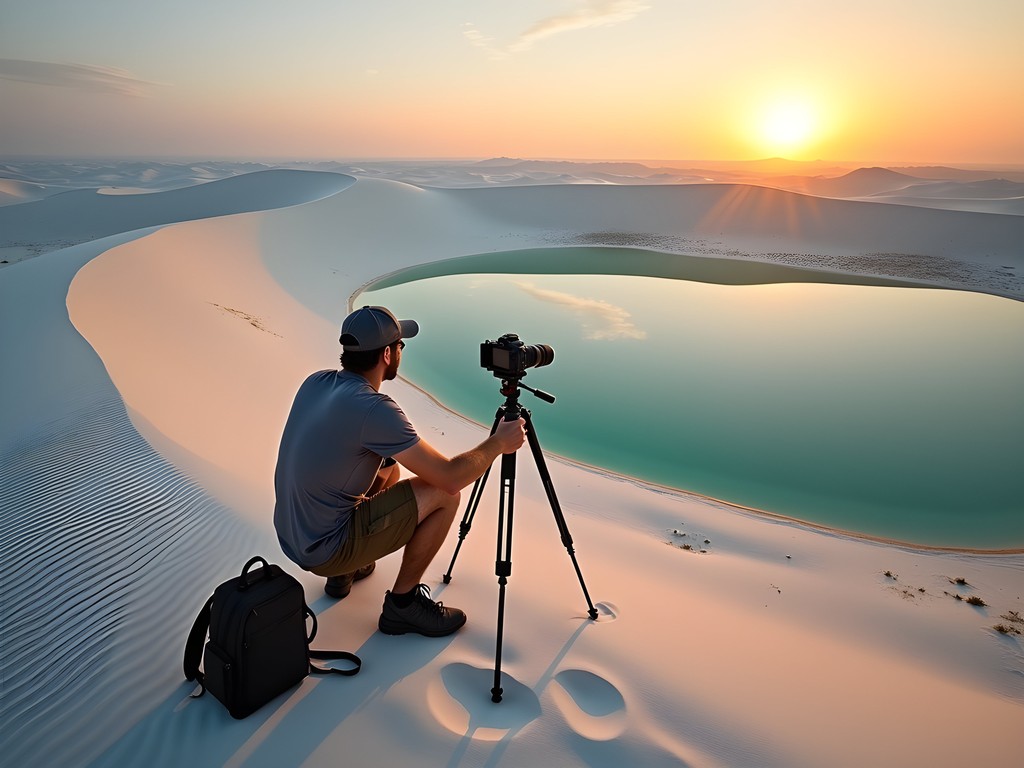
Tripods present a dilemma – they're essential for low-light shooting but cumbersome in deep sand. After experimenting with various options, I now use a carbon fiber model with wide feet attachments that prevent sinking. When weight is a concern for longer hikes, my travel tripod offers the perfect balance of stability and portability.
💡 Pro Tips
- Bring twice as many microfiber cloths as you think you'll need - sand and moisture make cleaning a constant necessity
- Use gaffer tape to seal vulnerable parts of your camera where sand might enter
- Pack a rocket blower for daily sensor cleaning - the fine sand particles are impossible to avoid completely
Mastering Light in an Extreme Environment
The light in Lençóis Maranhenses is unlike anywhere else I've photographed. The combination of reflective white sand and water creates challenging conditions that require technical knowledge to overcome – but also offers extraordinary creative possibilities.
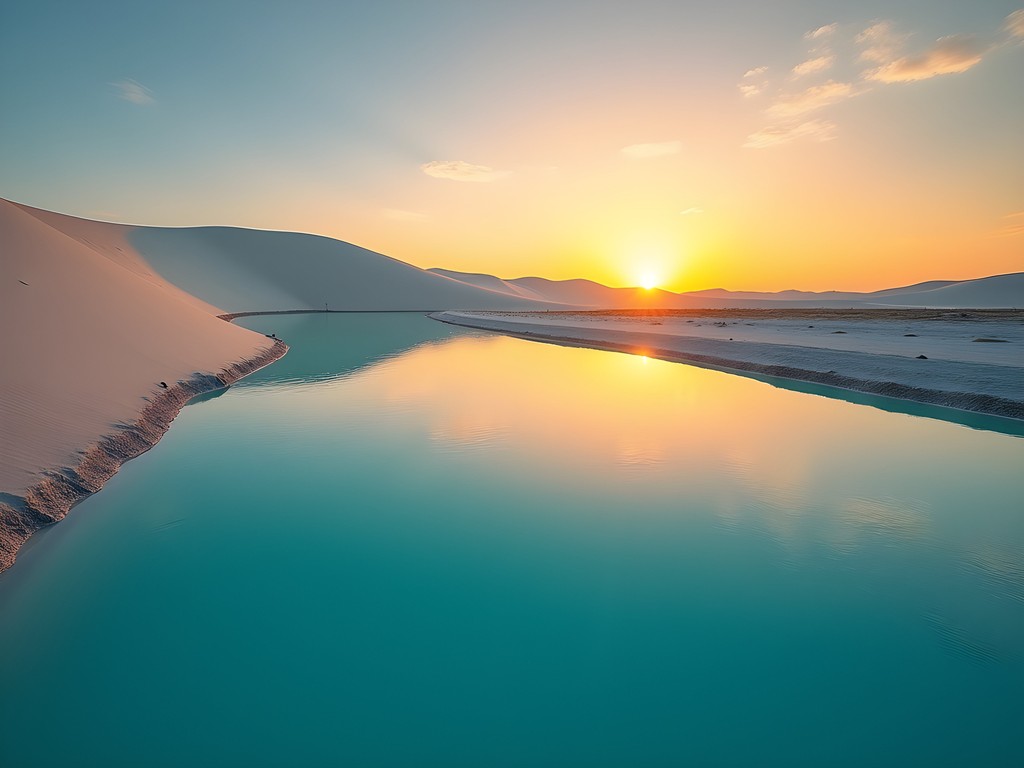
The golden hours here are truly magical but extremely brief. The transition from harsh daylight to soft golden light happens rapidly, giving you perhaps 30-45 minutes of prime shooting conditions. I've found that being on location at least an hour before sunset allows time to scout compositions and be ready when the light transforms.
During my last visit, I experimented extensively with shooting directly into the sun as it neared the horizon. The results were spectacular: backlit dune ridges glowing with translucent edges, lagoons transformed into mirrors of liquid gold. To manage the extreme dynamic range, I bracket my exposures (3-5 shots at different settings) and blend them later in post-processing.
Night photography presents another dimension entirely. The lack of light pollution makes Lençóis Maranhenses an excellent location for astrophotography, with the Milky Way reflecting in the lagoons creating otherworldly scenes. For these shots, I use my fast wide-angle lens which gathers enough light for the stars while capturing the expansive landscape.
Midday shooting, though typically avoided by landscape photographers, offers unique opportunities here. The harsh overhead light creates dramatic shadows and textures on the dunes, particularly when using a polarizer to enhance the contrast between wet and dry sand. For these conditions, I often convert images to black and white in post-processing, emphasizing the sculptural quality of the landscape.
💡 Pro Tips
- Arrive at your chosen location at least 45 minutes before sunset to scout compositions and be ready when the light changes
- Use the PhotoPills app to track sun and moon positions for planning your shots
- For night photography, bring a powerful headlamp with a red light mode to preserve your night vision while navigating between dunes

Navigation & Access: Finding the Perfect Shots
The most photogenic lagoons aren't necessarily the easiest to reach. After three visits, I've developed strategies for accessing the best locations while navigating this challenging terrain.
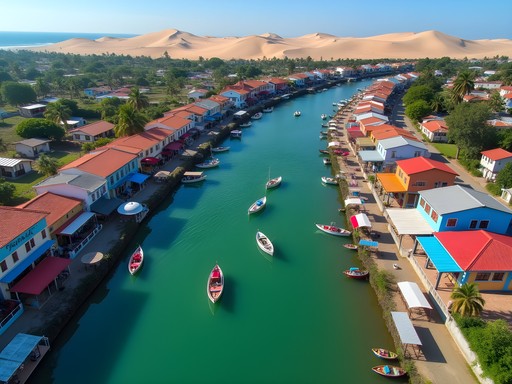
Barreirinhas serves as the main gateway to the park, but I've found that basing myself in Santo Amaro provides access to less-visited sections with equally stunning vistas. The small village of Atins, reachable by 4x4 or boat, offers the closest accommodation to some of the most photogenic eastern lagoons.
For serious photographers, I recommend hiring a local guide with photography experience. During my last visit, I worked with Paulo from Santo Amaro, who understood exactly what I was looking for – not just the postcard views, but unique perspectives and pristine dunes without footprints. Most importantly, he knew precisely when certain lagoons would catch the best light.
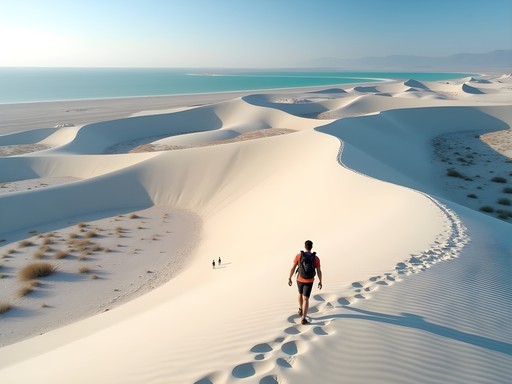
Navigating between lagoons requires preparation. The sand is exhausting to walk in, temperatures can soar, and landmarks are few. I track all my movements using my GPS watch which has proven invaluable for finding my way back after chasing the perfect light until dusk. Its solar charging capability means I never worry about battery life during long days in the field.
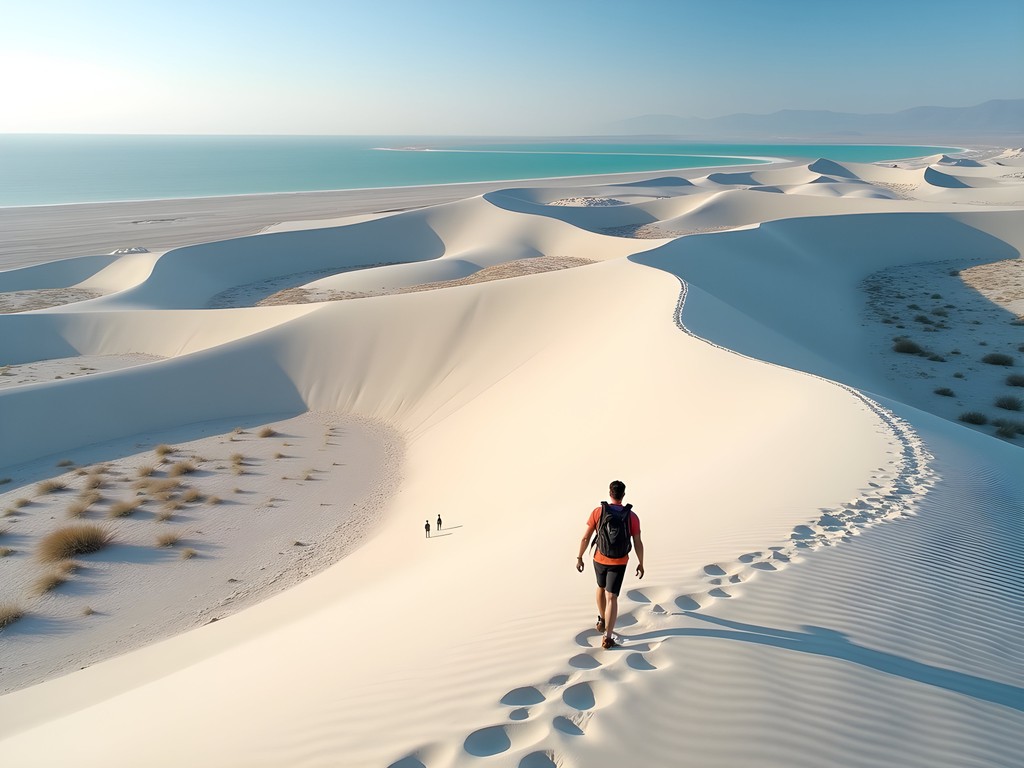
For those with limited time, focus on the Lagoa Azul and Lagoa Bonita circuit from Barreirinhas, or the Lagoa da Gaivota area from Santo Amaro. If you can dedicate 3+ days, the remote eastern section near Atins offers the most pristine photographic opportunities, including my favorite location – Lagoa do Peixe – where the dune formations create perfect leading lines toward the horizon.
💡 Pro Tips
- Book a guide who specifically understands photographers' needs - they should know about light conditions and be willing to visit locations at odd hours
- Mark your accommodation's GPS coordinates before heading out - dune landscapes can be disorienting
- Bring twice as much water as you think you'll need - the combination of heat and walking in sand increases consumption dramatically
Post-Processing Techniques for Dune & Lagoon Photography
The unique visual characteristics of Lençóis Maranhenses require specific post-processing approaches to accurately convey what you experienced. After experimenting with various techniques over my three visits, I've refined a workflow that maintains authenticity while enhancing the natural drama of this landscape.
The extreme brightness range presents the biggest challenge. I typically bracket exposures in the field, then blend them using luminosity masks in Photoshop. This preserves both the brilliant white of the sand and the deep blues of the lagoons without creating an artificial HDR look. For those newer to advanced blending techniques, I recommend starting with Adobe Lightroom's HDR merge function, which has improved significantly in recent versions.
Color calibration is crucial for lagoon photography. The water colors in Lençóis Maranhenses range from deep turquoise to emerald green depending on algae concentration and depth. I've found that slightly reducing saturation while increasing vibrance creates a more natural representation of these colors, which can otherwise appear artificially intense in digital captures.
For the most compelling images, I carefully adjust clarity and texture to enhance the ripple patterns in the sand without creating an over-processed appearance. The key is applying these adjustments selectively using radial or gradient filters rather than globally across the entire image.
My editing workflow relies heavily on my calibrated monitor which ensures I'm seeing accurate colors and tones. When editing Lençóis images specifically, I reduce my monitor brightness to about 80% of normal to better evaluate the bright sand areas, which helps prevent over-processing these challenging highlights.
💡 Pro Tips
- Create a custom camera profile specifically for Lençóis conditions - the unique light qualities benefit from tailored color rendering
- Use luminosity masks to selectively enhance the blue of the lagoons without affecting the white balance of the sand
- When processing night photography, reduce noise selectively - apply heavier noise reduction to water areas while preserving detail in the sand textures
Final Thoughts
Photographing Lençóis Maranhenses has taught me as much about patience and adaptability as it has about technical skills. This landscape demands respect – for its challenging conditions, its fragile ecosystem, and its ephemeral nature. The images you create here will be unlike anything else in your portfolio, but they require preparation, the right equipment, and a willingness to embrace the unexpected. The lagoon you scouted yesterday may appear completely different today as winds reshape the dunes overnight. Rather than fighting these changes, I've learned to incorporate them into my creative process, allowing the landscape to guide my compositions. Whether you're drawn to grand vistas, intimate details, or abstract patterns, Lençóis Maranhenses offers endless possibilities for the prepared photographer. I hope this guide helps you capture your own interpretation of this extraordinary place – and remember that sometimes the most compelling images come when you put down the camera for a moment and simply absorb the surreal beauty surrounding you.
✨ Key Takeaways
- The best photography conditions occur during July-September when lagoons are fullest and most colorful
- Protective gear for your camera is essential due to the challenging combination of sand, water and bright conditions
- Early morning and late afternoon provide the most dramatic lighting for dune photography
- Local guides who understand photographers' needs are invaluable for finding pristine locations
📋 Practical Information
Best Time to Visit
July to September for fullest lagoons
Budget Estimate
$100-150/day including accommodation, guide and transportation
Recommended Duration
5-7 days
Difficulty Level
Moderate


Comments
bluepro
Really love your photo composition! The dune patterns are incredible
Robert Moreau
Evelyn, this is an outstanding guide! I spent five days there in September and your insights about the golden hour lighting are spot-on. We stayed at the Pousada do Buriti which had these incredible sunset views over the dunes. One thing I'd emphasize is hiring an experienced local guide who knows the tides and lagoon conditions - ours took us to Lagoa Azul right when the afternoon light was hitting perfectly, and we got shots that looked like another planet. The investment in a quality guide made all the difference. Also, I used a UV filter on every lens which saved me from the sand damage. Worth every penny in that environment.
backpackqueen
Stunning photos! Definitely bucket list material
coffeemaster
Is this place good for beginners? I just got my first DSLR and want to practice landscape photography somewhere amazing
journeyperson
Is this place accessible for beginners or do you need to be really experienced with photography?
Evelyn Rogers
Great question! The landscape is so dramatic that even basic shots turn out stunning. I'd say focus on getting there at the right time of day (golden hour) and the location does most of the work. The technical challenges are more about protecting your gear than advanced photography skills.
Sarah Powell
This is such a comprehensive guide. Your section on protecting gear from sand infiltration is gold - I learned this the hard way and ended up with sand in my lens mechanism. One thing I'd add is that a circular polarizer is absolutely essential here, not optional. The reflections off the water can completely blow out your shots otherwise. I also found that bringing a small portable air blower was crucial for keeping my sensor clean between shoots. The sand gets everywhere no matter how careful you are. The landscape really does demand respect as you said - it's physically and technically challenging but so rewarding.
backpackqueen
Good tip about the polarizer!
Jennifer Thomas
I visited last July and your photos brought back all the memories! One tip I'd add for budget travelers - you can actually take local buses from Barreirinhas to some of the closer dune access points instead of booking the pricey 4x4 tours. We met a local guide named Paulo at the bus stop who took us to some incredible spots for like 1/3 the tour price. The sunrise at Lagoa Bonita was absolutely magical and we had it completely to ourselves. Your section on protecting gear from sand is SO important - I learned that the hard way when my lens got completely jammed on day 2!
hikingperson
This is super helpful, thanks! Do you remember how much Paulo charged?
Jennifer Thomas
I think it was around 150 reais for a half day, but that was last year so might have changed!
winterbuddy
We went in August and honestly wished we'd gone earlier in the season like you recommend. Some of the smaller lagoons were already drying up. The white sand is no joke either - I got some of the worst sunburn of my life on my feet because I didn't think to put sunscreen there. The reflection from the sand is crazy intense. Also bring way more water than you think you need. We ran out on our second day hiking and had to cut the shoot short.
tripchamp684
Can you fly drones there or is it restricted?
Evelyn Rogers
You can! Just need to register with ANAC (Brazilian drone authority) beforehand. The park itself doesn't restrict drones but be respectful of other visitors and wildlife.
adventureking
Can you fly drones there or is it restricted?
Sarah Powell
It's a national park so technically you need permits from ICMBio. Enforcement is inconsistent but I wouldn't risk it without proper authorization. The fines are steep.
Venture X
Premium card with 2X miles, $300 travel credit, Priority Pass