


Disclosure: This article contains affiliate links. We may earn a commission from purchases at no extra cost to you, which helps our travel content.
There's something about Edinburgh that feels like stepping onto a film set—perhaps it's the dramatic juxtaposition of medieval and Georgian architecture against the city's volcanic landscape, or maybe it's the way the Scottish light plays across the stone facades, shifting from golden warmth to moody blue within minutes. As a filmmaker who's spent years capturing wildlife in the remotest corners of the world, I find myself repeatedly drawn back to this city where human history and natural drama collide so spectacularly. During my recent autumn weekend visit—a brief respite from shooting my latest documentary series—I rediscovered why Edinburgh remains one of the most rewarding urban landscapes for photographers of all levels. Let me guide you through the visual feast that awaits in Scotland's capital, where each cobblestone and spire tells a story waiting to be framed.

The Golden Hours: Calton Hill and Arthur's Seat
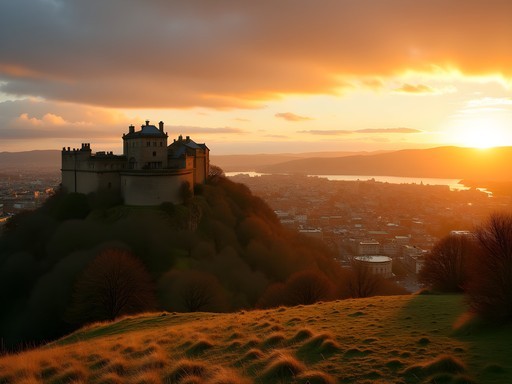
My relationship with Edinburgh began at dawn atop Calton Hill, where the city reveals itself in layers of architectural wonder. There's something almost ceremonial about arriving in darkness, setting up your tripod among the Athenian acropolis-inspired monuments, and waiting for first light to paint the city gold. The National Monument's pillars frame perfect vignettes of the cityscape, while the Nelson Monument offers elevated perspectives for those willing to climb its spiral staircase.
But the true magic of Calton Hill lies in its 360-degree potential—turn one way for classic postcard shots of Edinburgh Castle and the Old Town skyline, pivot slightly for the elegant Georgian grid of the New Town, or face east to capture the morning light spilling across the Firth of Forth.
For sunset chasers, Arthur's Seat demands your attention. This ancient volcano requires a more substantial hike (about 30-45 minutes up well-marked paths), but rewards photographers with sweeping panoramas. I've found the best compositions come from positioning the city against the dramatic western sky, using my telephoto lens to compress the layers of the urban landscape against the fading light.
Both locations demand patience. On my recent visit, I spent three hours on Calton Hill, watching as passing rain showers created ephemeral rainbows that arced over the castle—a moment I might have missed had I rushed.

💡 Pro Tips
- Arrive at Calton Hill at least 45 minutes before sunrise to secure prime tripod positions
- Bring a headlamp for pre-dawn setup and safe navigation
- Use a graduated ND filter to balance bright skies with darker foregrounds
The Royal Mile: Working with Light and Shadow
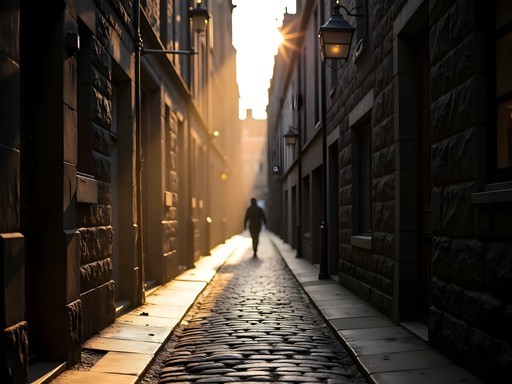
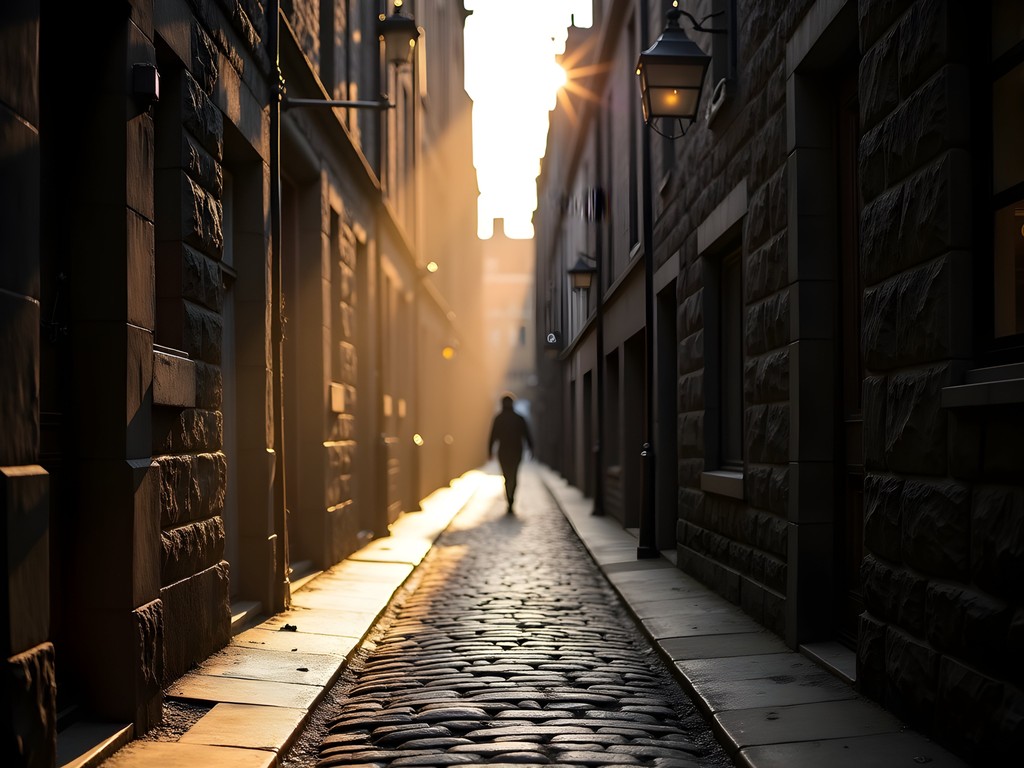
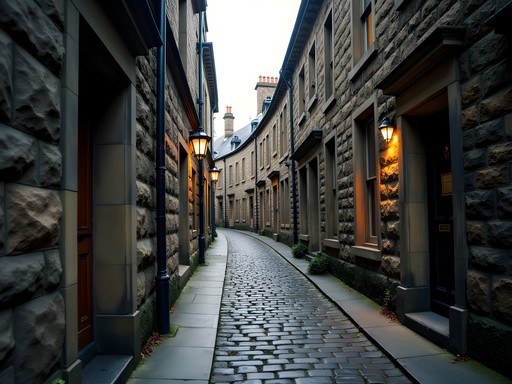
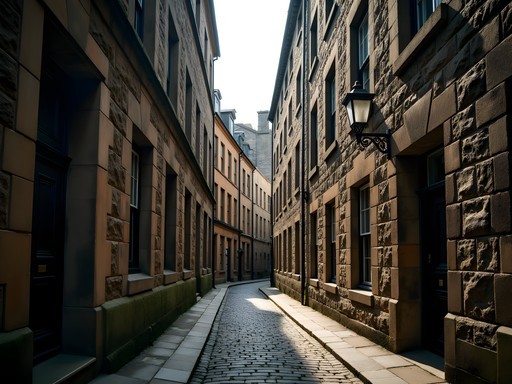
The Royal Mile presents a fascinating challenge for photographers—its narrow closes (alleyways) and towering buildings create dramatic light corridors that transform throughout the day. I've spent entire mornings moving between these medieval passages, watching as shafts of light gradually illuminate centuries-old stonework.
Rather than fighting the contrast, embrace it. Those deep shadows and bright highlights tell Edinburgh's story more authentically than any perfectly exposed shot ever could. The closes running perpendicular to the Mile—particularly Advocate's Close and Warriston's Close—offer frame-worthy compositions where light spills between buildings like liquid gold.
For street photographers, the Mile provides endless human moments against historical backdrops. I prefer working with my mirrorless camera here, as its silent shutter and inconspicuous profile allow me to capture candid moments without disrupting the scene. The camera's excellent dynamic range also handles the challenging contrast beautifully.
During autumn visits, the late afternoon light (around 3-5 PM) creates particularly striking effects as it cuts across the Mile at increasingly dramatic angles. Position yourself facing west for silhouette opportunities, or east to capture the warm glow on stone facades.
Don't neglect the details—Edinburgh's doorways, weathered signs, and architectural ornaments tell intimate stories that complement your wider cityscape shots. These close-up studies provide textural contrast to your portfolio and reveal the city's character in miniature.
💡 Pro Tips
- Visit the Royal Mile early morning (before 9 AM) or during golden hour to avoid crowds
- Look for leading lines in the cobblestones and walls to draw viewers into your images
- Experiment with black and white conversion to emphasize the dramatic shadows and textures
Edinburgh Castle: Beyond the Postcard
Edinburgh Castle dominates the skyline, and while postcard shots are tempting, I challenge you to find fresh perspectives on this iconic landmark. During my recent visit, I discovered that the castle reveals different characters depending on your vantage point and the weather conditions.
The Vennel steps off the Grassmarket offer one of my favorite alternative views—a narrow framed perspective with the castle looming dramatically above. In autumn, the light strikes the castle walls around 4 PM, creating a warm glow against increasingly dramatic skies. Princes Street Gardens provides lower angles that emphasize the castle's imposing position on its volcanic plug.
Weather is your creative partner in Edinburgh. Don't retreat when clouds gather—some of my most compelling castle images emerged when fast-moving weather systems created dramatic backdrops. The Scottish phenomenon of 'four seasons in one day' offers photographers remarkable variety within a single shooting session.
For those seeking technical excellence, consider focus stacking when shooting wider landscapes including the castle. The dramatic depth between foreground elements (gardens, graveyards, or urban details) and the castle itself often exceeds what a single exposure can render sharply. My carbon fiber tripod has proven invaluable for these precision shots, particularly in Edinburgh's often breezy conditions.
Night photography presents yet another facet of the castle's character. The golden illumination against the blue hour sky creates a magical quality that speaks to Edinburgh's romantic spirit. For these shots, I recommend arriving during late blue hour (about 30-45 minutes after sunset) when the ambient light and artificial illumination achieve perfect balance.

💡 Pro Tips
- Scout alternative vantage points like Blackford Hill or the Vennel steps for unique castle compositions
- Use a polarizing filter to enhance cloud definition and reduce glare from wet surfaces after rain
- Include human elements or urban details to provide scale and context to castle views

Dean Village and Water of Leith: Pastoral Edinburgh
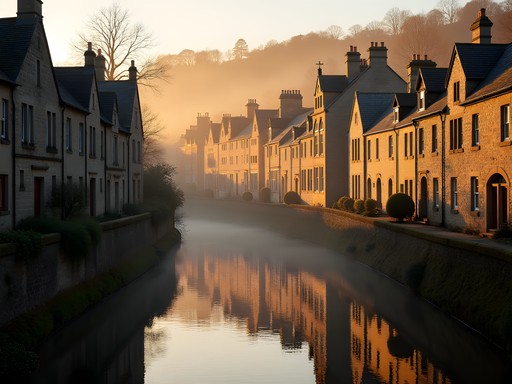
Just minutes from the urban energy of Princes Street lies Dean Village—a pastoral oasis that feels transported from another century. This former milling community along the Water of Leith offers photographers a completely different Edinburgh narrative, one of quiet corners and gentle flowing water rather than dramatic spires and volcanic outcrops.
The village's well-preserved stone buildings, including the iconic Well Court with its distinctive red sandstone and timber framing, create perfect reflections in the water on still mornings. I've found the hour after sunrise provides the most magical light here, when morning mist often hovers just above the water's surface, creating ethereal conditions.
The Water of Leith walkway extends this photographic journey, offering miles of riverside compositions as it winds through the city. In autumn, the path becomes a canvas of golden leaves and reflections that would make any landscape painter envious. The section between Dean Village and Stockbridge offers particularly rich visual material, with overhanging trees creating natural frames for your compositions.
For capturing moving water while maintaining detail, I rely on my variable ND filter to achieve those silky water effects even in brighter conditions. Experiment with exposure times between 1/2 second (for textural detail in the water) to several seconds (for dreamlike smoothness).
Don't rush this location—the charm of Dean Village reveals itself to patient observers. I spent an entire morning following the changing light across the water and stone buildings, watching as each hour brought new reflections and moods. This contemplative approach to photography connects deeply with the village's tranquil atmosphere.

💡 Pro Tips
- Visit on weekday mornings to avoid weekend crowds and capture reflections on calmer water
- Bring a polarizing filter to control reflections and enhance autumn foliage colors
- Include the historic mill stones as foreground elements to tell the area's industrial history
Victoria Street and Grassmarket: Color in the Old Town
In a city dominated by sandstone and granite, Victoria Street's curved rainbow of painted facades provides a welcome burst of color for photographers. This curved thoroughfare, said to have inspired Diagon Alley in the Harry Potter series, offers compositions that balance architectural precision with vibrant energy.
The street's unique split-level design allows for multiple perspectives—shoot from the upper terrace for graphic compositions emphasizing the curve and colorful shopfronts, or from street level to capture the bustling energy and architectural details. Early morning provides empty streets and clean light, but I've found mid-afternoon offers an engaging balance of people and illumination as the sun hits the north-facing facades.
The adjacent Grassmarket, once a medieval marketplace and execution site, now presents a lively square framed by historic buildings with the castle looming overhead. This area rewards photographers who embrace storytelling—capture the conversations outside pubs, the interaction between historic architecture and contemporary life, the way light plays across the open square.
For street photography in these vibrant areas, I rely on my prime lens for its exceptional low-light performance and beautiful rendering of colors. The wide aperture allows me to isolate subjects against the busy backgrounds while maintaining enough context to tell Edinburgh's story.
Rainy days—common in Edinburgh's autumn—shouldn't deter you. The wet cobblestones of Victoria Street transform into mirrors, reflecting the colorful buildings and creating opportunities for striking compositions. Position yourself at the top of the street looking down to capture these reflections to their full advantage.

💡 Pro Tips
- Photograph Victoria Street from the upper terrace early morning for the classic curved composition without crowds
- Use a small aperture (f/11-f/16) to capture sharp details from foreground to background when shooting the street's full curve
- Look for puddles after rain to capture colorful reflections of the buildings
Final Thoughts
As I packed away my gear after a final sunset shoot from Calton Hill, I reflected on Edinburgh's remarkable visual versatility. In just one autumn weekend, I'd captured medieval shadows, Georgian elegance, volcanic drama, and pastoral tranquility—all within walking distance of each other. What makes Edinburgh exceptional for photographers isn't just its postcard-perfect vistas, but the way the city rewards those who linger, who return to the same locations at different hours, who wait for that perfect intersection of light and atmosphere. Whether you're documenting your solo travels or creating fine art images, Edinburgh offers endless visual narratives waiting to be discovered through your unique perspective. I'll be returning in winter, when low-angled light and potential snow promise to reveal yet another facet of this photogenic chameleon of a city.
✨ Key Takeaways
- Visit key locations at different times of day—Edinburgh's character transforms dramatically with changing light
- Embrace adverse weather conditions as creative opportunities rather than obstacles
- Balance iconic postcard shots with intimate details that reveal the city's character
- Allow time for serendipity—some of Edinburgh's most magical photographic moments come unexpectedly
📋 Practical Information
Best Time to Visit
September-November for autumn colors and softer light
Budget Estimate
$150-250 per day including mid-range accommodation and meals
Recommended Duration
3-4 days minimum to capture different lighting conditions
Difficulty Level
Moderate (Involves Some Uphill Walking And Early Morning Starts)
Comments
Savannah Torres
Avery, this really captures Edinburgh's magic! We visited with our two kids last year and I wish I'd had your lighting tips then. The Royal Mile was tricky - I found myself constantly fighting the harsh midday sun bouncing off those stone buildings. Your point about waiting for overcast conditions there is spot on. Dean Village was our unexpected favorite though - we stumbled upon it by accident and the kids loved playing by the Water of Leith while I snapped photos. It felt like we'd left the city entirely. One tip I'd add: if you're traveling with family, the early morning shoots at Calton Hill mean fewer crowds, which makes it easier to get those clean shots AND keep little ones from photobombing every frame!
oceanmaster
is arthurs seat hard to climb? thinking about going
Savannah Torres
It's not too bad! We took our kids (ages 7 and 9) up there last spring and they managed it fine. The main path is pretty gradual - took us about 30-40 minutes at a family pace. Just wear decent shoes because it can be slippery when wet. The views are absolutely worth it though!
oceanmaster
awesome thanks!
Fatima Sims
This brings back memories! I spent three days in Edinburgh last year chasing light and it never disappointed. One tip I'd add - if you're shooting in autumn or winter, the weather changes FAST. I learned the hard way when a sudden downpour caught me on Calton Hill. Now I always keep my camera rain cover in my bag. Also, the view from Blackford Hill (south of the city) gives you a different perspective of Arthur's Seat with the city skyline - fewer tourists too!
happywalker
Ooh thanks for the Blackford Hill tip!
travelguy1202
Love this post! The castle shot is fire 🔥
Megan Martin
Excellent guide, Avery. I was in Edinburgh for a photography conference last fall and your point about the light quality on Calton Hill is absolutely right - that golden hour glow on the Dugald Stewart Monument is unbeatable. For anyone planning a trip, I'd also recommend checking out Circus Lane in Stockbridge for some charming mews photography. The cobbled lane with colorful doors makes for great street photography. Weather can change quickly though, so always pack layers!
happywalker
WOW these photos are incredible!! Going in March and SO excited now!
hikingchamp
Just got back from Edinburgh last week and used this guide! The tip about shooting the Royal Mile early morning was spot on - had the cobblestones almost to myself around 7am. One thing I'd add is that the walk from Dean Village along the Water of Leith to Stockbridge is gorgeous too, especially with the autumn colors right now.
travelguy1202
Oh nice! Did you need any special permits for photography at the castle?
hikingchamp
Nope, just regular admission! They're cool with cameras as long as you're not using a tripod inside
backpackdiver
Dean Village is SO underrated. Great shots!
wanderqueen
This looks amazing! Quick question - how early do you need to get to Arthur's Seat for sunrise? Is it safe to hike up in the dark?
Fatima Sims
I've done the Arthur's Seat sunrise hike a few times! Get there about 45 mins before sunrise. The main path is well-worn and lots of photographers make the trek, so you won't be alone. Just bring a headlamp and watch your footing on the rocky bits near the top. Totally worth it!
wanderqueen
Thanks so much! Adding this to my list
Sophia Gomez
Avery, this guide transported me back to my last business trip to Edinburgh when I managed to sneak in some photography between meetings! The way you've captured the city's dual personality - both medieval and Georgian - is exactly what makes it so photogenic. During my stay, I discovered that early mornings at Victoria Street offered amazing light as it cascaded down those colorful shopfronts. The curved street creates this gorgeous leading line that draws viewers in. I was using my 24-70mm almost exclusively, but curious what your go-to lens was for the narrow closes of the Royal Mile? I found myself constantly switching between wide angle and something tighter to isolate architectural details.
Avery Gordon
Victoria Street in morning light is magical! For the closes, I primarily used a 16-35mm to capture the sense of enclosure while still showing the dramatic height, but switched to a 50mm prime when I wanted to isolate textures and details. The challenge was definitely balancing the exposure between those dark walls and bright sky patches!
Venture X
Premium card with 2X miles, $300 travel credit, Priority Pass