


Disclosure: This article contains affiliate links. We may earn a commission from purchases at no extra cost to you, which helps our travel content.
As I disembarked at Ted Stevens Anchorage International Airport last February, the crisp Alaskan air filled my lungs with a familiar sharpness that reminded me of winter mornings back in Kitchener. Having documented my travels across five continents over fifteen years, I've developed an affinity for destinations where history and natural phenomena converge into extraordinary photographic opportunities. Anchorage in winter offers precisely this confluence—a gateway to both the dancing aurora borealis and remarkable wildlife encounters against snow-draped landscapes. After attending a dental research symposium in Seattle, I extended my North American journey with this week-long Alaskan photography expedition. What followed was a magnificent dance between technical precision and serendipitous moments, as I navigated the delicate balance of night photography in sub-zero temperatures and daytime wildlife tracking through Anchorage's surrounding wilderness.

Planning Your Aurora Photography Expedition
Successful aurora photography from Anchorage requires strategic preparation that balances technical readiness with geographical knowledge. Having photographed the northern lights in Tromsø and Reykjavík previously, I can attest that Alaska offers distinct advantages—particularly its accessibility to both urban amenities and rapid wilderness immersion.
The aurora forecast becomes your most essential planning tool. I religiously consulted the University of Alaska Fairbanks' Geophysical Institute aurora forecast (available at gi.alaska.edu) throughout my stay, which provides 3-day predictions rated on a scale of 0-9. Anything above a 3 rating warrants preparation for a night shoot. Combine this with clear sky forecasts from local meteorological services for optimal planning.
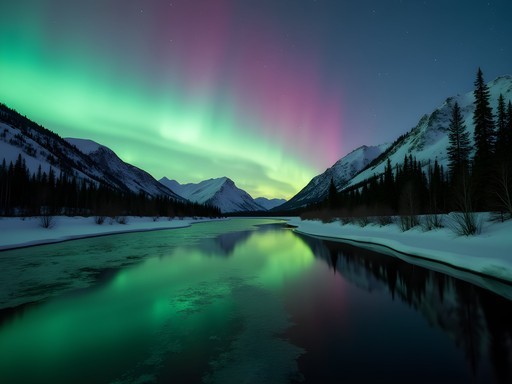
While Anchorage itself offers decent viewing opportunities at sites like Point Woronzof and Kincaid Park, the truly spectacular displays require venturing 15-30 minutes beyond city limits to escape light pollution. My most productive location was Eklutna Tailrace, approximately 40 minutes north of downtown—a site that combines minimal light pollution with the bonus of reflective water features when not completely frozen.
Equipment preparation is non-negotiable. My Sony Alpha a7 III performed admirably in extreme cold, though I kept spare batteries in insulated pouches close to my body. The camera's excellent low-light performance proved invaluable when balanced with my trusty wide-angle lens, which allowed me to capture the expansive celestial displays while maintaining reasonable exposure times.
💡 Pro Tips
- Always carry at least three camera batteries in insulated pouches during winter shoots
- Set up your tripod and composition before darkness falls completely
- Use the 500 rule (500 ÷ focal length = maximum exposure in seconds before stars blur) as your starting point for exposure
Mastering Night Photography Techniques in Extreme Cold
Night photography in Alaska's winter presents unique challenges that test both photographer and equipment. During my week in Anchorage, temperatures plummeted to -18°C during evening shoots—conditions that demand specific technical adaptations.
First, acclimatize your equipment gradually. I learned this lesson years ago in Copenhagen when my lens fogged irreparably during a winter harbor shoot. Now I place my camera gear in the hotel lobby for 30 minutes before transitioning outdoors, then keep it in an insulated camera bag until reaching the shooting location. This prevents internal condensation that can damage electronic components.
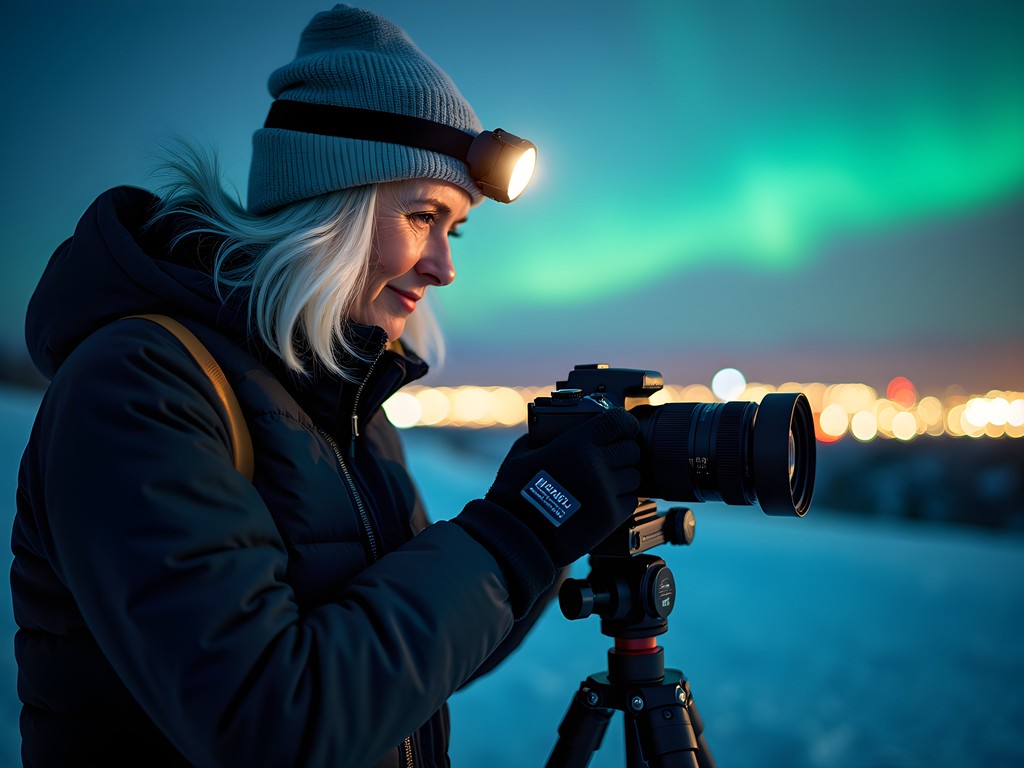
For aurora photography specifically, I begin with these baseline settings: ISO 1600, f/2.8, and a 15-second exposure. From there, adjustments depend on aurora activity—brighter, faster-moving displays require shorter exposures and potentially lower ISO settings to prevent overexposure of the dynamic light. The remote shutter release proved indispensable, eliminating camera shake while allowing me to trigger exposures without removing my gloves.
Focus presents another significant challenge in darkness. Pre-focus your lens to infinity during daylight hours and mark the position with gaffer tape, or use live view magnification on a bright star to achieve precise focus before beginning your aurora session. I prefer the latter method with my Sony's excellent electronic viewfinder.
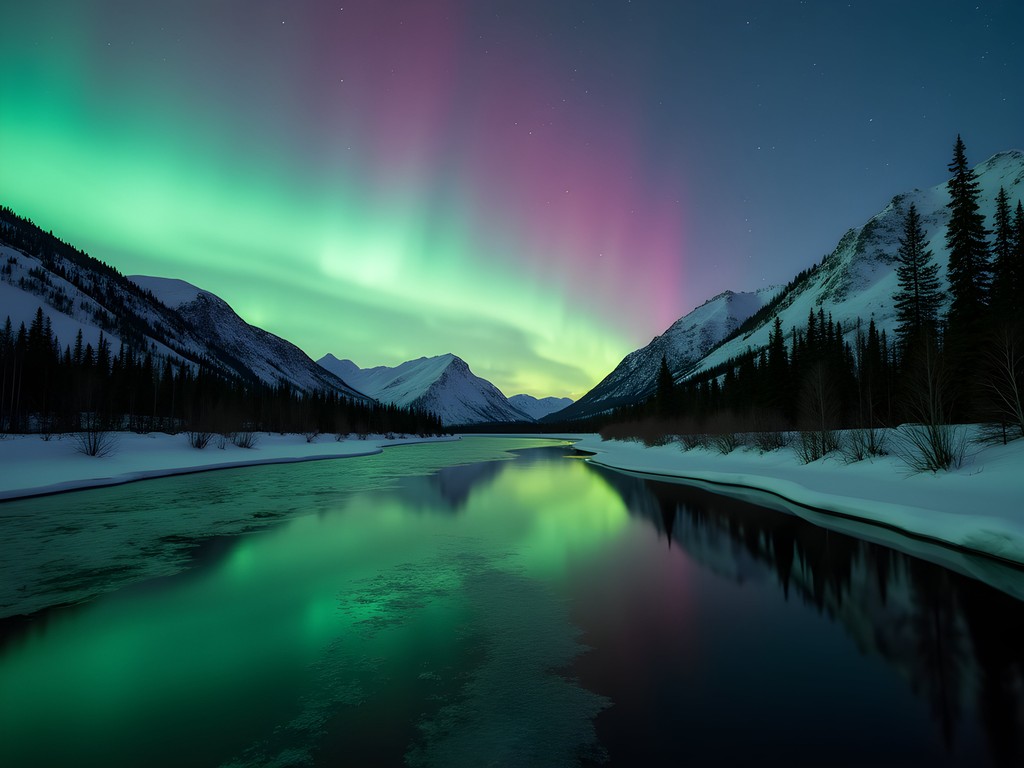
Composition becomes increasingly important when working with such dramatic subjects. Include foreground elements—a silhouetted tree line, mountain range, or reflective water surface—to provide scale and context. My most successful images from Eklutna incorporated the partially frozen water as a mirror for the dancing lights above.
💡 Pro Tips
- Set your white balance manually to 3200-4000K to capture the aurora's true colors
- Use hand warmers taped to your lens barrel to prevent focusing mechanisms from freezing
- Pack a headlamp with a red light mode to preserve your night vision while adjusting equipment
Wildlife Photography Expeditions from Anchorage
While the northern lights may have initially drawn me to Anchorage, the winter wildlife photography opportunities proved equally compelling. The stark contrast of animals against snow-covered landscapes creates dramatic compositional possibilities that simply don't exist in warmer seasons.
The jewel in Anchorage's wildlife photography crown is undoubtedly the Alaska Wildlife Conservation Center in nearby Portage. As a dentist who has spent decades studying anatomical precision, I find particular satisfaction in capturing the intricate details of animal physiognomy. The center's 200 acres house native species including wood bison, muskoxen, bears, and wolves in naturalistic enclosures that facilitate unobstructed photography. Winter visits offer the distinct advantage of smaller crowds and animals sporting their full winter coats.
For bird photography enthusiasts, the Tony Knowles Coastal Trail provides remarkable access to bald eagles, particularly near Point Woronzof. My most memorable encounter occurred during golden hour when the low winter sun illuminated an adult eagle perched on a snow-dusted spruce. The telephoto zoom lens I brought specifically for wildlife proved its worth in this moment, allowing me to maintain distance while capturing intimate details.
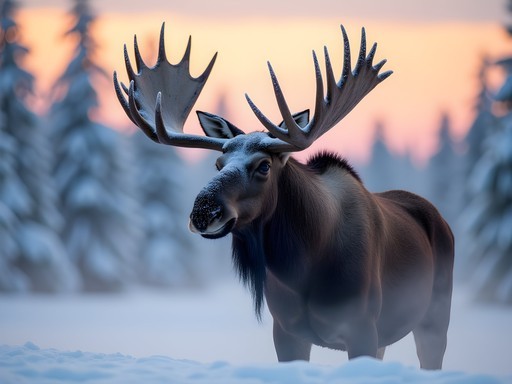
For more adventurous photographers, guided excursions to Chugach State Park offer opportunities to photograph moose in their natural habitat. These massive animals are surprisingly common around Anchorage in winter as they move to lower elevations. However, photographing them requires extreme caution and respect for their space—I recommend booking with experienced guides like Alaska Photo Treks who understand animal behavior and safety protocols.
Winter wildlife photography demands patience and preparation. Exposure compensation becomes crucial when photographing dark subjects against snow—I typically dial in +1 to +2 stops to prevent underexposure. Similarly, continuous shooting mode captures subtle variations in animal movement and expression, increasing your chances of securing that perfect moment.

💡 Pro Tips
- Use exposure compensation of +1 to +2 stops when photographing dark animals against snow
- Carry chemical hand warmers to revive cold camera batteries between shots
- For wildlife portraits, focus on the eyes and use the widest aperture your lens allows for subject isolation

Day Trips and Maritime Heritage
Given my longstanding fascination with maritime history—a passion that blossomed after relocating to Frankfurt and exploring European ferry systems—I couldn't resist incorporating Alaska's rich maritime heritage into my photographic itinerary.
The crown jewel of this exploration was a day trip to Seward, approximately 2.5 hours south of Anchorage along one of America's most scenic highways. While many travelers visit Seward only during summer months for cruises, winter offers a hauntingly beautiful perspective on this historic port town. The Alaska SeaLife Center remains open year-round, providing remarkable opportunities to photograph marine wildlife including Steller sea lions and various seabird species. Their underwater viewing areas present fascinating technical challenges for photography—I found setting my polarizing filter to maximum effect helped reduce reflections on the glass barriers.
More compelling for those interested in maritime history is the small but excellent Seward Museum, documenting the town's role in Alaska's maritime development. The historic photographs of early 20th-century vessels navigating the treacherous waters of Resurrection Bay provided inspiration for my own compositional approaches.
Closer to Anchorage, the Alaska Aviation Heritage Museum offers another perspective on the region's transportation history. While not strictly maritime, Alaska's unique dependence on bush planes creates fascinating parallels to isolated maritime communities. The museum's collection of vintage aircraft photographed against the dramatic backdrop of Lake Hood (the world's busiest seaplane base) makes for compelling visual storytelling.
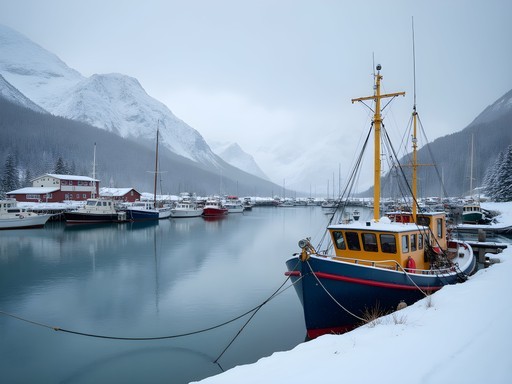
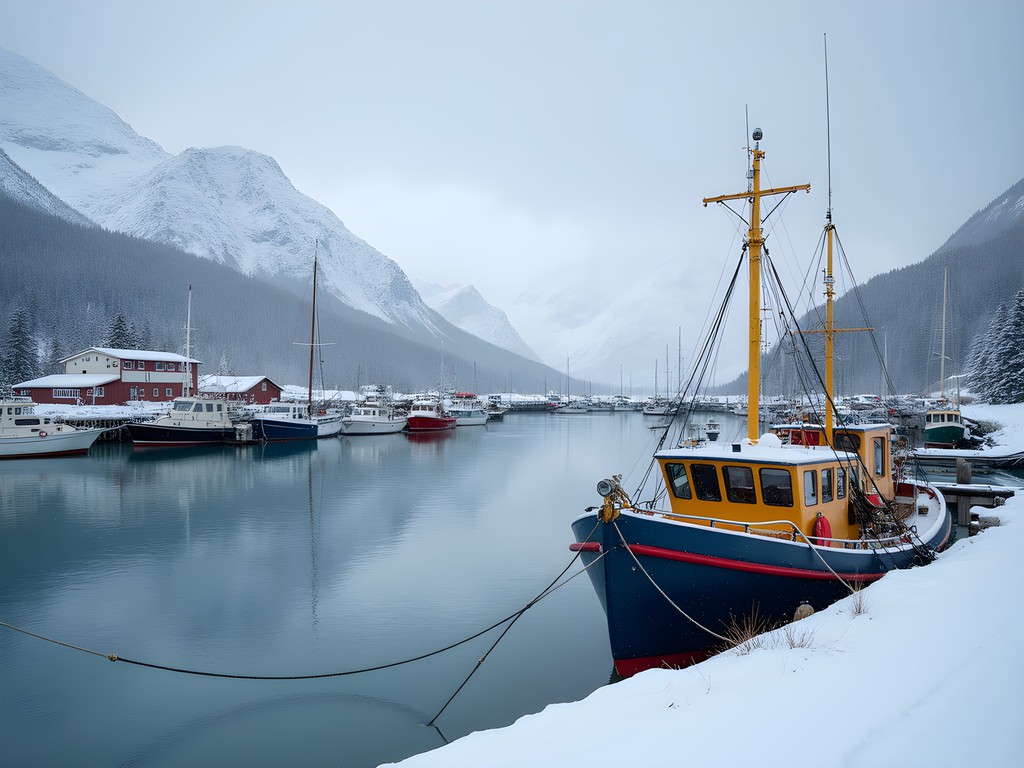
For those with maritime interests, winter offers a uniquely unfiltered view of Alaska's working waterfronts. The Port of Anchorage remains operational year-round, and from public viewing areas, you can photograph massive container ships navigating the ice floes of Cook Inlet—a powerful juxtaposition of human industry against nature's formidable winter presence.
💡 Pro Tips
- Visit Seward on weekdays during winter for minimal crowds and maximum photographic access
- Use a circular polarizer to reduce reflections when photographing through glass at museums and aquariums
- Research ship schedules at the Port of Anchorage to time your visit with vessel arrivals or departures
Accommodations and Practical Considerations
Selecting appropriate accommodation in Anchorage requires balancing comfort with strategic positioning for photography expeditions. After years of business travel combined with photography pursuits, I've developed a methodology for choosing lodging that supports rather than hinders creative work.
I selected the Lakefront Anchorage hotel for its unique position near Lake Hood. This mid-range property offered reasonable winter rates (approximately $130-160 USD per night) while providing direct access to seaplane photography opportunities and relatively quick departures northward for aurora chasing. The hotel's 24-hour lobby with complimentary coffee proved invaluable when returning from late-night photography sessions.
For photographers, several practical considerations become paramount when visiting Anchorage in winter. First, transportation: while the city has public transit, renting a vehicle is essential for serious photography pursuits. I reserved a 4WD SUV with winter tires well in advance—a necessity rather than luxury when navigating potentially icy roads to reach prime photography locations.
Second, dress appropriately for the conditions. My years in Canada prepared me somewhat, but Alaska's winter demands specialized gear. Layering remains the fundamental principle: moisture-wicking base layers beneath insulating mid-layers and a wind/waterproof outer shell. For photography specifically, thin merino liner gloves beneath fingerless mittens with fold-back tops allowed me to operate camera controls without exposing my entire hand to the elements.
Third, respect the shortened daylight hours in your planning. During my February visit, Anchorage received approximately 9.5 hours of daylight—a significant increase from December's 5.5 hours but still requiring careful itinerary management. I structured most days with wildlife photography during daylight hours (typically 9:00 AM to 4:30 PM), early dinners, brief evening rest, then aurora photography from 10:00 PM onward if conditions permitted.

💡 Pro Tips
- Request a north-facing hotel room for potential aurora viewing without leaving your accommodation
- Carry a thermos of hot tea or coffee during photography outings—hydration remains crucial even in cold weather
- Use smartphone apps like PhotoPills to track sunrise/sunset times and plan golden hour photography
Final Thoughts
As my flight departed Anchorage, banking over Cook Inlet with the winter sun casting long shadows across the snow-covered landscape, I reflected on how this Alaskan sojourn had expanded my photographic repertoire. The technical challenges of aurora photography in extreme cold, the patient pursuit of wildlife moments, and the documentation of maritime heritage in winter conditions—each element had pushed my skills in different directions. For photographers seeking to test their technical abilities while capturing truly magnificent natural phenomena, Anchorage in winter offers an accessible yet authentic Alaskan experience. The images I captured will certainly grace my dental office walls in Frankfurt, sparking conversations with patients about the remarkable intersection of professional travel and photographic passion. Whether you're pursuing the dancing lights of the aurora or the quiet moments of wildlife in snow, Anchorage provides both the infrastructure to support your expedition and the wilderness proximity to make it extraordinary. All that's required is preparation, patience, and perhaps a slightly adventurous spirit willing to embrace the beautiful challenges of winter photography.
✨ Key Takeaways
- Aurora photography requires technical preparation and weather monitoring to maximize success
- Winter wildlife photography offers unique compositional opportunities with animals against snow
- Maritime heritage sites provide compelling photographic subjects even in winter months
- Proper cold-weather preparation for both photographer and equipment is essential
📋 Practical Information
Best Time to Visit
January-March for optimal balance of aurora viewing and increasing daylight
Budget Estimate
$2,000-2,500 for one week (accommodations, car rental, food, guided excursions)
Recommended Duration
7-10 days
Difficulty Level
Intermediate



Comments
Hunter Thompson
Brilliant write-up Katherine! Alaska's been on my list forever and this has me properly inspired. Quick question - you mentioned staying out for hours waiting for the aurora. What was your strategy for staying warm? I'm usually a budget traveler so fancy heated gear isn't really in the cards for me. Did you find any good spots close to town where you could duck into a car or cafe to warm up between shots?
escapezone
Really enjoyed this post! I was in Anchorage two years ago and wish I'd had this guide then. One thing I'd add - the Alaska Wildlife Conservation Center is absolutely worth the drive if you want guaranteed wildlife shots. Got some amazing photos of bears, caribou, and even a lynx. The lighting in winter can be tricky though with such short days. Did you find the blue hour gave you better results than midday? Also, for anyone going, dress in serious layers. I thought I was prepared but that wind off Cook Inlet cuts right through you!
oceanninja
Thanks for the tip about the conservation center!
freewanderer
Going there next month!! Any tips on where to see moose?
escapezone
Kincaid Park is great for moose! Saw three on the trails there last time. Just keep your distance, they're huge and can be aggressive especially in winter.
escapeexplorer
Katherine - curious about your camera setup for the aurora shots? I'm heading to Anchorage in March and worried about my gear handling the extreme cold. Did you have any issues with batteries dying quickly? Also, what focal length did you find most useful?
freewanderer
not katherine but keep spare batteries in your inside pockets! learned that the hard way in norway lol
Hunter Thompson
Mate, the cold is no joke up there! I was in Iceland last winter doing aurora chasing and my batteries were dying in like 20 minutes. Definitely keep them warm like freewanderer said. I ended up getting some of those hand warmer packets and taping them to my camera battery grip - worked a treat! For focal length, I'd say 14-24mm range is perfect for capturing the full aurora display. Wide angle is your friend!
oceanninja
Those northern lights shots are incredible!!
Sage Dixon
Katherine, this brought back so many memories! I did a similar trip three winters ago and your night photography tips are spot on. One thing I'd add - those chemical hand warmers are absolute lifesavers when you're standing in -20°F waiting for the aurora. I'd tape one to the bottom of my camera body too. Also loved your section on the maritime heritage - the Alaska Native Heritage Center doesn't get enough love from photographers but the cultural context really enriched my understanding of the landscape I was shooting. Did you make it out to Girdwood at all?
Katherine Fisher
Yes! The hand warmer trick is genius. And I did get to Girdwood for a day - absolutely gorgeous, wish I'd had more time there. The Heritage Center was definitely a highlight for me too.
oceanwalker
Thanks for the tips everyone! Super helpful
oceanwalker
Going in March! Any specific spots you'd recommend for moose photography?
Sage Dixon
Not Katherine but I was just there in December! Kincaid Park early morning was incredible - saw a whole family of moose. Also Potter Marsh if you don't mind a short drive. Bring a good telephoto lens and keep your distance. Those guys are massive up close!
photoperson
Omg your aurora shots are STUNNING!! I've been dying to photograph the northern lights. How long did you have to wait each night to catch them? And did you have issues with your camera batteries dying in the cold?
Katherine Fisher
Thank you! Some nights were 2-3 hours of waiting, other nights they appeared within 30 minutes. Definitely keep spare batteries in your inside jacket pocket - the cold drains them fast! I went through 4 batteries one night.
photoperson
Good to know! Ordering extra batteries now lol
TravelWithMike
Just got back from Anchorage last week and followed many of your recommendations - they were spot on! The wildlife at Kincaid Park was incredible, saw three moose and countless snowshoe hares. We didn't get as lucky with the northern lights though - too cloudy most nights. One tip for others planning winter trips: the city buses were way more reliable than I expected even with snow. We used them to get to most of the trailheads you mentioned without any issues. Saved a ton on rental car costs!
Nicole Russell
That's such a good point about the buses! I was nervous about relying on public transport in winter there but ended up having the same positive experience.
JennyTravels
Wow, these photos are breathtaking! Love how you captured the green and purple waves in the aurora.
Katherine Fisher
Thanks Jenny! I got really lucky with the color variation that night. The KP index was at 5 which helped!
Venture X
Premium card with 2X miles, $300 travel credit, Priority Pass