

Disclosure: This article contains affiliate links. We may earn a commission from purchases at no extra cost to you, which helps our travel content.
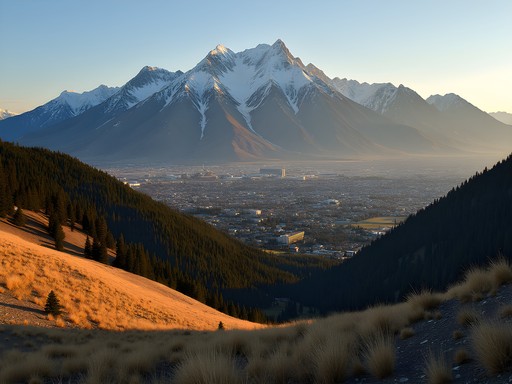
The first light of dawn breaks through the mist as I stand at the trailhead of Henri Pittier National Park, Venezuela's oldest protected wilderness. My sketchbook already bears the marks of early morning inspiration – quick strokes capturing the way the clouds embrace the mountain peaks like old friends reuniting. Having traversed mountain ranges across five continents, I've developed a particular fondness for places where ecosystems collide, where the boundary between one world and another blurs into something magical. Here, just outside Maracay, Venezuela's first national park offers precisely this liminality: a realm where cloud forests gradually surrender to Caribbean coastline, where over 500 bird species paint the canopy with flashes of color, and where adventure awaits those willing to venture beyond the ordinary tourist path.
The Cloud Forest Ascent: Rancho Grande to Pico Guacamaya
The journey begins at Rancho Grande Biological Station, where scientists have studied this remarkable ecosystem since the 1950s. I've arranged to meet Carlos, a local guide whose knowledge of the park rivals that of the most seasoned biologists. His eyes light up when I mention my interest in documenting the transition zones between ecosystems.
'Most tourists only see fragments of the park,' he tells me in Spanish that dances with the local Venezuelan cadence. 'But to understand Henri Pittier, you must witness how it changes as you climb.'
The trail to Pico Guacamaya is not for the faint-hearted. It demands respect, proper preparation, and a willingness to surrender to the mountain's rhythm. The path narrows as we ascend, the humidity wrapping around us like a warm blanket. My moisture-wicking shirt quickly proves its worth in these conditions, where being soaked by either sweat or sudden rainfall is inevitable.
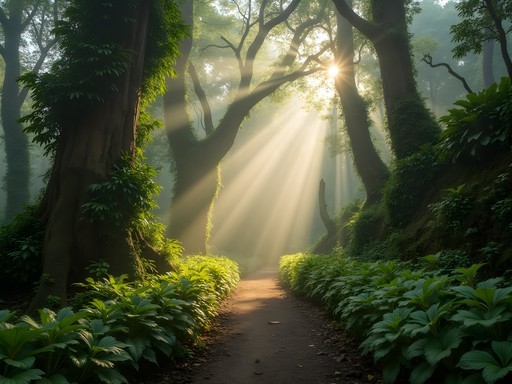
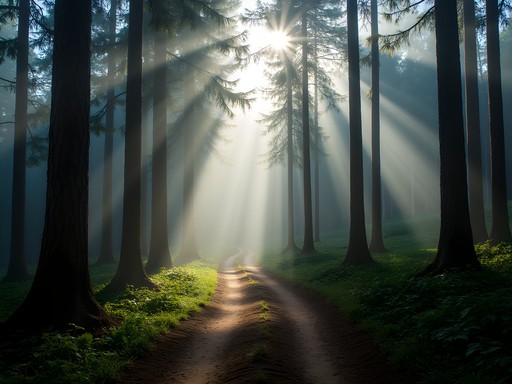
At approximately 1,500 meters above sea level, the character of the forest transforms dramatically. Massive trees create a cathedral-like canopy, their trunks serving as canvases for nature's artwork – lichens, mosses, and epiphytes in countless variations. I stop frequently, my camera capturing what my sketchbook cannot – the way sunlight filters through layers of green, creating an ethereal quality that reminds me of the sacred valleys I once documented in Bhutan.
The diversity of fungi alone would merit a separate expedition. Brilliant orange, sulfur-yellow, and otherworldly purple specimens emerge from fallen logs like nature's sculpture garden. Carlos points out a particularly striking red mushroom with white spots. 'Amanita muscaria,' he notes. 'Beautiful but deadly. Like many things in these mountains.'

💡 Pro Tips
- Hire a local guide for this trail - the navigation is challenging and their knowledge of wildlife and plants is invaluable
- Start no later than 7:00 AM to avoid afternoon thunderstorms that typically roll in around 2-3 PM
- Pack at least 3 liters of water per person - the humidity makes dehydration a serious concern
Biological Marvels: The Park's Extraordinary Biodiversity
Henri Pittier National Park represents a biological treasure trove that has captivated naturalists since the park's establishment in 1937. Originally named Rancho Grande National Park, it was later renamed to honor Swiss geographer and botanist Henri Pittier, who dedicated much of his life to studying Venezuela's ecosystems.
What makes this park exceptional is not just its biodiversity but the accessibility of that diversity within relatively short distances. In a single day's hike, one can traverse through distinct life zones, each hosting specialized communities of plants and animals.
'Look there,' Carlos whispers, pointing toward movement in the canopy. A family of howler monkeys observes us with casual interest before continuing their arboreal journey. Their haunting calls had served as our morning alarm at 5 AM – a primal sound that resonates through the forest like distant thunder.
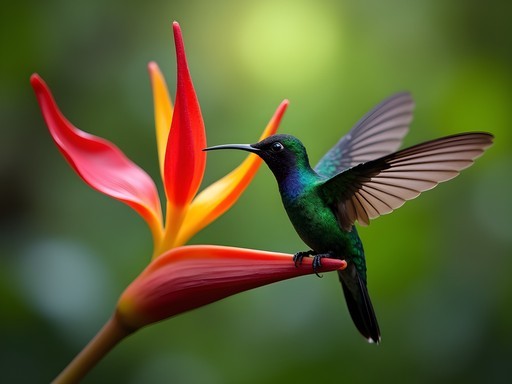
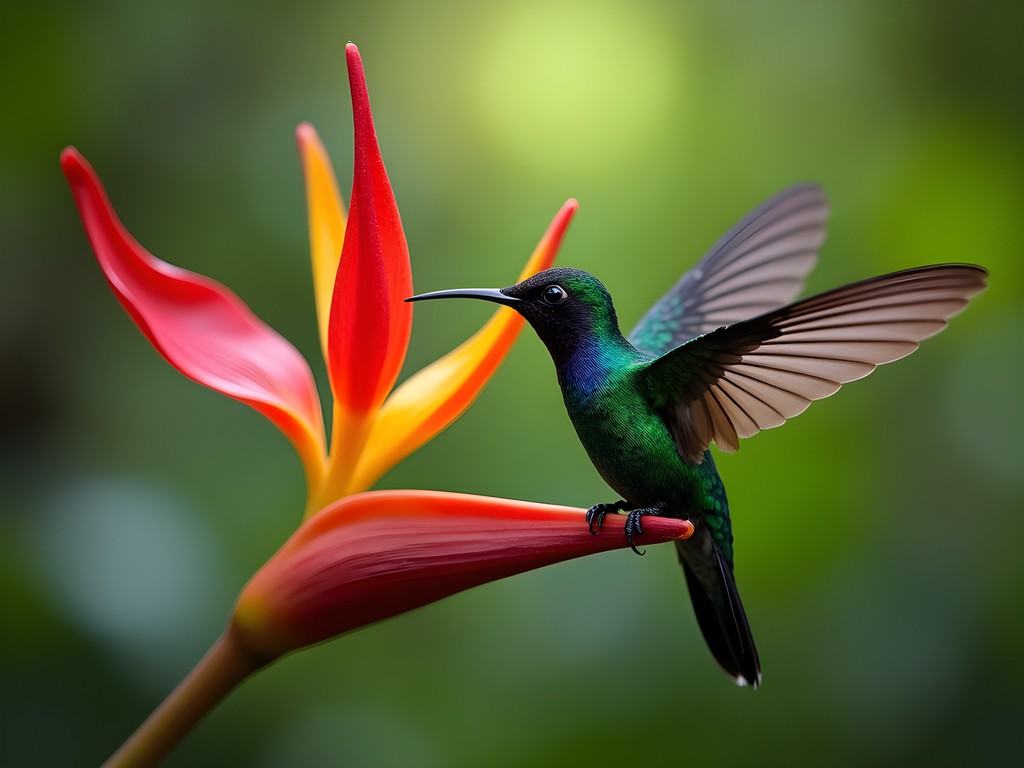
My compact binoculars reveal details I would otherwise miss: the iridescent gorget of a hummingbird feeding on heliconia flowers, the precise pattern on a poison dart frog no larger than my thumbnail, the cautious movements of a tayra (a member of the weasel family) as it investigates a fallen log.
The bird diversity alone justifies the challenging hike. Venezuela hosts over 1,400 bird species, and an impressive portion of them can be found within this park's boundaries. Ornithologists travel from across the globe to glimpse the Handsome Fruiteater, the Venezuelan Sylph, or the elusive Helmeted Curassow.
'The birds here,' Carlos explains as we pause to rest, 'they tell you everything about the health of the forest. When they thrive, the forest thrives.'
I've documented ecosystems from the Australian Outback to the Peruvian Andes, but the density of life here – the sheer volume of existence compressed into each square meter – continues to astonish me. My sketchbook fills with quick studies: the spiral pattern of a bromeliad, the compound eye of a praying mantis, the architectural perfection of a spider's web jeweled with morning dew.
💡 Pro Tips
- Bring a field guide to birds of Venezuela - even non-birders will be amazed by the diversity
- Move slowly and quietly for better wildlife viewing opportunities
- Early morning (6-9 AM) and late afternoon (3-6 PM) offer the best wildlife activity
The Descent to Choroni: Where Mountains Meet Caribbean
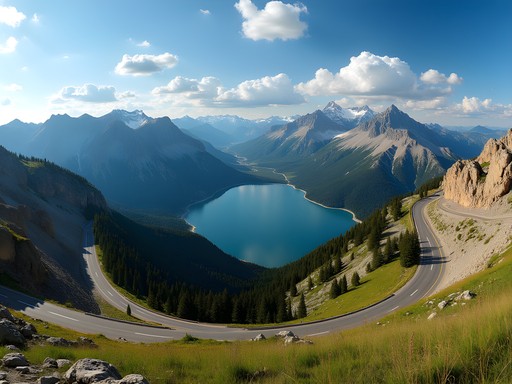
Perhaps the most remarkable aspect of Henri Pittier National Park is its dramatic ecological transition from cloud forest to Caribbean coastline. The ancient road from Maracay to Choroni cuts through the heart of the park, offering access to this remarkable gradient of ecosystems.
After our summit experience at Pico Guacamaya, Carlos suggests we complete our journey by descending toward the coastal town of Choroni. This colonial-era route once served as the main connection between Venezuela's central valleys and its Caribbean ports.
'The Spanish built this road in the 1700s,' Carlos explains as we navigate a particularly steep section. 'They needed to move coffee and cacao from the valleys to ships bound for Europe.'
As we descend, the vegetation shifts perceptibly. The moss-draped trees of the cloud forest gradually give way to drier forest types. The air becomes warmer, saltier. Butterflies appear in greater numbers – Henri Pittier hosts more than 800 species, including the electric blue morpho that seems to defy reality with its metallic brilliance.
I pause frequently to sketch and photograph these transitions. My trusty weather-resistant camera has accompanied me across five continents, but here in Henri Pittier, it earns its keep capturing the subtle shifts in light, color, and texture that define these ecological boundaries.
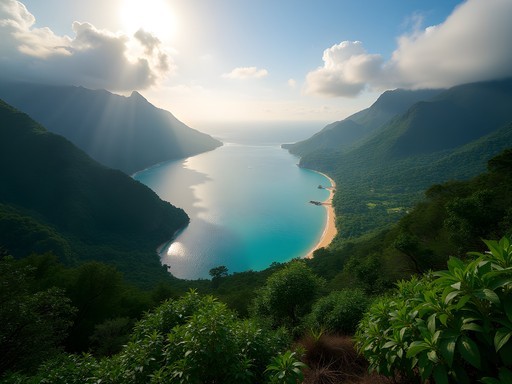
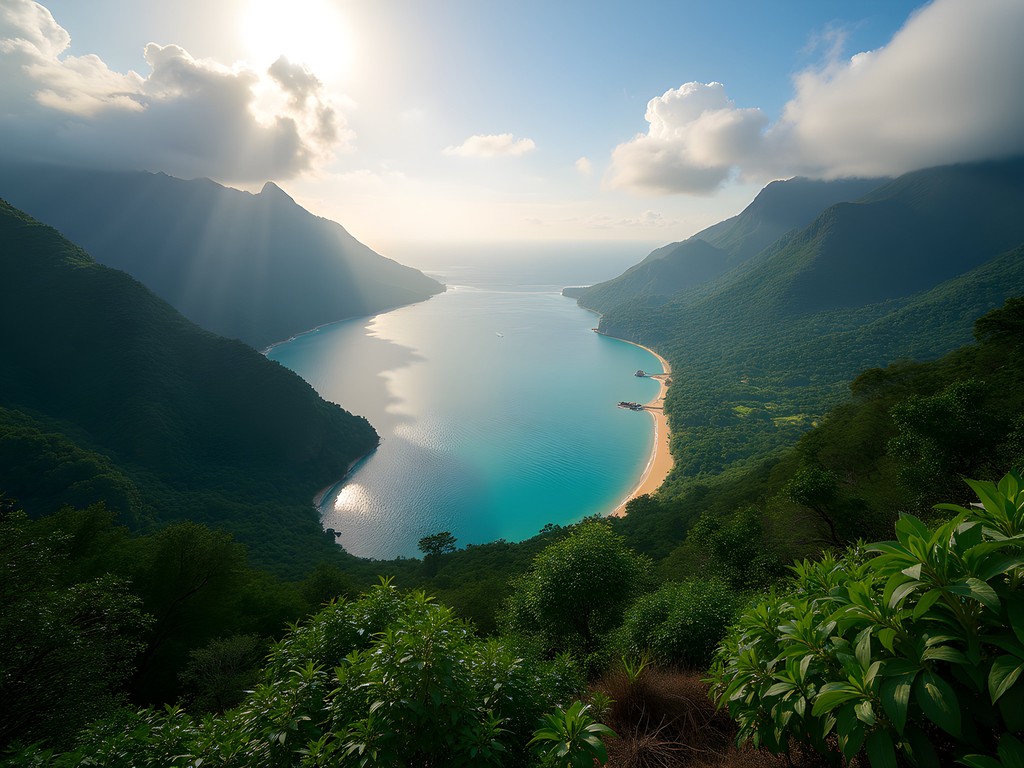
By mid-afternoon, we catch our first glimpse of the Caribbean Sea – a startling blue horizon that appears almost surreal after hours immersed in forest greens. The contrast is breathtaking: mountain cloud forest and tropical sea existing in such close proximity, separated by just a few kilometers of vertical descent.
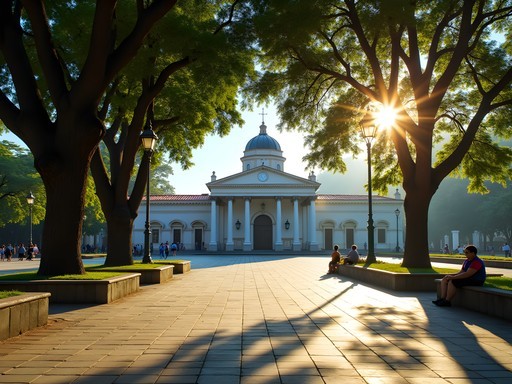
The final portion of our journey reveals coastal dry forest and eventually the historic town of Choroni itself, with its colonial architecture and laid-back Caribbean atmosphere. The temperature has risen significantly – at least 10°C warmer than our starting point in the mountains. My skin welcomes the change, having carried the memory of Sydney's winter in my bones.
💡 Pro Tips
- The descent to Choroni is steep and hard on the knees - trekking poles are highly recommended
- Arrange transportation back to Maracay in advance - public transport options are limited
- Bring a swimsuit for a refreshing dip at Playa Grande once you reach Choroni

Practical Challenges: Navigating Venezuela's Current Reality
I would be doing a disservice to fellow travelers if I didn't address the current challenges of visiting Venezuela. This is a country of extraordinary beauty facing extraordinary difficulties. The economic and political situation remains complex, with implications for tourism infrastructure and safety.
My journey to Henri Pittier required careful planning and local connections. I arranged everything through Carlos, whom I met through a Venezuelan artist I'd collaborated with in Sydney. This personal connection proved invaluable – Carlos not only guided me through the park but helped navigate the practical realities of travel in today's Venezuela.
'Things change quickly here,' he told me as we discussed logistics. 'What works today might not work tomorrow.'
The park itself has suffered from reduced funding and management resources. Some trails are less maintained than they once were, and ranger presence has diminished. Yet the natural beauty remains undiminished, perhaps even enhanced by the reduced visitor numbers.
Fuel shortages can complicate transportation, and the dual currency system (official and parallel exchange rates) creates confusion for international visitors. I found it essential to carry sufficient cash in small denominations of US dollars, as credit cards are rarely accepted outside major hotels in Caracas.
Safety concerns are real but manageable with proper preparation. I avoided displaying expensive equipment openly, traveled with a local guide at all times, and followed Carlos's advice about which areas to avoid. My anti-theft daypack provided additional peace of mind, with its lockable zippers and slash-proof construction.
Despite these challenges, the warmth of the Venezuelan people shines through. From the family who served us arepas at a small roadside stand to the local conservationists working tirelessly to protect Henri Pittier's biodiversity, I encountered nothing but generosity and resilience.

💡 Pro Tips
- Work with local contacts to arrange your visit rather than attempting independent travel
- Bring all necessary medications and first aid supplies as pharmacies may have limited stock
- Register with your country's embassy before traveling to Venezuela
Capturing the Soul of Henri Pittier: An Artist's Perspective
As both an artist and photographer, I approach landscapes with dual vision – seeking both the decisive moment that photography demands and the essential character that painting requires. Henri Pittier National Park offers endless inspiration for both pursuits.
During our two-day expedition, I filled nearly thirty pages of my sketchbook and captured hundreds of photographs. Yet I still feel I've barely scratched the surface of this remarkable place. The challenge lies not in finding subjects but in selecting from the overwhelming abundance.
What fascinates me most about Henri Pittier is the interplay of light through its various ecosystems. In the cloud forest, light becomes a tangible entity – filtering through mist and leaves to create an atmosphere that feels almost primordial. I found myself experimenting with longer exposures to capture the quality of this diffused illumination.
The colors shift dramatically as one moves through the park's elevation gradient. The cool blues and greens of the high forests give way to the warmer palette of the coastal regions. For an artist, this transition offers a natural study in color temperature and environmental adaptation.
I've always believed that truly understanding a landscape requires physical engagement with it – feeling the gradient of the slopes in your muscles, experiencing the changing humidity on your skin, hearing the subtle shifts in birdsong as you move between ecosystems. Henri Pittier demands this full sensory immersion.
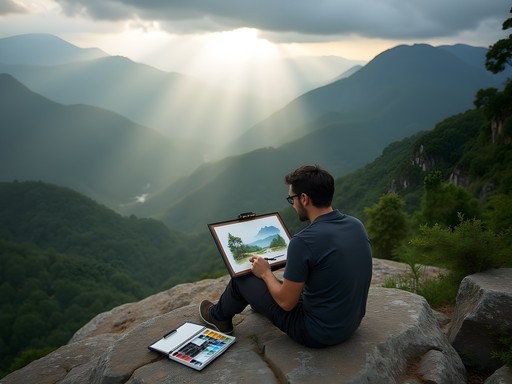
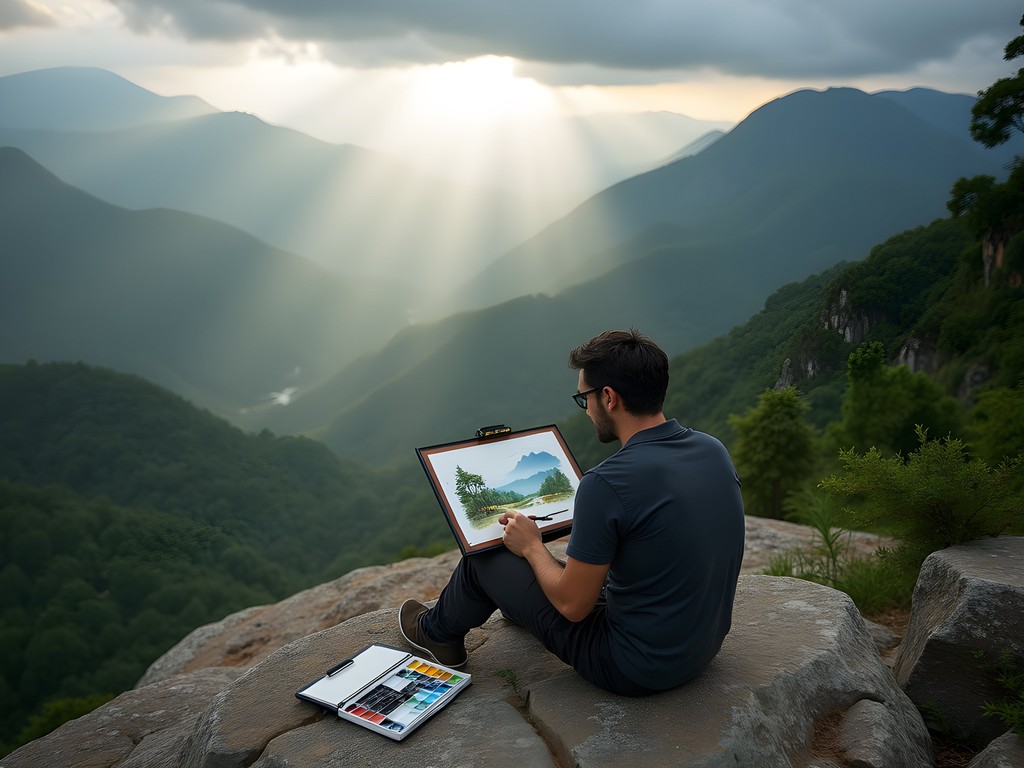
My approach to documenting the park combined quick field sketches (using my trusty watercolor travel kit) with photography and written notes. Each medium captures something the others miss – the sketchbook records my immediate impressions and emotional responses, the camera preserves details my hand cannot capture quickly enough, and my journal contextualizes these visual records with facts, stories, and sensory observations.
What emerged from this process was not just a record of a place but an experience of connection. In my years of documenting landscapes across continents, I've found that each place has its own unique voice – a particular way it speaks to those willing to listen. Henri Pittier speaks in the language of transition and contrast, of resilience and adaptation, of ecological interconnection across seemingly disparate worlds.
💡 Pro Tips
- Early morning and late afternoon offer the most dramatic lighting for photography
- Protect camera equipment from humidity with silica gel packets or a dry bag
- Consider bringing watercolor supplies rather than oils or acrylics due to the humid conditions
Final Thoughts
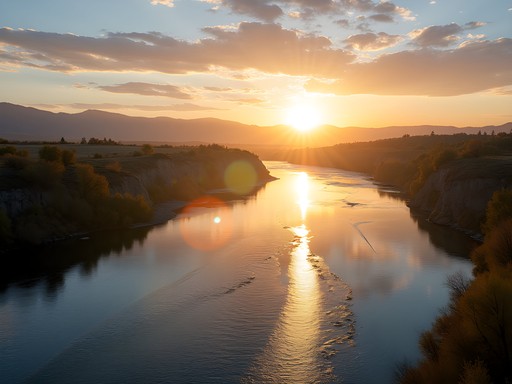
As I sit on the terrace of a small posada in Choroni, watching the Caribbean sunset paint the sky in hues that echo the heliconia flowers of the cloud forest, I reflect on the remarkable journey through Henri Pittier National Park. This mountain-to-sea transition zone represents Venezuela in microcosm – a land of extraordinary natural wealth facing significant challenges. The park itself stands as a testament to conservation vision, protecting a biological corridor that allows countless species to thrive across its ecological gradient.
For adventurous travelers willing to navigate the complexities of visiting Venezuela today, Henri Pittier offers rewards that few other destinations can match: biodiversity that rivals the Amazon, landscapes that transition dramatically within a day's hike, and the profound experience of witnessing ecosystems in conversation with one another. As my sketchbook and camera return with me to Australia, they carry not just images but invitations – to remember, to share, and perhaps most importantly, to return.
✨ Key Takeaways
- Henri Pittier National Park offers one of South America's most dramatic ecological transitions, from cloud forest to Caribbean coast
- Current travel challenges in Venezuela require careful planning and local connections, but the reduced tourism means more authentic experiences
- The biodiversity of the park (500+ bird species, 800+ butterfly species) makes it a paradise for nature enthusiasts despite limited infrastructure
📋 Practical Information
Best Time to Visit
December through April (dry season)
Budget Estimate
$30-50 USD per day excluding guides ($80-120 with professional guide)
Recommended Duration
2-3 days minimum
Difficulty Level
Challenging
Comments
skyrider
This is my first time hearing about this park! How do you get there from Caracas?
globeninja
What's the best time of year to go? I'm guessing dry season but curious about your take
Amit Sanchez
December to April is ideal - less rain means better trail conditions. I went in December and it was perfect. That said, the cloud forest is misty year-round, which is part of its magic!
globeninja
Perfect, that's what I was thinking. Thanks!
Claire Hawkins
This brings back memories! I visited with my family in 2021 and my kids still talk about the howler monkeys we heard in the canopy. Your description of Choroni is perfect - that little town feels like a secret paradise. We stayed an extra day just to enjoy the beach after the hike. One tip for families: the trail can be quite muddy and slippery, so good hiking boots are essential. My daughter learned that the hard way! The locals in Choroni were so kind to us, and the fresh fish at the beachside restaurants was unforgettable.
moonmate
How many days would you recommend for this hike? And is it doable without a guide?
Amit Sanchez
I'd say 2-3 days minimum to really enjoy it. As for guides, I'd strongly recommend one - they know the trails, the wildlife, and can help navigate any logistical challenges. Plus you're supporting the local community!
beachlegend
Those cloud forest photos are incredible!!
Jean Wells
Excellent documentation, Amit. I visited Henri Pittier in 2019 and your observations about the biodiversity are spot-on. The transition from cloud forest to coastal ecosystems is one of the most dramatic I've experienced in South America. Did you encounter any issues with trail maintenance? When I was there, some of the signage was deteriorating. Also curious about your experience with currency exchange - that was the most challenging logistical aspect of my visit.
Amit Sanchez
Jean, yes! Trail maintenance was definitely an issue in some sections. I mentioned it briefly in the 'Practical Challenges' section. Currency was tricky - USD cash is king, and having small bills made everything easier. The ecological transition you mentioned is exactly what makes this place so special.
nomadwalker
How safe is it to travel there right now? Been hearing mixed things about Venezuela but your post makes it look amazing
Amit Sanchez
Great question! I worked with a local guide and stayed aware of my surroundings. The park itself felt very safe, and the local communities were incredibly welcoming. Just do your research and connect with recent visitors before going.
nomadwalker
Thanks! That's really helpful
happyace8125
Wow this looks absolutely stunning! Adding to my bucket list 🌄
bluerider
Pro tip for anyone planning this: bring cash in small bills. Card payments are tricky in that area and you'll want to support the local posadas and restaurants in Choroni. The seafood there is amazing btw.
Savannah Walker
This is absolutely gorgeous! I love how you captured both the adventure and the challenges. That descent to Choroni sounds like a dream - there's something magical about hiking from mountains straight down to the sea. The biodiversity in Venezuelan cloud forests is unmatched. I did something similar in the Andes last year and brought my hiking water filter which was clutch for refilling from streams along the way. Your sketches must be incredible with all those heliconias and the coastal views!
Amit Sanchez
Thanks Savannah! The sketches turned out great - so much color and texture to work with. Good call on the water filter, definitely essential for longer treks.
Venture X
Premium card with 2X miles, $300 travel credit, Priority Pass