


Disclosure: This article contains affiliate links. We may earn a commission from purchases at no extra cost to you, which helps our travel content.
When most travelers think of Kisumu, Kenya's third-largest city, their minds immediately drift to the vast waters of Lake Victoria. As someone who's spent decades studying how ancient civilizations adapted their structures to local landscapes, I find it fascinating how modern tourism often follows similar patterns—clustering around the most obvious geographical features while overlooking elevated treasures. During my recent week-long solo expedition to Kisumu last October, I discovered that the true magic of this region lies not in its famous lake, but in the surrounding highlands that cradle the city like ancient guardians. These mountains—often absent from standard tourist itineraries—offer not just breathtaking panoramas, but windows into geological history that remind me of the Mayan highlands I first fell in love with decades ago. With nothing but my daypack, a well-worn pair of hiking boots, and approximately 25,000 Kenyan Shillings (about $200 USD) budgeted for the week's adventures, I set out to chart these forgotten pathways.

Finding My Bearings: Kit Mikayi and the Surrounding Highlands
My exploration began at Kit Mikayi, a 40-meter-tall rock formation about 29 kilometers west of Kisumu's city center. While technically not a mountain, this geological wonder serves as an excellent introduction to the region's elevated landscapes. Local Luo folklore describes this balanced rock formation as 'the first wife's stone'—a grandmother who turned to stone while pining for her son who left home.
What struck me immediately was how the formation's weathering patterns revealed centuries of climate cycles—similar to what I'd documented in Tikal's limestone structures, though formed through entirely different geological processes. The rock's surface tells a story of persistent winds and seasonal rains that have sculpted this landmark over millennia.
Rather than joining the typical day tours, I hired a local guide named Otieno for 1,500 KES (about $12 USD) who showed me not just the main formation but the network of lesser-known trails extending into the surrounding highlands. These paths, primarily used by local herders, offer spectacular morning views when the air quality is best.
The early start required reliable illumination, and my headlamp proved invaluable during the pre-dawn hike. Its adjustable brightness settings allowed me to navigate the rocky terrain while preserving battery life throughout the week's adventures.
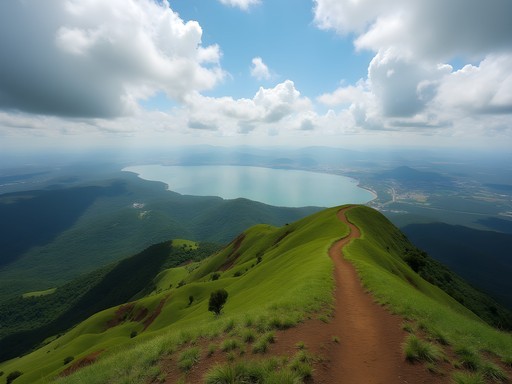
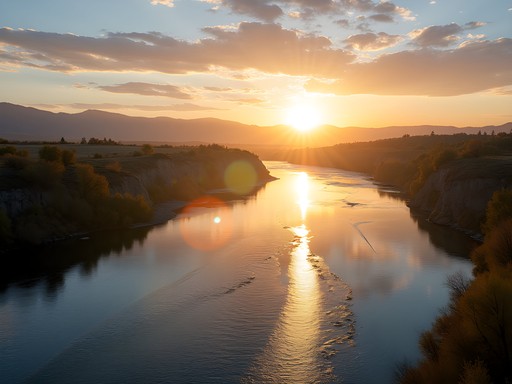
As the sun crested over the eastern highlands, the first rays illuminated Lake Victoria in the distance—a perspective that inverted the typical tourist gaze and transformed the famous lake into merely one element of a much grander landscape.

💡 Pro Tips
- Arrive at Kit Mikayi by 5:30 AM to catch the sunrise from the highlands behind it
- Negotiate guide fees before starting—expect to pay 1,000-2,000 KES for a half-day
- Bring at least 1.5 liters of water per person as the trails have no reliable water sources
The Nandi Hills: Following Ancient Trade Routes
The Nandi Hills, located northeast of Kisumu proper, present a completely different microclimate and geological story. These highlands have historically served as natural boundaries between different ethnic communities, and the ancient footpaths that crisscross them once facilitated trade between the lake-dwelling Luo and the highland Nandi people.
I dedicated two full days to exploring these hills, using public transportation (matatus) to reach the starting points—a budget-friendly approach costing roughly 200-300 KES per journey. What fascinated me was how the traditional settlement patterns followed almost identical principles to those I'd documented in highland Guatemala: communities positioned precisely at elevations that balanced access to water, defensive positioning, and agricultural potential.
The Nandi Hills trails range from gentle slopes to challenging ascents, but the intermediate hiker will find most routes manageable with proper preparation. I particularly recommend the trail beginning near Koibem village, which follows what locals confirmed was an ancient trade route. The path winds through small agricultural plots before ascending to viewpoints offering spectacular vistas across the Kavirondo Gulf.
I tracked my routes using my GPS hiking watch, which proved invaluable for recording elevations and distances while its solar charging capability meant I never worried about battery life during full-day hikes.
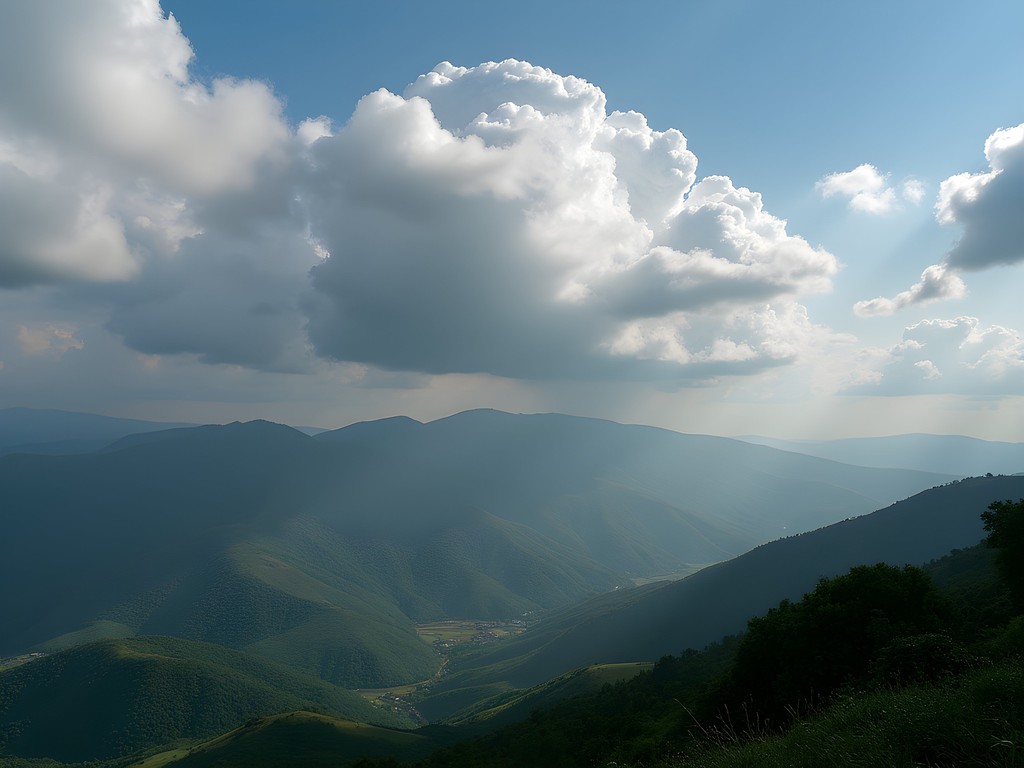
The weather patterns here are fascinating—mornings typically start clear before clouds build throughout the day. By mid-afternoon, brief rain showers often develop, following predictable patterns that ancient traders must have incorporated into their journey planning. October proved ideal for hiking these routes, with moderate temperatures and relatively dry conditions despite occasional afternoon showers.

💡 Pro Tips
- Start Nandi Hills hikes early (7-8 AM) to avoid afternoon rain showers
- Carry small denominations of Kenyan Shillings as village shops don't provide change for large bills
- Ask permission before photographing local agricultural practices or homes
Kajulu Hills: Where Archaeology Meets Elevation
The Kajulu Hills, located just east of Kisumu city, offered the perfect intersection of my archaeological interests and love for elevation. These hills harbor several sites with historical significance that remain largely overlooked by international visitors.
Accessing the Kajulu Hills requires either hiring a taxi (approximately 1,000-1,500 KES round trip) or taking a series of local matatus. I opted for the latter, spending just 400 KES total for transportation, though it required more time and basic Swahili communication skills.
What makes these hills particularly intriguing is the presence of ancient rock art sites that have received surprisingly little archaeological attention. Local guides can show you several rock shelters with faded ochre paintings that appear stylistically similar to those found in Tanzania's Lake Victoria region—suggesting possible cultural connections that spanned the lake centuries ago.
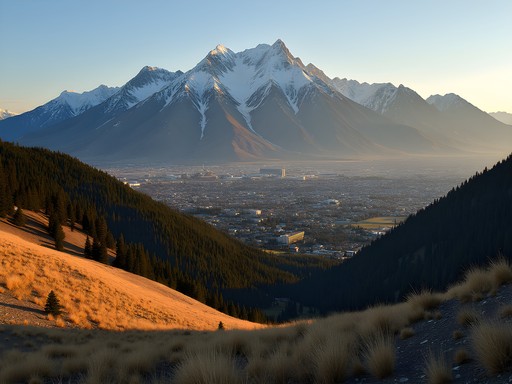
The most rewarding experience came from hiking to the top of Got Ramogi, one of the prominent hills in the range. The ascent takes approximately 2 hours at a moderate pace, following paths used by local herbalists who harvest medicinal plants from the hillsides. The summit offers a 360-degree view that encompasses both Lake Victoria and the surrounding highlands—a perspective that helps one understand why these elevated positions were strategically important throughout human history.
My trekking poles proved essential on the steeper sections, providing stability on loose surfaces and reducing strain during the descent. The cork handles remained comfortable despite the humid conditions that made plastic or foam alternatives slippery in my experience.
The Kajulu Hills also feature fascinating weathering patterns where seasonal water flows have carved distinct channels into the rock faces—creating natural collection points that would have been vital water sources for early inhabitants during dry seasons.

💡 Pro Tips
- Hire a local guide from Kajulu market for approximately 1,000 KES to locate the rock art sites
- Visit the hills on weekdays to avoid local weekend picnickers who sometimes leave trash behind
- Pack a light lunch to enjoy at the summit of Got Ramogi where the best views are found

The Gembe Hills: Off-Grid Solitude with Spectacular Rewards
For solo travelers seeking true solitude, the Gembe Hills southwest of Kisumu offer perhaps the most rewarding—though challenging—hiking experience in the region. These more distant highlands require commitment to reach but deliver unparalleled views and a profound sense of isolation that's increasingly rare in our connected world.
Reaching the trailhead involves a combination of matatu rides and potentially a bodaboda (motorcycle taxi) for the final stretch, totaling approximately 600-800 KES each way. I recommend arranging return transportation in advance, as passing vehicles are infrequent in this area.
The Gembe Hills trail system isn't formally maintained but follows clear paths used by local shepherds. What makes these hills particularly special is their unique geological composition—volcanic origins have created distinctive soil patterns that support specialized plant communities unlike those found in other highlands around Kisumu.
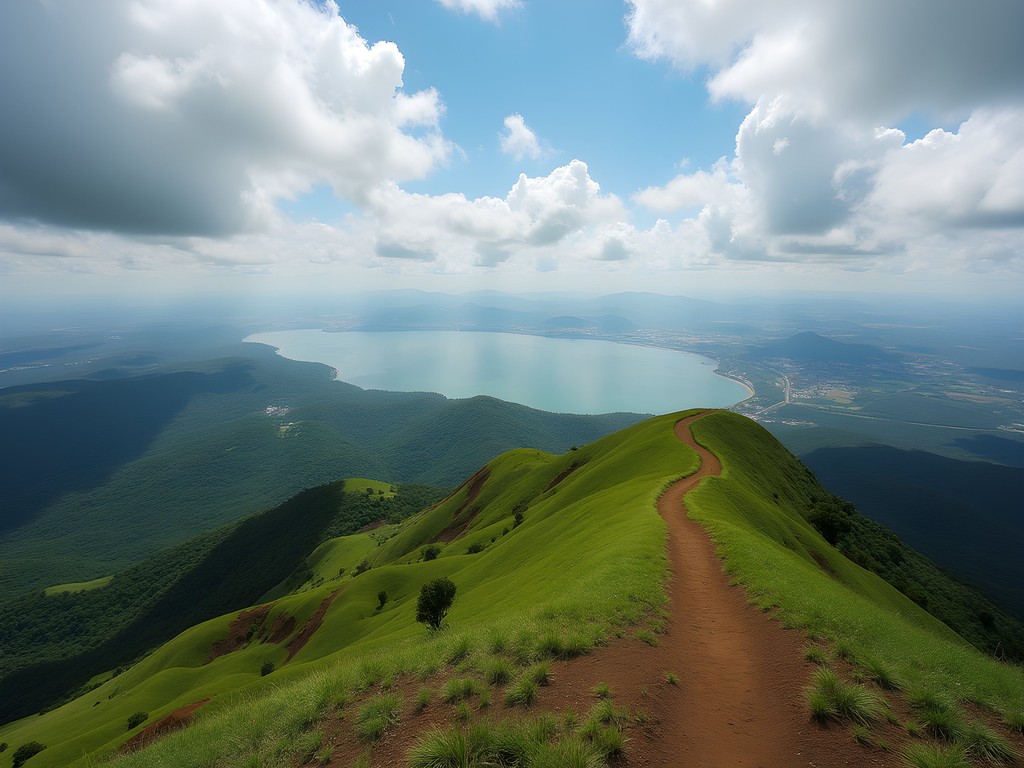
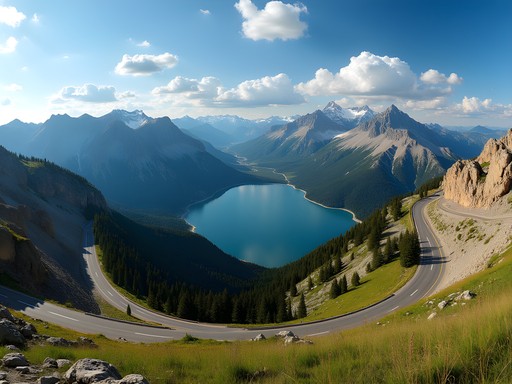
The most challenging but rewarding route ascends to a viewpoint locally known as 'God's Window,' requiring about 3-4 hours of hiking with significant elevation gain. From this vantage point, on clear days, you can see not only Lake Victoria but also distant mountains in Tanzania—a transnational perspective that reminds us how arbitrary political boundaries often are compared to the continuity of natural landscapes.
During my ascent, I encountered weather patterns that perfectly demonstrated why I've always been fascinated by microclimate variations. While Kisumu city was experiencing clear skies, the highlands had developed their own weather system with rolling fog banks that periodically obscured and then revealed the dramatic landscape below—creating an almost mystical atmosphere.
My merino wool base layer proved invaluable as temperatures dropped significantly with elevation gain. Unlike cotton or synthetic alternatives, the merino wool regulated temperature effectively even when I worked up a sweat during steeper sections, then kept me warm when resting in exposed, windy areas near the summit.
What struck me most about the Gembe Hills was the silence—a profound quiet broken only by wind and occasional birdsong that created space for reflection impossible to find in more trafficked areas.
💡 Pro Tips
- Pack extra water (minimum 3 liters) as there are no reliable water sources on these trails
- Download offline maps before departure as mobile reception is extremely limited
- Inform your accommodation of your hiking plans as a safety precaution given the remote location
Practical Considerations: Weather Patterns and Timing Your Visit
As someone who's spent decades observing how weather patterns influence both ancient settlements and modern travel experiences, I can confidently say that timing is everything when exploring Kisumu's highlands. The region experiences two primary rainy seasons: the 'long rains' from March to May and the 'short rains' from October to December.
My October visit coincided with the early phase of the short rains, which proved advantageous for several reasons. First, the occasional afternoon showers kept dust levels low, improving both visibility and breathing comfort on the trails. Second, the rain patterns were remarkably predictable—typically arriving between 2-4 PM and lasting 30-60 minutes—making it easy to plan hikes accordingly.
The intermediate difficulty rating I've assigned to Kisumu's mountain trails relates more to navigation challenges and weather variability than technical hiking demands. Most paths don't require specialized equipment beyond proper footwear and rain protection.
Temperature variations between Kisumu city and the highlands can be substantial. While daytime temperatures in the city often reach 29-32°C (84-90°F), the elevated trails can be 5-8°C cooler, with even greater drops during rain showers. This makes layering essential.
For budget solo travelers, accommodation options in Kisumu city provide the best base for daily excursions. I stayed at a simple guesthouse near the city center for approximately 2,000 KES per night, which included basic breakfast. This central location allowed easy access to matatu routes serving different trailheads.
Water safety is crucial in this region. Rather than repeatedly purchasing plastic bottles, I brought my water purifier which allowed me to refill from various sources when necessary. The integrated filter eliminated waterborne pathogens while reducing plastic waste—aligning with both health precautions and environmental responsibility.
💡 Pro Tips
- Plan to conclude hikes by 2 PM during rainy seasons to avoid afternoon showers
- Check local weather patterns upon arrival as seasonal variations can shift by several weeks
- Bring a lightweight rain jacket even on clear mornings as conditions can change rapidly at higher elevations
Final Thoughts
As I departed Kisumu after my week of highland exploration, I couldn't help but reflect on how these mountains—often overlooked in favor of the famous lake—embody the essence of thoughtful travel. Like the ancient civilizations I've studied throughout my career, the most rewarding discoveries often lie beyond the obvious attractions, requiring us to elevate our perspective both literally and figuratively. These trails offered not just physical challenges but windows into geological history, cultural exchange patterns, and the remarkable adaptations of both ancient and modern communities to their environments. Whether you're drawn to archaeological curiosities, seeking solitude, or simply wanting to experience Kenya beyond the standard tourist circuit, Kisumu's highlands reward the curious traveler with experiences that remain authentic and uncrowded. As climate patterns continue to shift globally, these microclimate-rich mountains may well become even more important refuges of biodiversity and human habitation—making now the perfect time to witness their splendor while supporting local guides who maintain traditional knowledge of these landscapes.
✨ Key Takeaways
- Kisumu's mountain trails offer uncrowded alternatives to typical Lake Victoria tourism
- October's early 'short rains' provide ideal hiking conditions with predictable weather patterns
- Local guides are essential for discovering archaeological sites and traditional knowledge
- Budget solo travel is highly feasible with public transportation and modest accommodation
📋 Practical Information
Best Time to Visit
June-July (dry season) or October (early short rains)
Budget Estimate
$30-50 USD per day including accommodation, transportation and food
Recommended Duration
5-7 days
Difficulty Level
Intermediate




Comments
backpackbuddy9404
Are these trails well marked or do you need a guide? Also any safety concerns hiking solo?
islandmaster
Kit Mikayi you can do solo easily. The others I'd recommend a guide, not so much for safety but because trails aren't always obvious and you'll learn way more about the area
Gregory Boyd
Excellent write-up. I trekked through western Kenya in 2024 and completely bypassed Kisumu thinking it was just a transit point. The connection you draw between these highlands and ancient trade routes is spot on - you can still see evidence of those pathways if you know where to look. For anyone planning this, accommodation in Kisumu town is quite affordable and the city makes a good base. I'd recommend spending at least 4-5 days to really explore these areas without rushing. The cultural context around Kit Mikayi alone deserves a full day. My hiking boots handled the rocky terrain perfectly on similar trails in the region.
smartrider9491
This is exactly what I've been looking for!! So tired of the same old safari and beach combo. Can't wait to explore these trails next month!
smartdiver17
What's the fitness level needed for these trails? Are they beginner friendly or more intermediate?
Gregory Boyd
Most of these are moderate - Kit Mikayi is quite accessible, Kajulu Hills has some steeper sections but nothing technical. If you can handle a few hours of walking with elevation gain you'll be fine.
islandmaster
If you're doing the Nandi Hills, start early morning. We made the mistake of going midday and it was brutally hot. Also the views at sunrise are supposed to be amazing though we missed that. Local guides at the base are super knowledgeable about the history and worth hiring.
Sarah Powell
Benjamin, this is such an important piece highlighting the interior landscapes around Kisumu. I visited Kajulu Hills last year and was struck by how few other tourists were there despite the accessibility and views. The archaeological sites you mentioned are fascinating - I spent time talking with a local guide who explained the Luo settlement patterns in the area. One thing I'd add for readers: the rainy season (March-May) makes some of these trails quite challenging, so dry season hiking is definitely preferable. The Gembe Hills sound incredible - adding that to my return itinerary.
smartrider9491
Thanks for the rainy season tip! Was planning April but might push it back now
explorechamp
Kit Mikayi is incredible
smartdiver17
How did you get there? Is it easy to find transport from the city center?
explorechamp
took a matatu from the main stage. about 30 min ride, cheap
happymood
Wow I had NO idea Kisumu had hiking!! Always just thought it was all about the lake. Definitely adding this to my list!!
Fatima Sims
Benjamin, your post brought back so many memories of my time in Kisumu! I spent three days exploring the Kajulu Hills last year and was blown away by how few tourists were there. One tip for anyone heading to these trails: the locals in the small villages along the way are incredibly welcoming, but it's good practice to ask permission before photographing people or their homes. Also, bringing small denominations of Kenyan shillings is helpful as there aren't ATMs once you leave Kisumu proper. The sunset view from the eastern ridge of Kajulu was one of my favorite moments in all my African travels - worth timing your hike to be there around 5-6pm!
wanderlustperson
Fatima, did you camp in the hills or head back to Kisumu each day? Trying to figure out the logistics for my trip next month!
Fatima Sims
I stayed in Kisumu and did day trips. There are some camping options in the Gembe Hills area if you're properly equipped, but for Kajulu and Nandi, day hikes worked perfectly. Just start early to maximize your time!
nomadseeker
Just got back from Kisumu last month and wish I'd seen this post before! We only did Kit Mikayi because we didn't know about these other trails. The local legends about the rock formation were fascinating though. Our guide told us all about how it got its name ('the stone of the first wife') and the traditional ceremonies still held there. Next time I'll definitely check out the Kajulu Hills - that archaeological angle sounds right up my alley. I used my hiking boots which were perfect for the terrain, especially after a bit of rain made things slippery.
Venture X
Premium card with 2X miles, $300 travel credit, Priority Pass