


Disclosure: This article contains affiliate links. We may earn a commission from purchases at no extra cost to you, which helps our travel content.
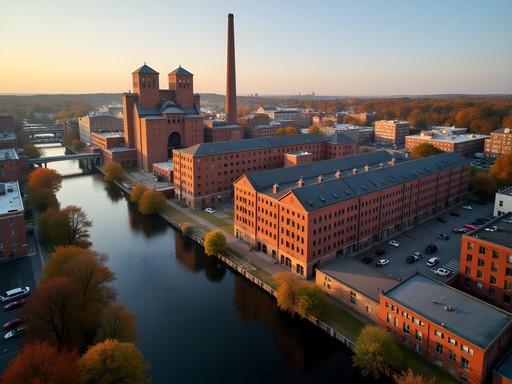
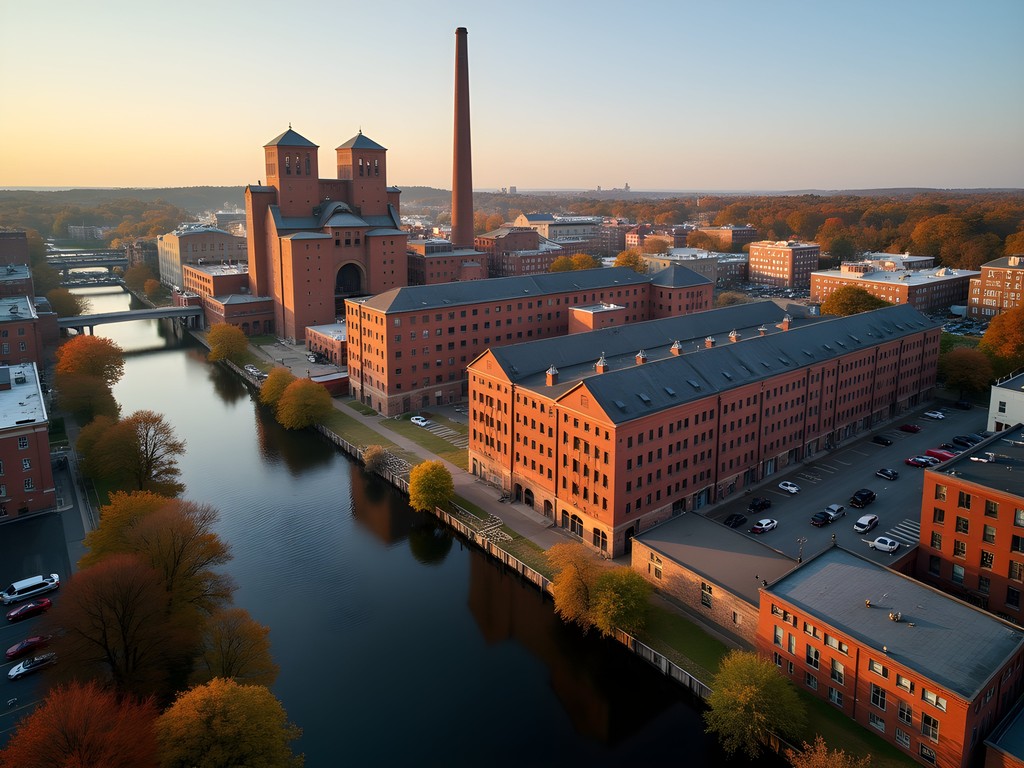
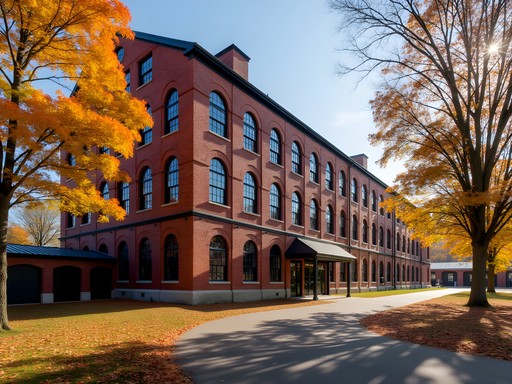
There's something quite familiar about mill towns that bridges continents. Standing on the banks of the Blackstone River, watching the autumn light play across the red brick facades of Woonsocket's historic mills, I couldn't help but see echoes of my childhood in Glasgow. These industrial cathedrals—once pulsing with the rhythms of looms and the shouts of workers—now stand as silent witnesses to a bygone era, waiting for someone to decode their stories. And if there's one thing this data scientist appreciates, it's extracting meaningful patterns from complex histories.

The Rise of Rhode Island's Mill Empire
Woonsocket wasn't always the quiet New England town you see today. In the 19th century, this modest riverside settlement transformed into an industrial powerhouse that helped shape America's manufacturing identity. The catalyst? Water power and immigrant ingenuity.
The Blackstone River—what locals once called 'America's hardest working river'—provided the crucial energy needed to power massive textile operations. Walking along the riverfront today, my engineer's eye can't help but appreciate the elegant problem-solving of these early industrialists. They harnessed natural energy flows with remarkable efficiency, decades before computational fluid dynamics could optimize their designs.
What truly sets Woonsocket apart, though, is its multicultural heritage. While documenting mill architecture with my laser measure, I struck up a conversation with a local historian who explained how French-Canadian workers formed the backbone of this industrial society. Nearly 70% of Woonsocket's population claimed French-Canadian heritage by 1900—creating a cultural island where French remained the predominant language well into the 20th century.
The technical precision of the mill operations combined with this unique cultural fabric created something truly special—a working-class renaissance that deserves far more attention than it typically receives in American history classes.

💡 Pro Tips
- Bring a small notebook to sketch architectural details you find interesting—they tell stories words often miss
- Visit early on weekdays to avoid weekend crowds and get better photos of the mill exteriors
- Look for the water power systems—the engineering is surprisingly sophisticated for its era
Museum of Work & Culture: A Digital Preservationist's Dream
If you're bringing students to Woonsocket, the Museum of Work & Culture is your essential first stop. Housed in a former textile mill (naturally), this museum does something rare in historical preservation—it presents industrial history through the lens of human experience rather than just machines.
As someone who's spent years developing machine learning algorithms to preserve cultural knowledge, I found their approach refreshingly holistic. The museum recreates environments from a 19th-century farmhouse in Quebec to a triple-decker tenement home and even a Catholic parochial school classroom.
I spent nearly three hours documenting the exhibits with my audio recorder, capturing the ambient sounds and oral histories that bring these spaces to life. What struck me most was how the museum doesn't shy away from the harsh realities of mill life—the dangerous working conditions, child labor, and labor struggles that defined this era.
For teachers bringing students, the interactive elements are brilliant for keeping young minds engaged. I watched a group of teenagers become completely absorbed in operating a simulated power loom, their faces showing the same mix of frustration and accomplishment that actual mill workers might have experienced a century ago.
The museum staff are incredibly knowledgeable and seemed genuinely chuffed when I asked detailed questions about how they're digitizing their collections. If you mention you're an educator, they'll provide specialized materials to help integrate the visit into your curriculum.

💡 Pro Tips
- Allow at least 2 hours to properly explore all exhibits
- The staff offer specialized tours for student groups with advance notice
- Don't miss the recreation of a union hall meeting—it's a powerful immersion into labor history
Walking the River: Industrial Archaeology on a Budget
One of the best ways to experience Woonsocket's industrial heritage costs absolutely nothing—perfect for educators working with tight budgets. The Blackstone River Bikeway and River Island Park offer spectacular views of the city's mill architecture while providing context for how the river shaped this community.
I spent a crisp autumn morning walking the route with my thermal mug filled with strong tea (some Scottish habits never die), mapping GPS coordinates of particularly interesting industrial remnants. The fall foliage creates a stunning contrast against the weathered brick of the mill buildings—your students will take brilliant photos without even trying.
What fascinates me as an engineer is how clearly you can trace the technological evolution along this riverfront. Early mills used direct mechanical power from water wheels, while later structures incorporated more sophisticated turbine systems and eventually steam power. It's like reading technological progress written in brick and stone.
For student groups, I'd recommend starting at Market Square and following the river north. The walk provides natural breaks for discussion, and the changing perspectives of the mills create perfect opportunities to discuss how industrial architecture evolved to maximize efficiency and production.
Bring along some river history cards to distribute among students—they provide excellent context about specific sites along the route and turn the walk into an interactive scavenger hunt of historical discovery.

💡 Pro Tips
- The path can get muddy after rain—proper walking shoes are essential
- Download the free Blackstone Valley mobile app for interactive maps and historical context
- Schedule your walk for early morning when the light makes the brick mills glow a remarkable shade of amber

Textile Treasures: Hands-On History Lessons
For a more tactile connection to Woonsocket's industrial past, seek out the remaining textile operations and specialty shops that still carry on the city's manufacturing tradition. These experiences provide students with tangible connections to abstract historical concepts.
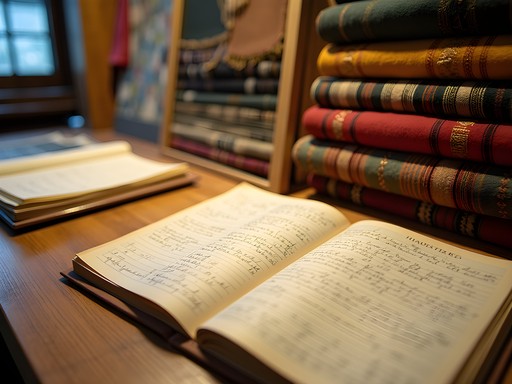
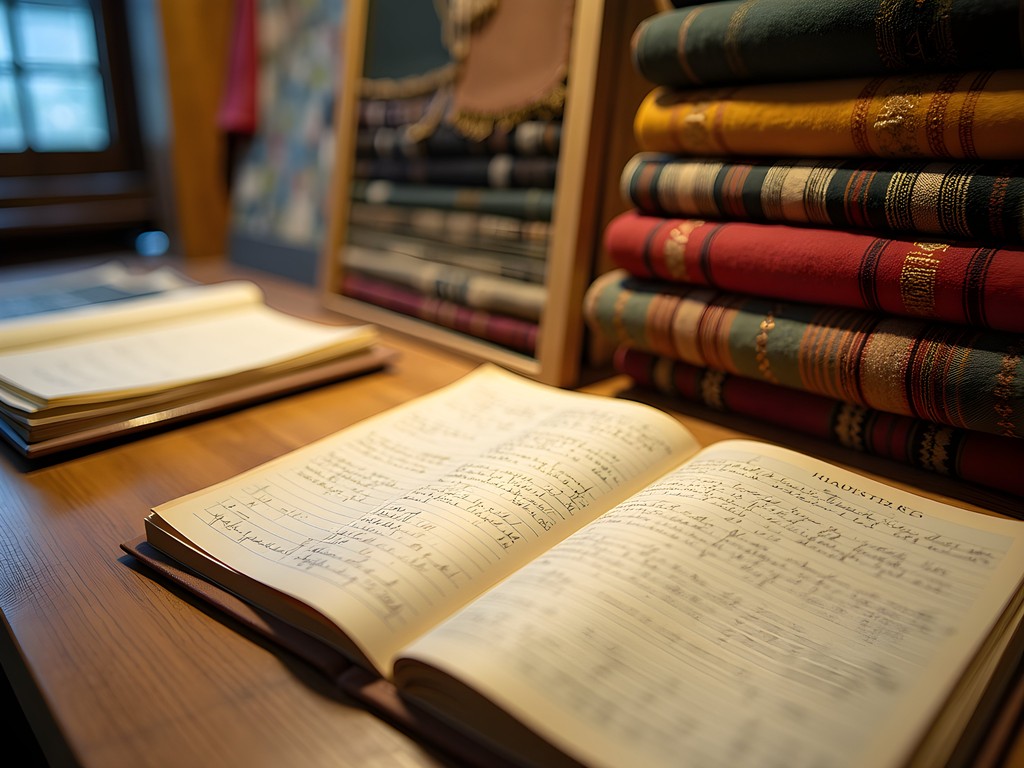
The American-French Genealogical Society, though focused on family histories, houses an impressive collection of textile samples and manufacturing tools that tell the story of technological innovation. I was particularly taken with their collection of pattern books showing how designs evolved over decades—a perfect illustration of how art and industry intersect.
For a truly memorable class activity, arrange a visit to one of the few remaining textile operations in the area. While the massive operations of the past are gone, several specialty textile producers continue Woonsocket's tradition. Seeing modern equipment alongside preserved vintage machinery creates powerful conversations about continuity and change in industrial processes.
I recommend bringing along a textile magnifier to examine fabric samples up close. The intricate weave patterns reveal the mathematical precision behind textile production—something that fascinates students with interests in both arts and sciences.
Before visiting, have students download period photographs of mill operations from the Library of Congress digital archives. Comparing these historical images with present-day sites creates a powerful before-and-after perspective that makes industrial history immediately relevant.
💡 Pro Tips
- Contact specialty textile shops at least two weeks in advance to arrange educational demonstrations
- Ask if students can handle sample materials—tactile experiences create stronger memories than visual ones alone
- Look for multilingual signage throughout Woonsocket—it reflects the city's French-Canadian heritage
Digital Preservation: Capturing History Before It Fades
As both an engineer and cultural preservation enthusiast, I can't help but view Woonsocket through the lens of digital conservation. The city's industrial heritage faces the same challenges I've encountered worldwide—physical structures deteriorate, oral histories are lost as generations pass, and documentation scatters to the winds.
Encourage your students to become active participants in preserving this history. I've found that young people bring fresh perspectives to historical documentation when given the right tools. For instance, I've been using a 360-degree camera to create immersive records of industrial spaces that may not survive another decade.
The Woonsocket Historical Society welcomes contributions to their digital archive—students can submit photographs, recorded interviews with longtime residents, or research projects. This transforms a simple field trip into meaningful community service.
What I find most compelling about Woonsocket is how clearly it demonstrates the cyclical nature of economic transformation. The city rose with the industrial revolution, suffered during deindustrialization, and now seeks new identity in a post-industrial world. These patterns repeat globally—I've documented similar transitions from Glasgow to Darwin.
Before leaving, take your group to the top floor of any publicly accessible mill building (the museum has an excellent vantage point). The panoramic view of the city reveals how completely the mills dominated not just the economy but the very geography of human settlement—a powerful visual lesson in how industry shapes communities.
💡 Pro Tips
- Create a shared digital collection where students can upload their photos and observations
- Reach out to the historical society before your visit—they often have volunteer guides available for educational groups
- Consider a simple oral history project where students interview older residents about their memories of the mills
Final Thoughts
As I packed away my gear and prepared for the journey back to Darwin, I couldn't help but reflect on how places like Woonsocket represent perfect fusion points for interdisciplinary education. Here, engineering meets anthropology, economics intertwines with art, and immigration narratives become inseparable from industrial innovation.
For educators bringing students to this forgotten industrial powerhouse, the greatest value lies in these intersections. Challenge your students to see beyond simple narratives of rise and decline. The true story of Woonsocket—like all industrial heritage—is one of human ingenuity, cultural adaptation, and communities shaped by technological change.
These red brick monuments to industry may be quieter now than in their manufacturing heyday, but with the right approach, they still speak volumes. Listen carefully along the Blackstone River, and you'll hear echoes of machines, multilingual conversations, and the persistent hum of human progress—a symphony of industrial heritage waiting to be decoded by the next generation. And if that's not worth a weekend of exploration, I dinnae ken what is.
✨ Key Takeaways
- Woonsocket offers an accessible, budget-friendly window into America's industrial revolution
- The multicultural aspects of the city's history provide excellent entry points for discussing immigration and labor history
- Digital preservation tools allow students to actively participate in documenting industrial heritage
- The compact nature of the historic district makes it ideal for walking tours with limited time
📋 Practical Information
Best Time to Visit
September-November
Budget Estimate
$150-300 per person for a weekend
Recommended Duration
1-2 days
Difficulty Level
Easy


Comments
wanderlustvibes
your photos are stunning!! the one with the sunset behind the mills is 🔥
Stephanie Romano
We took our kids here last summer and it was such a hit! I was worried they'd be bored (ages 8 and 11) but the hands-on textile demonstrations at the museum totally engaged them. They got to see how the looms worked and even try carding wool. The walking tour was great too - we made it into a scavenger hunt where they had to spot different architectural details. Pro tip: there's a great little cafe called River Falls Restaurant right near the museum that has kid-friendly options and the staff was super accommodating. It's refreshing to find historical sites that make industrial history accessible for families!
moonninja
the scavenger hunt idea is genius!
nomadclimber
is this doable without a car? trying to figure out if i can get there from providence easily
mountainway
RIPTA bus goes from providence, takes about an hour
Robert Moreau
Hunter, this brought back memories of my own mill town explorations through Lancashire a few years back. There's something haunting and beautiful about these industrial monuments, isn't there? The way you captured the light on those brick facades is stunning. I stayed at the Woonsocket Hilton last spring and was surprised by how walkable everything was. The Museum of Work & Culture reminded me so much of the People's History Museum in Manchester - that same dedication to telling workers' stories rather than just celebrating industrialists. Did you get a chance to explore any of the French-Canadian heritage sites? The Quebecois influence on the city's culture is fascinating.
skymaster
YES!! I've been to mill towns all over New England and Woonsocket is seriously one of the best preserved. The brick work is incredible and that riverside walk is gorgeous in fall. Did you make it to the Social?? It's this old social club building that's been converted and has amazing architecture.
wanderlustvibes
adding this to my list now!!
mountainway
Love this! Rhode Island is so underrated
moonninja
how long did you spend at the museum? planning a day trip from boston
Hunter Myers
I'd give yourself at least 2-3 hours for the Museum of Work & Culture. It's really immersive and you don't want to rush through the exhibits. The whole walking tour along the river took me another couple hours, so a full day from Boston would be perfect!
moonninja
awesome thanks!
moonlegend
Those brick facade photos are gorgeous!! Really captured the autumn light.
freebackpacker
Great post! Just wanted to add that parking near the museum is free which is awesome. Also there's a decent cafe nearby on Main St if you need lunch. The whole downtown area is pretty walkable.
Taylor Moreau
Excellent documentation of Woonsocket's heritage, Hunter. As someone who's covered industrial archaeology across the UK and Europe, I find the American mill town experience particularly compelling - the speed of industrialization and the immigrant story add unique dimensions. Your point about digital preservation resonates strongly. I've been working with several heritage sites on similar initiatives. The textile demonstrations you mentioned are brilliant for engagement. One tip for readers: if you're doing a broader New England industrial heritage tour, Lowell in Massachusetts pairs beautifully with Woonsocket for a weekend itinerary.
sunnyone
ooh lowell is on my list too! thanks for the pairing idea
Venture X
Premium card with 2X miles, $300 travel credit, Priority Pass