

Disclosure: This article contains affiliate links. We may earn a commission from purchases at no extra cost to you, which helps our travel content.
The moment I stepped onto Trinidad's cobblestone streets, my surveyor's heart skipped a beat. This perfectly preserved colonial town, nestled between the Escambray Mountains and the Caribbean Sea, represents one of the most extraordinary architectural time capsules I've encountered in my conservation work. Founded in 1514 by Spanish conquistador Diego Velázquez, Trinidad flourished during the sugar trade boom of the 18th and 19th centuries, leaving behind a legacy of stunning mansions, plazas, and churches that earned it UNESCO World Heritage status in 1988. As someone who spends her days measuring, documenting, and preserving historical structures across Italy, I found myself completely enchanted by Trinidad's distinct colonial character – a vibrant fusion of Spanish, French, and Caribbean influences that has miraculously survived both time and Cuba's complex political history. Join me for a weekend exploration of this architectural wonderland, where every façade tells a story and every courtyard whispers secrets of a bygone era.

Plaza Mayor: The Beating Heart of Colonial Trinidad
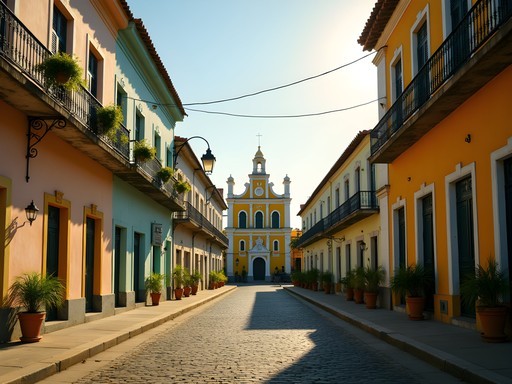
No exploration of Trinidad begins without spending time in Plaza Mayor, the town's historical and social nucleus that had me reaching for my measuring tools out of pure professional habit. This immaculately preserved square represents Cuban colonial urban planning at its finest – a central plaza surrounded by the homes of sugar barons who once controlled the region's vast wealth.
The plaza is dominated by the mustard-yellow Iglesia Parroquial de la Santísima Trinidad (Holy Trinity Church), whose simple exterior belies an impressive wooden altar and acoustics that still send shivers down my spine when I recall the impromptu choir practice I stumbled upon during my visit. As a surveyor specializing in historical structures, I was particularly impressed by the church's resilient construction, which has withstood centuries of tropical storms.
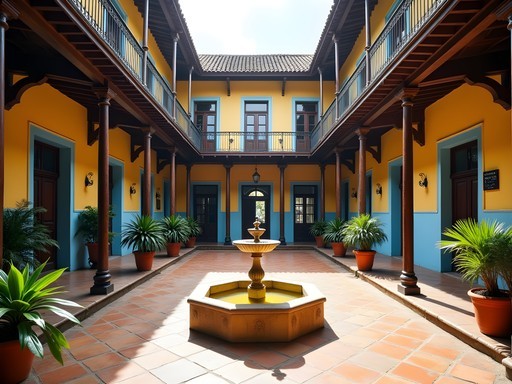
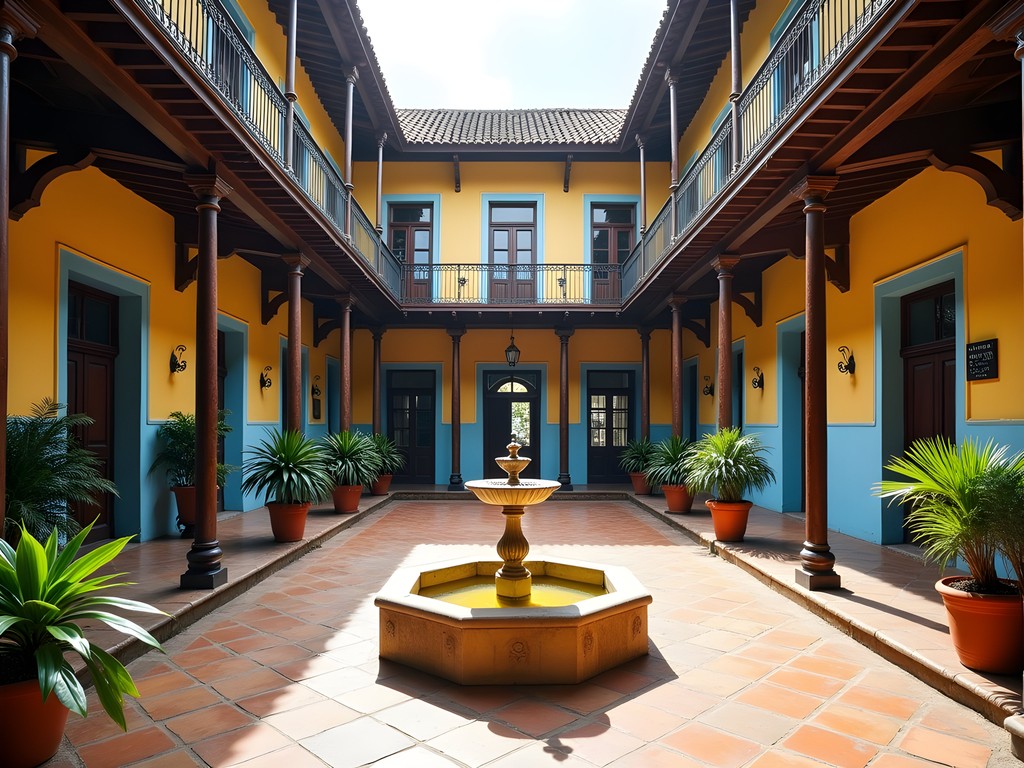
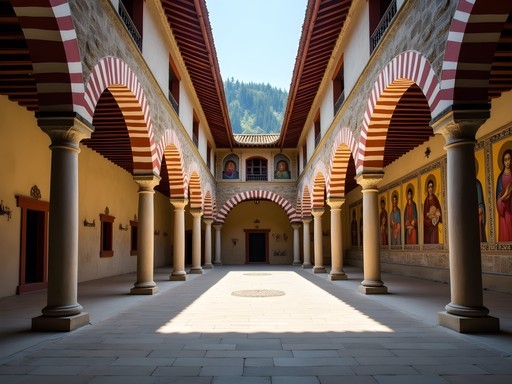
Surrounding the plaza are several architectural masterpieces, including the former Palacio Brunet, now housing the Romantic Museum. Here, I spent hours studying the traditional Cuban colonial floor plan – rooms arranged around a central courtyard that provides natural ventilation in the tropical climate, a sustainable design principle that predates modern air conditioning by centuries.
To truly appreciate the plaza's magnificence, I recommend climbing the bell tower at the Museum of the Fight Against Bandits (housed in the former Convento de San Francisco de Asís). The 360-degree views reveal Trinidad's perfect positioning between mountains and sea, and the harmonious urban layout that has remained largely unchanged since colonial times.

💡 Pro Tips
- Visit Plaza Mayor early morning or late afternoon to avoid both crowds and the intense midday heat
- Many museums charge a small camera fee (2-5 CUC) if you want to take photos inside
- Look for the original colonial street lamps that were converted from gas to electric but maintain their historical appearance
The Architectural Language of Sugar Wealth
Trinidad's architecture tells the story of its economic boom with every ornate detail and imported material. As someone who documents historical structures professionally, I was fascinated by how clearly one could read the town's economic timeline through its buildings.
The sugar aristocracy's mansions feature distinctive elements that I began to catalog mentally: elaborate wrought-iron grilles (rejas) protecting windows while allowing breezes; interior courtyards (patios) with fountains; high ceilings with wooden beams; and most distinctively, the half-moon shaped stained-glass windows called mediopuntos that filter Trinidad's intense sunlight into kaleidoscopic patterns across terra-cotta floors.
Casa Aldeman Ortiz on Plaza Mayor exemplifies this opulence perfectly. I spent an entire afternoon sketching its neoclassical details and studying how the building adapted European architectural ideals to a Caribbean climate. The owner's original German crystal chandelier still hangs in the main salon – a testament to the wealth that once flowed through Trinidad's streets.
For those interested in documenting architectural details themselves, I highly recommend bringing a portable sketchbook and a travel watercolor set. Trinidad's colorful facades practically beg to be painted, and I filled nearly half my sketchbook during my weekend stay.
Don't miss the Palacio Cantero (now the Municipal History Museum), where you can explore the full layout of a sugar baron's mansion. The architectural highlight is its magnificent central staircase made from Cuban marble and precious woods – a structure I would love to properly survey one day with modern equipment to understand how it has maintained its stability for two centuries.
💡 Pro Tips
- Look for the original Carrara marble floors imported from Italy in many mansions – they're identifiable by their distinctive veining patterns
- Notice how buildings incorporate cooling features like interior fountains and strategically placed windows for cross-ventilation
- Many buildings feature a mix of architectural styles as they were modified over generations – try to spot the chronological layers
Valle de los Ingenios: The Economic Engine Behind Trinidad's Splendor
Just a few kilometers outside Trinidad lies the Valle de los Ingenios (Valley of the Sugar Mills), another essential component of this UNESCO World Heritage site. As a conservationist, I was eager to explore this landscape that directly funded Trinidad's architectural marvels.
The valley once contained over 50 sugar mills and sprawling plantations that produced immense wealth through the exploitation of enslaved labor. Today, the ruins of these once-mighty industrial complexes dot the lush landscape, offering a sobering counterpoint to the opulence of Trinidad's town center.
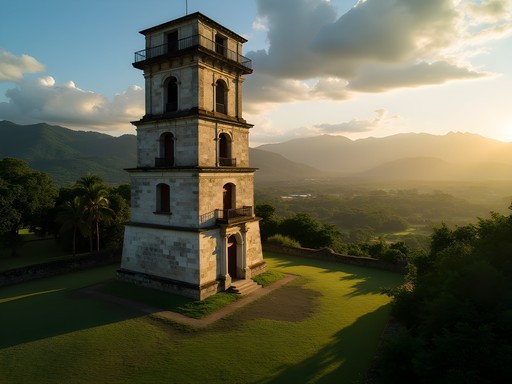
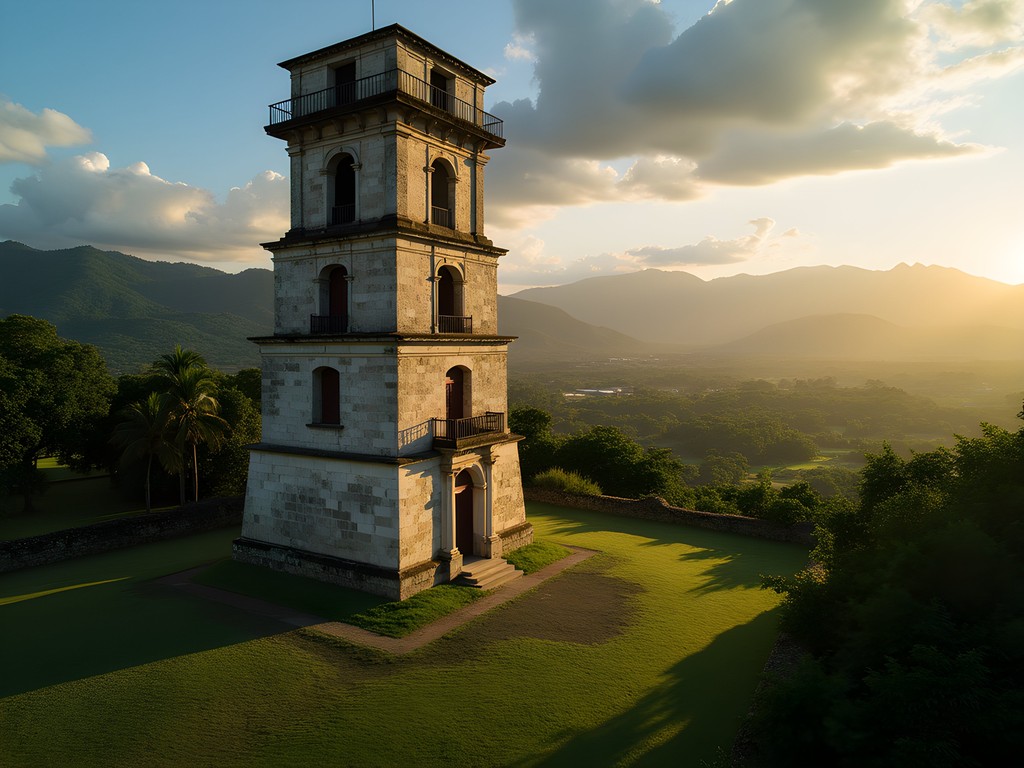
I hired a local guide with deep knowledge of the area's industrial heritage to take me through the valley. We traveled in a restored 1950s American car – practically the national vehicle of Cuba – stopping at key sites including the Manaca Iznaga estate. Here stands the iconic 45-meter tower that once served as a lookout over enslaved workers in the fields. I climbed its narrow spiral staircase, each step worn by centuries of use, to reach a vantage point that reveals the full extent of what was once one of Cuba's most productive sugar regions.
The preservation challenges here differ dramatically from those in Trinidad proper. While the town benefits from continuous habitation and tourism revenue, many valley structures are slowly returning to the earth, creating complex conservation dilemmas about which elements of this difficult history should be preserved and how.
For transportation to and around the valley, I recommend arranging either a classic car tour or taking the vintage steam train that runs through the valley (though its schedule can be unpredictable). Wear sturdy shoes and bring a compact binoculars to spot details in distant ruins and the abundant bird life that now inhabits these former plantations.
💡 Pro Tips
- Visit early in the day before the valley gets too hot – there's minimal shade at many sites
- Bring cash for entrance fees to individual sites as credit cards aren't widely accepted
- Consider hiring a local guide who can explain the complex industrial processes once used in sugar production

Conservation Challenges and Triumphs in Trinidad
As a surveyor who specializes in historical structures, Trinidad presents a fascinating case study in preservation. The town exists in a unique conservation bubble – economic hardship and Cuba's political isolation ironically helped preserve its colonial architecture by preventing modern development that might have otherwise replaced historic buildings.
Walking Trinidad's streets with my professional eye, I noticed the ongoing battle between preservation and deterioration. Many buildings display expert restoration work, particularly around Plaza Mayor where tourism dollars have funded meticulous conservation. The Office of the Conservator of the City (Oficina del Conservador) has done remarkable work with limited resources, developing innovative techniques to maintain original features while making structures habitable for modern life.
I was fortunate to meet with a local conservation specialist who explained their approach to maintaining the distinctive Cuban wooden roofing system called alfarjes – complex wooden frameworks that support tile roofs while allowing for expansion in the tropical heat. These technical solutions developed locally represent sustainable preservation approaches that don't rely on expensive imported materials.
Further from the tourist center, however, I observed buildings in various states of beautiful decay. Crumbling façades reveal construction methods from centuries past – layer upon layer of history visible in a single cracked wall. For the architectural enthusiast, these unrestored buildings often tell more authentic stories than their perfectly maintained counterparts.
One evening, I attended a community meeting where residents discussed the challenges of living in protected historic homes. The conversation revealed the tension between preservation regulations and modern needs – a universal conservation dilemma I've encountered from Florence to Philadelphia. Trinidad is navigating this balance remarkably well, allowing residents to maintain historic exteriors while sensitively modernizing interiors.

💡 Pro Tips
- Look for buildings displaying the small bronze plaques that indicate protected status under Trinidad's conservation program
- Respect private homes – many beautiful buildings are still residential despite their historical significance
- Support local conservation by visiting museums that funnel entrance fees into preservation efforts
Beyond the Postcard: Trinidad's Living Heritage
Trinidad is far more than a museum piece – it's a living, breathing community where daily life unfolds against an extraordinary historical backdrop. My most meaningful experiences came from interactions with Trinitarios who continue centuries-old traditions while adapting to contemporary realities.
Each morning, I started my day at a local panadería (bakery) where the bread is still baked in colonial-era wood-fired ovens. The baker explained how his family has maintained traditional recipes for generations, with subtle modifications necessitated by changing ingredient availability through Cuba's complex economic history.
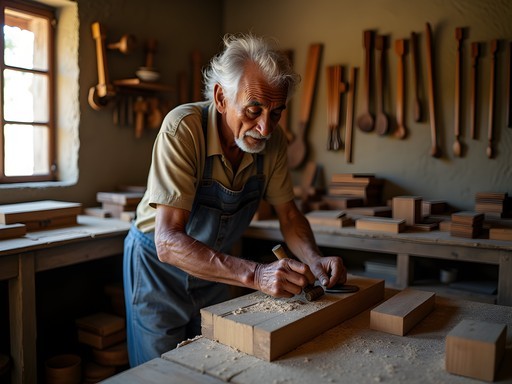
Trinidad's craftsmanship tradition remains vibrant, particularly in woodworking and textiles. I spent hours in the workshop of a furniture maker who creates pieces using the same joinery techniques employed in Trinidad's colonial-era buildings. His careful attention to historical accuracy while creating functional modern pieces perfectly embodied the town's balance between preservation and progress.
For textile enthusiasts, Trinidad's tradition of handmade crochet and embroidery is displayed in shops throughout town. The distinctive open-work technique called punto de Trinidad represents a cultural fusion of Spanish, African, and indigenous influences. I purchased a small tablecloth directly from the artisan who created it – a tangible connection to Trinidad's living heritage that now decorates my Florence apartment.
To document these experiences and the architectural details that captivated me professionally, I relied on my travel camera. Its compact size didn't intimidate local artisans, yet it captured the intricate details of both buildings and craftsmanship in remarkable clarity.
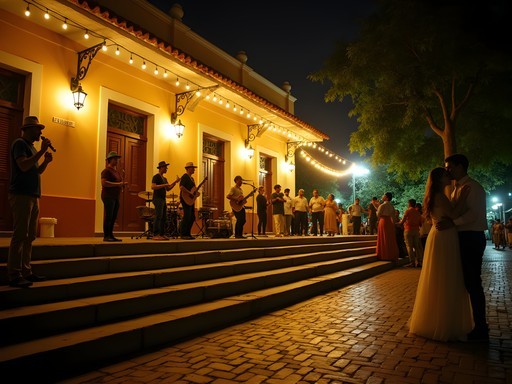
Each evening, I joined locals and visitors alike at Casa de la Música, an outdoor staircase where live music plays nightly. Watching residents of all ages dance salsa and son against the backdrop of colonial architecture perfectly illustrated Trinidad's remarkable cultural continuity – a town that honors its past while fully inhabiting its present.

💡 Pro Tips
- Learn a few Spanish phrases to connect with local artisans and hear their stories about traditional techniques
- Visit workshops early in the day to see craftspeople at work before they focus on selling to tourists
- Ask permission before photographing people at work – most are proud to share their crafts but appreciate the courtesy
Final Thoughts
As my weekend in Trinidad drew to a close, I found myself already planning a return visit with my surveying equipment to properly document some of the architectural features that most captivated me. Trinidad represents a conservation success story with valuable lessons for my work in Italy – proving that with community commitment and thoughtful stewardship, historical treasures can remain both authentically preserved and vibrantly alive. The town's ability to maintain its architectural integrity while adapting to modern needs offers a blueprint for sustainable heritage management worldwide. Whether you're an architecture enthusiast, a history buff, or simply someone who appreciates beauty, Trinidad rewards careful observation and unhurried exploration. Look beyond the postcard views to discover the technical ingenuity, cultural resilience, and ongoing conservation efforts that make this UNESCO site truly exceptional. Trinidad isn't just preserved in amber – it's evolving with respect for its past and hope for its future.
✨ Key Takeaways
- Trinidad's UNESCO status protects one of the best-preserved colonial towns in the Caribbean, offering insights into 18th and 19th-century architecture and urban planning
- The town's preservation success stems from a combination of historical circumstances and dedicated conservation efforts that balance authenticity with livability
- Beyond architecture, Trinidad's living heritage of craftsmanship and cultural traditions provides a deeper understanding of colonial influences that continue to shape Cuban culture
📋 Practical Information
Best Time to Visit
November through April offers pleasant temperatures and lower humidity
Budget Estimate
$70-120 USD per day including accommodations, meals, and activities
Recommended Duration
2-3 days minimum to explore thoroughly
Difficulty Level
Moderate (Cobblestone Streets And Hill Climbs Require Good Mobility)


Comments
Savannah Torres
This brings back such wonderful memories! We took our kids (8 and 11) to Trinidad last year, and they were surprisingly engaged with the history. The local guide we hired made all the difference - she told stories about pirate attacks and sugar barons that kept them fascinated. For families considering this trip, I'd recommend staying in a casa particular rather than a hotel - our host made special meals for the kids and even taught them basic Spanish phrases. The Museum of Colonial Architecture was surprisingly kid-friendly too with its interactive elements. Great post highlighting the preservation efforts - it's so important for these treasures to be maintained for future generations!
winterlover
Do you remember the name of your guide? We're planning to go with our nephew next year!
Savannah Torres
Her name was Marisol and she was wonderful! I don't have her direct contact info anymore, but we booked through our casa particular host at Casa Colonial El Patio in the center of town. They should know her!
sunnygal
Love the colors in Trinidad! So vibrant!
starphotographer
Your architectural photos are stunning! What lens did you use for those detail shots of the ironwork? I'm heading there next month and trying to decide what gear to bring. Also wondering if you found it safe to walk around with camera equipment?
Aaliyah Evans
Thanks! I used my zoom lens for most shots. Trinidad felt very safe for photography - just the usual precautions. The locals were actually really proud to have their buildings photographed!
winterlover
We visited Trinidad last December and found it less crowded than Havana. Definitely recommend taking a horse-drawn carriage tour - our guide knew all the hidden architectural gems and stories behind the buildings. The Casa de la Música was also amazing for evening entertainment after exploring all day. Just bring a good guidebook since internet can be spotty there!
Sage Dixon
Your post brought back so many memories! I visited Trinidad last year and was equally mesmerized by the architectural details. The contrast between the grand colonial mansions and the humble homes was striking. My favorite discovery was actually in Valle de los Ingenios - climbing the Manaca Iznaga tower at sunset and seeing the entire valley bathed in golden light. It really drives home the complex history of the region. Did you get a chance to visit any of the small pottery workshops? The local artisans are keeping traditional techniques alive that date back centuries.
Aaliyah Evans
I did visit a few workshops! The ceramics tradition there is incredible. And that sunset view from Manaca Iznaga is magical - I actually mention it briefly in the full article. Next time I want to stay overnight in the valley to really explore more thoroughly.
islandbackpacker
Those blue buildings are stunning! Added to my bucket list!
wavestar4469
Beautiful post! Did you find it difficult to get good photos without crowds in Plaza Mayor? Going in January and wondering about the best time of day to visit.
Aaliyah Evans
Early morning is definitely your friend! I was out by 6:30am and had the plaza almost to myself for about an hour. The light is gorgeous then too - perfect for photography.
wavestar4469
Thanks so much! Setting my alarm early then!
cuban_heritage_lover
As a Cuban-American, I really appreciate how respectfully you've portrayed Trinidad's history. Thank you!
Jennifer Rodriguez
For anyone planning to visit Trinidad, I'd recommend allocating at least 3 full days to properly experience both the town and Valle de los Ingenios. The lighting for photography is best early morning (7-9am) when the streets are less crowded and the golden light hits the colorful facades. Also, consider staying in a casa particular rather than a hotel - many are in beautifully restored colonial buildings and offer an authentic experience with local hosts who can provide historical context you won't get elsewhere.
freewalker
Totally agree about the casa particular recommendation! We stayed in one near Plaza Mayor with these amazing original ceiling beams and a courtyard. The host made us the best breakfast every morning!
history_buff_tom
The connection between sugar wealth and architecture is fascinating. Really enjoyed this perspective!
Venture X
Premium card with 2X miles, $300 travel credit, Priority Pass