



Disclosure: This article contains affiliate links. We may earn a commission from purchases at no extra cost to you, which helps our travel content.
When the blockchain ecosystem feels like it's closing in around you, there's nothing like stepping into a place where history's distributed ledger is written in stone, wood, and sugar cane. St. John's, Antigua presents a fascinating historical repository—a place where colonial powers once competed for Caribbean supremacy and where the painful legacy of sugar plantations exists alongside stunning natural beauty. Having spent the past week exploring this captivating capital with a fellow developer friend, I've compiled a comprehensive breakdown of St. John's historical treasures. Whether you're a history buff or simply seeking a winter escape with cultural depth, St. John's offers an accessible yet profound journey through time that deserves a spot in your travel execution plan.

Nelson's Dockyard: A Naval Code Legacy
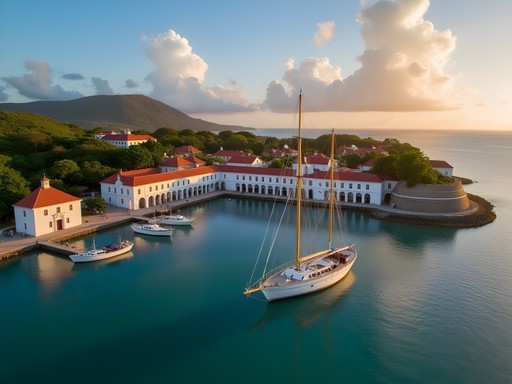
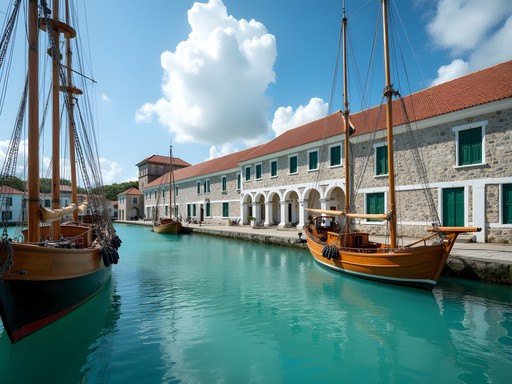
Nelson's Dockyard isn't just another historical site—it's essentially a perfectly preserved Git repository of 18th and 19th-century naval architecture. As a UNESCO World Heritage site, this Georgian-era naval base has maintained its structural integrity with remarkable fidelity to the original codebase, so to speak.
Walking through the dockyard feels like traversing a timeline where British naval dominance was systematically constructed. The precision of the stonework reminds me of well-architected blockchain solutions—built to withstand the tests of time and external pressures. Admiral Horatio Nelson himself was stationed here from 1784 to 1787, overseeing operations in a facility that served as both a defensive stronghold and a maintenance hub for the fleet.
What struck me most was how the restoration work has been implemented with such attention to historical accuracy while still allowing for modern functionality. The old sail loft now houses a fascinating museum, while former naval officers' quarters have been transformed into hotels, restaurants, and shops without compromising their architectural integrity.
For the best experience, I'd recommend bringing the travel binoculars I carried. They were invaluable for spotting architectural details high on buildings and examining the harbor views that made this location so strategically valuable to the British Navy.

💡 Pro Tips
- Visit early in the morning (before 9 AM) to avoid cruise ship crowds and capture the best light for photography
- The Dockyard Museum offers an excellent audio guide worth the extra $5
- Book a guided tour with a local historian rather than self-guiding—the contextual information transforms your understanding
Betty's Hope: Decoding the Sugar Plantation System
Betty's Hope presents a stark counterpoint to the naval glory of Nelson's Dockyard. This former sugar plantation operates as a crucial node in understanding Antigua's complex colonial past—one built on the exploitation of enslaved Africans and the ruthless pursuit of profit through sugar production.
Established in 1651, Betty's Hope functioned like an early industrial algorithm: inputs of forced labor and agricultural techniques yielded outputs of valuable sugar and rum that fueled the British Empire's economic engine. Today, the restored twin windmills stand as monuments to both human ingenuity and human cruelty.
My partner and I spent a contemplative afternoon here, tracing the production flow from cane field to processing center. The on-site museum does an admirable job of presenting both the technical aspects of sugar production and the human cost of the plantation system. The juxtaposition is powerful—ingenious mechanical systems alongside documentation of the brutal conditions endured by enslaved people.
The site requires substantial walking under the Caribbean sun. My sun hat proved essential for protection while exploring the grounds. Its wide brim and moisture-wicking fabric kept me comfortable throughout the visit, allowing me to focus on absorbing the site's complex history rather than dealing with sun exposure.
What's particularly striking about Betty's Hope is how it doesn't shy away from the contradictions of colonial history. The technological achievements are presented alongside their human costs, creating a nuanced picture that refuses simple narratives.

💡 Pro Tips
- Visit during weekdays to have a more solitary, reflective experience
- The site has limited shade, so bring sun protection and plenty of water
- Take time to read all the interpretive displays—they provide crucial context
St. John's Cathedral: Architectural Exception Handling
Rising above the St. John's skyline, the baroque towers of St. John's Cathedral function as a sort of architectural exception handler—a structure that has repeatedly fallen and been rebuilt, each iteration incorporating elements of the past while adapting to new conditions.
The current cathedral is actually the third iteration on this site. The first was constructed in 1683, followed by rebuilds in 1745 and the current structure in 1845. Each version has had to contend with the challenging environmental conditions of the Caribbean—earthquakes, hurricanes, and the relentless tropical climate.
What fascinated me from a technical perspective was how the builders implemented resilience patterns in the design. The current structure incorporates earthquake-resistant features that were quite advanced for the 19th century. The interior wooden ceiling is constructed like an inverted ship's hull, showcasing the crossover between naval and ecclesiastical architecture in colonial settings.
The cemetery surrounding the cathedral contains graves dating back to the 1700s, with inscriptions that tell stories of colonial administrators, naval officers, and prominent local families. It's essentially a physical database of the island's colonial elite, though notably absent are records of the enslaved people who formed the majority of the population.
During our visit, we were fortunate to witness a local choir practicing inside. The acoustics are remarkable—another testament to the architectural sophistication of the space. The cathedral remains an active place of worship, so respectful visiting during non-service hours is recommended.

💡 Pro Tips
- Check service times before visiting to avoid disrupting worship
- Look for the carved figures at the church entrance representing St. John the Divine and St. John the Baptist
- Bring small change for the donation box that supports the ongoing restoration efforts

Museum of Antigua and Barbuda: Curating the Historical Dataset
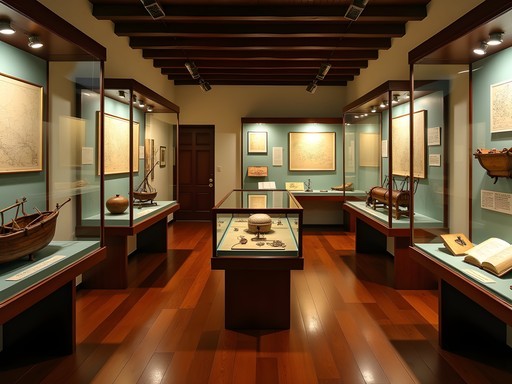
Housed in the colonial-era courthouse building dating from 1750, the Museum of Antigua and Barbuda functions as the central repository for the island's historical dataset—from pre-colonial Arawak artifacts to independence-era documents.
What impresses me most about this museum is how it manages to present a comprehensive timeline with relatively limited resources. The curation is thoughtful, presenting artifacts in context rather than as isolated curiosities. The museum begins with geological formations and early indigenous settlements, creating a complete historical stack rather than focusing exclusively on the colonial period.
The most compelling exhibits deal with the transition from slavery to emancipation and eventually to independence. These exhibits don't shy away from difficult historical truths but present them with appropriate gravity and context. There's a particularly moving display of personal items belonging to enslaved individuals that humanizes what could otherwise become abstract historical narrative.
For photography enthusiasts like myself, the museum's lighting conditions can be challenging. My travel tripod proved invaluable for capturing clear images of artifacts without flash (which isn't permitted in most areas). It's compact enough to carry all day but sturdy enough for the small camera I typically travel with.
The museum staff are exceptionally knowledgeable and eager to share insights that go beyond the written displays. I had a fascinating conversation with a curator about how traditional boat-building techniques have persisted from colonial times to the present day, with knowledge passed down through generations of Antiguan craftspeople.

💡 Pro Tips
- Allow at least 90 minutes to properly explore all exhibits
- Visit on Thursdays when local historians often give impromptu talks
- The gift shop offers locally authored history books you won't find elsewhere
Fort James: Defensive Infrastructure at the Harbor Entrance
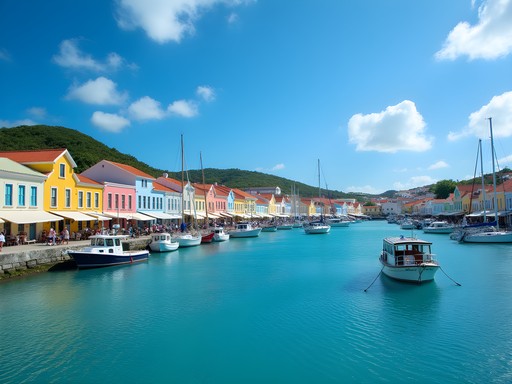
Standing guard at the entrance to St. John's Harbor, Fort James represents a classic example of defensive infrastructure deployment—positioned for maximum strategic advantage with overlapping fields of fire to protect the valuable harbor beyond.
Built in the early 18th century to defend against French attacks, Fort James is smaller and less restored than Nelson's Dockyard but offers a more intimate connection with military history. The fort's position provides spectacular views across the harbor to more modern cruise ship facilities, creating a striking juxtaposition of colonial past and tourist-driven present.
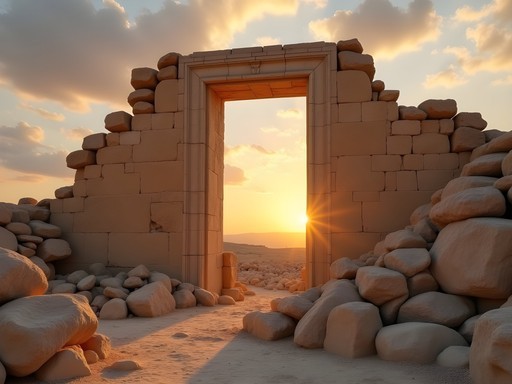
What remains today are impressive stone walls, several cannons in their original positions, and the powder magazine. The site has a pleasantly untamed quality—less manicured than other historical attractions, which lends it an authenticity that more polished sites sometimes lack.
I spent a sunset hour here capturing time-lapse footage of boats moving through the harbor entrance, imagining how this same view would have been anxiously monitored by British soldiers watching for enemy sails on the horizon. The changing light on the weathered stone creates exceptional photography opportunities.
While exploring the fort's perimeter, I discovered a local guide offering unofficial tours. His knowledge of not just the fort's official history but also local legends and stories passed down through generations added dimensions that no guidebook could provide. These impromptu connections often yield the richest travel experiences—the human element that contextualizes the stone and mortar.

💡 Pro Tips
- Visit late afternoon for the best lighting conditions and fewer visitors
- The fort has minimal facilities, so bring water and sun protection
- Wear sturdy shoes as the terrain is uneven and can be slippery after rain
Final Thoughts
St. John's historical sites function like a well-documented codebase—each structure and artifact building upon the others to create a comprehensive understanding of Antigua's colonial past. The city offers couples a perfect balance of educational immersion and romantic tropical setting, especially during winter months when the weather is ideal and the historical sites are less crowded. What makes St. John's unique is how it doesn't sanitize its history; instead, it presents the full complexity of colonial heritage—the engineering achievements alongside the human costs, the architectural beauty alongside the systems of exploitation. As you plan your own exploration of this fascinating destination, remember that understanding the past is the first step toward building a more equitable future—something I've found to be true in both travel and technology. When will you deploy your own journey to this remarkable historical crossroads?
✨ Key Takeaways
- St. John's offers accessible yet profound historical experiences perfect for couples seeking cultural depth in a tropical setting
- The city's colonial sites present both British naval history and the sugar plantation economy with nuance and context
- Winter visits provide ideal weather conditions and fewer crowds at major historical attractions
- Local guides often provide invaluable context that transforms understanding of historical sites
📋 Practical Information
Best Time to Visit
December through April (dry season)
Budget Estimate
$150-250 per day for couples (mid-range)
Recommended Duration
5-7 days
Difficulty Level
Beginner


Comments
adventurezone
Great photos!
beachfan
Is this easy to reach without a rental car? We prefer not to drive on our trips
roamking
Taxis are pretty affordable there. Nelson's Dockyard is a bit far for public transport but doable
Hunter Thompson
Brilliant write-up Gary! I've been to a few Caribbean islands but St. John's really does have something special with how intact the historical sites are. The blockchain/tech analogies throughout your post are pretty clever too haha. Quick question - did you hire a guide or explore on your own? I'm heading there in a few months and debating whether a guided tour adds enough value or if the sites are self-explanatory enough.
Gary Spencer
Thanks Hunter! I did both actually - self-guided at Betty's Hope and the cathedral, but took a guided tour at Nelson's Dockyard. The guide definitely added context and stories you wouldn't get from just reading plaques. Worth it for at least one site!
summerace
OMG YES!!! We spent three days exploring all these sites last winter and it was absolutely incredible! The cathedral is STUNNING and the museum has so much more than I expected. Pro tip: go to Betty's Hope early morning before it gets too hot - there's zero shade out there. Also the little gift shop at Nelson's Dockyard has beautiful local art if you're looking for souvenirs!
roamking
Love this! St. John's is so underrated
Frank Garcia
Really interesting comparison between the naval and plantation histories here. I visited last year and what struck me most was how Betty's Hope doesn't sugarcoat (pun intended) the brutal reality of the plantation system. The interpretive signage does a solid job contextualizing the economic drivers behind the sugar trade and its human cost. Did you get a chance to climb up the windmill tower? The view across the old cane fields really drives home the scale of these operations.
summerace
The windmill view is AMAZING! totally agree about the signage
wanderlustdiver8298
How long did you spend at Nelson's Dockyard? Planning a day trip from our resort and trying to figure out timing!
Gary Spencer
I'd budget at least 2-3 hours to really explore the dockyard properly. The museum alone is worth an hour, and you'll want time to walk around the restored buildings and grab lunch at one of the waterfront spots.
wanderlustdiver8298
Perfect, thanks so much!
Sage Dixon
What a fantastic historical deep-dive, Gary! Your comparison of St. John's history to a well-documented codebase really resonates. During my visit last year, I had an incredible experience when I met an elderly gentleman at St. John's Cathedral whose ancestors had actually worked on the sugar plantations. He shared family stories passed down through generations that no history book could capture - the human element behind all this impressive architecture. If you're visiting, I suggest setting aside some time to simply sit in the local cafes and talk with residents. Their personal connections to these historical sites add layers of understanding that go beyond what you can see with your eyes. Also, don't miss the smaller historical exhibits around town - they're less crowded than the main attractions but often hold the most fascinating artifacts and stories.
Gary Spencer
That's such a powerful experience, Sage. You're absolutely right about connecting with locals - those personal narratives add so much depth to understanding a place's history. Thanks for sharing that perspective!
adventuremood
Did you rent a car to get around to all these sites or is public transportation doable?
Gary Spencer
I rented a car which gave me flexibility, but there are decent bus services between St. John's and Nelson's Dockyard. Taxis are also available but can add up cost-wise if you're visiting multiple sites.
island_hopper22
Going there next month, any other tips for photographing Nelson's Dockyard? Best time of day for lighting?
Marco Suzuki
Early morning (0700-0830) provides optimal lighting conditions with minimal tourist interference in frame compositions. The restored buildings present warm tones against the harbor backdrop during this timeframe. Afternoon creates harsh shadows.
wildmate
Morning is great but don't miss golden hour! Around 5pm the light hits the old brick buildings perfectly. Bring water though, it gets HOT!
island_hopper22
Thanks both! Will plan for early morning and late afternoon shoots then!
Venture X
Premium card with 2X miles, $300 travel credit, Priority Pass