


Disclosure: This article contains affiliate links. We may earn a commission from purchases at no extra cost to you, which helps our travel content.
There's something rather magical about witnessing the dance between ancient tradition and futuristic innovation that defines modern China. As I stood at the threshold between the meticulously pruned rockeries of Yu Garden and the gleaming skyscrapers of Pudong, I couldn't help but reflect on how this juxtaposition mirrors my own Anglo-Nigerian heritage—distinct worlds coexisting in beautiful harmony. Having explored the frozen frontiers of the Arctic for years, this springtime sojourn through Shanghai and Suzhou offered a refreshingly temperate adventure into China's historical soul, revealing how families have thrived in these spaces across centuries.

Shanghai: Where History Breathes Amid Skyscrapers
The Bund stands as Shanghai's most eloquent storyteller—a waterfront promenade where colonial-era architecture faces off against Pudong's futuristic skyline across the Huangpu River. As a father who has always encouraged my children to read landscapes like textbooks, I found myself instinctively collecting tales to share with my nieces and nephews back home.
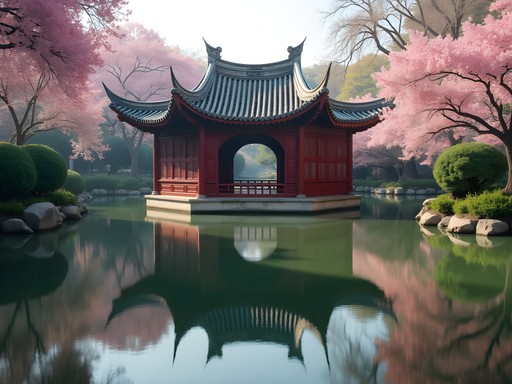
The Yu Garden (Yuyuan) quickly became my favourite historical enclave in Shanghai's urban jungle. Dating back to the Ming Dynasty, this 16th-century classical garden offers families a splendid opportunity to explore traditional Chinese aesthetics. My orthodontist's eye couldn't help but appreciate the mathematical precision in the garden's design—each rockery, pavilion, and pond placed with deliberate intention to create perfect harmony.
For capturing these architectural marvels, I relied heavily on my variable ND filter to balance the bright spring sunshine against the intricate shadow play throughout the gardens. The filter proved particularly valuable when photographing the exquisite Jade Rock, allowing me to accentuate its 72 holes that create fascinating light patterns.

💡 Pro Tips
- Visit Yu Garden early in the morning (before 9am) to avoid crowds and capture the best photographs
- The Jade Rock is best viewed on sunny days when light filters through its natural perforations
- Purchase tickets for the garden online to avoid queuing at the entrance
The Forgotten Alleyways: Shanghai's Shikumen Heritage
While most visitors flock to the reconstructed glamour of Xintiandi, I found myself drawn to Tianzifang—a more authentic preservation of Shanghai's shikumen (stone gate) architecture. These narrow lanes house a labyrinth of traditional homes converted into boutiques, cafés, and art studios.
As someone who collects cultural artifacts that tell stories of human adaptation, I was delighted to discover artisans crafting traditional paper cuttings alongside contemporary designers reimagining Chinese aesthetics for the modern age. My most treasured souvenir—a hand-carved chop (name seal) created while I watched—now sits proudly in my Lincoln study alongside Inuit sculptures from my Arctic expeditions.
Navigating these narrow lanes requires comfortable footwear, particularly if you're exploring with family members. My walking shoes proved invaluable during long days of exploration—providing the perfect balance of support and style for both historical wanderings and evening meals at upscale establishments.

💡 Pro Tips
- Visit Tianzifang on weekdays to avoid weekend crowds
- Many shops accept WeChat Pay or Alipay, so set up a payment method before your trip
- Look for the small workshops where artisans demonstrate traditional crafts—they often welcome photography
Suzhou: The Venice of the East
A mere 30-minute journey via high-speed rail transported me from Shanghai's metropolitan energy to Suzhou's contemplative classical gardens. As a UNESCO World Heritage site, these gardens represent the pinnacle of Chinese landscape design philosophy, where every element serves both aesthetic and symbolic purposes.
The Humble Administrator's Garden (Zhuozheng Yuan) stands as the largest and arguably most magnificent of Suzhou's classical gardens. Created in the early 16th century, its ingenious design creates the illusion of expansiveness within a relatively modest space—a principle I've often discussed with colleagues when designing orthodontic clinics that feel spacious despite spatial constraints.
For families traveling with children, these gardens offer delightful educational opportunities. My sister's children were fascinated by the miniature landscapes that replicate mountains and valleys in microcosm—a concept not dissimilar to the bonsai traditions I've documented in Japan. To keep younger visitors engaged, I recommend bringing a polarizing filter to show them how it reveals underwater features in the garden ponds, making fish and aquatic plants suddenly visible.

💡 Pro Tips
- Purchase a Suzhou Garden Combination Ticket if you plan to visit multiple gardens
- The gardens are living textbooks of Chinese philosophy—learn about yin-yang balance and the five elements before visiting
- Hire a knowledgeable guide who can explain the symbolic meanings behind garden elements

Capturing the Light: Photography in Classical Gardens
As someone who has documented the harsh contrasts of Arctic landscapes, I found Suzhou's gardens presented an entirely different photographic challenge—capturing the subtle interplay of light filtering through latticed windows, reflecting off water surfaces, and dappling through carefully positioned foliage.
The Master of Nets Garden (Wangshi Yuan), though smaller than others, offers perhaps the most photogenic compositions. Its ingenious design creates framed views that seem to have anticipated the rule of thirds by centuries. During my visit, I relied heavily on my travel tripod for low-light photography, particularly during the garden's evening illuminations when traditional music performances animate the historical spaces.
For those interested in architectural photography, I recommend bringing a lens cleaning kit as the combination of water features and spring humidity can quickly create lens condensation issues. The constantly changing light conditions as you move between indoor and outdoor spaces also demands frequent lens changes, making proper cleaning essential for capturing the gardens' subtle details.

💡 Pro Tips
- Visit gardens at different times of day—morning light creates beautiful reflections while late afternoon brings golden light to pavilions
- Use a polarizing filter to manage reflections on water surfaces
- Look for natural frames created by moon gates and latticed windows
Family Dynamics in Ancient Spaces
What fascinated me most about these historical sites was observing how modern Chinese families interact within spaces designed centuries ago for very different family structures. As someone who has studied how extreme environments impact family dynamics, I was struck by the multigenerational groups navigating these gardens together—grandparents explaining cultural references to attentive grandchildren, parents capturing family portraits against classical backdrops.
The Lingering Garden (Liu Yuan) became my favorite spot for observing these interactions. Its name reflects the Chinese concept of lingering appreciation—the idea that beauty should be savored slowly rather than rushed. I noticed how Chinese families would often spend hours in a single garden, while Western tourists typically hurried through in under an hour.
For families traveling with children, I recommend bringing a foldable water bottle as garden explorations can be thirsty work, particularly in spring when temperatures begin to rise. Many gardens have traditional teahouses where you can refill bottles while sampling local teas—creating natural breaks in your exploration that mirror the contemplative purpose of these spaces.

💡 Pro Tips
- Encourage children to sketch or photograph details that catch their attention rather than rushing through
- Visit the Suzhou Museum (designed by I.M. Pei) for context on garden design principles
- Pack light snacks as food options within gardens are limited
Final Thoughts
As my high-speed train glided back toward Shanghai on my final day, I found myself contemplating the profound lesson these gardens and historical sites offer modern families: the value of creating spaces that encourage contemplation, conversation, and connection across generations. While my professional work focuses on aligning teeth, these classical Chinese gardens demonstrate a different kind of alignment—the harmonious arrangement of natural elements to nurture human relationships.
For couples seeking meaningful travel experiences, Shanghai and Suzhou offer that rare combination of accessibility and authenticity. The historical treasures here aren't roped-off relics but living spaces where ancient wisdom continues to shape contemporary life. Whether you're photographing the dramatic contrasts of Shanghai's skyline or losing yourself in Suzhou's classical gardens, this corner of China reveals how skillfully the culture has balanced preservation and progress.
As I packed away my camera and notebook, I realized that these gardens had shifted my perspective on my own travel documentation. Perhaps my next Arctic expedition will focus less on the extreme environment itself and more on how families create harmony within challenging conditions—a lesson in human adaptation I learned not in the frozen north, but in the classical gardens of Suzhou.
✨ Key Takeaways
- Shanghai and Suzhou offer complementary historical experiences—urban preservation amid modernization versus classical Chinese garden design
- Spring visits provide ideal photography conditions with moderate temperatures and blooming garden elements
- These destinations work particularly well for multigenerational travel, offering rich educational opportunities alongside visual splendor
📋 Practical Information
Best Time to Visit
March to May (spring) or September to November (autumn)
Budget Estimate
$100-150 per day excluding international flights
Recommended Duration
7 days (4 in Shanghai, 3 in Suzhou)
Difficulty Level
Moderate





Comments
hikingstar
Your garden photos are stunning! What camera do you use?
wanderguy
Been to both cities multiple times and you really captured the essence of them. The contrast between old and new in Shanghai never gets old. If anyone's going, don't skip the Propaganda Poster Art Centre - it's tucked away in a random apartment building but totally worth finding. And in Suzhou, the Master of Nets Garden is smaller than the famous ones but honestly my favorite. Less crowded and the evening performances they do there in summer are incredible.
Nicole Russell
Caleb, this brought back so many memories! I visited the Humble Administrator's Garden in Suzhou last spring and it was absolutely breathtaking. Your photography tips are spot on - early morning light really is magical there. One thing I'd add for anyone planning to visit: try to go on a weekday if possible. The gardens get PACKED on weekends and it's hard to capture that peaceful atmosphere. Also, the shikumen neighborhoods in Shanghai are disappearing fast, so definitely prioritize those if you're interested in architectural history. Great post!
hikingstar
Good tip about weekdays! Did you need to book tickets in advance?
Nicole Russell
I bought mine at the gate but during peak season it might be safer to book online. Super easy either way!
sunsetmood
How easy is it to get from Shanghai to Suzhou? Is there a train or did you drive?
wanderguy
The high-speed train is super easy! Takes like 30 mins from Shanghai Hongqiao station. Trains run constantly throughout the day.
sunsetmood
Perfect, thanks!
greenway
This looks amazing!! Adding Suzhou to my list now
bluepro
What camera settings did you use for the garden shots? Mine always come out too dark in those covered walkways.
travelace
not the author but I bumped up my ISO to like 800-1600 in those spots. worked pretty well
Haley Hamilton
Caleb, this brought back so many memories! I spent three weeks exploring Suzhou's gardens last spring and completely fell in love with the Humble Administrator's Garden at sunrise - barely any tourists and the light filtering through the pavilions was absolutely magical. One tip I'd add: if you're serious about garden photography, try visiting on overcast days. The diffused light really brings out the details in the rockwork and prevents harsh shadows on the architecture. Also, the Master of Nets Garden does evening performances that are absolutely worth staying for. Did you catch any of those?
bluepro
Which garden would you recommend for a first timer? Only have one day in Suzhou.
Haley Hamilton
Definitely start with Humble Administrator's Garden - it's the largest and gives you the full experience. Get there right when it opens!
travelace
The shikumen neighborhoods are so underrated! Great post.
journeyking
Just got back from a similar trip last month. Pro tip: the Bund in Shanghai is beautiful at sunset, but PACKED with people. If you walk north past the main viewing area toward the cruise terminal, it thins out considerably and you still get those amazing Pudong skyline views. Also, many of Suzhou's smaller gardens have way fewer tourists but are just as beautiful as the famous ones.
happymood
OMG those gardens look INCREDIBLE!!! 😍😍😍 I'm literally obsessed with the rock formations and those moon gates! Did you try any amazing food in Suzhou?? I heard their soup dumplings are to die for!!! Planning my trip now!!!
Caleb Kennedy
The food in Suzhou is fantastic! Don't miss the squirrel-shaped mandarin fish - sounds weird but it's their signature dish. And yes, the soup dumplings are incredible everywhere!
Venture X
Premium card with 2X miles, $300 travel credit, Priority Pass