


Disclosure: This article contains affiliate links. We may earn a commission from purchases at no extra cost to you, which helps our travel content.
Standing at the entrance to Ephesus, watching the morning light illuminate the marble columns of this ancient metropolis, I couldn't help but slip into 'security mode' - scanning the landscape, observing the flow of visitors, and mentally mapping exit routes. Old habits from my Border Patrol days die hard. But this time, I wasn't securing a border - I was about to explore one of humanity's most impressive archaeological treasures. After 15 years with U.S. Border Patrol and countless trips documenting markets worldwide, I've developed a knack for reading places - their rhythms, their stories, their hidden corners. Turkey's ancient city of Ephesus offers more stories than most, with its remarkably preserved streets, grand monuments, and whispered secrets of a civilization long past. This spring weekend exploration would be different from my usual market adventures, but no less rich in cultural significance. Kia ora, fellow travelers - let's journey together through the magnificent ruins of Ephesus, where I'll share not just the history, but the practical insights that make a visit truly memorable.

Planning Your Visit to Ephesus
After years of navigating border checkpoints and crowded markets from Morocco to Thailand, I've learned that preparation is key to a smooth experience. Ephesus sits about 3 kilometers from Selçuk, a charming Turkish town that serves as the perfect base for exploration.
I arrived in Turkey via Izmir Airport, roughly an hour's drive from Selçuk. While public transportation options exist, I opted for a rental car to maximize flexibility and security - a habit from my Border Patrol days that's hard to shake. The drive is straightforward with well-marked roads, though having a good GPS device or reliable map app is essential as some signs are only in Turkish.
Accommodation in Selçuk ranges from budget hostels to boutique hotels. I chose the mid-range Ayasoluk Hotel, a family-run establishment with a rooftop terrace offering stunning views of St. John's Basilica. At around $70-90 USD per night in spring, it provided excellent value with its authentic Turkish breakfast and helpful staff.
Tickets to Ephesus cost 200 Turkish Lira (approximately $25 USD) as of my visit. I strongly recommend purchasing the Museum Pass Aegean if you're planning to visit multiple sites in the region - at 550 Lira, it quickly pays for itself with access to Ephesus, the Terrace Houses, Ephesus Museum, and several other nearby attractions.
One thing my security background has taught me: crowds can make or break an experience. Arriving at Ephesus by 8:00 AM when gates open puts you ahead of the tour buses that typically arrive around 9:30 AM. This early start granted me nearly empty pathways and unobstructed photos - a luxury that disappeared by mid-morning when the ancient streets became as crowded as a Bangkok night market.
💡 Pro Tips
- Purchase tickets online in advance to skip the queue
- Enter from the upper (north) gate and walk downhill through the site
- Wear sturdy walking shoes - the ancient marble streets are slippery when worn smooth
The Library of Celsus: Ephesus' Crown Jewel
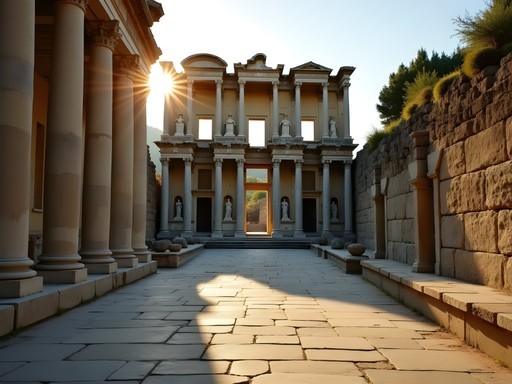
If there's one image that defines Ephesus, it's the magnificent façade of the Library of Celsus. As I approached this architectural masterpiece, my training in observation revealed details that casual visitors might miss. The four female statues between the columns - Sophia (Wisdom), Episteme (Knowledge), Ennoia (Intelligence) and Arete (Virtue) - aren't just decorative. They're symbolic guardians of the intellectual treasure once housed within.
Built in 117 CE as both a library and mausoleum for Roman Senator Celsus Polemaeanus, this structure once held nearly 12,000 scrolls, making it one of the ancient world's most important knowledge repositories. The façade we see today is a careful reconstruction completed in the 1970s, but it loses none of its impact.
A security-minded tip: while most visitors crowd directly in front of the library for photos, I discovered that the best views (and most striking photographs) come from the slightly elevated path to the right of the façade. This position not only provides a unique angle but also escapes the worst of the crowds.
The interior space, though empty now, creates a natural acoustic chamber. Stand in the center and speak normally - your voice will amplify and echo in a way that suggests the architects understood sound engineering long before modern science defined it.
As a market specialist, I couldn't help but notice how the Library's position at the intersection of several main streets mirrors the strategic placement of important stalls in traditional bazaars - prime real estate meant to attract attention and foot traffic. Some patterns of human behavior haven't changed in two millennia.
I spent nearly an hour here, watching the changing light play across the marble façade while listening to my audio guide explain the intricate architectural details. The investment in a quality guidebook or audio tour truly enhances the experience, providing context that brings these ancient stones to life.

💡 Pro Tips
- Visit the Library twice - once in early morning light and again in late afternoon when the marble glows golden
- Look for the secret tunnel that once connected the Library to the brothel across the street
- Study the facial expressions on the statues - they convey different emotions based on your viewing angle
The Terrace Houses: A Glimpse into Elite Roman Life
While most visitors focus on Ephesus' grand public buildings, I found the Terrace Houses to be the most revealing part of the site. These residences of Ephesus' wealthy elite require a separate ticket (or are included with the Museum Pass), but the additional cost is more than justified.
Located opposite Hadrian's Temple on the slope of Mount Bulbul, these luxurious homes have been protected by modern roofing that creates a climate-controlled archaeological site. The preservation work here is ongoing, and watching archaeologists carefully piece together ancient frescoes reminded me of the artisans I've documented in markets worldwide - hands skilled in work that requires infinite patience.
As someone with Māori heritage, I'm particularly drawn to how cultures express themselves through their living spaces. The intricate mosaics underfoot tell stories of wealth and taste, while the sophisticated heating systems (hypocausts) beneath the floors speak to engineering ingenuity that wouldn't be matched again for centuries.
The houses are arranged in a terraced structure - hence the name - and connected by a series of stairways that climb the hillside. My Border Patrol experience made me appreciate the defensive aspects of this design; the layout provided natural security with limited access points and excellent visibility.
One particularly stunning room features a fresco depicting Socrates, still vibrant with color after nearly 2,000 years. I found myself reaching for my travel journal to sketch some of the geometric patterns that adorned the walls and floors - inspiration that would later influence my choices at Istanbul's Grand Bazaar.
The glass walkways installed throughout allow visitors to move through the houses without damaging the ancient floors, while providing views of the excavation layers below. It's a masterclass in archaeological presentation that makes the ancient world tangible.
The Terrace Houses require about 45-60 minutes to explore properly. The space can get warm during midday, so carrying water is essential. Photography is permitted without flash, though the reflective glass walkways can make capturing clear images challenging.

💡 Pro Tips
- Pay the extra fee for the Terrace Houses - they're the best-preserved Roman domestic buildings in the Mediterranean
- Look for the ancient graffiti scratched into some walls - even Romans had their rebellious teenagers
- Visit during midday when the houses' covered structure provides welcome shade from the sun

The Great Theater and Harbor Street
The Great Theater of Ephesus strikes me as the ancient equivalent of a modern stadium, capable of seating 25,000 spectators. As I climbed to the upper tiers, my security training kicked in - I found myself assessing crowd flow patterns and identifying potential bottlenecks, just as I would have done during large operations with Border Patrol.
This massive semicircular structure wasn't just for entertainment. It served as a gathering place for civic matters and, according to tradition, was where the silversmith Demetrius rallied fellow craftsmen against the apostle Paul, whose preaching threatened their trade in Artemis souvenirs. As someone who's documented artisans from Mexico to Morocco, I understand how deeply craft traditions intertwine with economic survival and cultural identity.
The theater's acoustics are remarkable - stand at the center of the stage and speak in a normal voice, and your words will carry clearly to the highest seats. This design predates modern sound engineering by millennia yet achieves what many contemporary venues require electronic assistance to accomplish.
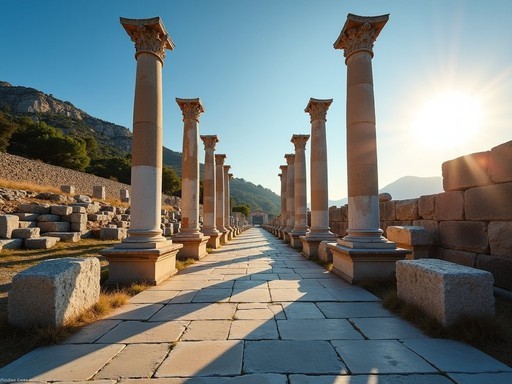
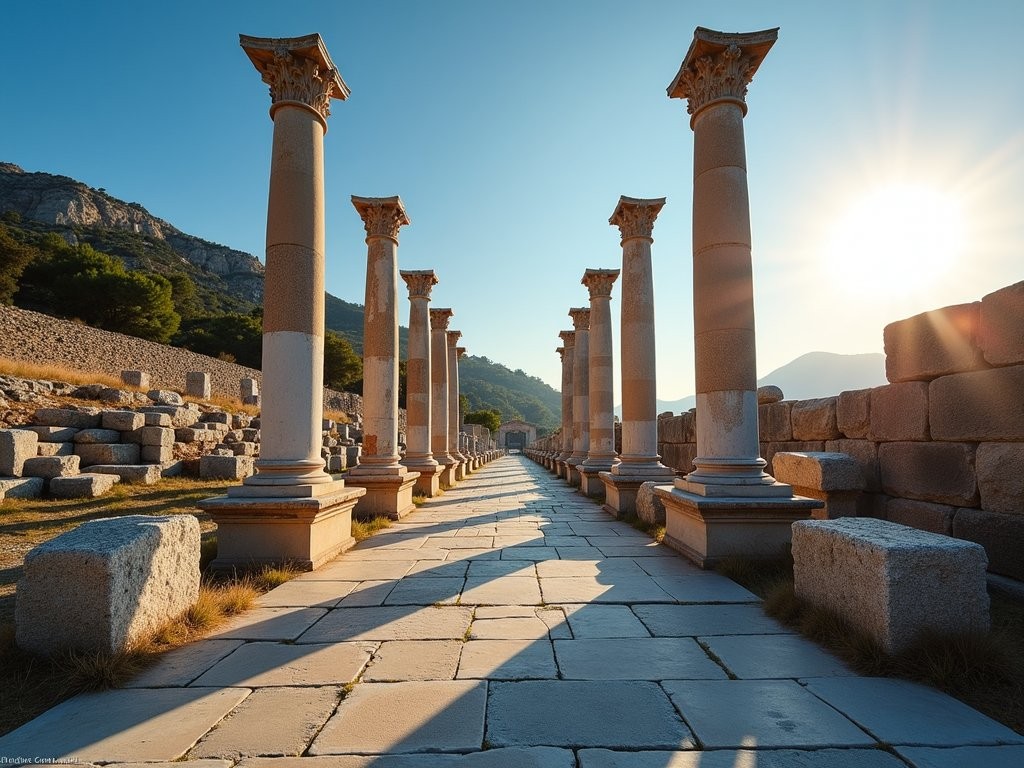
From the theater, Harbor Street stretches toward where the ancient port once stood (now silted over and several kilometers from the sea). This broad, column-lined avenue was once Ephesus' commercial lifeline, connecting the city to maritime trade routes that spanned the Mediterranean. Walking its marble slabs, worn smooth by countless ancient footsteps, I imagined the merchants, sailors, and travelers who once crowded this thoroughfare - not unlike the market streets I've documented across the world.
Look down as you walk Harbor Street - you'll notice grooves worn into the marble from ancient cart wheels and clever innovations like raised stones that served as pedestrian crossings during rainy seasons when the street might flood. These practical details reveal a sophisticated urban planning that feels surprisingly modern.
At day's end, I found a quiet spot at the lower end of Harbor Street to rest and write in my travel notebook, capturing observations while they were fresh. The slanting afternoon light created dramatic shadows across the ancient stones, and the thinning crowds allowed moments of quiet reflection that connected me to the countless others who had passed this way before.

💡 Pro Tips
- Climb to the top tier of the theater for spectacular panoramic views of the entire archaeological site
- Visit the theater in late afternoon when the lighting is dramatic and the crowds have thinned
- Look for the subtle drainage systems along Harbor Street - evidence of sophisticated Roman engineering
Beyond the Main Site: Temple of Artemis and Ephesus Museum
Most visitors limit their Ephesus experience to the main archaeological park, but my security background has taught me to look beyond obvious boundaries. Two nearby sites provide crucial context that completes the Ephesus story: the Temple of Artemis and the Ephesus Museum in Selçuk.
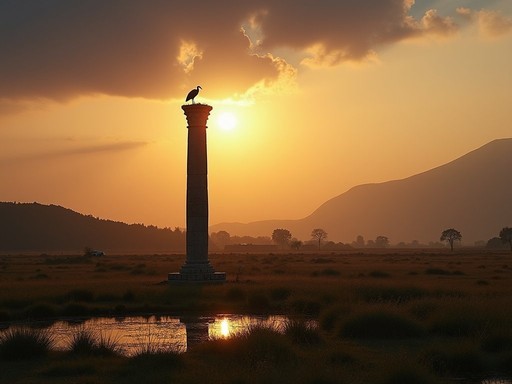
The Temple of Artemis was once counted among the Seven Wonders of the Ancient World. Today, a single reconstructed column stands in a marshy field about 1 kilometer from Selçuk town center. The site initially seems underwhelming - especially compared to the grandeur of the main Ephesus complex. But standing there, trying to mentally reconstruct a temple once four times the size of the Parthenon, offers a powerful lesson in historical perspective and the impermanence of even our greatest achievements.
I visited at sunset when the golden light gave the lonely column an ethereal quality. A local farmer tending his fields nearby noticed my interest and approached to share stories passed down through generations about the temple's glory days. These unplanned encounters with local knowledge keepers often provide the most authentic insights - something I've found true from New Zealand markets to Turkish archaeological sites.
The Ephesus Museum in Selçuk houses many of the most significant artifacts recovered from the archaeological site. The famous statue of Artemis with her multiple breast-like protrusions (actually bull testicles, representing fertility) showcases how this Greek goddess was adapted to incorporate elements of earlier Anatolian mother goddesses - a fascinating example of cultural synthesis.
The museum's collection of everyday items - cooking utensils, children's toys, jewelry - provides intimate glimpses into ancient daily life that the grand architecture of the main site cannot. As someone who's documented craft traditions worldwide, I was particularly drawn to the displays of ancient workmanship - the delicate metalwork and intricate ivory carvings that demonstrate how skilled artisans have always found ways to transform raw materials into objects of beauty.
Allow at least two hours for the museum if you're genuinely interested in understanding Ephesus beyond its architectural remains. The building is air-conditioned - a welcome respite during hot spring afternoons - and the informative English placards provide excellent context for what you've seen at the main site.

💡 Pro Tips
- Visit the Temple of Artemis site at sunset for atmospheric photos of the lone column
- Combine your museum visit with lunch in Selçuk - Ejder Restaurant near the museum serves excellent authentic Turkish food
- Look for the gladiator tombstones in the museum - they reveal fascinating details about this ancient profession
Local Flavors: Where to Eat and Shop Near Ephesus
My years documenting market cultures worldwide have taught me that food and crafts often preserve traditions long after monuments have crumbled. The area around Ephesus offers rich opportunities to connect with local culture through both.
In Selçuk, several restaurants serve authentic regional cuisine that connects directly to ancient culinary traditions. My favorite discovery was Ejder Restaurant, where the owner proudly explained that their slow-cooked lamb with quince uses a recipe documented in Roman texts from Ephesus. The Ottoman-style courtyard setting creates an atmospheric backdrop for dishes that have evolved over centuries.
For a quicker meal, the small eateries near the lower gate of Ephesus offer simple but delicious gözleme (savory stuffed flatbreads) prepared by local women on traditional hot plates. Watching their practiced hands quickly flip the thin dough reminded me of craftspeople I've documented worldwide - the confidence that comes from skills passed through generations.
Speaking of craft traditions, the town of Selçuk hosts several workshops where artisans create items using techniques dating back to Ephesus' heyday. I spent a fascinating hour at Ephesus Ceramic Art Center, where the potter demonstrated how they recreate designs found on ancient pottery fragments using traditional methods. Their studio prices are considerably more reasonable than the tourist shops near the Ephesus gates.
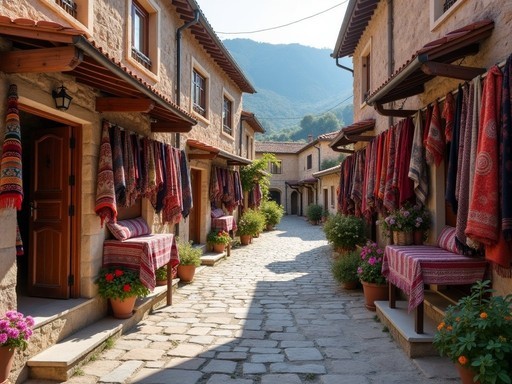
For those interested in textiles, the nearby village of Şirince (about 8 kilometers from Selçuk) is known for traditional weaving. The drive there winds through picturesque hills covered with olive groves and vineyards. In the village, I discovered an elderly woman working a loom on her porch, creating intricate cotton towels using patterns her grandmother taught her. When traveling with my compact binoculars, I spotted her work from the village square and was able to appreciate the detailed craftsmanship before approaching.
Şirince is also famous for fruit wines - particularly unusual varieties like mulberry and quince. The free tastings offered by most shops provide a pleasant way to interact with local producers, though the wines themselves tend to be quite sweet for Western palates.
One security-minded tip: while the Ephesus region is generally very safe, the shops nearest to the archaeological site often engage in aggressive sales tactics. Prices there can be 3-4 times higher than identical items in Selçuk town. My Border Patrol experience taught me to maintain situational awareness in crowded tourist areas - a skill equally useful when navigating persistent salespeople.

💡 Pro Tips
- Ask for 'ev yemeği' (home cooking) in restaurants to try authentic family recipes rather than tourist versions
- Shop for souvenirs in Selçuk town rather than at the Ephesus gates for better prices and quality
- Visit Şirince in late afternoon after the day-trip crowds have departed for a more authentic experience
Final Thoughts
As I stood atop the theater at Ephesus watching the setting sun cast long shadows across ruins that have witnessed two millennia of human history, I felt that familiar sense of perspective that great archaeological sites inspire. From my years with Border Patrol to my current travels documenting market cultures, I've learned that understanding the past helps us navigate the present. Ephesus offers this understanding in abundance.
What makes this ancient city truly remarkable isn't just its impressive architecture or historical significance, but how it connects us to the everyday lives of people who walked these same marble streets centuries ago. Their theaters, homes, libraries, and marketplaces reveal concerns not so different from our own.
If you're planning a visit, give yourself at least a full day for the main site, plus another half-day for the museum and surrounding attractions. Come prepared for considerable walking, bring water, and arrive early to beat both the crowds and the heat. Most importantly, take moments to sit quietly amidst the ruins, allowing yourself to absorb the whispers of history that echo through these ancient stones. Kia ora and safe travels.
✨ Key Takeaways
- Ephesus rewards those who venture beyond the iconic Library of Celsus to explore less-visited sections like the Terrace Houses
- Spring offers ideal weather for exploration with fewer crowds than summer months
- The surrounding towns of Selçuk and Şirince provide authentic cultural experiences that complement the archaeological wonders
- A visit to both the main site and the Ephesus Museum provides the most complete understanding of this ancient city
📋 Practical Information
Best Time to Visit
April-May or September-October for mild weather and fewer crowds
Budget Estimate
$70-120 per day including accommodation, food, and entrance fees
Recommended Duration
1-2 full days
Difficulty Level
Moderate - Considerable Walking On Uneven Surfaces


Comments
Taylor Moreau
Excellent guide, Taylor. I visited Ephesus during a business trip to Istanbul last autumn and made the detour - absolutely worth it. Your point about arriving early is spot on. I got there around 8:30am and had the Library of Celsus practically to myself for about 20 minutes. By 10am, the tour groups had descended and it was quite crowded. The Terrace Houses are extraordinary - the frescoes are remarkably well-preserved. I'd also recommend the Ephesus Archaeological Museum in Selçuk afterwards; it provides excellent context for what you've just seen. The marble statues and artifacts there really bring the site to life.
wanderlustwalker
Good to know about the museum! Is it walking distance from the ruins?
Taylor Moreau
It's in Selçuk town, about 3km from the main entrance. Easy taxi ride or you can take the dolmuş.
oceanexplorer
This looks amazing!! Definitely going next year 😍
wanderlustwalker
Wow this looks amazing! Adding to my bucket list 🙌
Taylor Hunter
Thanks! You'll love it - definitely worth the trip!
escapeclimber
We did the public transportation from Selcuk and it was super easy. Way cheaper than the tours from Kusadasi. The dolmus drops you right at the entrance.
globeguide
Good to know! How much was it?
escapeclimber
Like 5 lira each way, basically nothing
George Hayes
Great guide! We took our kids (8 and 11) here last year and they absolutely loved it. The theater was a huge hit - they ran up and down testing the acoustics. One thing I'd add for families: bring a good sun hat for everyone. The Turkish sun is no joke and there's very little shade on the main marble street. We went through so much water! The kids also really enjoyed imagining what life was like in the public toilets (yes, they thought the communal bathrooms were hilarious). It's actually a great place to spark interest in ancient history for younger travelers.
bluemood
Really cool photos! Going in September
Savannah Walker
Taylor, your description of the Terrace Houses is spot on! I visited last summer and almost skipped them because of the extra entrance fee, but they ended up being my favorite part. Those frescoes and mosaics are incredibly preserved. Pro tip: hire a local guide at the entrance - I paid about 100 lira and learned SO much more than I would have on my own. The stories about daily Roman life really brought everything to life. Also totally agree about the sunset from the theater - absolutely magical moment!
oceanexplorer
Did you book the guide in advance or just find one there?
Savannah Walker
Just found one at the entrance! There are several official guides waiting there. Look for the ones with badges.
redseeker
How early should we get there to avoid crowds? Planning to visit in May and worried about tour groups
escapeclimber
Get there right when it opens at 8am. By 10am the cruise ship groups arrive and it gets packed. Also bring water - there's not much shade!
redseeker
Thanks! That's super helpful
globeguide
Wow those Library photos are stunning!! Adding this to my bucket list 🏛️
redchamp
Just got back from Turkey last week and Ephesus was the highlight of our trip! Your tip about starting at the upper entrance and working down was spot on - saved us from hiking uphill in the heat. The cats lounging on the ancient ruins were my favorite part though. So many photogenic feline friends! We also visited the Temple of Artemis site afterward, which was a bit underwhelming (just one column standing) but completed the historical picture. Anyone else notice how the acoustics in the Great Theater are still incredible after all these centuries?
coolmood
The cats! Yes! I have more photos of Ephesus cats than ruins on my phone 😂
Venture X
Premium card with 2X miles, $300 travel credit, Priority Pass