

Disclosure: This article contains affiliate links. We may earn a commission from purchases at no extra cost to you, which helps our travel content.
There's something magical about sitting in a Viennese café, where time seems suspended between the marble tabletops and ornate ceilings. As someone who grew up with the lively cafeterías of Seville and later embraced Detroit's third-wave coffee scene, Vienna's coffee culture hit me differently—it felt like stepping into the living room of history itself. The Viennese coffee house tradition isn't just about caffeine; it's a UNESCO-recognized cultural heritage that has shaped intellectual discourse for centuries. During a recent weekend trip to Austria's capital while attending a renewable energy conference, I found myself drawn to these elegant time capsules where Freud, Trotsky, and countless artists once debated the world's great ideas over perfectly crafted melange and sachertorte. Join me as we explore the spaces where coffee transcends being merely a beverage and becomes a way of life—un estilo de vida that has survived empires, wars, and the digital age.

The Magnificent Café Central: Where History and Coffee Collide
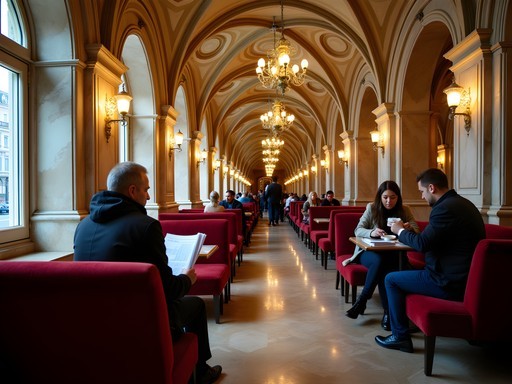
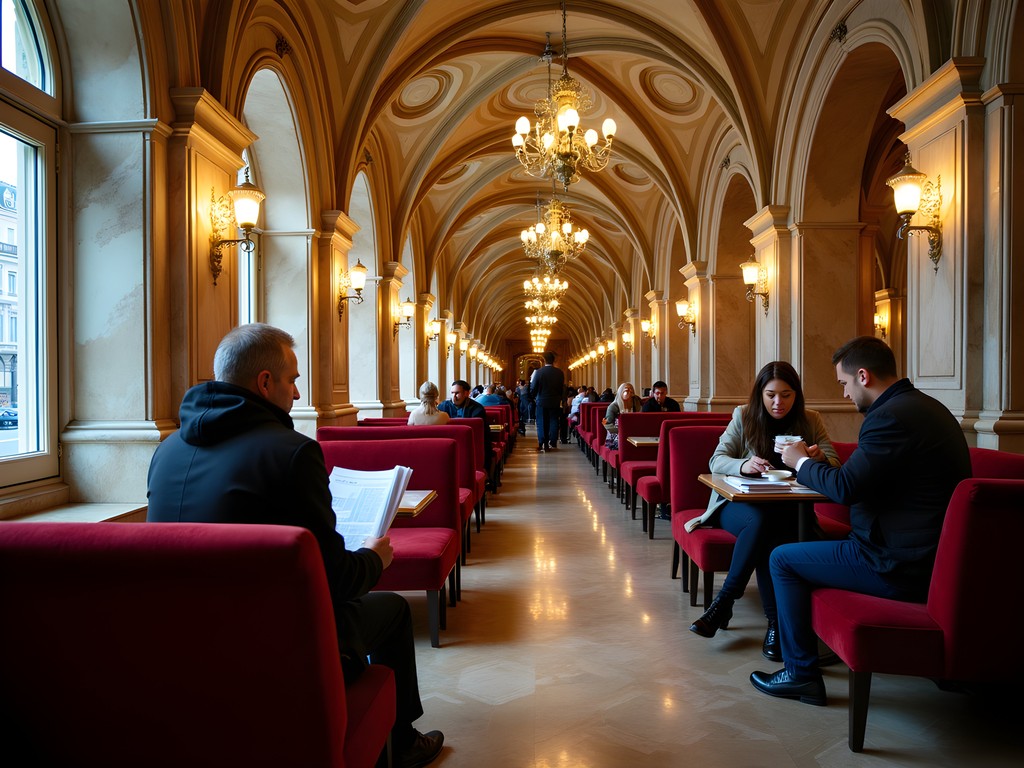
Walking into Café Central feels like entering the intellectual heart of old Vienna. Located in the former Bank and Stockmarket building, its neo-Gothic architecture with towering marble columns and vaulted ceilings immediately commands reverence. I arrived early on a crisp Saturday morning, my engineering mind appreciating the structural magnificence while my travel-hungry soul absorbed the ambiance.
As I settled into a plush velvet banquette, a tuxedo-clad waiter approached with the distinctive formality that defines Viennese service. "Herr Ober," as these professional waiters are traditionally addressed, presented me with a silver tray bearing my melange (similar to a cappuccino but uniquely Viennese) and a glass of water—always served alongside coffee here.
The café's historical significance is impossible to ignore. At the table next to mine, a small plaque commemorated where Leon Trotsky once played chess while planning revolution. Across the room, Sigmund Freud's favorite spot sat occupied by tourists snapping photos. Yet somehow, Café Central balances being both a living museum and a functioning café with remarkable grace.
What struck me most was how the coffee ritual here differs from Spain's quick espresso culture or America's grab-and-go mentality. In Vienna, your coffee comes with an implicit rental of your table for as long as you wish. I spent three hours reading, observing, and occasionally jotting notes in my travel journal, without a single pointed look from staff suggesting I should leave.
The Wiener Melange arrived picture-perfect, but it was the accompanying Kaiserschmarrn—shredded pancake with plum compote—that transported me to another era. The recipe has remained unchanged for over a century, a testament to Vienna's reverence for tradition.
💡 Pro Tips
- Visit Café Central before 10am to avoid the tourist crowds
- Try the house specialty 'Café Central Torte' alongside your coffee
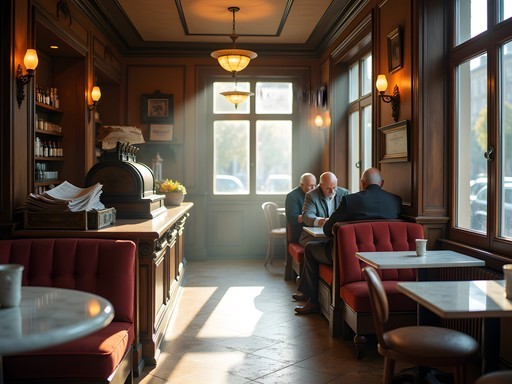
- Look for the newspaper racks—reading newspapers for hours is a traditional Viennese café activity
Decoding Vienna's Coffee Menu: A Language of Its Own
One of the most intimidating aspects of Viennese coffee culture for newcomers is navigating the specialized vocabulary. As someone who speaks both Spanish and English, I'm accustomed to language barriers, but Vienna's coffee lexicon is uniquely complex—almost like learning the technical specifications of a new renewable energy system.
A Kleiner Schwarzer (small black coffee) might sound straightforward, but it's actually quite different from an American-style black coffee. Then there's the Verlängerter (essentially an Americano), Einspänner (black coffee topped with whipped cream served in a glass), and my personal favorite, the Fiaker—a mocha with a shot of rum, named after the city's horse-drawn carriage drivers who needed the extra warmth.
During my exploration, I found myself frequently consulting my Vienna travel guide, which fortunately included a comprehensive coffee glossary. By my second day, I was confidently ordering like a local, much to the approving nods of the traditionally stern Herr Ober.
What fascinated me most was how each coffee variation comes with its own serving ritual. A Melange arrives with a small spoon balanced precisely on the saucer, while a Franziskaner (similar to a melange but with more milk) comes topped with a dollop of whipped cream rather than milk foam.
The precision reminds me of my engineering work—each element carefully calculated for the optimal experience. Yet unlike the cutting-edge renewable systems I design in Detroit, these coffee preparations have remained unchanged for generations, perfected through centuries of refinement rather than technological advancement.

💡 Pro Tips
- Always expect your coffee to be served with a glass of water
- Don't rush—coffee in Vienna is meant to be savored slowly
- If confused by the menu, a 'Melange' is the safest bet for most international visitors
Café Sacher: Home of Vienna's Most Famous Chocolate Cake
No coffee pilgrimage to Vienna would be complete without visiting the legendary Café Sacher, home of the world-famous Sacher-Torte. Located in the elegant Hotel Sacher near the Opera House, this café represents the more luxurious side of Vienna's coffee tradition.
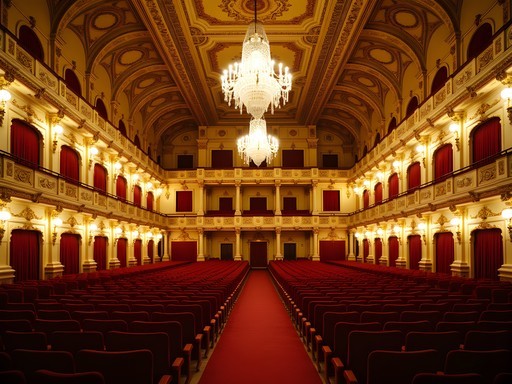
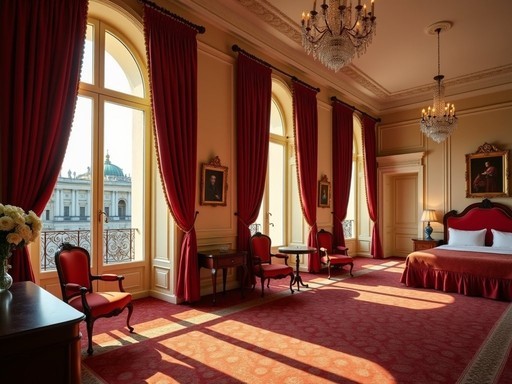
Unlike the intellectual atmosphere of Café Central, Sacher embraces its tourism appeal with an elegant flair. The deep red upholstery, crystal chandeliers, and golden accents create an atmosphere of Habsburg-era opulence. When I visited on Sunday afternoon, a piano player provided classical background music that perfectly complemented the setting.
The star attraction is, of course, the Original Sacher-Torte—a chocolate cake with a thin layer of apricot jam and dark chocolate icing. Its recipe remains a closely guarded secret since Franz Sacher created it in 1832. Having grown up with my Spanish father's appreciation for good pastries and my mother's American sweet tooth, I approached this legendary dessert with high expectations.
The experience didn't disappoint, though I found myself more impressed by the perfect execution than by flavor complexity. The cake is deliberately not too sweet, allowing the chocolate's natural bitterness to shine. It's served with unsweetened whipped cream (Schlagobers) that balances the richness perfectly.
While enjoying my torte and Großer Brauner (double espresso with a side of cream), I couldn't help but notice the international crowd around me. Tourists from Japan snapped photos of their perfectly plated desserts, while a couple from what sounded like Italy debated the merits of Viennese versus Italian pastry traditions. In that moment, I realized how this culinary heritage serves as a cultural bridge—much like my own mixed heritage has allowed me to connect with diverse perspectives.
Before leaving, I purchased one of their signature wooden boxes containing a Sacher-Torte to bring back to my colleagues in Detroit. At €44, it wasn't cheap, but some experiences are worth the splurge. The cake survived the journey remarkably well in my insulated travel tote, which I typically use for keeping water cool during my astronomy expeditions to dark sky reserves.

💡 Pro Tips
- Make a reservation to avoid the notoriously long lines, especially on weekends
- The 'Original Sacher-Torte' is trademarked and only available here and at a few official outlets
- Try the cake with a 'Großer Brauner' coffee for the traditional pairing

Café Hawelka: The Bohemian Soul of Vienna's Coffee Scene
After experiencing the grandeur of Central and the luxury of Sacher, I craved something more authentic and less touristic. My search led me to Café Hawelka, tucked away on a narrow street in Vienna's old town. This small, smoke-stained establishment has been a bohemian haven since 1939, when Leopold and Josefine Hawelka first opened its doors.
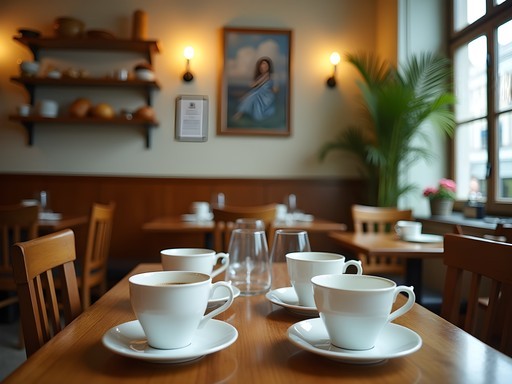
Unlike the ornate décor of other historic cafés, Hawelka embraces a worn, lived-in aesthetic. Mismatched tables crowd the small space, newspapers hang on wooden racks, and the walls display artwork from the many artists who have frequented the café over decades. The lighting is dim, creating an intimate atmosphere that encourages hushed conversations and creative contemplation.
As an engineer with an artistic soul, I immediately felt at home among the eclectic crowd—a mix of elderly Viennese regulars, university students, and the occasional in-the-know traveler. When I pulled out my dog-eared copy of Stefan Zweig's "The World of Yesterday" (a perfect read for understanding Vienna's cultural history), the elderly gentleman at the next table nodded approvingly.
Hawelka's coffee is strong and straightforward, without the ceremonial presentation found elsewhere. I ordered their house specialty, a Mokka (similar to a Turkish coffee), which arrived thick and powerful, with grounds settling at the bottom of the cup. The café is also famous for its Buchteln—sweet yeast buns filled with plum jam that emerge fresh from the oven each evening around 10pm, filling the space with an irresistible aroma.
What makes Hawelka special isn't perfection but authenticity. The service can be gruff, finding a table sometimes requires patience, and you won't find elaborate pastry displays. Yet it offers something increasingly rare: a genuine connection to Vienna's intellectual and artistic heritage, unsanitized for tourism.
As I sat sketching the interior in my travel sketchbook, I thought about how this space embodied the same principles I value in sustainable engineering—honoring tradition while creating space for new ideas to flourish. In Hawelka, Vienna's coffee house tradition feels like a living, breathing entity rather than a museum exhibit.

💡 Pro Tips
- Visit after 10pm to try their famous Buchteln fresh from the oven
- Don't expect quick service—the leisurely pace is part of the experience
- Bring a book or newspaper to blend in with the locals
Sustainability and Tradition: Vienna's Coffee Houses Embrace Modern Values
As a renewable energy engineer, I'm constantly evaluating the sustainability practices of the places I visit. Vienna's historic coffee houses present an interesting case study in balancing tradition with modern environmental consciousness.
On the surface, these institutions might seem stuck in the past, but many have quietly implemented impressive sustainability initiatives while preserving their historic character. Café Diglas, for instance, sources all its electricity from renewable providers—a fact I discovered while chatting with the manager after noticing their subtle certification emblem by the entrance.
Many cafés now work with local organic dairy farms for their milk and cream, and several have transitioned to biodegradable to-go packaging for the increasing number of tourists seeking coffee on the move (though true Viennese would never dream of taking their coffee to go!).
What's most sustainable about these establishments, however, is their fundamental business model. Unlike modern cafés designed for rapid turnover, Viennese coffee houses are built for longevity—both of the visit and of the institution itself. Furniture is repaired rather than replaced. China cups have been in service for decades. Food waste is minimal because pastries are made in small batches throughout the day.
Perhaps most importantly, these spaces foster community and intellectual exchange—the social sustainability that's often overlooked in our digital age. During my visit to Café Sperl, I witnessed a spontaneous conversation between strangers at neighboring tables about a newspaper article, something increasingly rare in our headphone-isolated world.
For travelers seeking to minimize their environmental impact while experiencing Vienna's coffee culture, I recommend carrying a reusable water bottle to refill from Vienna's excellent public fountains between café visits. The city's compact center makes walking between coffee houses easy, and Vienna's exceptional public transportation system means you can reach even outlying cafés without needing a car.

💡 Pro Tips
- Look for the 'Bio' designation on menus, indicating organic ingredients
- Many historic cafés now offer plant-based milk alternatives if you ask
- Visit cafés during off-peak hours to reduce the need for them to stock excess food that might be wasted
Final Thoughts
As I boarded my flight back to Detroit, the taste of my final Viennese melange lingered pleasantly. What began as a simple weekend exploration between conference sessions evolved into a profound appreciation for a culture that has elevated coffee drinking to an art form. These historic cafés aren't just relics of a bygone era—they're living institutions that continue to shape Vienna's cultural landscape, offering spaces where time slows down and conversation matters. Whether you're seeking the grandeur of Café Central, the luxury of Sacher, or the bohemian soul of Hawelka, Vienna's coffee houses offer something increasingly precious in our fast-paced world: permission to pause. Hasta la próxima, Viena—until next time, when I'll return to discover more hidden gems in this city where coffee is never just coffee, but a centuries-old tradition worth savoring.
✨ Key Takeaways
- Vienna's historic coffee houses are UNESCO-recognized cultural institutions, not just places to drink coffee
- Each café has its own unique character, from intellectual hubs to bohemian hideaways
- Understanding the specialized coffee vocabulary enhances the authentic Viennese experience
- Many traditional cafés are embracing sustainability while maintaining their historic character
📋 Practical Information
Best Time to Visit
year-round, though winter offers the coziest atmosphere
Budget Estimate
€30-50 per day for coffee and pastries at 2-3 cafés
Recommended Duration
2-3 days to experience a variety of coffee houses
Difficulty Level
Beginner
Comments
Jose McDonald
Matthew, this post brings back memories! I hit Vienna last fall during a crazy solo trip through Central Europe and the coffee culture absolutely blew my mind. I'm more of a grab-and-go coffee person usually, but something about these places made me want to sit for hours. I actually discovered that the waiters at Café Central don't mind if you sit there reading for like 3 hours - it's totally normal! I had my travel journal with me and filled like 20 pages just people-watching. The architecture alone is worth the visit. Did you make it to any of the late-night spots? I found this place that stays open until 2am and it had the most incredible vibe with local students and artists.
escapewanderer
Bring a book or journal. The whole point is to slow down and soak it in.
globeguide
Going there next month, can't wait!
sunnynomad7594
Did you try the Sachertorte at the actual Café Sacher? I've heard mixed reviews about whether it's worth the hype and the price. Some people say it's too dry? I'm torn between splurging there or just trying it at a regular bakery. Would love to hear your honest take on whether the original is really that much better!
Jose McDonald
Dude, you HAVE to try it at the source! Yeah it's pricey but it's an experience. The chocolate is so rich and they serve it with this amazing whipped cream. I went after a morning of exploring the Naschmarkt and it was the perfect reward. Don't overthink it - just go!
Sofia Franklin
Great breakdown of the coffee menu! I spent three days analyzing Vienna's café pricing structure last year and found that the traditional coffeehouses actually offer better value than modern chains when you factor in the experience. The Melange averages €4-5 but you can sit for hours without pressure to leave. Pro tip: if you're on a budget, go for the smaller neighborhood cafés in the 7th district - same quality, half the tourist markup. I tracked my spending and saved about 40% compared to the famous spots while getting equally authentic experiences.
sunnynomad7594
Ooh which cafes in the 7th district? I'm heading there in June!
Sofia Franklin
Café Sperl and Café Hummel are both excellent and way less crowded than Central.
explorebackpacker
Love the photos! Really captures the vibe
mountainwanderer
Café Hawelka is absolutely worth it. Best atmosphere hands down.
adventurefan
This looks amazing! Quick question - do you need to make reservations at Café Central or can you just walk in? Planning a trip for April and don't want to miss it!
escapewanderer
Walk-ins are fine but go early morning or mid-afternoon to avoid crowds. Weekends can get crazy busy!
adventurefan
Perfect, thanks so much!
mountainhero
Great post! Is it true that you can sit for hours with just one coffee? I've heard waiters won't bring the check unless you ask for it. Also, any recommendations for cafés with the best people-watching?
Matthew Black
Absolutely true! It's completely acceptable to linger with one coffee for hours - newspapers and books are provided for exactly this reason. For people-watching, try Café Prückel or Schwarzenberg, both have great windows overlooking busy streets. And yes, you'll need to ask for the check when you're ready.
cityblogger
Just booked flights to Vienna after reading this! Can't wait to try that Einspänner coffee you mentioned!
Venture X
Premium card with 2X miles, $300 travel credit, Priority Pass