Disclosure: This article contains affiliate links. We may earn a commission from purchases at no extra cost to you, which helps our travel content.
There's something almost sacred about the ritual of coffee in Vienna. As I step through the heavy wooden doors of Café Central, the soft murmur of conversation and gentle clink of porcelain creates what Austrians might call a Kaffeehausgeräuschkulisse — the distinctive soundscape of a traditional coffeehouse. Having visited Vienna numerous times for both work and pleasure, I've developed a deep appreciation for how these elegant institutions serve as the beating heart of Viennese cultural life. They are neither simply restaurants nor mere cafés, but rather what locals call a zweites Wohnzimmer — a second living room — where time seems suspended between tradition and modernity. This autumn weekend, I invite you to join me on an intimate journey through Vienna's most cherished coffee sanctuaries, where centuries of history steep alongside your Melange, and where couples can find both connection and contemplation amid the marble tabletops and tufted velvet.

The Grand Dames: Café Central & Café Sacher
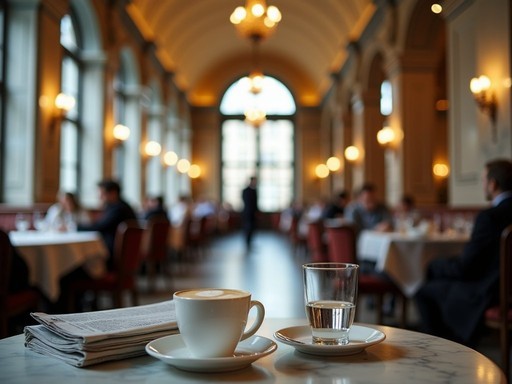
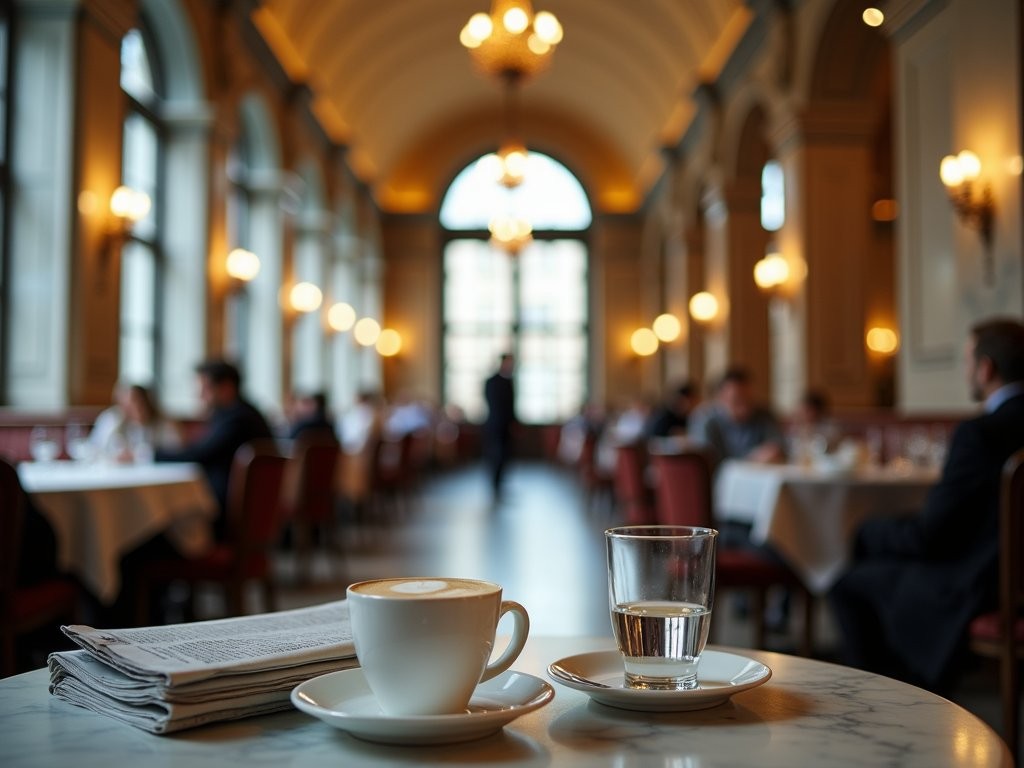
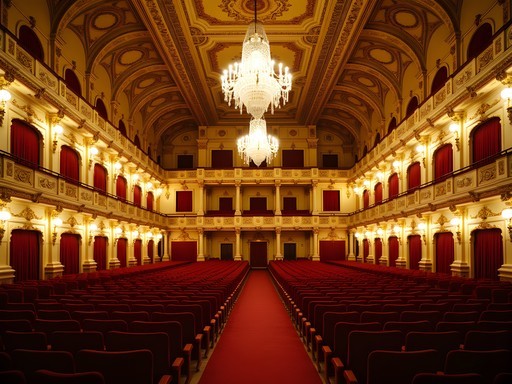
My love affair with Vienna's coffee culture began at Café Central, where luminaries like Freud, Trotsky, and Stefan Zweig once debated the great ideas of their time. Walking beneath its vaulted ceilings, I'm always struck by how the space balances grandeur with intimacy. The Oberkellner (head waiter) — distinguished by his formal attire and commanding presence — orchestrates the room with a dignified efficiency that feels unchanged since 1876.
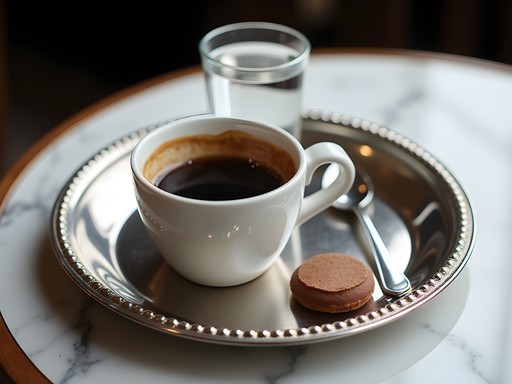
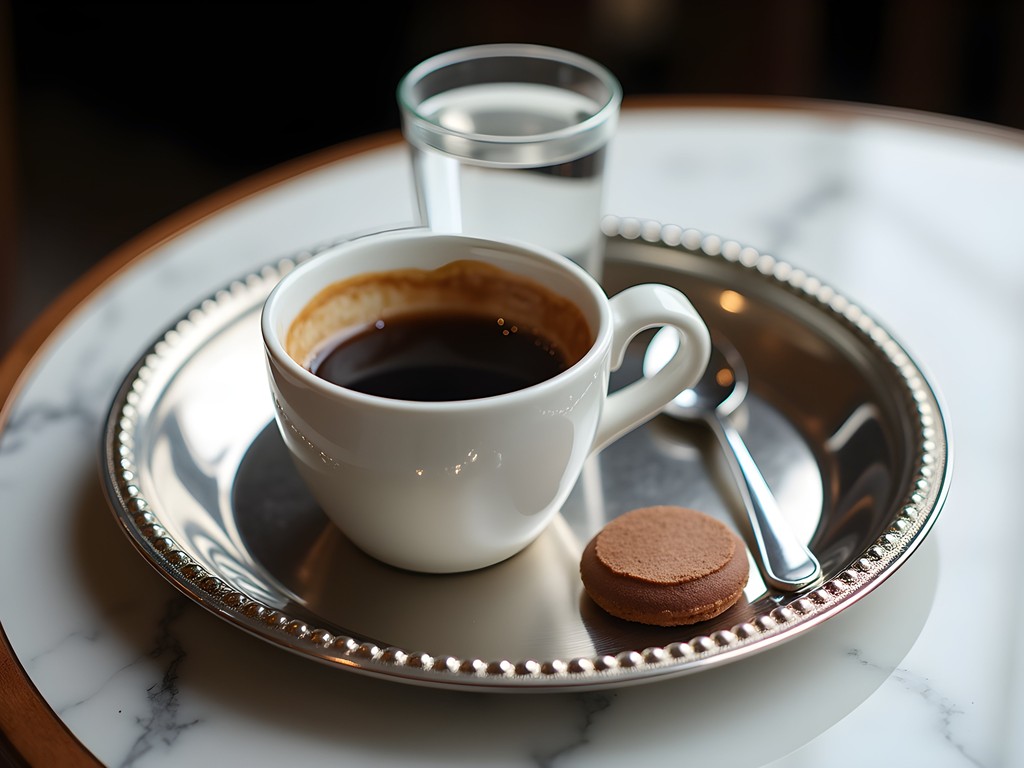
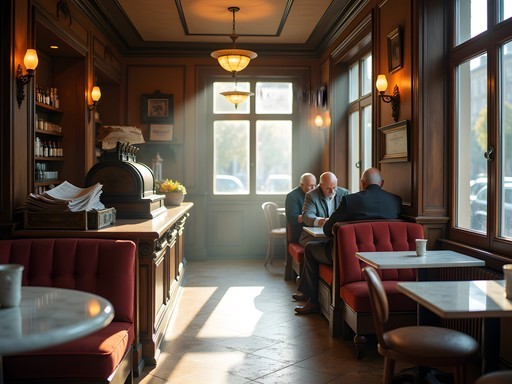
My ritual here never varies: I order a Kleiner Brauner (espresso with a splash of cream) and a slice of Apfelstrudel, then settle into a window seat with my travel journal to observe the gentle theater of Viennese life. Unlike American coffee culture with its emphasis on takeaway cups and quick consumption, here coffee is served on silver trays with a glass of water, meant to be savored over hours.
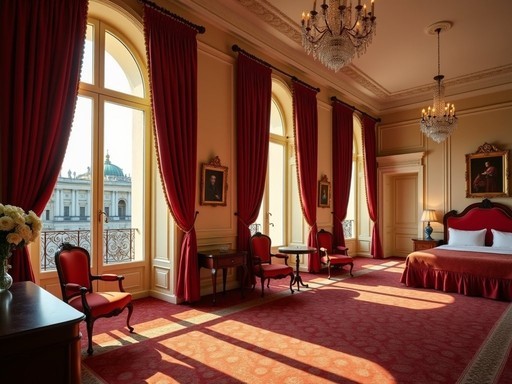
A short walk away stands Café Sacher, home to the legendary Sacher-Torte. While some dismiss it as a tourist trap, I find its red damask walls and crystal chandeliers transport me to the height of Habsburg elegance. The chocolate cake itself — with its precise layer of apricot jam and shiny chocolate glaze — follows a closely guarded recipe from 1832. My translator's tip: order it mit Schlag (with whipped cream) as the locals do, and pair it with an Einspänner — black coffee in a glass topped with whipped cream, named after the one-horse carriages whose drivers needed the cream to keep their coffee warm while navigating Vienna's streets.
💡 Pro Tips
- Visit Café Central before 10am to avoid the tourist crowds and experience the authentic morning ritual of newspaper reading
- At Café Sacher, request a table in the back room for a more intimate experience away from the tour groups
- Most traditional cafés don't rush customers — your bill only comes when requested, so you can linger for hours over a single coffee
Literary Haunts: Café Hawelka & Café Sperl
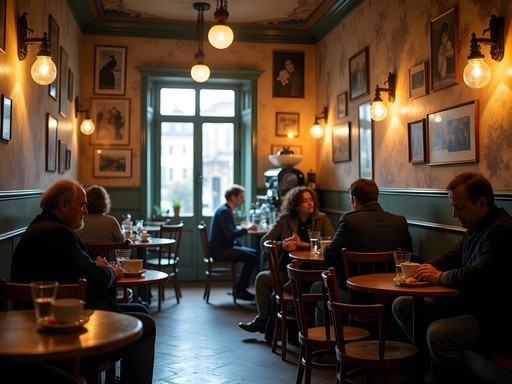
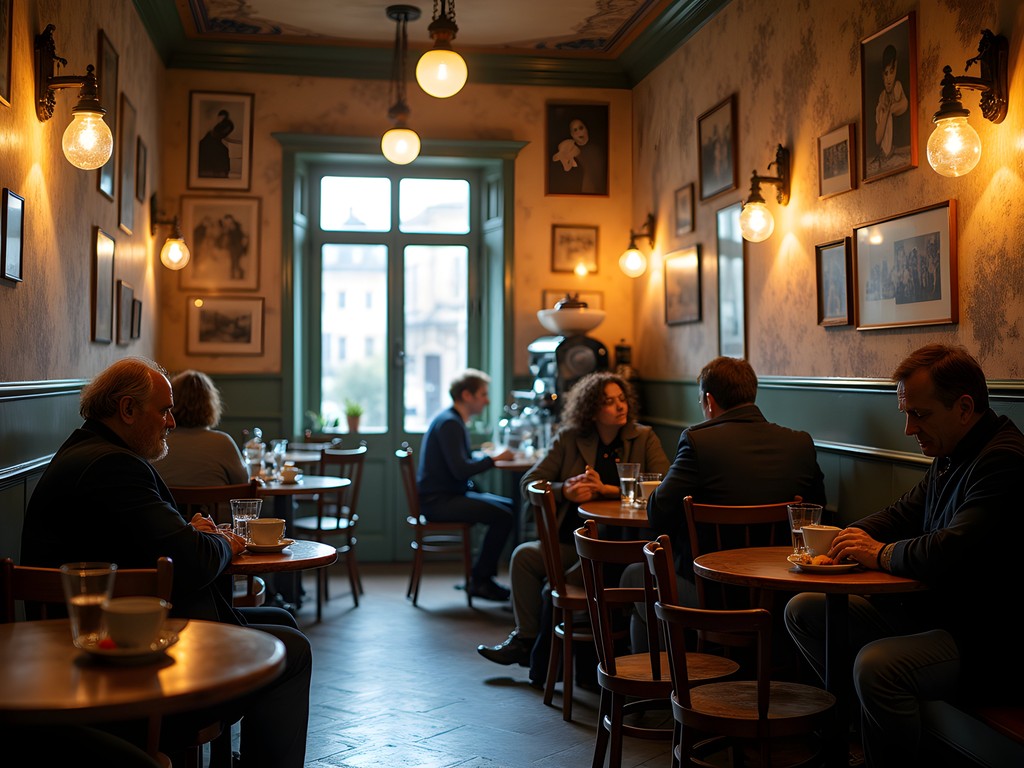
For a more intimate glimpse into Vienna's coffee culture, I always make time for Café Hawelka, a tiny, smoke-stained institution on Dorotheergasse. Leopold and Josefine Hawelka opened their doors in 1939, and the café quickly became a nucleus for post-war literary figures and artists. Today, their grandson continues the tradition in a space that feels delightfully frozen in time.
The first time I visited Hawelka, I arrived just as they were pulling fresh Buchteln (sweet yeast buns filled with plum jam) from the oven—a specialty only available after 8pm. The scent of vanilla and yeast mingling with coffee created what the Japanese might call umami for the soul. I sat beside a bookshelf stacked with dog-eared literary journals and watched as a gray-haired man in the corner sketched patrons on a napkin, a practice I've since learned has been happening here for decades.
Equally atmospheric but less crowded is Café Sperl, which opened in 1880 and maintains much of its original furnishings. The billiard tables in the back room have witnessed countless matches between local intellectuals, while the worn leather banquettes have supported the weight of both ordinary Viennese and extraordinary artists. Here, I recommend ordering a Kapuziner (similar to a cappuccino, but with a more precise ratio of coffee to milk) and their house specialty, a rum-soaked Sperl-Schnitte cake.
As someone who translates both words and cultural contexts, I find these spaces particularly moving for how they preserve a way of being that has nearly vanished elsewhere. In our era of digital nomadism and co-working spaces, these cafés were the original remote workplaces, where the price of a coffee bought you a desk, heating, newspapers, and community for as long as you wished to stay.
💡 Pro Tips
- Café Hawelka is one of the few places that still allows smoking in a separate section — request the non-smoking area if you're sensitive
- Bring a book or your e-reader to blend in with locals who come to read for hours
- At Sperl, look for the table in the corner that was featured in the film 'Before Sunrise' — a perfect spot for couples
Modern Classics: Café Demel & Kleines Café
While Vienna's coffee culture is deeply rooted in tradition, it continues to evolve in fascinating ways. Café Demel represents this perfect balance between preservation and innovation. Founded in 1786 as a confectionery to the Habsburg court, Demel maintains its imperial connections while embracing contemporary sensibilities.
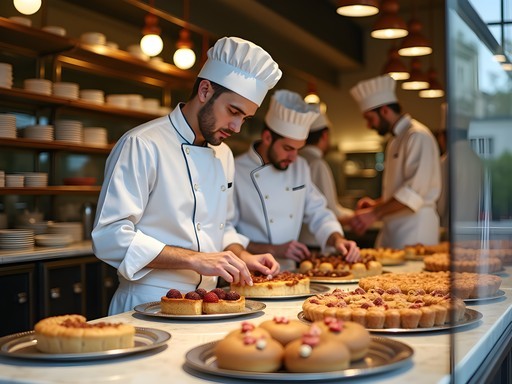
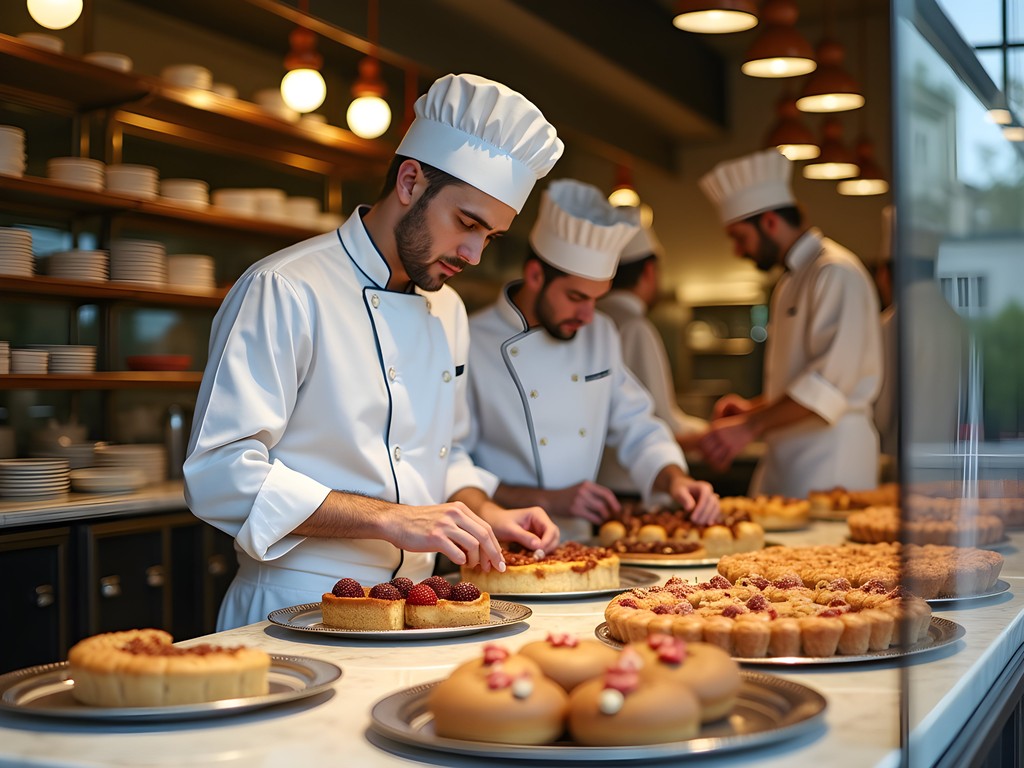
What distinguishes Demel is its open kitchen, where you can watch white-uniformed pastry chefs craft intricate tortes and Konfekt (fine confections) behind a glass wall. I spent one rainy afternoon here with my language notebook, jotting down the specialized German vocabulary of Viennese pastry-making as I observed the precise movements of the Zuckerbäcker (confectioners).
The coffee menu at Demel features both traditional preparations and seasonal specialties. During fall visits, I recommend their pumpkin spice Melange — a Viennese take on the American favorite that predates the trend by decades, featuring house-made spice syrup and real pumpkin essence.
For a completely different experience, I always make time for Kleines Café (literally 'Small Café') in the Franziskanerplatz. True to its name, this tiny establishment founded by actor Hanno Pöschl can barely seat 20 people inside, but in fair weather, the tables spill out onto one of Vienna's most charming squares. Here, the coffee is straightforward, the atmosphere unpretentious, and the people-watching unparalleled.
What fascinates me as someone who straddles cultural boundaries is how these spaces demonstrate Gemütlichkeit — that untranslatable German concept encompassing coziness, contentment, and belonging. In a Viennese café, this quality emerges from the perfect tension between formality and comfort, between the rituals of service and the freedom to simply be.
💡 Pro Tips
- At Demel, ask for a tour of the back kitchens — they sometimes accommodate curious visitors who express genuine interest in the craft
- Visit Kleines Café in late afternoon when locals finish work and the square fills with Viennese of all ages
- When ordering at Demel, the traditional way to request your check is by saying 'Zahlen, bitte' rather than making a signing motion

Off the Beaten Path: Café Korb & Café Prückel
For couples seeking authentic Viennese coffee experiences away from the well-trodden tourist circuit, I recommend venturing to Café Korb and Café Prückel, where locals far outnumber visitors.
Café Korb, founded in 1904 with Emperor Franz Josef in attendance at its opening, maintains a fascinating dual personality. The ground floor presents an unpretentious, almost utilitarian café where elderly Viennese play cards alongside young creative types. Descend the spiral staircase, however, and you'll discover a basement that hosts avant-garde art exhibitions, poetry readings, and the occasional psychoanalytic society meeting (a nod to regular patron Sigmund Freud).
The owner, Susanne Widl—former actress, model, and cultural icon—epitomizes Viennese eccentric elegance. On my last visit, she was holding court at her regular table, dressed in a vintage Chanel suit with her signature red lipstick, discussing theater with a group of directors. The coffee here is excellent, particularly the Maria Theresia (black coffee with orange liqueur topped with whipped cream), but it's the apple strudel that draws me back—made from a recipe Susanne claims was passed down through generations of Habsburg court chefs.
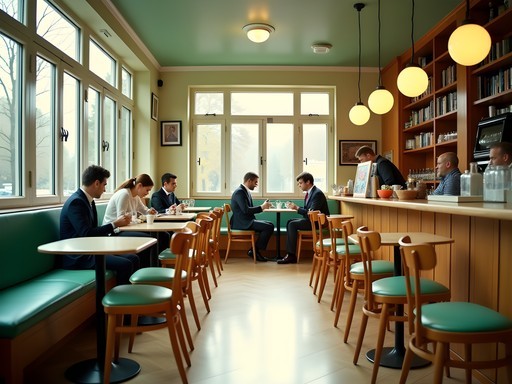
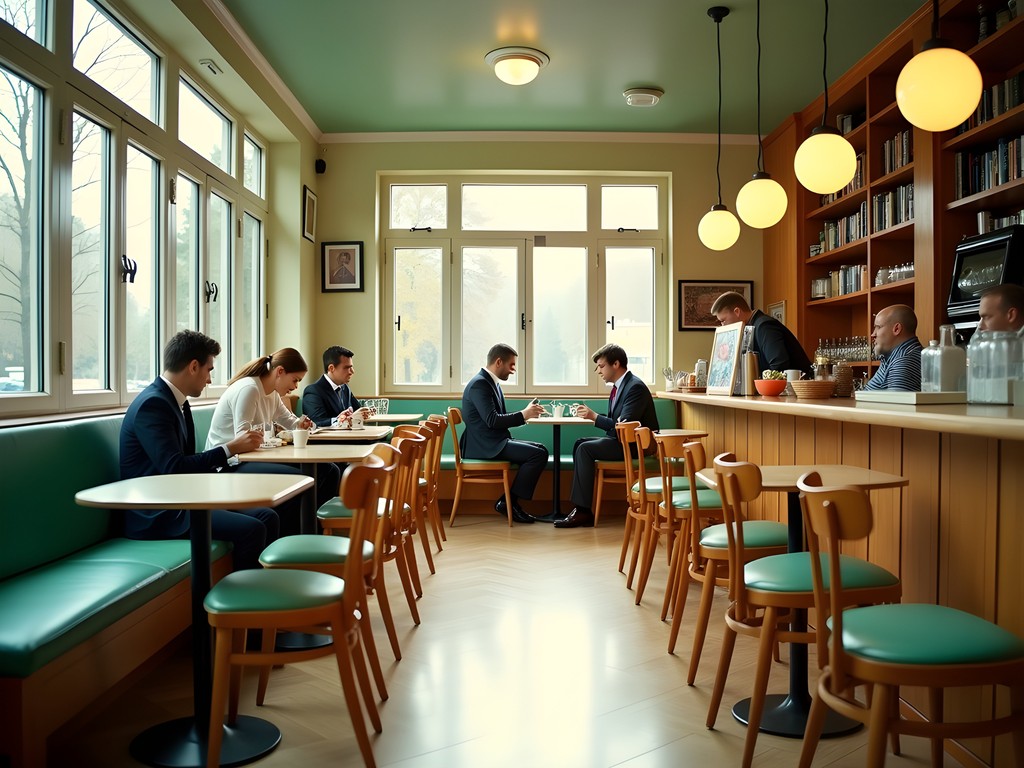
A short tram ride away sits Café Prückel, a magnificent example of 1950s design that feels like walking onto a Wes Anderson film set. The mint-green upholstery, globe lighting, and bentwood furniture create a retro atmosphere that somehow never feels contrived. Piano music fills the room most afternoons, and the newspaper selection is among the most comprehensive in the city.
What makes these spaces special for couples is their perfect balance of privacy and public engagement. You can spend hours in intimate conversation while occasionally dipping into the ambient social life around you—perhaps exchanging recommendations with neighboring tables or joining in the gentle applause after a piano piece concludes.
💡 Pro Tips
- At Café Korb, check their cultural events calendar — many readings and discussions are in English or offer translation
- Café Prückel offers live piano music Monday through Saturday from 3-6pm, making it perfect for an afternoon date
- Both cafés serve excellent breakfast until 3pm, ideal for late risers exploring Vienna's nightlife
The Art of Viennese Coffee: Varieties & Rituals
To truly appreciate Vienna's café culture, one must understand the language and rituals that surround coffee consumption here. Unlike the Italian espresso tradition or American coffee culture, Viennese coffee preparation represents its own distinct art form with roots in the Ottoman siege of 1683 (when coffee beans were purportedly discovered in abandoned Turkish camps).
The foundation of most Viennese coffee drinks is a strong Mokka (similar to espresso but prepared differently). From there, variations emerge through precise combinations of cream, milk, egg yolks, honey, and spirits. Some essential varieties to try:
- Kleiner Schwarzer/Großer Schwarzer: Small or large black coffee
- Melange: Equal parts coffee and hot milk with milk foam (similar to cappuccino)
- Einspänner: Black coffee in a glass with whipped cream
- Fiaker: Black coffee with a shot of rum and whipped cream (named after Vienna's horse-drawn carriages)
- Franziskaner: Melange with more milk and whipped cream instead of milk foam
Beyond the coffee itself, understanding the accessories is crucial. Your coffee will always arrive on a silver or metal tray, accompanied by a glass of water (to cleanse the palate and hydrate), and often a small spoon balanced on the water glass. This water should be sipped between tastes of coffee, and is refilled without asking.
The Zeitungen (newspapers) mounted on wooden rods are free for patrons to read but should be returned to their stands. Many cafés still maintain international newspaper subscriptions—a tradition from when these establishments served as the living rooms for Vienna's intelligentsia.
Perhaps most importantly, one must understand the role of the waiter in Viennese café culture. These are career professionals, often addressed as 'Herr Ober,' who take immense pride in their work. Their seemingly brusque manner is not rudeness but rather part of the theatrical experience. They are the guardians of tradition, the arbiters of proper café etiquette, and—once you become a regular—surprisingly warm custodians of your personal habits and preferences.
💡 Pro Tips
- Learn the phrase 'Einen Melange, bitte' (A melange, please) — it's the most typical Viennese coffee order and marks you as someone in the know
- Never rush the waiter — the pace of service is deliberately unhurried, reflecting the café's function as a place where time slows down
- Tipping is customary but modest — simply round up the bill by a euro or two and say 'Stimmt so' (keep the change)
Final Thoughts
As I sit in Café Central on my final evening, watching the pianist coax melancholy Schubert from the grand piano, I'm reminded that Vienna's coffeehouses are more than mere establishments—they are cultural institutions that have weathered revolutions, wars, and the relentless march of modernization. In a world increasingly defined by digital connectivity and fleeting interactions, these spaces offer something profoundly countercultural: an invitation to slowness, to presence, to the art of conversation and contemplation. Whether you come to Vienna for a weekend or a lifetime, its café culture offers a portal to a different way of experiencing time and togetherness. So bring your partner, order a Melange, and allow yourself to be embraced by that untranslatable quality of Gemütlichkeit that has sustained Viennese souls for centuries. The coffee will eventually cool, but the memories you create in these hallowed halls will warm you long after you've returned home.
✨ Key Takeaways
- Vienna's historic cafés offer couples a unique blend of privacy and public engagement perfect for meaningful connection
- Understanding coffee terminology and café etiquette enhances your experience and marks you as a respectful visitor
- The autumn season brings special seasonal offerings and fewer crowds than summer months
📋 Practical Information
Best Time to Visit
September to November
Budget Estimate
€30-50 per day for coffee and pastries for two people
Recommended Duration
Weekend (2-3 days)
Difficulty Level
Beginner
Comments
luckylegend
adding this to my bucket list!
wildtime
if you're doing multiple cafes definitely grab a good walking guide because they're all pretty walkable from each other in the innere stadt. we hit 3 in one day last spring and it was perfect
Morgan Cunningham
Excellent breakdown of the café landscape, Audrey. I'd argue that Café Prückel deserves more attention than it typically gets - the 1950s interior is a fascinating contrast to the Belle Époque grandeur of Central and Sacher. For solo travelers, I found the communal newspaper tables at most traditional cafés to be surprisingly social. One practical note: many of these historic cafés don't take reservations, and queues at Café Sacher can be 45+ minutes in peak season. My strategy was to visit the famous ones early morning (around 8am) and save the smaller spots for afternoons.
moonmate
Going there in September! How much does coffee usually cost at these places? Trying to budget
wildtime
from what i remember it was like 4-6 euros for coffee, more at the fancy places like sacher. totally worth it though
moonmate
thanks! not bad at all
summerphotographer
Love the photos!
Amy Brown
Audrey, this brought back such wonderful memories! I spent a rainy October week in Vienna five years ago and practically lived in these cafés. Café Hawelka was my absolute favourite - there's something about those worn velvet seats and the way the waiter remembered my order by day three. I'd add that if anyone visits Café Sperl, go on a weekend afternoon when they have live piano music. The acoustics in that space are just magical. And don't rush - that's the whole point of Viennese coffee culture. I once spent four hours in Café Central with just a melange and a newspaper, and nobody batted an eye.
luckylegend
4 hours?? that's amazing, would feel so awkward doing that here lol
Amy Brown
That's exactly what makes it special! It's actually expected there - they even bring you a glass of water on a silver tray with your coffee.
greenchamp
This is making me so hungry for sachertorte right now!!
Sage Dixon
Audrey, you've captured the essence of Vienna's coffee culture beautifully! I was there during a snowstorm last January, and ducking into Café Korb after hours of wandering the icy streets was like finding a warm hug in architectural form. What struck me most was how these cafés truly function as Vienna's living rooms - I saw business meetings, first dates, solo readers, and old friends all sharing the same space without any pressure to leave. One tip for anyone going: don't miss the lesser-known Café Goldegg in the 4th district. It's where locals play billiards in the back room while others read newspapers for hours. Their Einspänner coffee (black coffee with whipped cream) and house-made poppy seed cake was my favorite combination in all of Vienna. And unlike some of the more famous spots, the staff actually seemed happy to see me return day after day!
wildtime
Sachertorte at Café Sacher is overrated. Fight me.
roamlover
Controversial but I kind of agree! The one at Demel is better IMO.
wildtime
Thank you! Finally someone with taste! 😄
skymaster
Those photos of Café Central are stunning! The ceiling alone is worth the visit.
Venture X
Premium card with 2X miles, $300 travel credit, Priority Pass