
Disclosure: This article contains affiliate links. We may earn a commission from purchases at no extra cost to you, which helps our travel content.
Twenty-three years in the FBI teaches you to notice patterns, and the pattern I've observed across five continents is simple: to truly understand a culture, follow the food trail. My recent weekend in Medan, North Sumatra's bustling capital, confirmed this investigative approach yet again. As someone who's spent decades protecting archaeological sites and studying ancient civilizations, I find food markets and traditional kitchens to be living museums—places where history continues uninterrupted through recipes passed down generations. Medan sits at the crossroads of multiple culinary influences: indigenous Batak traditions, Chinese immigrants, Indian traders, and colonial Dutch all left their mark on this gastronomic landscape. What follows is my field report on navigating this complex flavor terrain on a government salary. No fancy expense accounts here—just strategic deployment of resources to maximize culinary intelligence gathering.

The Tactical Approach to Medan's Food Markets
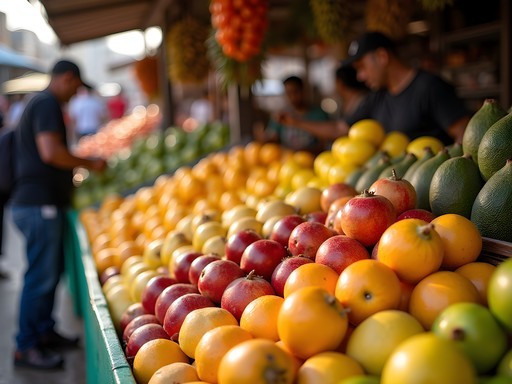
Any proper investigation requires methodical groundwork, which is why I began at Pasar Sambas, one of Medan's oldest traditional markets. Arriving at 0630 hours provided optimal conditions: cooler temperatures, freshest produce, and vendors still willing to explain their wares before the midday rush.
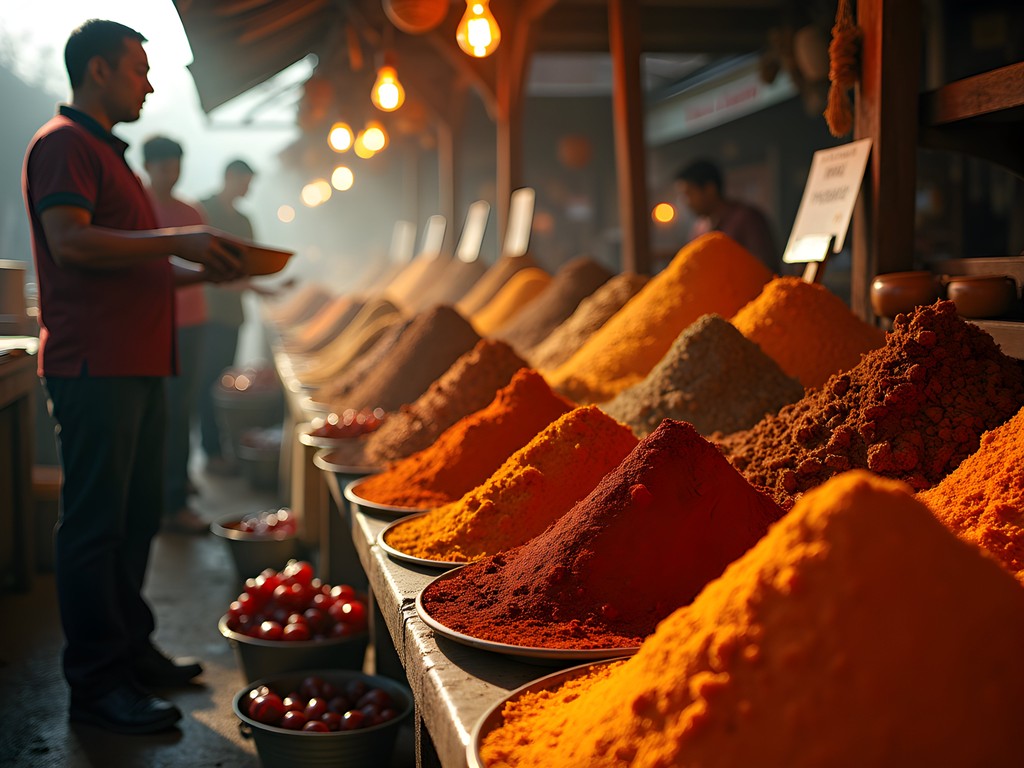
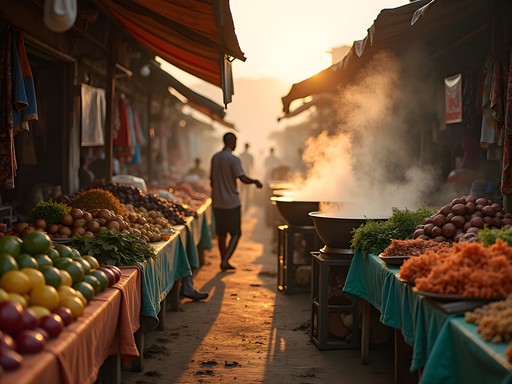
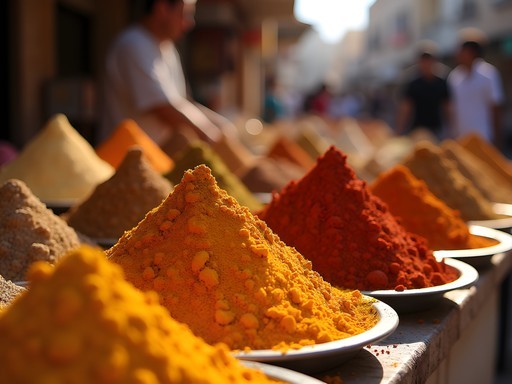
The market presents itself as a labyrinth of narrow pathways lined with stalls displaying pyramids of chili peppers in varying shades of green to crimson, mountains of turmeric and galangal roots, and bundles of lemongrass and kaffir lime leaves. The olfactory evidence was overwhelming—layers of aromas from pungent durian fruit to sweet mangosteen.
For documentation purposes, I carried my compact camera, which proved invaluable for capturing market scenes without drawing undue attention. Its low-light capabilities handled the market's shadowy corners admirably.
My investigation led to a stall operated by Ibu Mariam, a spice vendor whose family has occupied the same market position for four generations. Her collection of andaliman pepper—a citrusy, numbing spice unique to North Sumatra—became a focal point of my inquiry. This pepper, I learned, is essential to authentic Batak cuisine and nearly impossible to procure stateside.
The market follows a logical organization system, with wet goods (meat, fish) segregated from dry goods (spices, grains). This isn't arbitrary but reflects traditional Sumatran spatial arrangements that date back centuries—a living archaeological record of commerce patterns.
💡 Pro Tips
- Visit markets between 6:30-8:00 AM for the freshest selection and fewer crowds
- Bring small denominations of Indonesian rupiah for easier transactions
- Ask permission before photographing vendors or their goods
Decoding Medan's Signature Dishes
After establishing baseline knowledge at the market, I proceeded to fieldwork: systematic sampling of Medan's defining dishes. This required moving beyond tourist establishments to locations frequented by locals—always the most reliable sources.
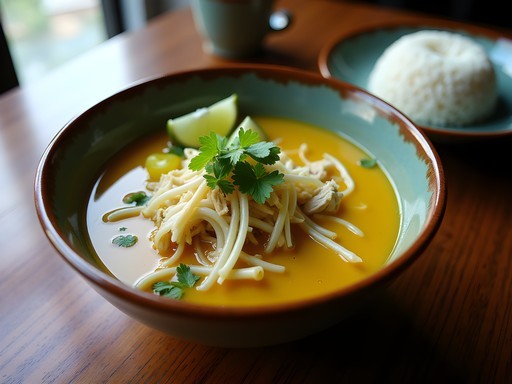
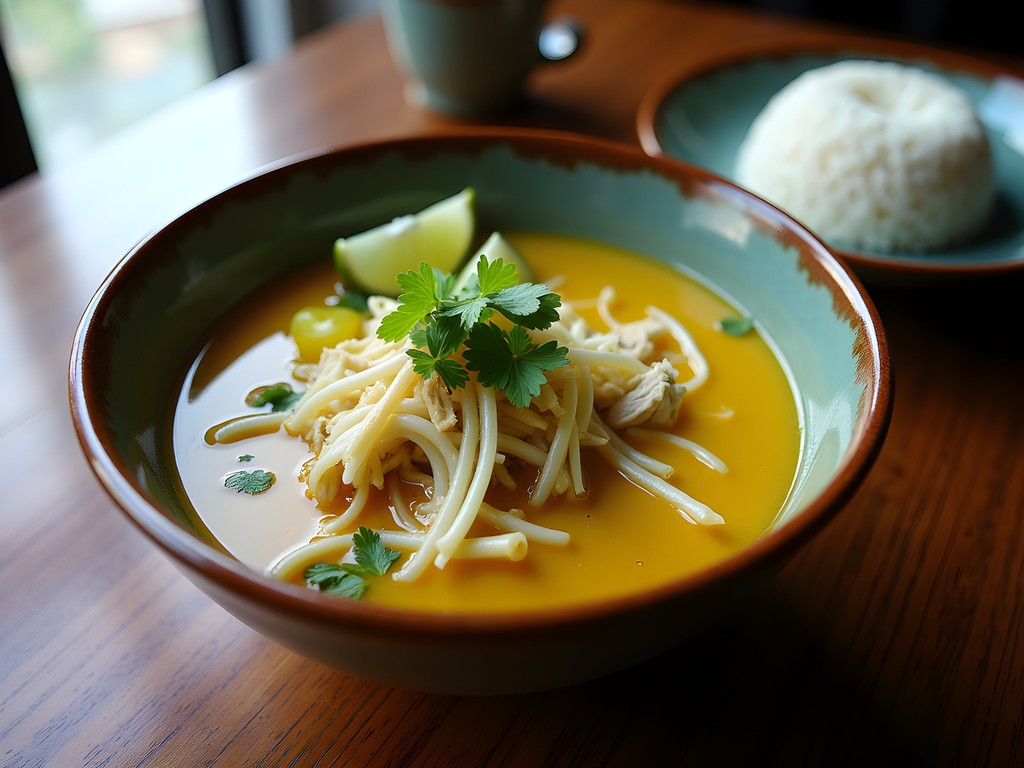
My first target was Soto Medan, a coconut-based soup with fragrant spices, shredded chicken, and bean sprouts. Unlike its Javanese counterparts, Medan's version incorporates potatoes and is served with a side of sticky rice rather than standard white rice. Analysis of this dish reveals historical trade connections—the coconut milk technique showing clear Thai influence while the spice profile points to Indian trade routes.
At Jalan Selat Panjang, I located Kedai Bihun Bebek Asie, an establishment dating to 1960. Their specialty, Bihun Bebek (duck vermicelli soup), demonstrates Chinese culinary techniques applied to local ingredients—an archaeological layer of migration patterns expressed through food preparation methods.
Most revealing was my encounter with Bika Ambon, a honeycomb-textured cake that, despite its name, originated in Medan rather than Ambon. The fermentation process and use of coconut milk points to indigenous techniques predating colonial contact, while the addition of European-introduced vanilla represents a colonial-era modification.
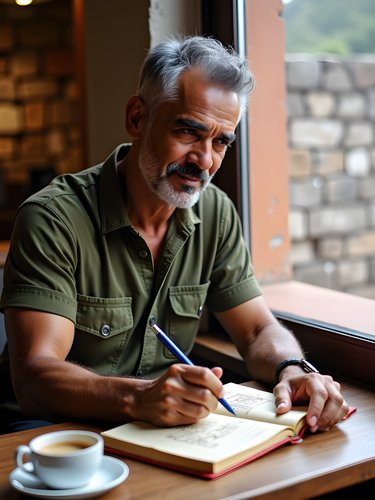
To record these culinary findings properly, I relied on my travel journal with acid-free paper, which has accompanied me from Guatemalan ruins to Jordanian excavation sites. Its water-resistant cover proved particularly valuable when a sudden downpour struck during my street food exploration.
💡 Pro Tips
- Order half portions when possible to sample more dishes
- Look for establishments with high turnover of local customers
- Learn the phrase 'tidak pedas' (not spicy) if you have low spice tolerance
The Archaeological Evidence: Culinary Fusion in Kampung Keling
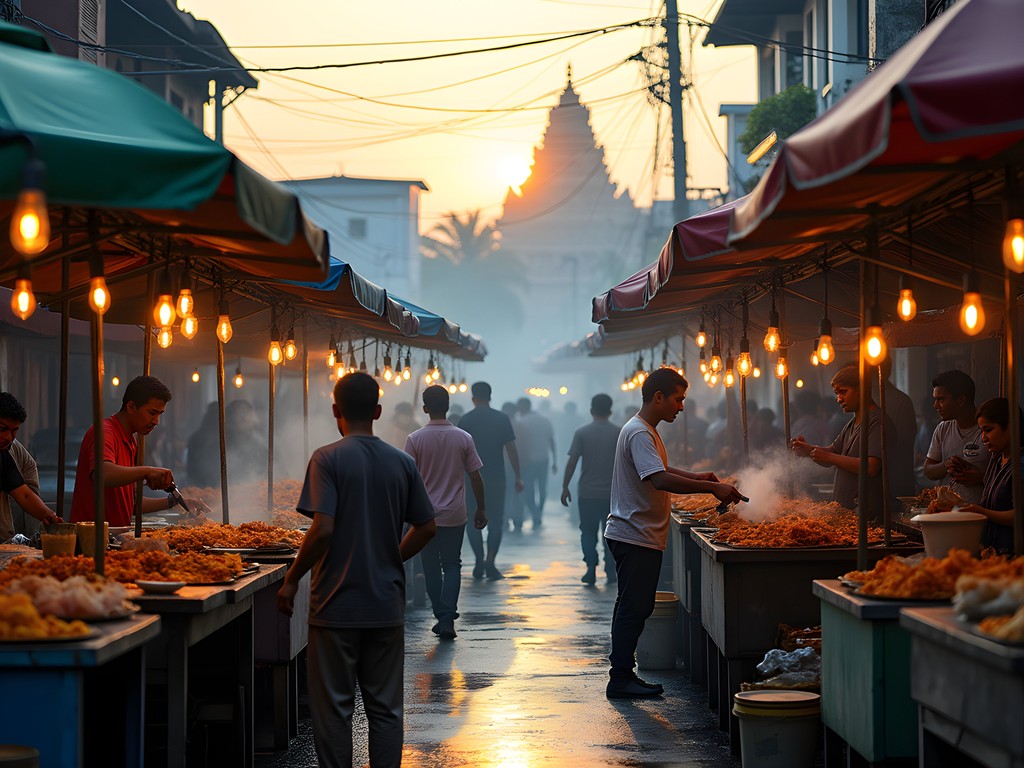
Medan's Little India district, locally known as Kampung Keling, presents a fascinating case study in cultural preservation through culinary tradition. My investigation of this area focused on how Indian culinary techniques merged with Sumatran ingredients over centuries of trade and migration.
The neighborhood centers around Shri Mariamman Temple, built in 1884 by Tamil immigrants. Surrounding this cultural anchor point are numerous establishments serving food that documents this cultural exchange. At Kedai Cek Mat, I observed the preparation of Murtabak, a stuffed pancake of Middle Eastern origin that reached Sumatra via Indian Muslim traders. The Medan version incorporates local aromatics like andaliman pepper and torch ginger—evidence of culinary adaptation to local conditions.
Particularly noteworthy was the discovery of Kari Kambing Medan, a goat curry whose preparation methods differ significantly from both Indian and Malay versions. The incorporation of fermented durian (locally called tempoyak) represents an indigenous Sumatran element integrated into an imported cooking technique—a perfect archaeological stratigraphy of flavor.
The area's street configuration itself tells a story, with narrow pathways reminiscent of South Indian market towns rather than typical Indonesian urban planning. This physical environment has preserved cooking methods that might otherwise have been lost to modernization.
For those conducting their own culinary investigations in this district, I recommend water purification tablets as a precautionary measure. While most established restaurants maintain good standards, smaller street vendors may use untreated water in food preparation.
💡 Pro Tips
- Visit Kampung Keling during late afternoon when food stalls are fully operational
- Try Martabak Medan with its unique local spice blend
- Observe the cooking process when possible—vendors are often proud to demonstrate their techniques

Field Notes on Medan's Chinese Culinary Influence
The Chinese community's impact on Medan's food landscape presents another layer of cultural stratification worth investigating. Concentrated primarily around Kesawan and Jalan Selat Panjang, these culinary artifacts date back to the 19th century when Chinese laborers arrived to work on Deli's tobacco plantations.
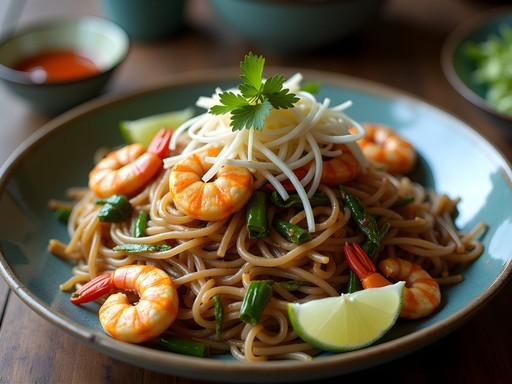
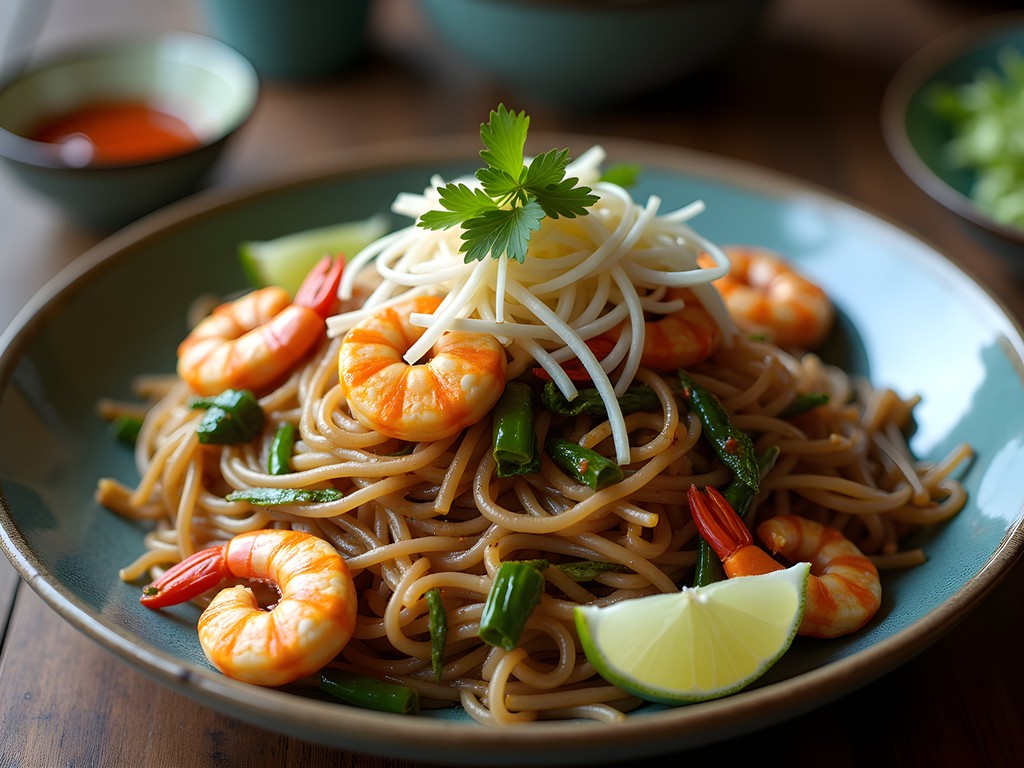
My systematic sampling began with Kwetiau Ateng on Jalan Semarang, an establishment dating to 1953. Their signature dish—flat rice noodles stir-fried with seafood—demonstrates wok hei, the 'breath of the wok' technique requiring precise heat control. This cooking method remains unchanged since its introduction to Sumatra, preserved through generational knowledge transfer.
Of particular interest was the discovery of Bihun Bebek Asie (duck rice vermicelli), which shows clear Teochew influence but incorporates local Sumatran spices absent in its Chinese ancestor dish. The establishment's third-generation owner, Mr. Lim, confirmed my hypothesis that his grandfather modified the original recipe in the 1960s to accommodate local palates—a textbook example of culinary adaptation.
Perhaps most revealing was Medan's Bakmi, a noodle dish displaying Hokkien techniques but utilizing local ingredients. The incorporation of andaliman pepper and torch ginger represents indigenous elements absent in mainland Chinese versions.
My investigation of Chinese-Indonesian bakeries revealed Bolu Meranti, a rolled cake that combines European baking techniques (likely introduced during Dutch colonial period) with Chinese flavor profiles and local pandan leaves—a three-culture fusion in a single food item.
During these extended culinary investigations, my insulated water bottle proved essential for maintaining hydration in Medan's tropical climate without generating plastic waste.
💡 Pro Tips
- Many Chinese-Indonesian establishments close by 8 PM, plan accordingly
- Look for places where multiple generations work together—these often maintain the most authentic techniques
- Cash is preferred at most traditional establishments
Budget-Conscious Culinary Intelligence Gathering
Operating on a government pension requires strategic resource allocation. My methodology for maximizing culinary intelligence while minimizing expenditure in Medan followed established protocols I've developed across 37 countries.
First, accommodations were selected based on proximity to food districts rather than amenities. I secured lodging at Wisma Sederhana, a basic but clean establishment within walking distance of both Kampung Keling and Kesawan. This eliminated transportation costs and facilitated early morning market reconnaissance.
For optimal sampling efficiency, I implemented the 'small portion, high variety' approach. Many establishments offer half portions (porsi setengah) upon request, enabling broader sampling without exceeding daily caloric or financial budgets. This technique allowed me to document 27 distinct dishes over a three-day period at an average cost of 25,000 IDR ($1.75 USD) per item.
Breakfasts at local warung (small family-owned businesses) provided substantial nourishment at minimal cost. A typical morning meal of Lontong Sayur (rice cakes with vegetable curry) with tea averaged 15,000 IDR ($1 USD), while delivering complex flavor profiles worthy of documentation.
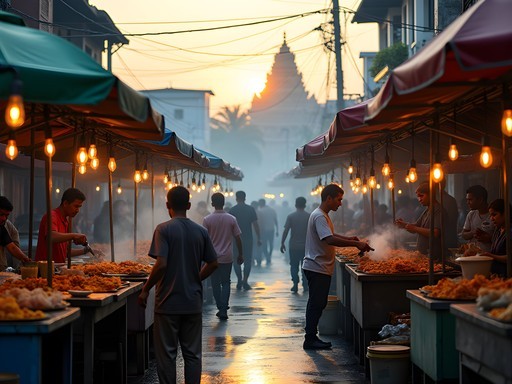
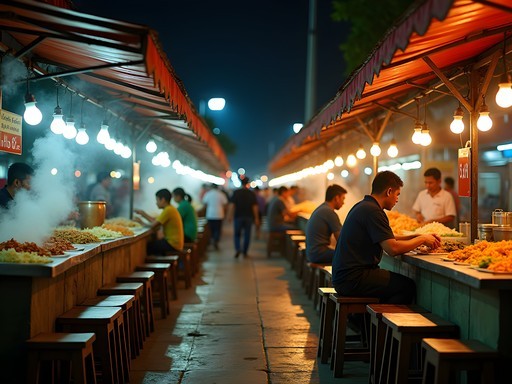
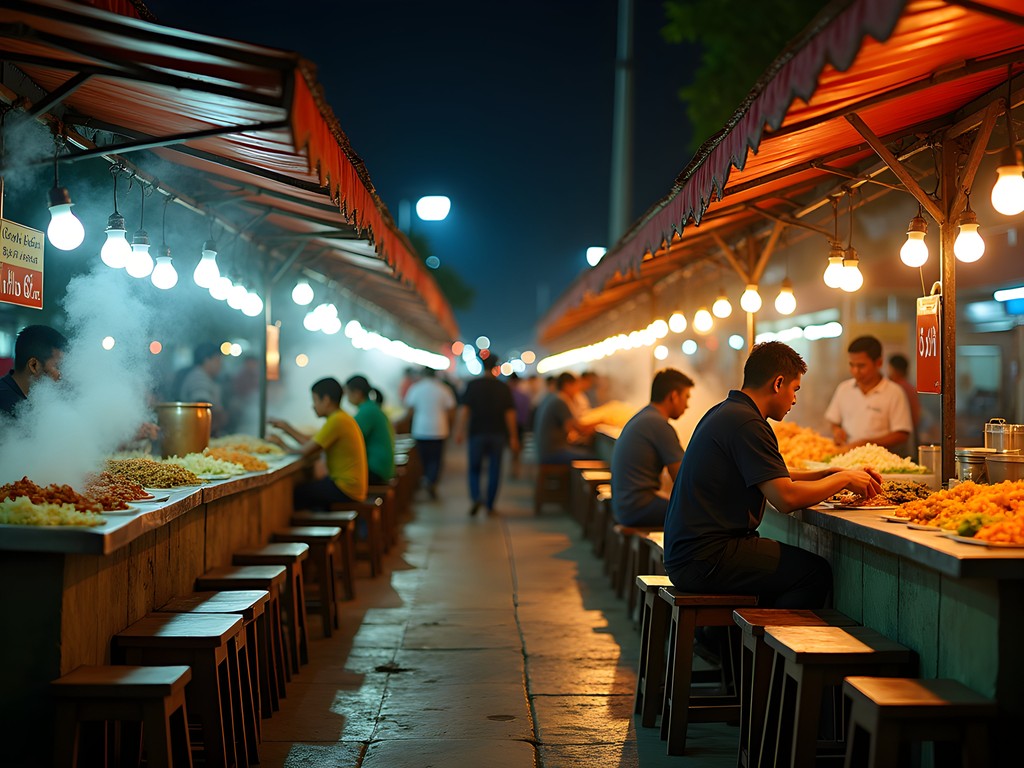
Street food presented the optimal cost-to-authenticity ratio. The night market at Jalan Semarang offered particularly efficient sampling opportunities, with most items priced between 10,000-20,000 IDR ($0.70-$1.40 USD).
For those conducting similar budget-conscious culinary investigations, I recommend carrying a compact daypack for market purchases and essential gear. The internal organization system proved invaluable for keeping my field notes, camera, and water bottle accessible while navigating crowded food markets.
💡 Pro Tips
- Ask for 'porsi setengah' (half portion) to sample more dishes within your budget
- Breakfast at local warung offers the best value-to-cost ratio
- Street food is generally 30-40% cheaper than similar dishes in established restaurants
Final Thoughts
My investigation of Medan's culinary landscape reveals a complex archaeological record of cultural exchange preserved through cooking techniques and flavor profiles. The city presents an exceptional case study in how migration patterns, trade routes, and colonial influences can be documented through food traditions. For the budget-conscious traveler with investigative tendencies, Medan offers extraordinary value—access to living history through affordable culinary experiences that would cost ten times as much in Western countries. As with any field operation, preparation is key: bring small denominations of local currency, maintain proper hydration protocols, and approach each culinary encounter with methodical attention to detail. The evidence is clear: Medan deserves recognition as one of Southeast Asia's most significant food destinations, particularly for those who approach eating as a form of cultural archaeology.
✨ Key Takeaways
- Medan's food scene represents layers of cultural history from indigenous Batak to Chinese, Indian, and Dutch influences
- Early morning market visits provide optimal conditions for understanding local ingredients
- Budget travelers can experience extraordinary culinary diversity for under $15-20 USD per day
- Street food and family-run warung offer the best value-to-authenticity ratio
📋 Practical Information
Best Time to Visit
year-round (slightly drier May-September)
Budget Estimate
$30-50 USD per day including accommodation
Recommended Duration
2-3 days
Difficulty Level
Beginner

Comments
George Hayes
Man, this takes me back! I did a food tour through Medan with my family about three years ago and your description of the layered cultural influences is spot-on. We stayed for a week and honestly could have used another. One thing I'd add for families - the Tip Top Restaurant is a great introduction to Medan cuisine in a comfortable setting before you dive into the markets. My kids were intimidated by the market chaos at first, but after a couple meals there they were ready to explore. The rendang we had in Kampung Keling was life-changing. Your FBI investigative lens really captures something I felt but couldn't articulate - that sense of uncovering layers of history through food.
summerguide
Thanks for the Tip Top rec!
winterwalker
This is EXACTLY what I needed! Been to Jakarta and Bali but never made it to Sumatra. The archaeological approach to food culture is brilliant - you've convinced me to book flights. That section on cooking techniques preserving history gave me chills. Any recommendations for cooking classes there?
sunnydiver
Is it easy to get around without speaking Indonesian? My Bahasa is pretty basic
winterwalker
Not the author but I was just there in December - you'll be fine! Lots of people speak some English in the tourist areas and food vendors are super patient. Just learn a few food words and you're golden.
Claire Hawkins
Anthony, this resonates so much with my own experiences in Southeast Asia! I took my kids to Penang last year and we did a similar spice market tour - the way food tells the story of migration and cultural exchange is just magical. My 7-year-old still talks about the lady who showed us how to grind fresh nutmeg. Did you find the Chinese-Indonesian fusion dishes in Kampung Keling similar to what you'd find in Penang? I'm thinking of adding Medan to our next family trip and your 'tactical approach' is exactly what I need with three kids in tow!
Anthony Snyder
Claire - yes, very similar to Penang but with stronger Batak influences. The Chinese-Indonesian fusion here has its own distinct character. With kids, I'd recommend staying near the Maimun Palace area for easier logistics.
summerguide
Love the FBI angle on food! Really cool perspective
wanderclimber9672
Which market did you like best? Going there in March!
Anthony Snyder
Pajak Sentral was my favorite - arrive early morning around 6am for the best experience. The spice vendors in the back section are incredibly knowledgeable.
wanderclimber9672
awesome thanks!!
coffeestar
Really enjoyed this! Question about the Chinese influence section - are there any specific neighborhoods you'd recommend for exploring that side of Medan's food culture? Planning a trip for October and want to map things out properly.
Kimberly Murphy
Not Anthony but Kesawan area is brilliant for Chinese-Indonesian fusion. The street food there is incredible!
waveblogger
Love the FBI investigative approach to food tourism lol! But seriously, Medan is SO underrated. I spent a week there last year and the bika ambon alone is worth the trip. Pro tip: if you're doing the market tours, bring a small portable fan because the humidity is no joke, especially around the food stalls. The rendang at Tip Top Restaurant is also phenomenal - it's this old colonial building with amazing history.
coffeestar
Tip Top is such a vibe! The architecture alone is worth visiting.
freeblogger
Going there in March, super excited now!
Kimberly Murphy
Brilliant write-up Anthony! I was in Medan last year and completely agree about Kampung Keling - the fusion there is absolutely fascinating. Did you get to try soto Medan at the morning market near Istana Maimun? The vendor with the blue cart does the best version I've ever had. The broth is incredible. Also found that early mornings (before 7am) are the best time to hit the markets before it gets absolutely sweltering. The durian pancakes near Tjong A Fie Mansion are also a must!
waveblogger
Blue cart soto!! Yes! That guy is a legend.
Venture X
Premium card with 2X miles, $300 travel credit, Priority Pass