
Disclosure: This article contains affiliate links. We may earn a commission from purchases at no extra cost to you, which helps our travel content.
When my buying trip to Jakarta unexpectedly freed up a week in my schedule, I made an impulsive decision that would forever change my palate: I booked a flight to East Timor. This tiny Southeast Asian nation, independent only since 2002, remains one of the region's most overlooked destinations—especially for food travelers. Maliana, a mountain-flanked market town in the western highlands, became my culinary base camp. Far from the luxury boutiques and fashion showrooms I typically navigate, I found myself wandering through vibrant open-air markets where the fabrics weren't on mannequins but rather wrapped around the waists of women selling the most aromatic spices and freshest produce I've ever encountered. What followed was seven days of flavor exploration that cost less than a single designer dinner in Tokyo, yet delivered experiences that no Michelin star could replicate. This is my story of discovering Timor's soul through its kitchens—where Portuguese colonial influence meets indigenous Austronesian traditions in a symphony of unexpected flavors.

Navigating Maliana's Market Culture
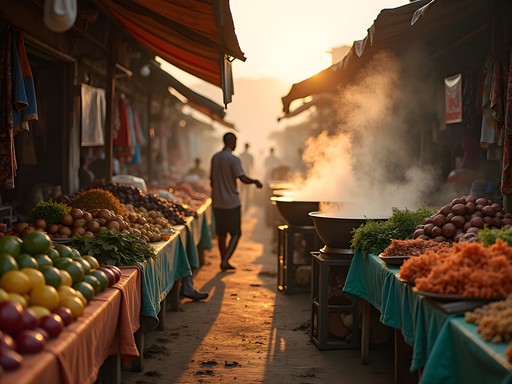
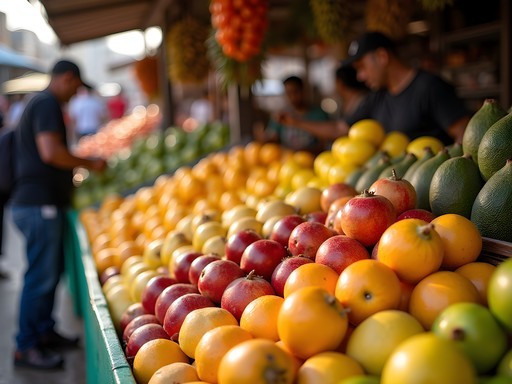
If you've browsed Milan's Quadrilatero della Moda, you understand the thrill of the hunt. Maliana's central market delivers that same dopamine hit, but with ingredients instead of Italian leather. The market operates on a cadence that feels both chaotic and perfectly choreographed—much like fashion week, but with significantly lower price tags.
I arrived at dawn on my second day, armed with my travel journal and a handful of basic Tetun phrases I'd frantically memorized the night before. The market unfolds in concentric circles: produce on the periphery, dry goods and spices in the middle rings, and prepared foods at the heart. Unlike the curated displays of department stores, nothing here is arranged for aesthetic appeal—yet everything possesses an authentic beauty that no visual merchandiser could improve upon.
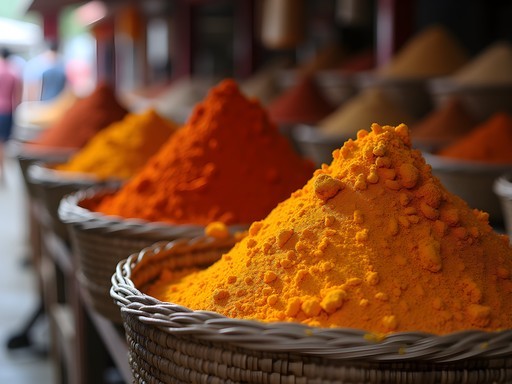
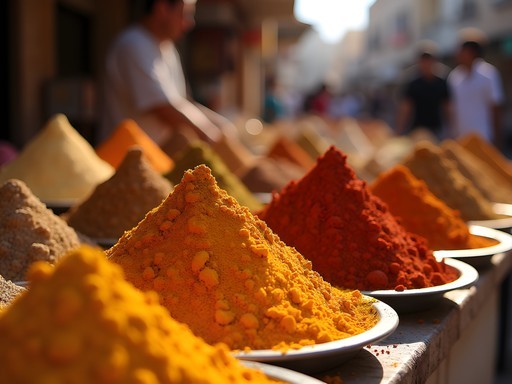
The star attraction is undoubtedly the spice section, where mounds of freshly ground turmeric, ginger, galangal, and chili create a color palette that would make any trend forecaster swoon. These aren't packaged in sterile containers but rather piled high in woven baskets, sold by weight and wrapped in banana leaves—zero-waste packaging that predates our sustainability buzzwords by centuries.
What struck me most was the textile connection—many vendors displayed their goods on traditional tais cloths, the same vibrant handwoven fabrics I'd researched during my undergraduate studies. Here, fashion and food culture intertwine in ways I never expected, each informing and elevating the other.

💡 Pro Tips
- Arrive before 7 AM for the freshest selection and to beat the midday heat
- Bring small denomination US dollars—they're widely accepted alongside Timorese currency
- Learn basic counting in Tetun to negotiate prices respectfully
The Portuguese Colonial Influence: Fusion Before It Was Trendy
Long before fusion cuisine became the darling of metropolitan restaurants, East Timor was perfecting the blend of Portuguese colonial flavors with indigenous ingredients. This small nation spent nearly 500 years under Portuguese rule, and that European influence is evident in every bite—though transformed by necessity and creativity into something entirely unique.
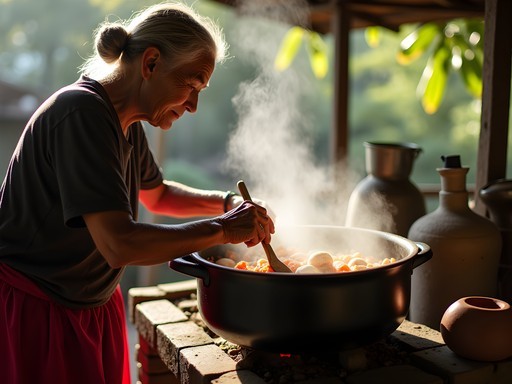
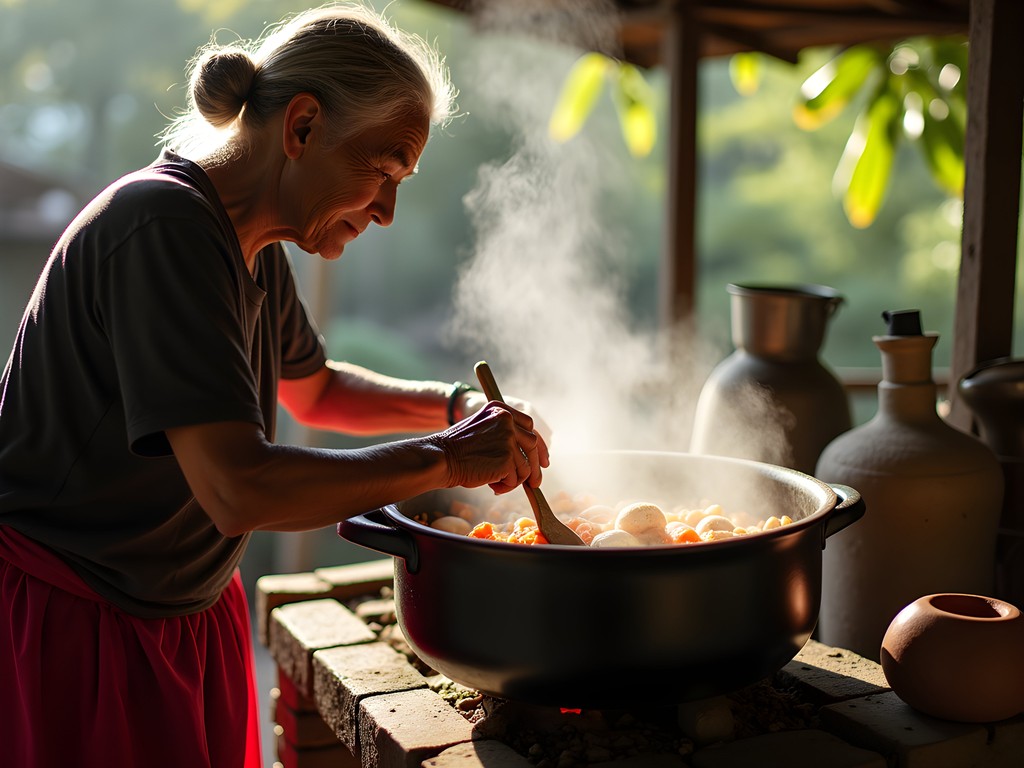
In Maliana, I connected with Maria, a local grandmother whose outdoor kitchen became my culinary classroom for two afternoons. Her hands moved with the practiced precision of a master craftsman, reminding me of the artisans I've watched in leather workshops across Italy. The difference? Her materials were cassava leaves, coconut milk, and the freshest seafood I've ever handled.
"Portuguese brought the technique, Timor gave the flavor," she explained while teaching me to make caril, a curry that bears little resemblance to its Indian namesake. The Portuguese colonial influence appears in the base techniques—slow sautéing, layering of flavors—while indigenous ingredients like ai-manas (Timorese chilies) and ai-parapa (a local basil variety) transform these European methods into something distinctly Timorese.
The crown jewel of this fusion is undoubtedly koto, a red bean stew that shares DNA with Portugal's feijoada but incorporates local aromatics and is traditionally served with rice rather than bread. I spent an entire morning helping Maria prepare this dish, crushing garlic with a stone pestle that had been in her family for generations—a tool more precious than any designer accessory I've ever coveted.
💡 Pro Tips
- Ask permission before photographing home cooks or their setups—many are happy to share but appreciate being asked
- Bring small gifts like coffee or tea when visiting local homes for cooking lessons
- Don't rush the cooking process—many traditional dishes require slow simmering to develop proper flavors
Coffee Culture: Timor's Hidden Luxury Export
If there's one product category where East Timor deserves global recognition, it's coffee. The highlands around Maliana produce some of Southeast Asia's most distinctive arabica beans, yet most are exported unmarked, blended into commercial products that never acknowledge their origin. For a retail buyer like me who obsesses over provenance and authenticity, this anonymity feels like fashion's equivalent of removing designer labels from couture pieces.
I spent a day with coffee farmers in the hills above Maliana, where coffee grows in partial shade beneath towering hardwood trees. Unlike the manicured coffee plantations I've visited in Colombia and Ethiopia, Timorese coffee cultivation feels almost wild—organic by necessity rather than certification. The farmers harvest and process beans using methods unchanged for generations, drying them on woven mats in the mountain air.
The resulting cup profile is extraordinary—notes of dark chocolate and black cherry with a distinctive earthy finish that would command premium prices in specialty cafes worldwide. Yet most farmers sell to middlemen at fraction of fair value, lacking direct market access.
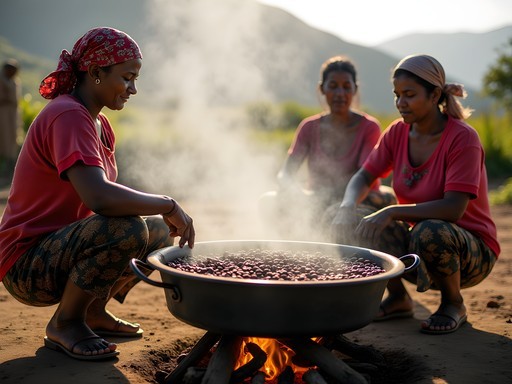
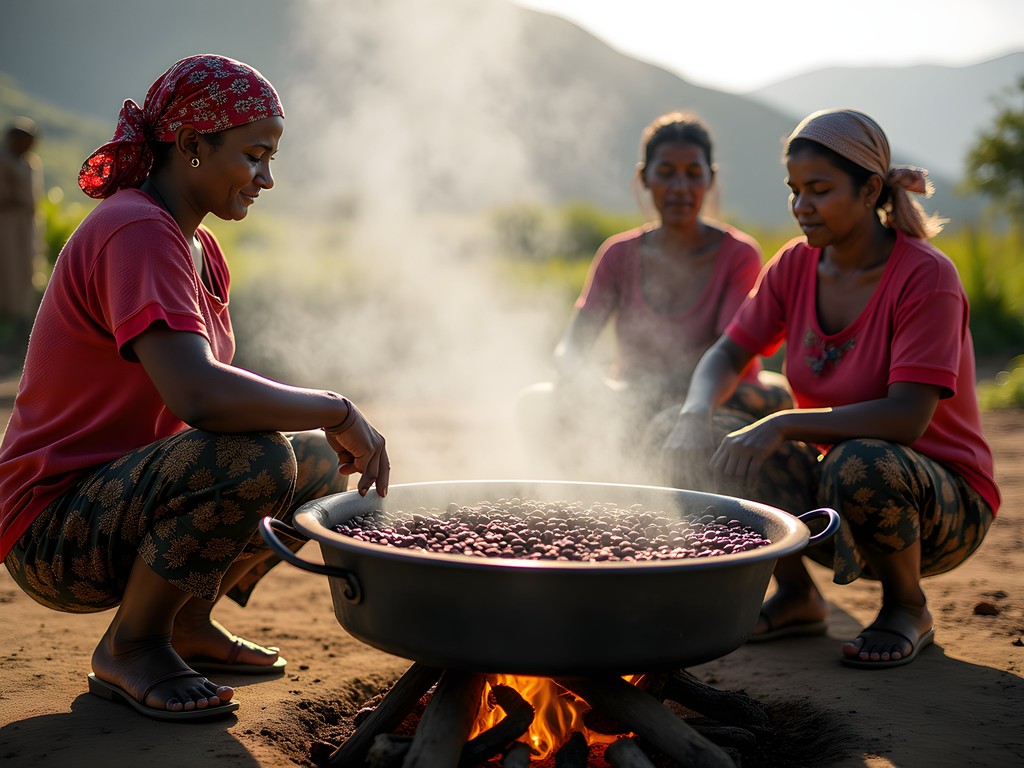
In Maliana town, I discovered a small cooperative where women roast beans in small batches over wood fires, turning them constantly with a paddle to ensure even heat distribution. I brought my hand grinder along on this trip specifically hoping to bring home beans, and it proved to be the perfect conversation starter. When the women saw me grinding fresh beans each morning at my guesthouse, they invited me to join their roasting session.
The experience reinforced something I've observed across fashion and food: true luxury isn't about branding or price—it's about connection to origin, production methods, and the hands that create.
💡 Pro Tips
- Buy coffee directly from producers or cooperatives when possible to ensure fair compensation
- Look for beans labeled 'Timor Hybrid'—a naturally occurring cross between arabica and robusta varieties unique to the region
- Pack coffee in vacuum-sealed bags to preserve freshness during travel

Beyond Rice: The Staple Foods Redefining Comfort
If you asked me before this trip to name East Timorese staple foods, I'd have defaulted to the standard Southeast Asian answer: rice. While rice certainly features prominently, Maliana introduced me to a diverse carbohydrate landscape that challenges Western notions of staple foods.
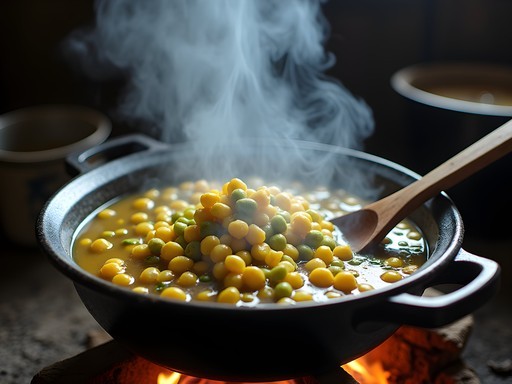
Corn (batar) plays a starring role in Timorese cuisine, appearing in forms ranging from roasted young ears to dried kernels ground into meal. The signature dish batar da'an combines corn with mung beans in a stew-like consistency that serves as both breakfast and dinner food. After trying it with fresh coconut milk at a roadside warung, I found myself craving it each morning—a surprising shift for someone who typically starts days with espresso and not much else.
Cassava (ai-farina) appears in numerous preparations, but the most fascinating is koto, where the root is fermented underground for days before being unearthed, dried, and pounded into flour. The slightly sour notes this process creates provide a perfect counterbalance to rich stews. When I mentioned to my host that the technique reminded me of how certain luxury leather goods are treated to develop character, she laughed and said, "But we've been doing this for centuries."
Perhaps most surprising was my introduction to sago palm—not the processed pearls familiar from Asian desserts, but the starchy pith extracted from palm trunks. In remote villages outside Maliana, I watched families process this traditional carbohydrate source through an elaborate sequence of extraction, washing, and drying that yields a versatile flour used in everything from puddings to flatbreads.
I recorded each preparation method in my waterproof notebook, which proved invaluable during unexpected afternoon downpours as I documented recipes I hope to recreate back home.

💡 Pro Tips
- Try batar da'an for breakfast at local eateries—it's typically served only in the morning hours
- Look for ai-farina dishes that use the fermented cassava preparation method for the most authentic flavors
- Ask locals to demonstrate proper eating techniques for communal dishes—there are often specific customs around sharing food
Cooking with Fire: The Original Slow Food Movement
In fashion, we often talk about artisanal techniques and slow craftsmanship as luxury selling points. In Maliana, I discovered the original slow food movement—cooking methods that haven't changed in centuries and require nothing but fire, patience, and expertise.
Unlike the gas stoves and electric appliances that dominate Western kitchens, cooking in Maliana revolves entirely around fire management. Different dishes require specific heat levels, achieved not by turning knobs but by arranging wood and coals with precision. The skill reminded me of watching master tailors in Milan who know exactly how much pressure to apply to different fabrics—an intuitive knowledge no machine can replicate.
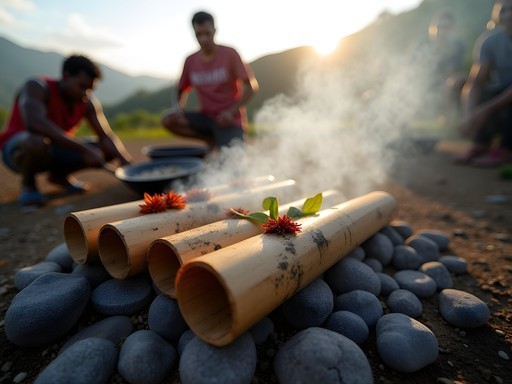
The most impressive demonstration came when I joined a community feast preparing tukir, a method where meat is cooked inside bamboo tubes placed directly in hot coals. The preparation begins at dawn, with men splitting bamboo while women prepare marinades of chili, ginger, and coconut milk. The sealed bamboo tubes slowly roast for hours, infusing the meat with smoky flavor and bamboo essence.
Equally fascinating was watching sanan tanan (clay pot cooking), where earthenware vessels are nestled into embers for slow, even heat distribution. These unglazed pots, made locally from river clay, impart a mineral quality to stews and broths that no commercial cookware could match. I was so impressed that I carefully wrapped one to bring home, though I doubt my electric stove will do it justice.
The reverence for fire extends to preservation techniques as well. Fish and meat are often smoked over smoldering coconut husks, creating intensely flavored proteins that can be stored without refrigeration. The resulting products—especially smoked fish—become flavor foundations for countless dishes, demonstrating how necessity breeds culinary innovation.

💡 Pro Tips
- Participate in a community cooking event if invited—these are valuable cultural exchanges, not tourist activities
- Learn basic fire management techniques from locals if you plan to try outdoor cooking
- Respect the time investment of traditional cooking methods—never rush hosts or suggest faster alternatives
Final Thoughts
As my week in Maliana drew to a close, I found myself lingering over a final cup of hand-roasted coffee, reluctant to leave this culinary frontier that had so thoroughly recalibrated my understanding of authentic food experiences. What struck me most wasn't just the flavors—though they were extraordinary—but the unbroken connection between food, culture, and daily life. In Maliana, cooking isn't performance or entertainment; it's living heritage. For travelers willing to venture beyond East Timor's more visited coastal areas, Maliana offers a rare glimpse into culinary traditions untouched by tourism's homogenizing influence. Pack light, bring an open palate, and prepare to experience flavors that no trendy restaurant could possibly replicate. The fashion world taught me to recognize craftsmanship and authenticity—Maliana showed me their purest expressions.
✨ Key Takeaways
- East Timor's cuisine represents one of Southeast Asia's last undiscovered culinary frontiers
- Portuguese colonial influence created unique fusion dishes centuries before 'fusion cuisine' became trendy
- Traditional cooking methods using fire and fermentation create flavors impossible to replicate with modern techniques
- Maliana's markets offer an authentic food shopping experience with ingredients sourced directly from surrounding farms
📋 Practical Information
Best Time to Visit
April-May (late spring, after rainy season)
Budget Estimate
$30-50 per day including accommodation, food and local transport
Recommended Duration
5-7 days
Difficulty Level
Moderate

Comments
bluevibes
Love the market photos!
Taylor Moreau
Excellent piece, Jose. I visited Dili for a conference last year but didn't make it to Maliana - clearly a missed opportunity. The Portuguese-Indonesian fusion you describe is fascinating from a culinary anthropology perspective. East Timor really is one of those destinations that rewards the adventurous traveller. The infrastructure can be challenging, but that's part of the authentic experience. Did you find English widely spoken in the markets, or was Portuguese more useful?
Jose McDonald
Taylor - Portuguese and Tetum were definitely more useful than English in Maliana's markets. I picked up basic Tetum phrases which helped immensely. Dili has more English speakers, but once you're in the rural areas, it's quite limited.
coollife
The coffee section really caught my attention. Do you know if they export the beans directly or is it hard to get outside of Timor? Would love to try some at home.
Jose McDonald
Great question! Some specialty roasters in Australia and Portugal carry Timor beans. Look for cooperatives like Cafe Timor or NCBA CLUSA brands. The quality is seriously underrated - single origin stuff rivals anything from Ethiopia.
coollife
Thanks! I'll check those out
tripmood3583
This looks amazing! Never even thought about East Timor for food travel.
bluevibes
Same here! Adding it to my list now
vacationbuddy
Love the photos! Really inspiring
smartking
Can you buy that coffee anywhere online? Would love to try some authentic Timorese beans at home
Jose McDonald
Some specialty roasters import it but honestly the freshest stuff is there in person. Look for Cooperativa Cafe Timor online though - they export quality beans!
Robert Moreau
Jose, this brought back memories! I spent three days in Dili last year and kept hearing about Maliana's food scene but didn't make it out there - major regret now after reading this. That coffee culture section especially resonates. I found some incredible single-origin Timorese beans at a small roastery in Dili and they rivaled anything I've had in Hawaii. The Portuguese influence on the cuisine is fascinating too - that fusion of flavors created something truly unique. Did you get a chance to try any of the seafood dishes? I'm planning another trip next year and Maliana is definitely on the itinerary this time.
Jose McDonald
Robert! Yes, the seafood was incredible - fresh catch every morning. You'll love it. The coastal villages near Maliana have some amazing grilled fish preparations with local spices.
escapegal
OMG this looks amazing!! I've never even heard of Maliana before but now I'm obsessed. That market culture section has me drooling 🤤 How hard is it to get there from Dili?
Jose McDonald
It's about 2.5 hours by car from Dili! The road is decent and the scenery is gorgeous. Totally worth the trip.
escapegal
Perfect! Adding this to my bucket list 😍
tripwalker
Just got back from Maliana last month! Your post captures it perfectly. That market is sensory overload in the best way. We tried this amazing dish called batar daan (corn with beans) that a local family made for us - simple but so flavorful with those local herbs. The coffee is seriously life-changing. We stayed at a small guesthouse where the owner roasted beans each morning right outside our window - best alarm clock ever! One tip for anyone going: the local buses between towns are an experience, but bring something soft to sit on. Those wooden benches are ROUGH for a 3-hour ride!
skyking
Thanks for the bus tip! How did you find the weather in Maliana? Planning for October and wondering what to pack.
tripwalker
It was hot during the day but cooled off at night, especially in the highlands. Definitely bring layers! And a rain jacket - we got caught in some surprise afternoon showers.
skyking
That coffee section has me intrigued! Jose, where exactly did you find the best cup? Heading to East Timor in October and definitely want to experience the coffee culture firsthand.
travelchamp
Following this! Also curious if you can bring beans back through customs easily?
Venture X
Premium card with 2X miles, $300 travel credit, Priority Pass