



Disclosure: This article contains affiliate links. We may earn a commission from purchases at no extra cost to you, which helps our travel content.
The first time I visited Copenhagen with my American father in the late '90s, Danish cuisine wasn't exactly on the global culinary map. We ate decent but forgettable meals of hearty meat and potatoes, with the occasional smørrebrød (open-faced sandwich) that hinted at something more interesting beneath the surface. Fast forward two decades, and ¡Dios mío! What a transformation! Copenhagen has engineered nothing short of a gastronomic revolution, propelling itself from a city of solid but unexceptional fare to a world-renowned culinary destination. This metamorphosis fascinates me not just as someone who appreciates good food, but as a student of how culture manifests through design—even on the plate. On my recent summer visit, I spent a week tracing this remarkable journey from traditional Danish classics to the cutting-edge New Nordic movement that has chefs worldwide taking notes.

The Foundations: Traditional Danish Cuisine
To understand Copenhagen's culinary revolution, one must first appreciate its foundations. Traditional Danish cuisine is built on the honest simplicity that characterizes much of Scandinavian cooking—practical food designed to sustain through long winters and make the most of local resources.
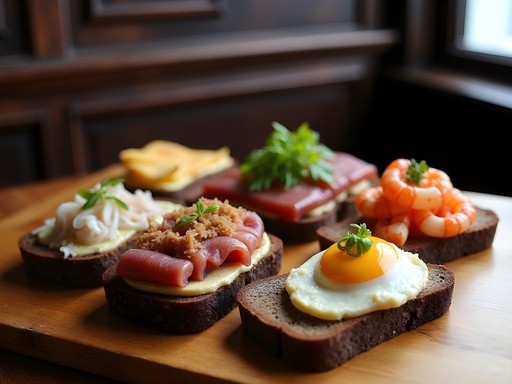
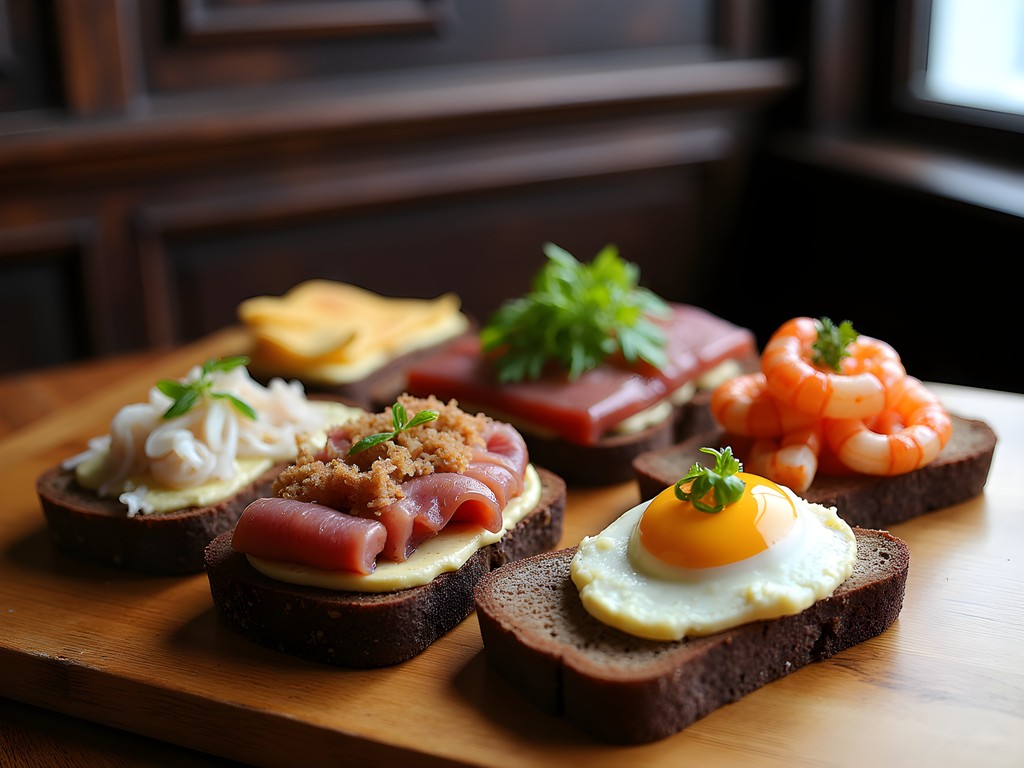
My exploration began at Restaurant Schønnemann, a Copenhagen institution since 1877 that feels like stepping into a time capsule. Dark wood paneling, vintage photographs, and the warm aroma of fresh bread transport you to another era. Here, I reacquainted myself with smørrebrød in its most traditional form—rye bread topped with precisely arranged combinations like pickled herring with onions and capers, or roast beef with remoulade and crispy fried onions.
'El que no arriesga, no gana' (nothing ventured, nothing gained) as we say in Spain, so I ordered the more adventurous offerings: liver pâté with bacon and mushrooms, and the notorious stegt flæsk—crispy pork belly with parsley sauce. These dishes tell the story of Danish culinary heritage—resourceful, unpretentious, and deeply satisfying.
Another cornerstone of traditional Danish cooking is frikadeller (meatballs) which I sampled at Restaurant Klubben in Vesterbro. These hand-formed treasures of pork and veal, fragrant with nutmeg and allspice, are the quintessential Danish comfort food. Paired with caramelized potatoes, pickled red cabbage, and a cold Carlsberg, they represent Danish hygge (coziness) on a plate.
💡 Pro Tips
- For authentic smørrebrød, visit during lunch hours (11:30-3:00) when it's traditionally eaten
- Make reservations at traditional restaurants at least 3-4 days in advance, especially in summer
- Try aquavit (snaps) with your smørrebrød—it's traditional and helps cut through the rich toppings
The Turning Point: Noma and the New Nordic Manifesto
If there's a single catalyst for Copenhagen's culinary transformation, it's undoubtedly Noma. When René Redzepi and Claus Meyer opened this groundbreaking restaurant in 2003, they didn't just launch a business—they ignited a movement. Their New Nordic Manifesto emphasized purity, seasonality, ethics, health, sustainability, and quality—principles that would reshape not just Danish cuisine, but global gastronomy.
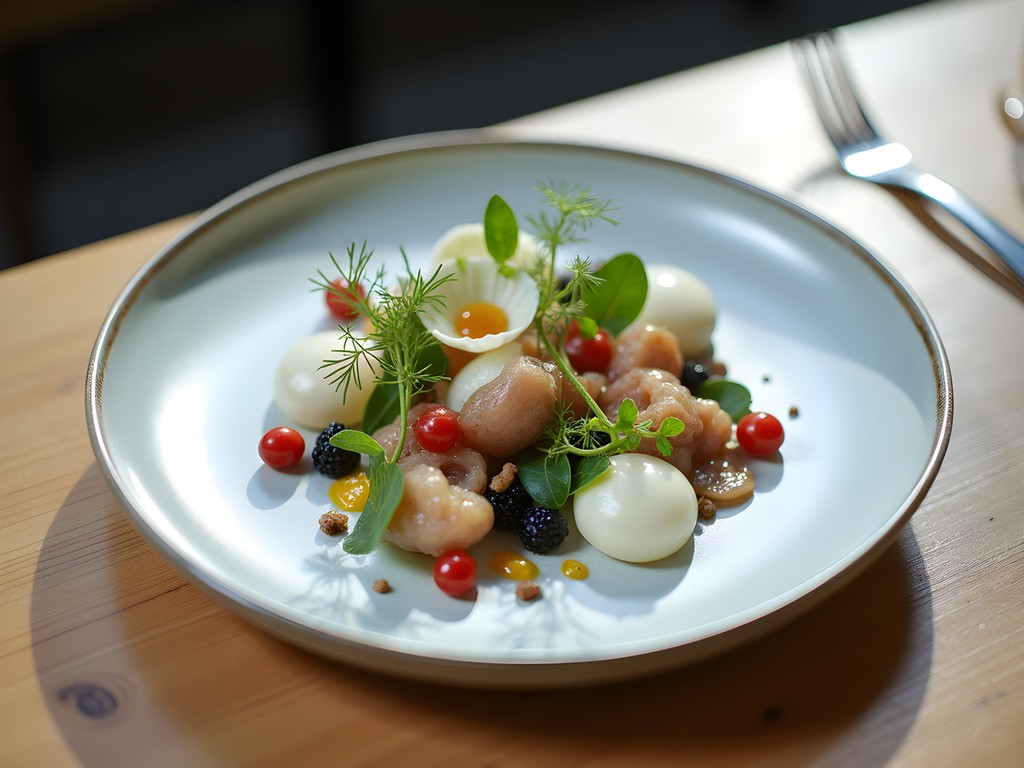
Securing a reservation at Noma remains challenging (and expensive), but I was fortunate to experience their summer menu. The meal was nothing short of revelatory—a progression of dishes that told the story of the Nordic landscape through ingredients I never imagined could be transformed into haute cuisine. Fermented grasshoppers with wild berries. Sea buckthorn transformed into ethereal desserts. Vegetables treated with the reverence typically reserved for luxury proteins.
What struck me most was how the design sensibility extended beyond the food. The restaurant space itself—housed in a renovated waterfront warehouse—reflects the same philosophy as the cuisine: natural materials, clean lines, and an unpretentious elegance that feels distinctly Danish. Even the handcrafted ceramics and wooden serving pieces tell the story of Nordic craftsmanship.
For capturing these culinary masterpieces, I relied on my mirrorless camera which handled the restaurant's moody lighting beautifully without disturbing other diners with a flash. The detail it captured in these intricate dishes was remarkable—something my smartphone simply couldn't match.
💡 Pro Tips
- Book Noma 3-4 months in advance when reservations open
- If you can't get a Noma reservation, try their more accessible sister restaurant 108
- Consider lunch instead of dinner at top restaurants for a similar experience at a lower price point
The Ripple Effect: Copenhagen's Middle Market Renaissance
Perhaps the most exciting aspect of Copenhagen's culinary revolution isn't what's happening at the high end, but how it has transformed the middle market. The principles of New Nordic cuisine—seasonality, locality, innovation, and sustainability—have trickled down to create a vibrant ecosystem of restaurants serving exceptional food at more accessible prices.
Amass, founded by former Noma head chef Matt Orlando, exemplifies this evolution. Set in a converted warehouse with dramatic graffiti art and communal tables, it offers a more relaxed interpretation of New Nordic principles. Their fermentation program transforms humble ingredients into complex flavor bombs, while their zero-waste philosophy means everything finds a purpose—from vegetable scraps to bread ends.
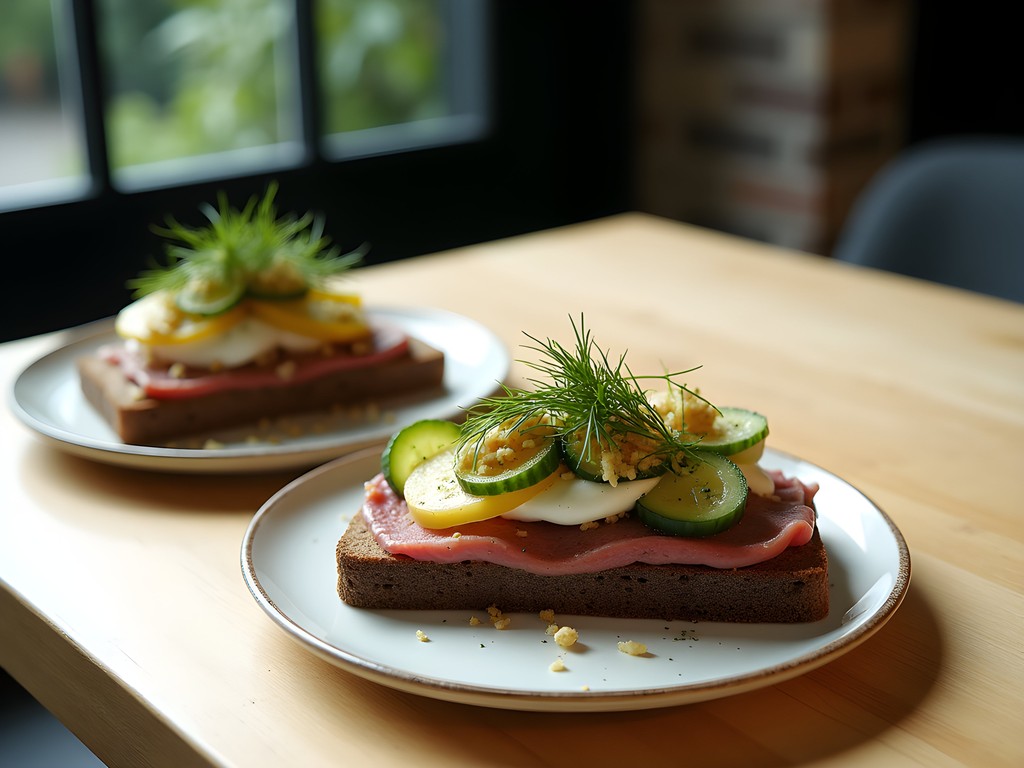
For a casual lunch that still embodies New Nordic ideals, I visited Selma in Vesterbro. Their smørrebrød reimagines traditional Danish open-faced sandwiches with contemporary techniques and seasonal ingredients. The classic pickled herring gets updated with apple, mustard seeds, and dill, while traditional roast beef is elevated with horseradish cream, pickled cucumber, and fried shallots.
Baest represents another facet of Copenhagen's evolving food scene—restaurants applying Nordic principles to other cuisines. This organic pizzeria mills their own flour, makes cheese in-house, and sources impeccable local ingredients for their wood-fired pizzas. The result is neither traditionally Italian nor overtly Nordic, but something uniquely Copenhagen.
To navigate this culinary landscape, I relied heavily on my Copenhagen food guide which provided excellent context for understanding the city's culinary transformation alongside reliable recommendations across various price points.
💡 Pro Tips
- Many mid-range restaurants offer 'chef's choice' options that provide excellent value
- Book tables even at casual spots—Copenhagen's dining scene is popular with locals and tourists alike
- Ask for wine pairings—many restaurants have interesting natural wine programs

Market Culture: Torvehallerne and Beyond
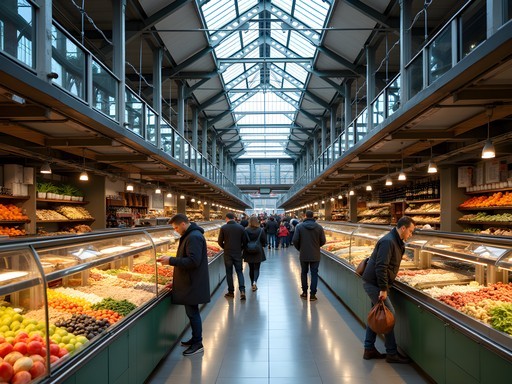
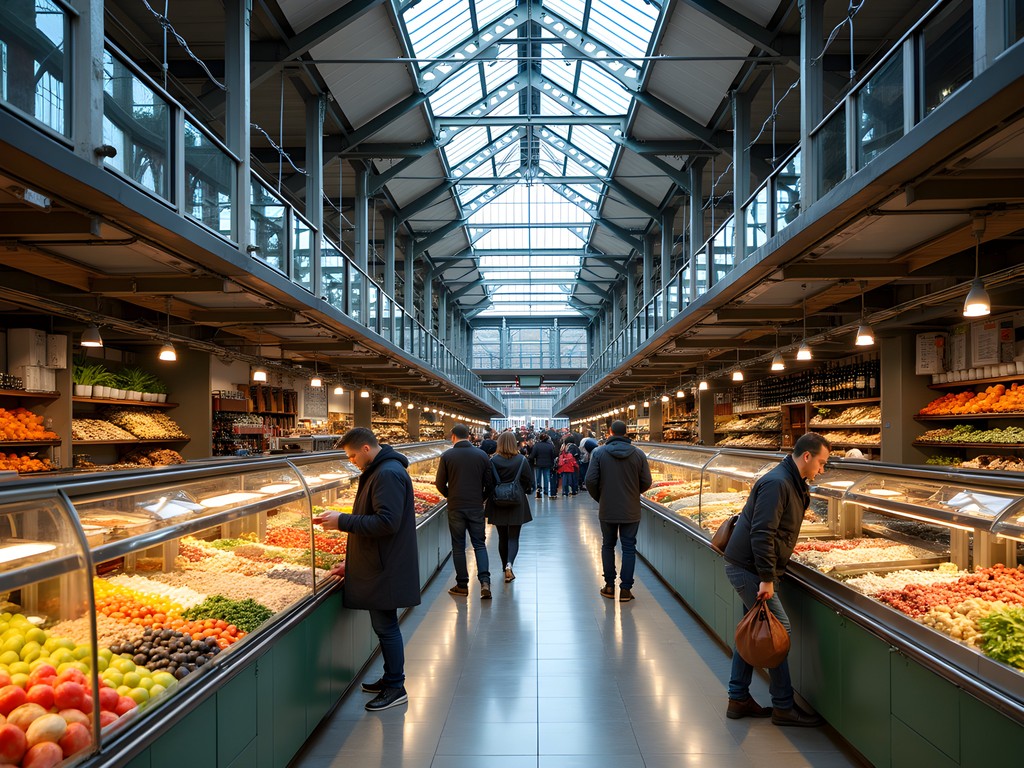
No exploration of Copenhagen's food scene would be complete without diving into its markets, where you can experience both traditional Danish foods and New Nordic innovations in casual settings. Torvehallerne, Copenhagen's premier food market, offers a perfect crash course in Danish gastronomy under one roof.
During my visits (I returned almost daily), I developed a routine: coffee from Coffee Collective, whose light-roasted beans showcase Nordic precision and attention to detail; smørrebrød from Hallernes, where traditional recipes meet quality ingredients; and sweet treats from Grød, which elevates humble porridge to an art form.
Torvehallerne also provides an excellent opportunity to stock up on edible souvenirs. I filled my packing cubes with vacuum-sealed Danish cheeses, small-batch aquavit, and jars of Nordic preserves to recreate a taste of Copenhagen back home in Henderson.
Beyond Torvehallerne, Copenhagen's street food scenes offer additional perspectives on the city's evolving food identity. Reffen, an open-air street food market built from shipping containers on the harbor, showcases Copenhagen's multicultural side. Here, global cuisines are reinterpreted through a Danish lens—think tacos with Nordic seafood or Middle Eastern flatbreads topped with local, seasonal vegetables.
What fascinates me as someone with dual cultural heritage is seeing how Copenhagen has managed to evolve its cuisine while maintaining a strong sense of cultural identity. There's no rejection of tradition, but rather a thoughtful reinterpretation that honors the past while creating something new and distinctly Danish.
💡 Pro Tips
- Visit Torvehallerne in the morning when it's less crowded and produce is freshest
- Many market vendors offer samples—don't be shy about trying before buying
- Reffen is weather-dependent and mainly operates in summer—check opening hours before visiting
Sweet Endings: Danish Pastry Tradition Meets Innovation
In Spain, we have a saying: 'De postre, lo que sea, pero que no falte'—roughly translated as 'For dessert, anything will do, but don't skip it.' The Danes seem to share this philosophy, with their rich tradition of pastries and sweets now undergoing the same thoughtful reinvention as their savory cuisine.
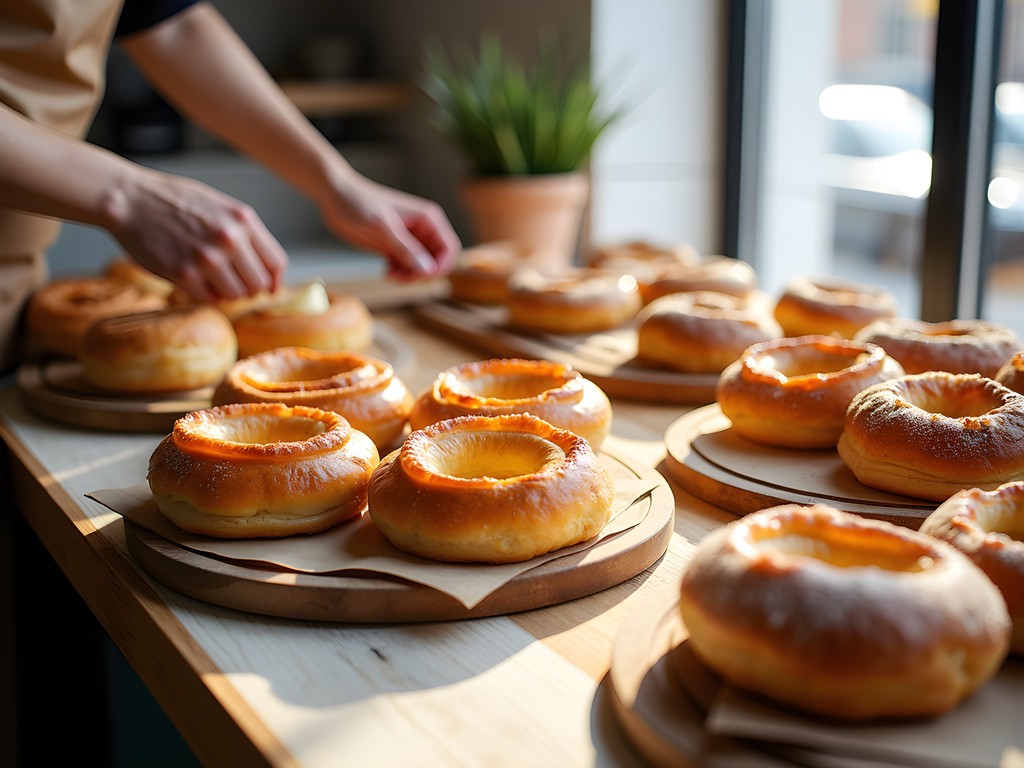
The classic wienerbrød (Danish pastry) remains ubiquitous, and for good reason. At Andersen Bakery near Tivoli Gardens, I indulged in perhaps the best kanelsnurre (cinnamon swirl) of my life—buttery, perfectly laminated dough with a fragrant cinnamon filling and a subtle cardamom undertone that elevated it beyond the ordinary.
Yet contemporary pastry chefs are pushing boundaries too. At Hart Bageri, founded by former Tartine baker Richard Hart in collaboration with René Redzepi, traditional Danish pastries are reimagined with organic heritage grains, natural fermentation, and seasonal Nordic ingredients. Their cardamom buns incorporate local honey and sea buckthorn for a distinctly Danish twist on the classic.
Perhaps most emblematic of Copenhagen's sweet evolution is Lille Bakery in Refshaleøen. Founded by three Noma alumni, this community-focused bakery creates pastries that bridge tradition and innovation. Their poppy seed 'tebirkes' maintains the classic form but uses organic Danish butter and locally-milled flour, resulting in a pastry that's simultaneously familiar and revelatory.
For those with more contemporary tastes, La Glace—Copenhagen's oldest confectionery—offers 'Sports Cake,' a layered creation of crushed nougat, whipped cream, and caramelized puff pastry that has been delighting Copenhageners since 1891. Some traditions, it seems, need no reinvention.
To track my pastry adventures across the city, I used my travel journal to note each bakery's specialties and my impressions—creating both a personal memento and a reference for future visits.
💡 Pro Tips
- Visit bakeries early (before 9am) for the freshest selection
- Many bakeries are closed on Mondays—plan accordingly
- Don't miss tebirkes—a Danish specialty with poppy seeds that's less known to tourists but beloved by locals
Final Thoughts
As I boarded my flight home to Henderson, my palate still dancing with the flavors of my week-long culinary journey, I reflected on what makes Copenhagen's food scene so remarkable. It's not just the technical excellence or innovative ingredients—it's the thoughtful balance between honoring tradition and embracing change. The New Nordic revolution hasn't erased Denmark's culinary heritage; it has reframed it, asking not just 'How have we always done this?' but 'Why did we do it this way, and how might we do it better?'
For travelers seeking to understand a culture through its food, Copenhagen offers a masterclass in culinary evolution. From the humble smørrebrød to the heights of Noma's artistry, from traditional pastries to their modern reinterpretations, the city tells a compelling story of a cuisine finding its voice on the global stage while remaining distinctly, proudly Danish. ¡Buen provecho!
✨ Key Takeaways
- Copenhagen's culinary scene beautifully balances tradition and innovation
- The New Nordic movement has influenced restaurants at all price points, not just fine dining
- Markets and bakeries offer accessible entry points to understand Danish food culture
- Reservations are essential for most restaurants, even casual ones
📋 Practical Information
Best Time to Visit
May through September, with June-August being peak season
Budget Estimate
$75-150 per person per day for food (excluding fine dining experiences)
Recommended Duration
5-7 days
Difficulty Level
Beginner


Comments
skyone
Do you need reservations way in advance for most places? Or can you walk in at the mid-range spots?
freemood
Mid-range you can usually walk in or book a few days ahead. The really popular ones like Barr or Höst I'd book at least a week or two out though!
Mark Griffin
Exactly what freemood said. Lunch spots are usually easier to get into without reservations too.
sunsetway
Great article! Really helpful
Gregory Boyd
Interesting analysis of the culinary evolution. From a backpacker's perspective, I'd note that Copenhagen's food scene has become more accessible across price points, but it's still one of the pricier cities in Europe for budget travelers. That said, the supermarket culture is excellent - Irma and Torvehallerne offer quality ingredients at reasonable prices for self-catering. I actually found this Copenhagen food guide quite useful for understanding the philosophy behind the movement and finding mid-range spots. The emphasis on sustainability aligns well with conscious travel practices.
freemood
Been to Copenhagen 4 times now and totally agree about the transformation! My first visit in 2015 vs my last one in 2024 were like different cities food-wise. Pro tip: if you want the New Nordic experience without dropping $400 per person, check out Restaurant Barr - same team as Noma but way more accessible pricing and the beer selection is incredible. Also don't sleep on the hot dogs from DØP, they've elevated even street food to an art form. The fermented and pickled flavors are everywhere now and I'm here for it!
skyone
Thanks for the Barr recommendation! Just looked it up and added to my list
roambuddy
Going in May!! Can't wait to try everything
photoblogger
Love the photo of Torvehallerne! Really captures the vibe
Timothy Jenkins
Excellent piece, Mark. I visited Copenhagen in 2019 and was similarly struck by how the New Nordic movement has transformed the entire dining landscape. What impressed me most wasn't just the high-end establishments, but how the philosophy has trickled down to neighborhood bistros and even street food vendors. The emphasis on seasonality, sustainability, and local sourcing has become genuinely embedded in the culture rather than just marketing speak. I'd add that the coffee culture there deserves its own article - places like Coffee Collective are doing remarkable things. Did you make it to any of the smaller islands for foraging experiences?
Mark Griffin
Thanks Timothy! I didn't get to the islands this trip but that's definitely on my list for next time. You're absolutely right about the coffee scene - Coffee Collective was outstanding.
hikingwanderer
OMG yes!! I went to Copenhagen last fall and the food was INSANE. We couldn't get into Noma (obviously lol) but we tried this place called Relae and it blew my mind. Never thought vegetables could taste like that?? Also the smørrebrød at Torvehallerne was so good and way more affordable than the fancy places. Definitely want to go back and explore more of the middle market restaurants you mentioned!
skyone
How much did you spend on food per day roughly? Trying to budget for my trip
hikingwanderer
probably like $80-100 a day? but I ate at nicer places for dinner. you could def do it cheaper with more casual spots and the markets!
triplover
Just booked flights to Copenhagen for February after reading this! Any recommendations for places that won't break the bank but still give you that New Nordic experience? Also, is the food market open year-round?
Amit Sullivan
You'll love winter in Copenhagen! For affordable New Nordic, try Höst or Manfreds. Both offer tasting menus at reasonable prices compared to the top-tier places. And yes, Torvehallerne is open year-round - it's mostly indoors so perfect for winter. Don't miss the flødeboller (chocolate-covered marshmallow treats) at Summerbird there!
coolguy
What's one traditional Danish dish that everyone should try? Is it that smørrebrød thing you mentioned?
triplover
Not the author but YES to smørrebrød! Also try frikadeller (meatballs) and flæskesteg (roast pork with crackling). Danish pastries are obviously a must too - but they call them 'wienerbrød' there!
Venture X
Premium card with 2X miles, $300 travel credit, Priority Pass