
Disclosure: This article contains affiliate links. We may earn a commission from purchases at no extra cost to you, which helps our travel content.
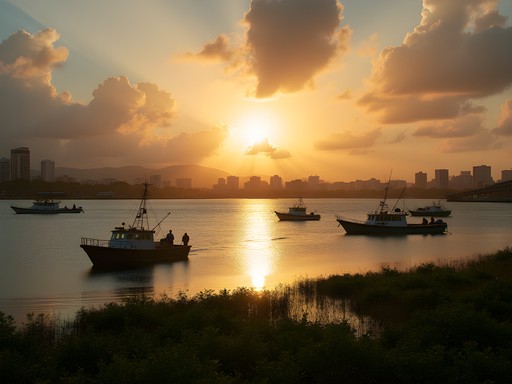
When most travelers think of Jamaica, their minds drift to all-inclusive resorts and pristine beaches. But after decades exploring how communities adapt to their environments, I've learned that true cultural understanding happens in the spaces where everyday life unfolds. Last winter, I traded Sydney's summer heat for Jamaica's warm embrace, bypassing the tourist hubs to spend a week in Portmore – a vibrant community just west of Kingston where authentic Jamaican life pulses without pretense. What I discovered was a microcosm of Jamaican resilience, creativity, and community that most travelers never experience.

Finding My Bearings in Jamaica's Fastest-Growing Community
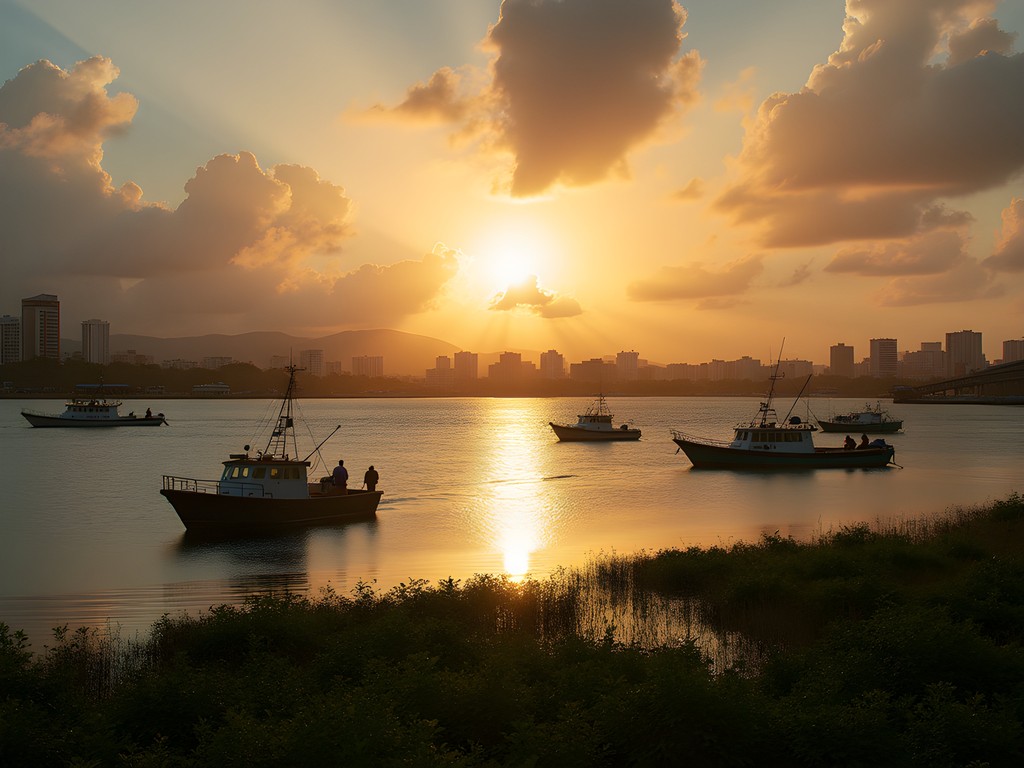
Portmore isn't in most travel guides, and that's precisely why it deserves your attention. This rapidly expanding community across the harbor from Kingston offers something increasingly rare in our globalized world: an unfiltered glimpse into contemporary Jamaican life.
I based myself at a modest guesthouse in Waterford, one of Portmore's 15 distinct neighborhoods. My host, Ms. Claudette, immediately dispelled any notion that I'd be a mere observer here. 'In Portmore, nobody stays a stranger long,' she declared, handing me a cup of freshly brewed Blue Mountain coffee that would become my morning ritual.
Portmore's unique urban planning fascinated my developer's eye immediately. Unlike the organic growth of ancient cities I typically study, Portmore represents Jamaica's largest planned community – a relatively recent development that tells the story of Kingston's expansion and the island's evolving social structures. The neighborhoods, each with distinct personalities, create a fascinating mosaic worth exploring systematically.
💡 Pro Tips
- Stay in smaller guesthouses rather than hotels for a more personal connection to the community
- Public transportation (route taxis and buses) is the best way to explore different Portmore neighborhoods authentically
- Ask locals about current community events – impromptu gatherings happen frequently
Hellshire Beach: Where Local Food Culture Comes Alive
Any archaeologist will tell you that food remains reveal more about ancient cultures than almost any other artifact. The same holds true in modern communities. Hellshire Beach, just a 20-minute drive from central Portmore, offers not just beautiful coastline but Jamaica's most authentic seafood experience.
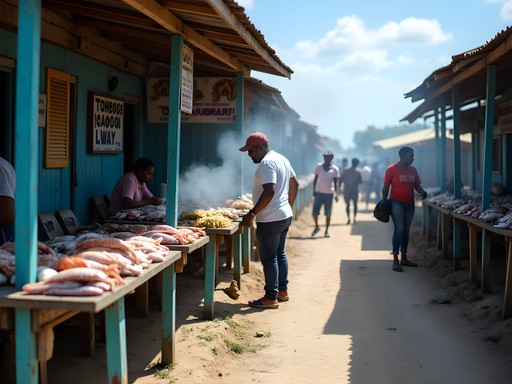
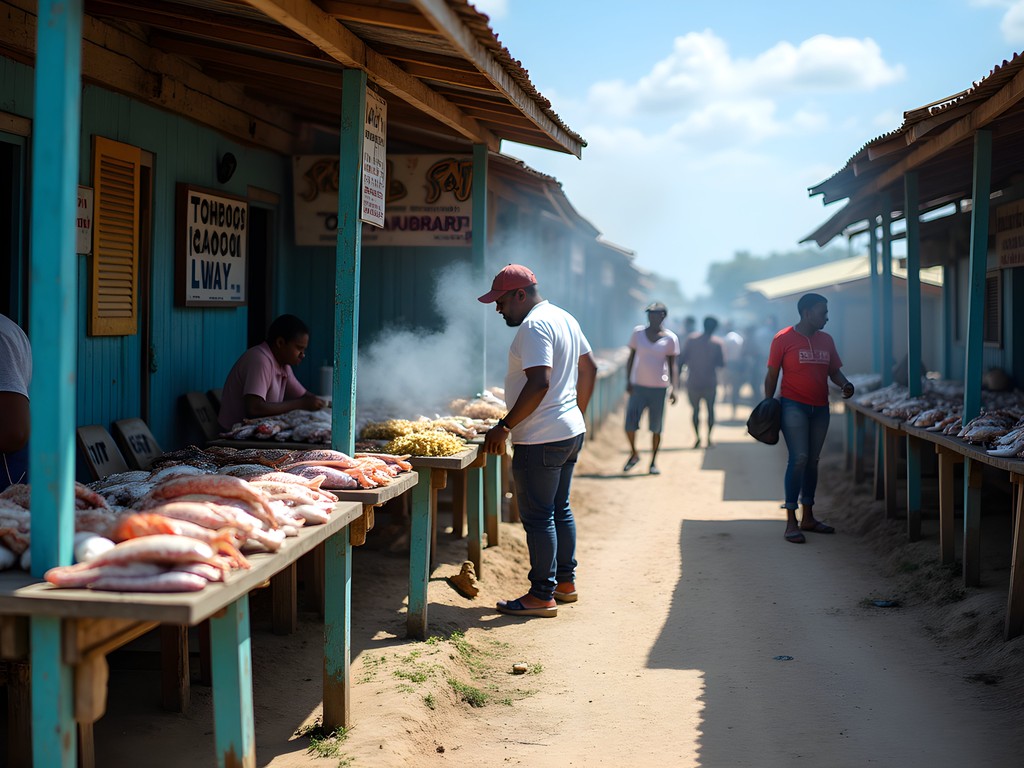
Unlike the sanitized resort beaches, Hellshire pulses with local energy. Wooden food shacks line the shore, each competing for attention with their distinctive preparations of fresh-caught fish. I spent an entire afternoon at Aunt May's, watching her prepare escovitch fish – a traditional Jamaican dish where freshly caught fish is fried and then marinated in a vinegar-based sauce with peppers, onions, and carrots.
'The secret is in the timing,' Aunt May explained, deftly flipping fish with hands that have performed this ritual thousands of times. 'Too long in the vinegar and it falls apart. Not enough time and the flavors don't marry.'
I sat at a weathered wooden table, feet in the sand, using my waterproof notebook to jot down her techniques while enjoying what might be the most delicious fish I've ever tasted. The cultural exchange that happens around food here is worth the trip alone.
💡 Pro Tips
- Visit Hellshire Beach on weekdays to avoid local weekend crowds
- Ask vendors which fish was caught that morning for the freshest options
- Bring cash as most food vendors don't accept cards
Reggae's Grassroots: Music as Cultural Archaeology
As someone who studies how civilizations express themselves through built environments, I've always been fascinated by music's role as cultural architecture – invisible structures that shape communities as powerfully as any temple or monument.
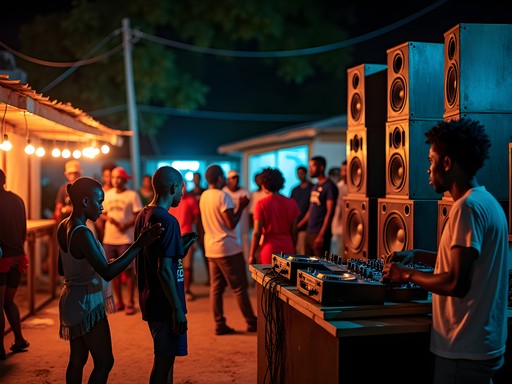
Portmore has deep connections to reggae history, with numerous artists calling it home. Rather than seeking commercial venues, I followed my guesthouse host's advice and found myself at a small community 'sound system' gathering in Gregory Park. Unlike staged performances for tourists, these events represent reggae in its natural habitat – community spaces where music facilitates social bonding and commentary.
The selector (DJ) methodically built his musical narrative throughout the evening, starting with older classics before progressing to contemporary dancehall. Between tracks, community members took turns on the microphone, practicing the art of 'toasting' – rhythmic speaking over instrumental breaks that formed the foundations of modern rap.
'This is where the music breathes,' explained Delroy, a local teacher who became my impromptu cultural guide for the evening. 'What you hear in hotels is reggae's body, but this – this is its soul.'
I recorded parts of the evening on my portable recorder, capturing not just the music but the environmental sounds that give context to this living tradition. These recordings now serve as my most treasured souvenir from Jamaica.

💡 Pro Tips
- Ask local record shops about upcoming sound system events rather than following tourist guides
- Respect the space by observing before participating – these are community events, not tourist attractions
- Bring small bills to support vendors selling food and drinks at these gatherings

Braeton Market: Economic Anthropology in Action
Markets have always been my window into understanding communities. Like archaeological sites where layers of human activity accumulate, markets reveal social hierarchies, trade patterns, and cultural values through everyday exchanges.
Braeton Market, Portmore's largest, operates primarily on Saturday mornings but begins stirring well before dawn. I arrived at 5:30 AM with my insulated water bottle filled with Ms. Claudette's coffee, ready to observe the market coming to life.
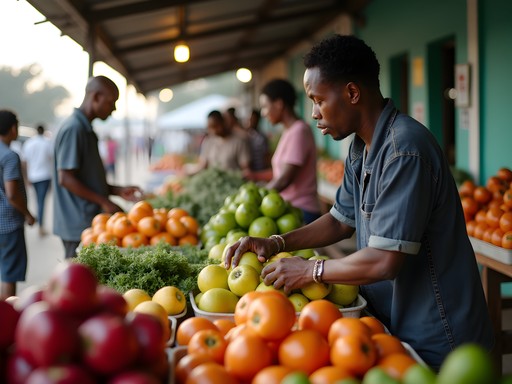
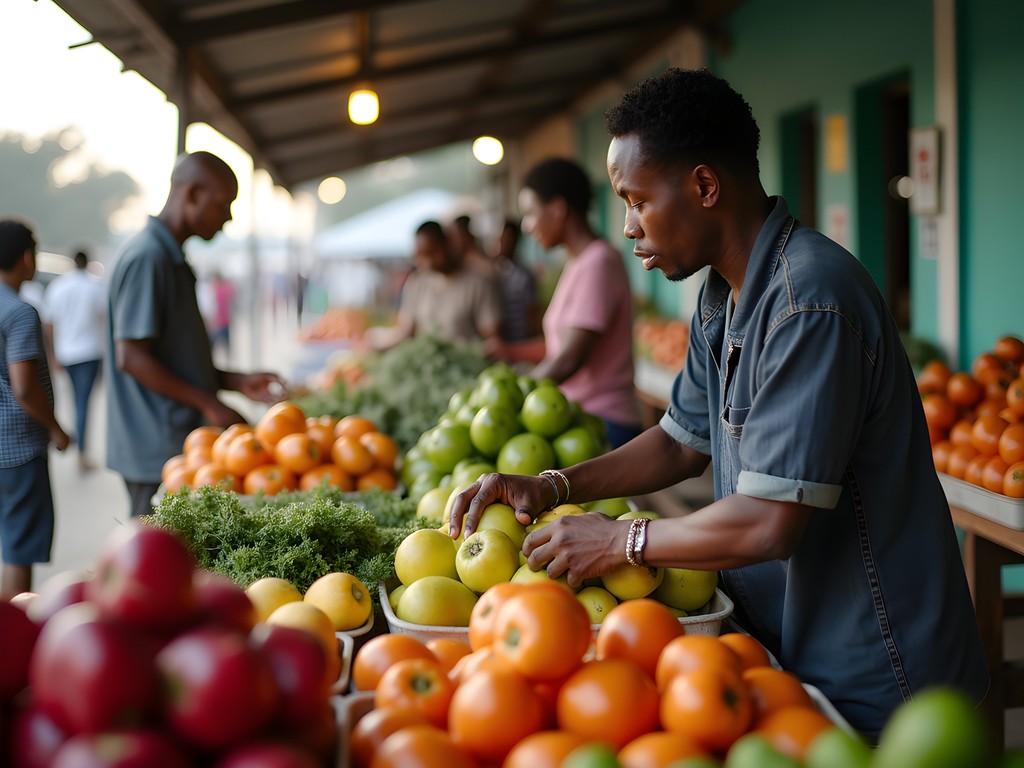
Farmers from rural parishes arrived first, unloading produce grown in Jamaica's fertile interior. Urban vendors followed, setting up stalls selling everything from household goods to clothing. By 7:00 AM, the market had transformed from empty concrete structure to vibrant commercial ecosystem.
What struck me most was the market's efficiency in resource distribution. Nothing goes to waste here. Produce with minor blemishes sells at reduced prices. Items that don't sell fresh are quickly transformed – slightly overripe mangoes become juice, sold in repurposed bottles.
I spent hours observing the intricate social dance of negotiation. Price haggling here isn't merely economic – it's relationship building. Regular customers receive better prices, but only after ritual exchanges about family, weather, and community matters. The market functions as both commercial space and social hub, with information exchanged as valuably as goods.
'You can't understand Jamaica until you understand how we trade,' explained Ms. Veronica, a vendor selling homemade sauces in recycled bottles that I now use for my own preserves back in Sydney.
💡 Pro Tips
- Arrive early (before 7:00 AM) to see the market assembly process and get the freshest produce
- Bring your own bag and small denominations of Jamaican dollars
- Practice basic negotiation but understand that building rapport is more important than getting the absolute lowest price
Community Tourism: The Future of Sustainable Travel
My most meaningful experiences in Portmore came through a small community tourism initiative in the Waterford neighborhood. Unlike commercialized cultural performances, this grassroots program connects visitors with residents who share their skills and knowledge through informal workshops.
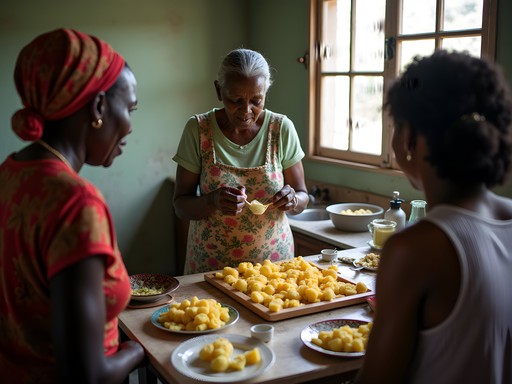
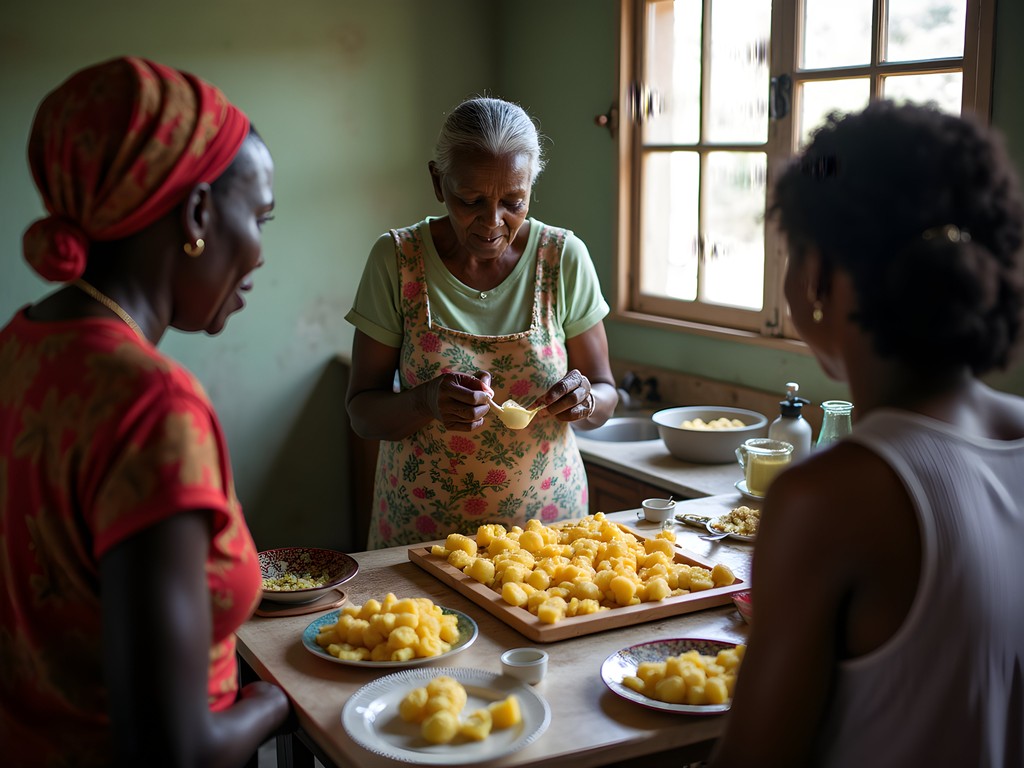
I spent an afternoon learning traditional cassava preparation with Ms. Elaine, a process remarkably similar to techniques I've documented in pre-Columbian Mesoamerican communities. The continuity of these food traditions across centuries and continents speaks to human ingenuity in working with similar environments.
'My grandmother taught me this way,' Ms. Elaine explained while demonstrating how to extract the toxic compounds from raw cassava. 'Now the young people want instant food. But this knowledge is our heritage.'
Later in the week, I joined a drumming workshop led by Brother Marcus, who explained the West African origins of specific rhythms and their evolution through Jamaica's complex history. I recorded the session using my clip-on microphone attached to my phone, creating an audio journal that captures nuances my written notes could never convey.
What makes these experiences special is their authenticity – these aren't performances but genuine knowledge exchanges. Participants contribute to the community through program fees that support local development rather than enriching outside companies. This model represents sustainable tourism at its best: economically beneficial to hosts while culturally enriching for visitors.
💡 Pro Tips
- Contact the Waterford Community Development Committee at least two weeks before your visit to arrange participation
- Come with specific interests but remain flexible about scheduling
- Consider bringing small gifts that represent your home country to exchange (avoiding generic souvenirs)
Final Thoughts
As my week in Portmore came to an end, I found myself reflecting on how this community – largely ignored by conventional tourism – had provided me with a more profound understanding of Jamaica than any resort ever could. The experience reinforced what my archaeological background has always suggested: cultures reveal themselves not through monuments but through everyday practices, social structures, and adaptations to environment.
Portmore's appeal isn't in landmark attractions but in its living cultural systems – markets that function as social institutions, music that serves as community bonding, and food traditions that connect generations. For the budget-conscious traveler willing to step beyond comfort zones, communities like Portmore offer authentic cultural immersion that luxury simply cannot buy.
As climate patterns shift and mass tourism struggles with sustainability challenges, this community-based approach represents a more resilient model – one where visitors and hosts exchange value equitably. My weathered field notebook now holds another chapter of cultural observations, but more importantly, my understanding of human adaptation has expanded through Portmore's lessons in resilience, creativity, and community. If you're ready to experience the real Jamaica, look beyond the brochures and find your way to where everyday life unfolds in all its vibrant complexity.
✨ Key Takeaways
- Authentic cultural experiences in Jamaica happen in communities like Portmore where locals live their daily lives
- Community-based tourism initiatives provide more meaningful exchanges than commercial cultural performances
- Markets, food traditions, and music gatherings offer windows into contemporary Jamaican culture beyond stereotypes
- Building relationships with local residents transforms a simple visit into a profound cultural exchange
- Budget travel often provides richer cultural experiences than luxury tourism
📋 Practical Information
Best Time to Visit
December through April (dry season)
Budget Estimate
$50-75 USD per day including accommodation, food and local transportation
Recommended Duration
5-7 days
Difficulty Level
Intermediate



Comments
dreamchamp
Just got back from Portmore and followed so many of these recommendations!! The escovitch fish at Hellshire was LIFE-CHANGING! And you were so right about spending time at Braeton Market - I bought the most beautiful hand-carved wooden sculptures directly from the artist. Can't believe tourists miss these experiences!
Benjamin Sanchez
So happy to hear you had an authentic experience! Those wooden sculptures are incredible - did you meet Mr. Patterson? He's been carving for over 40 years.
dreamchamp
YES! That's exactly who I bought from! He showed me his whole process and even let me try carving a small piece. What an incredible craftsman!
winterlegend
We did the public transportation thing in Portmore too! Felt nervous at first but ended up having the best conversations with locals on those crowded route taxis. One driver even took us to his cousin's yard where they were having a small family cookout. Ended up staying for hours trading stories. That's the Jamaica you don't get at resorts.
wildmood
Any recommendations for where to hear the best reggae in Portmore? Heading there in February!
winterlegend
Not the author but I was there last month - check out Kaluga Kafe on Thursday nights. Total local vibe and amazing sound system. Just be prepared to stay late, the good stuff doesn't start until after 11pm!
wildmood
Thanks for the tip! Late nights are no problem on vacation 😎
Claire Hawkins
Benjamin's post brought back wonderful memories of our family trip to Jamaica last summer! We stayed in Portmore for three days after a week at a resort, and it completely changed our perspective. My kids still talk about the escovitch fish at Hellshire Beach - watching it prepared right in front of us was both educational and delicious! For families considering this kind of cultural immersion, I recommend bringing a travel journal for the kids to document their experiences. My 9-year-old filled hers with drawings of the musicians we met and pressed flowers from Braeton Market. The contrast between resort Jamaica and community Jamaica taught them more about global perspectives than any classroom could.
oceanlover
How safe did you feel using the local transportation? I'm planning a solo trip and wondering if the route taxis are ok for tourists?
Benjamin Sanchez
I felt quite safe using route taxis, especially during daylight hours. Just make sure they're licensed (red license plates) and ask your accommodation which routes are best. The JUTC buses are also reliable for longer trips. Most locals were happy to help me navigate!
oceanlover
Thanks so much for the tips! The red plates are exactly the kind of detail I needed to know.
Marco Suzuki
Benjamin, your anthropological approach to travel is refreshing. I visited Portmore last year and completely agree that Hellshire Beach offers a more authentic experience than the manicured resort beaches. The fish vendors there are characters! I spent an afternoon chatting with a fisherman named Devon who taught me more about Jamaican coastal life than any guidebook could. Did you get a chance to visit the Greater Portmore Night Market? It happens only on the last Friday of each month, but the local crafts and street food scene there is incredible.
dreamchamp
Omg the night market sounds AMAZING!! Adding to my list for my trip next year!
Benjamin Sanchez
Marco, I missed the Night Market by just a few days! Devon at Hellshire is a treasure - he showed me how they've been preparing fish the same way for generations. Will definitely time my next visit for that market.
waveway
Finally a post about the real Jamaica! Been wanting to see beyond the resort walls.
Megan Martin
Benjamin, this really resonates with my own experiences traveling for work in the Caribbean. I spent time in Portmore last year for a conference and made it out to Hellshire Beach one evening. The fried fish and festival bread were incredible - nothing like the resort food. Your point about music as cultural archaeology is spot on. I found that engaging with local music scenes, whether in Jamaica or elsewhere, opens doors that typical tourism never does. The economic insights from Braeton Market are particularly valuable for understanding how communities function beyond the tourist economy.
wanderlustmaster
This sounds amazing! How did you get around Portmore? Thinking about skipping the resort next time I go to Jamaica.
Megan Martin
Not Benjamin, but I've done similar trips in Jamaica. Route taxis are the way to go in Portmore - cheap and authentic. Just ask locals at your accommodation for the main taxi stands. They're usually very helpful pointing visitors in the right direction.
wanderlustmaster
Thanks! That's super helpful
adventureone
Just got back from Jamaica and wish I'd seen this post before going! We stayed at a resort the whole time and I feel like we missed the real Jamaica. The one day we ventured to Ocho Rios market felt more authentic than our entire week at the resort. Definitely bookmarking this for next time - Hellshire Beach sounds like exactly what we were looking for!
Venture X
Premium card with 2X miles, $300 travel credit, Priority Pass