Disclosure: This article contains affiliate links. We may earn a commission from purchases at no extra cost to you, which helps our travel content.
The Red Sea laps gently against Eilat's shores as tourists bask in the predictable pleasures of this resort town. But twenty minutes from the beach umbrellas and snorkeling excursions lies an entirely different Israel—one that has persisted for centuries in the stark beauty of the Negev Desert. After decades covering sporting events across continents, I've developed a particular appreciation for the cultural contexts that shape communities. When my recent assignment covering a regional cricket tournament brought me to Israel's southernmost city, I made it my mission to venture beyond the typical tourist track. What I discovered was a rich tapestry of Bedouin heritage that offers families a profound cultural experience far more memorable than another day at the beach. This isn't the Eilat of glossy brochures; it's a living connection to ancient desert wisdom and hospitality that transforms a weekend getaway into an education of the heart.

First Encounters: The Bedouin Hospitality Experience
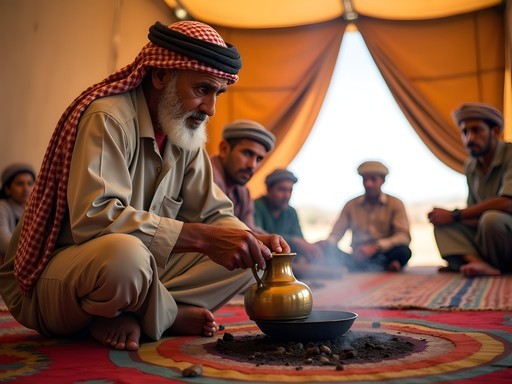
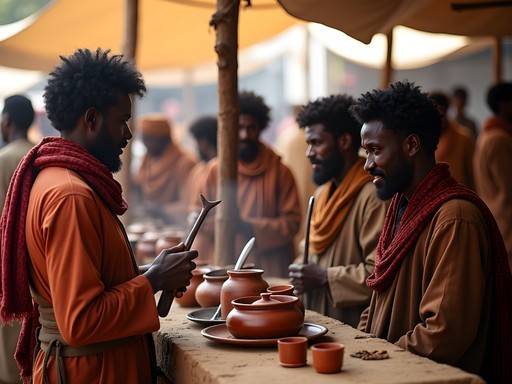
My introduction to Bedouin culture came through the universal language of food—that great equalizer that transcends linguistic barriers. At a traditional encampment just outside Eilat proper, I found myself seated cross-legged on colorful woven rugs alongside three generations of a Bedouin family. The patriarch, Abu Suleiman, with deep lines etched into his weathered face like the wadis that cut through the surrounding landscape, prepared coffee in a ritual that felt more ceremonial than culinary.
The process was deliberate, unhurried—a stark contrast to my usual flat white grabbed on the run in Wellington. Green cardamom pods were crushed in a brass mortar, coffee beans roasted over coals in a long-handled pan, then ground and brewed in a distinctive pot called a finjan. The resulting coffee—bitter, aromatic, and served in tiny cups without handles—is never refused in Bedouin culture. It represents the sacred bond between host and guest.
"In our tradition, we always pour three cups," Abu Suleiman explained through his son, who translated. "The first is for the soul, the second for the sword (meaning protection), and the third for the guest to depart in peace."
What struck me most was how naturally children were incorporated into the experience. Unlike some cultural demonstrations that feel staged for tourists, this was authentically multigenerational. Young children darted between elders, occasionally stopping to observe with curiosity as I fumbled with the proper way to accept my coffee with my right hand. No one rushed them away or demanded silence—they were simply absorbing their heritage through osmosis, just as Bedouin children have for centuries.

💡 Pro Tips
- When visiting a Bedouin home or camp, always accept at least the first cup of coffee offered—declining is considered rude.
- Bring a small gift for the host family—dates or sweets are appropriate, but avoid alcohol.
- Dress modestly with shoulders and knees covered, particularly if visiting more traditional families.
Desert Wisdom: Learning Survival Skills from the Experts
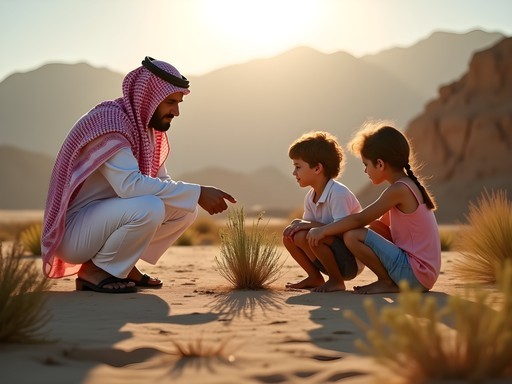
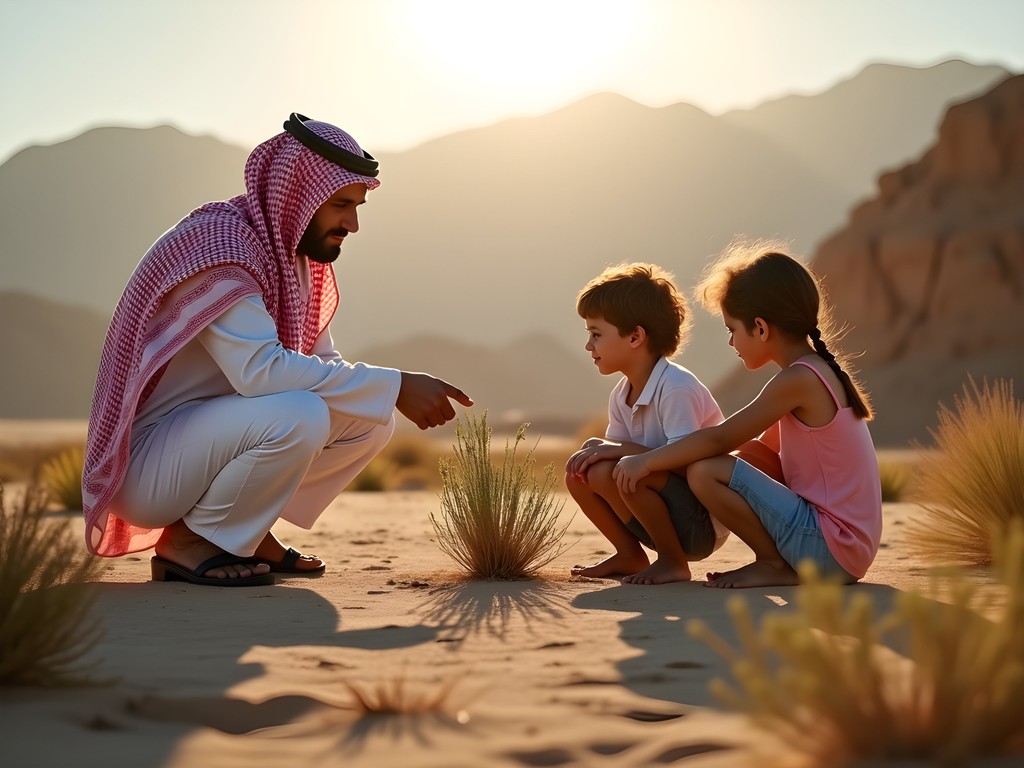
"The desert gives you everything you need to survive—if you know how to listen," explained Salim, our Bedouin guide, as he crouched to examine what looked to me like an unremarkable patch of sand and rock. Within moments, he had identified three edible plants, a natural indicator of underground water, and tracks revealing the nocturnal journey of a desert fox.
Our afternoon desert trek with Salim was ostensibly about survival skills, but it quickly became apparent that this was really a masterclass in reading landscapes. As someone who has trekked through rainforests from Costa Rica to Tasmania, I found the desert's subtle language far more challenging to interpret. Where I saw emptiness, Salim saw stories written in sand.
For families with children, this experience proves particularly valuable. In an age when most kids can navigate complex digital interfaces but struggle to identify basic plants, watching young eyes widen as Salim demonstrated how to extract water from seemingly barren ground was profoundly satisfying. My fellow travelers' children, initially glued to their devices, were soon scrambling to identify animal tracks and collect samples of medicinal desert plants.
Prior to the trek, I had invested in a desert hat with UPF protection and a wide brim—essential gear that proved its worth as the afternoon sun intensified. Several families in our group hadn't prepared as thoroughly, resulting in some uncomfortable sunburns despite the relatively mild autumn temperatures.
The highlight came when Salim taught us to start fire using traditional methods. After twenty minutes of collective failure that had the children giggling at their parents' ineptitude, a 10-year-old girl finally produced the first ember. The look of pride on her face as she successfully completed this ancient task—one that modern convenience has rendered nearly obsolete—was worth the price of admission alone.
💡 Pro Tips
- Book desert treks in the morning or late afternoon to avoid midday heat, even in autumn.
- Bring at least 2 liters of water per person, regardless of the trek duration.
- Wear closed-toe shoes rather than sandals—desert terrain is deceptively rough and can harbor scorpions.
Traditional Games and Sports: Play as Cultural Preservation
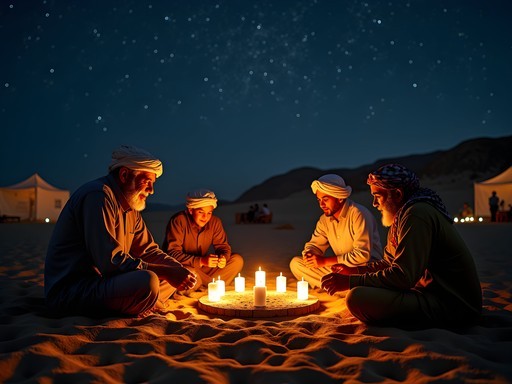
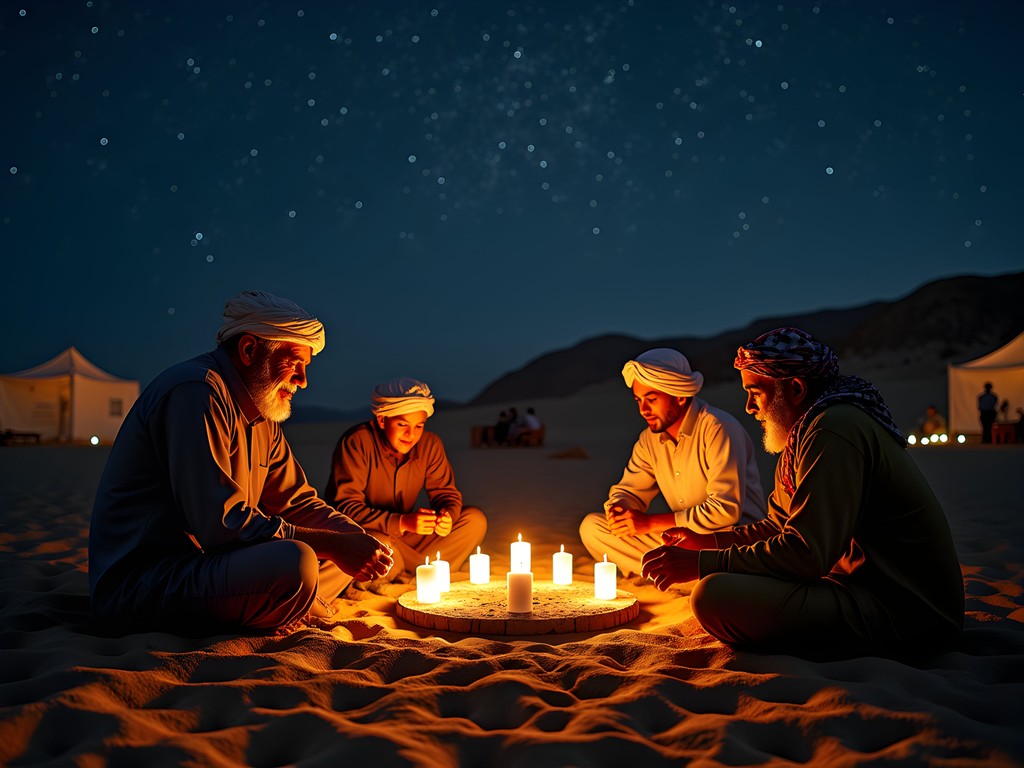
As a sports journalist, I've documented competitions in stadiums across six continents, but few sporting experiences have intrigued me as much as the traditional Bedouin games I witnessed on my second evening in the desert. Under a canopy of stars that seemed close enough to touch, a space was cleared among the tents for demonstrations of sija (a strategy game played with stones), camel racing (thankfully, just the stories and techniques rather than actual racing), and the highlight: Bedouin wrestling.
Unlike the highly commercialized sporting events I typically cover, these games serve a purpose beyond entertainment. They're vehicles for cultural preservation, teaching young Bedouins skills that once meant survival: strategic thinking, horsemanship, and physical strength.
"These games are how we remember who we are," explained Hassan, a young Bedouin man who had recently returned to his community after studying engineering in Tel Aviv. "When I was at university, I would practice sija in my dormitory. My Israeli roommates thought it was just a game, but for me, it was a connection to my ancestors."
What makes these experiences particularly suitable for families is their participatory nature. After demonstrations, visitors are invited to try their hand at the various games. I found myself thoroughly outmatched by a 12-year-old local boy in a game of sija, much to the amusement of onlookers. The strategic complexity of what appeared to be a simple stone game reminded me of chess—layers of thinking concealed beneath a deceptively straightforward exterior.
For families planning to document these unique cultural exchanges, I recommend a compact camera with good low-light capability. The starlit desert setting creates magical photographic opportunities, but the limited lighting makes smartphone photography challenging. Having covered sporting events in challenging light conditions for decades, I've found that a dedicated camera with manual settings makes all the difference between capturing the moment and missing it entirely.
💡 Pro Tips
- Join in the games when invited—participation is valued more than skill in Bedouin culture.
- Ask permission before photographing individuals, especially women and children.
- Learn a few basic Arabic phrases—even simple greetings earn tremendous goodwill.

Music and Storytelling: The Oral Traditions of the Desert
"In the desert, stories are our most precious possession," Fatima told me as she adjusted her headscarf. "They require no water, they weigh nothing to carry, yet they sustain us through difficult times."
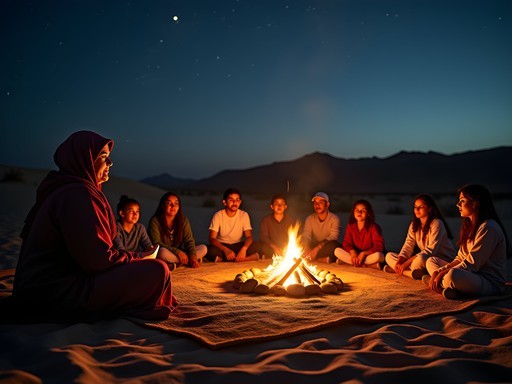
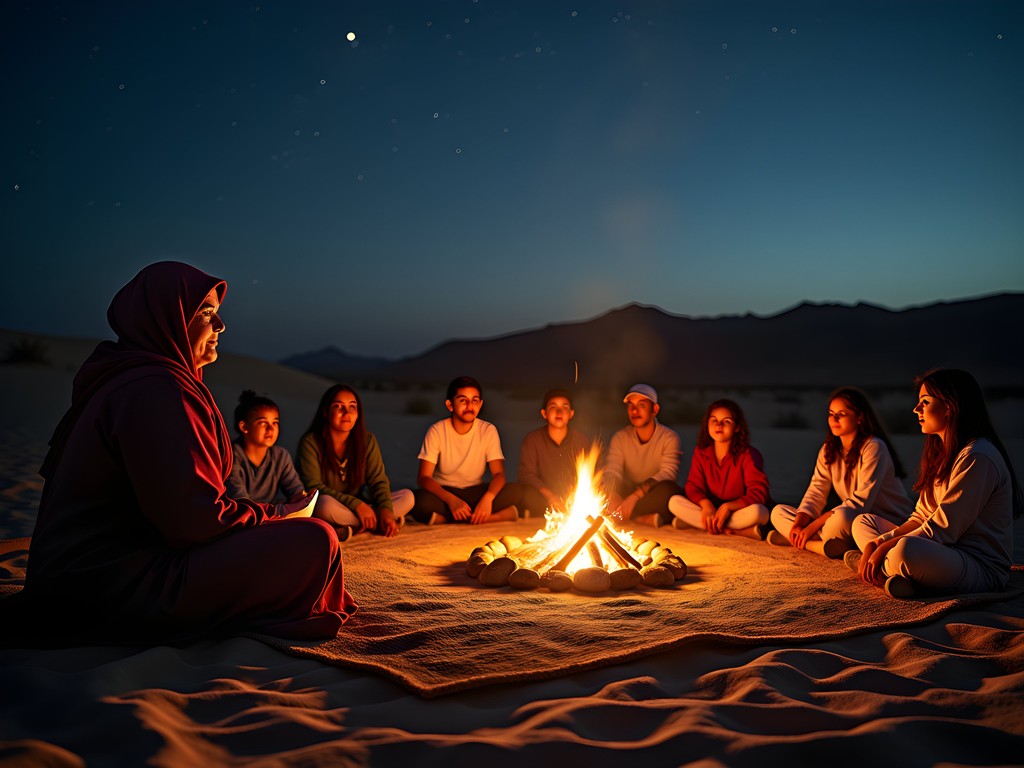
Fatima, one of the few female Bedouin guides in the region, specializes in preserving the oral traditions that have historically been passed down through generations. On our third evening in the desert, we gathered around a crackling fire for a session of music and storytelling that transported us far from the nearby resort town's neon glow.
The evening began with the haunting sounds of the rababa, a single-stringed instrument that produces melodies as vast and ancient as the desert itself. The musician, an elderly man named Mahmoud, played with eyes closed, his weathered fingers drawing sounds from the instrument that seemed to carry the collective memory of his people.
For families accustomed to the sensory overload of modern entertainment, the simplicity of this experience offers a powerful counterpoint. Children who might normally fidget through performances sat transfixed as Fatima recounted tales of desert spirits, clever heroes, and the special relationship between the Bedouin and their harsh environment. These weren't stories sanitized for tourist consumption but authentic narratives that serve as both entertainment and education within Bedouin society.
"Every story contains a lesson about how to live," Fatima explained. "When we tell children about the man who ignored signs of an approaching sandstorm, we are not just entertaining them—we are teaching them to read the sky."
What struck me most was the interactive nature of the storytelling. Unlike Western traditions where audience and performer maintain separate roles, here the boundaries blurred. Listeners interrupted with questions or contributed details to familiar tales, creating a communal experience rather than a performance.
For families wishing to capture audio of these remarkable sessions (with permission), I've found my portable recorder invaluable. The desert acoustics create unique sound experiences that smartphone microphones simply can't capture faithfully.
💡 Pro Tips
- Respect the sacred nature of certain stories by not interrupting during key moments.
- If you're invited to share a story from your own culture, be prepared with something appropriate.
- Ask about the meaning behind stories—many contain layers of cultural significance not obvious to outsiders.
Handcrafts and Heritage: Connecting Through Creation
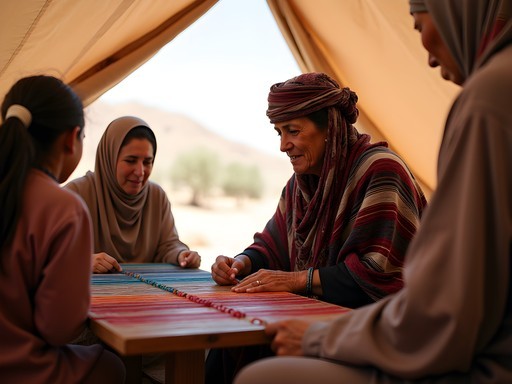
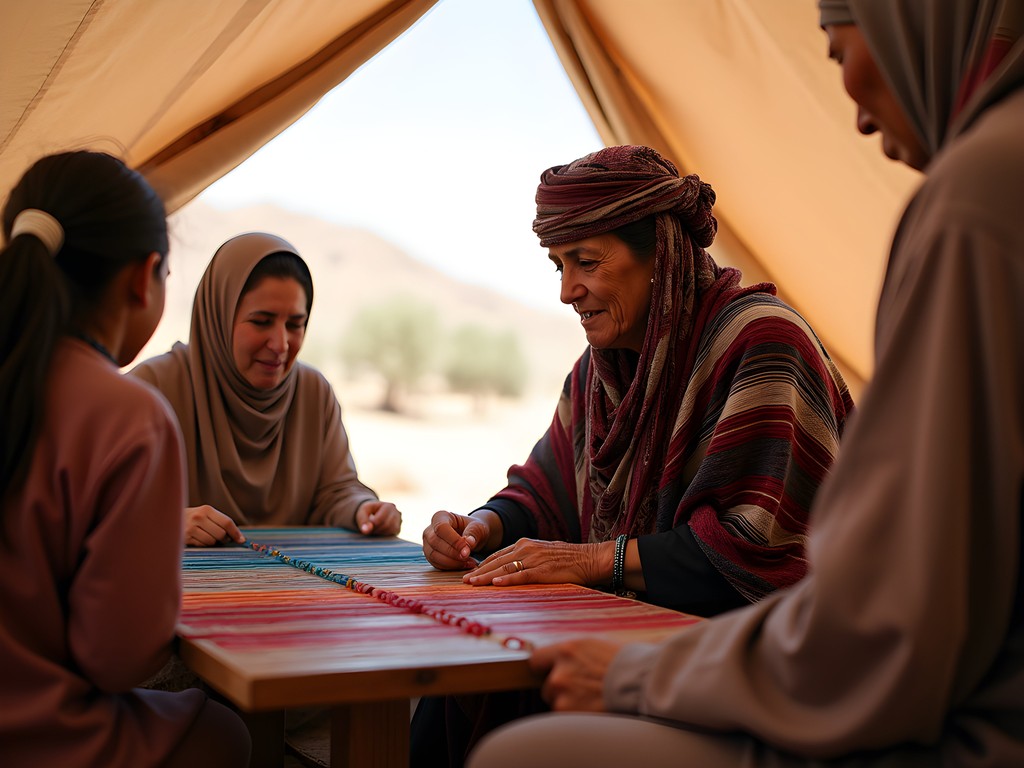
On our final morning, we participated in what proved to be the most unexpectedly engaging activity of our cultural immersion: a workshop on traditional Bedouin handicrafts. Under a goat-hair tent that provided blessed shade from the climbing sun, three Bedouin women had set up stations for weaving, embroidery, and jewelry making.
As someone whose hand-eye coordination is generally limited to operating camera equipment, I approached the weaving loom with trepidation. My clumsy first attempts at creating a simple pattern on the small portable loom elicited patient correction from Noor, our instructor. "No, like this," she demonstrated, her fingers flying across the threads with practiced precision. "The pattern tells the story of your tribe, your family, your history."
What makes this experience particularly valuable for families is its tangible nature. In an era when children (and adults) spend increasing time in virtual worlds, the tactile experience of creating something with your hands provides a powerful counterbalance. The concentration on children's faces as they learned to thread beads in traditional patterns was a testament to the enduring appeal of handcrafts.
The workshop also offered insight into the economic realities of contemporary Bedouin life. Many of these women supplement their family income by selling handicrafts to tourists, creating a delicate balance between preserving authentic traditions and meeting market demands.
"We change some colors for tourists," admitted Samira, who specializes in embroidery. "Traditional patterns use only four colors, but visitors prefer brighter combinations." This pragmatic adaptation illustrates how Bedouin culture remains resilient through evolution rather than rigid preservation.
For families wanting to support this cultural enterprise, the handicrafts make meaningful souvenirs that directly benefit the community. I purchased a small woven bracelet that now serves as a daily reminder of this experience—far more significant than any mass-produced magnet or keychain from Eilat's tourist shops.
If you're planning to document this colorful experience, consider bringing a polaroid camera. I've found that offering instant photos to craftspeople who have shared their knowledge creates an immediate exchange that bridges cultural divides. The smiles when I presented our instructors with photos of them demonstrating their crafts were among my favorite moments of the entire experience.
💡 Pro Tips
- Purchase handicrafts directly from artisans rather than tourist shops to ensure fair compensation.
- Ask about the symbolism in patterns and designs—many tell specific cultural stories.
- Consider booking a private workshop if traveling with young children who might need more attention and assistance.
Final Thoughts
As our weekend among the Bedouin drew to a close, I found myself reflecting on the stark contrast between Eilat's beach resorts and the profound cultural experiences waiting just beyond the city limits. In my decades covering sporting events worldwide, I've witnessed how traditional games and cultural practices serve as repositories of collective wisdom and identity. The Bedouin of the Negev offer something increasingly rare in our hyperconnected world: authentic cultural exchange that transcends the superficial. For families seeking meaningful travel experiences that educate as they entertain, these desert encounters provide lasting value far beyond the typical vacation snapshot. The Bedouin have thrived in one of Earth's most challenging environments not by conquering the desert, but by understanding it intimately. Perhaps there's no better lesson we can offer our children than this profound example of sustainable adaptation and cultural resilience.
✨ Key Takeaways
- Authentic Bedouin experiences offer families educational value far beyond typical resort activities
- The participatory nature of Bedouin cultural experiences makes them particularly suitable for children
- Supporting traditional crafts and experiences helps preserve Bedouin heritage while providing sustainable income
- The contrast between resort Eilat and traditional Bedouin life creates a powerful learning opportunity about adaptation and sustainability
📋 Practical Information
Best Time to Visit
Fall (September-November) or spring (March-May) for moderate temperatures
Budget Estimate
$150-300 per family for a full day experience including meals
Recommended Duration
Weekend (2-3 days)
Difficulty Level
Beginner

Comments
journeymate
Love the photos! Adding this to my Israel itinerary
Frank Garcia
Really appreciate this perspective on Eilat. I spent three days there last year and completely missed this cultural dimension - got caught up in the diving scene. The traditional games section particularly caught my attention. I've found that participatory cultural experiences like that create much more meaningful memories than passive observation. Did you find the Bedouin community welcoming to tourists, or does it feel like they're performing for visitors? That's always my concern with 'cultural tourism' experiences.
Amit Sullivan
Great question Frank. It felt genuinely authentic - we stayed with a family who hosts maybe 2-3 groups per month, so it's supplemental income but not their primary focus. The grandfather was teaching survival skills he actually uses when herding. That said, I'm sure some operations are more touristy than others.
freefan
How did you book the Bedouin experience? Is there a specific tour company you'd recommend or can you just show up?
Amit Sullivan
Hey! I booked through a local operator called Desert Shade Tours. They picked us up from our hotel in Eilat. You can also arrange directly with some Bedouin families but having a guide helped with translation and cultural context.
freefan
perfect, thanks!
sunnychamp
This sounds amazing!! Never thought about Eilat beyond the beaches
freefan
same here! always assumed it was just a resort destination
coffeeninja
Just got back from Eilat last week and did something similar! Pro tip: bring cash in small bills for purchasing handmade crafts. Many of the artisans don't take cards and their work is incredible. The woven bracelets I bought are now my favorite souvenirs. Also, wear closed shoes - the desert floor gets scorching hot during the day!
dreamnomad
Thanks for the tips! How much should I budget for crafts? Don't want to be caught short!
coffeeninja
I'd say around 200-300 shekels if you want a few nice pieces. The handwoven camel bags are pricier (400+ shekels) but absolutely worth it - mine's now my favorite market tote back home!
Bryce Diaz
This takes me back! I stumbled upon a similar experience outside Eilat about five years ago when my resort day-trip got canceled due to weather. What started as disappointment turned into the highlight of my entire Middle East journey. The tea ceremony alone is worth the trip - watching our host carefully prepare it over open flames while explaining how each movement has been preserved for generations. The survival skills workshop made me realize how disconnected we've become from basic knowledge our ancestors took for granted. Amit - did you try the bread making? I still use that technique at home, though my results never quite match what we made in the desert!
sunsetblogger
Been to Eilat three times and never knew about this. What a miss!
photopro
Great article! I'm a photographer heading to Israel next month. Did you find the Bedouin communities open to being photographed? I always want to be respectful of local customs.
Amit Sullivan
Great question! Always ask permission first. Many are comfortable with photos of landscapes and crafts, but some prefer not to have their faces photographed, especially the women. I found carrying a instant camera and giving prints as gifts opened many doors and created wonderful connections.
Timothy Jenkins
Brilliant piece that highlights what I've always believed - the real treasure of any destination lies beyond the tourist traps. I spent three weeks in the Negev last year and the Bedouin experiences were the highlight. If you're planning a visit, I'd recommend spending at least one night in a traditional camp. The stargazing is unparalleled, and the silence of the desert at night is something that stays with you. Amit, did you try the hand-roasted coffee ceremony? That ritual alone taught me more about Bedouin values and hospitality than any guidebook could.
photopro
Timothy, any tips on which camp to choose? So many options online and hard to tell which are authentic vs tourist traps.
Timothy Jenkins
Look for smaller camps run by actual Bedouin families rather than large commercial operations. I stayed with a family near Khan al-Ahmar who had just 3 tents for visitors. The best experiences aren't usually the most advertised ones!
greennomad
Those sunset photos are STUNNING! Definitely adding this to my bucket list!
Venture X
Premium card with 2X miles, $300 travel credit, Priority Pass