Disclosure: This article contains affiliate links. We may earn a commission from purchases at no extra cost to you, which helps our travel content.
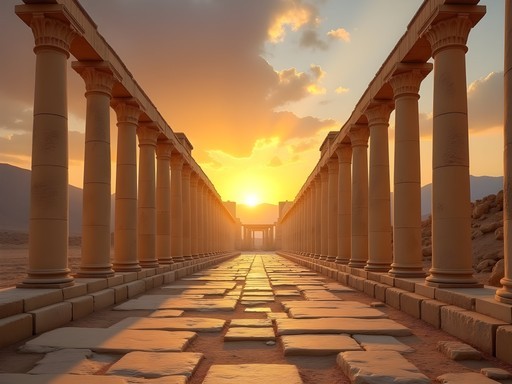
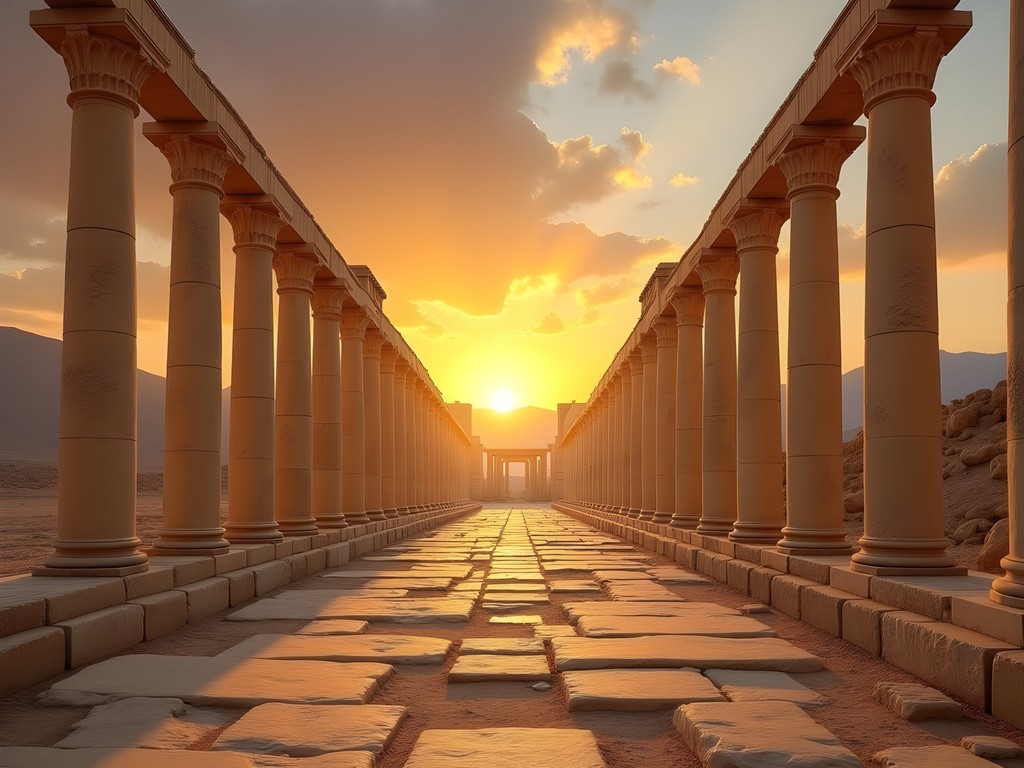
Standing amid the honey-colored columns of Palmyra as the setting sun bathes them in golden light remains one of the most profound moments in my fifteen years of cultural exploration. This ancient caravan city, rising from Syria's desert landscape like a mirage, once stood at the crossroads of several civilizations, amassing wealth as a vital trading hub along the Silk Road. While Syria's ongoing conflict has dramatically altered access to this UNESCO World Heritage site, understanding Palmyra's cultural significance has never been more important. As someone who visited just before the conflict erupted, I feel a responsibility to share insights into this irreplaceable treasure—a place where Greco-Roman architecture blends with Persian influences to create something uniquely Palmyrene. This guide offers context for students of history and archaeology who hope to one day witness Palmyra's majesty when peace returns to Syria.

Historical Context: The Rise and Fall of Palmyra
Before setting foot in Palmyra, I immersed myself in its fascinating history through extensive reading. What emerged was the story of an oasis settlement that transformed into one of antiquity's most impressive cities.
Palmyra's golden age arrived in the 1st and 2nd centuries CE when it functioned as a crucial waypoint for caravans traversing between the Mediterranean and Mesopotamia. Merchants grew wealthy from taxing goods passing through—silk from China, spices from India, glassware from Rome—creating a cosmopolitan center in the desert. The city's unique position allowed it to maintain autonomy while navigating relationships with both the Roman Empire and Parthian Persia.
The most captivating chapter in Palmyra's history involves Queen Zenobia, who led a remarkable rebellion against Rome in the 3rd century. After her husband's assassination, this formidable ruler expanded Palmyrene control across much of the eastern Roman Empire before Emperor Aurelian ultimately defeated her forces in 273 CE. The city never fully recovered from Rome's subsequent retribution.
To truly appreciate Palmyra's complex history before visiting, I highly recommend reading The Fires of Autumn, which provides rich historical context while remaining accessible to non-specialists.
💡 Pro Tips
- Learn basic Arabic greetings and phrases before your visit
- Study Palmyra's layout and major monuments before arrival to maximize limited touring time
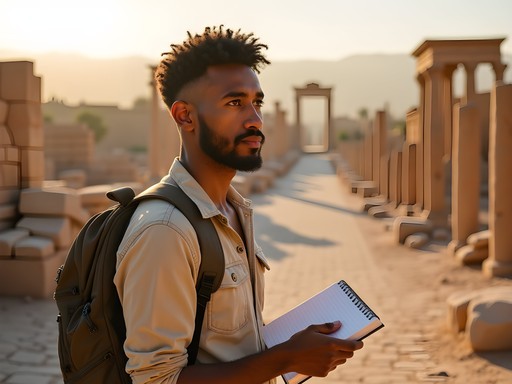
- Keep a journal to record your observations—this site inspires profound reflections
Architectural Marvels: Walking Through Ancient Palmyra
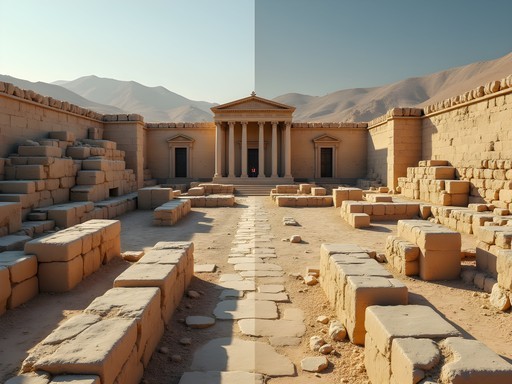
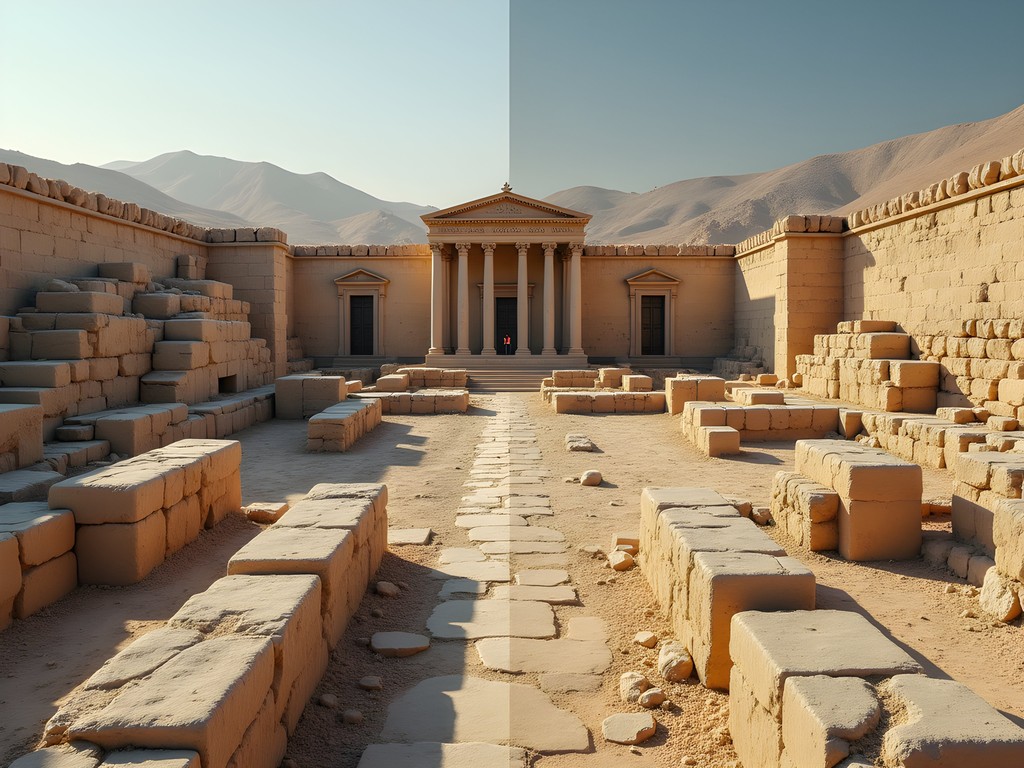
My first day exploring Palmyra's archaeological zone left me speechless. The sheer scale and preservation of this desert metropolis exceeded all expectations. While recent conflict has damaged some structures, understanding the original layout helps visualize Palmyra at its height.
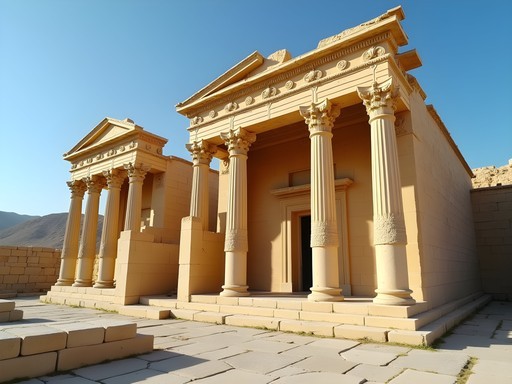
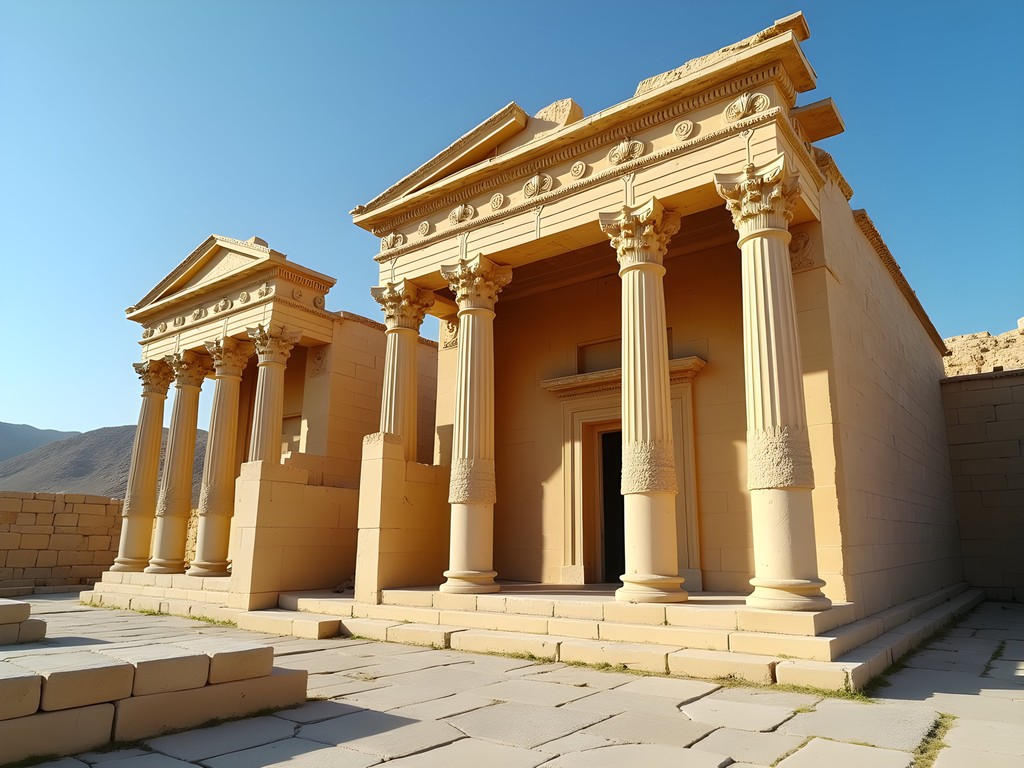
The site's crown jewel is undoubtedly the Temple of Bel, once one of the most important religious buildings in the Middle East. Dating from 32 CE, this massive complex blended classical architecture with local traditions. Though partially destroyed in 2015, understanding its former grandeur remains vital for architectural students.
Nearby, the monumental arch formed a visual hinge between the temple precinct and the Great Colonnade—Palmyra's main thoroughfare stretching over a kilometer. Walking this ancient boulevard, I could almost hear the multilingual chatter of merchants and the clatter of camel caravans arriving laden with exotic goods.
The remarkably preserved theater could seat 4,000 spectators, while the agora (marketplace) reveals the city's commercial importance. Most haunting are the tower tombs in the Valley of Tombs, where Palmyra's wealthy were buried in multi-story funerary towers with sculpted portraits preserving their likenesses for eternity.
During my exploration, I relied heavily on my archaeological guidebook which provided detailed context for each structure beyond what local guides could offer. Its fold-out maps proved invaluable for navigating the sprawling site efficiently.
💡 Pro Tips
- Wear sturdy walking shoes with ankle support—the site is vast with uneven terrain
- Start early in the morning when temperatures are cooler and light is ideal for photography
- Bring a detailed site map to identify structures, as many information panels may be damaged or missing
Cultural Significance: Palmyra's Unique Identity
What fascinated me most about Palmyra was its remarkable cultural hybridity. This wasn't simply a Roman outpost or a Persian satellite—it was distinctly Palmyrene, with a unique identity forged at the crossroads of civilizations.
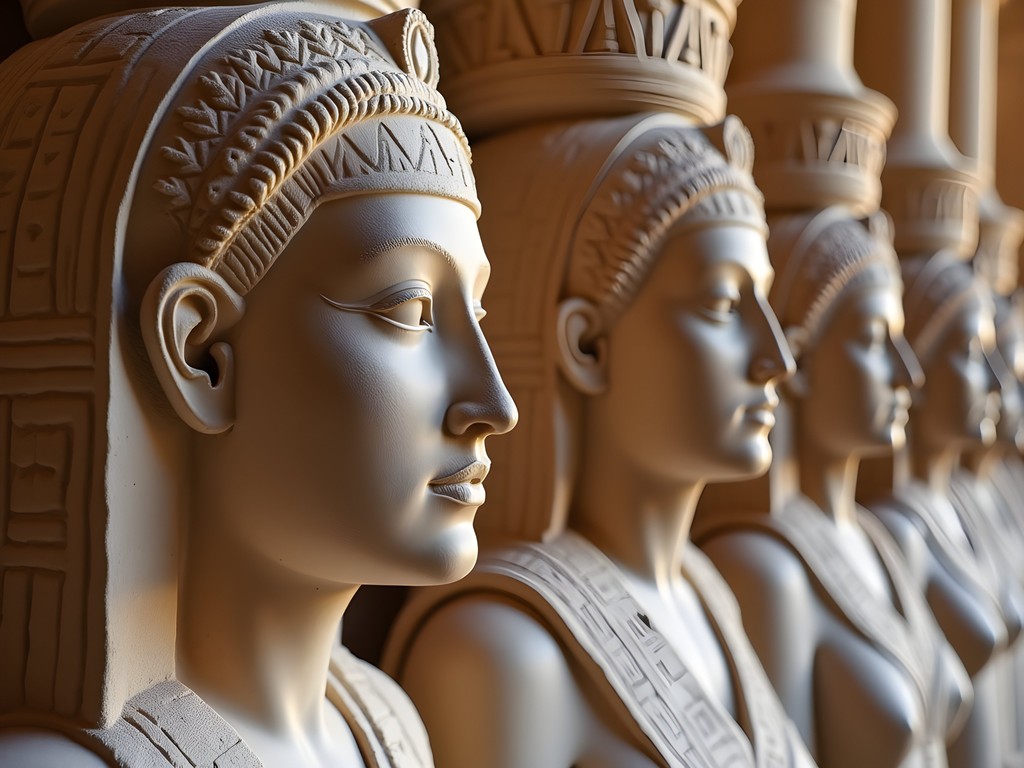
The city's bilingual nature is evident in inscriptions carved in both Greek and Aramaic (the local Semitic language). These texts reveal a society where Eastern and Western traditions coexisted and blended. Palmyrene art similarly combined classical techniques with local aesthetics, creating a distinctive style seen in funerary portraits and architectural decorations.
Religion in Palmyra reflected this syncretism. The pantheon included local deities like Bel, Baalshamin, and Allat alongside Greco-Roman gods. The temples incorporated both classical architectural elements and Near Eastern spatial arrangements—a physical manifestation of cultural fusion.
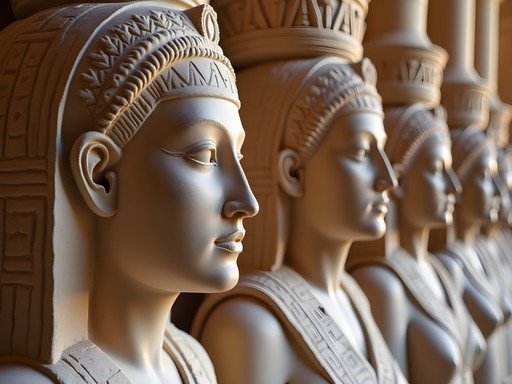
Perhaps most telling was Palmyrene fashion, visible in sculptural reliefs throughout the site. Elite women wore elaborate turbans, heavy jewelry, and richly draped garments that combined Roman styles with Persian influences. Men often displayed a similar hybrid appearance in their dress and grooming.
During my visit, I was struck by how this ancient cultural melting pot resonated with my own mixed heritage. As someone navigating between American and British cultural contexts, Palmyra's ability to synthesize diverse influences into something uniquely its own felt surprisingly relevant across the millennia.
To capture these cultural nuances in my photography, I relied on my travel camera, whose exceptional detail and low-light capabilities proved perfect for documenting intricate carvings and architectural elements in varying desert light conditions.
💡 Pro Tips
- Look closely at funerary portraits for details of ancient Palmyrene fashion and jewelry
- Bring binoculars to examine architectural details and carvings on upper levels of buildings
- Consider hiring a knowledgeable local guide who can explain the cultural context beyond the physical ruins

Responsible Cultural Tourism in Conflict Zones
I must address the elephant in the room: Syria remains an active conflict zone, and Palmyra has suffered grievously. Parts of the site have been deliberately destroyed, looted, or damaged during military operations. As of this writing, I cannot in good conscience recommend travel to Palmyra due to extreme safety concerns and ethical considerations.
However, I believe in preparing for a future when responsible tourism may resume. Cultural heritage in conflict zones raises complex questions about tourism ethics that students of archaeology and history should contemplate. When sites eventually reopen to visitors, approaching them with appropriate knowledge and sensitivity becomes paramount.
During my pre-conflict visit, I observed how tourism could both benefit and harm Palmyra. Economic opportunities for local communities were significant, yet increased foot traffic accelerated erosion of fragile structures. Finding this balance will be even more critical during any future reconstruction phase.
For those studying Palmyra from afar, numerous virtual resources now exist. The Palmyra Photogrammetry Project and other digital humanities initiatives have created detailed 3D models of monuments before their destruction. These resources allow for meaningful engagement with Palmyra's cultural significance without physical presence.
Should peace return and tourism resume, visitors will have an important responsibility: to approach the site with knowledge, respect, and awareness of both its ancient significance and recent trauma. Tourism that acknowledges this complex reality can contribute positively to cultural preservation and local recovery.
💡 Pro Tips
- Support organizations working to document and preserve Syrian cultural heritage
- Engage with virtual reconstructions and museum collections featuring Palmyrene artifacts
- When travel eventually becomes possible, choose tour operators with demonstrated commitment to ethical practices
Preparing for Future Visits: Academic Resources
While physical access remains restricted, students can develop deep understanding of Palmyra through academic resources. My own journey with this remarkable site began long before visiting, through books, lectures, and museum collections.
Start with Paul Veyne's excellent monograph Palmyra: An Irreplaceable Treasure, which contextualizes the site's significance within ancient Mediterranean history. For architectural analysis, Susan Downey's Architectural Terracottas from Palmyra provides specialized insights into construction techniques and decorative elements.
Museum collections worldwide house significant Palmyrene artifacts. The Louvre in Paris, British Museum in London, and Istanbul Archaeological Museum all display important pieces that survived through earlier archaeological expeditions. Studying these collections provides close examination of Palmyrene artistic techniques impossible to appreciate from a distance at the site itself.
Digital humanities projects have become increasingly valuable, particularly after recent destruction. The digital archaeology guide provides an excellent overview of platforms documenting endangered heritage sites like Palmyra.
For language students, exploring Palmyrene Aramaic inscriptions offers insights into this ancient Semitic language. Jean-Baptiste Yon's Les Inscriptions de Palmyre remains the definitive collection, though it requires advanced French reading skills.
Finally, connect with academic departments focusing on Near Eastern archaeology. Many universities host lecture series featuring scholars working on Palmyra's preservation and documentation, offering the most current research and perspectives on this endangered cultural treasure.
💡 Pro Tips
- Join online communities dedicated to Syrian heritage preservation to stay updated on Palmyra's condition
- Look for museum exhibitions featuring Palmyrene artifacts or digital reconstructions
- Consider supporting academic projects focused on documenting and preserving knowledge about Palmyra
Final Thoughts
Palmyra's story isn't simply one of ancient glory and modern tragedy—it's about cultural resilience and the enduring power of human creativity at the crossroads of civilizations. As students of history and archaeology, your engagement with sites like Palmyra matters profoundly. Through your studies, this Pearl of the Desert continues to live in our collective understanding even when physical access remains impossible. When peace eventually returns to Syria, a new generation of visitors will walk Palmyra's colonnaded streets with fresh perspectives. Until that day, I encourage you to explore Palmyra through academic resources, virtual reconstructions, and museum collections—preparing not just for future travel, but for meaningful participation in preserving our shared cultural heritage. The columns of Palmyra have witnessed two millennia of human history; they remind us that even in our most troubled times, what we create can outlast us and speak across generations.
✨ Key Takeaways
- Palmyra represents a unique cultural fusion where Eastern and Western traditions blended into something distinctly Palmyrene
- Despite recent damage, understanding Palmyra's architectural and artistic achievements remains crucial for students of cultural heritage
- Virtual resources and museum collections offer meaningful ways to engage with Palmyra while physical access remains restricted
- Responsible cultural tourism requires balancing appreciation with ethical considerations about conflict zones
📋 Practical Information
Best Time to Visit
Fall (October-November) when temperatures are moderate
Budget Estimate
$1,500-2,000 for a week including academic program fees
Recommended Duration
5-7 days minimum to properly explore the site and surrounding region
Difficulty Level
Challenging

Comments
roamwanderer
Really powerful writing. Thanks for sharing this
Kimberly Murphy
Brilliant piece, Timothy! Your description of the Temple of Bel really transported me there. I've been fascinated by Palmyra's story - that unique blend of Roman, Persian, and Arab influences created something truly special. The Queen Zenobia history is particularly compelling. Have you had a chance to visit any of the Syrian heritage exhibitions that have been touring? The British Museum had one a while back that featured artifacts and 3D reconstructions. It's not the same as being there, but it keeps the cultural memory alive while the site recovers.
cityadventurer
didnt know about those exhibitions! will look that up
adventurechamp
I visited Palmyra back in 2009 and it was absolutely breathtaking. The scale of the ruins and the desert setting made it feel like stepping back in time. It breaks my heart what happened to some of the structures during the conflict. Timothy, your point about cultural resilience really resonates - these sites represent so much more than just old stones. Really appreciate you highlighting the responsible tourism angle too. We need to think carefully about how we engage with heritage sites in sensitive areas.
roamwanderer
2009 must have been amazing timing. wish i'd gone then
cityadventurer
Those sunset photos are absolutely stunning!! The golden light on those columns is incredible
photoone
is it even possible to visit syria right now? would love to see this but seems complicated
Kimberly Murphy
It's incredibly complicated at the moment - you'd need to arrange everything through official channels and the security situation is still unpredictable. I've been following the situation closely and hoping to visit when it's safer. For now, I'm exploring Jordan's ancient sites which have some similar desert architecture!
photoone
thanks! yeah maybe jordan is a better option for now
sunnyvibes
incredible post, really educational!
freeblogger
This is amazing! I had no idea about the Queen Zenobia history. Just went down a total wikipedia rabbit hole about her lol. She sounds like such a badass taking on the Roman Empire like that!
Nicole Russell
Right?! She's one of history's most underrated figures. There's a great book about her if you want to learn more - Zenobia biography
coffeeadventurer
adding this to my bucket list!! even if i cant go now maybe someday
explorerider
What was the cultural significance of Palmyra being at that specific crossroads location? I've visited other ancient trade route cities but never fully understood what made this one so special compared to others in the region.
Mason Sullivan
From what I've read, Palmyra was basically THE oasis between the Roman Empire and Persia. Caravans HAD to stop there - no other water source for days in any direction. That geographical chokepoint made them incredibly wealthy and powerful. They could basically charge whatever they wanted and everyone had to pay up. Pretty brilliant actually.
photoguide
the golden hour lighting in your photos is perfect. really captures the magic of the place
Venture X
Premium card with 2X miles, $300 travel credit, Priority Pass