
Disclosure: This article contains affiliate links. We may earn a commission from purchases at no extra cost to you, which helps our travel content.
When I first stepped foot in Quorn, the gateway to Australia's ancient Flinders Ranges, I was immediately struck by the convergence of rustic outback charm and the immense, star-filled night sky above. As both an astronomy enthusiast and someone who appreciates landscapes where geological history is written in stone, this remote corner of South Australia offers a perfect marriage of my passions. What began as a curiosity about the Southern Hemisphere's dark sky opportunities evolved into one of the most rewarding winter getaways I've experienced—a place where the Milky Way feels close enough to touch and where 540-million-year-old mountains tell stories of Earth's distant past.

Quorn: The Perfect Base for Your Flinders Adventure
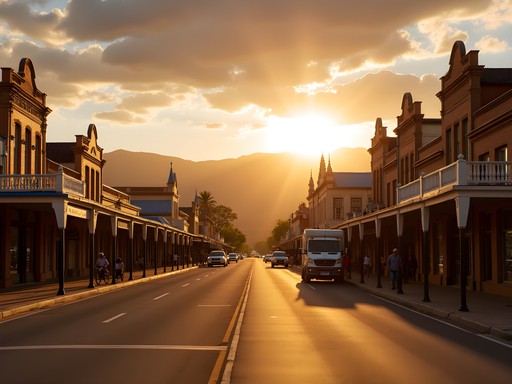
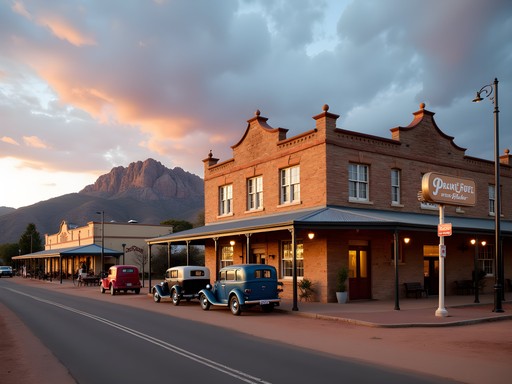
Nestled at the southern entrance to the Flinders Ranges, the historic town of Quorn serves as an ideal launching point for exploring this magnificent region. Once a bustling railway hub on the Great Northern Railway, this charming town of roughly 1,200 residents has preserved its early 20th-century character while providing modern amenities for travelers.
The Transcontinental Hotel, with its wide verandas and period details, offers comfortable accommodation with a genuine outback atmosphere. For those seeking self-contained options, I found the Flinders Ranges Motel to provide excellent value with clean, spacious rooms and kitchenettes—perfect for preparing simple meals between adventures.
Don't miss the Quorn Railway Station, home to the famous Pichi Richi Railway—a heritage steam train that operates between Quorn and Port Augusta on select dates. Even if you don't catch a ride, the railway museum offers fascinating insights into the region's transportation history.
For provisions, Emily's Bistro serves hearty country meals using local ingredients, while the Quandong Café (named after the native peach) offers excellent coffee and homemade pastries—ideal for fueling up before a day of exploration.

💡 Pro Tips
- Book accommodations well in advance during the popular winter season (June-August)
- The Pichi Richi Railway operates seasonally—check their schedule if you're keen to experience this historic steam train
- Stock up on snacks and water in Quorn before heading deeper into the ranges where services are limited
Stargazing in the Flinders: An Astronomer's Paradise
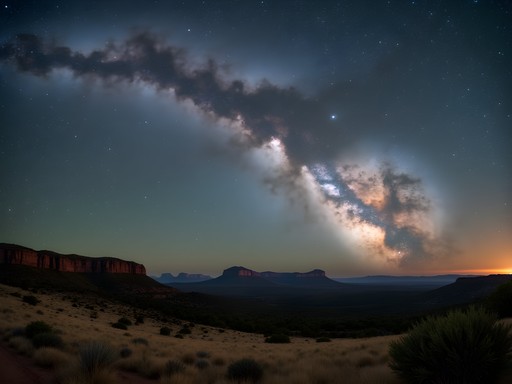
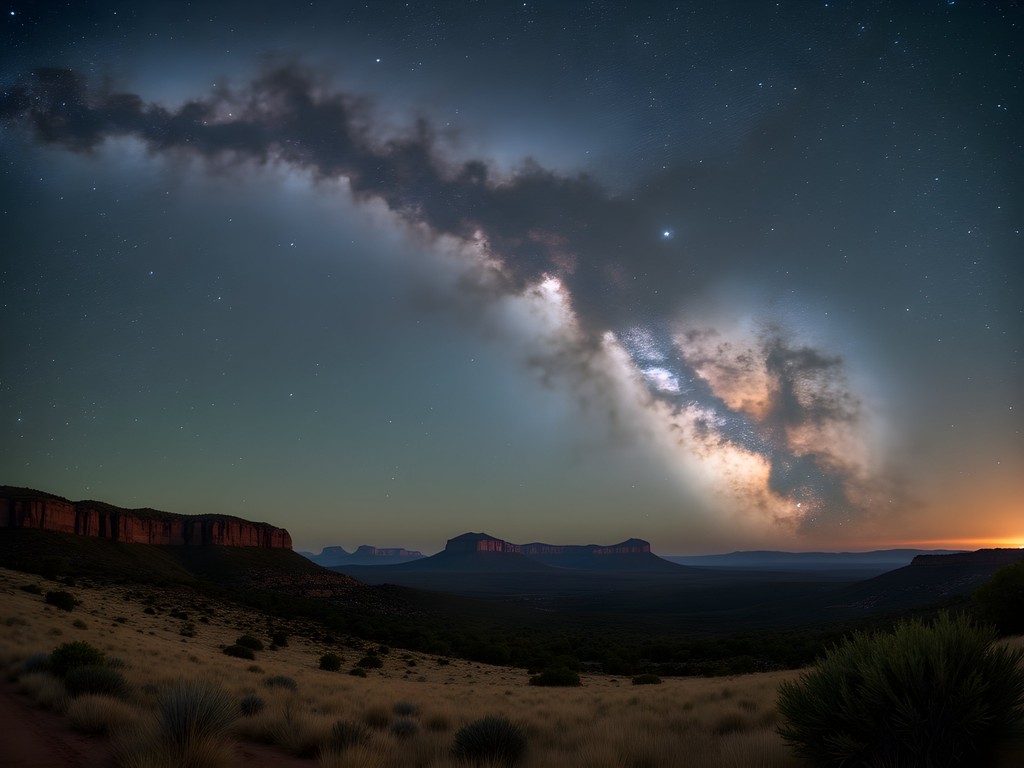
As someone who grew up scanning the Northern Hemisphere skies with my father, nothing prepared me for the astronomical wonders visible in the Flinders Ranges. The region's combination of high elevation, dry air, minimal light pollution, and southern latitude creates ideal conditions for observing celestial phenomena invisible from North America.
Wilpena Pound, a natural amphitheater of mountains about an hour north of Quorn, offers some of the darkest skies I've encountered. On my recent winter visit, I was able to clearly see the Magellanic Clouds (satellite galaxies of our Milky Way) with the naked eye—a humbling experience that simply isn't possible from Atlanta.
I highly recommend bringing a quality star chart specifically for Southern Hemisphere viewing, as the constellations will likely be unfamiliar to Northern Hemisphere observers. For serious photography, a star tracker mount is essential for capturing long exposures of the galactic core without star trails.
For those without equipment, Arkaroola Wilderness Sanctuary offers guided astronomy tours using their observatory telescopes. Their 14-inch Schmidt-Cassegrain telescope revealed details of the Eta Carinae nebula that left me speechless—a highlight of my astronomical experiences worldwide.
💡 Pro Tips
- Winter (June-August) offers the clearest night skies and comfortable daytime temperatures for exploring
- New moon periods provide optimal stargazing conditions—plan your visit accordingly
- Pack warm layers as nighttime temperatures can drop below freezing, even when days are mild
Exploring the Ancient Geology of Flinders Ranges
The Flinders Ranges represent one of Earth's most significant geological treasures—a place where the planet's history is laid bare in layers of rock dating back over half a billion years. As someone with a professional interest in environmental conservation, I found the region's geological story both humbling and urgent.
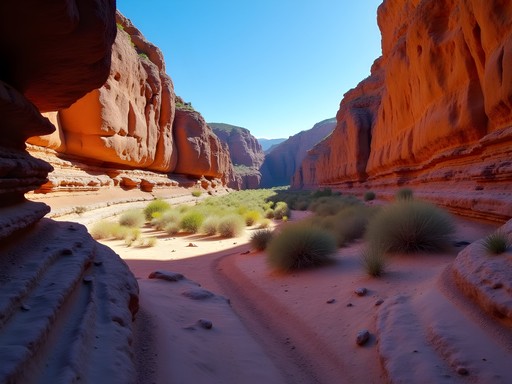
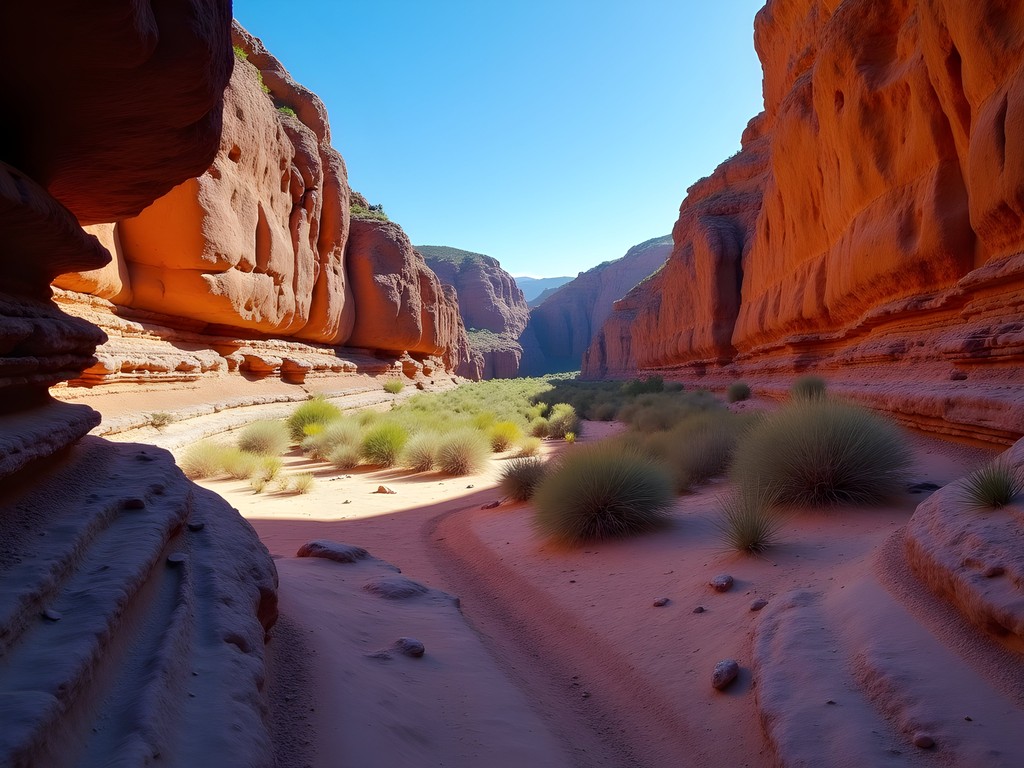
Brachina Gorge, accessible via a moderately challenging dirt road (manageable in a standard SUV with careful driving), serves as a natural corridor through 130 million years of Earth's history. The designated geological trail features interpretive signs explaining how these ancient seabeds were thrust upward to form the mountain ranges we see today.
For those interested in paleontology, the Ediacara Hills contain fossils of Earth's earliest known complex multicellular organisms, dating back 550 million years. While the actual fossil beds are protected, excellent examples are on display at the Nilpena Station visitor center.
Wilpena Pound, the region's iconic natural amphitheater, rewards hikers with breathtaking vistas. The moderate 3-4 hour return hike to St. Mary Peak (Ngarri Mudlanha) offers panoramic views that demonstrate the scale of these ancient formations. For this hike, I found my hiking poles invaluable on the steeper sections, especially when navigating loose rock surfaces.
💡 Pro Tips
- Respect geological features by staying on marked trails and never removing rocks or fossils
- Carry plenty of water (at least 2-3 liters per person) for hikes, as the air is extremely dry
- Download offline maps as mobile coverage is spotty throughout the ranges

Indigenous Heritage and Cultural Connections
The Flinders Ranges hold profound cultural significance for the Adnyamathanha people, who have lived in these lands for tens of thousands of years. As a visitor, engaging respectfully with this cultural heritage added immeasurable depth to my understanding of the region.
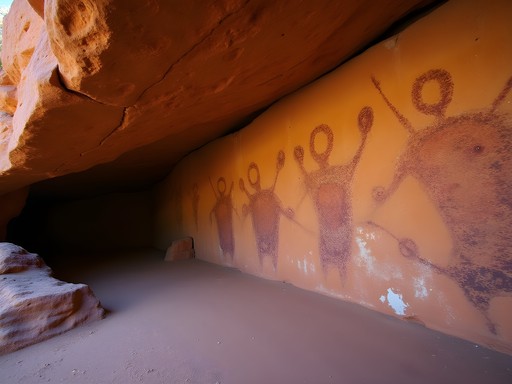
At Arkaroo Rock in Ikara-Flinders Ranges National Park, a short but rewarding hike leads to ancient ochre and charcoal rock art depicting the creation story of Wilpena Pound. The artwork, protected by overhanging rock, has survived for generations and offers a glimpse into the deep connection between the Adnyamathanha people and this landscape.
In Quorn, I was fortunate to join a guided cultural walk with an Adnyamathanha elder who shared knowledge about traditional plant uses, storytelling traditions, and sustainable land management practices that have valuable applications in modern conservation efforts—something that resonated deeply with my environmental law background.
For those wanting to deepen their understanding before visiting, I recommend reading the cultural guidebook, which provides essential context for appreciating the living cultural landscape you'll encounter.

💡 Pro Tips
- Always obtain proper permits before visiting culturally sensitive sites
- Book indigenous-led tours well in advance as they often have limited availability
- Approach rock art sites with respect—never touch the artwork or use flash photography
Beyond Quorn: Day Trips to Surrounding Towns
While Quorn makes an excellent base, several nearby towns offer unique experiences worth a day trip. I found that having a portable cooler in the car was invaluable for keeping drinks and snacks fresh during these explorations.
Hawker (45 minutes north) serves as the artistic heart of the region, with the Jeff Morgan Gallery housing the remarkable Wilpena Panorama—a 360-degree painted representation of the view from St. Mary Peak that must be seen to be believed. The town's Flinders Food Co. café also makes exceptional pastries using native ingredients.
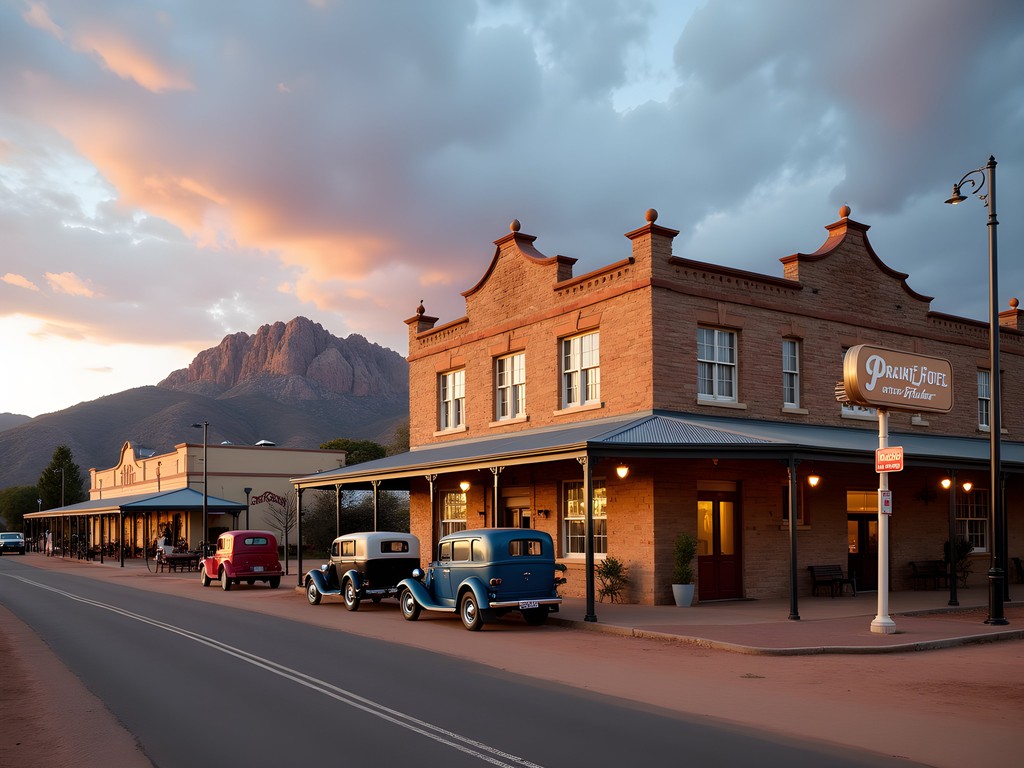
Parachilna, though tiny, is home to the iconic Prairie Hotel, famous for its 'Feral Mixed Grill' featuring emu, kangaroo and camel meat. As someone who appreciates trying local specialties, this was a memorable culinary adventure that connected me to the region's pastoral history.
Blinman, the highest town in South Australia, offers fascinating heritage mine tours that descend into the copper mines that once drove the region's economy. The winding drive to Blinman through Parachilna Gorge is itself worth the journey for its spectacular scenery.
For astronomy enthusiasts, I recommend timing your visit to coincide with one of the stargazing events at Arkaroola Wilderness Sanctuary. Their astronomical tours using professional-grade equipment revealed details of southern sky objects I'd previously only seen in photographs. Having a good red light headlamp is essential for navigating after dark while preserving your night vision.
💡 Pro Tips
- Fill your gas tank whenever possible as fuel stations are widely spaced throughout the region
- Many smaller towns have limited operating hours—check ahead, especially for weekend visits
- Carry cash as card facilities can be unreliable in remote locations
Final Thoughts
As I stood atop Wangara Lookout on my final evening in the Flinders Ranges, watching the setting sun transform Wilpena Pound into a glowing amphitheater of red and gold, I reflected on how this remote corner of Australia had exceeded all my expectations. From the moment-stopping brilliance of the southern night sky to the humbling timeline of ancient rocks, from the living cultural heritage of the Adnyamathanha people to the warm hospitality found in outback towns like Quorn—this region offers experiences that resonate on both scientific and spiritual levels.
For families seeking meaningful connections with nature and science, couples looking for a romantic escape under brilliant stars, or solo travelers drawn to landscapes of profound beauty, the Flinders Ranges deliver experiences impossible to find elsewhere. As both an astronomy enthusiast and someone concerned with environmental conservation, I found this region to be a perfect intersection of my passions—a place where looking up at ancient light from distant stars complements looking down at ancient rocks from Earth's distant past.
I encourage you to make the journey to this special corner of Australia. In an increasingly connected world, places that offer genuine dark skies and geological wonders on this scale become ever more precious. The Flinders Ranges await with stories written in stone and light—all you need to do is come and listen.
✨ Key Takeaways
- Quorn provides an ideal base with historic charm and modern amenities for exploring the Flinders Ranges
- Winter (June-August) offers the best combination of clear night skies and comfortable daytime temperatures
- Book indigenous cultural experiences and astronomy tours well in advance to secure your spot
- Allow at least 5-7 days to properly experience the region's geological wonders, dark skies, and cultural heritage
📋 Practical Information
Best Time to Visit
Winter (June-August)
Budget Estimate
$150-250 AUD per day for accommodations, meals and activities
Recommended Duration
5-7 days minimum
Difficulty Level
Beginner To Moderate


Comments
Raymond Hassan
Excellent write-up, Kyle. I visited the Flinders last year during winter and the stargazing was indeed phenomenal - virtually no light pollution once you're away from the towns. One thing I'd add for readers: the temperature drops dramatically at night, even in warmer months. I underestimated this and spent my first night freezing at my campsite near Wilpena Pound. The geological formations are fascinating too - standing in front of those 600-million-year-old rock layers really puts things in perspective. Did you get a chance to do the Heysen Trail sections? Some of the most rewarding hiking I've done in Australia.
oceangal
Good tip about the cold nights! Adding extra layers to my packing list now
oceangal
This looks amazing! Quick question - is Quorn easy to reach without a car? Thinking of doing a solo trip but don't have my license yet lol
Raymond Hassan
There's a bus service from Adelaide but honestly, you'll want a car to properly explore the ranges. The towns are spread out and the best viewpoints require driving. Maybe look into rental options or joining a tour group?
oceangal
Thanks! Yeah might have to bite the bullet and rent something
freestar
Can you do this without a car or do you really need one? Coming from Adelaide.
freeexplorer
Planning a trip for September. Is that a good time weather-wise? Also, is 4 days enough to see the main sights or should I budget more time?
coolguy
September is perfect! Not too hot. I'd say 5 days minimum if you want to really explore.
Stephanie Romano
We took our kids (7 and 10) to the Flinders last year and it was transformative for them. The Indigenous heritage section of your post really resonates - we did a guided walk with an Adnyamathanha elder near Wilpena and my daughter still talks about the stories she heard about the creation of the ranges. For families reading this, the Pichi Richi Railway in Quorn was a huge hit and broke up the hiking nicely. The stargazing was the highlight though. My son had never seen the Milky Way so clearly. We stayed at the Quorn caravan park which had great facilities for families.
mountainlegend
This is so helpful! Were the walks kid-friendly or pretty challenging?
Stephanie Romano
Most were doable! Stick to the shorter trails around Quorn. The Dutchmans Stern trail was too much for our 7yo but the older one managed it. Plenty of easier options though.
coolguy
Looks amazing! Thanks for sharing
Jean Wells
Kyle, excellent breakdown of the region. I visited Quorn three years ago and your analysis of its position as a strategic base is spot-on. What struck me most was the accessibility of dark sky viewing compared to other Australian outback destinations. The light pollution metrics are exceptional. One observation: the seasonal temperature variations are more extreme than many international visitors anticipate. I'd recommend emphasizing the 15-20°C diurnal temperature swings, particularly for those planning camping expeditions.
freestar
Good point about the temperature changes. What time of year did you go?
Jean Wells
I was there in April (autumn). Daytime was pleasant at 22°C, but nights dropped to 5°C. Pack layers.
mountainlegend
Adding this to my bucket list right now!!
photoace
Those night sky shots are incredible! How long were the exposures?
Dylan Turner
Kyle, your piece on the indigenous heritage in the region is particularly insightful. When I visited last October, I participated in a guided walk with an Adnyamathanha elder that completely transformed my understanding of the landscape. The connection between the geology and dreamtime stories adds such rich context to those magnificent formations. I'd highly recommend visitors book the 'Welcome to Country' experience at Wilpena Pound Resort - it includes traditional ceremonies and storytelling that you simply can't get from guidebooks. Also found that my binoculars were essential for spotting wildlife and appreciating the geological details from the lookouts.
sunnylife3709
That indigenous tour sounds amazing! How far in advance did you need to book it?
Dylan Turner
I booked about 3 weeks ahead, but in peak season (Aug-Oct) I'd recommend at least 6 weeks. They only run them on certain days with limited spots.
Venture X
Premium card with 2X miles, $300 travel credit, Priority Pass