

Disclosure: This article contains affiliate links. We may earn a commission from purchases at no extra cost to you, which helps our travel content.
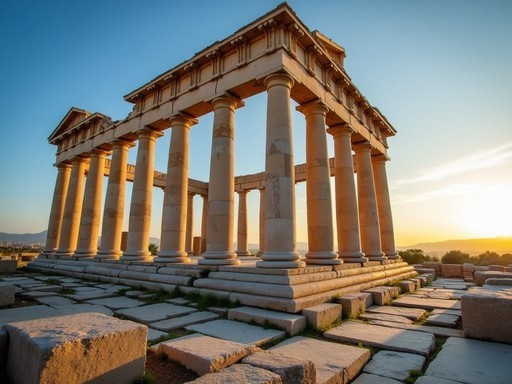
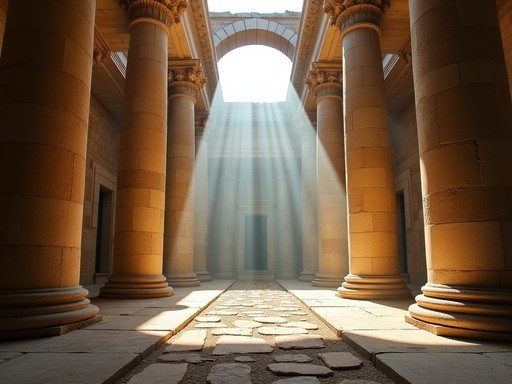
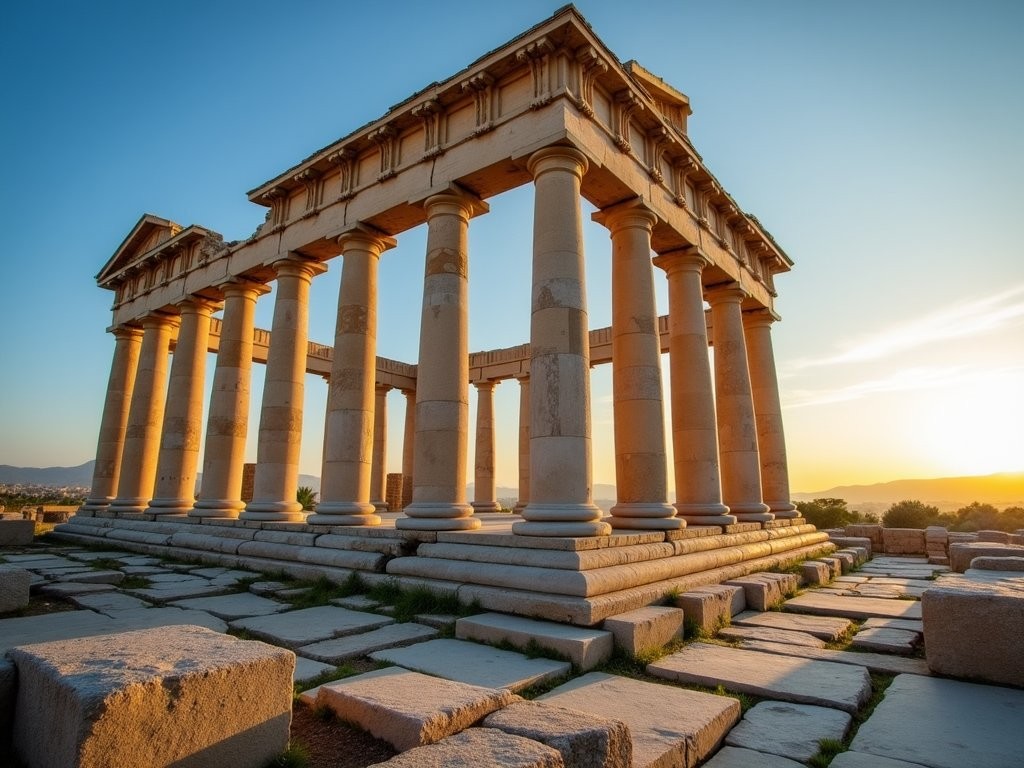
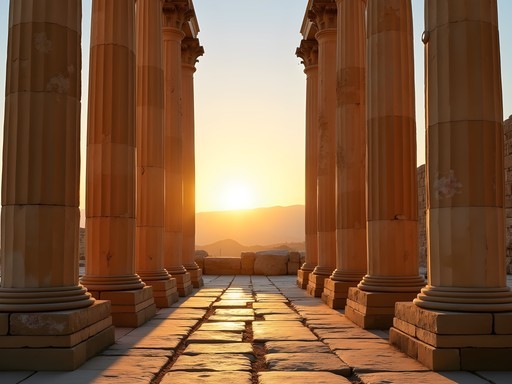
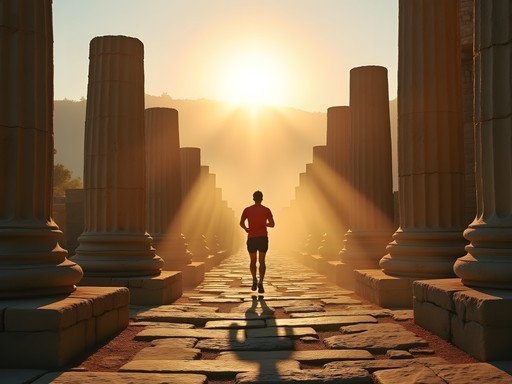
The first rays of morning light pierce through the massive columns of the Temple of Jupiter, casting long shadows across stones that have witnessed millennia of human history. I stand in awe, my breath visible in the cool spring air of the Bekaa Valley. There's something about ancient sacred spaces that resonates deeply with both my Mi'kmaq heritage and my scientific mind. As an EMT, I've learned to read the physical world for signs of distress or healing—and these temples, these monuments to human ingenuity and spiritual devotion, speak volumes about our capacity for creating spaces of power and reverence. Baalbek isn't just another archaeological site; it's a testament to what humans can accomplish when driven by something greater than themselves. After years of exploring sacred sites across continents, from New Zealand's wilderness to Peru's ancient citadels, I've found myself drawn to this relatively under-visited wonder in Lebanon's fertile valley—a place where Roman engineering meets ancient Phoenician sacred ground, creating one of the most spectacular temple complexes on Earth.

The Colossal Scale of Baalbek: A Medical Responder's Perspective
When you spend your days in emergency response, you develop an intuitive sense of scale and proportion—the difference between a minor incident and a multi-casualty situation, the weight of a human body during a mountain rescue. Nothing in my career prepared me for the sheer magnitude of Baalbek.
The Temple of Jupiter features stone blocks weighing up to 800 tons—that's roughly equivalent to 400 adult moose or 200 ambulances stacked together. The famous trilithon, three adjacent stones in the temple foundation, each weighs approximately 1,000 tons. Standing beside them, I felt the same humbling sensation I experienced during my first major avalanche response in the Canadian Rockies—a reminder of forces far beyond human scale.
As I traced my fingers along the weathered limestone, I couldn't help but think about the bodies that constructed this place. As someone who understands human physical capacity intimately, I found myself calculating the physiological cost of this labor—how many workers, how many injuries, how many lives. The Romans' engineering prowess is evident in every precisely cut stone, but so too is the toll of imperial ambition.
To properly document these colossal structures, I relied on my DJI Mini 3 Pro Drone which proved invaluable for capturing the true scale and layout of the complex. Its compact size made it easy to transport in my daypack, while still providing stunning aerial perspectives that ground-level photography simply cannot achieve.
What makes Baalbek truly remarkable isn't just its size, though. It's the precision. As someone trained to assess vital signs and minute changes in patient condition, I appreciate the meticulousness of the stonework—how blocks weighing hundreds of tons fit together with seams barely visible to the naked eye. No modern cement or mortar holds these structures together, just gravity and perfect engineering.
💡 Pro Tips
- Visit early morning (7-9am) for the best light and fewer crowds
- Bring binoculars to examine the intricate carvings high on the columns
- Wear sturdy shoes with ankle support—the site has uneven surfaces and requires substantial walking
Sacred Geometry: Where Ancient Wisdom Meets Modern Understanding
My fascination with sacred geometry began long before my EMT career—it stems from childhood lessons about Mi'kmaq star knowledge and celestial navigation. At Baalbek, these interests converged powerfully as I explored the precise astronomical alignments of the temples.
The Temple of Jupiter was constructed with careful attention to solar events. During my visit, I used my Celestron SkyMaster Binoculars to observe how certain architectural elements frame celestial bodies at specific times. These powerful, compact binoculars are perfect for both stargazing and examining architectural details that would otherwise be missed by the naked eye.
The complex isn't just impressive above ground. Beneath the temples lies an elaborate system of substructures, tunnels, and chambers that speak to both practical engineering and ritual purposes. As I descended into these spaces, my EMT instincts kicked in—assessing air quality, structural integrity, potential hazards. Yet simultaneously, I felt the weight of spiritual significance these spaces held for ancient worshippers.
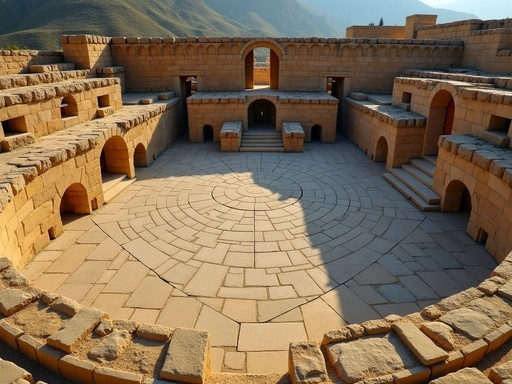
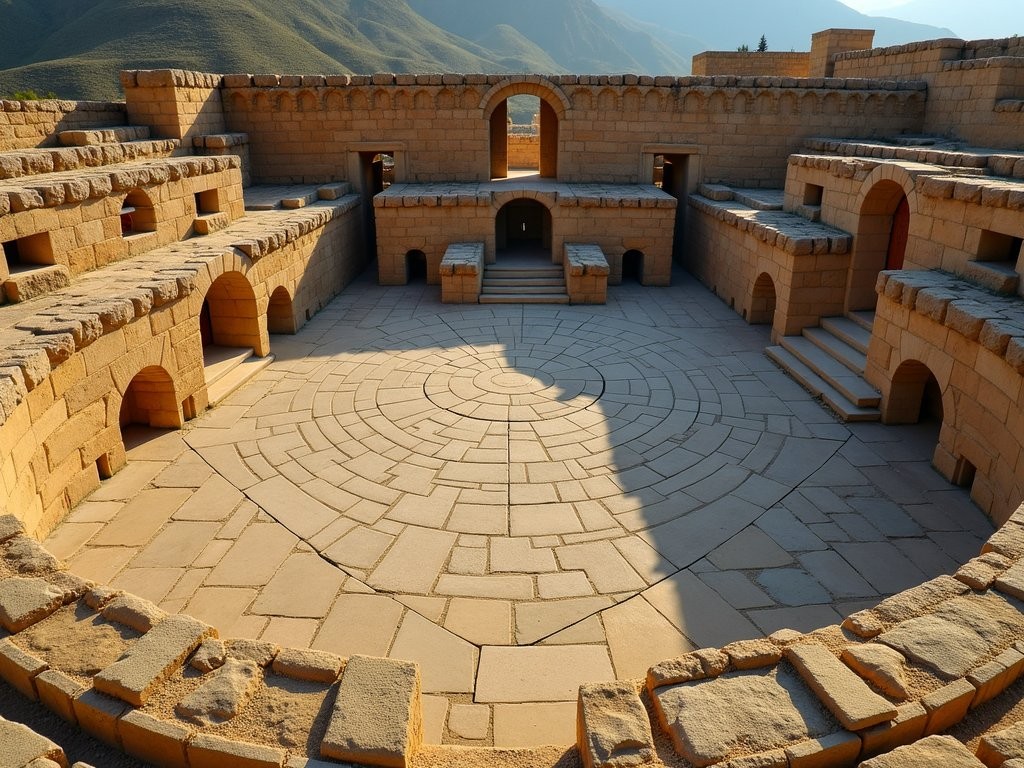
The hexagonal forecourt of the Jupiter complex particularly captivated me. Hexagons appear repeatedly in nature—from honeycomb structures to certain molecular formations. They represent optimal efficiency and strength, something I've observed in emergency medical equipment design as well. The ancients understood this inherently, incorporating these forms into their most sacred spaces.
Walking through the site with Hassan, my local guide, I learned how the temples were built upon earlier Phoenician sacred sites, creating a palimpsest of spiritual significance. This layering of sacred spaces across cultures resonated with my own understanding of how indigenous knowledge persists and adapts through colonial impositions. Just as Mi'kmaq healing traditions found ways to survive within Western medical frameworks, the earlier Phoenician sacred geometry informed and influenced the Roman structures built atop them.
"The stones remember," Hassan told me, echoing something my grandmother once said about our ancestral lands. "They hold the memories of all who have worshipped here." Standing in the hexagonal court as afternoon light created geometric shadows across the stones, I understood exactly what he meant.
💡 Pro Tips
- Download a star chart app to understand the astronomical alignments of the temples
- Visit during equinox or solstice if possible, when the sun's alignment with architectural elements is most pronounced
- Ask guides specifically about the subterranean chambers—many tourists miss these fascinating spaces
The Healing Properties of Ancient Sacred Spaces
As someone who straddles the worlds of emergency medicine and indigenous healing traditions, I've developed a unique perspective on how physical spaces affect our wellbeing. Baalbek exemplifies what I've observed across sacred sites worldwide—these spaces were designed not just for worship but for healing.
The Temple of Bacchus, better preserved than the larger Temple of Jupiter, contains acoustic properties that alter how sound travels. Standing in specific positions, I could feel how chanting or music would have resonated through the body—creating what modern science recognizes as frequency-based healing effects. My paramedic training has taught me how sound waves can affect heart rate, blood pressure, and neurological function. The ancients understood this intuitively.
The site also features what archaeologists believe were healing springs and pools. Water sources at sacred sites across cultures often contain higher mineral content or subtle electromagnetic properties. Having collected water samples from sacred sites across four continents (a peculiar hobby, I admit), I've found fascinating patterns in their mineral compositions. While I didn't sample Baalbek's ancient water systems (most are dry now), the positioning of these features suggests knowledge of geomagnetic properties.
Throughout the complex, I noticed strategic use of different stone types—not just for structural purposes but potentially for their energetic properties. This reminded me of a rescue operation near a Mi'kmaq sacred site where an elder explained how certain stones were placed to "balance the energies" of the landscape. Modern research into piezoelectric properties of various minerals lends scientific credence to these ancient practices.
To fully document my observations, I relied on my Moleskine Classic Notebook with its acid-free paper that ensures my notes and sketches will last for years. I've found digital notes never quite capture the nuanced observations and personal reflections that emerge when pen meets paper, especially in places of profound historical and spiritual significance.
Many visitors rush through Baalbek, focusing only on its architectural magnificence. By slowing down—touching the stones, listening to the spaces, observing how light interacts with different chambers throughout the day—I connected with the site's subtle healing dimensions. These weren't just temples for worship; they were sophisticated wellness centers designed with an understanding of how environment influences human physiology and spirit.

💡 Pro Tips
- Bring a refillable water bottle—the Lebanese spring sun can be deceptively dehydrating even when temperatures feel comfortable
- Spend time sitting quietly in different areas of the temples to experience their unique acoustic properties
- Consider bringing a small journal to record your impressions and physical sensations at different points within the complex

Local Cuisine: The Bekaa Valley's Healing Foods
My journeys always orbit around two interconnected centers: sacred spaces and local food traditions. The Bekaa Valley surrounding Baalbek offers some of Lebanon's most extraordinary culinary experiences, made more meaningful by understanding their historical and medicinal contexts.
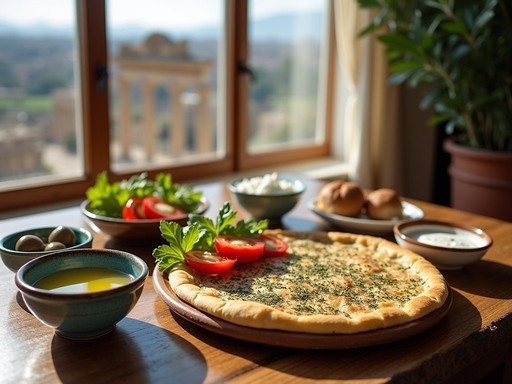
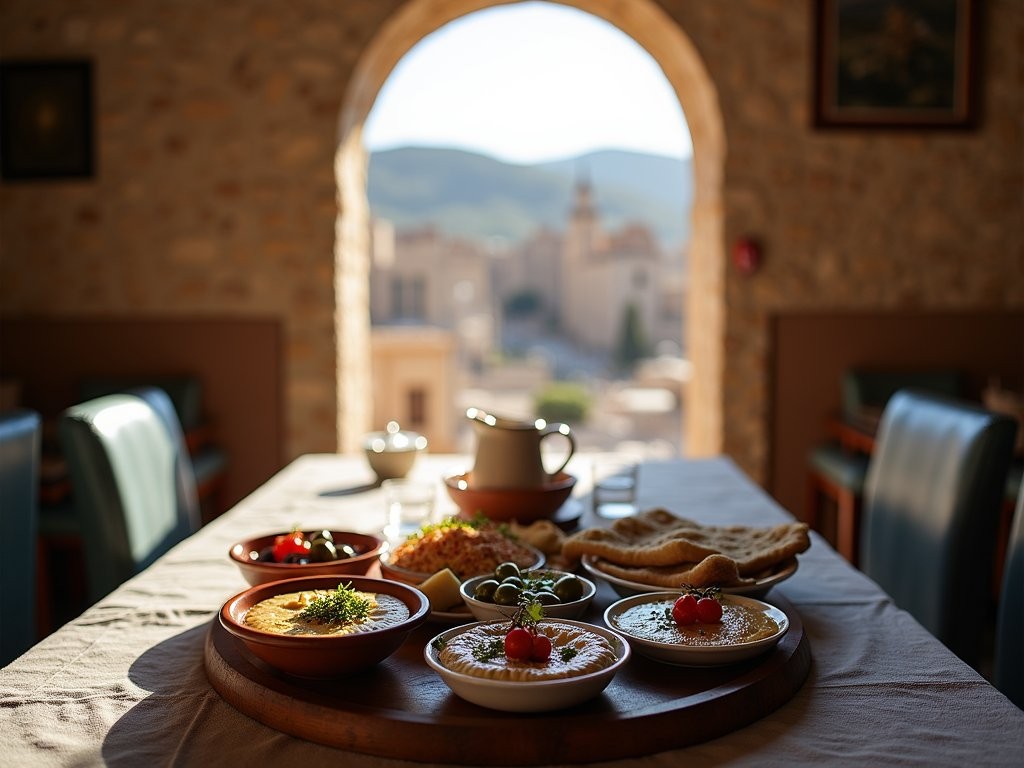
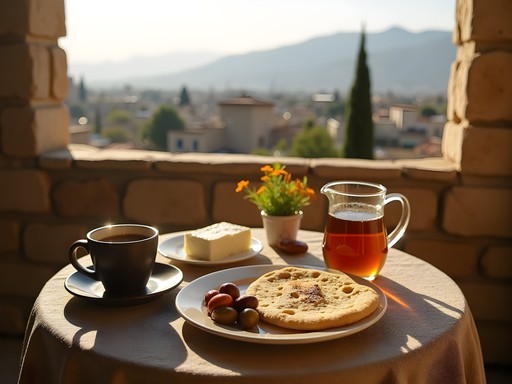
After a morning exploring the ruins, I followed my nose (and the recommendation of my guide Hassan) to a small family restaurant in Baalbek town. There, I experienced a traditional Lebanese breakfast of manakish—flatbread topped with za'atar, a mixture of wild thyme, sumac, and sesame seeds. Za'atar has been used medicinally throughout the region for centuries; its thyme component contains thymol, a natural antiseptic that modern research confirms has antimicrobial properties.
The Bekaa Valley is Lebanon's agricultural heartland, and the connection between its fertile soil and the massive temples is no coincidence. Ancient civilizations built their most important structures where the land was most productive. This region produces exceptional olive oil, which features prominently in local cuisine. The polyphenols in traditional cold-pressed olive oil have demonstrated anti-inflammatory properties—something I've seen utilized in both emergency medicine and traditional healing.
For lunch, I visited a local farmer who served kishk—a fermented yogurt and bulgur mixture that's been prepared the same way for thousands of years. As someone who's studied gut health and its connection to overall wellness, I was fascinated by this traditional fermented food. The farmer explained that kishk was traditionally prepared in autumn and preserved for winter consumption—providing essential nutrients and probiotics during scarce months.
Perhaps most memorable was my dinner experience at a small vineyard just outside Baalbek. Lebanon's wine tradition dates back at least 5,000 years, predating even the earliest temples at Baalbek. The vineyard owner, a woman named Nada whose family has produced wine for generations, explained how the same soil that nourished the massive cedar and limestone used in the temples gives their grapes distinctive mineral qualities. We sat watching the sunset paint the distant temple columns golden while sampling wines made from indigenous Lebanese grape varieties.
What struck me most was how the local food ecosystem formed a complete wellness cycle—fermented dairy for gut health, mineral-rich wines, anti-inflammatory olive oil, and herb mixtures with antimicrobial properties. This wasn't just delicious food; it was a complete system of nourishment developed over millennia, perfectly adapted to the local environment and human needs.

💡 Pro Tips
- Ask specifically for 'baladi' products—this term refers to traditional, locally-produced foods made using ancient methods
- Try the local arak (anise-flavored spirit) in moderation—it's traditionally consumed with mezze and believed to aid digestion
- Visit the Baalbek farmers market (Saturday mornings) to purchase za'atar and other local specialties directly from producers
Practical Tips: Navigating Baalbek on a Budget
As an experienced traveler who prefers meaningful connections over luxury accommodations, I've found Baalbek to be refreshingly accessible for budget-conscious explorers. Here's how to experience this world-class archaeological wonder without breaking the bank.
First, accommodation: I stayed at Palmyra Hotel, a historic establishment where archaeological pioneers and even European royalty once lodged. While it's seen better days, the charm, location (walking distance to the ruins), and reasonable rates make it an authentic experience rather than a compromise. The hotel's balconies offer stunning views of the temples, especially at sunset when the limestone glows amber. For those seeking more modern amenities, guesthouses in nearby Zahle provide excellent value while being just a 30-minute drive away.
Transportation to Baalbek deserves careful consideration. From Beirut, shared vans (known locally as servees) depart regularly from Cola intersection for about $5-7 USD one-way. The journey takes approximately 2 hours. For those with limited time, I recommend joining a day tour from Beirut—while slightly more expensive, these often include other Bekaa Valley sites and eliminate navigation challenges.
Once in Baalbek, the site itself is remarkably affordable. Entrance fees run about $10 USD (15,000 Lebanese pounds), with student discounts available. While official guides at the entrance charge around $25-30, I found a local university student named Malik who offered excellent insights for about $15. His knowledge of both archaeological details and local perspectives provided a richer experience than some of the more rehearsed official tours.
For meals, avoid the tourist-oriented restaurants near the site entrance. Instead, walk 10 minutes into town where local establishments serve authentic Lebanese cuisine at local prices. My favorite discovery was a small family-run place called Tamnin, where a feast of mezze, grilled meats, and fresh bread cost less than $12 USD per person.
As an EMT accustomed to carrying essential supplies, I always pack my LifeStraw Personal Water Filter when traveling. This compact device allows you to safely drink from virtually any water source, saving money on bottled water while reducing plastic waste. Throughout Lebanon, I used it with tap water without any issues, though in Baalbek the municipal water occasionally has a mineral taste some might find unpleasant.
Finally, timing your visit can significantly impact both experience and budget. Spring (April-May) offers ideal weather and fewer crowds than the summer high season, with corresponding lower prices for accommodation. Weekdays see fewer tour groups than weekends, allowing for more contemplative exploration of this magnificent site.
💡 Pro Tips
- The site is vast—bring snacks and water as there are limited refreshment options once inside
- Consider splitting guide costs with other travelers you meet at the entrance
- Lebanese SIM cards with data are inexpensive and valuable for navigation—purchase at the Beirut airport upon arrival
Final Thoughts
As the setting sun bathes the massive columns of Baalbek in golden light, I find myself reflecting on what these ancient stones have witnessed. They've stood through empires rising and falling, through countless prayers and rituals, through earthquakes and wars. In my travels across sacred sites worldwide, I've rarely encountered a place where human ingenuity and spiritual devotion manifest so monumentally. The temples of Baalbek remind us that healing happens not just in the body but in our connection to something greater—whether you find that in architectural precision, celestial alignment, or the simple pleasure of breaking bread made from wheat grown in the same fertile valley that nourished these temples for millennia. When you visit, take time to move beyond mere sightseeing. Touch the stones. Listen to their stories. Let the sacred geometry and ancient wisdom work their subtle healing. In a world increasingly disconnected from both our past and our physical environment, places like Baalbek offer a profound reconnection—one massive stone block at a time.
✨ Key Takeaways
- Baalbek contains some of the largest building blocks ever used in human construction—a testament to Roman engineering
- The site demonstrates sophisticated understanding of sacred geometry and astronomical alignment
- Local culinary traditions in the Bekaa Valley offer insight into ancient healing practices through food
- Spring visits provide ideal weather, fewer crowds, and budget-friendly experiences
📋 Practical Information
Best Time to Visit
April-May (spring) or September-October (fall)
Budget Estimate
$30-50 USD per day excluding accommodation
Recommended Duration
1-2 full days
Difficulty Level
Easy To Moderate (Some Uneven Surfaces And Stairs)


Comments
oceannomad
Just added this to my Lebanon itinerary for next spring! Your photos are incredible. Any specific time of day you'd recommend visiting for the best light?
Sage Dixon
Early morning (right at opening) or late afternoon about 2 hours before sunset gives the most dramatic light on the columns. Midday can be harsh, especially in summer. Enjoy your trip!
Amit Sullivan
Your section on the local cuisine brought back wonderful memories! When I visited Baalbek in my younger days, an elderly gentleman invited me to his home after seeing me admire the ruins. His wife prepared the most incredible mezze spread with fresh labneh, tabbouleh made with herbs from their garden, and warm bread that had just come out of their stone oven. The hospitality of the Lebanese people is truly something special. After lunch, he showed me ancient coins he'd found near his property over the years - likely Roman. Your post captures that magical connection between past and present that makes Baalbek so special. Did you try the local wine? The Bekaa Valley produces some excellent varieties.
oceannomad
That sounds amazing! I love when travel leads to those unexpected personal connections. Now I'm hungry for Lebanese food!
triplover
Those stones are HUGE! How did they even move them??
travelqueen
How did you get to Baalbek from Beirut? Is it easy to do as a day trip or should I stay overnight?
Sage Dixon
I hired a driver through my hotel in Beirut (about 2-hour drive each way). You can do it as a day trip, but I'd recommend staying overnight in the Bekaa Valley if you have time - the morning light at the ruins is magical!
Frank Garcia
There's also public transportation if you're on a budget. Buses leave from Cola station in Beirut. Takes longer but costs only a few dollars. I used my travel guide which had detailed transport info and site explanations not found on the limited signage at Baalbek.
Frank Garcia
Great analysis of the architectural significance of Baalbek. I visited last year and was struck by how the Romans incorporated earlier Phoenician elements into their design. Your observation about the healing properties of sacred spaces is fascinating - I noticed something similar at other Roman sites across the Mediterranean. The acoustics in certain chambers seemed deliberately engineered. Did you try the test where you stand in the center of the Temple of Bacchus and speak? The sound reflection is remarkable. Also found that getting there early (as you mentioned) is critical for photography without crowds.
Jean Wells
Sage, I appreciate your unique angle connecting the sacred geometry with healing spaces - not something I've seen covered in other Baalbek posts. The Temple of Bacchus truly is remarkable for its preservation. One thing I'd add for readers: don't skip the museum on site. It's small but provides crucial context about the construction techniques and the various civilizations that occupied this space. Also, if you're interested in Roman engineering, the quarry with the unfinished Stone of the Pregnant Woman is a 10-minute walk away and absolutely worth seeing. The scale of what the Romans attempted here defies logic even by modern standards.
globequeen2594
Wow! These photos are absolutely stunning! Baalbek has been on my bucket list forever but I've been hesitant about traveling to Lebanon. Was it safe when you visited? The Temple of Jupiter looks massive!
Sage Dixon
Thanks! I found the Bekaa Valley and Baalbek quite safe during my visit. Just do the usual research before traveling and be aware of any regional developments. The scale of the ruins is truly mind-blowing in person!
globequeen2594
That's reassuring to hear! Definitely moving it up on my travel list now. Those columns are incredible!
moonvibes
What time of day do you recommend visiting? I'm thinking early morning to avoid crowds and heat?
Jean Wells
Early morning is definitely optimal. I visited in September and arrived right at opening (8am). The light is extraordinary at that hour, and you'll have about 90 minutes before tour groups arrive. The temperature difference is significant too - by midday it was 35°C. Bring water and sun protection regardless of timing.
beachzone
Really loved reading about the healing foods section! My wife and I visited Baalbek 3 years ago and we stayed an extra day just to explore the Bekaa Valley wineries and restaurants. The food there is incredible - so fresh and flavorful. We had this amazing lunch at a family-run place near the ruins with the best tabbouleh I've ever tasted. Wish I could remember the name! Also the ruins are even more impressive in person than photos can capture.
vacationgal
omg now i want to go even more!
smartgal
Is it safe to visit right now? I've been wanting to go but keep hearing mixed things about traveling to Lebanon.
moonvibes
I went last fall and felt totally safe. Baalbek is in the Bekaa Valley and pretty chill. Just check your government travel advisories before you go.
Venture X
Premium card with 2X miles, $300 travel credit, Priority Pass