



Disclosure: This article contains affiliate links. We may earn a commission from purchases at no extra cost to you, which helps our travel content.
The rhythmic pulse of samba music fades as you venture beyond Rio's postcard shores. While tourists flock to the crescent sweep of Copacabana and the fashion-forward Ipanema, the soul of Rio's coastal identity lies in its lesser-known stretches of sand—places where cariocas (Rio locals) escape the crowds and reconnect with the wild beauty that defines Brazil's coastline. During my recent summer sabbatical, I traded my consulting calendar for a well-worn Havaianas map, determined to discover the beaches that don't make it onto the glossy travel brochures. What I found was nothing short of wabi-sabi perfection—the Japanese concept of beauty in imperfection that my mother often spoke of during my childhood in Edinburgh. These hidden coastal havens offer not just pristine sands and crystalline waters, but windows into authentic Brazilian life, where the pretense falls away and the genuine spirit of Rio reveals itself in quiet coves and fishing villages seemingly untouched by time.

Prainha: The Surfer's Paradise
Just 30 kilometers west of the tourist bustle lies Prainha, a crescent of golden sand embraced by lush Atlantic rainforest. Unlike its famous cousins to the east, this beach remains largely untouched by commercial development—a deliberate conservation effort that has preserved both its natural beauty and its powerful, consistent waves.
On my second morning in Rio, I rose before dawn, strapped my water-resistant daypack to my motorcycle rental, and followed the coastal road as it wound through Barra da Tijuca. The journey itself is half the experience—as you navigate the curves of Avenida Estado da Guanabara, the cityscape gradually surrenders to verdant wilderness, punctuated by glimpses of the glittering Atlantic.
When I arrived, local surfers were already dancing across waves that rolled in with remarkable consistency. 'The break here is technical but forgiving,' explained Mateus, a sun-weathered surfing instructor who offered to show me the ropes. For intermediate surfers, Prainha offers the perfect balance of challenge and accessibility—the waves powerful enough to thrill but predictable enough to build confidence.
After my lesson, I retreated to the shade of a simple beachside kiosk, where I savored a plate of freshly caught fish and ice-cold coconut water. The absence of high-rise hotels and chain restaurants creates a refreshing authenticity that feels increasingly rare in our homogenized world. Here, time moves to the rhythm of the tides rather than the urgent ping of notifications.

💡 Pro Tips
- Visit on weekdays to avoid the weekend crowds from the city
- Arrive early (before 9 AM) for the best surfing conditions and parking spots
- Bring cash as card facilities are limited at the beach kiosks
Joatinga: Rio's Secret Cove
If exclusivity is what you seek, Joatinga delivers in spades. Tucked away in Joá, one of Rio's most affluent neighborhoods, this small beach remains hidden to most tourists due to its challenging access and limited visiting hours. The beach is only accessible during low tide, creating a natural exclusivity that keeps crowds at bay.
To reach this secluded paradise, I navigated a steep trail descending through Atlantic forest—a journey that demands proper footwear and a moderate level of fitness. My trail running shoes proved invaluable on the occasionally slippery path, providing the grip needed to negotiate the final rocky descent.
The effort, however, pays dividends in solitude. On a Tuesday afternoon in February, I shared the beach with only a handful of locals—mostly affluent residents from the surrounding hillside homes and in-the-know cariocas seeking respite from the city's energy.
The water at Joatinga is remarkably clear by Rio standards, with a deep blue hue that transitions to turquoise near the shore. Strong currents make swimming challenging for novices, but the natural rock pools formed at low tide offer safer alternatives for cooling off. I spent hours alternating between these natural jacuzzis and the shade of my beach umbrella, reading Gabriel García Márquez and occasionally glancing up to watch eagles soaring above the dramatic cliffs.
As the tide began its inevitable return, beachgoers packed up in unison—a reminder of nature's authority over this special place. The enforced temporality of Joatinga creates an atmosphere of mindfulness; everyone present seems to appreciate the fleeting privilege of occupying such beauty.

💡 Pro Tips
- Check tide tables before visiting—the beach disappears completely at high tide
- Pack your own refreshments as there are no vendors on the beach
- Wear proper footwear for the steep trail access
Grumari: Wild Beauty Beyond the City
Further west than Prainha lies Grumari, a 3-kilometer stretch of undeveloped coastline that feels worlds away from Rio's urban beaches. Protected as part of an environmental conservation area, Grumari represents coastal Brazil in its most pristine form—a rarity so close to a major metropolis.
The journey to Grumari takes commitment. Public transport is virtually non-existent, making a rental car or taxi the most practical options. The road winds through rural landscapes dotted with small farms and fruit stands selling fresh produce from the surrounding agricultural area.
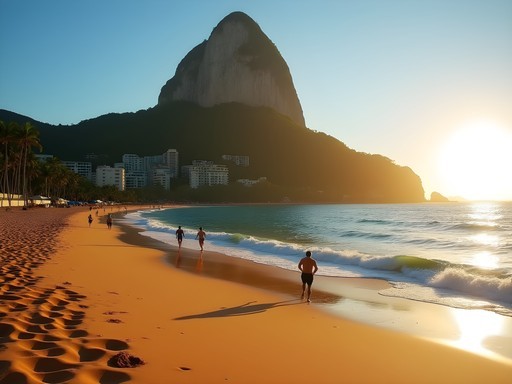
Upon arrival, I was struck by the dramatic contrast between Grumari and the beaches closer to the city center. Here, no high-rises punctuate the horizon—just rolling hills covered in native vegetation that tumble down to meet golden sand. The beach itself is remarkably wide, allowing visitors to spread out even on busy days.
During my visit, I joined a group of locals for a game of footvolley—a uniquely Brazilian hybrid of football and volleyball that showcases the remarkable technical skill of even casual players. Between matches, I cooled off in the powerful Atlantic waves, which demand respect but reward swimmers with refreshing clarity uncommon in urban areas.
For lunch, I bypassed the handful of simple restaurants along the road in favor of a picnic assembled from my morning visit to the feira (farmers market) in Barra. Fresh pão de queijo (cheese bread), tropical fruits, and locally produced cachaça made for a simple feast that perfectly complemented the untamed setting.
As the afternoon progressed, I hiked to the eastern end of the beach, where a small trail leads to natural pools formed among the rocks. Here, sheltered from the open ocean's power, I floated peacefully while watching frigatebirds soar overhead—a moment of connection with nature that felt almost spiritual in its simplicity.

💡 Pro Tips
- Bring ample water and sun protection as shade is limited
- Consider visiting the nearby organic farms that sell fresh produce directly to visitors
- The beach has basic facilities including showers and toilets, but they're rustic by urban standards

Ilha de Paquetá: Island Escape in Guanabara Bay
For a complete change of pace, Paquetá Island offers a journey back in time just 70 minutes from downtown Rio by ferry. This car-free island in Guanabara Bay presents a slice of colonial Brazil preserved like an insect in amber—complete with colorful Portuguese architecture, horse-drawn carriages, and beaches with views of Sugarloaf Mountain in the distance.
I caught the traditional yellow ferry from Praça XV in Centro, where R$7 (approximately £1) purchased not just transportation but a transition to a slower way of life. As we pulled away from the mainland, the city's iconic skyline gradually receded, replaced by the approaching silhouette of this 1.2-square-kilometer island paradise.
Paquetá operates at a pace dictated by feet, bicycles, and the occasional horse-drawn carriage rather than engines. I opted to rent a bicycle from a vendor near the ferry terminal—the ideal way to circumnavigate the island in a leisurely two hours. My compact camera barely left my hand as I pedaled past colonial mansions, their facades painted in pastel hues that pop against the tropical vegetation.
The beaches of Paquetá lack the dramatic surf of their oceanic counterparts, offering instead calm, shallow waters perfect for families with young children. At Praia da Moreninha, named after a famous Brazilian novel set on the island, I watched local children building elaborate sandcastles while their parents sipped cold beer under rented umbrellas.
For lunch, I followed a local recommendation to a simple restaurant serving the day's catch prepared with minimal fuss but maximum flavor. The moqueca (seafood stew) featured fish caught that morning in the surrounding bay, transformed by coconut milk, dendê oil, and generations of culinary wisdom into something far greater than the sum of its parts.
As afternoon mellowed into evening, I found myself at the western edge of the island, where a small beach offers uninterrupted views of the sunset behind Rio's mountainous skyline. Sharing this moment with a mix of day-trippers and the island's 3,000 permanent residents, I felt I'd discovered a secret hiding in plain sight—a community that has deliberately chosen to preserve its connection to a simpler time despite the metropolitan giant that looms just across the water.

💡 Pro Tips
- The last ferry back to Rio leaves earlier than you might expect—check the schedule carefully
- Bring insect repellent as mosquitoes can be prevalent in the island's interior
- Many businesses close for siesta in the afternoon—plan meals accordingly
Niterói's Hidden Gems: Beaches Across the Bay
Most visitors to Rio never cross Guanabara Bay to explore Niterói, the city's often-overlooked neighbor. This oversight means missing some of the region's most spectacular coastal scenery and least crowded beaches—a mistake I was determined not to make during my exploration of Rio's hidden shores.
The journey to Niterói takes just 20 minutes via ferry from Praça XV, though I opted to drive across the distinctive Rio-Niterói Bridge for the panoramic vistas it offers. My first destination was Itacoatiara, a beach consistently rated among Brazil's most beautiful yet remarkably free from international tourism.
Flanked by massive granite formations and backed by Atlantic forest, Itacoatiara feels more like a remote coastal hideaway than a beach accessible by public bus from a major metropolitan area. The powerful shore break attracts bodyboarders and surfers from across Brazil, while the wide, impeccably clean sand provides ample space for sunbathers even on weekends.
What struck me most was the sense of community—groups of friends sharing massive coolers filled with cold drinks, families spanning three generations occupying the same stretch of sand they've visited for decades, and vendors who greet regular customers by name. I spent the morning bodysurfing in waves that demanded respect but rewarded effort with exhilarating rides toward shore.
For lunch, I ventured to nearby Camboinhas, where upscale beach clubs offer a more refined experience. At a restaurant built on stilts over the sand, I feasted on fresh oysters harvested that morning from the bay while sipping a crisp vinho verde that transported me momentarily to Portugal's Douro Valley.
As afternoon shadows lengthened, I made my way to Praia de Adão e Eva (Adam and Eve Beach), a small cove accessible only by a 20-minute hike through forest. The trail opens dramatically onto a pristine beach where clothing is optional and development non-existent. Swimming in the crystal-clear water as the setting sun painted the sky in shades of amber and rose, I felt I'd discovered the perfect antidote to Copacabana's sensory overload.
Returning to Rio at dusk, the city lights began their nightly dance across the bay. From this perspective—looking back at the city I'd temporarily escaped—I gained a new appreciation for Rio's dual identity as both urban powerhouse and natural paradise.

💡 Pro Tips
- The ferry between Rio and Niterói offers the best views of both cities' skylines
- Beach facilities at Itacoatiara are limited—bring what you need for the day
- Uber works well in Niterói and is often the easiest way to reach beaches beyond the ferry terminal
Final Thoughts
As my week of coastal exploration drew to a close, I found myself sitting on the ferry back from Paquetá, watching Rio's famous skyline grow larger on the horizon. The beaches I'd discovered beyond the well-trodden sands of Copacabana and Ipanema had revealed a different Rio—one where nature still holds sway and communities maintain connections to traditions that predate the tourist economy. These hidden shores offer more than just an escape from crowds; they provide windows into the soul of a city that exists beyond the postcard images. Whether you're seeking the perfect wave at Prainha, the exclusive seclusion of Joatinga, or the timeless tranquility of Paquetá, Rio's secret beaches reward those willing to venture beyond the obvious. In the Scottish tradition of my father, I'd call these places 'kenspeckle'—remarkable and worthy of recognition—while embodying what my Japanese mother would call 'ichi-go ichi-e'—unique moments in time that can never be replicated. I urge you to seek them out while they still retain their authentic character and connection to the true spirit of Rio de Janeiro.
✨ Key Takeaways
- Rio's hidden beaches offer a more authentic experience than famous tourist beaches
- Each secret beach has its own distinct character, from surf paradises to historic island retreats
- Local transportation including ferries and rental cars makes these beaches accessible with some planning
- Visiting during weekdays dramatically improves the experience at most hidden beaches
📋 Practical Information
Best Time to Visit
December through March (summer in Southern Hemisphere)
Budget Estimate
R$150-300 per day excluding accommodation
Recommended Duration
5-7 days
Difficulty Level
Moderate



Comments
freeperson
This is amazing!! I'm going to Rio in March and had no idea these places existed. Definitely adding Joatinga to my list!
Amit Sullivan
Carter, this brought back wonderful memories! I visited Grumari back in 2019 with my wife, and we had the entire beach practically to ourselves on a Tuesday afternoon. We packed a picnic and just sat there for hours watching the waves. The restaurants near the beach entrance served the most incredible fresh fish too. One thing I'd add - bring cash! Most of the beach vendors don't take cards, and there aren't ATMs nearby. We learned that the hard way. The wildness of that coastline really does feel like stepping into another world.
freeperson
Good tip about the cash! Adding that to my notes
roamace
How hard is it to get to Prainha without a car? Public transport doable?
Carter Sato
You can take bus 385 from Barra da Tijuca, but it's not super frequent. I'd recommend going early morning or you might wait a while. Totally worth it though!
roamace
thanks!!
photoking
We did the public transportation to Grumari and it was great! Bus 360 from Leblon. Takes about 45 min but super cheap
photolife
thanks!! this is super helpful
Casey Andersson
Carter, this brought back such wonderful memories! I visited Joatinga last year and you've captured its magic perfectly. Getting down that steep trail felt like discovering Narnia - one moment you're on a residential street, the next you're in this pristine cove that feels untouched by time. I stayed at a boutique hotel in São Conrado and hired a local guide who knew the best time to visit (early morning before 9am is ideal). The exclusivity is real though - it's definitely more of a 'those in the know' kind of spot. Worth every bit of effort to get there. Did you manage to catch sunset at Grumari? That golden hour light over those wild beaches is absolutely breathtaking.
photolife
omg this sounds incredible! was it safe to go alone or better with a guide?
photolife
Wow never heard of these beaches!! Going to Rio in March, definitely checking out Prainha
photoking
same here! my friend went last year and only did copacabana lol
photolife
right?? the photos look amazing. how do you get to Prainha from the city?
SunSeeker99
That shot of the sunset at Grumari is absolutely magical! What camera do you use?
Carter Sato
Thanks! Just my trusty phone camera actually - Google Pixel with a bit of editing in Lightroom. The natural light at Grumari does most of the work!
islandclimber
How's the snorkeling at Grumari? Worth bringing gear?
Carter Sato
The snorkeling at Grumari is decent but not spectacular. Water clarity varies a lot depending on recent weather. The rocky areas at the far western end have some fish, but don't expect Caribbean-level visibility. If you already have compact gear, bring it, but I wouldn't buy or rent specifically for this spot.
islandclimber
Perfect, thanks! Might just stick to swimming then and save the gear space in my backpack.
Bryce Diaz
Carter, your post brought back so many memories! I spent a month in Rio last year and discovered Ilha de Paquetá by accident when a local friend suggested it. That car-free island feels like stepping back in time! We rented bikes and circled the whole island, stopping at that little beach on the eastern side where locals were grilling fresh fish. The ferry ride itself is worth it just for the views of Sugarloaf Mountain from the water. One tip for anyone going: the last ferry leaves earlier than you might expect, so check the schedule carefully. I almost got stranded overnight because I lost track of time watching the sunset with my compact binoculars from that hilltop viewpoint.
TravelingTeacher
Is it possible to reach these beaches using public transportation or do you recommend renting a car?
Carter Sato
You can definitely reach them by public transport! For Prainha and Grumari, take bus 384 from Jardim Oceânico metro station. For Joatinga, it's a bit trickier - bus to Barra then a short taxi ride is your best bet. Paquetá is easy - just hop on the ferry from Praça XV in downtown Rio. I actually prefer public transport as parking can be limited, especially on weekends.
TravelingTeacher
Thanks so much! Public transport it is then. Can't wait to explore these hidden gems!
Venture X
Premium card with 2X miles, $300 travel credit, Priority Pass