
Disclosure: This article contains affiliate links. We may earn a commission from purchases at no extra cost to you, which helps our travel content.
The concept of 'beach retreats' in a landlocked city like Gweru, Zimbabwe might seem paradoxical at first glance. Yet, as I've discovered through years of anthropological fieldwork across seemingly unlikely destinations, human ingenuity transforms landscapes to fulfill our universal longing for water-adjacent leisure. Gweru's artificial lakes and dams—created primarily for practical purposes—have evolved into vibrant social spaces where local families craft their own version of beach culture. These water bodies offer a fascinating glimpse into how communities adapt global leisure concepts to local geographies, creating uniquely Zimbabwean interpretations of 'beach life' that blend colonial legacies, indigenous traditions, and contemporary family recreation patterns. After spending several summers documenting textile traditions in Zimbabwe's Midlands Province, these lake beaches became my weekend sanctuary—places where research notes could wait while I observed how ordinary Zimbabweans create extraordinary moments of joy around simple shorelines.

Antelope Park: Where Wildlife Meets Waterside Relaxation
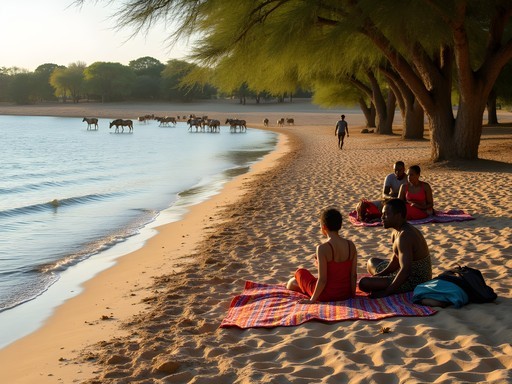
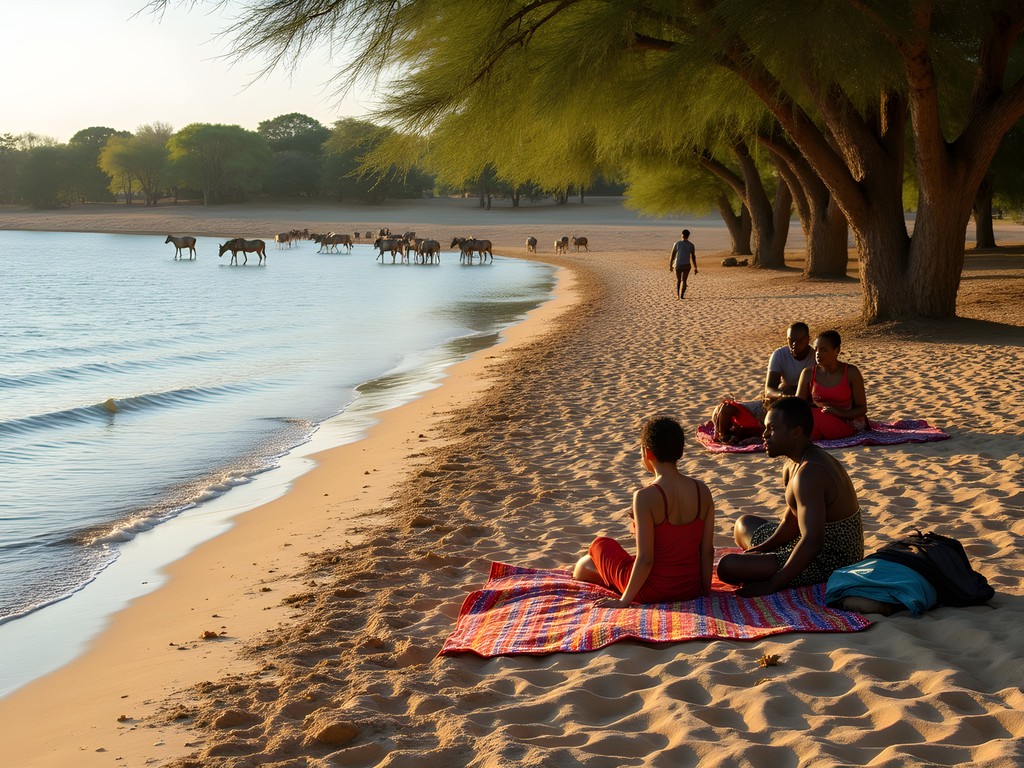
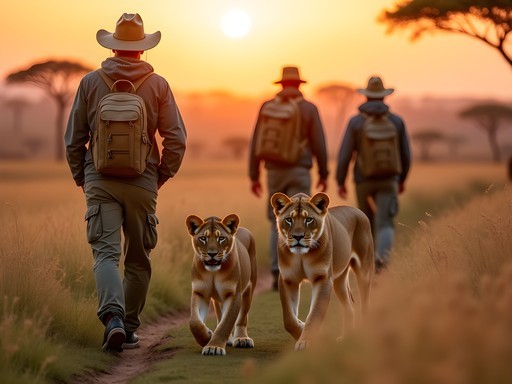
Antelope Park sits just 10km outside Gweru's center, yet it feels worlds away from urban Zimbabwe. While internationally known for its lion conservation program, locals understand it as something else entirely: the region's premier lakeside retreat. The park's expansive dam creates a beach-like atmosphere along its golden banks, where families spread colorful chitenge cloths atop the sand in lieu of beach towels.
During my first visit, I'd come to interview a local weaver about traditional patterns, but found myself instead documenting how she and her family transformed their weekend lakeside ritual into a micro-enterprise. They'd bring extra textiles—some traditional, others adapted with modern motifs—and rent them to visitors who arrived unprepared for picnicking. This informal economy around leisure spaces fascinated me from an anthropological perspective, but as a traveler, I was equally captivated by the setting itself.
The lake shore offers an unexpected beach-like experience, with shallow entry points perfect for children to splash safely while parents relax nearby. Unlike crowded coastal beaches, here you'll find ample space to spread out, often with curious impala or zebra watching from a respectful distance. The juxtaposition of wildlife viewing and water play creates a uniquely Zimbabwean beach experience that's impossible to replicate elsewhere.
For families wanting to extend their stay, the rustic camping areas provide budget-friendly accommodation. I've spent several nights here under canvas, lulled to sleep by the gentle lapping of water against the shore and the distant calls of nocturnal animals. Pack your portable water filter to ensure safe drinking water throughout your stay without relying on plastic bottles—an essential tool for responsible travelers in regions with limited infrastructure.
💡 Pro Tips
- Visit early morning (6-9am) to spot wildlife coming to drink at the water's edge while enjoying the beach in solitude
- Bring your own food supplies as on-site options are limited and relatively expensive
- Consider camping mid-week for significantly reduced rates and fewer crowds
Whitewaters Dam: The Local's Beach Alternative
Ask any Gweru resident where they go when temperatures soar, and Whitewaters Dam inevitably enters the conversation. This municipal reservoir, originally built for practical purposes, has been reclaimed by locals as their primary weekend retreat. What strikes me most about Whitewaters is how the community has collectively constructed a beach culture in the absence of natural coastal features—proof that 'beach' is as much a social concept as a geographical one.
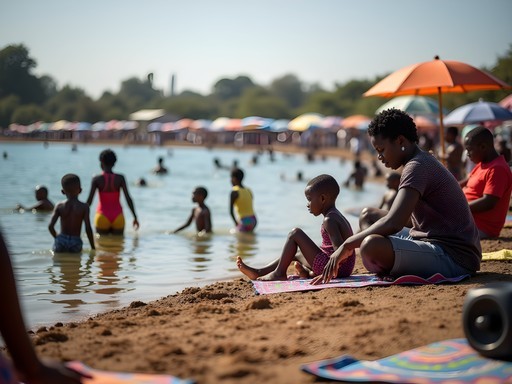
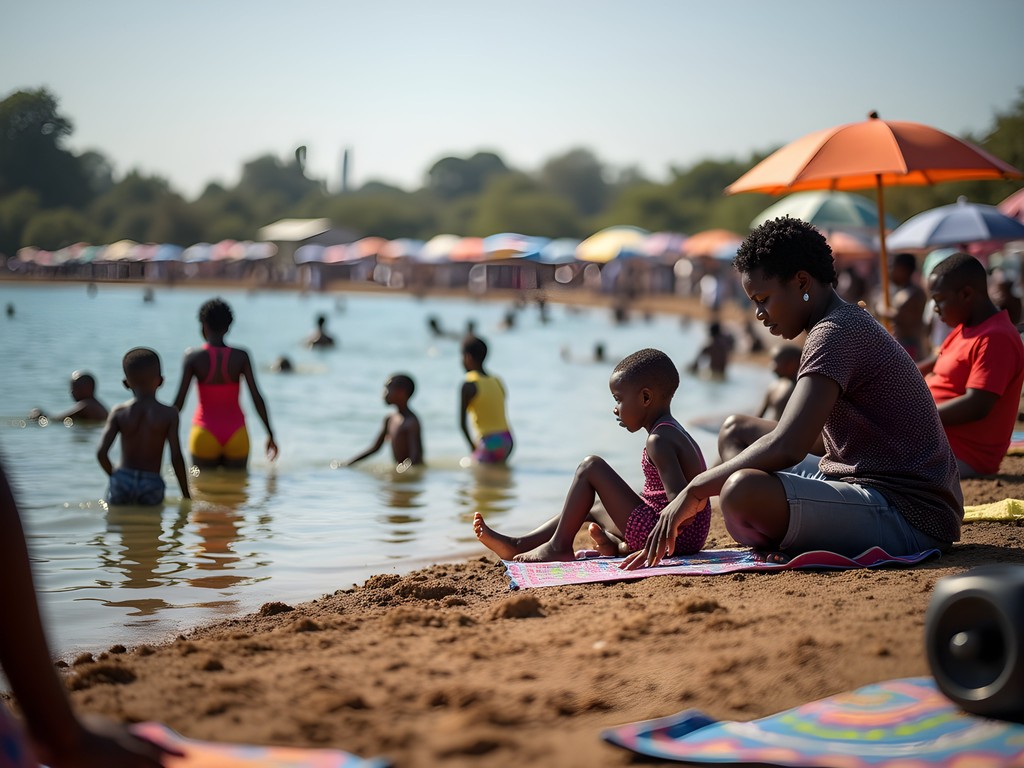
During my research stays in Gweru, I've joined multiple family gatherings at Whitewaters, observing how the shoreline transforms each weekend. Vendors arrive early, setting up impromptu food stalls selling roasted maize, sadza, and freshly caught bream. Teenagers organize informal swimming competitions, while younger children build sand castles from the reservoir's silty banks. The atmosphere pulses with the same energy you'd find at any coastal beach town, despite being hundreds of kilometers from the ocean.
The dam's shallow entry points make it particularly suitable for families with small children, though I strongly recommend bringing a children's life jacket as there are no lifeguards on duty. This compact safety essential has saved countless parents from anxiety during my observed visits, allowing children to enjoy the water while maintaining necessary safety precautions.
What makes Whitewaters special isn't pristine conditions—you won't find resort amenities here—but rather the authentic community atmosphere. On Sundays especially, extended families gather for day-long picnics, often bringing portable speakers that fill the air with competing soundtracks of Zimbabwe's urban music scene. It's a cultural immersion opportunity that reveals how contemporary Zimbabwean families balance traditional values with modern leisure practices.
💡 Pro Tips
- Bring cash for local food vendors who offer the most authentic (and affordable) dining options
- Sunday afternoons feature impromptu drumming and dance sessions—join in rather than just observe
- Consider hiring a local guide through your accommodation to facilitate introductions to families open to sharing their picnic space
Birkdale Pool: Crafted Waters and Cultural Exchange
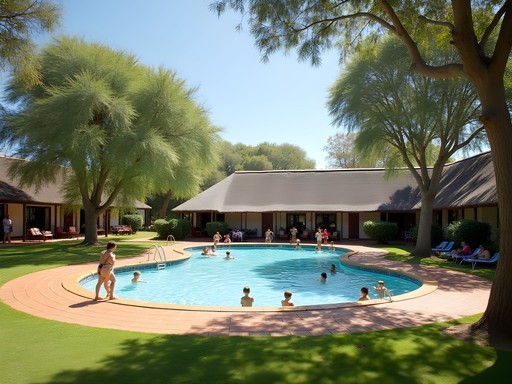
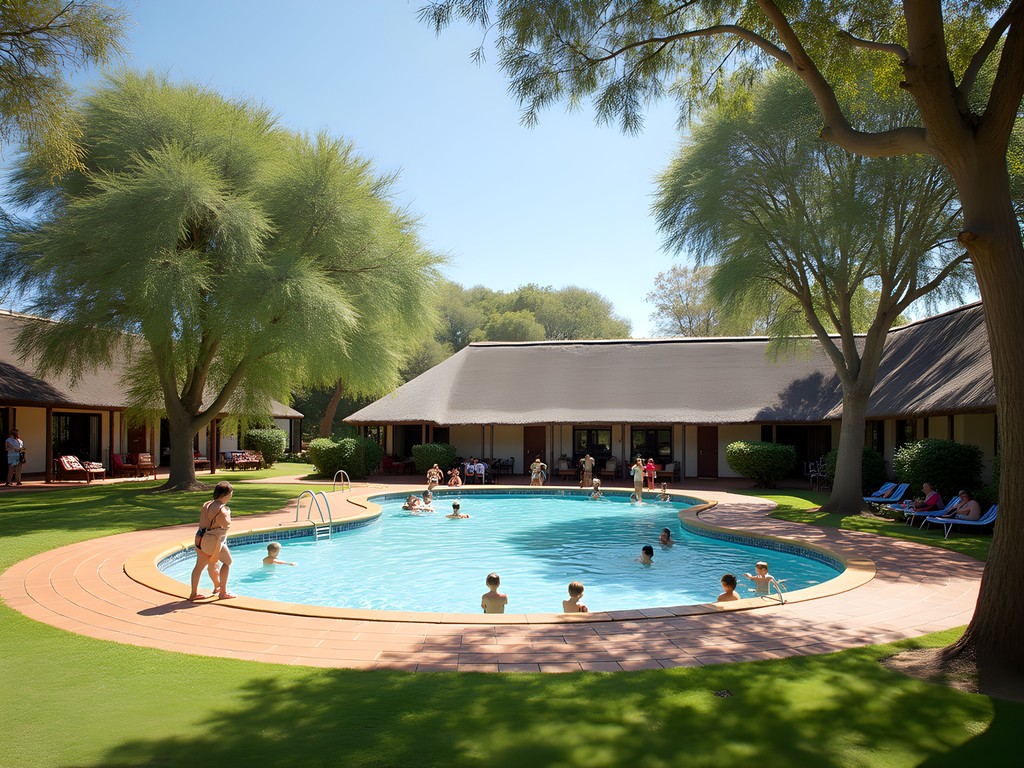
For families seeking more structured water activities, Birkdale Pool represents Gweru's compromise between natural settings and developed facilities. This spring-fed swimming pool complex on the city's outskirts offers a manicured alternative to the more rugged dam experiences, while maintaining accessibility for budget-conscious travelers.
My relationship with Birkdale began during my second research trip to Zimbabwe when persistent afternoon rains made lakeside fieldwork challenging. A local weaver I was interviewing suggested we continue our conversation at Birkdale, where covered pavilions would protect her textiles while her children enjoyed the pools. What began as a practical solution evolved into a recurring fieldsite where I observed fascinating cross-cultural interactions between local families and the occasional international visitors.
The main pool maintains a consistent depth suitable for confident swimmers, while a separate shallow area caters to younger children. What distinguishes Birkdale from similar facilities I've visited across the global south is the surrounding gardens, where local plant species create natural shade and showcase indigenous landscaping techniques. These gardens become impromptu picnic grounds on weekends, with families claiming territories under acacia trees from early morning.
The facility's modest entrance fee (approximately USD$3 for adults, $1 for children) makes it accessible to middle-income Zimbabwean families while providing necessary maintenance funds. For travelers on tight budgets, this represents exceptional value compared to similar facilities elsewhere in Southern Africa. I recommend bringing your own dry bag to protect cameras and documents, as the combination of splashing children and afternoon thundershowers can quickly damage electronics.
💡 Pro Tips
- Visit on Saturdays when local swimming clubs practice, offering impromptu lessons to interested visitors
- The on-site tuck shop charges premium prices—bring your own snacks and drinks
- Request permission before photographing local families; offering to share digital copies via WhatsApp builds goodwill

Ngamo Dam: Fishing Culture Meets Family Recreation
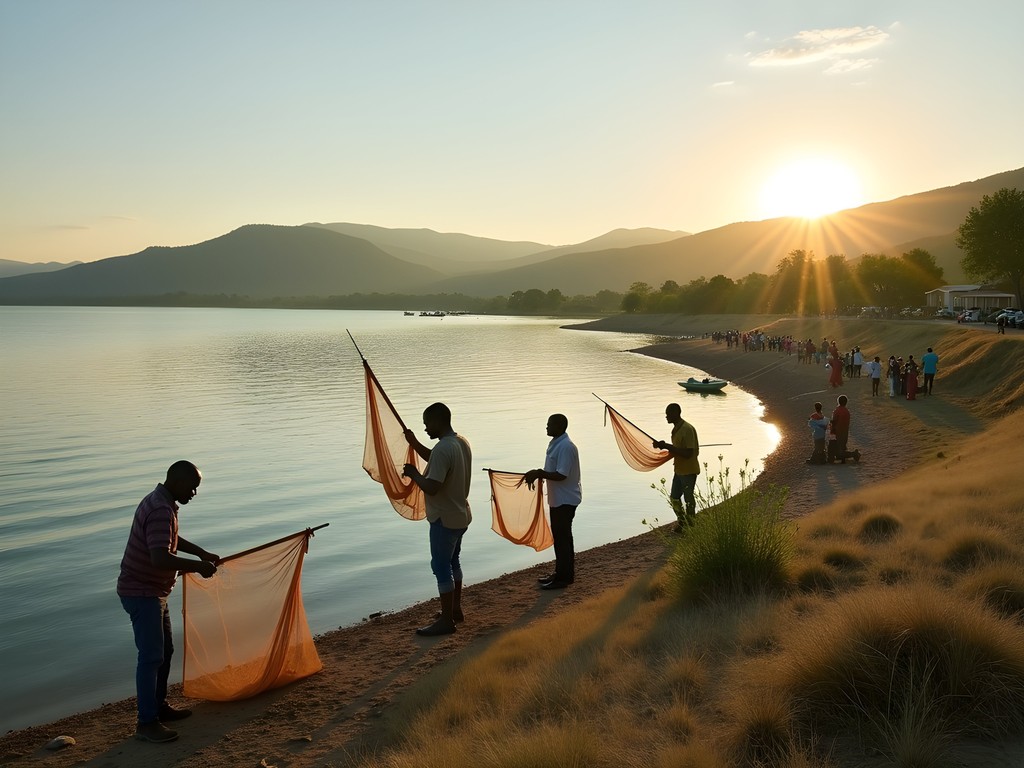
Perhaps the most anthropologically fascinating of Gweru's water spaces is Ngamo Dam, where traditional fishing practices have evolved alongside recreational uses to create a hybrid cultural space. Located approximately 15km from the city center, Ngamo requires more effort to reach but rewards visitors with a glimpse into how contemporary Zimbabweans navigate between subsistence activities and leisure pursuits.
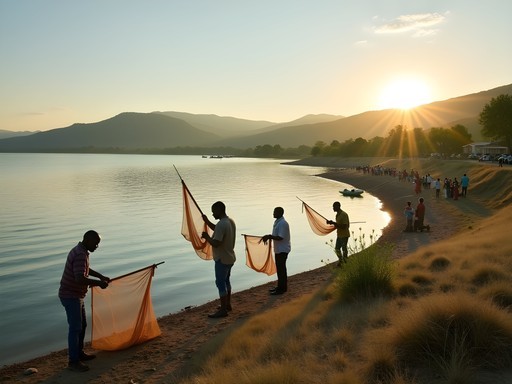
During my field research documenting how traditional craft knowledge transfers between generations, I spent several days at Ngamo observing fishing families. What began as professional interest quickly became personal appreciation for this multi-purpose space. Unlike the more recreational-focused sites, Ngamo maintains a working relationship with the water—local fishermen cast their nets in the early morning hours, while their families utilize the same shores for weekend relaxation once the day's catch is secured.
For visiting families, this creates an unparalleled opportunity to engage with authentic local lifeways. Children particularly enjoy watching the fishing techniques, which blend traditional knowledge with modern adaptations. Several fishermen have developed side businesses offering informal fishing lessons to visitors, teaching basic casting techniques using handmade rods.
The shoreline itself offers several coves with sandy approaches suitable for swimming, though I advise bringing water shoes to protect against occasional rocky patches. The water clarity varies seasonally but generally remains suitable for swimming from June through October. During my August visit, I spent hours documenting textile patterns while periodically cooling off in the refreshingly clean water.
For overnight stays, basic camping is permitted with permission from the local fishing cooperative. My camping hammock proved perfect for these shoreline accommodations, providing comfortable sleeping arrangements while minimizing impact on the fragile ecosystem. The cooperative members appreciate visitors who demonstrate respect for both the natural environment and their traditional practices.
💡 Pro Tips
- Arrive before 7am to observe (or participate in) the morning fishing activities
- Bring small denominations of USD for purchasing fresh fish directly from fishermen
- Learn a few basic Shona greetings to facilitate meaningful interactions with local families
Cultural Etiquette: Respectful Beach Behavior in Zimbabwe
Understanding local cultural norms transforms a simple weekend at Gweru's water spaces from basic tourism into meaningful cultural exchange. Throughout my field research in Zimbabwe, I've observed how water-adjacent leisure spaces operate with unwritten but important social protocols that differ significantly from Western beach cultures.
Most notably, swimwear expectations reflect Zimbabwe's relatively conservative social values. While international-style swimsuits are acceptable at developed facilities like Birkdale Pool, the dam beaches typically see local women wearing t-shirts over swimwear or swimming in light clothing. Men commonly wear longer swim shorts rather than brief styles. As visitors, adapting to these norms demonstrates cultural sensitivity—I typically opt for board shorts and a rash guard, which provide sun protection while aligning with local modesty standards.
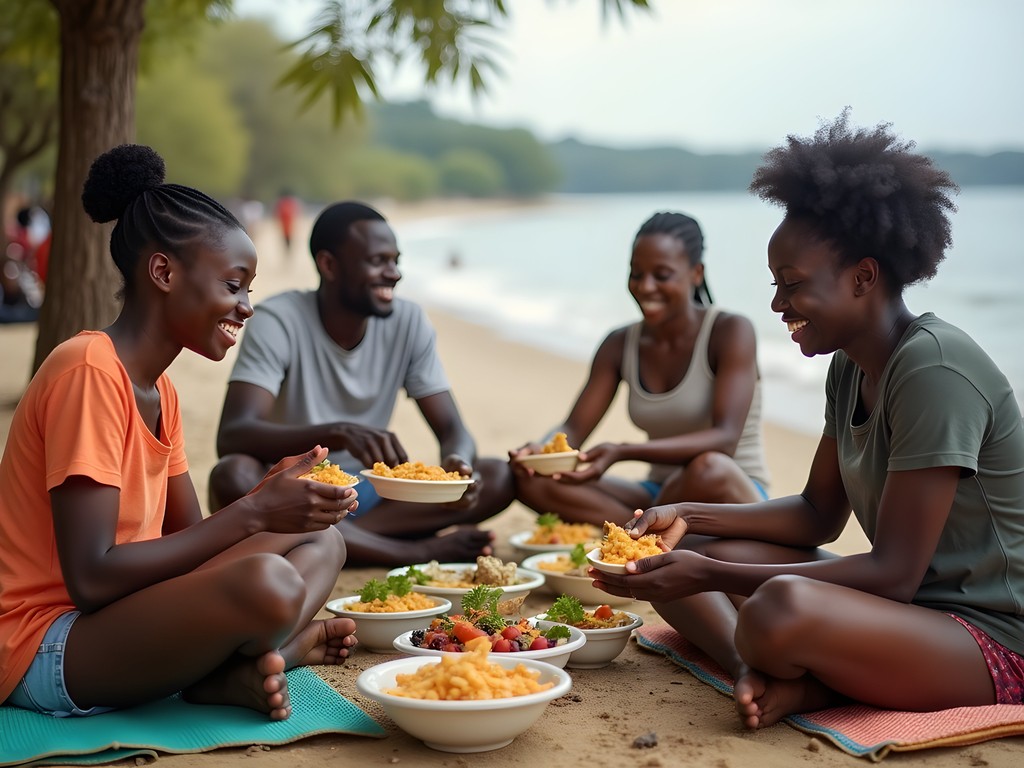
Picnicking etiquette also differs from Western individualism. At Whitewaters and Ngamo especially, food sharing is an expected social practice. Families who bring abundant food naturally offer portions to nearby groups, creating impromptu communal dining experiences. Coming prepared with extra snacks to share facilitates these connections, though never photograph people eating without explicit permission—a taboo I learned about early in my fieldwork.
Water safety approaches reflect collective responsibility rather than institutional oversight. Without lifeguards present, community members watch all children collectively, regardless of family connections. Visitors with children will notice locals naturally including their children in this communal supervision—accept this generosity of spirit rather than maintaining rigid boundaries.
Music and celebration are integral to Zimbabwean beach culture, with sound systems common features of weekend gatherings. Rather than seeking quiet natural experiences, embrace the festive atmosphere as an authentic expression of local leisure values. My portable Bluetooth speaker has facilitated countless cross-cultural exchanges when I've offered to play music from various global traditions alongside local favorites, creating spontaneous cultural sharing moments.
💡 Pro Tips
- Dress modestly at dam beaches—board shorts and rash guards or t-shirts over swimwear show respect for local norms
- Bring extra snacks to share with neighboring families—this reciprocity builds immediate goodwill
- Always ask permission before joining activities like impromptu soccer games or fishing demonstrations
Final Thoughts
Gweru's lake beaches reveal something profound about human adaptability—our capacity to create culturally meaningful leisure spaces regardless of geographical limitations. These water bodies aren't mere substitutes for coastal experiences but vibrant cultural sites where uniquely Zimbabwean interpretations of 'beach life' flourish. As travelers seeking authentic connections, these lakeside retreats offer something far more valuable than pristine sand or resort amenities: they provide windows into how ordinary Zimbabweans create joy, community, and cultural continuity through shared water spaces. By approaching these sites with cultural humility and genuine curiosity, your family can participate in—rather than merely observe—the beautiful adaptability of human leisure culture. Whether you're watching dawn break over fishing nets at Ngamo or joining impromptu dance circles at Whitewaters, Gweru's hidden beach alternatives invite you to reimagine what 'going to the beach' can mean.
✨ Key Takeaways
- Gweru's artificial lakes and dams have developed unique beach cultures blending practical use with leisure activities
- Budget-friendly water recreation options exist for every family preference, from developed facilities to natural settings
- Adapting to local cultural norms around modesty, food sharing, and communal supervision enhances the experience
- The most meaningful experiences come through cultural exchange rather than treating these spaces as mere swimming holes
📋 Practical Information
Best Time to Visit
June through October (dry season)
Budget Estimate
$50-100 for a weekend (family of four)
Recommended Duration
2-3 days
Difficulty Level
Intermediate

Comments
coffeefan
How's the water quality at these spots? Safe for swimming?
Douglas Bradley
Claire, this is excellent work. The way you've documented how communities create leisure spaces in non-traditional settings really resonates with my own observations across landlocked regions. I'm particularly interested in the fishing culture at Ngamo Dam—did you notice any specific rituals or social structures around the fishing community there? In my experience, these water-based gathering spots often develop really intricate social hierarchies. Also curious about accessibility for international visitors—is independent travel feasible or would you recommend arranging local guides?
coffeefan
good question about guides, was wondering the same thing
springzone
Never thought about landlocked beaches before! This is so cool
Douglas Bradley
Right? Claire's anthropological approach really reframes how we think about 'beach culture.' I've seen similar adaptations in places like Malawi and Uganda where lake culture becomes incredibly significant.
springzone
makes sense! people find water wherever they can
Taylor Moreau
Claire, this is a fascinating exploration of how communities create leisure spaces in landlocked regions. I've seen similar adaptations in Bolivia around Lake Titicaca and in landlocked parts of Central Asia. The anthropological angle you've taken here really resonates—these aren't just 'substitutes' for ocean beaches, they're culturally distinct spaces with their own meaning. I'm particularly interested in the fishing culture at Ngamo Dam. During my business travels through Southern Africa, I've found these local gathering spots often provide more authentic cultural insights than traditional tourist destinations. Have you explored how these spaces function during different seasons?
greenway
That's such a cool perspective! Never thought about it that way
starmate
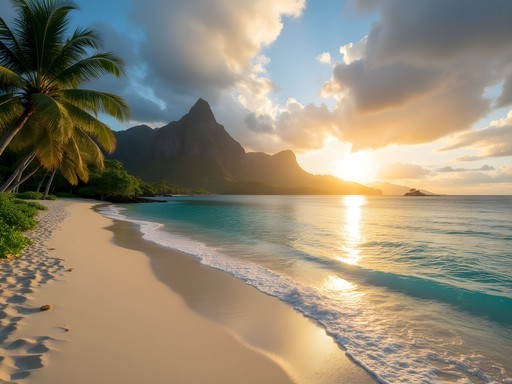
Really like your photo of Antelope Park!
greenway
This is SO cool!! I never would have thought to visit Gweru but now I'm adding it to my bucket list. The photos of Ngamo Dam look amazing! Love the idea of fishing culture mixed with family spots. Does anyone know if you need special permits for fishing there?
islandace
Good question! I'd like to know this too
islandace
Wait, beaches in Gweru?? I've always thought of Zimbabwe as totally landlocked. How's the water quality at these dams? Safe for swimming?
starmate
Whitewaters is decent for swimming, locals use it all the time. Just check after heavy rains.
moonzone
Those sunset pics from Whitewaters Dam are stunning! Added to my bucket list!
travelninja
Great post! I'd add that Ngamo Dam has really stepped up their fishing game in the last year. They now offer guided fishing trips with all equipment included, perfect if you're a beginner like me. The guide showed us all the local techniques and we caught enough for dinner! My travel rod was handy but honestly their rental gear was just as good. If you're heading there, try to go on a weekday - weekends get packed with local families (which is fun too, just different vibe).
nomadbackpacker
Just got back from Gweru last week and can confirm Birkdale Pool is as amazing as Claire describes! We spent a whole day there and it was the perfect escape from the heat. The cultural exchange bit is so true - we ended up playing water volleyball with some local university students who then showed us this amazing little food stall just outside that serves the best sadza I've had in Zimbabwe. One tip: they rent these really comfortable loungers but they go quickly, so get there before 10am if you want to snag one. Also worth noting that they have decent changing facilities which isn't always a given at these places.
travelninja
How was the entrance fee at Birkdale? I've heard it varies depending on the season.
nomadbackpacker
We paid $7 USD per person in January, which included access to all facilities. Apparently it goes up to $10 during peak holiday periods. Still totally worth it compared to similar places I've visited. They take mobile payments too which was convenient.
travelninja
That's really reasonable! Thanks for the info. Adding it to my itinerary for sure.
Venture X
Premium card with 2X miles, $300 travel credit, Priority Pass