


Disclosure: This article contains affiliate links. We may earn a commission from purchases at no extra cost to you, which helps our travel content.
The Sonoran Desert holds a peculiar magic that resonates with my mountaineer's soul. Unlike the soaring Himalayas or the rugged Andes, Phoenix's landscape whispers its secrets through ancient saguaros and painted skies. After decades exploring vertical terrains across continents, I've developed a surprising affinity for this horizontal wilderness—where adventure unfolds not in conquering peaks, but in surrendering to the desert's rhythm. Join me as I share a week of Phoenix adventures that balance adrenaline with cultural discovery, proving that sometimes, the most profound journeys happen closest to the ground.

Hiking Phoenix's Desert Treasures
My relationship with Phoenix began five years ago when a postal workers' convention brought me to Arizona. While colleagues retreated to air-conditioned casinos, I escaped to Camelback Mountain at sunrise, and a love affair with desert hiking was born.
On this return visit, I started with South Mountain Park—America's largest municipal park and a geological masterpiece. The Holbert Trail offers a moderate 2.5-mile climb that rewards with panoramic valley views. My mountaineering background made the ascent comfortable, but don't underestimate the desert—it demands respect regardless of your experience level.
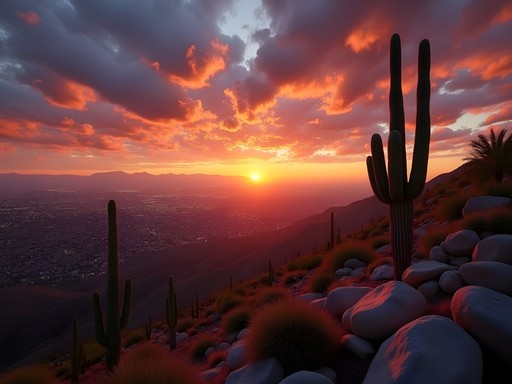
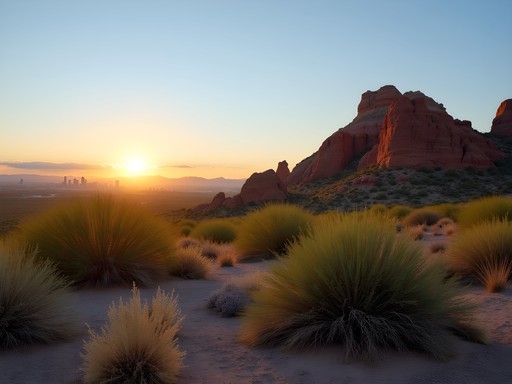
For a truly transcendent experience, Piestewa Peak at sunset transformed my understanding of desert light. As the sun dipped below the horizon, the rocks seemed to inhale the day's final glow, exhaling colors I've only seen in Himalayan alpenglow.
My technical approach to hiking transitions seamlessly to desert terrain, though I've adapted my gear significantly. I never hit these trails without my wide-brimmed hat and a hydration vest that distributes water weight evenly—critical for maintaining balance on loose desert terrain.

💡 Pro Tips
- Start hikes before 8am during warmer months to avoid dangerous heat
- Pack at least 1 liter of water per 2 hours of planned hiking
- Download trail maps to your phone as cell service can be spotty in mountain preserves
Sunrise Ballet: Hot Air Ballooning Over the Sonoran
There's a peculiar parallel between mountaineering and hot air ballooning—both offer that rare sensation of floating between worlds. But where climbing is all muscle and technical precision, ballooning is surrender and grace—much like the difference between bharatanatyam and kathak dance forms I've studied.
I booked with Hot Air Expeditions for a sunrise flight, rising before dawn when the desert air still carries night's coolness. As we inflated the massive balloon, I was struck by the choreography of it all—the crew moving in practiced unison, the fabric billowing like a dancer's costume catching the wind.
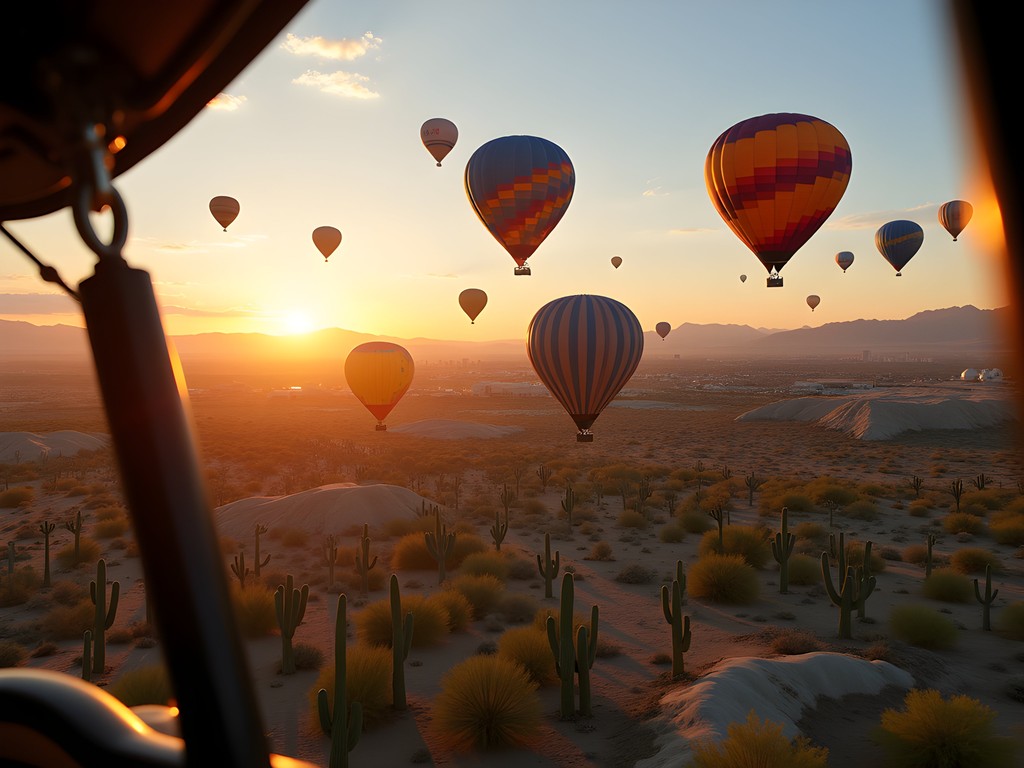
Once airborne, the silence astonished me. We drifted over the desert landscape as the rising sun painted the Superstition Mountains with golden light. Our pilot, Maria, pointed out wildlife below—javelinas scurrying between cacti, a coyote trotting along a wash. The perspective was revelatory—patterns in the desert landscape visible only from above, like reading the choreography notes of an ancient performance.
For fellow travelers with camera gear, I recommend a camera strap that secures equipment while allowing quick access for those fleeting wildlife moments. And don't forget a microfiber cooling towel for after the flight—the post-landing champagne breakfast tradition is delightful, but desert temperatures rise quickly once the sun is up.
💡 Pro Tips
- Wear layers—mornings start cool but warm quickly after sunrise
- Bring a hat that won't blow away easily in the balloon basket
- Book flights at least 2-3 days in advance as they often fill up
Desert Rhythms: Off-Road Adventures in the Sonoran
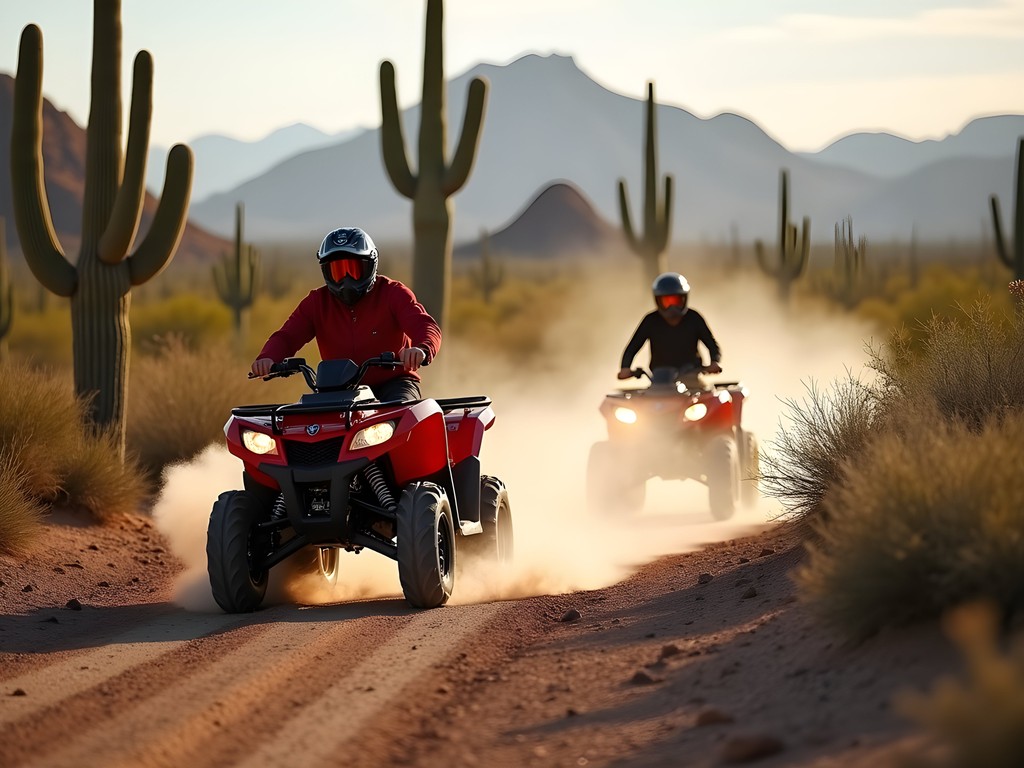
My postal route back in St. Louis is as predictable as they come. Perhaps that's why I'm drawn to off-road adventures—they satisfy my craving for the unexpected. In Phoenix, I discovered Desert Wolf Tours, offering guided ATV expeditions through Box Canyon and the Bradshaw Mountains.
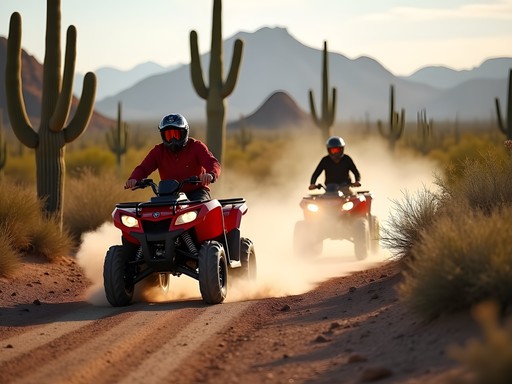
After a thorough safety briefing (reminiscent of pre-climb checks in mountaineering), our guide Aaron led us through terrain that alternated between technical rock crawls and sweeping desert straightaways. The experience demands a balance of precision and abandon that reminded me of the Garba dance circles I've joined in Gujarat—structured yet spontaneous.
Midway through our journey, we stopped at an ancient Hohokam petroglyph site. Standing before these centuries-old symbols, I felt the same reverence I experience in Himalayan monasteries—a connection to those who found meaning in these seemingly inhospitable landscapes long before us.
For this adventure, I wore my desert gaiters to keep rocks from infiltrating my boots—a trick I learned from Sherpa guides who use similar protection in scree fields. I also brought a dust mask which proved invaluable when following other ATVs through dusty washes.
💡 Pro Tips
- Wear sunglasses with a strap to secure them during bumpy sections
- Bring twice as much water as you think you'll need—the dry air and excitement are dehydrating
- Apply sunscreen to the backs of your hands—a commonly forgotten spot that gets intense sun exposure while gripping handlebars

Cultural Immersion: The Desert's Living Heritage
Between adrenaline-fueled adventures, I sought connections to the cultural heartbeat of the Sonoran Desert. The Heard Museum offered profound insights into Native American art and history, with exhibitions that resonated deeply with my interest in cultural preservation through performance and ritual.
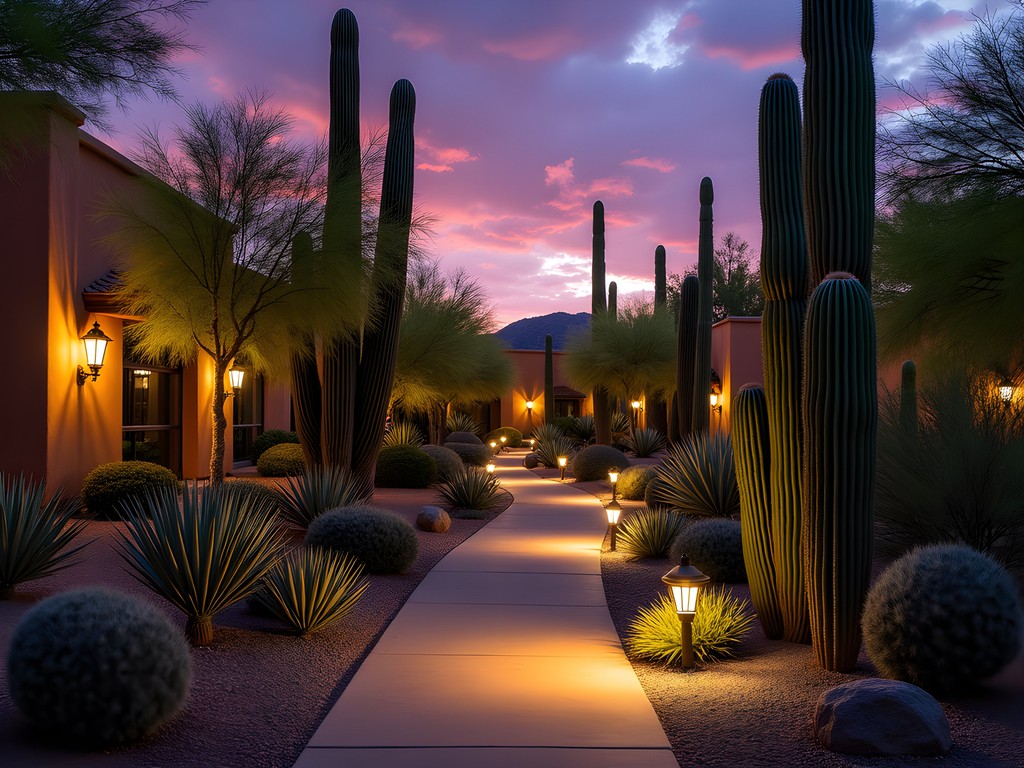
At the Desert Botanical Garden, I joined a twilight tour focused on indigenous plant uses, learning how the Tohono O'odham and other tribes developed sophisticated relationships with desert flora. The guide demonstrated traditional harvest techniques for saguaro fruit that reminded me of precise movements in classical Indian dance—deliberate, respectful, and passed down through generations.
My most unexpected cultural encounter came at the Musical Instrument Museum, where I discovered an exhibit on Himalayan ceremonial instruments remarkably similar to those I'd seen in remote Nepalese villages. This cross-cultural connection thousands of miles from both regions left me contemplative about humanity's universal language of rhythm and movement.
For comfortable museum exploration, I relied on my compression socks which prevent the leg fatigue that comes from hours of standing on hard museum floors—a trick I learned from a Sherpa guide who swears by them for long descents.
💡 Pro Tips
- Visit the Heard Museum on Free First Friday evenings for special programming
- Book the Desert Botanical Garden's specialized tours at least a week in advance
- Allow a full day for the Musical Instrument Museum—it's vast and captivating
Desert Nights: Stargazing and Nocturnal Wonders
My mountaineering experiences have gifted me countless nights under star-filled skies, but Phoenix's desert darkness offers a clarity that rivals even Himalayan nights. I joined a guided astronomy tour at the Lost Dutchman State Park, where professional-grade telescopes revealed Saturn's rings and Jupiter's moons with breathtaking clarity.
For a more immersive experience, I participated in a night hike at McDowell Sonoran Preserve. Our naturalist guide, Carmen, introduced us to the desert's nocturnal inhabitants—from kangaroo rats to scorpions that glow electric blue under UV light. The experience reminded me of night treks in Nepal, where darkness reveals a completely different ecosystem than daylight hours.
The desert's nocturnal soundscape particularly moved me—coyote calls echoing through canyons created natural compositions as complex as any classical raga I've studied. I often found myself sitting in silent meditation, simply absorbing this desert symphony.
For these nighttime adventures, my red light headlamp proved essential—it preserves night vision while providing necessary illumination. I also recommend a lightweight insulated jacket as desert temperatures can drop dramatically after sunset, something many visitors underestimate.

💡 Pro Tips
- Reserve astronomy tours around the new moon for optimal star visibility
- Bring binoculars even if telescopes are provided—they're perfect for scanning the night sky between formal viewings
- Allow 20-30 minutes for your eyes to fully adjust to darkness before expecting to see fainter celestial objects
Final Thoughts
As my week in Phoenix drew to a close, I found myself standing atop Dobbins Lookout at South Mountain's summit, watching the city lights flicker to life below. The desert had worked its peculiar alchemy on me once again—stripping away the unnecessary, leaving only what matters most.
Phoenix offers a masterclass in contrasts: adrenaline-pumping adventure alongside meditative silence, scorching days yielding to cool star-filled nights. For fellow travelers seeking both physical challenge and cultural depth, few destinations deliver this balance so effortlessly.
Whether you're scaling Camelback's rocky spine at dawn, floating above saguaro forests in a hot air balloon, or discovering ancient petroglyphs on an ATV expedition, Phoenix invites you to experience the desert on its own terms—with respect, wonder, and a willingness to be transformed.
As a mountaineer who found unexpected joy in this horizontal wilderness, I encourage you to bring your own passions to the Sonoran Desert. Like the traditional dances I've studied around the world, Phoenix has its own rhythm—once you learn its steps, you'll never forget the dance.
✨ Key Takeaways
- Balance adventure activities between early morning and evening to avoid peak desert heat
- Incorporate cultural experiences between physical adventures for a more meaningful connection to the landscape
- Pack for extreme temperature variations—desert conditions can shift dramatically within hours
- Respect water conservation in this arid environment—it's both practical and ethical
📋 Practical Information
Best Time to Visit
October-April, with October-November offering ideal temperatures and smaller crowds
Budget Estimate
$1,500-2,500 for a week including accommodations, activities, and meals
Recommended Duration
5-7 days to experience diverse adventures without rushing
Difficulty Level
Moderate - Activities Can Be Tailored To Fitness Levels, But Desert Conditions Require Proper Preparation


Comments
bluegal
Adding this to my bucket list!
roambackpacker
This is EXACTLY what I needed!! Going to Phoenix in March with my partner and we're so pumped for the off-roading. Which tour company did you use? Also dying to know - is the desert really as stunning as your photos make it look or is that just good photography skills? 😄
photohero4396
Not Aiden but I went last year and trust me, it's even MORE stunning in person. The colors at sunset are insane!
Aiden Gupta
Ha! A bit of both honestly. But photohero4396 is right - the desert really does look magical, especially during golden hour. I used Arizona Desert Mountain Jeep Tours and they were fantastic.
springguy
Love the photos!
Hunter Thompson
Absolutely brilliant post, Aiden! I did the Camelback Mountain hike last spring and nearly died in the heat haha. Started at 6am and it was already scorching by 8. Your tip about bringing 3 liters of water is spot on - I only had 1.5L and regretted it massively. The views from the top though... absolutely mental. Did you get a chance to explore any of the desert botanical gardens? That's on my list for when I go back!
Aiden Gupta
Camelback is no joke! I skipped the botanical gardens this time but heard amazing things. Next trip for sure.
roamguy
Great post! Quick question - how much did the hot air balloon ride cost you? Planning a trip in October and trying to budget. Also, did you book in advance or just show up?
Aiden Gupta
Thanks! I paid around $200 per person and definitely booked 2-3 weeks ahead. October is peak season so I'd recommend booking early. The sunrise flights are worth every penny!
roamguy
Perfect, thanks man!
globediver
Which balloon company did you use? There seem to be so many options and I'm having trouble deciding. Also wondering if the sunrise timing means you have to wake up crazy early or if it's reasonable?
coffeeace6726
not OP but we used Hot Air Expeditions last year and it was awesome
journeytime
Great write-up! I've done Phoenix three times now and your recommendations are spot on. One thing I'd add - bring way more water than you think you need for the hikes. The dry heat is deceptive and you dehydrate faster than you realize. Also if anyone's doing the off-roading, closed-toe shoes are a must even though it's tempting to wear sandals. Learned that one the hard way on my first trip!
wintermate
is it too hot in july?? planning a trip then
journeytime
July is brutal tbh - regularly over 110°F. If you have to go then, hike super early (like 5am start) and spend afternoons indoors or at pools. I made the mistake of afternoon hiking once... never again lol
wintermate
yikes ok maybe ill reconsider lol thanks!
Douglas Bradley
Really enjoyed this perspective, Aiden. The comparison between desert and mountain landscapes is fascinating - I've always been drawn to how different ecosystems shape the travel experience. The cultural immersion section particularly resonated with me. When I visited Arizona last year, I spent time at the Heard Museum learning about indigenous perspectives on the land. It completely transformed how I viewed the desert afterwards. Did you get a chance to connect with any local indigenous guides during your hikes? I found their knowledge about plant uses and seasonal changes invaluable.
globediver
The Heard Museum is amazing! Should be on everyone's Phoenix itinerary honestly
coffeeace6726
Love this! Going to Phoenix in March, can't wait
journeytime
March is perfect timing! Not too hot yet. Definitely do the sunrise balloon ride if you can swing it.
Venture X
Premium card with 2X miles, $300 travel credit, Priority Pass