



Disclosure: This article contains affiliate links. We may earn a commission from purchases at no extra cost to you, which helps our travel content.
The first time my boots touched the edge of Pamukkale's otherworldly terraces, I instinctively reached for my field recorder. The gentle trickle of mineral-rich water cascading over calcium deposits created a delicate symphony that most visitors, mesmerized by the visual spectacle, completely miss. That's the thing about Pamukkale – it engages all your senses if you're willing to slow down and truly experience it. This spring weekend getaway marked my second visit to Turkey's famous 'Cotton Castle,' but my first time exploring it as a solo traveler with the freedom to wander at my own pace, recording both the sounds and sights that make this UNESCO World Heritage site so magical. Whether you're drawn to the healing properties of the thermal waters (something my Filipino grandmother would have appreciated) or the ancient ruins that tell stories of civilizations past, this weekend adventure guide will help you experience Pamukkale beyond the typical tourist trail.

Preparing for Your Pamukkale Adventure
Before setting off to this geological wonder in southwestern Turkey, I spent hours researching the best approach to experience Pamukkale authentically. The terraces are about a 3-hour drive from Izmir or 2.5 hours from Bodrum, making it accessible for a weekend trip from either city.
I chose to stay in the small town of Pamukkale rather than day-tripping from a larger city – a decision that rewarded me with early morning access to the terraces before the tour buses arrived. The town itself is modest but offers enough accommodation options to suit most budgets.
Packing light but purposefully is essential for this adventure. The combination of water activities and hiking means you'll need versatile gear. I brought my trusty hiking sandals which were perfect for wading through the shallow thermal pools while providing enough support for exploring the extensive ruins of Hierapolis above the terraces.
For capturing both the visual and auditory experience, I packed my waterproof camera and a compact field recorder wrapped in a waterproof case. The calcium-rich waters can damage electronics, so protection is crucial if you're planning to document your journey.

💡 Pro Tips
- Book accommodation in Pamukkale town for early morning access to the terraces
- Bring two pairs of footwear: one that can get wet for the terraces and sturdy shoes for exploring Hierapolis
- Pack a small towel to dry your feet when transitioning from the wet terraces to the archaeological site
Navigating the Travertine Terraces
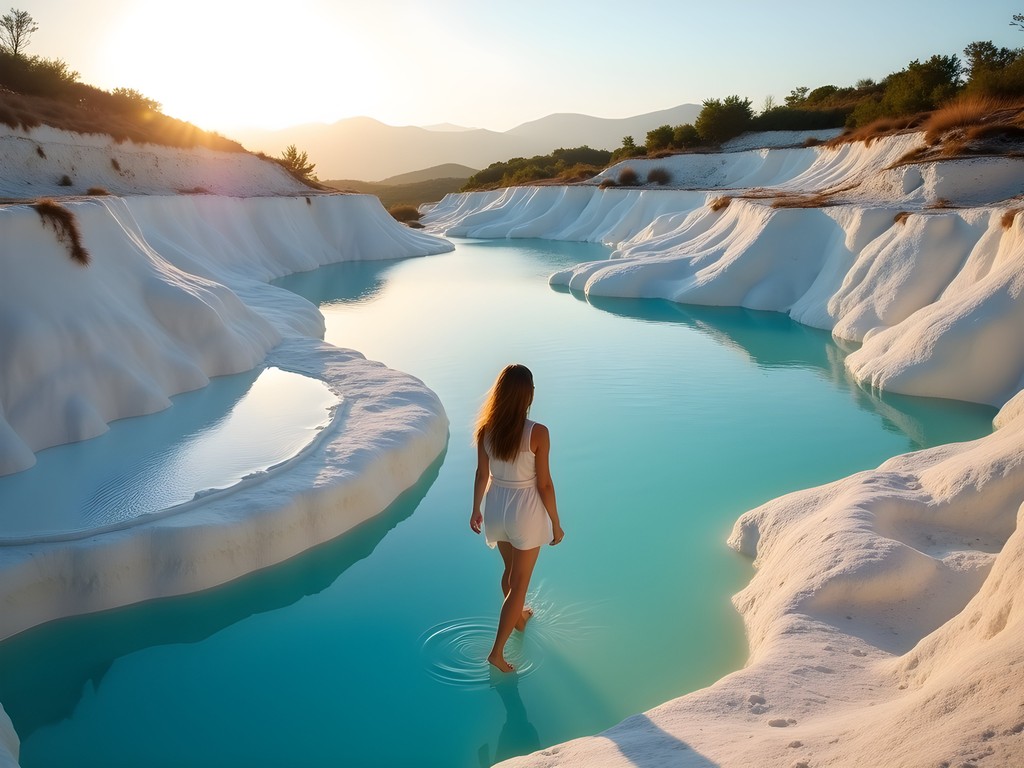
The terraces of Pamukkale are both more delicate and more extensive than photographs suggest. To protect this natural wonder, visitors are required to remove their shoes before walking on the calcium formations – a rule strictly enforced by attendants throughout the site.
I arrived at the south entrance just as it opened at 8:00 AM, which I highly recommend. The morning light casts the white calcium deposits in a soft golden glow, and the cooler temperatures make the warm thermal waters all the more inviting. The contrast of my feet against the surprisingly smooth white surface while warm mineral water flowed between my toes created an almost meditative experience.
Moving slowly uphill, I discovered that each terrace has its own acoustic signature – some pools create gentle bubbling sounds while others offer a more resonant trickling as water cascades over edges. These natural soundscapes change throughout the day as the sun warms different sections of the formation.
While the main tourist path is well-marked, I found joy in exploring the peripheral pools where fewer visitors venture. Here, the water is often clearer, and you can more easily observe the crystalline structures forming beneath the surface. Just be mindful of areas marked as fragile or under restoration.
💡 Pro Tips
- Visit early morning (before 9 AM) or late afternoon (after 4 PM) to avoid crowds and harsh midday sun
- Bring a water bottle – the combination of sun reflection off white surfaces and thermal heat can be dehydrating
- Take your time ascending – rushing through the terraces means missing the subtle changes in water temperature and mineral composition
Exploring Ancient Hierapolis
What many visitors don't realize is that the white terraces are just one part of the Pamukkale experience. At the top of the calcium formation lies Hierapolis, an ancient Greco-Roman city founded around 190 BCE that flourished as a healing center because of the therapeutic properties of the thermal springs.
After spending the morning exploring the terraces, I dried my feet, slipped on my hiking shoes, and ventured into this archaeological wonderland. The ruins stretch across a vast plateau, requiring good walking shoes and plenty of water – the insulated water bottle I brought kept my water cool despite the spring sunshine beating down on the exposed ruins.
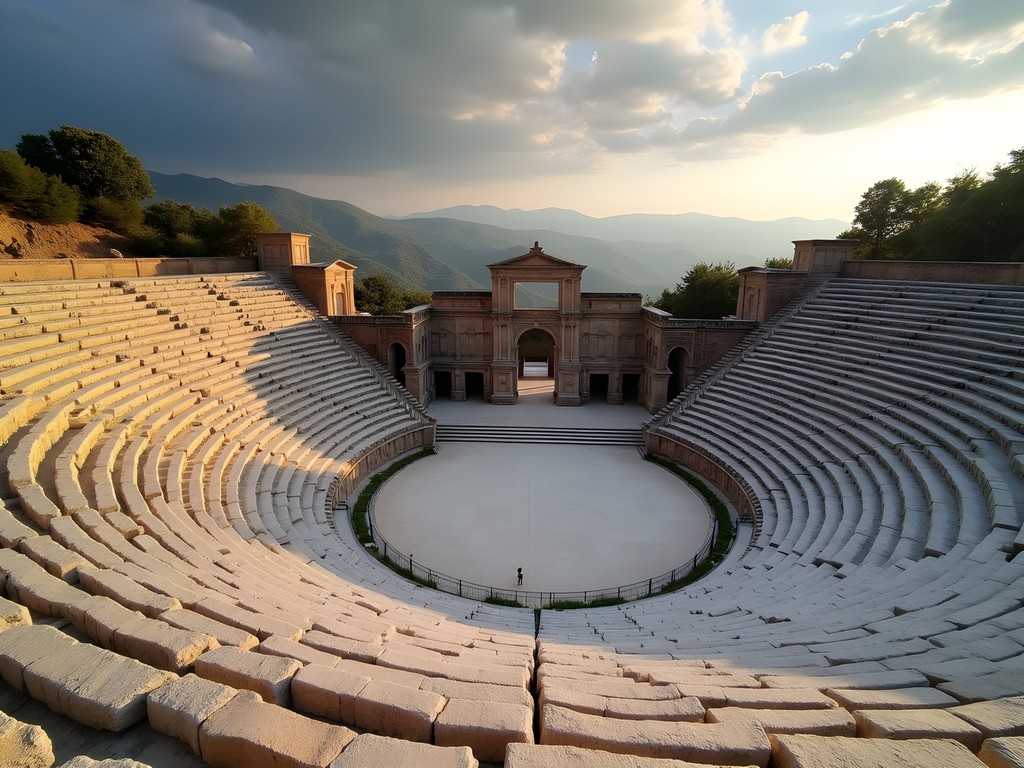
The ancient theater, carved into the hillside to seat 15,000 spectators, offers spectacular acoustics – something I couldn't resist testing with a quiet humming that resonated throughout the semicircular structure. Standing center stage, I closed my eyes and recorded the ambient sounds, capturing the whispers of wind through ancient stone that has witnessed thousands of years of human history.
Beyond the theater, don't miss the Plutonium (a cave that emits toxic gases, viewed safely from a distance), the remarkably preserved Necropolis with its ornate sarcophagi, and the Antique Pool – also known as Cleopatra's Pool – where you can swim among fallen marble columns for an additional fee. The thermal waters here maintain a constant 36°C (96.8°F) year-round, and contain minerals believed to help with various ailments – a tradition of healing that reminded me of my grandmother's herbal remedies.
💡 Pro Tips
- Allocate at least 3 hours to properly explore Hierapolis – it's much larger than most visitors expect
- Visit the archaeological museum housed in the former Roman baths to see artifacts discovered at the site
- If swimming in Cleopatra's Pool, bring a waterproof pouch for valuables as lockers are limited

Beyond the Tourist Trail: Hidden Hiking Paths
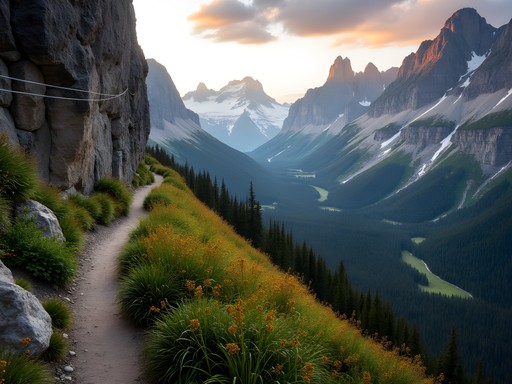
While most visitors limit their experience to the main terraces and central ruins, Pamukkale offers several lesser-known hiking trails that showcase the region's diverse landscape. On my second day, I set out early with my day pack filled with essentials to explore these hidden paths.
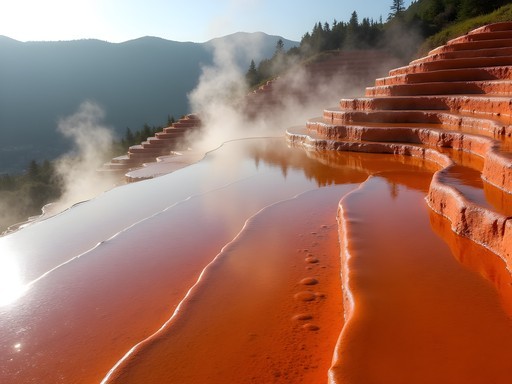
The trail connecting Hierapolis to the neighboring village of Karahayıt offers a completely different perspective of the region. Unlike the white terraces of Pamukkale, Karahayıt features striking red travertines colored by the high iron content in its thermal waters. The 5km path between the two sites winds through olive groves and rural landscapes where local farmers tend their fields much as they have for generations.
As I hiked, I recorded the soundscape transitioning from tourist-filled areas to rural countryside – the mechanical clicks of cameras giving way to rustling olive leaves and distant sheep bells. The contrast between the manufactured sounds of tourism and the authentic rhythms of local life was striking.
Another worthwhile trek is the path to the ruins of Laodicea, an ancient city mentioned in the Bible's Book of Revelation. Located about 10km from Pamukkale, this less-visited archaeological site offers equally impressive ruins without the crowds. The walking path follows portions of ancient roads that once connected these important cities.
These hikes offer not just physical exercise but cultural context – helping you understand how Pamukkale fits into the broader historical and geographical landscape of the region. They're also perfect for solo travelers seeking both adventure and moments of peaceful reflection away from the main tourist areas.

💡 Pro Tips
- Start hikes early in the morning to avoid afternoon heat, especially in late spring
- Download offline maps before setting out as cell service can be spotty between sites
- Carry small Turkish lira notes for purchasing fresh fruit or water from local vendors along rural paths
Capturing the Sounds and Flavors of Pamukkale
As a sound engineer, I'm constantly attuned to the acoustic environment of places I visit. Pamukkale offers a fascinating auditory landscape that shifts dramatically throughout the day – from the peaceful morning trickle of water over calcium deposits to the afternoon cacophony of multiple languages echoing across the terraces.
To truly appreciate this dimension of Pamukkale, I recommend finding quiet moments away from crowds. Early mornings at the north end of the terraces offer the gentle sounds of thermal waters bubbling up from underground sources. The ancient theater at Hierapolis creates fascinating natural reverberations when the site is less crowded. Even the small town of Pamukkale itself has its own soundtrack – listen for the call to prayer echoing across the valley five times daily, creating a hauntingly beautiful acoustic experience.
No sensory exploration would be complete without tasting local flavors. The town of Pamukkale offers several family-run restaurants serving traditional Turkish cuisine. I particularly enjoyed Mehmet's Family Restaurant where I savored gözleme (stuffed flatbread) prepared by women who have been making it for decades. The restaurant's terrace offers views of the white terraces illuminated at night while you dine.
For a more immersive food experience, visit the weekly market in nearby Denizli (Tuesdays). Here, local farmers sell seasonal produce, herbs, and spices that reflect the agricultural richness of the region. I purchased dried herbs reminiscent of those my grandmother used in her healing preparations – connections across cultures that remind me how universal traditional knowledge truly is.

💡 Pro Tips
- Bring a small audio recorder or use your phone's recording app to capture the unique sounds of water flowing over the terraces
- Try gözleme with different fillings – spinach and feta is traditional but minced meat (kıymalı) versions are equally delicious
- Visit a local hammam (Turkish bath) to experience the thermal waters in a traditional setting – the one in Pamukkale town is small but authentic
Final Thoughts
As the sun set on my final evening in Pamukkale, I found myself sitting at the edge of a thermal pool, my recorder capturing the gentle symphony of water flowing over ancient calcium deposits. This place exists at the intersection of geological wonder and human history – a rare site where natural beauty and cultural heritage are equally compelling. For solo travelers seeking both adventure and moments of quiet reflection, Pamukkale offers a perfect balance. The physical experience of hiking across its varied landscapes combines beautifully with opportunities to connect with local culture and ancient history. Whether you're drawn by the famous white terraces, the extensive ruins, or the lesser-known hiking paths beyond, this corner of Turkey rewards those willing to explore with open senses and an adventurous spirit. As my grandmother would say, some places heal not just through their mineral waters, but through the perspective they offer – and Pamukkale certainly changed mine.
✨ Key Takeaways
- Visit early morning or late afternoon to experience the terraces without crowds and in the best light
- Allocate at least two full days to explore both the terraces and the extensive ruins of Hierapolis
- Venture beyond the main site to discover red travertines and rural hiking paths for a more complete experience
- Engage all your senses – the sounds, tastes and textures of Pamukkale are as remarkable as the visual spectacle
📋 Practical Information
Best Time to Visit
April to June or September to October
Budget Estimate
$50-100 per day including accommodation and entrance fees
Recommended Duration
2-3 days
Difficulty Level
Easy To Moderate





Comments
wavemood
Going there in 3 weeks!! So excited after reading this! Thanks for all the details about the hidden paths, definitely doing those!
Megan Martin
Excellent comprehensive guide, Kimberly. I visited Pamukkale during a business trip to Turkey last year and managed to squeeze in an early morning visit before meetings in Izmir. Your point about timing is crucial - I arrived at 6:30 AM and had the terraces practically to myself for about 45 minutes. The light at that hour is extraordinary for photography. For business travelers or anyone on a tight schedule, I'd recommend staying in Pamukkale village the night before rather than Denizli. The proximity makes early access much easier, and several boutique hotels offer thermal pool access which is perfect for unwinding after a long day.
globenomad
Which hotel did you stay at? Looking for recommendations
happyperson
YES to the hidden trails section! Most tourists never leave the main terraces but those paths above Hierapolis have the BEST views. We found this little shepherd trail that took us to a viewpoint overlooking the entire valley. Hardly anyone there and perfect for photos without crowds!
vacationseeker
Great guide! The sunset photos are stunning
George Hayes
Kimberly, this brought back memories! We took our kids to Pamukkale three years ago and it was one of those trips that still comes up at dinner conversations. My 8-year-old called it 'the cotton castle made of clouds' and honestly that's the best description I've heard. The Hierapolis ruins were incredible too - my son pretended to be a Roman emperor in the ancient theater for like 20 minutes straight. One tip for families: pack water shoes in your bag for after the terraces. The walk back to the entrance gets rocky and little feet get tired. Also, the small museum near the north gate is air-conditioned and has fascinating artifacts if you need a break from the heat.
wavemood
Cotton castle made of clouds - that's so cute!! Now I really want to go
globenomad
Quick question - do you really have to go barefoot on the terraces? I have sensitive feet and worried about the hot surfaces
vacationseeker
yeah barefoot only. bring a small towel to stand on when it gets too hot
Kimberly Morgan
Yes, barefoot is required to protect the terraces! The water actually keeps most areas cool. Go early morning or late afternoon when it's not as hot. The thermal pools are the perfect temperature though!
travelexplorer
This looks absolutely amazing!! Adding to my bucket list right now!
travelstar
Just got back from Pamukkale two weeks ago! This guide would have been so helpful before I went haha. I made the mistake of wearing my regular hiking boots on the terraces and got yelled at by security - you have to go barefoot on the white parts! Definitely bring a small towel to dry your feet after. The water is surprisingly warm in some pools and ice cold in others. We did the paragliding from the cliffs above and the views were insane, highly recommend if you're into that sort of thing. Also seconding what others said about going early, it gets SO crowded by 10am.
Hunter Thompson
Brilliant guide, Kimberly! The section about Hierapolis was spot on. I spent way more time exploring the ancient city than I planned because it's just so massive. That theatre is incredible! One thing I'd add for anyone reading - if you're on a budget, you can actually walk up from Pamukkale village for free instead of paying the main entrance fee. It's a steep walk but the views are mint. Also the thermal pools in the village are way cheaper than Cleopatra's Pool and just as good imo. Stayed at a pension there for like 15 quid a night with breakfast included!
travelstar
Good tip about the village entrance! Didn't know about that
hikingtime
Great photos! Adding this to my bucket list
Venture X
Premium card with 2X miles, $300 travel credit, Priority Pass