

Disclosure: This article contains affiliate links. We may earn a commission from purchases at no extra cost to you, which helps our travel content.
The vermilion gates of Itsukushima Shrine emerge from the gentle tide, creating that iconic postcard image we've all seen countless times. But as I discovered during my recent autumn escape to Miyajima Island, this UNESCO World Heritage site offers far more than just its famous floating torii. Having spent years organizing luxury itineraries for clients seeking cultural immersion with a dash of adventure, I was determined to experience Miyajima beyond the standard day-trip circuit. What followed was a week of discovery that balanced spiritual encounters with adrenaline rushes, culinary delights with challenging hikes, and moments of solitude amidst one of Japan's most visited destinations. This guide is for couples seeking that perfect balance of adventure and cultural authenticity on an island that truly rewards those willing to venture beyond the well-trodden path.

Hiking Mt. Misen: Sacred Heights and Breathtaking Vistas
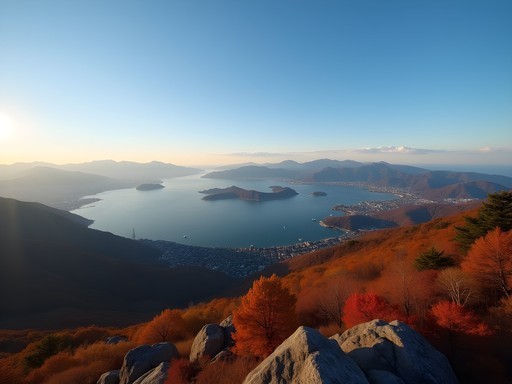
Standing at 535 meters, Mt. Misen isn't particularly imposing by mountaineering standards, but what it lacks in height, it more than makes up for in spiritual significance and panoramic splendor. As someone who's hiked across the Lake District and traversed Alpine trails, I can confidently say that Misen offers one of the most rewarding day hikes I've experienced.
Three distinct trails lead to the summit: the Daisho-in, Momijidani, and Omoto routes. For couples seeking both challenge and variety, I recommend ascending via the Daisho-in path (about 2.5 kilometers) and descending through the Momijidani route. The Daisho-in trail begins at the eponymous temple complex and winds through ancient forests dotted with stone lanterns and small shrines—perfect for those seeking both physical activity and cultural immersion.
About halfway up, the forest canopy occasionally parts to reveal glimpses of the Seto Inland Sea dotted with islands—a tantalizing preview of the summit view. I found myself stopping frequently, not just to catch my breath but to absorb the shifting perspectives as the elevation increased.
The final approach to Kuguri-iwa, a natural stone arch, signals you're nearing the summit plateau. Here, you'll find the Misen Hondo Hall and Reikado Hall, which houses a sacred flame said to have been burning continuously for 1,200 years. The flame was used to light the eternal flame at Hiroshima's Peace Memorial Park—a sobering connection to the region's recent history.
For the best experience, pack a hydration backpack as water sources are limited on the mountain. I started my hike early (around 8 AM) to avoid both crowds and the midday heat, even in autumn. This timing also allowed me to enjoy the summit almost entirely to myself before the ropeway passengers began arriving.

💡 Pro Tips
- Start early (before 9 AM) to avoid crowds and midday heat
- The Daisho-in route offers the most scenic and culturally interesting ascent
- Pack more water than you think you'll need, especially in warmer months
Sea Kayaking: A Different Perspective on the Floating Torii
While thousands of tourists jostle for the perfect photo of the floating torii from the shoreline, I discovered a far more intimate way to experience this iconic structure—by sea kayak at sunrise. There's something profoundly moving about silently gliding across the water as the first light illuminates Itsukushima's vermilion gates, with barely another soul in sight.
Several operators offer guided kayaking tours around the island, but I opted for a sunrise expedition with a local guide named Kenji, who combines kayaking instruction with cultural and ecological insights. Our small group of four paddled out from a beach near the Miyajima ferry terminal just before dawn, equipped with stable sit-on-top kayaks perfect for beginners and intermediates alike.
As we rounded the coastline toward Itsukushima Shrine, the morning light began to transform the scene before us. The shrine and its famous torii appeared to hover between sea and sky in the misty morning air—a perspective entirely different from the standard viewing areas. What struck me most was the silence; only the gentle sound of our paddles breaking the water's surface accompanied the visual spectacle.
After photographing the torii from various angles (my waterproof phone case proved invaluable here), we continued around the island's coastline, exploring small caves and inlets inaccessible by land. Kenji pointed out oyster farms—Miyajima's other claim to fame—and we occasionally spotted Japanese macaques foraging along the shoreline.
For couples seeking a unique shared adventure, this kayaking experience creates memories far beyond what standard tourism offers. The physical activity is moderate and suitable for most fitness levels, though some upper body strength is helpful. Most tours last 2-3 hours, providing enough time to circle a significant portion of the island while still leaving your afternoon free for other explorations.

💡 Pro Tips
- Book sunrise kayaking tours at least a week in advance as they're limited and popular
- Wear quick-dry clothing and bring a change of clothes for after the tour
- Waterproof protection for your camera or phone is essential
Forest Bathing in Momijidani Park
Japan gave the world the concept of shinrin-yoku or 'forest bathing'—the practice of immersing oneself in forest atmospheres for mental and physical wellbeing. Miyajima offers one of the most sublime settings for this practice at Momijidani Park, a verdant valley that transforms into a tapestry of crimson and gold during autumn.
While technically a park, Momijidani feels more like an enchanted forest, with ancient maple trees lining a bubbling stream that cascades down from Mt. Misen. Stone bridges crisscross the water at various points, creating perfect meditation spots where the sound of flowing water drowns out any remnants of the tourist bustle near the shrine.
During my visit in late November, the autumn colors were reaching their peak intensity. I spent one entire afternoon here with my travel journal, alternating between mindful walking and simply sitting on moss-covered stones to absorb the sensory experience. The Japanese practice of forest bathing isn't about hiking or exercising—it's about presence and allowing the forest environment to engage all your senses.
For couples, Momijidani offers a chance to reconnect through shared silence. My recommendation is to visit early morning or late afternoon when the light filtering through the maple canopy creates an almost otherworldly atmosphere. The park is also considerably less crowded during these hours, enhancing the sense of intimacy with nature.
Bring a thermos of green tea, find a secluded spot by the stream, and simply be present together. It's these quiet moments of connection—both with nature and each other—that often become the most treasured memories of a journey.

💡 Pro Tips
- Visit early morning (before 9 AM) or late afternoon (after 3 PM) to avoid crowds
- Wear comfortable shoes that can handle potentially muddy paths after rain
- Pack a small picnic and find a private spot away from the main path

Night Kayaking and Bioluminescence Tours
Perhaps the most unexpected adventure I discovered on Miyajima was a night kayaking tour that showcased a different kind of illumination—natural bioluminescence in the Seto Inland Sea. While this activity is weather-dependent and seasonal (best from late summer through early autumn), it offers an almost mystical experience for those lucky enough to catch the right conditions.
I joined a small group led by an experienced marine biologist who explained the science behind the phenomenon while guiding us to areas where bioluminescent plankton concentrations were highest. Launching our kayaks as the last light faded from the sky, we paddled away from light pollution into the darkness of a protected cove.
The experience begins with your eyes adjusting to the darkness. Then, almost imperceptibly at first, you notice a faint blue glow trailing behind your paddle strokes. As you continue further from shore, each movement through the water creates swirls of ethereal blue light. Running your hand through the water produces what looks like liquid stars flowing between your fingers.
What makes this experience particularly special for couples is the shared sense of wonder it evokes. There's something profoundly connecting about floating together in darkness, witnessing one of nature's most magical displays. Our guide encouraged periods of silence, where we simply drifted and observed, creating space for the kind of meaningful moments that travel at its best can facilitate.
For safety and comfort during night paddling, I highly recommend bringing a headlamp with a red light setting (to preserve night vision) and wearing quick-dry clothing with an additional warm layer, as temperatures can drop considerably after sunset even in autumn.

💡 Pro Tips
- Book well in advance as these specialized tours have very limited spots
- Choose dates around the new moon for optimal darkness and bioluminescence visibility
- Bring a warm, water-resistant jacket even in warmer months as evenings on the water can be chilly
Cultural Adventures: Shakushi Making and Tea Ceremonies
Adventure on Miyajima isn't limited to physical pursuits—cultural immersion offers its own form of exhilaration. One of my most memorable experiences was participating in a traditional shakushi (rice scoop) carving workshop. These wooden scoops are Miyajima's traditional craft, considered lucky talismans for the home.
In a small workshop tucked away in one of the island's back streets, I spent a fascinating afternoon learning the basics of this craft from a third-generation artisan. The process begins with selecting a piece of Japanese white oak, the traditional wood used for these implements. Under careful guidance, I learned to shape the wood using specialized tools, gradually transforming a rough block into the distinctive oval scoop shape.
What makes this experience special for couples is the shared creative process and the meaningful souvenir you create together. My shakushi now occupies a place of honor in my Bristol kitchen—a functional memento that brings back memories of Miyajima every time I use it.
Equally enriching was participating in a traditional tea ceremony at Kikugetsutei, a tea house overlooking the sea. More than just drinking tea, this ritual embodies fundamental concepts in Japanese culture: harmony, respect, purity, and tranquility. The ceremony takes place in a tatami room with sliding doors opened to frame the view of the Seto Inland Sea—nature itself becomes part of the aesthetic experience.
Our tea master explained each deliberate movement as she prepared the matcha, from the precise way she folded the cloth to the specific angle at which she held the bamboo whisk. As participants, we learned the proper way to receive the tea bowl, how many times to turn it before drinking, and the appropriate phrases to exchange.
For those seeking to deepen their understanding of Japanese aesthetics, I recommend purchasing a quality tea ceremony set to continue practicing this mindful ritual at home. The muscle memory of these precise movements becomes a form of moving meditation that can transport you back to this island long after you've returned home.

💡 Pro Tips
- Book cultural workshops at least 3-4 days in advance during peak seasons
- Wear comfortable clothing that allows for sitting on tatami floors for extended periods
- Learn basic Japanese phrases related to these activities for a more authentic experience
Final Thoughts
As the ferry pulled away from Miyajima's shores on my final day, I watched the famous torii gate recede into the distance—now familiar from multiple perspectives: from mountain heights, kayak level at dawn, and illuminated by night. What began as a simple desire to explore beyond the postcard image had evolved into a week of adventures that engaged body, mind, and spirit. Miyajima rewards the curious traveler who stays longer and digs deeper, revealing layers of natural beauty and cultural richness that day-trippers never experience. For couples seeking to create shared memories through adventure, this sacred island offers the perfect balance of physical challenge, cultural immersion, and moments of tranquil connection. Whether you're paddling through bioluminescent waters under starlit skies or mindfully sipping matcha with the floating shrine in view, Miyajima offers transformative experiences that will continue to resonate long after you've returned home. The true magic of this island isn't just in its iconic gate but in the countless adventures waiting beyond it.
✨ Key Takeaways
- Stay overnight on Miyajima to experience the island without day-trip crowds
- Balance physical adventures like hiking and kayaking with cultural immersion for a more meaningful experience
- Autumn offers the perfect combination of comfortable temperatures, reduced humidity, and spectacular foliage
📋 Practical Information
Best Time to Visit
Mid-October to late November for autumn colors; March to May for spring
Budget Estimate
$150-200 per day per couple (accommodations, activities, meals)
Recommended Duration
3-5 days minimum to experience beyond day-trip attractions
Difficulty Level
Moderate (Some Activities Require Basic Fitness)


Comments
Frank Garcia
Really comprehensive guide Timothy. I think what's interesting about Miyajima is how it balances mass tourism with genuine adventure opportunities. The Mt. Misen hike is a perfect example - you can take the easy ropeway route OR properly earn those views with the hiking trails. I'm curious about the bioluminescence tours though - what time of year did you do that? I was under the impression the Seto Inland Sea doesn't get much bioluminescence compared to places like Okinawa. Also, practical question: did you rent the kayak gear on the island or bring your own dry bag? Mine saved my camera gear during a similar paddle in Shikoku.
springstar
Going there next month for the first time! Any restaurant recommendations?
Jean Wells
Try the grilled oysters from any of the street vendors near the ferry terminal - Miyajima is famous for them. For sit-down, Kakiya is excellent for oyster dishes, though expect a wait during peak times.
triplife
We did the sea kayaking last October and it was honestly the highlight of our whole Japan trip. Seeing the torii gate from water level is completely different than from the shore. Our guide took us around to the back side of the island too where there were basically no tourists. Heads up though - you WILL get wet even on a calm day, so bring a dry bag for your phone. I learned that the hard way lol. The company we used provided the dry bags which saved our stuff.
springstar
This sounds amazing! I'm not a super strong swimmer though, is that okay?
triplife
You wear life jackets the whole time and stay pretty close to shore, so you should be fine! They asked about swimming ability when we booked.
Jean Wells
Excellent write-up, Timothy. I've been to Miyajima probably a dozen times over the years and it's refreshing to see someone highlight the adventure aspects rather than just the shrine circuit. One thing I'd add for readers: the night kayaking tours are weather-dependent and only run certain months. I tried booking in January once and everything was closed for winter. The bioluminescence is most visible June through September. Also, if you're serious about the Mt. Misen hike, the ropeway is a good option for one direction—going down is harder on the knees than most people expect, especially on those stone steps near the summit.
springstar
Good to know about the night tours! Was planning to go in March but might push it to summer now.
coffeegal
Love the photos!!
beachnomad
How long did the Mt. Misen hike actually take you? Trying to figure out if we can do it and still catch the last ferry back.
Timothy Jenkins
Took me about 2.5 hours up and 1.5 down, but I was moving pretty steady. The Daisho-in trail is steeper but more interesting than the Momijidani route. Last ferry is usually around 10pm so you'll have plenty of time if you start by early afternoon!
beachnomad
Perfect, thanks! That's super helpful.
wanderguy2827
Love the photos!
cityblogger
Great post! One thing I'd add - stay overnight on the island if you can. Most day trippers leave by 5pm and you get the whole place basically to yourself. The evening atmosphere around the shrine is magical. We stayed at a small ryokan near the ropeway station and it was worth every yen.
starhero
Ooh good tip! Any ryokan recommendations?
dreamfan
We visited Miyajima last spring and honestly wished we'd known about the kayaking! We only did the shrine and deer spotting which was lovely but felt like we missed out. The forest bathing in Momijidani Park sounds amazing - is it guided or can you just wander on your own? Also, how was the weather in autumn Timothy? Trying to figure out the best time to go back.
skyseeker
Adding this to my bucket list right now!
Venture X
Premium card with 2X miles, $300 travel credit, Priority Pass