

Disclosure: This article contains affiliate links. We may earn a commission from purchases at no extra cost to you, which helps our travel content.
The first time I saw millions of bright red crustaceans painting an entire island crimson, I nearly dropped my DIY camera rig. As a skydiver, I'm used to adrenaline rushes, but witnessing Christmas Island's red crab migration left me breathless in an entirely different way. This remote Australian territory hosts what might be the planet's most visually stunning migration – when approximately 50 million crimson crabs march from forest to sea in a synchronized biological spectacle that transforms the entire landscape. After experiencing this natural wonder firsthand last November, I'm sharing my complete guide for couples seeking their own perfect migration adventure.

Planning Your Migration Timing: Nature's Unpredictable Calendar
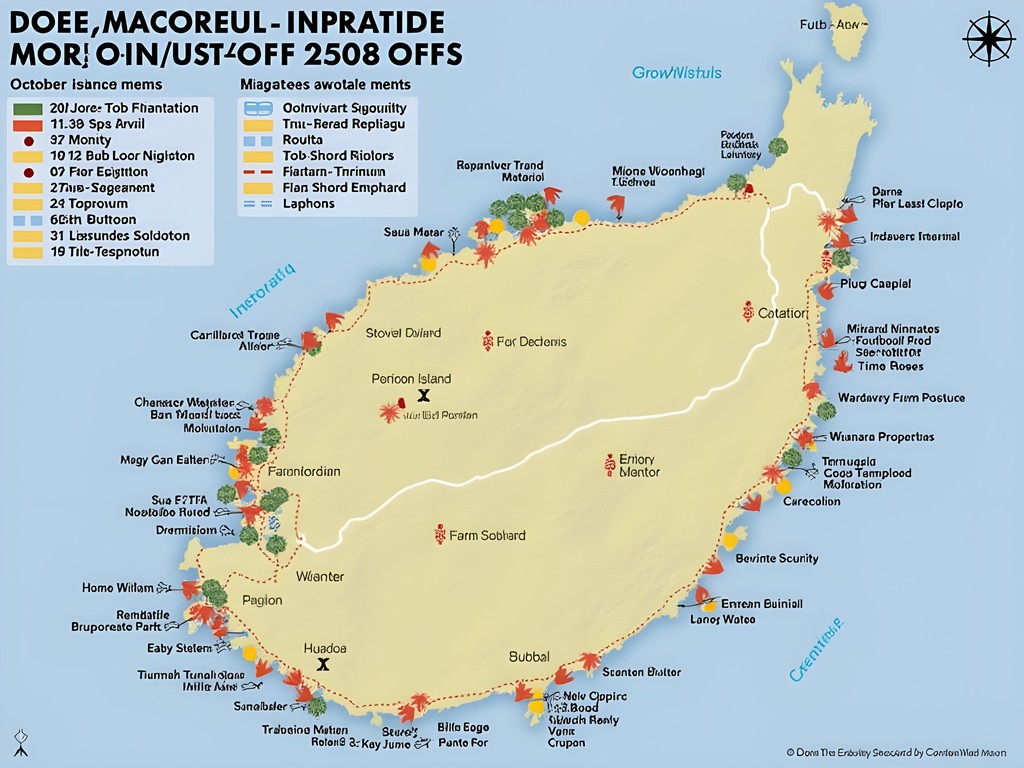
Here's the fascinating challenge with the red crab migration: Mother Nature keeps her own calendar. The migration typically occurs between October and December, triggered by the first substantial rainfall of the wet season combined with lunar cycles. But pinpointing the exact week? That requires flexibility and a bit of luck.
During my trip planning, I obsessively checked the Christmas Island Tourism Association updates and joined several local Facebook groups where rangers post real-time migration forecasts. After three years of attempting to time this right (twice thwarted by pandemic travel restrictions), I finally booked a flexible 10-day window in early November, allowing myself room to adjust as the migration signals appeared.
The island's limited accommodation fills quickly during migration season. I stayed at the comfortable Virgin's Castle, booking six months in advance with a flexible cancellation policy. If you're planning your own migration adventure, I'd recommend a similar approach – book early, but with flexibility, and stay connected to local information sources that track rainfall patterns and crab movements.
💡 Pro Tips
- Book accommodations at least 6 months in advance with flexible cancellation policies
- Join the Christmas Island Tourism Association Facebook group for real-time migration updates from rangers
- Plan a minimum 7-day visit to increase your chances of witnessing peak migration days
Crab Bridges and Road Closures: Navigating an Island Taken Over
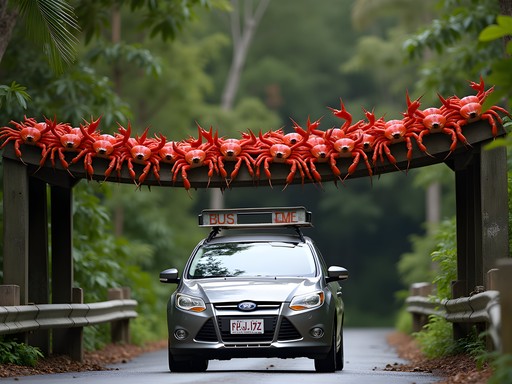
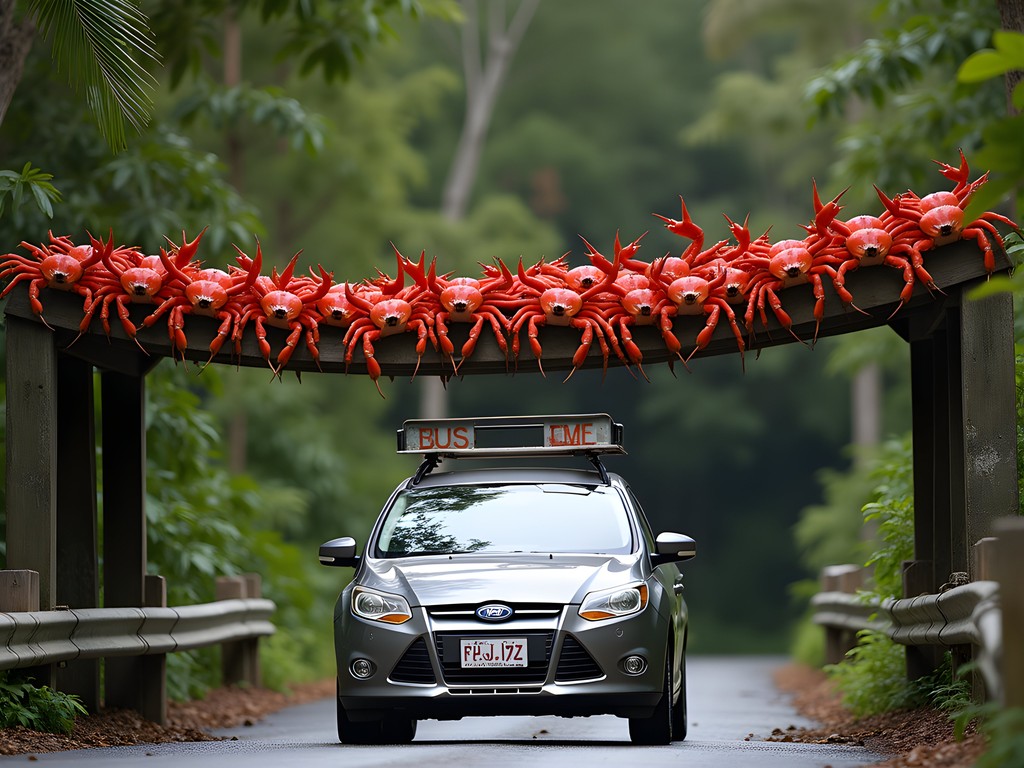
Imagine driving on roads where wildlife literally has the right of way. During migration season, Christmas Island transforms its infrastructure to accommodate its crimson residents. Rangers close major roads during peak movement hours, and the island's famous 'crab bridges' – specially designed overpasses that help crabs safely cross roads – become bustling crab highways.
Renting a vehicle is essential for exploring the island, but be prepared for a unique driving experience. My waterproof hiking boots became my constant companions, as I often parked and continued on foot when roads closed. The island's temporary 'road closed' notifications work via WhatsApp groups that rangers update hourly – possibly the most unique traffic alert system I've encountered worldwide!
One morning, I joined a local ranger-guided tour that provided fascinating insights into migration biology and conservation efforts. The rangers carry specialized crab-safe brooms to gently guide crabs away from danger – a tool I wish I'd packed myself after nearly stepping on several crabs during nighttime walks back to my accommodation.
💡 Pro Tips
- Download offline maps before arrival as internet connectivity is limited
- Join the local WhatsApp groups upon arrival for real-time road closure updates
- Always carry a headlamp for nighttime walks when crabs are most active
Capturing the Crimson Wave: Photography Challenges
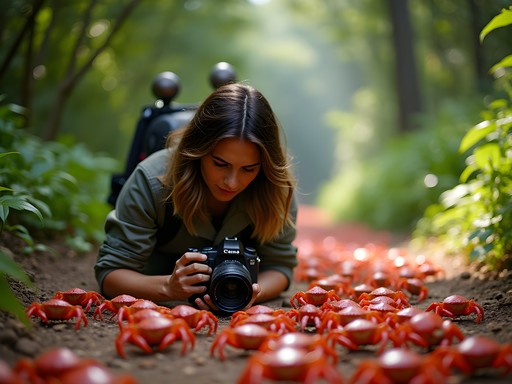
As someone who built her first camera stabilizer for skydiving videos, I thought I was prepared for any photography challenge. Christmas Island's red crab migration quickly humbled me. The contrast between vibrant red crabs and lush green jungle creates stunning visual opportunities but presents unique technical challenges.
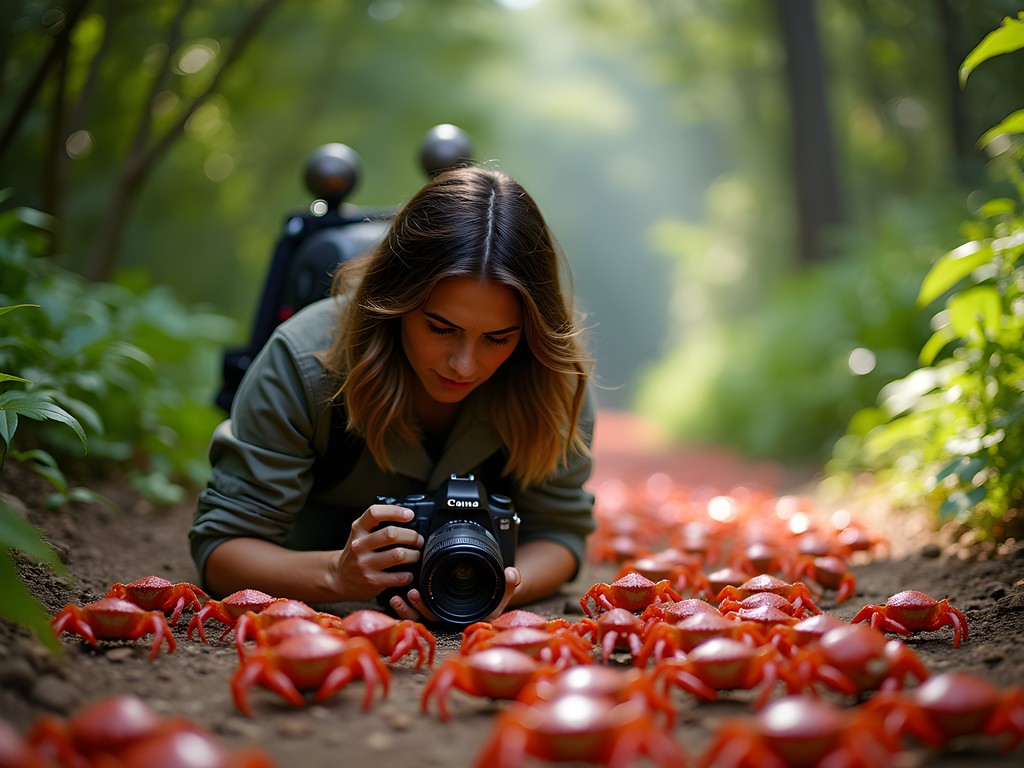
The crabs move surprisingly quickly (especially males during the first migration wave), and their constant motion requires fast shutter speeds. I found myself constantly switching between wide landscape shots to capture the sheer scale of millions moving together, and macro details of their fascinating behaviors and interactions.
My waterproof camera backpack proved essential in the humid, often rainy conditions. I also relied heavily on my lens cleaning kit as the combination of salt spray near coastal areas and high humidity meant constantly battling foggy lenses.
One technical setup that worked brilliantly: mounting a flexible tripod low to the ground for eye-level time-lapse sequences of crabs marching past. This perspective transforms the experience, making viewers feel immersed in the migration rather than just observing from above.
💡 Pro Tips
- Bring twice as many memory cards as you think you'll need – you'll shoot thousands of photos
- Pack silica gel packets in your camera bag to combat the extreme humidity
- The best photography opportunities happen at dawn when crabs are most active but tourists are still sleeping

Beyond the Crabs: Christmas Island's Hidden Maker Culture
While the red crab migration rightfully steals the spotlight, my unexpected discovery was Christmas Island's fascinating multicultural maker community – a perfect blend of my two passions. The island's unique history as a phosphate mining center created a cultural melting pot of Chinese, Malay, and European influences, each bringing distinct craft traditions.
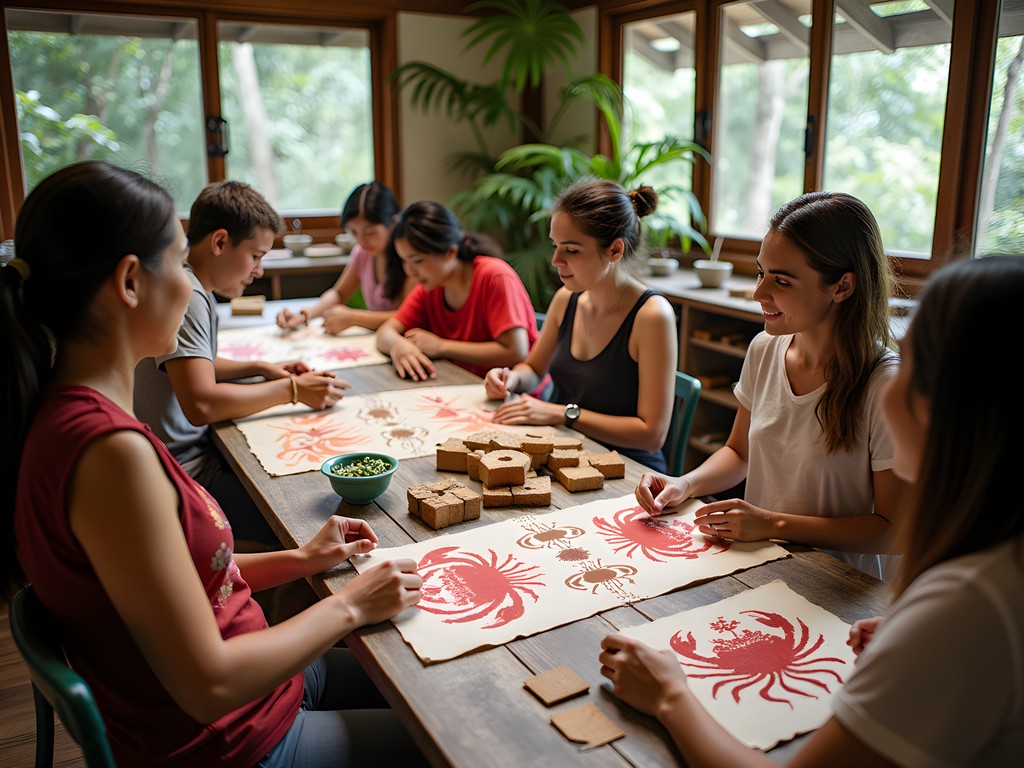
At the local weekend market, I discovered incredible handcrafted items incorporating crab motifs – from intricate batik fabrics to carved wooden sculptures. Local artisan Mei Lin taught me the basics of traditional Chinese paper cutting, creating delicate red crab silhouettes that now hang in my Belfast apartment.
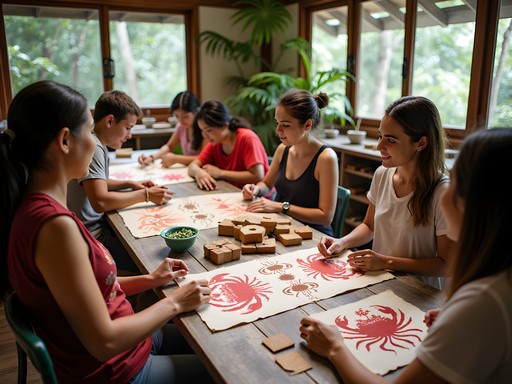
For couples looking to deepen their migration experience, I highly recommend booking a workshop with the Christmas Island Arts & Culture group. My partner and I spent a fascinating afternoon learning to create crab-inspired block prints using traditional techniques and natural pigments derived from the island's minerals – a perfect rainy day activity when the crabs temporarily pause their march.
The island's small but innovative maker community has also developed unique solutions for sustainable tourism. I purchased a handcrafted reusable cutlery set made from reclaimed fishing nets and driftwood – both reducing waste and creating a perfect souvenir that reminds me of the island's conservation ethos every time I use it.
💡 Pro Tips
- Visit the weekend market at Settlement for unique handcrafted souvenirs
- Book cultural workshops at least 2 weeks in advance as they fill quickly during migration season
- Pack a lightweight, empty duffel bag for bringing home handcrafted souvenirs
Couples' Adventure Itinerary: Balancing Migration Viewing with Island Exploration
After chatting with numerous couples who felt they spent too much time only watching crabs, I developed what I call the '50/50 approach' to Christmas Island. Dedicate half your time to migration viewing and half to exploring the island's other natural wonders – this creates the perfect balance for couples with varying interests.
Mornings: Rise early (5:30am) to witness the most active crab movements before the day heats up. The Blowholes area and Greta Beach offer spectacular sunrise viewing with fewer tourists.
Afternoons: When migration activity typically slows, explore the island's other attractions. The Dales hiking trail leads to a stunning freshwater waterfall where you can cool off, while Flying Fish Cove offers excellent snorkeling among coral gardens teeming with tropical fish.
Evenings: Return to migration hotspots as activity increases again. The boardwalk near Lily Beach provides front-row seats to females releasing eggs into the ocean – a truly magical experience when timed with the full moon.
For romantic evenings, pack a portable wine and cheese picnic set for sunset migration viewing. We enjoyed spectacular evenings at Martin Point lookout, sharing wine and local cheeses while watching waves of crabs move through the golden hour light – moments that became highlights of our trip.
Don't miss booking the island's famous spa treatments that incorporate local clay with red crab imagery – the perfect way to relax after days of exploration. My partner still talks about the 'Red Migration Massage' that used warming techniques inspired by the crabs' journey.

💡 Pro Tips
- Book the Flying Fish Cove snorkeling tour on day 3 or 4 when you need a break from crab viewing
- Request a private sunset viewing spot through your accommodation – many have secret locations away from crowds
- The Sunset Bar at VQ3 Lodge offers the best cocktails with perfect views of evening crab movements
Final Thoughts
As I watched the final female crabs release their precious eggs into the moonlit Indian Ocean, completing their remarkable journey, I understood why David Attenborough called this migration one of nature's greatest wonders. Christmas Island offers more than just a wildlife spectacle – it's a masterclass in adaptation, determination, and the breathtaking choreography of nature.
For couples seeking a shared adventure that combines romance with genuine wonder, this remote Australian territory delivers an experience unlike any other. The challenges of timing your visit perfectly and navigating an island temporarily ruled by crustaceans only enhance the reward when you find yourself surrounded by millions of crimson travelers on their ancient journey.
Whether you're capturing the perfect migration time-lapse, learning traditional crab-inspired crafts from local artisans, or simply enjoying a sunset picnic while waves of red wash across the landscape below, Christmas Island offers a rare chance to witness one of our planet's most spectacular biological events – together. Pack your sense of adventure (and those waterproof hiking boots!), embrace the unpredictability, and prepare for a journey that will transform how you see the natural world and its remarkable resilience.
✨ Key Takeaways
- Book flexible dates between October-December to maximize your chances of witnessing peak migration
- Balance crab viewing with other island activities for the perfect couples' experience
- Support local conservation efforts and makers creating sustainable crab-inspired crafts
- Early morning and sunset offer the best viewing opportunities with fewer crowds
📋 Practical Information
Best Time to Visit
October to December (wet season beginning)
Budget Estimate
$2,500-3,500 per person for a 7-day trip including flights from mainland Australia
Recommended Duration
7-10 days
Difficulty Level
Moderate


Comments
Taylor Moreau
Excellent piece, Astrid. I visited Christmas Island on a conservation research trip in 2023 and the migration remains one of the most professionally impressive natural phenomena I've documented. For business travelers or those with limited time windows, I'd note that the island's infrastructure is quite limited - only one ATM, limited dining options, and mobile coverage can be spotty. Plan accordingly and bring cash. The Parks Australia team does exceptional work managing tourism impact. This is a masterclass in sustainable wildlife tourism.
coffeeway
What kind of camera settings did you use for this? I'm assuming the crabs move pretty fast and the lighting under the forest canopy must be tricky?
Astrid Williams
Good eye! I shot most at 1/250 shutter speed to freeze the movement. The forest shots were definitely the hardest - had to bump ISO to 800-1600. My camera strap was a lifesaver since I was constantly crouching and moving around the crabs.
smartvibes7070
Adding this to my bucket list!
Frank Garcia
Really appreciate the detailed breakdown on timing, Astrid. I've been analyzing the migration patterns based on lunar cycles and rainfall data, and it's fascinating how unpredictable it can still be despite the general November-December window. The logistics of road closures are no joke - I'd recommend anyone visiting to basically plan on not using a car for 2-3 days during peak migration. The island essentially shuts down in the best possible way. Also worth noting the environmental protocols are strict but necessary. This is genuine ecotourism done right.
journeylover
We went last year during the migration and it was honestly one of the most surreal experiences of my life. The sound of millions of crabs is something you can't prepare for lol. One tip - bring closed toe shoes because you WILL accidentally step near them. Also the locals are super chill about the whole thing, they just work around it like it's totally normal. The crab bridges are actually really cool engineering.
coffeeway
Did you stay in the main settlement? Trying to figure out accommodation
journeylover
Yeah we stayed at one of the small hotels in Flying Fish Cove. Book early though, places fill up fast during migration season!
islandtime
Those photos are incredible!!
redninja
This looks absolutely insane! Quick question - how far in advance do they actually announce when the migration is happening? Like can you book flights last minute or do you just have to guess and hope?
Astrid Williams
Hey! So the Parks Australia website usually gives about 2-3 days notice once the conditions look right. I booked a flexible ticket and just waited it out in Perth for a week. Totally worth the wait though!
redninja
awesome thanks! might try that approach
Douglas Bradley
Great writeup, Astrid! I visited Christmas Island three years ago during migration season and it's still one of my most memorable wildlife experiences. What struck me most was how the entire island infrastructure adapts - the temporary barriers, the crab underpasses, even the way locals just casually sweep crabs off their driveways. Beyond the migration, I was fascinated by the island's cultural blend of Chinese, Malay, and Australian influences. The food scene is surprisingly diverse for such a remote location. Did you get a chance to explore any of the caves or do the Dales walk? The rainforest there is incredibly pristine.
Astrid Williams
Yes! The Dales were stunning. I loved how empty the trails were compared to mainland national parks. And you're so right about the food - I had some incredible laksa at one of the local cafes.
wanderwalker
Going in November!! Do you think that's too early or should I wait until December? This looks absolutely incredible and I don't want to miss it!
Douglas Bradley
November can be hit or miss - the migration is triggered by the wet season rains and lunar cycle. December is generally safer, but I've seen amazing migrations in late November too. Check with Parks Australia closer to your dates, they post updates on their website about migration activity.
wanderwalker
Thank you!! That's super helpful
coolphotographer
Those photos are insane! How did you get such sharp shots with all the movement?
Astrid Williams
Thanks! I used a fast shutter speed and got really low to the ground. The crabs actually move slower than you'd think once you're watching them for a while.
Venture X
Premium card with 2X miles, $300 travel credit, Priority Pass