


Disclosure: This article contains affiliate links. We may earn a commission from purchases at no extra cost to you, which helps our travel content.
The rhythmic clacking of train wheels across continents has always represented more than mere transportation to me—it's the percussion soundtrack to cross-cultural innovation. When my consulting firm assigned me a month-long project comparing tech ecosystems from Texas to Central Asia, I seized the opportunity to design what colleagues deemed 'professionally insane': a 30-day rail journey from Austin's vibrant tech scene to Almaty's emerging innovation hub, traversing seven countries during autumn's transformative embrace. This wasn't merely about ticking off destinations but observing how seasonal transitions influence technological adaptation across vastly different environments.

Plotting the Trans-Continental Route: From Concept to Itinerary
Mapping a train journey from Texas to Kazakhstan requires equal parts logistical precision and comfortable acceptance of the unpredictable—a balance I've honed through years of navigating both boardrooms and border crossings.
My route crystallized into distinct segments: Austin to Chicago aboard Amtrak's Texas Eagle, followed by the Lake Shore Limited to New York. From there, I flew to London (the one unavoidable flight), continuing via Eurostar to Paris, then Deutsche Bahn connections through Germany and Poland. The real adventure began with the Polish-Ukrainian border crossing, continuing through Ukraine to Moscow, where I boarded the iconic Trans-Siberian for the three-day journey to Novosibirsk. The final leg traversed Kazakhstan's northern steppes to Almaty.
Planning this complex itinerary demanded specialized tools beyond standard travel apps. My travel router proved invaluable, creating secure connections in remote stations where I needed to confirm connections or make last-minute adjustments. For tracking multiple time zones and connections, I relied on my world time watch, which simplified the mental gymnastics of calculating arrival times across continents.

💡 Pro Tips
- Book Russian and Central Asian train segments at least 45 days in advance—they fill surprisingly quickly in autumn
- Download offline maps and translation apps before crossing into countries with internet restrictions
- Carry a universal power adapter with multiple USB ports for different train power systems
Tech Hubs in Transition: Autumn's Influence on Innovation
As a management consultant specializing in how environments shape technological development, this journey offered a unique lens through which to observe autumn's impact on tech communities across continents.
In Austin, fall brings a renewed energy after summer's oppressive heat. The city's outdoor workspaces filled with developers and entrepreneurs leveraging the pleasant temperatures—the seasonal shift visibly altering work patterns and collaborative dynamics. I spent three days conducting interviews at coffee shops and co-working spaces, noting how the changing leaves mirrored the pivoting startup strategies.
Contrastingly, Berlin's tech scene embraces autumn with a distinctive intensity. As daylight shortened, I observed how innovation hubs extended their hours, creating a nocturnal creativity culture that felt distinctly European. The light therapy lamp I packed proved essential during extended work sessions at Berlin's Factory campus, where I documented how seasonal affective responses influence product development cycles.
Most fascinating was Moscow's tech response to approaching winter. The Russian capital's innovation centers have developed sophisticated indoor ecosystems where temperature, light, and even humidity are precisely controlled to maintain productivity as autumn deepens. My smart notebook became invaluable here, allowing me to digitize extensive observations while moving between heated metro stations and technology parks without exposing traditional notebooks to temperature fluctuations.

💡 Pro Tips
- Schedule meetings with local tech communities through platforms like Meetup.com before arrival
- Visit university innovation centers, which often showcase seasonal research projects
- Attend at least one tech conference in each major hub to understand regional priorities
The Trans-Siberian Segment: Three Days of Productive Solitude
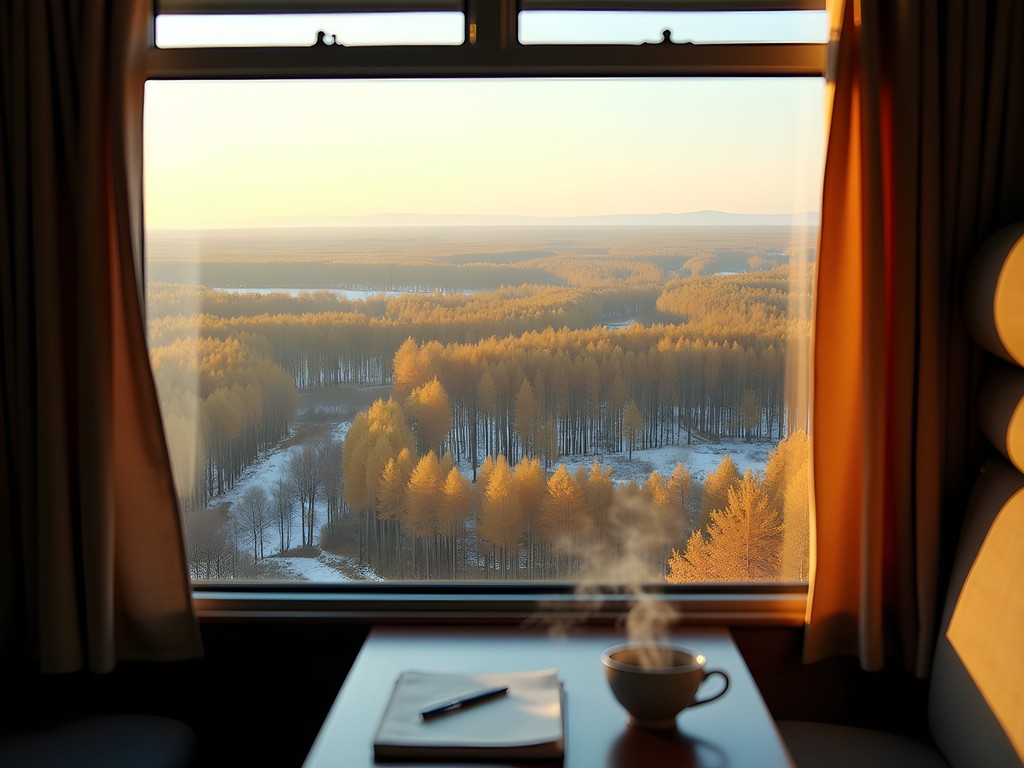
The Trans-Siberian Railway segment from Moscow to Novosibirsk represents the journey's heart—three days and three nights traversing Russia's vast expanse as autumn transforms the landscape from golden birch forests to the first dustings of Siberian snow.
I secured a first-class compartment—an investment in productivity rather than luxury. This private space became my mobile office, complete with a small fold-down desk where I analyzed data collected from previous tech hubs. The train's gentle rhythm provided an unexpected creativity catalyst, the changing landscape outside my window offering fresh perspectives on cross-cultural innovation patterns.
While Russian trains offer surprisingly reliable electrical outlets, power management remained crucial. My solar power bank proved invaluable during occasional outages, particularly when transcribing interview recordings from earlier stops. For meals, I alternated between the dining car—an excellent venue for conversations with Russian tech professionals also traveling east—and my own provisions supplemented with platform purchases during the brief station stops.
Sleep quality determines productivity on such journeys. My silk sleep mask and noise-cancelling earbuds created a consistent sleep environment despite changing time zones and the train's mechanical symphony. Each morning, I performed a modified yoga routine in my compartment—maintaining physical wellness despite the spatial constraints.
💡 Pro Tips
- Download ample podcasts and audiobooks; cellular coverage is surprisingly spotty across Siberia
- Bring a Russian phrasebook specifically for train travel terminology
- Set alarms for major station stops—some are as brief as 10 minutes but offer essential opportunities to stretch legs and purchase fresh food

Kazakhstan's Emerging Tech Scene: Where Tradition Meets Innovation
Arriving in Kazakhstan as autumn fully embraced the steppes offered a fascinating conclusion to my transcontinental analysis. Almaty, often overlooked in global tech conversations, reveals itself as a compelling fusion of traditional Central Asian values and forward-thinking innovation—particularly in fintech and sustainable resource technologies.
The city's position between China's technological ambitions and European markets creates a unique innovation ecosystem. During my week exploring Almaty's tech community, I witnessed how the harsh approaching winter influences both technological priorities and work culture. Unlike Western hubs that might slow for seasonal holidays, Kazakhstan's tech sector intensifies as winter approaches, with development sprints scheduled to coincide with the indoor season.
Navigating Almaty's business landscape required cultural adaptability. My instant translation earbuds facilitated seamless conversations with Kazakh entrepreneurs who preferred speaking their native language rather than English or Russian. For business meetings that often extended into traditional meals, I carried a compact business attire steamer to maintain professional presentation despite unpredictable weather transitions.
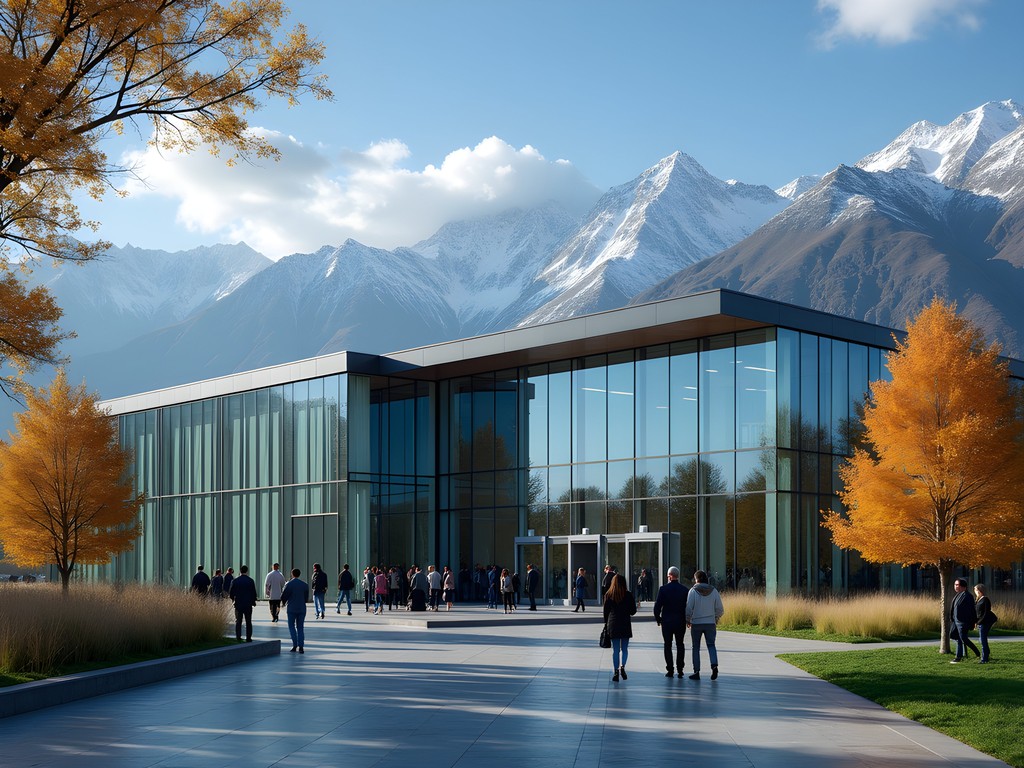
Most revealing were the contrasts in seasonal adaptation across my journey's tech hubs. While Austin's innovation culture embraces outdoor elements year-round, Almaty's tech campuses feature sophisticated indoor environments designed for maximum productivity during the harsh continental winter—a microcosm of how environmental factors shape technological development patterns globally.
💡 Pro Tips
- Connect with the Astana Hub community before arrival for introductions to Almaty's tech scene
- Respect traditional Kazakh business customs alongside modern tech practices
- Schedule meetings earlier in the day during autumn, as daylight hours shorten dramatically
Final Thoughts
As my train pulled into Almaty's station on day thirty, I realized this journey had evolved beyond a simple consulting project into a profound exploration of how seasons shape innovation across continents. The data I gathered—comparing how tech communities from Texas to Kazakhstan respond to autumn's transformative influence—revealed patterns that transcend cultural boundaries while honoring regional distinctions.
This rail odyssey reinforced my conviction that truly understanding global innovation requires immersion in seasonal transitions across diverse environments. The tech executive seeking market expansion opportunities or the entrepreneur developing cross-cultural products would benefit immensely from experiencing how autumn's arrival reshapes work patterns in Berlin differently than in Novosibirsk or Almaty.
As we navigate increasingly borderless technological development, perhaps we should embrace more transcontinental journeys—not as luxury tourism but as essential professional development. There's wisdom in watching the leaves change color across seven countries while observing how those changes influence the humans creating our technological future. What seasonal transitions shape your industry's innovation cycles? How might a transcontinental perspective enhance your understanding of global market opportunities? The answers may lie aboard the next train departing your local station.
✨ Key Takeaways
- Transcontinental train travel offers unparalleled insight into how seasonal changes influence regional innovation patterns
- Tech hubs across continents respond differently to autumn's arrival, creating distinct productivity rhythms worth understanding
- Extended train journeys can serve as productive mobile offices with proper preparation and tools
- Kazakhstan's emerging tech scene represents a fascinating fusion of Central Asian traditions with forward-thinking innovation approaches
📋 Practical Information
Best Time to Visit
September-October for optimal autumn conditions across all regions
Budget Estimate
$4,500-6,000 USD for 30 days (mid-range accommodations, first-class train tickets)
Recommended Duration
Minimum 25 days, ideally 30-35 days
Difficulty Level
Challenging


Comments
trainadventurer
Love this! What was your favorite meal on the entire journey?
Naomi Bennett
Definitely the home-cooked borscht from a babushka who boarded our train in Siberia selling food from a basket! That, or the incredible horse milk (kumis) I tried at a tech conference in Almaty. Both unforgettable!
tech_nomad_42
Epic journey! The Kazakhstan tech scene insights were eye-opening. Never would have thought Almaty was such a hub.
Gregory Boyd
Fascinating journey, Naomi! I've done extensive train travel through Europe and parts of Asia, but connecting Texas to Kazakhstan is next-level commitment. Your observations about the tech scenes across different countries is particularly interesting - I've noticed similar patterns of innovation hubs developing along major transportation routes. The Trans-Siberian segment is indeed special. When I did it in 2022, I found the forced disconnection incredibly valuable for deep work and writing. Did you find any particular stretch of the journey especially conducive to productivity or inspiration? And how did the autumn landscapes influence your perspective on the different tech ecosystems you were analyzing?
Naomi Bennett
Thanks Gregory! The stretch between Yekaterinburg and Novosibirsk was magical for productivity - something about the endless birch forests and the rhythm of the train. Autumn definitely added a layer of perspective - seeing tech hubs in seasonal transition mirrored the innovation cycles I was studying. The contrast between Berlin's established scene and Kazakhstan's emerging one was particularly stark in fall colors.
Gregory Boyd
That's beautifully observed. There's something about those Siberian birch forests that seems to unlock creativity. I'll have to try the autumn timing next time - I've only done it in summer when the days are incredibly long.
roamninja9996
I did part of this route last year (just the Moscow-Irkutsk segment) and it was mind-blowing! Those three days on the train were surprisingly productive for me too. Did you find the wifi reliable enough to work on the Russian trains? I struggled a bit with connectivity.
Naomi Bennett
The wifi was definitely spotty! I downloaded everything I needed before boarding and used my phone as hotspot when we passed through bigger cities. The forced digital detox in between was actually pretty refreshing!
skybackpacker
This is seriously impressive! How did you manage the visa situation for all 7 countries? Was it complicated to arrange?
Naomi Bennett
Thanks! The visa process was definitely one of the biggest challenges. I started planning about 4 months in advance. Russia was the most complex - needed invitation letters and specific itinerary details. Kazakhstan offers e-visas now which made that part easier!
skybackpacker
Super helpful, thanks! Did you book all train tickets in advance or some as you went?
Naomi Bennett
I booked the Trans-Siberian segment about 60 days out (it fills up!), but did some of the shorter European legs just a week or two ahead. Definitely recommend seat61 website - invaluable for planning!
roamstar
Thanks for sharing this!! Super inspiring
Megan Martin
This is exactly the type of innovative business travel approach more consultants should consider. I've done Austin to NYC by train for client meetings, but never contemplated something this ambitious. The productivity angle during the Trans-Siberian segment really resonates—three days of uninterrupted focus time is nearly impossible to find otherwise. For anyone considering this route for business purposes, I'd recommend getting a reliable portable WiFi device. I used a mobile hotspot for my European train journeys and it was invaluable for staying connected across borders. How did you manage connectivity through Russia and Kazakhstan?
springperson
Good question about the wifi! I'd be worried about being offline for days
vacationbuddy
Did you book all the train tickets in advance or just figure it out as you went? This looks incredible but also kinda intimidating to plan!
backpackzone
Adding this to my bucket list!
Casey Andersson
Naomi, what a magnificent journey! I did a portion of the Trans-Siberian last year in first class and it was transformative. The way you've woven the consulting work with the travel narrative is brilliant. I'm curious about your accommodation choices in the tech hubs—did you find coworking spaces along the route, or were you primarily working from the trains? The autumn timing must have been spectacular through Siberia. I found the golden birch forests absolutely mesmerizing in October. Would love to hear more about Kazakhstan's tech scene; it's not a destination that gets nearly enough attention in our travel circles.
vacationbuddy
First class Trans-Siberian sounds amazing! How much did that cost if you don't mind me asking?
Venture X
Premium card with 2X miles, $300 travel credit, Priority Pass