


Disclosure: This article contains affiliate links. We may earn a commission from purchases at no extra cost to you, which helps our travel content.
There's something deeply satisfying about discovering the soul of an industrial American city that most travelers simply drive past. Waukegan, Illinois—positioned gracefully along Lake Michigan's western shore—is precisely such a place. As someone who's spent decades appreciating the intersection of craftsmanship and culture, I found myself drawn to this lakefront city's architectural narrative during a crisp autumn weekend. The city wears its history openly, from ornate 19th-century facades to repurposed industrial spaces, all set against the backdrop of Lake Michigan's expansive waters. This isn't the Illinois that tourists typically seek out, and that's precisely why it deserves your attention. C'est dans les vieux pots qu'on fait les meilleures soupes—the best soup is made in old pots—as my mother would say, and Waukegan's historic districts have been simmering with stories for over 150 years.

Waukegan's Architectural Time Capsule
Walking through Waukegan's Genesee Street Historic District feels like stepping through different chapters of American architectural history. The preservation here isn't pristine and polished like in tourist-heavy destinations—it's authentic, sometimes weathered, but always revealing the bones of exceptional craftsmanship.
The Genesee Theatre stands as the crown jewel, a 1927 movie palace whose restoration speaks to the city's commitment to preserving its cultural landmarks. I spent nearly an hour examining the intricate plasterwork in the main hall, recognizing techniques that haven't changed in centuries. The mechanical precision in these ornamental details reminds me of my father's workshop in Paris—where beauty and function were never separated.
Nearby, the 1891 Richardsonian Romanesque courthouse commands attention with its robust stone construction and distinctive round arches. What caught my professional eye were the original iron window mechanisms, still functioning after more than a century—a testament to the quality of materials and engineering principles that modern buildings rarely match.
For architecture enthusiasts, I recommend bringing a good pair of compact binoculars to appreciate the details on upper facades that are often missed. The craftsmanship is in the details, and Waukegan's buildings reward those who take time to look closely.

💡 Pro Tips
- Visit the Genesee Theatre even when there's no show—they often allow visitors to peek inside the main hall
- The historic district is compact enough to explore entirely on foot, so wear comfortable walking shoes
- Early morning light (around 8-9am) offers the best conditions for photographing the eastern-facing historic facades
Lakefront Heritage & Industrial Beauty
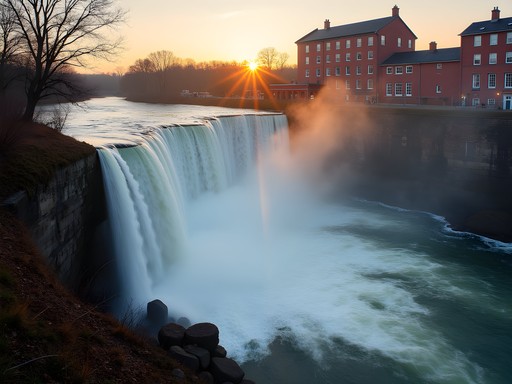
Waukegan's relationship with Lake Michigan defines its character, and nowhere is this more evident than along the harbor and lakefront areas. The city's industrial past merges with natural beauty in ways that remind me of certain ports in northern France—functional, weathered, yet possessing an undeniable aesthetic quality.
The Waukegan Harbor and Marina offer more than just boats and water; they provide context for understanding how this city developed. The lighthouse, though modest compared to some Great Lakes beacons, has guided vessels since 1889. Its utilitarian design—sturdy iron construction with minimal ornamentation—speaks to the Midwestern pragmatism that shaped these lakefront communities.
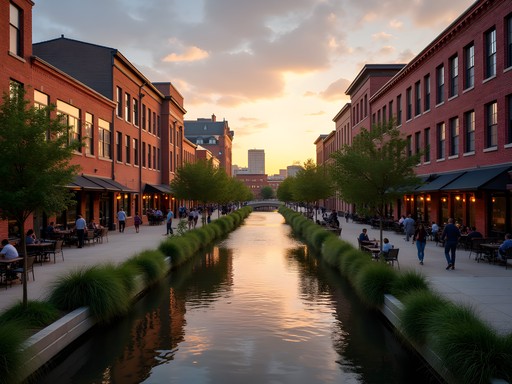
What truly captured my attention were the repurposed industrial buildings along the waterfront. As someone who appreciates mechanical systems and their evolution, I found myself studying the converted warehouses, noting how their original functions influenced their construction. The massive timber beams and iron fittings in these structures tell stories of engineering solutions from another era.
During my exploration, I used my weatherproof notebook to sketch interesting architectural details and make notes—something I'd highly recommend for fellow urban explorers. The lakefront area can get quite windy in fall, and having weather-resistant paper means your observations won't be lost to a sudden shower.

💡 Pro Tips
- Visit the harbor at sunset when the industrial structures create dramatic silhouettes against the colored sky
- The Waukegan History Museum offers excellent context for understanding the lakefront's development
- Walking the entire lakefront trail takes about 90 minutes—bring water and dress in layers for changeable lake weather
Ray Bradbury's Waukegan: Literary Landmarks
Few visitors realize that Waukegan served as the inspiration for the fictional Green Town in Ray Bradbury's seminal works, including Dandelion Wine and Something Wicked This Way Comes. As someone who appreciates how physical spaces influence creative expression, following Bradbury's footsteps through his hometown offered a unique perspective on both the writer and the city.
The Ray Bradbury Experience Museum, though modest in size, provides thoughtful context for understanding how Waukegan's landscapes and architecture shaped Bradbury's imagination. The Carnegie Library building (now the Waukegan History Museum) where young Bradbury spent countless hours reading stands as a testament to how public architecture can influence individual lives.
Walking through Bradbury Park with its ravine—the inspiration for many scenes in his works—I was struck by how the physical landscape of a place becomes embedded in its stories. The park's meandering paths and ancient trees create natural corridors that seem designed for storytelling.
The most rewarding experience was simply wandering the residential streets near Washington Park, where Bradbury grew up. Many homes from the 1920s and 30s remain, and it's easy to see how these Midwestern architectural styles—with their welcoming porches and mysterious attics—populated the author's fictional Green Town.
I documented my literary exploration using my portable camera, which excels in capturing the nostalgic quality of these historic neighborhoods. Its film simulation modes perfectly rendered the autumn light filtering through mature trees onto century-old homes.

💡 Pro Tips
- Read at least one Bradbury story set in Green Town before visiting to appreciate the connections
- The Waukegan History Museum staff can provide a self-guided tour map of Bradbury-related sites
- Visit Washington Park in late afternoon when the shadows grow long—you'll understand why Bradbury was so attuned to the quality of light in his descriptions

Cultural Diversity in Architecture & Cuisine
What makes Waukegan particularly fascinating is how waves of immigration have shaped its built environment and cultural landscape. The city's architectural story isn't limited to its downtown landmarks—it extends into neighborhoods where different cultural influences are expressed through both grand and humble structures.
The Holy Trinity Church, with its distinctive Eastern European-influenced design, stands as a testament to the Lithuanian community that once thrived here. The craftsmanship in its woodwork reminded me of techniques I've observed across Europe—the universal language of skilled hands transcending borders.
In the southern neighborhoods, the influence of Mexican and Central American communities becomes evident in colorful murals and adaptively reused storefronts. These areas demonstrate architecture as a living, evolving practice rather than simply preserved history. The way these communities have transformed utilitarian spaces into vibrant cultural centers speaks to the resilience and creativity that often goes unrecognized in architectural discussions.
This cultural diversity extends to Waukegan's culinary landscape. Between architectural explorations, I discovered authentic Mexican establishments like La Casa de Samuel and Taquería El Norte, where the handcrafted quality of the food mirrored the handcrafted nature of the city's built environment.
Le ventre vide n'a point d'oreilles—an empty stomach has no ears—as we say in France. To fully appreciate Waukegan's architectural treasures, fuel your explorations at these local establishments rather than chain restaurants.

💡 Pro Tips
- Visit Holy Trinity Church on Sunday morning when the interior is accessible and the light through the stained glass is most impressive
- The Mexican Independence Day celebrations in September feature special access to community buildings not typically open to visitors
- Local bakeries like Panadería Nuevo León offer the perfect afternoon energy boost during architectural walking tours
Budget-Friendly Exploration Strategies
Exploring Waukegan's architectural heritage doesn't require deep pockets—in fact, some of the most rewarding experiences come at little to no cost. As someone who values substance over luxury in travel, I found this lakefront city perfectly suited to meaningful budget exploration.
The Waukegan History Museum offers free admission, providing essential context for understanding the city's development. Their walking tour maps (available for a small donation) are worth their weight in gold, offering self-guided routes through different historical periods and architectural styles.
One of my favorite discoveries was the Waukegan Public Library—not just for its information resources but for its architecture. The 1965 modernist building features fascinating mechanical systems that are visible by design, showcasing the functional beauty that I've always appreciated as a mechanic. The library also hosts free exhibitions on local history and architecture throughout the year.
For accommodation, I bypassed the chain hotels and opted for the Airbnb experience, securing a room in a restored 1920s bungalow near Washington Park. This not only saved money but provided an immersive experience in historic residential architecture that no hotel could match.
Waukegan's location just an hour from Chicago via Metra train makes it accessible without a rental car—another significant budget saver. The compact nature of its historic districts means that once you've arrived, everything is walkable.

💡 Pro Tips
- The Waukegan Park District offers free guided architecture tours on the first Saturday of each month (May-October)
- Visit the Waukegan History Museum first to collect free maps and background information
- Pack a picnic lunch to enjoy in one of the historic parks—Washington Park offers the best combination of historic atmosphere and lakefront views
Final Thoughts
As I boarded the Metra train back to Chicago, watching Waukegan's lakefront fade into the distance, I found myself reflecting on how this overlooked city embodies what I value most in urban exploration—authentic history expressed through craftsmanship, cultural layering revealed in architectural details, and stories waiting to be discovered by those willing to look beyond the obvious. Waukegan may not appear in many travel guides, but for couples seeking a meaningful weekend of exploration without breaking the bank, its architectural legacy offers rich rewards. The city reminds us that understanding how things are built—whether buildings, communities, or stories—gives us deeper appreciation for the places we visit. As my father would say while teaching me to repair engines: Comprendre comment ça marche, c'est déjà l'avoir à moitié réparé—understanding how something works is already half the repair. Perhaps in exploring overlooked places like Waukegan, we repair our connection to America's diverse architectural heritage.
✨ Key Takeaways
- Waukegan offers an accessible, budget-friendly window into America's architectural evolution over 150 years
- The literary connections to Ray Bradbury provide a unique lens for understanding how physical places inspire creativity
- Cultural diversity is expressed through both grand and humble architectural features throughout the city
- Fall provides the ideal combination of comfortable temperatures and beautiful lighting for architectural photography
📋 Practical Information
Best Time to Visit
September-October for fall foliage and comfortable temperatures
Budget Estimate
$200-300 for a weekend (excluding transportation to the region)
Recommended Duration
2-3 days
Difficulty Level
Easy


Comments
springrider
This is really inspiring! I'm pretty new to travel and usually just stick to the obvious destinations. Never would have thought to explore a place like Waukegan but you make it sound really interesting. The Ray Bradbury connection is cool, I loved his books in high school. Might try this for my first solo day trip.
Bryce Diaz
Perfect choice for a first solo trip! Small enough to not be overwhelming, easy to get to, and plenty to discover. You'll do great.
Sophia Gomez
I had a work conference in nearby Gurnee last year and took an afternoon to explore Waukegan on a colleague's recommendation. Completely unexpected highlight of that trip! The contrast between the grand old buildings and the working-class authenticity really struck me. We grabbed lunch at a Colombian restaurant that was incredible. It's refreshing to write about places that aren't oversaturated with tourism—these are the stories that matter. Great piece, Nathan.
roamway
any good spots for architecture photography? what time of day did you shoot?
Nathan Mitchell
Morning light on the lakefront is gorgeous. The downtown buildings photograph really well in late afternoon too. Definitely walk along Washington Street for the best historic facades.
travelseeker
How long does the metra take from chicago? thinking about doing this as a day trip
Nathan Mitchell
About an hour from downtown on the Union Pacific North line. Very doable as a day trip!
roamway
just fyi the weekend schedule is less frequent so check times before you go
backpacknomad
Love this! So many hidden gems in the midwest
Bryce Diaz
Nathan, this really resonates with me. I spent a weekend in Waukegan last fall and had a similar experience—that feeling of discovering something authentic that hasn't been packaged for tourists yet. The Genesee Theatre is absolutely stunning inside if you can catch a show there. I also found this incredible Mexican bakery on Grand Avenue that's been there since the 60s. The owner told me stories about how the neighborhood has evolved. These industrial lakefront towns have so much character once you slow down enough to look.
starking
wait theres a ray bradbury museum there?? how did i not know this
Nathan Mitchell
Not a full museum, but there are several markers and sites around town where he lived and got inspiration! The library has a great collection too.
starking
awesome thanks!
Bryce Diaz
Nathan, you've captured the essence of Waukegan perfectly. I grew up about 30 miles from there but never appreciated it until I returned as an adult travel writer. The architectural contrasts are what make it special - those grand old bank buildings downtown next to modest worker housing, all with Lake Michigan as a backdrop. For anyone visiting, don't miss the Carnegie Library building - it's a perfect example of early 20th century civic architecture. And if you're a Bradbury fan, bring a copy of 'Dandelion Wine' to read while sitting in Washington Park. The descriptions will come alive around you. I spent two days photographing just the ornate doorways and window details throughout the historic district - each one tells a story about Waukegan's boom years.
vacationlover
Bryce - did you find parking easy there? Thinking of driving up from Indianapolis next month.
Bryce Diaz
Plenty of street parking downtown and a few public lots. Much easier than Chicago! The lot near the lakefront is free on weekends.
luckydiver
Just visited last weekend after reading your post! The lakefront was beautiful even in fall weather. Thanks for putting this place on my radar!
smartway6456
Is it easy to get around without a car? Planning to take the Metra up from Chicago next weekend.
Nathan Mitchell
The downtown area and lakefront are very walkable from the Metra station. For some of the further Bradbury sites, I used the local bus system which was decent. You might also want to pick up a pocket guidebook at the visitor center - it helped me navigate the historic districts efficiently!
Venture X
Premium card with 2X miles, $300 travel credit, Priority Pass