


Disclosure: This article contains affiliate links. We may earn a commission from purchases at no extra cost to you, which helps our travel content.
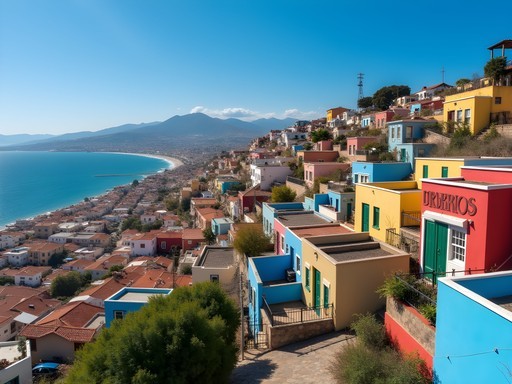
The first thing that strikes you in Valparaíso isn't the Pacific Ocean stretching endlessly westward, though that view alone would merit the journey. It's the riot of color cascading down the city's 42 cerros (hills), as if some cosmic editor had unleashed every shade in their palette across this Chilean port city's corrugated landscape. Twenty years in publishing taught me to appreciate the power of visual storytelling, but nothing prepared me for Valparaíso—a living canvas where street art isn't merely decoration but the vibrant punctuation marks in a narrative of cultural resistance and renewal. This UNESCO World Heritage site has transformed from a forgotten port town into South America's street art capital, where every wall tells a story, every mural a chapter in an ongoing conversation between the city's maritime past and its creative present.

Finding Your Bearings in Chile's 'Jewel of the Pacific'
Valparaíso sprawls across dozens of hills like pages of a manuscript waiting to be bound together. The city divides neatly between the flat El Plan (downtown) with its commercial hustle, and the residential hills above, each with distinct personalities and artistic signatures. My first day here reminded me of my editorial days—overwhelmed by the scope of what lay before me, uncertain where to begin, but knowing something magnificent would emerge from the chaos.
I based myself in Cerro Alegre, the most tourist-friendly hill and an ideal starting point. From my modest but charming hostel (where a private room cost less than $30 USD), I could wander the labyrinthine streets and discover new murals around every corner. The neighborhood's gentrification means plenty of cafés, restaurants, and viewpoints where you can pause to absorb the visual feast.
Valparaíso operates on a vertical geography that defies conventional navigation. Forget your standard city grid—here, you'll navigate by ascensores (funiculars), staircases, and winding passages that seem to fold back on themselves like complex narrative structures. These historic funiculars, dating back to the late 19th century, are not just transportation but time machines connecting different eras of the city's history. Riding the creaking Ascensor Artillería ($1.50 round trip), I felt like I was moving between chapters of the city's story, from the commercial prose of the port to the poetic heights of the residential hills.

💡 Pro Tips
- Purchase a multi-ride ticket for the ascensores to save money if you plan to explore multiple hills
- Download the offline map of Valparaíso on Maps.me before arriving—GPS works even without data
- The Free Walking Tours that depart daily from Plaza Sotomayor provide excellent orientation for first-timers
Decoding the Visual Language of the Streets
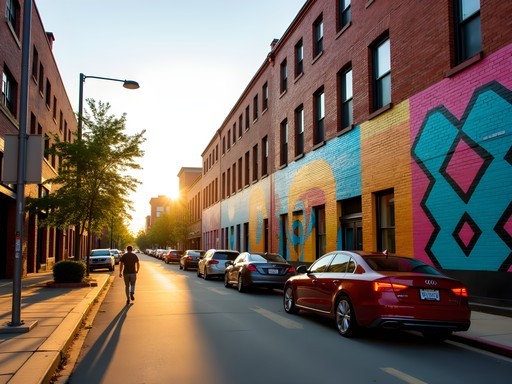
Street art in Valparaíso isn't a recent phenomenon—it's deeply political, rooted in the resistance against Pinochet's dictatorship when messages that couldn't be spoken aloud found expression on city walls. Today's murals range from whimsical surrealism to pointed social commentary, creating a palimpsest where new works continually overlay the old, much like the endless revision process of a manuscript.
Unlike the sanitized street art districts emerging in cities worldwide, Valparaíso's scene maintains an organic authenticity. Many works appear spontaneously, without permission, keeping the rebellious spirit alive. Others are commissioned pieces by international artists who make pilgrimages to leave their mark on this unique urban canvas.
On my third day, I joined a street art tour led by a local artist named Javiera. She pointed out subtle differences between graffiti (text-based, often tags or signatures), murals (larger narrative pieces), and paste-ups (paper-based art adhered to walls). What struck me most was how the art responds to the city's unique architecture—wrapping around corners, climbing staircases, utilizing the three-dimensional landscape in ways flat-terrain cities simply cannot.
"Here, the walls speak," Javiera told me, gesturing to a politically-charged piece depicting Chile's indigenous Mapuche people. "In Valpo, we don't separate art from life or politics. It's all one conversation."
Capturing these works requires good equipment—my compact camera proved invaluable for documenting both sweeping murals and intricate details while remaining unobtrusive in neighborhoods where flashing expensive gear isn't advisable.

💡 Pro Tips
- Book a tour with Valpo Street Art Tours for in-depth context from working artists
- Visit early morning or late afternoon when the light brings out the colors in the murals
- Ask permission before photographing murals that are part of private homes or businesses
Navigating the Hills: A Budget Explorer's Guide
For students and budget travelers, Valparaíso offers remarkable value compared to Santiago or other South American destinations. Street food empanadas ($2-3) and completos (Chilean hot dogs, $3-4) fuel exploration without breaking the bank. Local markets like Mercado Cardonal provide fresh produce at minimal cost if you're staying in accommodations with kitchen access.
My own budget strategy involved selecting a few strategic splurges—like dinner at Café Vinilo, where live music accompanies excellent seafood—while keeping most meals simple. The real value in Valparaíso isn't found in restaurants anyway, but in the free visual feast surrounding you.
Transportation costs stay minimal if you embrace walking. Though the hills are steep (earning Valparaíso the nickname "Little San Francisco"), comfortable shoes and a reasonable fitness level make most areas accessible. I averaged 15,000 steps daily, each one revealing new artistic discoveries. When the inclines proved too challenging, especially after long days, the historic funiculars and local buses (micros) provided inexpensive alternatives.
Accommodation presents the greatest expense, but numerous hostels and guesthouses cater to budget travelers. Cerro Alegre and neighboring Cerro Concepción offer the most convenient locations but command higher prices. I found better value slightly farther from the tourist center in Cerro Bellavista, home to the famous Museo a Cielo Abierto (Open Sky Museum), where a collection of 20 murals created by faculty and students from the local art school in the 1990s marks one of the city's earliest organized street art initiatives.
One unexpected budget tip: carry a refillable water bottle. The Chilean tap water is safe to drink, and you'll need constant hydration while climbing those hills. Mine became as essential as my notebook for documenting the ever-changing gallery of the streets.

💡 Pro Tips
- Use the local colectivos (shared taxis) that run set routes for about $1 per ride when you're too tired to climb another hill
- Visit the free Naval and Maritime Museum for context on the city's seafaring history
- Many hostels offer free or very cheap walking tours led by staff members—these often reveal hidden spots not on commercial tours

Beyond the Tourist Trail: Finding Authentic Valparaíso
While Cerro Alegre and Cerro Concepción feature prominently in guidebooks, Valparaíso's authentic pulse beats strongest in less-trafficked neighborhoods. After three days of following the standard routes, I ventured into areas where tourists rarely tread, guided by recommendations from my hostel staff and local artists I'd befriended.
Cerro Polanco revealed some of the city's most ambitious murals, including a 20-story apartment building completely transformed by artist Inti Castro. Here, art exists not for visitors but for residents, many of whom live in economic circumstances that contrast sharply with the tourist zones. The neighborhood's public elevator (the only vertical one in the city) deposits you directly into a tunnel decorated with murals before you emerge into what feels like an open-air gallery.
In Cerro Carcel, the former prison has been repurposed as a cultural center where workshops and exhibitions provide glimpses into the city's contemporary art scene beyond street art. I spent an afternoon watching theater students rehearse in the courtyard where prisoners once exercised—a powerful metaphor for the city's transformation from decline to cultural rebirth.
My most memorable discovery came through pure serendipity—following the sound of drums up unmarked stairs to find a community music circle in a small plaza adorned with freshly-painted murals. The participants welcomed me with mate (the South American herbal tea) and conversation about how art functions as community glue in a city where economic challenges remain despite the tourism boom.
For capturing these authentic moments, I relied on my smartphone rather than my camera, finding that the less obtrusive device allowed for more natural interactions. The excellent low-light capabilities proved essential for documenting evening gatherings and murals in shadowy alleyways.
A word of caution: while most areas of Valparaíso are safe during daylight hours, exercise standard urban awareness. I always carried a photocopy of my passport rather than the original, kept minimal cash on hand, and asked locals about area safety before venturing into unfamiliar neighborhoods.

💡 Pro Tips
- Learn basic Spanish phrases—outside tourist areas, English is less commonly spoken
- Visit the Ex-Cárcel Cultural Park on weekends when local artists often sell their work
- Follow @graffitiValpo on Instagram to find information about new murals and street art events happening during your visit
The Changing Canvas: Gentrification vs. Preservation
Valparaíso presents a fascinating case study in the double-edged sword of art-driven urban renewal. The very street art that helped revitalize the city now risks becoming a victim of its own success. As tourism increases, some neighborhoods have seen rapid gentrification, with longtime residents priced out of their homes as boutique hotels and upscale restaurants move in.
During my week-long stay, I witnessed this tension firsthand. In Cerro Alegre, a building owner was painting over an iconic mural to prepare for a new business opening. Nearby, residents protested with their own counter-graffiti: "Valpo no se vende" (Valparaíso is not for sale).
The irony wasn't lost on me—as a travel writer, I contribute to the very tourism that drives these changes. Yet Valparaíso's artistic community seems determined to maintain the city's authentic character. Many artists now include anti-gentrification themes in their work, and community organizations fight to preserve affordable housing alongside the artistic heritage.
What makes Valparaíso's street art scene so compelling is precisely this tension—it remains a living, breathing ecosystem rather than a static outdoor museum. New works appear constantly, responding to current events and community concerns. A mural I photographed on Monday had been modified by Wednesday, with new elements added in response to a political development.
"The walls are our newspapers," explained Carlos, a local artist I met while he worked on a piece near my hostel. "In Valpo, we don't wait for permission to speak."
This dynamic quality makes Valparaíso worth revisiting—the city you document today won't be identical to the one that exists next year. My travel journal filled quickly with sketches and notes, an attempt to capture not just what I saw but how it made me feel to witness a city where art isn't cordoned off in museums but integrated into daily life.

💡 Pro Tips
- Visit the same routes at different times of day—murals transform dramatically as light changes
- Support local artists by purchasing prints or participating in workshops rather than just photographing their work
- Check out the Museo de Bellas Artes to understand how street art connects to Chile's broader artistic traditions
Final Thoughts
As I descended Ascensor Artillería on my final evening in Valparaíso, watching the setting sun ignite the multicolored hills in a final blaze of glory, I couldn't help but think of what my editor at National Geographic once told me about the best destinations: they're not the ones that photograph perfectly, but the ones that change how you see. Valparaíso had done exactly that—reshaping my understanding of how art, politics, and daily life can intertwine in public space. The city remains a work-in-progress, much like a manuscript in perpetual revision, each new artistic intervention adding depth to its collective story. For students and budget travelers seeking more than postcard perfection, Valparaíso offers a masterclass in creative resilience and authentic expression. Come with an open mind, comfortable shoes, and plenty of camera storage—this living canvas demands to be experienced, not just observed.
✨ Key Takeaways
- Valparaíso's street art is not just decorative but deeply connected to political and social movements
- Budget travelers can experience the city's rich artistic culture without spending much beyond basic accommodations
- Venturing beyond tourist areas reveals more authentic and cutting-edge artistic expressions
- The city's unique vertical geography creates a three-dimensional canvas unlike any other street art destination
📋 Practical Information
Best Time to Visit
Spring (September-November) or Fall (March-May)
Budget Estimate
$30-50/day for budget travelers
Recommended Duration
Minimum 3 days, ideally 5-7 days
Difficulty Level
Intermediate

Comments
starrider5031
LOVED Valparaíso when I went in March!! Your photos brought back so many memories. One thing I wish I'd known - bring a good camera or at least make sure your phone is charged. I ran out of battery halfway through day 2 and was so bummed. The light in the late afternoon is absolutely magical on those colorful houses. Also the empanadas at the Mercado Cardonal are incredible and so cheap!
sunsetway
How many days would you recommend staying? Planning a trip from Santiago
roamwanderer
we did 2 nights and it felt perfect. enough time to explore without rushing
Timothy Jenkins
Brilliant post. For anyone planning a visit, I'd strongly recommend connecting with the local street art collectives through their Instagram accounts before you go. Many artists offer informal walking tours that provide context you simply won't get otherwise. Also, the Museo a Cielo Abierto is worth the trek—it's where this movement really began in the 1990s. Bring comfortable shoes with good grip; those cobblestones get treacherous after rain.
starrider5031
This is super helpful!! Do you remember any of the collective names? Would love to reach out
Timothy Jenkins
Try @valpostreetart and @cerropolis_valpo as starting points
sunsetwanderer
Beautiful photos! Love the colors
Jean Wells
Excellent breakdown of the different cerros, Leah. I spent three weeks in Valparaíso in 2024 documenting the evolution of street art there, and you've captured something essential about how the murals function as community dialogue rather than mere decoration. One tip for readers: visit during the week if possible. Weekends bring cruise ship crowds to the lower areas, but the residential hills remain wonderfully authentic. The contrast between UNESCO-protected architecture and contemporary street art creates fascinating visual tension that rewards slow, deliberate exploration.
roamwanderer
We visited Valpo last year and totally agree about getting off the main tourist path. Cerro Bellavista was cool but we found the most incredible murals just wandering around Cerro Alegre randomly. The dogs everywhere were friendly but definitely travel in packs lol. Also those ascensors are sketchy but so fun!
sunsetway
are the ascensors safe?? they look really old
roamwanderer
yeah they're fine! been running forever. just part of the experience
starqueen
wow this looks amazing!! adding to my list
starguide1607
If you're going to Valpo, don't miss the empanadas at this tiny place on Templeman Street. Best I had in all of Chile!
sunnyblogger
Omg yes! The cheese and seafood ones are incredible. I think the place is called Delicias Express?
starguide1607
@sunnyblogger That's the one! I dream about those empanadas!
Sarah Powell
What a thoughtful analysis of Valparaíso's street art scene! I appreciated how you contextualized the political and social dimensions of the murals - something many visitors miss. When I visited, I found it helpful to take a guided tour with a local artist first (I used Tours4Tips) to understand the symbolism, then explored independently afterward with that newfound perspective. The contrast between the UNESCO-protected areas and the more authentic neighborhoods is striking. I'd add that photographing the street art presents unique challenges due to the steep hills and narrow streets - a wide-angle lens is essential for capturing the full impact of the larger murals.
starguide1607
Tours4Tips was amazing! Our guide was an art student and knew all the artists personally.
backpackguy
Great photos! The colors in this city are unreal.
Venture X
Premium card with 2X miles, $300 travel credit, Priority Pass