


Disclosure: This article contains affiliate links. We may earn a commission from purchases at no extra cost to you, which helps our travel content.
The Rock River winds through Rockford like a timeline, chronicling the city's evolution from industrial powerhouse to cultural renaissance. As a wildlife biologist who has documented urban adaptations across North America for three decades, I find Rockford particularly fascinating—a mid-sized Midwestern city demonstrating remarkable ecological and cultural resilience. My research initially brought me here to study riparian corridor adaptations, but I've returned multiple times to witness the city's transformation. This spring weekend exploration revealed how Rockford has reimagined its industrial spaces, revitalized its riverfront, and reconnected residents with both natural and cultural heritage—creating an urban laboratory of revitalization that deserves far more attention than it typically receives in travel discourse.

Anderson Japanese Gardens: Urban Serenity with Scientific Precision
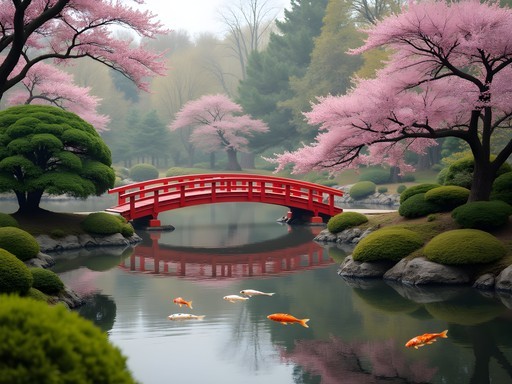
While many visitors approach the Anderson Japanese Gardens purely for aesthetic appreciation, my background in ecological systems draws me to this 12-acre masterpiece for additional reasons. The gardens represent one of North America's finest examples of intentional urban ecosystem design, where human artistry and natural processes achieve remarkable equilibrium.
Created in 1978 when businessman John Anderson commissioned landscape architect Hoichi Kurisu to transform his swampy backyard, the gardens demonstrate principles of ecological succession and habitat creation that we often discuss in restoration biology. The 200+ species of plants are meticulously maintained through traditional Japanese pruning techniques that mimic natural growth patterns while creating human-defined forms—a fascinating intersection of culture and biology.
During my spring visit, I observed Eastern bluebirds utilizing nesting boxes discretely integrated into the landscape design, while chorus frogs vocalized from the koi ponds. The garden staff practice integrated pest management rather than chemical interventions, creating a functioning ecosystem rather than merely an outdoor museum.
The gardens' Guest House, designed by Tadashi Yamane, incorporates principles of biomimicry in its construction—something I documented extensively in my field notes using my waterproof notebook, which proved invaluable during an unexpected spring shower.

💡 Pro Tips
- Visit early morning (9-10am) when wildlife activity is highest and before larger groups arrive
- Request the self-guided ecology tour brochure at the entrance for insights beyond the standard cultural information
- Bring binoculars to observe bird activity in the upper canopy of the Japanese maples
Burpee Museum of Natural History: Urban Paleontology in Context
The Burpee Museum represents precisely what I advocate for in my academic writing—a regional natural history institution that connects global scientific understanding with local ecological context. While modest in size compared to metropolitan museums, the Burpee excels in contextualizing paleontological findings within the regional landscape.
The museum's crown jewel, Jane the juvenile T. rex, provides an exceptional teaching moment about ontogenetic development in theropod dinosaurs. Having spent time at both the Field Museum in Chicago and the American Museum of Natural History in New York, I was impressed by how the Burpee's interpretive materials made complex concepts accessible without oversimplification.
What particularly resonated with my research interests was the 'Windows to Wilderness' exhibit, documenting ecological changes in the Rock River Valley from prehistoric times through European settlement to present-day conservation efforts. The exhibit effectively demonstrates how urban development has fragmented habitat corridors—precisely the phenomenon I've studied in eastern raccoon populations throughout the Great Lakes region.
For visitors with children, I recommend bringing a pocket microscope to examine the details of the geological specimens in the hands-on discovery area. This simple tool transformed my colleague's daughter's experience from passive observation to active scientific inquiry.

💡 Pro Tips
- Allow at least 2 hours to properly explore all exhibits
- Check the schedule for the paleontology lab windows—sometimes you can observe active fossil preparation
- The museum hosts excellent lecture series; check their calendar if your visit coincides with an evening talk
Rock River Recreation Path: Urban Corridor Ecology
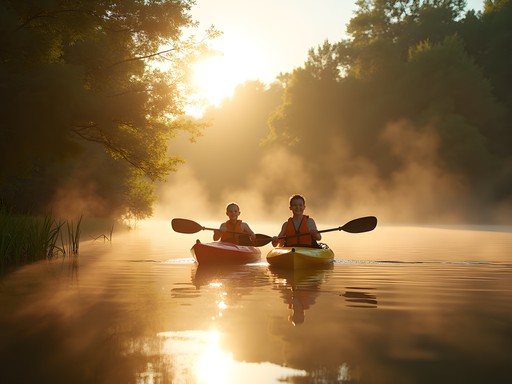
The 10-mile Rock River Recreation Path offers more than just scenic views—it presents a fascinating study in urban corridor ecology. As someone who has published extensively on how linear green spaces function as wildlife highways through developed areas, I was eager to document the ecological transitions along this pathway.
The paved trail follows the river's contours through downtown, connecting disparate neighborhoods and ecological zones. What impressed me most was how the city has incorporated native plantings along sections of the riverbank—a stark contrast to the manicured, ecologically sterile riverfront developments I've observed in many other Midwestern cities.
During my morning walks, I documented evidence of beaver activity near Shorewood Park, raccoon tracks in several muddy sections, and an impressive diversity of migratory warblers utilizing the corridor during spring migration. The city's decision to maintain sections of unmowed riparian buffer has clearly paid ecological dividends.
The trail also serves as an excellent case study in urban environmental history. Interpretive signs mark former industrial sites where factories once discharged directly into the river, contrasted with current restoration efforts. For those interested in documenting their observations, I recommend the field guide which has accompanied me on countless urban ecology excursions.
What particularly struck me was how the path contextualizes Rockford's relationship with its river over time—from industrial resource to neglected waterway to centerpiece of urban revitalization. This trajectory mirrors patterns I've documented in numerous post-industrial cities across the Great Lakes region.

💡 Pro Tips
- The section between Whitman Street Bridge and the Sinnissippi Gardens offers the best wildlife viewing opportunities
- Early morning (before 8am) provides optimal conditions for observing urban wildlife
- Download the Rock River Trail Initiative app for ecological points of interest along the route

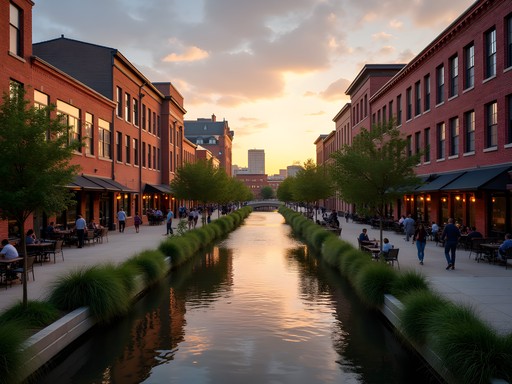
Midtown District: Adaptive Reuse as Urban Strategy
Rockford's Midtown District exemplifies a phenomenon I've documented across North America—how creative adaptive reuse of industrial infrastructure can catalyze neighborhood revitalization without complete displacement of existing communities. As a biologist who studies adaptation, I find urban adaptive reuse particularly fascinating as a human parallel to ecological succession.
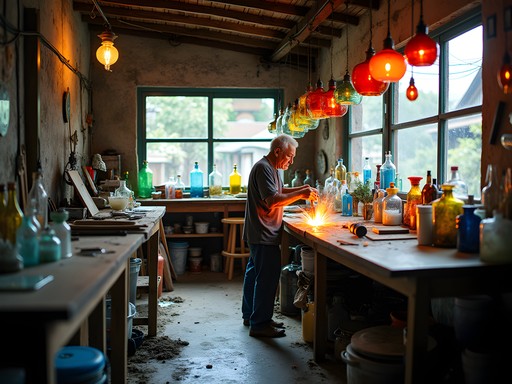
The district centers around the former Rockford Standard Furniture Company building, now transformed into a mixed-use development housing creative businesses, studios, and community spaces. What distinguishes Rockford's approach from gentrification patterns I've observed in larger cities is the intentional preservation of affordability and inclusion of existing neighborhood stakeholders in the planning process.
The Katie's Cup coffee shop serves as an informal community center where I observed diverse neighborhood residents interacting—a stark contrast to the socially segregated 'third places' that often accompany urban redevelopment. Their locally-sourced breakfast fueled my morning explorations, and the baristas provided invaluable local insights that shaped my itinerary.
Particularly noteworthy is how the district has incorporated green infrastructure into its redevelopment strategy. Rain gardens capture stormwater runoff from former industrial sites, while native plantings support urban pollinators—a small but meaningful contribution to urban biodiversity. The Rockford Art Deli's screen-printing operation has implemented environmentally responsible practices, demonstrating how creative industries can minimize ecological impacts.
For those interested in urban development patterns, I suggest bringing a field journal to document observations on how different demographic groups utilize these transitional spaces. My research on urban adaptation consistently reinforces that the most successful revitalized neighborhoods maintain socioeconomic diversity rather than simply replacing one population with another.

💡 Pro Tips
- Visit on First Fridays when galleries and studios open their doors to the public
- The Rockford Art Museum offers an excellent exhibit on the city's industrial history that contextualizes the district's transformation
- Speak with longtime business owners for perspectives on the neighborhood's evolution
Nicholas Conservatory & Gardens: Controlled Ecosystem in Urban Context
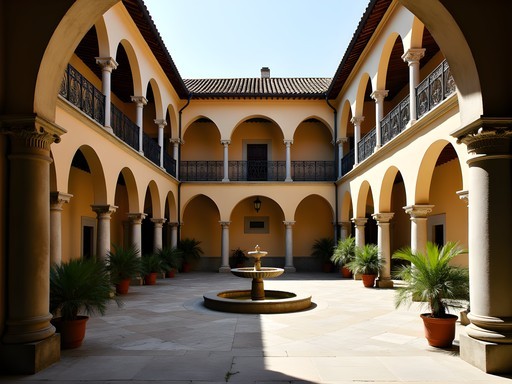
For a biologist who has spent decades studying how organisms adapt to built environments, the Nicholas Conservatory represents a fascinating controlled experiment in ecosystem design. This 11,000-square-foot tropical greenhouse along the Rock River creates a compelling juxtaposition—exotic tropical species thriving in a carefully maintained environment while native Illinois ecosystems undergo seasonal changes just outside its glass walls.
What distinguishes this facility from similar conservatories I've visited in larger cities is its intentional educational approach connecting tropical plant conservation to local environmental issues. The interpretive materials effectively explain how principles of tropical forest ecology—nutrient cycling, species interdependence, and adaptation to environmental stressors—apply equally to the temperate ecosystems of northern Illinois.
During my visit, I was particularly impressed by the conservatory's butterfly habitat, which houses species native to both tropical regions and Illinois. The exhibit thoughtfully explains migration patterns, habitat requirements, and conservation challenges facing lepidoptera globally and locally—making distant environmental issues immediately relevant to Rockford residents.
The outdoor gardens incorporate sustainable landscaping practices, including rain gardens that capture and filter stormwater before it reaches the Rock River and extensive use of native prairie plants that support local pollinators. These demonstration gardens provide visitors with practical examples of how ecological principles can be applied to home landscapes.
The conservatory's Eclipse Lagoon offers excellent bird watching opportunities, particularly during spring migration. I observed several warbler species, great blue herons, and a surprising diversity of waterfowl utilizing this urban habitat patch—evidence of how thoughtfully designed urban green spaces can support biodiversity even within developed areas.

💡 Pro Tips
- Visit Tuesday mornings for their guided 'Science Behind the Gardens' tours that explain the ecological principles at work
- The outdoor gardens are free to access even when the conservatory is closed
- Check their calendar for special exhibits—their seasonal butterfly displays are particularly educational
Final Thoughts
Rockford exemplifies what I've observed in my decades studying urban adaptation—that mid-sized cities often serve as more accessible laboratories for sustainable revitalization than their larger counterparts. The city has leveraged its industrial heritage, riverfront assets, and cultural institutions to create an urban experience that feels authentic rather than manufactured for tourism. What makes Rockford particularly worthy of exploration is how it balances preservation and progress, maintaining connections to its working-class roots while embracing creative approaches to urban challenges. For travelers seeking to understand how American industrial cities are reinventing themselves in the 21st century, Rockford offers valuable insights without the overwhelming scale of larger metropolitan areas. As both a scientist and traveler, I value places that reveal their stories gradually—and Rockford rewards those willing to look beyond surface appearances to discover the complex urban ecosystem beneath.
✨ Key Takeaways
- Rockford demonstrates how industrial heritage can be preserved while adapting to new economic and ecological realities
- The city's relationship with the Rock River has evolved from exploitation to celebration, creating new recreational and ecological opportunities
- Mid-sized cities often implement innovative urban solutions that fly under the radar of mainstream travel media
- Thoughtful adaptive reuse of existing infrastructure creates more authentic urban experiences than ground-up redevelopment
📋 Practical Information
Best Time to Visit
Mid-April through June when spring migration and flowering are at their peak
Budget Estimate
$200-300 for a weekend (accommodations, meals, and attractions)
Recommended Duration
2-3 days
Difficulty Level
Easy


Comments
Nicole Russell
Just got back from a solo weekend in Rockford and have to say your post was my inspiration, Sophia! As a fellow biology enthusiast (though amateur compared to you), I was fascinated by the urban ecology observations. The Rock River Recreation Path was a highlight - I rented a bike and spent a whole morning spotting birds and native plants. The Burpee Museum was also incredible - their Jane the T-Rex exhibit blew me away! For anyone visiting, I'd add Prairie Street Brewing Company to the itinerary - it's right on the river with amazing sunset views and they brew some fantastic beers. Rockford really does feel like a city that's found its stride again.
Sophia Wilson
Thanks for the kind words, Nicole! So glad you enjoyed the urban ecology aspects. Prairie Street Brewing is a perfect example of the adaptive reuse I mentioned - that building has such history!
freelife
Those garden photos are stunning! Added to my bucket list!
Kimberly Murphy
Brilliant post, Sophia! I'm always drawn to cities that are reinventing themselves, and Rockford sounds like it's doing it right. The urban ecology angle is fascinating - we don't often think about river corridors as wildlife habitats in the middle of cities. I did something similar exploring post-industrial cities in northern England, and there's something special about watching nature reclaim these spaces. Planning a Midwest road trip for next year and Rockford just made the list. The combination of cultural attractions and outdoor access is exactly what I look for. Quick question - are there kayak rentals along the Rock River? That would be an amazing way to experience the urban ecology you described!
wanderadventurer
Love the photos! That Japanese garden looks incredible.
vacationadventurer4566
How's the Rock River trail for running? Looking for good routes in the area. Is it paved the whole way?
wanderadventurer
Mostly paved! Did a 10k there last spring, really nice surface and great views.
cityhero
Never thought about Rockford as a destination. This changed my mind!
Claire Hawkins
Sophia, I love your scientific lens on urban renewal! We visited Rockford with our three kids last fall and the Burpee Museum was a highlight - they have a fantastic dinosaur exhibit that kept our 7-year-old mesmerized for hours. What struck me most was how family-friendly everything felt without being touristy or commercialized. The Japanese Gardens offered such a peaceful contrast to the museum energy. We're based in Valencia where urban green spaces are treasured, and Anderson Gardens would fit right in with European standards. The adaptive reuse you mention in Midtown reminded me of similar projects in Barcelona. Mid-sized cities really do offer these gems without the overwhelming crowds.
coffeemate
How walkable is the downtown area? I'm planning to visit without a car and wondering if I can easily get between the museum, gardens, and restaurants or if I should plan on using rideshares.
coolnomad
We found parts of downtown pretty walkable, but you'll definitely want transportation between some of the attractions. We used the Rockford Mass Transit buses which were surprisingly convenient and cheap! I used my transit app to navigate and it worked great.
globeninja
Is this a good weekend trip from Chicago? How much time would you recommend?
Claire Hawkins
Perfect weekend trip! We did it with our kids last autumn. Two days is ideal - one for the museums and gardens, another for the river path and exploring Midtown. About 90 minutes from Chicago, so very doable.
vacationdiver8481
Just got back from Rockford last week and this article nails it! The Midtown District has some amazing breweries and restaurants we weren't expecting. We spent an afternoon just wandering around and found this incredible coffee roaster. The whole area feels like it's really coming alive. Also did the river path on rented bikes - so peaceful and way less crowded than Chicago trails. Definitely an underrated Illinois destination!
Venture X
Premium card with 2X miles, $300 travel credit, Priority Pass